
电影

Search documents
好莱坞最“烧钱”导演,跻身福布斯亿万富豪行列
3 6 Ke· 2025-12-17 23:58
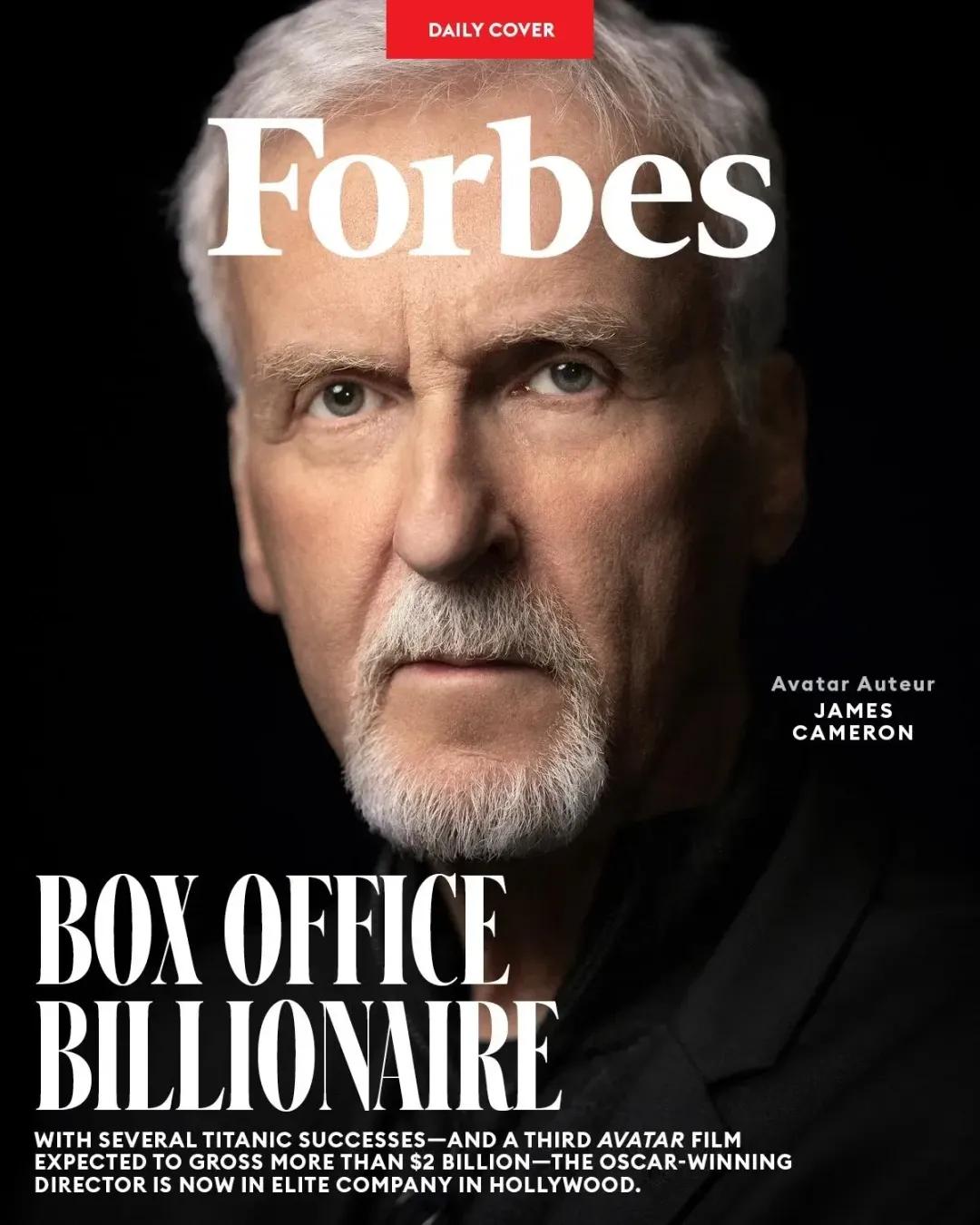
Core Insights - James Cameron, despite the low pre-sale performance of "Avatar: The Way of Water" in China, has become the world's richest director with an estimated net worth of $1 billion, primarily from his film earnings [2][4][5]. Group 1: Career Achievements - Over a 40-year career, Cameron's films have grossed nearly $9 billion globally, with significant contributions from "Titanic" and the "Avatar" series [2][12]. - Cameron is part of an elite group of Hollywood billionaires, including George Lucas and Steven Spielberg, achieving this wealth primarily through his film successes rather than external business ventures [4][5]. - His films have consistently pushed the boundaries of technology and storytelling, leading to high expectations for box office performance [8][17]. Group 2: Financial Insights - Forbes estimates that Cameron's earnings from the first "Avatar" film alone exceed $350 million, with additional income from merchandise and theme park rights [15]. - If "Avatar: The Way of Water" meets its box office expectations, Cameron could earn at least $200 million in the coming months [5]. - Cameron's financial strategy often involves taking risks, such as investing his own money to ensure high production quality, which has historically paid off with substantial box office returns [12][13]. Group 3: Future Prospects - Cameron has plans for a fourth and fifth "Avatar" film, contingent on the financial success of the third installment [17][18]. - His commitment to innovation in filmmaking continues, as seen in the development of new underwater filming technologies for the "Avatar" sequels [17].


发放超千万元消费券 2026“MOVIE生活新年嘉年华”启幕
Jiang Nan Shi Bao· 2025-12-17 14:30
Group 1 - Jiangsu Film Group launched the "2026 MOVIE Life New Year Carnival" to promote cultural consumption, starting on December 16, 2025 [1] - The carnival focuses on "benefiting people's livelihood and promoting consumption" through various initiatives such as issuing consumption vouchers and organizing cross-city activities in Suzhou, Nantong, and Yancheng [1] - During the event period from December 16, 2025, to March 3, 2026, consumers can receive a "20 yuan" movie consumption voucher via the Taopiaotiao App or Alipay mini-program, applicable for single tickets priced at 30 yuan or more [1] Group 2 - The event includes limited edition movie packages, with a couple's package priced at 58 yuan and a family package at 78 yuan, totaling 21,000 sets available for purchase starting at 8 PM on December 16, 2025 [1] - From December 31, 2025, to January 2, 2026, 13 cities in Jiangsu will host "Hundred Theaters New Year Viewing," featuring popular holiday films with corresponding discounts [2] - The carnival aims to enrich the cultural experience during the festive season and enhance service consumption quality and expansion through film screenings and promotional activities [2]

《阿凡达3》预售“遇冷”
证券时报· 2025-12-17 08:30
Core Viewpoint - The pre-sale performance of "Avatar: The Way of Water" (referred to as "Avatar 3") is underwhelming compared to its predecessor, raising concerns about its box office potential [1][6]. Pre-sale Performance - "Avatar 3" began pre-sales on December 12, with total pre-sale and preview box office reaching approximately 57.7 million yuan by December 17, 11 AM, surpassing 50 million yuan on December 16, just 2 days and 9 hours before its release [2][4]. - In contrast, "Avatar: The Way of Water" achieved over 20 million yuan in its first-day pre-sales on December 7, 2022, and surpassed 50 million yuan within 1 day and 13 hours, eventually exceeding 200 million yuan before its release [4]. Box Office Context - "Avatar: The Way of Water" grossed approximately 1.7 billion yuan, ranking fifth among films released in 2022 and becoming the highest-grossing imported film of that year [5]. - The original "Avatar" released in 2009 remains the highest-grossing film in history, with a total box office of 21.2 billion yuan [7]. Factors Affecting Pre-sale Performance - Analysts attribute the disappointing pre-sale results of "Avatar 3" to high ticket prices and the film's lengthy runtime of 198 minutes, which poses challenges for audience attendance and theater scheduling [9]. - Ticket prices for "Avatar 3" are notably high, with preview screenings in Shanghai priced above 100 yuan, and special screenings reaching up to 188 yuan. Regular screenings on the release day are also priced higher than typical films [9].

“国产GPU第二股”沐曦股份开盘大涨568% 募得41.97亿资金
Chang Jiang Shang Bao· 2025-12-17 06:58
Group 1 - Nabacuan's gross margin has declined for four consecutive quarters, and its operating cash flow has turned negative, with monetary funds at only 188 million [1] - Dongguan Bank has been waiting for 17 years to enter the A-share market and has been fined 13.32 million in the past two years, while executive salaries have increased by 2.25 million [1] - Lin Qingxuan has spent 1.1 billion on marketing over three and a half years, which is 12 times its R&D expenditure, and has faced multiple fines for false advertising [1] Group 2 - Xinfang Pharmaceutical has been sued for unit bribery, leading to a stock price drop and poor performance [1] - Zijin Mining, under Chen Jinghe's leadership, has created a trillion-dollar mining empire with interest-bearing liabilities of 169.6 billion [1] - Tianfeng Securities may be involved in regulatory violations related to the Contemporary Group and reported a profit of 153 million in the first three quarters [1] Group 3 - Country Garden delivered 140,000 units in the first 11 months, and its debt restructuring is expected to alleviate over 90 billion in liabilities [1] - Guangzhou Rural Commercial Bank has reduced 48.1 billion in debt over three years, with a loan impairment loss of 3.1 billion in six months [1] - 37 Interactive Entertainment has been fined 32.55 million for information disclosure violations and has spent 25.8 billion on customer acquisition over three years [1] Group 4 - "Zootopia 2" has achieved a box office of 2 billion in six days, with China's film industry seeing a 13-fold increase in quarterly profits [1] - Enjie shares are under pressure with 15.6 billion in debt, and plans to restructure with Zhongke Hualian to integrate upstream industries [1] - Shanxi Fenjiu has a return on equity of 31.82%, surpassing Moutai [1] Group 5 - Changan Technology has incurred losses of 462 million over the past two years, with Hefei Guotou investing 1.419 billion to deepen cooperation between central and local governments [1] - Xiaomi Group's third-quarter report shows an adjusted net profit increase of 80.9%, while its market value has evaporated by 360 billion in six months [1] - Master Kong has a dividend payout ratio of 100%, with Japanese capital realizing a 20% return, and the Wei brothers earning nearly 10 million annually [1] Group 6 - Founder of Bawang Tea Ji has partnered with the "photovoltaic goddess," creating a new model of capital market collaboration worth 60.3 billion [1]

阿凡达导演卡梅隆点赞哪吒2:世界级的动画水平
Xin Lang Cai Jing· 2025-12-17 06:10
19日(本周五),电影《阿凡达3》将在中国大陆上映。导演卡梅隆接受专访时透露,《阿凡达3》有 着"令人惊叹的动作"和"更高层次的情感"。"这部电影令人惊喜的地方,在于它能真正触动心弦。这与 家庭中的角色有关,关于他们的关系如何经受考验,他们如何度过这段创伤期,并互相治愈、共同努 力。" 谈及中国电影,卡梅隆说,"在过去几年里,中国电影人取得了一些非凡成就,比如《哪吒2》, 它展示的是世界级的动画水平。此外,他还给中国年轻电影人建议,"情感是最重要的东西,一切的核 心在于人。"(央视新闻) ...
全球影史票房冠军续作 《阿凡达3》预售“遇冷”!
Zheng Quan Shi Bao Wang· 2025-12-17 05:21
Core Insights - The highly anticipated Hollywood blockbuster "Avatar: The Way of Water" (referred to as "Avatar 3") is set to release on December 19, with pre-sales and screenings currently underway, but initial data indicates disappointing pre-sale performance [1][4] Group 1: Box Office Performance - "Avatar 3" has generated approximately 57.7 million yuan in pre-sales and screenings as of December 17, with the pre-sale surpassing 50 million yuan on December 16, just 2 days and 9 hours before its release [1] - In contrast, "Avatar: The Way of Water" had a much stronger pre-sale performance, exceeding 20 million yuan on its first day of pre-sales and reaching over 1 billion yuan just five days before its release [4] Group 2: Market Context - "Avatar: The Way of Water" was released during a market downturn, which contributed to its strong box office performance, ultimately grossing approximately 1.7 billion yuan and ranking as the highest-grossing imported film of 2022 [4][6] - The release of "Avatar 3" has led to a noticeable correction in the stock prices of certain A-share companies that had previously surged in anticipation of the film's release [4] Group 3: Film Details - "Avatar 3" is produced by 20th Century Fox and continues the story from "Avatar: The Way of Water," set in the year 2154, featuring a narrative that includes significant emotional stakes and impending conflict [5] - The film is expected to showcase stunning visual effects and action sequences, aiming to deliver an epic cinematic experience [8] Group 4: Pricing and Duration Challenges - The ticket prices for "Avatar 3" are notably high, with pre-screening prices in Shanghai exceeding 100 yuan, and some special screenings reaching up to 188 yuan [9] - The film's runtime of 198 minutes poses challenges for audience attendance and theater scheduling, being longer than its predecessor [9]

毕赣:不害怕成为一名小众的艺术电影导演
Zhong Guo Qing Nian Bao· 2025-12-17 03:34
Core Viewpoint - The film industry in China has undergone significant changes over the past decade, with the micro-short drama market expected to surpass the domestic film market in 2024. Despite this, director Bi Gan remains committed to creating niche art films, emphasizing his passion for filmmaking rather than commercial success [1][13]. Group 1: Bi Gan's Background and Artistic Journey - Bi Gan was born in 1989 in Kaili, Guizhou, and developed a unique storytelling perspective from a young age, influenced by his strict yet supportive grandmother and the diverse conversations in his mother's barbershop [2]. - He initially pursued a television directing degree in Taiyuan, where he began exploring existential themes in his films, distinguishing himself from peers who focused on campus life [3][7]. - His early exposure to philosophy and literature in a local bookstore shaped his artistic vision, leading him to view art as a means to explore profound questions [3][5]. Group 2: Career Development and Challenges - Bi Gan's first film, "Old Tiger," was made with limited resources and faced numerous technical challenges, leading him to question his suitability for filmmaking [7][8]. - After a brief stint in a wedding studio, he returned to filmmaking with "Kaili Blues," which gained recognition and attracted investment, marking the beginning of his career as a director [8][10]. - Despite initial doubts and external pressures to pursue a stable job, Bi Gan chose to follow his instinct for filmmaking, recognizing the importance of personal choice in his artistic journey [9][12]. Group 3: Recent Work and Artistic Philosophy - Bi Gan's latest film, "Wild Times," reflects his observations of contemporary life and the disconnect between individuals and the world, structured through sensory experiences rather than linear storytelling [12][13]. - He acknowledges the risks of collaborating with commercial actors but believes that a talented actor can enhance a project, maintaining that his creative logic remains unchanged despite industry shifts [13][14]. - Bi Gan emphasizes that the essence of filmmaking lies in conveying genuine emotions, regardless of the complexities involved in the process [14].
(年终特稿)出彩、出圈、出海,中国向世界呈现文化新样貌
Zhong Guo Xin Wen Wang· 2025-12-17 01:51
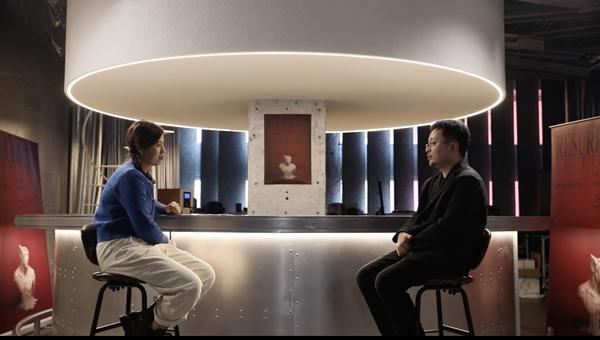
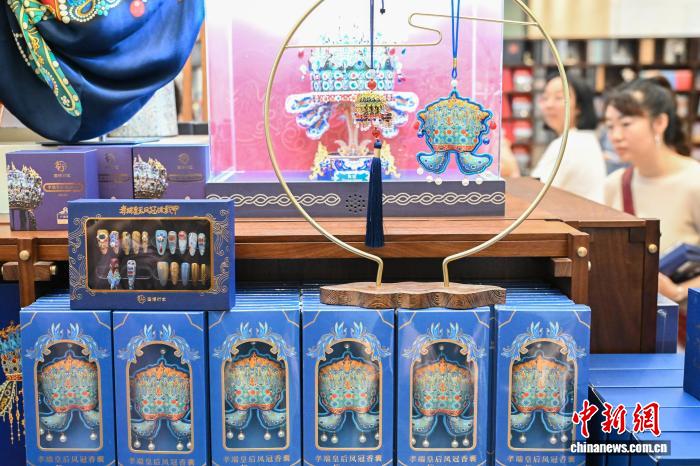
Core Insights - The article highlights the emergence of a new cultural representation of China to the world, showcasing diverse IP forms and their global impact, such as the record-breaking box office of the animated film "Ne Zha" and the successful sales of cultural products like the Fengguan refrigerator magnet [1][3]. Group 1: Cultural Products and Their Impact - The Fengguan refrigerator magnet, launched by the National Museum of China, has achieved cumulative sales of over 2 million units within a year, indicating the vitality of traditional culture in contemporary consumer culture [3][4]. - The film "Ne Zha" has significantly influenced the Chinese film market, with its catchphrase "Help me break the cauldron" becoming one of the top ten internet buzzwords of 2025, reflecting its cultural resonance [3][4]. Group 2: Globalization of Chinese Culture - The character Labubu, representing a new wave of Chinese cultural products, has gained international popularity, with significant sales figures reported in various countries, including a record-breaking single-day revenue of 10 million RMB in Thailand [6]. - The success of these cultural products is attributed to their ability to resonate with both local and global audiences, showcasing a blend of traditional Chinese values and modern narratives [6][7]. Group 3: Cultural Confidence and Innovation - Experts emphasize that the new cultural phenomena emerging by 2025 are rooted in China's cultural heritage and confidence, highlighting the creative transformation and innovative development of traditional culture [6][7]. - The article suggests that the appeal of these products lies in their modern storytelling and strong technological presentation, which attract younger audiences and foster international dialogue [6].

中泰证券传媒2026年度策略:AI+IP双轮驱动 看好游戏、电影、出版等投资机会
Zhi Tong Cai Jing· 2025-12-16 23:37
Group 1 - The core viewpoint of the report highlights three main lines of AI implementation: the formation of edge-side entry points, practical iteration of model capabilities, and the maturity of multimodal tools [1][2] - The consumption market is shifting from "functional satisfaction" to "emotional resonance," with IP evolving from a symbol of traffic to emotional currency, indicating a strong potential for large IPs and their commercialization [3] - The domestic cultural product infrastructure is globally leading, with Millennials and Generation Z exhibiting cultural confidence and emotional consumption needs, creating a smooth supply-demand logic [3] Group 2 - The media industry shows clear attributes of both offense and defense, with positive investment opportunities in gaming, film, and publishing sectors [4] - The gaming sector is experiencing steady growth, with a high EPS support level and a strong safety cushion, suggesting a focus on companies with stable performance or significant product marginal changes [4] - The film industry is recovering post-pandemic, with an industry gross margin of 28.9% in Q1-Q3 2025, an increase of 7.2 percentage points, and a heightened emphasis on non-ticket revenue [4] - In publishing, state-owned educational materials and auxiliary businesses are expected to strengthen their fundamentals due to state backing, with local state-owned publishing companies offering a dividend ratio of 50-60% [4]

电影《遥远的普若岗日》全国上映
Ren Min Ri Bao· 2025-12-16 22:31
Core Viewpoint - The film "Distant Purwogangri," co-produced by the publicity departments of Tibet Autonomous Region and Zhejiang Province, showcases the development journey of Shuanghu County in Tibet, highlighting the struggles and perseverance of local officials and residents [1]. Group 1 - The film features the story of a university graduate, Tong Xiaofan, and the fate of local herders, illustrating the transition from district to county and ecological relocation in Shuanghu County [1]. - It is based on the touching experiences of several workers in Shuanghu County who have dedicated themselves to their roles, emphasizing unique themes, stunning visuals, and heartfelt narratives [1]. - The film aims to convey warmth and emotion to the audience through its portrayal of the community's efforts to overcome difficulties [1].