半导体

Search documents
一季度30只新股IPO,北交所占比过半
第一财经· 2026-03-30 13:18
Core Viewpoint - The A-share market has seen a significant increase in new listings and fundraising in the first quarter of 2026, with a total of 30 companies expected to go public, marking a 50% year-on-year increase in fundraising [3][6]. Group 1: New Listings and Fundraising - As of March 30, 2026, 30 companies are set to be listed in the A-share market, compared to 27 in the same period last year, with total fundraising amounting to 258.79 billion yuan, a 57.07% increase from 164.76 billion yuan in 2025 [3][6]. - The Beijing Stock Exchange (北交所) has become the leading platform for new listings, with 16 companies listed, accounting for approximately 53% of the total. In contrast, the Shanghai and Shenzhen main boards and the Sci-Tech Innovation Board each had 6 listings, while the Growth Enterprise Market had 2 [6][7]. - The fundraising scale for the Beijing Stock Exchange is relatively lower, with 16 companies raising a total of 48.84 billion yuan, which is 18.87% of the total fundraising. The Sci-Tech Innovation Board raised the highest amount at 89.22 billion yuan, accounting for 34.48% [6][7]. Group 2: IPO Application and Review Process - The number of new IPO applications received has changed, with the Sci-Tech Innovation Board receiving the most applications this year, while the Beijing Stock Exchange was the main recipient last year [10][12]. - A total of 39 companies have had their IPO applications approved this year, with 20 from the Beijing Stock Exchange, 13 from the Shenzhen Stock Exchange, and 6 from the Shanghai Stock Exchange [13]. - The number of companies terminating their IPO processes has significantly decreased, with only 9 companies terminating their applications this year compared to 50 last year, indicating a more favorable environment for companies seeking to go public [10][13]. Group 3: Underwriting and Fees - The total underwriting fees from the 30 companies listed in the first quarter are estimated to be 14.63 billion yuan, with China International Capital Corporation (中金公司) leading with 2.53 billion yuan from 4 projects [8][9]. - The top ten companies by fundraising amount include 4 from the main and Sci-Tech Innovation Boards, with no companies from the Beijing Stock Exchange making the list. The highest fundraising amount was from Zhenstone Co., Ltd. (振石股份), which raised 2.91859 billion yuan [7][9].


指数研选系列报告:科创创业AI指数:双线精选,一键布局全景AI链
GF SECURITIES· 2026-03-30 12:38
Group 1 - The Core View: The Science and Technology Innovation Entrepreneurship AI Index (932456.CSI) was officially launched on May 14, 2025, to reflect the overall performance of large and mid-cap growth companies with core artificial intelligence attributes in the Sci-Tech Innovation Board and the Growth Enterprise Market [1] - The index aims to capture the performance of companies involved in AI foundational resources, technology development, and application support, highlighting the characteristics of balancing domestic and overseas computing power chains [9] - The index is composed of 50 securities selected based on liquidity and market capitalization, focusing on high-elasticity computing power targets [9] Group 2 - Highlight 1: The top-level design of the "14th Five-Year Plan" anchors long-term beta for the AI chain, addressing core constraints in AI development and promoting large-scale application [10] - Highlight 2: The AI industry cycle is transitioning from the training phase to the inference phase, with significant capital expenditure from cloud vendors continuing to expand [14][17] - Highlight 3: The anticipated reversal of "stagflation" expectations may lead to greater elasticity in technology styles, with historical data showing that tech stocks often rebound first after such expectations dissipate [26][28] Group 3 - Highlight 4: The index focuses on large and mid-cap growth styles, with a market capitalization structure dominated by companies with over 100 billion in market value, providing strong foundational support [36] - Highlight 5: The index achieves risk balance across markets, with a reasonable distribution of core technology sectors, effectively avoiding excessive concentration in a single market or sector [41][45] - Highlight 6: The index is heavily weighted towards upstream sectors while also considering downstream applications, capturing the full-cycle benefits of the AI industry [48] Group 4 - Highlight 7: The AI industry's prosperity continues to validate the index's strong earnings growth expectations, with projected net profit growth significantly outperforming mainstream broad-based indices [56] - Highlight 8: The index exhibits high return elasticity and a favorable risk-return ratio, with a historical annualized return of 50.02% and a Sharpe ratio of 1.18, indicating strong risk compensation [60]


3月第4周立体投资策略周报:策略周报:资金面扰动仍在,市场情绪回落-20260330
Guoxin Securities· 2026-03-30 12:30
Group 1 - The core conclusion indicates that in the fourth week of March, a total net outflow of funds into the market was 35.5 billion, compared to a net outflow of 34.6 billion in the previous week [1][7] - Short-term sentiment indicators are at a mid-high level since 2005, while long-term sentiment indicators are at a mid-low level since 2005 [1][12] - From an industry perspective, the highest transaction volume share in the past week was in the power equipment (99%), communication (98%), and semiconductor (96%) sectors, while the lowest was in real estate (0%), commercial trade (1%), and liquor (1%) [2][14] Group 2 - The recent week saw a decrease in financing balance by 24 billion, an increase in public fund issuance by 21 billion, a net redemption of ETFs amounting to 5.7 billion, and an estimated net outflow of northbound funds of 10.5 billion [1][7] - The recent week’s annualized turnover rate was 488%, placing it in the 82nd percentile historically, while the financing transaction ratio was 8.95%, placing it in the 56th percentile historically [12][15] - The recent week’s A-share risk premium was 2.63%, which is in the 42nd percentile historically, and the dividend yield of the 300 index (excluding finance) compared to the ten-year government bond yield was 1.24, in the 5th percentile historically [2][14]
资本市场周报(2026年第2期):市场定价由“通胀”初步切换至“衰退”逻辑-20260330
Yin He Zheng Quan· 2026-03-30 12:24
Market Trends - The capital market has shifted from pricing "inflation" to initially pricing "recession" as geopolitical tensions escalate[6] - If the conflict does not stabilize by April, "recession" will be formally priced in[11] Economic Indicators - WTI crude oil futures rose to $101.18 per barrel, up 2.4% from the previous week[9] - The Dow Jones Industrial Average fell by 0.9%, the S&P 500 by 2.12%, and the Nasdaq Composite by 3.23%[10] - The yield on the 10-year U.S. Treasury bond increased to 4.44%, reaching a 12-month high[10] Currency and Commodity Performance - The U.S. dollar index closed at 100.05, up 0.75 points, while non-U.S. currencies continued to face pressure[10] - The Chinese yuan depreciated minimally against the dollar, closing at 6.91, indicating relative strength[10] Global Market Reactions - The KOSPI index in South Korea saw the largest decline, down 5.92%, while the DAX and CAC40 indices fell by 11.8% and 10.24%, respectively[10] - Chinese assets performed relatively better, with the CSI 300 index down 1.41%[10] Policy Developments - The central bank emphasized the need for financial stability and regulatory upgrades in response to market conditions[6] - The digital yuan wallet upgrade aims to enhance the internationalization of the yuan, currently holding a 3.1% share in global payments[6]
豪威集团(603501) - 2026年第一季度主要经营数据的公告
2026-03-30 11:01
| 证券代码:603501 | 证券简称:豪威集团 | 公告编号:2026-027 | | --- | --- | --- | | 转债代码:113616 | 转债简称:韦尔转债 | | 豪威集成电路(集团)股份有限公司 2026 年第一季度主要经营数据的公告 本公司董事会及全体董事保证本公告内容不存在任何虚假记载、误导性陈 述或者重大遗漏,并对其内容的真实性、准确性和完整性承担法律责任。 重要内容提示: 本公告所涉及的主要经营数据为初步核算数据,可能与公司 2026 年第一 季度报告中披露的数据存在差异,具体数据请以公司正式披露的 2026 年第一季 度报告为准。敬请投资者理性投资,注意投资风险。 一、2026 年第一季度主要经营数据 公司各业务线毛利率稳健,报告期内,公司主营业务结构稍有变化,半导体 代理业务收入占比较上年同期有所提升,导致公司整体毛利水平略有下降。 公司将持续优化业务结构,积极开拓新兴下游应用场景,稳健开拓公司产品 版图,并同时强化供应链管理与成本管控,力争改善盈利能力,推动公司业务实 1 现高质量发展。 三、风险提示 本公告所涉及的主要经营数据为初步核算数据,可能与公司 2026 年第 ...

定增市场双周报2026.03.16-2026.03.29:折价率创新低,β收益分化-20260330
Shenwan Hongyuan Securities· 2026-03-30 10:44
Group 1: Market Dynamics - As of March 30, 2026, 18 new private placement projects were added, a decrease of 4 from the previous period, with 6 projects terminated, also down by 3[4] - The number of projects awaiting approval stands at 662, with 75 having passed the review, a decrease of 8[8] - The average discount rate for competitive bidding projects reached a record low of 1.36%, down 13.26 percentage points, while the market price discount rate averaged 4.16%, down 11.80 percentage points[4] Group 2: Project Analysis - Jiangfeng Electronics plans to raise up to 1.928 billion yuan for projects related to semiconductor materials, with expected revenue growth exceeding 20% in 2024 and 2025[4] - iFLYTEK aims to raise up to 4 billion yuan for AI education projects, with the AI industry expected to grow at a compound annual growth rate of 32.1% from 2024 to 2029[4] - The average price-to-sales (PS) and price-to-book (PB) ratios for Jiangfeng Electronics are 10.75X and 7.83X, respectively, while iFLYTEK's PS and PB ratios are 4.63X and 6.12X[4] Group 3: Investment Insights - 62.5% of the newly unlocked competitive bidding projects yielded positive returns, with an average absolute return of 13.88% and an excess return of 1.30%[4] - The average market price discount rate for newly listed competitive projects was 15.24%, with some projects exceeding 22%[4] - The average subscription premium rate for competitive projects was 12.05%, reflecting a 4.35 percentage point increase[4]

芯片关键材料,持续紧缺
半导体芯闻· 2026-03-30 10:36
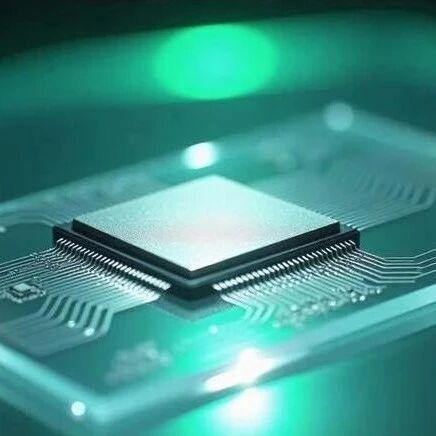
Core Viewpoint - The supply shortage of T-Glass produced by Nittobo is expected to worsen despite the company's efforts to expand production capacity, driven by strong demand from major tech companies [2][3]. Group 1: Market Dynamics - Prismark predicts that the demand for T-Glass will exceed Nittobo's production capacity starting in the second half of 2024, as major tech companies like Nvidia, Google, and Amazon seek to procure T-Glass for semiconductor substrates [3]. - Nittobo currently has a production capacity of 500,000 square meters (㎡) of T-Glass, which is significantly higher than its competitors, including Taiwan Glass (100,000㎡), Taishan Glass (50,000 to 100,000㎡), Grace Technology (100,000㎡), and Nanya Plastics (50,000㎡) [3]. Group 2: Competitive Landscape - Nittobo plans to invest $530 million in its T-Glass division, aiming to double its production capacity by 2028, which is projected to hold a market share of 55% compared to 45% for all other competitors combined [4]. - The supply shortage of T-Glass is expected to persist this year and next, with predictions indicating that the situation will worsen by 2028 if major tech companies continue to exclusively use Nittobo products [4]. Group 3: Technical Advantages - T-Glass is characterized by a low coefficient of thermal expansion (CTE), which minimizes warping during high-temperature processes, thus meeting the demands for larger substrate sizes and miniaturized circuits [4].
三安光电,最新回应
半导体芯闻· 2026-03-30 10:36
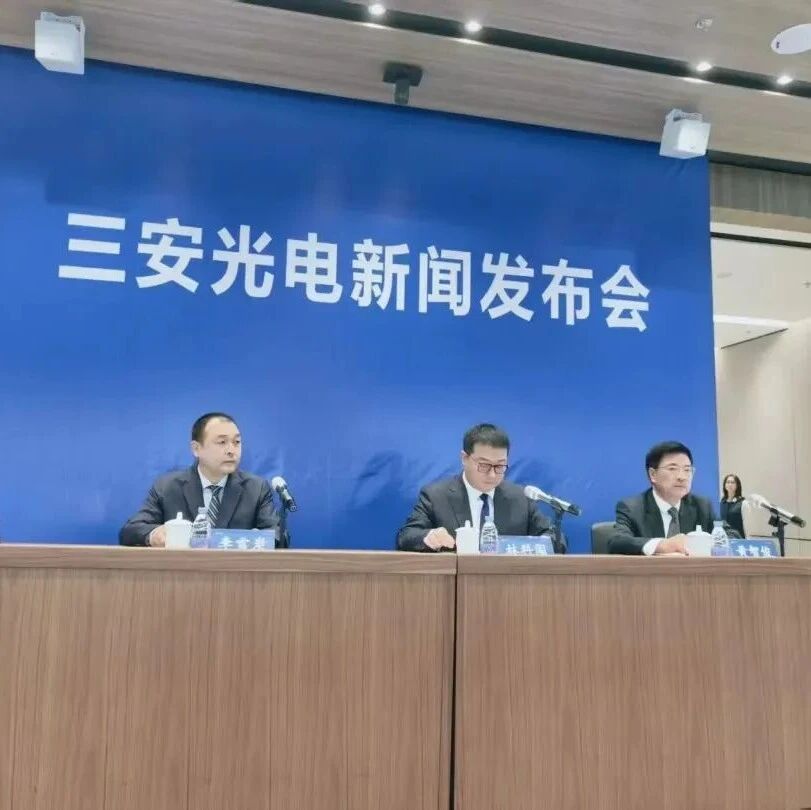
Core Viewpoint - The recent legal issues surrounding the actual controller of Sanan Optoelectronics have raised concerns, but the company assures that its operations remain stable and unaffected by these events [6][10]. Group 1: Company Response to Challenges - Sanan Group has established a "Risk Disposal Working Group" to address current difficulties and is actively seeking strategic partners to ensure normal operations [7][8]. - The government and relevant departments are involved in coordinating efforts to resolve debt issues, indicating a supportive environment for the company [7][8]. - Sanan Group emphasizes its commitment to maintaining contractual obligations and protecting the rights of creditors while ensuring the normal operation of its business segments [8]. Group 2: Operational Stability - Sanan Optoelectronics reports that its production and management are operating normally, with all business activities progressing as planned [10]. - The company maintains a robust organizational structure and governance system, ensuring independence from its controlling shareholder [10]. - The ongoing partnership with STMicroelectronics in the joint venture, Anystar Semiconductor, is advancing, with projects entering the mass production phase, which is expected to significantly impact the global silicon carbide market [10]. Group 3: Market Confidence Initiatives - To bolster market confidence, the chairman and vice chairman of Sanan Optoelectronics plan to increase their shareholdings in the company, with intended investments of no less than RMB 20 million and RMB 5 million, respectively [11].

三星员工,要求更多奖金
半导体芯闻· 2026-03-30 10:36
Core Insights - Samsung Electronics' union has been advocating for the removal of performance bonus caps and the adoption of a profit-linked compensation system similar to SK Hynix, but productivity among Samsung's employees is significantly lower than that of SK Hynix [1] - As of 2025, Samsung's Device Solutions (DS) department has an average operating profit per employee of approximately 318 million KRW (about $210,206), while SK Hynix's figure is 1.37 billion KRW, indicating that Samsung's employees generate only about one-fourth of the operating profit compared to their SK Hynix counterparts [1] - The revenue per employee also shows a disparity, with Samsung's DS department at 1.67 billion KRW and SK Hynix at 2.81 billion KRW, reflecting lower efficiency in both revenue and profit generation for Samsung [1] Group 1 - From 2021 to 2025, Samsung's DS department saw a workforce increase of about 22%, growing from 63,902 to 78,064 employees, while SK Hynix's workforce grew by only 14%, from 30,135 to 34,549 [2] - Despite a larger increase in employee numbers, Samsung's productivity improvement has been relatively limited compared to SK Hynix, which has managed to maintain higher output efficiency [2] - As of 2025, Samsung's average salary is approximately 158 million KRW, while SK Hynix's is around 185 million KRW; however, Samsung's figure encompasses various divisions, which may not accurately reflect the average within the DS department [2] Group 2 - The key issue lies not only in absolute salary levels but also in the structure of profit generation, as performance-based compensation is inherently linked to the company's profit scale and each employee's output [2] - Analysts suggest that the productivity of Samsung's DS department is significantly lower than that of SK Hynix, indicating that the union's demands for changes in the compensation system should be evaluated in conjunction with productivity levels and profit structures rather than through simple comparisons [2]
五周连跌!美股科技牛真要结束了?
和讯· 2026-03-30 09:28
Core Viewpoint - The article discusses the decline of the tech sector in the U.S. stock market, particularly the "seven giants" of technology, and raises questions about the sustainability of the tech bull market driven by AI advancements [4][5][6]. Group 1: U.S. Tech Market Decline - The U.S. stock market indices fell over 1% on March 27, marking the first time in nearly four years that they recorded five consecutive weeks of decline [4]. - The "seven giants" of U.S. tech, including Meta and Amazon, saw significant drops, with Meta and Amazon down nearly 4%, and other giants like Tesla and Microsoft down over 2% [4]. - The index tracking these tech giants has dropped nearly 15% year-to-date, with Microsoft down over 26% and Meta down over 20% [4][6]. Group 2: A-Share Market Response - The A-share market is experiencing volatility, with tech stocks, particularly in AI and humanoid robotics, seeing declines of over 10% [4]. - Despite potential short-term pain, there is a belief that a decline in A-shares could present a "golden opportunity" for investors in the long run [5][9]. Group 3: Market Sentiment and Future Outlook - There is a divergence in market sentiment regarding the tech sector, with some believing the current downturn is a technical correction, while others see it as a sign that the tech bull market may be nearing its end [7]. - The article highlights that the tech giants' previous status as a "safe haven" is being challenged as profit-taking occurs [6]. - Concerns about high valuations and the realization of AI technology's potential are contributing to the current market dynamics [7]. Group 4: Investment Strategies - Investors are advised to avoid rushing into the market and to wait for valuations to normalize before making new investments [8]. - The article suggests that the "HALO assets," which include essential infrastructure like electricity and natural resources, could provide defensive investment opportunities amid market volatility [10][11]. - A balanced investment strategy between tech stocks and defensive "HALO assets" is recommended, with a long-term positive outlook on gold despite short-term fluctuations [11].