制造业

Search documents
百宏实业(02299)1月13日斥资9.5万港元回购2万股
智通财经网· 2026-01-13 09:12
智通财经APP讯,百宏实业(02299)发布公告,于2026年1月13日,该公司斥资9.5万港元回购2万股股 份,每股回购价4.69-4.82港元。 ...
江门今年力争引进600个亿元以上产业项目
Nan Fang Ri Bao Wang Luo Ban· 2026-01-13 09:06
Group 1 - The core message of the meeting is to innovate strategies for attracting investment and promoting development in Jiangmen, aiming to introduce over 600 industrial projects with investments exceeding 200 billion yuan in 2023, with over 70% in manufacturing [1] - Jiangmen plans to enhance its participation in the Greater Bay Area by 2026, focusing on collaboration with Hong Kong and Macau in sectors such as marine economy, health, energy conservation, and cultural tourism [1] - The city aims to establish a modern industrial system targeting a trillion-yuan industrial economy, emphasizing smart, green, and integrated development across eight key industrial clusters [1] Group 2 - To strengthen industrial platform capacity, Jiangmen will invest over 10 billion yuan in infrastructure and develop a batch of mature industrial land, enhancing the efficiency of its high-tech zone and seven provincial industrial parks [2]
开年就“卷”起来了!这些会议里藏着今年的“重点赛道”
Jin Rong Shi Bao· 2026-01-13 08:43
Group 1 - The core focus of the new year is on optimizing the business environment, which is seen as essential for economic development and is being addressed with concrete measures across various provinces [2][3] - Shanghai has prioritized addressing urgent issues such as delayed payments to businesses, marking a shift from isolated improvements to a systematic upgrade of the business environment [2] - Liaoning has placed the optimization of the business environment at the forefront of its revitalization efforts, implementing strict measures to combat inefficiencies and illegal practices that affect enterprises [2] Group 2 - Technological innovation and manufacturing upgrades are identified as the dual engines for high-quality development, with provinces like Hubei showcasing significant innovations in various sectors [3] - Hubei aims to transform its technological innovations into economic value through a comprehensive system that fosters innovation and nurtures industrial ecosystems [3] - Henan is focusing on project construction linked to manufacturing upgrades, utilizing government support to enhance both traditional and new enterprises [3] Group 3 - Hainan is committed to becoming a significant international trade hub by advancing its free trade port initiatives, which include expanding zero-tariff policies and enhancing cross-border trade [4] - The province's efforts are positioned to provide replicable experiences for national-level open policies, contributing to a robust dual circulation economy [4] Group 4 - Local government leaders are actively engaging with businesses through innovative marketing strategies and direct interactions to resolve issues and promote local products [5] - This hands-on approach reflects a shift towards a more service-oriented government, enhancing market confidence and stability [5] Group 5 - The collective actions taken by various provinces signal a commitment to high-quality development, with a focus on improving the business environment, fostering innovation, and enhancing cooperation [6] - The ongoing efforts are expected to create a fertile ground for economic growth, ensuring that the goals set for the 14th Five-Year Plan are achieved effectively [6]
离职率连续三年下滑 职场人的跳槽热情降温了?
Di Yi Cai Jing· 2026-01-13 08:28
Core Insights - The overall employee turnover rate in China decreased to 14.8% in 2025, marking a 0.5 percentage point decline from 2024, continuing a three-year trend of gradual decrease [1] Industry Analysis - The hospitality and tourism sector has the highest turnover rate at 16.5%, despite a slight decrease of 0.2 percentage points from 2024, indicating persistent issues with employee turnover [1] - The manufacturing sector follows with a turnover rate of 15.7%, influenced by pressures from dual carbon goals and digital transformation, leading to adjustments in frontline worker positions [2] - The real estate sector's turnover rate decreased to 15.4% from 15.9% in 2024, reflecting ongoing personnel optimization amid deep industry adjustments [2] - In contrast, the transportation and logistics sector saw a significant decline in turnover rate by 1.4 percentage points to 14.0%, suggesting a more stable employment ecosystem due to mature logistics systems and flexible employment models [2] Regional Trends - The turnover rate gap between first-tier cities and new first-tier cities is narrowing, indicating a shift in talent flow dynamics, with new first-tier cities becoming attractive destinations due to industrial upgrades and lower living costs [2] - Cities like Chengdu are emerging as talent hubs, particularly in the electronic information industry, attracting a significant influx of skilled workers [2] Labor Market Dynamics - The labor market in China is transitioning towards a "stability-oriented" model, prompting companies to optimize HR strategies to address potential challenges [3] - The decrease in turnover rates, while positive, highlights the need for employers to balance efficiency with employee well-being for long-term success [3]
马斯克预警:留给旧世界的时间只剩2000天,中国握着唯一的“王牌”
Xin Lang Cai Jing· 2026-01-13 08:24
Core Insights - Elon Musk emphasizes that humanity is at a critical juncture, with only 2000 days left for the old world, highlighting the urgency of technological advancements and the transition from carbon-based to silicon-based civilization [2][3]. Group 1: Key Predictions - The timeline for significant AI advancements includes: by 2026, AI intelligence will surpass the smartest human individuals; within 3 years, Optimus robots will outperform top surgeons; and by 2029, AI intelligence will exceed the total intelligence of all humans [4][5][6]. - Musk warns that the upcoming crisis will be related to transformers and electricity, asserting that China is leading in energy infrastructure, significantly outpacing the U.S. [7][22]. Group 2: Economic and Workforce Implications - The job market will undergo a major transformation, with white-collar jobs being the first to be affected by AI, while blue-collar jobs will face a delay until the mass production of Optimus robots [8][9]. - Musk predicts that traditional economic models will collapse, suggesting that saving for retirement will become irrelevant due to extreme deflation driven by AI and robotics [10]. Group 3: Technological Landscape - Musk believes that the semiconductor supply chain will become less relevant as physical limitations of chip manufacturing are reached, with China expected to overcome these challenges [11][31]. - The future bottleneck in computing power will shift to electricity and architecture, where both the U.S. and China will be on equal footing [12][32]. Group 4: Education and Societal Changes - Musk critiques the current education system, suggesting it will devolve into a social space as AI tutors become prevalent, rendering traditional knowledge acquisition obsolete [13][33]. - The future workforce will favor individuals who can effectively collaborate with AI, rather than those who excel in rote memorization [14][36]. Group 5: Competitive Landscape - Musk identifies three main players in the future AGI landscape: xAI, Google, and "China Inc." (the Chinese state), emphasizing that the competition will be defined by infrastructure, data, and national will [20][36]. - He suggests that only those who can harness national resources for infrastructure and talent will be able to compete effectively in the AGI arena [36][37].


离职率连续三年下滑,职场人的跳槽热情降温了?
Di Yi Cai Jing· 2026-01-13 08:18
Core Insights - The "risk aversion" mentality is leading employees to prefer staying in their current positions rather than seeking new opportunities, as evidenced by a decline in the overall employee turnover rate to 14.8% in 2025, down 0.5 percentage points from 2024, marking a three-year trend of gradual decrease [1][2]. Industry Analysis - The hospitality and tourism sector has the highest turnover rate at 16.5%, despite a slight decrease of 0.2 percentage points from 2024, indicating persistent issues with employee turnover [1][3]. - The manufacturing sector maintains a turnover rate of 15.7%, influenced by pressures from dual carbon goals and digital transformation, which are causing adjustments in frontline worker positions [2][3]. - The real estate sector's turnover rate has decreased to 15.4% from 15.9% in 2024, reflecting ongoing personnel optimization amid industry adjustments [2][3]. - In contrast, the transportation and logistics sector has seen a significant decline in turnover rate to 14.0%, down 1.4 percentage points from 2024, suggesting a more stable employment ecosystem due to the maturation of logistics systems and flexible employment models [2][3]. Regional Trends - The turnover rate gap between first-tier cities and new first-tier cities is narrowing, indicating a shift in talent flow dynamics, with new first-tier cities becoming attractive destinations for talent due to industrial upgrades and lower living costs [3][4]. - The balance between salary competitiveness, industrial foundation, and quality of life in new first-tier cities is changing employment choices, as more young people prioritize work-life balance and sustainable career development over solely targeting first-tier cities [4]. Labor Market Dynamics - The labor market in China is transitioning towards a "stability-oriented" model, prompting companies to optimize HR strategies to address potential challenges, emphasizing the need for a balance between efficiency and employee well-being [4].
人才流动进入“沉淀期” 2025年离职率降至14.8%
Sou Hu Cai Jing· 2026-01-13 07:06
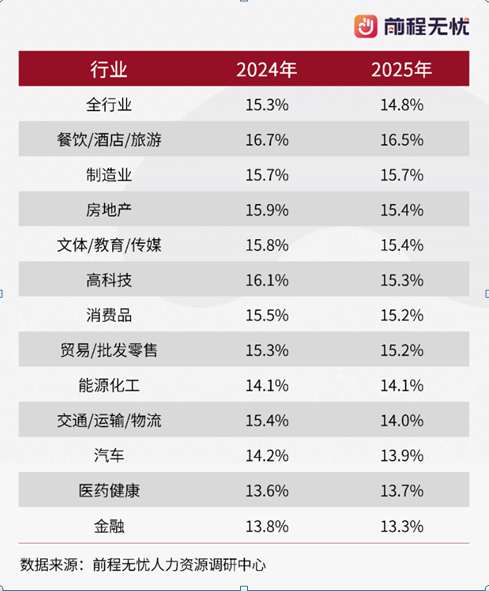
Core Insights - The overall employee turnover rate in 2025 is projected to decrease to 14.8%, down from 15.3% in 2024, indicating a trend towards a more stable labor market after recent fluctuations [1][3]. Industry Analysis - The decline in turnover rates is influenced by external economic conditions rather than solely increased employee loyalty. Companies are controlling labor costs and reducing hiring, leading employees to perceive higher risks and opportunity costs associated with job changes [3]. - The report identifies the top three industries with the highest turnover rates in 2025: - Hospitality/Tourism at 16.5% - Manufacturing at 15.7% - Real Estate at 15.4% [4]. - The manufacturing sector's turnover rate remains at 15.7%, linked to industry upgrades and a greater desire to retain skilled workers, although high turnover in basic assembly line positions persists [4]. - The real estate sector's turnover rate has decreased from 15.9% in 2024, reflecting ongoing personnel optimization and transformation within the industry [4]. - The transportation/logistics sector shows the most significant decline in turnover, dropping 1.4 percentage points to 14.0%, indicating a more stable employment ecosystem as logistics systems mature [4]. - A comparison of turnover rates across various industries shows a general decline, with notable changes in the following sectors: - High-tech: from 16.1% to 15.3% - Consumer goods: from 15.5% to 15.2% - Trade/Wholesale: from 15.3% to 15.2% - Automotive: from 14.2% to 13.9% [5]. City-Level Insights - Turnover rates in 2025 have decreased across all cities compared to 2024, with a narrowing gap between first-tier cities (e.g., Beijing, Shanghai, Shenzhen) and new first-tier cities (e.g., Chengdu, Hangzhou). This trend suggests that talent mobility is becoming more balanced and not solely favoring major metropolitan areas [5].
美国对俄制裁放大招,500%关税逼全球选边,中国直面三重冲击
Sou Hu Cai Jing· 2026-01-13 06:05
Core Viewpoint - The "Sanctioning Russia Act of 2025" aims to fundamentally reshape global sanctions logic, transitioning from targeted punishments to forcing countries to choose sides, with severe penalties for those continuing to engage with Russian energy products [1][3]. Summary by Sections Section 1: Direct Sanctions on Russia - The act imposes punitive tariffs of no less than 500% on nearly all Russian imports, including previously exempt essential goods like agricultural fertilizers, with a goal to fully ban Russian uranium by 2028 [1]. - It includes stringent measures against the Russian Central Bank, freezing its assets in the U.S. and prohibiting transactions with U.S. entities, while also targeting major Russian banks and financial institutions to cut off their access to capital and the dollar system [1]. - The sanctions list has been expanded to include key figures in the Russian government, military, and energy sectors, employing asset freezes and transaction bans to enhance accountability [1]. Section 2: Secondary Sanctions on Third Countries - The act's most threatening aspect is the secondary sanctions clause, which imposes a 500% tax on all goods and services exported to the U.S. from countries that knowingly purchase Russian energy products [3]. - This clause applies indiscriminately, effectively acting as a trade embargo on countries reliant on exports to the U.S., which could devastate their economies [3]. - The vague definition of "knowingly" allows the U.S. to interpret and expand the sanctions scope, potentially penalizing countries that indirectly engage with Russian energy through third parties [3]. - China is explicitly excluded from any exemptions, facing heightened tariff threats despite the act's national security waiver provisions [3]. Section 3: Risks for China - China faces significant risks across trade, finance, and energy sectors due to the act, as it attempts to draw China into a geopolitical conflict between the U.S. and Russia [5]. - The potential implementation of 500% tariffs could drastically reduce China's exports to the U.S., which reached $540 billion in 2024, affecting key sectors like electrical equipment and textiles [7]. - Anticipated tariffs may lead U.S. importers to shift orders to other regions, increasing costs and extending settlement periods for Chinese exporters, creating long-term negative effects [7]. - Financially, Chinese banks may need to limit dealings with Russia to avoid U.S. sanctions, complicating trade financing and cross-border transactions, which could slow down trade growth with Russia [7]. - In the energy sector, China must navigate a dilemma between reducing Russian energy imports to maintain access to the U.S. market or continuing its current procurement levels and facing severe tariffs [7]. - The act represents a strategic tool for the U.S. to bind global energy trade to geopolitical objectives, compelling countries to comply with U.S. strategic arrangements [7].

前程无忧报告:离职率连续三年下降
Jing Ji Guan Cha Bao· 2026-01-13 04:35
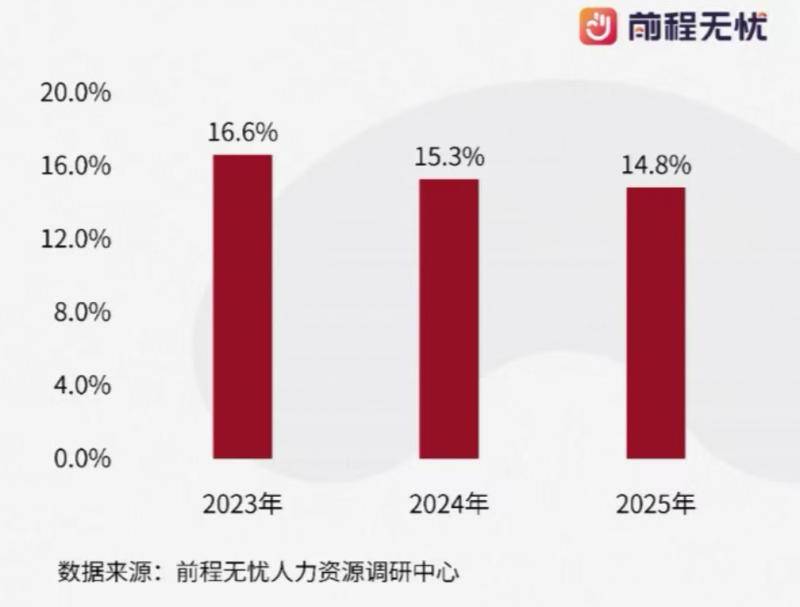
Core Insights - The overall employee turnover rate in 2025 decreased to 14.8%, marking a three-year decline, with previous rates at 16.6% in 2023 and 15.3% in 2024 [1][2] - The decline in turnover is attributed to external economic factors rather than increased employee loyalty, as companies are implementing cost-cutting strategies and reducing hiring, leading to fewer job opportunities [1] - Employees are exhibiting a risk-averse mentality, preferring to remain in their current positions due to perceived risks and opportunity costs associated with job changes [1] Industry Analysis - The industries with the highest turnover rates in 2025 are: - Hospitality/Tourism with a turnover rate of 16.5% - Manufacturing at 15.7% - Real Estate at 15.4% [2] - The manufacturing sector's turnover rate is closely linked to industry upgrades, with pressures from carbon neutrality goals and digital transformation leading to adjustments in frontline worker positions [2] - The real estate sector continues to experience high turnover due to ongoing industry adjustments, despite a decrease from 15.9% the previous year, indicating ongoing personnel optimization and transformation efforts [2]
黑灯工厂的本质就是无人经济
3 6 Ke· 2026-01-13 03:54
Core Insights - The rise of fully automated companies is reshaping the economic landscape, leading to a potential future where human labor is largely obsolete [1][2][4] - The concept of a "post-human economy" is becoming a reality, with many companies operating without human employees, generating significant profits [2][4][19] - A classification framework has been developed to categorize companies based on their level of automation and integration of artificial intelligence, revealing a spectrum of operational models [9][10][14] Group 1: Automation Levels - Companies are categorized into five levels of automation, ranging from fully human-operated to fully automated operations, with Level 5 representing "dark factories" that operate without human intervention [21][24][30] - The framework indicates that many companies are moving towards higher levels of automation, with some achieving significant operational efficiency without human workers [14][19][62] Group 2: AI Integration Models - Five prototypes of AI integration have been identified, including AI-enhanced companies that improve existing products and AI-native operations that rely entirely on automation [26][28][29] - The trend shows a clear preference for companies that minimize human involvement, as they are perceived to be more efficient and scalable [60][62] Group 3: Investment Trends - Investment in the "unmanned economy" is projected to reach $368.5 billion by 2024, with a significant portion directed towards AI software companies and manufacturing automation [37][40][69] - The distribution of investments indicates a strong bias towards technologies that replace human labor, with 42% allocated to AI software and 31% to manufacturing automation [40][69] Group 4: Economic Implications - The unmanned economy creates wealth without generating employment opportunities, raising concerns about who benefits from this wealth [53][55] - The traditional economic model is disrupted, as production no longer guarantees job creation, leading to potential economic instability [53][55] Group 5: Future Scenarios - Several potential scenarios for the future of the unmanned economy are outlined, including gradual transitions to mixed models, accelerated automation leading to mass unemployment, and regulatory interventions to slow down automation [56][59] - The likelihood of an accelerated transition is emphasized, as the economic incentives for automation are strong and regulatory responses are often slow [59][60]