能源

Search documents
银河期货每日早盘观察-20251202
Yin He Qi Huo· 2025-12-02 01:32
Report Industry Investment Rating No information provided in the content. Core Views of the Report - The stock index futures still have the momentum to rebound, and the treasury bond futures should focus on the central bank's bond - buying scale. - In the agricultural products sector, the supply pressure of international soybeans increases, and the international sugar price has bottomed out, while the domestic sugar price is in a low - level shock. The oscillation in the oil sector continues. - In the ferrous metals sector, steel prices fluctuate within a range with cost support, coking coal and coke operate in a bottom - oscillating pattern, and iron ore should be treated with a high - level short - bias mindset. - In the non - ferrous metals sector, gold is in a strong - bias oscillation, and silver hits a new high. Platinum and palladium generally follow the upward trend of gold and silver, but there is a risk of callback. Summary According to Related Catalogs Financial Derivatives - **Stock Index Futures**: The market rebounded with increased trading volume. The index is expected to continue to rebound, and attention should be paid to the previous pressure levels. The trading strategies include short - term oscillating upward, conducting IM/IC 2512 long + ETF short cash - and - carry arbitrage, and using the double - buying option strategy [20][21]. - **Treasury Bond Futures**: The performance of treasury bond futures was divided on Monday. The central bank's open - market operation led to a net withdrawal of short - term liquidity. The 11 - month official manufacturing PMI rebounded slightly. The bond market is expected to continue to oscillate in the short term, and the previous long positions are recommended to be closed at high points [23][24][25]. Agricultural Products - **Protein Meal**: The supply pressure of international soybeans increases, and the domestic supply may remain high. The price of rapeseed meal is expected to oscillate. The option strategy is to sell a wide - straddle [28][29]. - **Sugar**: Internationally, the sugar production in Brazil may be lower than expected, and the international sugar price is expected to oscillate at the bottom with a slightly upward trend. Domestically, the new sugar production increases, but the high production cost provides support. The trading strategies include short - term bottom - oscillating, conducting 1 - month long and 5 - month short arbitrage, and selling put options at low levels [35][36]. - **Oilseeds and Oils**: The production of Malaysian palm oil decreased slightly in November, and the export was weak. The inventory is expected to gradually decrease. The price of soybean oil follows the overall trend, and the domestic rapeseed oil inventory is expected to continue to decline. The recommended strategy is to conduct short - term low - buying and high - selling band operations [37][38][39]. - **Corn/Corn Starch**: The US corn futures fell. The domestic northeast corn price is strong, and the north China price is weak. The 01 - contract corn oscillates at a high level. The trading strategies include short - term long on the 03 - contract corn on dips, short on the 01 - contract corn at high points, and waiting for dips on the 05 and 07 - contract corn [40][41]. - **Hogs**: The slaughter rhythm of large - scale enterprises has slowed down, but the overall supply pressure still exists. The recommended strategies are a short - bias mindset and selling a wide - straddle [43]. - **Peanuts**: The peanut spot price is stable, and the futures price oscillates at a high level. The trading strategies include short - selling the 01 - contract peanut at high points, waiting and seeing on the 05 - contract peanut, conducting 1 - 5 contract reverse arbitrage, and selling the pk601 - P - 7600 option [45][47]. - **Eggs**: The demand is average, and the egg price is mainly stable. The in - production laying - hen inventory is still high. The recommended strategy is to build long positions on the far - month contract on dips [48][49][50]. - **Apples**: The apple inventory is low, and the fundamentals are strong. Considering the high price of the 01 - contract and the approaching delivery, it is recommended to wait and see [51]. - **Cotton - Cotton Yarn**: The new cotton supply increases, and the demand enters the off - season. The cotton price is expected to oscillate in the short term [55]. Ferrous Metals - **Steel**: The steel price oscillates within a range with cost support. The trading strategies include maintaining an oscillating - upward trend, conducting the coil - coal ratio arbitrage, and waiting and seeing on options [59][60]. - **Coking Coal and Coke**: The market is operating at the bottom. The trading strategies include lightly buying far - month contracts on dips, stopping profit on the 1/5 reverse arbitrage of coking coal, and waiting and seeing on options [61][62]. - **Iron Ore**: The price is expected to be treated with a high - level short - bias mindset. The supply is loose in the fourth quarter, and the demand is weak. The trading strategy is to be short - biased at high levels [64]. - **Ferroalloys**: The short - term rebound is driven by cost, but the future demand pressure suppresses the rebound height. The option strategy is to sell an out - of - the - money straddle [67][68]. Non - Ferrous Metals - **Gold and Silver**: Gold is in a strong - bias oscillation, and silver hits a new high. The trading strategies include holding long positions on gold below the 5 - day moving average, and for silver, aggressive investors can hold long positions against the 5 - day moving average, while conservative investors can adjust the stop - profit point. Buying out - of - the - money call options is also recommended [70][71]. - **Platinum and Palladium**: They generally follow the upward trend of gold and silver, but there is a risk of callback due to arbitrage. The trading strategies include holding long positions on platinum following gold and silver, being cautious about the callback risk, having a neutral view on palladium, conducting long platinum - short palladium ratio arbitrage, and buying out - of - the - money call options [73][74]. - **Copper**: The Japanese central bank's hawkish remarks trigger concerns about global liquidity tightening. The copper price may experience a short - term pull - back but has a long - term upward trend. The trading strategy is to take partial profit on long positions below 86,000 yuan/ton and then buy back on dips [77][78]. - **Alumina**: The short - term maintenance has limited impact. The price is expected to be in a weak - bias oscillation. The trading strategies include waiting and seeing on arbitrage and options [80][82]. - **Electrolytic Aluminum**: The macro and micro factors resonate, and the aluminum price is in a strong - bias oscillation. The trading strategy is to be bullish on the medium - term price on dips [85][86]. - **Cast Aluminum Alloy**: It oscillates strongly following the aluminum price. The trading strategies include waiting and seeing on arbitrage and options [88][89]. - **Zinc**: The price fluctuates widely. The trading strategy is to take partial profit on profitable long positions and be vigilant about macro factors [91][93]. - **Lead**: The price oscillates within a range. No specific trading strategies are recommended in the text [95].
能源化工期权:能源化工期权策略早报-20251202
Wu Kuang Qi Huo· 2025-12-02 00:58
1. Report Industry Investment Rating There is no information about the report industry investment rating in the provided content. 2. Core Viewpoints of the Report - The energy - chemical sector is mainly divided into energy, alcohols, polyolefins, rubber, polyesters, alkalis, and others. For each sector, options strategies and suggestions are provided for selected varieties. Each options variety has an options strategy report written according to the underlying market analysis, options factor research, and options strategy suggestions [9]. - The overall strategy is to construct an options portfolio strategy mainly based on sellers, as well as spot hedging or covered strategies to enhance returns [3]. 3. Summary According to Relevant Catalogs 3.1 Futures Market Overview - The report provides the latest prices, price changes, price change percentages, trading volumes, volume changes, open interests, and open interest changes of multiple energy - chemical option underlying futures contracts, including crude oil, liquefied petroleum gas (LPG), methanol, ethylene glycol, etc. [4] 3.2 Options Factors 3.2.1 Volume - to - Open - Interest PCR - The report presents the volume - to - open - interest PCR data of various options varieties, including trading volume, volume change, open interest, open interest change, volume PCR, volume PCR change, open interest PCR, and open interest PCR change, which are used to describe the strength of the options underlying market and the turning point of the underlying market [5]. 3.2.2 Pressure and Support Levels - The report shows the pressure points, pressure point offsets, support points, support point offsets, maximum call option positions, and maximum put option positions of various options varieties from the perspective of options factors, which can be used to analyze the pressure and support levels of the underlying options [6]. 3.2.3 Implied Volatility - The report provides the at - the - money implied volatility, weighted implied volatility, weighted implied volatility change, annual average implied volatility, call option implied volatility, put option implied volatility, 20 - day historical volatility, and the difference between implied and historical volatility of various options varieties [7]. 3.3 Options Strategies and Suggestions 3.3.1 Energy - Related Options - **Crude Oil**: The fundamental situation is that the demand of US refineries has stabilized and rebounded. During the recent oil price decline, shale oil production slightly decreased, and refineries increased the diesel output rate due to arbitrage demand. The overall on - balance - sheet inventory remains healthy. OPEC's short - term supply is flat, Libya's exports have quickly recovered, and CPC Terminal's exports remain weak. Russia's exports are not hindered. In the Middle East, satellite data shows that Kuwait's refinery resumed operations earlier than expected, which weakened the strong support for low - sulfur fuel oil. The price trend shows short - term weak fluctuations in August, continued weakness and a bearish trend in September followed by a gradual rebound, a sharp decline and then a rebound in October, and a continued shock followed by a rebound and then a sharp decline in November. The implied volatility of crude oil options fluctuates above the average level. The options open interest PCR is below 0.80, indicating a weak market. The pressure level is 540 and the support level is 430. Suggested strategies include constructing a bearish spread strategy of put options, a short - biased call + put options combination strategy, and a long collar strategy for spot hedging [8]. - **LPG**: The US propane inventory is starting to decline but remains at a historically high level. The cost - end crude oil is under pressure from oversupply on one hand and is disturbed by geopolitical issues on the other hand. The LPG price fluctuated between $62 - 66 this week with frequent ups and downs. The price trend shows a sharp decline in September, a rebound and then a slight shock in October, and a continued bullish trend in November, showing a market situation of an oversold rebound with pressure above. The implied volatility of LPG options has dropped significantly to near the lower - than - average level. The options open interest PCR is around 0.80, indicating a weak market. The pressure level is 4500 and the support level is 4150. Suggested strategies include a short - biased call + put options combination strategy and a long collar strategy for spot hedging [10]. 3.3.2 Alcohol - Related Options - **Methanol**: The port inventory is 136.35 tons, a decrease of 11.58 tons compared to the previous period. The market sentiment has improved, and the inventory is accelerating to be depleted due to a decrease in arrivals. The enterprise inventory is 37.37 tons, an increase of 1.5 tons compared to the previous period, and at a low level compared to the same period last year. The enterprise's pending orders are 23.07 tons, a decrease of 1.56 tons compared to the previous period. The price trend shows a weakening and bearish trend since August, a rebound after a low - level consolidation in September, a continued weak and bearish trend since October, and a decline followed by an increase in November, showing a situation of an oversold rebound with pressure above. The implied volatility of methanol options fluctuates around the historical average level. The options open interest PCR is below 0.60, indicating a weak and volatile market. The pressure level is 2300 and the support level is 2000. Suggested strategies include a bearish spread strategy of put options, a short - biased call + put options combination strategy, and a long collar strategy for spot hedging [10]. - **Ethylene Glycol**: The port inventory is 73.2 tons, unchanged from the previous period. The downstream factory inventory days are 15 days, an increase of 2.2 days compared to the previous period. In the short term, the arrival volume decreased last week, the departure volume is moderately low, and the expected inventory accumulation speed of the port has slowed down. There are more unexpected maintenance of domestic plants, and the expected arrival volume from overseas in December is expected to decrease, which has improved the expected balance sheet of ethylene glycol. The price trend shows a slight weak consolidation in August, a continued weak and bearish trend since September, a weak and bearish decline in October, and a low - level weak shock in November, showing a weak market situation with pressure above. The implied volatility of ethylene glycol options fluctuates around the lower - than - average level. The options open interest PCR is below 0.70, indicating strong short - selling power. The pressure level is 4500 and the support level is 3500. Suggested strategies include a bearish spread strategy of put options, a short - volatility strategy, and a long collar strategy for spot hedging [11]. 3.3.3 Polyolefin - Related Options - **Polypropylene**: The PE production enterprise inventory is 45.4 tons, a decrease of 9.80% compared to the previous period and an increase of 9.77% compared to the same period last year. The PE trader inventory is 4.71 tons, a decrease of 6.60% compared to the previous period. The PP production enterprise inventory is 54.63 tons, a decrease of 8.00% compared to the previous period and an increase of 15.79% compared to the same period last year. The PP trader inventory is 20.05 tons, a decrease of 6.04% compared to the previous period. The PP port inventory is 6.53 tons, a decrease of 0.76% compared to the previous period. The price trend shows a weak and slight fluctuation in August, a continued weak and bearish trend in September, an accelerated decline followed by a low - level shock in October, and a low - level weak consolidation followed by a rebound in November, showing a weak market situation with short - selling pressure above. The implied volatility of polypropylene options has dropped to around the average level. The options open interest PCR is around 0.70, indicating a weakening market. The pressure level is 7000 and the support level is 6300. Suggested strategies include a bearish spread strategy of put options and a long collar strategy for spot hedging [11]. 3.3.4 Rubber - Related Options - **Rubber**: It is expected that 10 - 11 tons of rubber warehouse receipts will expire and be delivered in mid - January, and the rubber inventory and warehouse receipts in the exchange will significantly decrease, with a low inventory level. The price trend shows a recovery and then a range - bound consolidation in August, a continued weak and bearish trend since September, a continued low - level consolidation in October, and a slight range - bound consolidation in November, showing a weak consolidation market situation with support below and pressure above. The implied volatility of rubber options has risen sharply and then dropped to near the lower - than - average level. The options open interest PCR is below 0.60. The pressure level has dropped significantly to 16000 and the support level is 15000. Suggested strategies include a short - neutral call + put options combination strategy [12]. 3.3.5 Polyester - Related Options - **PTA**: As of November 21, the overall social inventory of PTA (excluding credit warehouse receipts) is 223 tons, a decrease of 3.3 tons compared to the previous period. The downstream load remains at a high level, and the expected maintenance volume of PTA in November is expected to increase, and it is expected to enter a phased inventory - depletion stage. The price trend shows a decline followed by a slight consolidation and then a rapid rebound, a continued weak and bearish trend in September, a decline followed by an increase and then a slight shock in October, and a gradual rebound and recovery in November, showing a rebound and recovery market situation with pressure above. The implied volatility of PTA options fluctuates at a higher - than - average level. The options open interest PCR is around 0.70, indicating a volatile market. The pressure level is 4700 and the support level is 4300. Suggested strategies include a short - neutral call + put options combination strategy [12]. 3.3.6 Alkali - Related Options - **Caustic Soda**: By the end of the month, the supply is sufficient. The downstream alumina market has generally low enthusiasm for entering the market recently, and the market is still in a stalemate, with most purchases of caustic soda on an as - needed basis. It is expected that the alumina market will show a weakening and fluctuating trend in the later period. In addition, data shows that the cumulative export volume from January to October 2025 is 2944386.820 tons, a year - on - year increase of 41.93%. The cumulative import volume from January to October 2025 is 338.803 tons, a year - on - year decrease of 94.57%. The price trend shows a rapid decline followed by a short - term bullish upward movement and then a high - level shock in August, a continuous decline since September, an accelerated decline in October, and a low - level weak and bearish trend in November, showing a weak and bearish market situation with pressure above recently. The implied volatility of caustic soda options fluctuates at a relatively high level. The options open interest PCR is below 0.60, indicating a weak market. The pressure level is 3000 and the support level is 2200. Suggested strategies include a bearish spread strategy and a long collar strategy for spot hedging [13]. - **Soda Ash**: As of November 28, 2025, the in - factory inventory of soda ash is 158.74 tons, a decrease of 5.70 tons compared to the previous period. The available inventory days are 13.16 days, a decrease of 0.47 days compared to the previous period. The in - factory inventory of heavy soda ash is 84.68 yuan/ton, a decrease of 4.05 yuan/ton compared to the previous period. The in - factory inventory of light soda ash is 74.06 yuan/ton, a decrease of 1.65 yuan/ton compared to the previous period. The price trend shows a continued weak consolidation since August, a low - level slight fluctuation and a weak trend in September, a continued weak trend in October, and a low - level weak shock in November, showing a low - level weak shock market situation with pressure above and support below. The implied volatility of soda ash options fluctuates at a relatively high historical level. The options open interest PCR is below 0.60, indicating strong short - selling pressure. The pressure level is 1860 and the support level is 1100. Suggested strategies include a bearish spread strategy, a short - volatility combination strategy, and a long collar strategy for spot hedging [13]. 3.3.7 Other Options - **Urea**: The enterprise inventory is 143.72 tons, a decrease of 4.64 tons compared to the previous period. The domestic reserve demand and export preparation have driven the depletion of enterprise inventory. The port inventory is 10 tons, unchanged from the previous period, and it is expected that the port collection will gradually increase in the future. The price trend shows a wide - range and large - amplitude fluctuation in August, a gradual weakening in September, a low - level weak shock in October, and a gradual rebound and recovery in November, showing a low - level shock and then a gradual rebound market situation. The implied volatility of urea options fluctuates slightly around the historical average level. The options open interest PCR is below 0.60, indicating strong short - selling pressure. The pressure level is 1800 and the support level is 1600. Suggested strategies include a short - bullish call + put options combination strategy and a long collar strategy for spot hedging [14].
新版基础设施REITs项目行业范围清单发布 商业办公设施、城市更新设施等被纳入
Zhong Guo Zheng Quan Bao· 2025-12-01 20:42
(REITs)项目申报要求》,此次清单将基础设施REITs进一步扩围至更多行业领域和资产类型。具体 来看,在消费基础设施领域新增体育场馆项目,以及商旅文体健等多业态融合的商业综合体项目、四星 级及以上酒店项目。此外,新增商业办公设施,包括超大特大城市的超甲级、甲级商务楼宇项目;新增 城市更新设施,包括老旧街区、老旧厂区更新改造项目,以及涵盖上述多种资产类型的城市更新综合设 施项目。 国家发展改革委表示,清单范围内符合条件的项目应严格按照常态化推荐发行阶段有关政策要求进行申 报。各省级发展改革部门、有关中央企业要坚持"优中选优",严格把关项目质量,强化风险意识,高质 量做好项目申报工作。 国家发展改革委政策研究室副主任、新闻发言人李超日前表示,将继续加强与证监会的协同配合,进一 步优化申报推荐流程,动态完善有关项目申报要求,提高工作质效,在严防风险、严把质量的基础上, 支持更多符合条件的项目发行上市,更好推动基础设施REITs支持实体经济发展。 (文章来源:中国证券报) 国家发展改革委12月1日消息,国家发展改革委对基础设施REITs发行范围作了进一步拓展,形成了 《基础设施领域不动产投资信托基金(REITs) ...
新版基础设施REITs项目行业范围清单发布
Zhong Guo Zheng Quan Bao· 2025-12-01 20:25
● 本报记者 欧阳剑环 国家发展改革委12月1日消息,国家发展改革委对基础设施REITs发行范围作了进一步拓展,形成了 《基础设施领域不动产投资信托基金(REITs)项目行业范围清单(2025年版)》,以更好发挥基础设 施REITs盘活存量资产、促进投资良性循环的作用。 (REITs)项目申报要求》,此次清单将基础设施REITs进一步扩围至更多行业领域和资产类型。具体 来看,在消费基础设施领域新增体育场馆项目,以及商旅文体健等多业态融合的商业综合体项目、四星 级及以上酒店项目。此外,新增商业办公设施,包括超大特大城市的超甲级、甲级商务楼宇项目;新增 城市更新设施,包括老旧街区、老旧厂区更新改造项目,以及涵盖上述多种资产类型的城市更新综合设 施项目。(下转A02版) (上接A01版)国家发展改革委表示,清单范围内符合条件的项目应严格按照常态化推荐发行阶段有关 政策要求进行申报。各省级发展改革部门、有关中央企业要坚持"优中选优",严格把关项目质量,强化 风险意识,高质量做好项目申报工作。 国家发展改革委政策研究室副主任、新闻发言人李超日前表示,将继续加强与证监会的协同配合,进一 步优化申报推荐流程,动态完善有关项 ...
宁波能源集团股份有限公司关于2025年11月对外提供担保的进展公告
Shang Hai Zheng Quan Bao· 2025-12-01 19:13
证券代码:600982 证券简称:宁波能源 公告编号:2025-068 债券代码:242520.SH 债券简称:GC甬能Y1 宁波能源集团股份有限公司关于2025年11月对外提供担保的进展公告 本公司董事会及全体董事保证本公告内容不存在任何虚假记载、误导性陈述或者重大遗漏,并对其内容 的真实性、准确性和完整性承担法律责任。 至公告披露日,公司对金通租赁的担保余额为93,422.55万元,占公司最近一期经审计净资产(归母所有 者权益)的比例为21.53%,担保金额及担保余额在2024年年度股东会授权范围内。 重要内容提示: ● 担保对象及基本情况 ■ ● 累计担保情况 ■ 一、担保情况概述 (一)担保的基本情况 近日,宁波能源集团股份有限公司(以下简称"宁波能源"或"公司")签订担保协议,为宁波金通融资租 赁有限公司(以下简称"金通租赁")提供合计44,390万元人民币的连带责任保证。 上述担保事项具体情况如下: ■ (二)内部决策程序 公司第八届董事会第二十七次会议及2024年年度股东会均审议通过了《关于公司年度担保预计的议 案》,具体详见公司2025年4月22日、2025年5月14日于上海证券交易所网站(w ...

永泰能源集团股份有限公司关于召开2025年第三次临时股东会的通知
Shang Hai Zheng Quan Bao· 2025-12-01 18:55
Group 1 - The company will hold its third extraordinary general meeting of shareholders on December 22, 2025, at 14:30 in Taiyuan, Shanxi Province [2][10][44] - The voting method for the meeting will combine on-site and online voting through the Shanghai Stock Exchange's system [3][4][7] - Shareholders must register for the meeting between December 18 and 19, 2025, and can authorize a representative to attend [13][14] Group 2 - The company plans to repurchase its A-shares with a total amount between RMB 30 million and RMB 50 million [18][22] - The repurchase price will not exceed RMB 2.50 per share, which is 150% of the average trading price over the last 30 trading days prior to the board's decision [20][32] - The repurchased shares will be used for cancellation to reduce the company's registered capital [25][31] Group 3 - The repurchase will be funded by the company's own and self-raised funds [19][33] - The repurchase period will last for 12 months from the date of shareholder approval [28][42] - The company has no plans for share reductions by major shareholders in the next three to six months [22][35]

热点思考 | 日本宽财政,市场忽视了什么?(申万宏观·赵伟团队)
赵伟宏观探索· 2025-12-01 16:05
Core Viewpoint - The article discusses the economic stimulus plan introduced by Prime Minister Kishi Sanae, which is expected to weaken the yen and increase inflationary pressures in Japan. The combination of expansive fiscal policy and tight monetary policy may lead to risks of a reversal in carry trade, necessitating caution regarding the divergence in monetary policies between the Bank of Japan and the Federal Reserve [2][8]. Group 1: Economic Stimulus Plan - Kishi Sanae's economic stimulus plan amounts to 21.3 trillion yen (approximately 135 billion USD), slightly exceeding market expectations of 17 trillion yen. The fiscal deficit rate for Japan is projected to rise significantly in 2026 [3][9]. - The stimulus plan focuses on three main areas: 55% for inflation subsidies and social welfare (11.7 trillion yen), 34% for strategic industry investments (7.2 trillion yen), and 8% for defense and diplomacy (1.7 trillion yen) [3][15]. Group 2: Impact on GDP and Inflation - The expansive fiscal policy may raise Japan's GDP growth by 0.5 percentage points in 2026, which is lower than the contributions expected from the US (0.6 points) and Germany (0.63 points). The fiscal deficit rate is expected to increase by 1.77 percentage points in Japan, compared to 1.0 points in the US and 0.84 points in Germany [4][23]. - While the inflation subsidies may temporarily lower the overall CPI growth by 0.7 percentage points in early 2026, they could simultaneously increase core inflation pressures in the medium term due to rising real incomes and a weaker yen [4][29]. Group 3: Risks of Carry Trade Reversal - The combination of high inflation and a weak yen makes it difficult for Kishi's expansive fiscal policy to coexist with the Bank of Japan's loose monetary policy. Recent hawkish signals from the Bank of Japan suggest a potential shift towards interest rate hikes [5][35]. - The divergence between the yen and US dollar interest rates, with the yen reaching a low of 157.9 against the dollar while the US-Japan 2-year interest rate spread narrows to around 2.5%, indicates that the market has priced in risks associated with Japan's fiscal expansion [5][41]. - The current conditions suggest a potential for a reversal in carry trade, although the impact may be milder compared to August 2024. Factors such as net short positions in the yen, the degree of divergence between exchange rates and interest rates, volatility, and triggering conditions should be monitored [5][47].


海内外企业家羊城共话中国经济韧性与新质生产力
Zhong Guo Xin Wen Wang· 2025-12-01 13:19
Group 1: Economic Resilience and New Productive Forces - The conference in Guangzhou focused on the resilience of the Chinese economy and the concept of new productive forces, with participation from domestic and international entrepreneurs sharing their insights on China's economic development [1][4]. - Entrepreneurs emphasized the importance of traditional industries enhancing competitiveness and sustainable development, urging the adoption of new technologies and self-improvement [3][4]. Group 2: Insights from Chinese Entrepreneurs - Cao Dewang, founder of Fuyao Glass, highlighted that traditional manufacturing must maintain confidence and determination to navigate through changing times, noting that Fuyao Glass has become the world's largest automotive glass supplier with nearly 40% of the global market share [3][4]. - He also stressed the social responsibility of enterprises, stating that they should create value for the country and society, exemplified by his establishment of Fuyao University with a 10 billion yuan investment [3]. Group 3: Cultural and Tourism Development - Xie Tieniu, chairman of Zhengjia Group, discussed the essence of tourism as culture, advocating for projects that immerse international audiences in Chinese civilization, aligning with China's 14th Five-Year Plan to build a "tourism powerhouse" [4]. - He proposed a shift in the cultural tourism industry towards valuing cultural spirit and innovative experiences, moving away from reliance on natural scenery and historical sites [4]. Group 4: Foreign Perspectives on China's Economic Growth - Giovanni Di Giovanni, chairman of Eni China, noted that China's strategic decisions in cultivating new productive forces present dual opportunities for the energy sector, emphasizing the transition towards green innovation [5]. - He remarked on China's modernization process providing multinational companies with stable growth opportunities, supported by a large market and unique advantages in the new energy sector [5].


份额规模齐创历史新高!可月月分红的港股红利低波ETF获资金连续7日加仓
Ge Long Hui· 2025-12-01 12:39
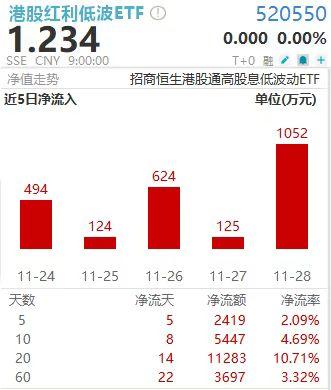
Group 1 - The core viewpoint of the articles highlights the increasing preference for high-dividend assets in the Hong Kong stock market, particularly in the context of low interest rates and economic uncertainty [1][3] - As of November 28, the Hong Kong Dividend Low Volatility ETF (520550) has seen a net inflow of over 34 million, marking a cumulative net inflow of over 840 million since the beginning of the year, with the latest scale reaching nearly 1.2 billion, achieving historical highs in both net inflow and share size [1][3] - The ETF employs a "high dividend + low volatility" dual-factor stock selection strategy, which includes a low management fee of 0.2%, enhancing cost efficiency for investors [3] Group 2 - The ETF's monthly dividend mechanism and T+0 trading feature further improve capital efficiency, making it an attractive option for large institutional investors, including insurance funds [3] - The portfolio structure focuses on mature industries such as finance and energy to provide a safety net, while implementing a 5% weight limit on individual stocks to achieve risk diversification and avoid "dividend traps" [3] - Retail investors can access the ETF through feeder funds (Class A: 024029/Class C: 024030) for investment opportunities [3]
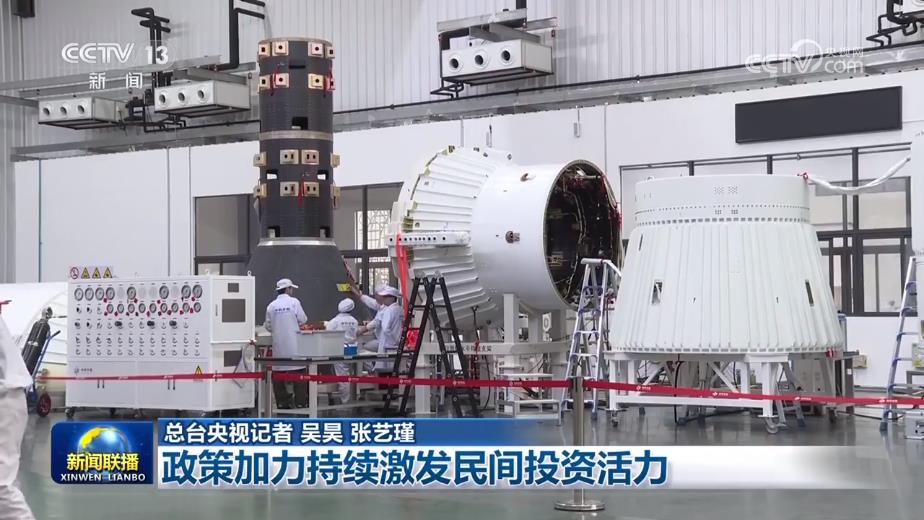
政策加力持续激发民间投资活力
Yang Shi Wang· 2025-12-01 12:24
Group 1 - The core viewpoint of the articles highlights the significant growth and potential of private investment in China, driven by relaxed market access and strengthened resource guarantees [1] - In the first ten months of this year, private investment in infrastructure has increased by 4.5% year-on-year, accounting for 22.6% of total infrastructure investment, which is a 1 percentage point increase compared to the same period last year [1] - Over 2,000 projects have attracted private capital participation, with a total investment exceeding 2.6 trillion yuan [1] Group 2 - Private investment is accelerating in new fields and sectors, with the highest private capital share in nuclear power projects in Guangdong reaching 20% [3] - In Henan, 5.3 billion yuan of every 10 billion yuan in private investment this year has been directed towards emerging industries [3] - The private investment in the automotive manufacturing, railway, shipbuilding, aerospace, and other transportation equipment manufacturing sectors has shown double-digit growth in the first ten months [3]