
证券业

Search documents
存款搬家走到哪了?
2025-09-23 02:34
Summary of Conference Call Records Industry Overview - The records focus on the banking and financial industry, particularly the trends in deposit migration and its implications for the capital market. Key Points and Arguments 1. **Deposit Migration Trends** - As of August, M1 growth increased by 0.4 percentage points to 6%, while M2 growth remained stable, indicating a continued trend towards liquidity in deposits. Corporate demand for current deposits rose to 6.7%, while household current deposit growth slightly decreased to 6.3% [2][3][4] 2. **Potential for Capital Market Inflows** - The potential scale for household deposits migrating to equity markets is estimated at 5 to 7 trillion RMB. However, the process is complex and not straightforward, influenced by various factors including liquidity in the financial system [2][3][12] 3. **Impact of Monetary Policy** - The central bank's liquidity provision remains ample, with an increase of 0.4 trillion RMB in August. Interbank market rates are maintained at around 1.4% to 1.5%, indicating a loose monetary environment. However, a net decrease of 110 billion RMB in the central bank's debt to other financial companies may signal regulatory shifts [4][11] 4. **Cross-Border Capital Flows** - The RMB exchange rate remained strong, with a shift from capital outflows to inflows in the A-share market. This change is attributed to improved foreign capital conditions and a reversal of previous outflow trends [5][9] 5. **Non-Bank Deposit Increases** - Non-bank deposits increased by 550 billion RMB year-on-year in August, primarily from funds entering brokerage margin accounts and fixed-income product accounts. This indicates a shift in investment preferences towards non-bank financial products [6][7] 6. **Investor Risk Appetite** - There is a notable increase in residents' risk appetite, with a shift from fixed-term to current and equity assets. The ratio of household savings to stock market capitalization has decreased from 210% to 157%, suggesting room for further capital market inflows [8][12] 7. **Market Dynamics and Investor Sentiment** - Despite the potential for deposit migration, the pace has slowed due to factors such as preemptive fiscal and credit policies, increased investor divergence post-stock market rises, and a slowdown in export growth affecting capital flows [3][10][11] 8. **Future Outlook on Deposit Migration** - While the current pace of deposit migration is slowing, the potential remains significant. The estimated 5 to 7 trillion RMB potential for migration is expected to continue, albeit with fluctuations influenced by fiscal policies, market performance, and export dynamics [12] Other Important Insights - The trend of passive equity fund growth indicates a shift in investor behavior, with passive funds or ETFs becoming the primary choice for market entry [7] - The overall liquidity environment and regulatory changes will play crucial roles in shaping future capital market dynamics and deposit migration trends [4][11]
LPR连续4月“按兵不动” 央行表态货币政策立场是支持性的
Sou Hu Cai Jing· 2025-09-22 23:18
Core Viewpoint - The LPR rates for September remain unchanged, with the 1-year LPR at 3.0% and the 5-year LPR at 3.5%, consistent since May, indicating a stable monetary policy environment in China [1][3][5] Summary by Relevant Sections LPR Rates and Market Expectations - The LPR rates have been stable for five consecutive months, reflecting a lack of change in the 7-day reverse repurchase rate, which has remained at 1.40% since May [3][4] - Analysts suggest that the unchanged LPR rates align with market expectations, as banks lack the incentive to lower LPR quotes due to rising market interest rates and historical low net interest margins [3][5] Monetary Policy Context - The People's Bank of China (PBOC) emphasizes a supportive monetary policy stance, aiming for a balance between domestic needs and external factors, particularly in light of the recent Federal Reserve rate cut [2][7] - The PBOC's approach is to maintain liquidity and support economic recovery while monitoring macroeconomic data for potential adjustments [7][8] Future Outlook - Analysts predict a possibility of new rounds of interest rate cuts and reserve requirement ratio reductions in the fourth quarter, driven by the need to stimulate domestic demand and stabilize the real estate market [5][6] - The PBOC may consider further lowering the LPR to alleviate high mortgage rates and boost housing demand, which is seen as crucial for reversing negative market expectations [6][8]
陆家嘴财经早餐2025年9月23日星期二
Wind万得· 2025-09-22 22:26
Financial Sector - As of June 2023, China's banking sector total assets reached nearly 470 trillion yuan, ranking first globally; the stock and bond market sizes are second in the world [2] - The total assets of the banking and insurance sectors exceed 500 trillion yuan, with an average annual growth of 9% over the past five years [2] - The A-share technology sector now accounts for over 25% of the total market capitalization, with long-term funds holding approximately 21.4 trillion yuan in A-share market value, a 32% increase since the end of the 13th Five-Year Plan [2] Military and Defense - The Chinese Navy's J-15T, J-35, and KJ-600 carrier-based aircraft have successfully completed their first catapult launches and landings on the Fujian aircraft carrier, marking a significant milestone in naval development [3] Economic Policy and Regulation - The People's Bank of China has maintained the 1-year LPR at 3% and the 5-year LPR at 3.5% for four consecutive months, with potential for new interest rate cuts in the fourth quarter [4] - The Ministry of Finance is guiding local governments to implement a series of policies to support debt management and financing platform reforms [4] Capital Markets - The China Securities Regulatory Commission is accelerating the implementation of comprehensive capital market reforms, including improvements to the Sci-Tech Innovation Board and the Growth Enterprise Market [5] - A-shares saw collective gains, with the Shanghai Composite Index rising 0.22% to 3828.58 points, and the ChiNext Index increasing by 0.55% [5] Real Estate - The real estate sector is experiencing a decline in inventory value, with a total of 8.14 trillion yuan reported for major developers in the first half of 2025, down 4.6% from the end of 2024 [9] Steel Industry - The steel industry aims for an average annual growth of around 4% over the next two years, focusing on precise capacity control and prohibiting new capacity additions [8] Technology and Innovation - OpenAI is reportedly collaborating with companies like Luxshare Precision to develop consumer-grade AI devices, although specific details remain unconfirmed [11] - Media reports indicate that MediaTek has launched the Dimensity 9500 chip, which boasts a 33% performance increase and a 42% reduction in power consumption compared to its predecessor [11] International Relations - The U.S. and China are maintaining close communication between their leaders, with discussions ongoing regarding various issues [4]


每日债市速递 | 金融监管总局表示银行业保险业总资产超过500万亿元
Wind万得· 2025-09-22 22:26
Group 1: Open Market Operations - The central bank announced a 240.5 billion yuan 7-day reverse repurchase operation on September 22, with a fixed interest rate of 1.40% and a bid amount of 240.5 billion yuan, fully subscribed [1] - Additionally, a 300 billion yuan 14-day reverse repurchase operation was conducted using a fixed quantity and multi-price bidding method, marking the first such operation in nearly eight months [1] Group 2: Funding Conditions - The interbank market saw a continued improvement in funding conditions, with the overnight repo weighted average rate falling to around 1.42% [2] - The overnight funding quotes on the anonymous X-repo system also decreased to 1.43%, although supply remained at several hundred billion yuan [2] Group 3: Interest Rates and Debt Market - The latest one-year Loan Prime Rate (LPR) remained stable at 3.0%, while the five-year LPR also held steady at 3.5% [13] - The yield on major interbank bonds generally declined, with the 30-year futures contract rising by 0.22% and the 10-year contract increasing by 0.20% [12] Group 4: Financial Market Developments - The central bank successfully issued 60 billion yuan of 6-month central bank bills in Hong Kong at a winning rate of 1.72% [14] - The total scale of domestic bond ETFs surpassed 600 billion yuan, setting a new record [18]

四部门详解“十四五”金融业硬核成绩单
Shang Hai Zheng Quan Bao· 2025-09-22 18:48
Core Viewpoint - The Chinese banking sector has achieved significant milestones over the past five years, with a focus on maintaining financial stability and supporting economic recovery through a supportive monetary policy framework [7][8][9]. Group 1: Banking Sector Achievements - As of June 2023, China's banking sector total assets reached nearly 470 trillion yuan, ranking first in the world [9]. - The stock and bond markets are the second largest globally, while foreign exchange reserves have maintained the top position for 20 consecutive years [7][9]. - The growth rates for loans to technology-based SMEs, inclusive small micro loans, and green loans have exceeded 20% annually during the "14th Five-Year Plan" period [9]. Group 2: Monetary Policy and Financial Stability - The People's Bank of China emphasizes a supportive monetary policy stance, aiming for liquidity sufficiency and reduced financing costs to bolster consumption and investment [8][10]. - The number of financing platforms has decreased by over 60%, and financial debt has dropped by more than 50% compared to the beginning of 2023 [10]. - The bond market has maintained a low default rate, and the overall market operation remains stable [10][11]. Group 3: Financial Services to the Real Economy - The banking and insurance sectors have provided an additional 170 trillion yuan in funding to the real economy over the past five years [12][13]. - Key areas such as scientific research loans, long-term loans for manufacturing, and infrastructure loans have seen annual growth rates of 27.2%, 21.7%, and 10.1%, respectively [13]. - The balance of inclusive small micro enterprise loans has reached 36 trillion yuan, which is 2.3 times that of the end of the "13th Five-Year Plan" [13]. Group 4: Regulatory Enhancements - The financial regulatory framework has been strengthened through comprehensive oversight, including institutional, behavioral, functional, and continuous regulation [15]. - The financial sector has effectively managed risks, with a significant reduction in high-risk institutions and assets compared to peak levels [15]. - Support for affordable housing and rental housing projects has exceeded 1.6 trillion yuan, with loans for housing construction surpassing 7 trillion yuan [15]. Group 5: Foreign Exchange Market Developments - The foreign exchange market has shown stability, with cross-border receipts and payments reaching 14 trillion USD in 2024, a 64% increase from 2020 [21]. - The trading volume in the foreign exchange market is projected to reach 41 trillion USD in 2024, reflecting a 37% growth since 2020 [21]. - The proportion of the renminbi in cross-border trade has increased from 16% to nearly 30%, indicating enhanced market resilience [21][22].
“十四五”期间我国金融风险总体可控,金融体系稳健运行,服务实体经济的能力逐步增强
Sou Hu Cai Jing· 2025-09-22 17:27
Core Insights - The Chinese financial sector has shown significant growth and stability during the "14th Five-Year Plan" period, with total banking assets reaching nearly 470 trillion yuan, making it the largest in the world [1] - The A-share market's total market capitalization surpassed 100 trillion yuan for the first time in August, indicating enhanced resilience and risk management capabilities [1] - Financial risks are generally controllable, with a focus on addressing high-risk small financial institutions, real estate, and local government debt [3][4] Banking Sector - As of June 2023, China's banking sector total assets were nearly 470 trillion yuan, ranking first globally [1] - The number of high-risk small financial institutions has significantly decreased, with many provinces achieving "dynamic zero" for these institutions [3] Securities Market - The A-share market's total market capitalization exceeded 100 trillion yuan in August, reflecting improved market resilience [1] - The annualized volatility of the Shanghai Composite Index decreased by 2.8 percentage points compared to the "13th Five-Year Plan" period, now at 15.9% [1] Real Estate Sector - Financial support for housing projects exceeded 1.6 trillion yuan, aiding the construction and delivery of nearly 20 million housing units [4] - Adjustments in down payment ratios and mortgage rates are expected to save over 500 million households approximately 300 billion yuan in interest payments annually [4] Local Government Debt - The number of local financing platforms has decreased by over 60%, and the scale of financial debt has dropped by more than 50% compared to the beginning of 2023 [4] Foreign Exchange and Cross-Border Trade - China's cross-border payment scale reached 14 trillion yuan in 2024, a 64% increase from 2020, with an average annual growth rate 8 percentage points higher than the previous five-year period [6] - The trading volume in the foreign exchange market is projected to be 41 trillion yuan in 2024, a 37% increase from 2020 [6] Regulatory Environment - The China Securities Regulatory Commission has implemented strict measures to control risks, including significant penalties for financial misconduct, such as a record fine of 4.175 billion yuan against Evergrande and its auditing firm [7] - Approximately 7,000 zombie private equity firms have been cleared, and all problematic financial institutions have been addressed [7] Monetary Policy - The People's Bank of China emphasizes a supportive monetary policy stance, aiming to maintain liquidity and stabilize the financial market amid global economic fluctuations [8][9]
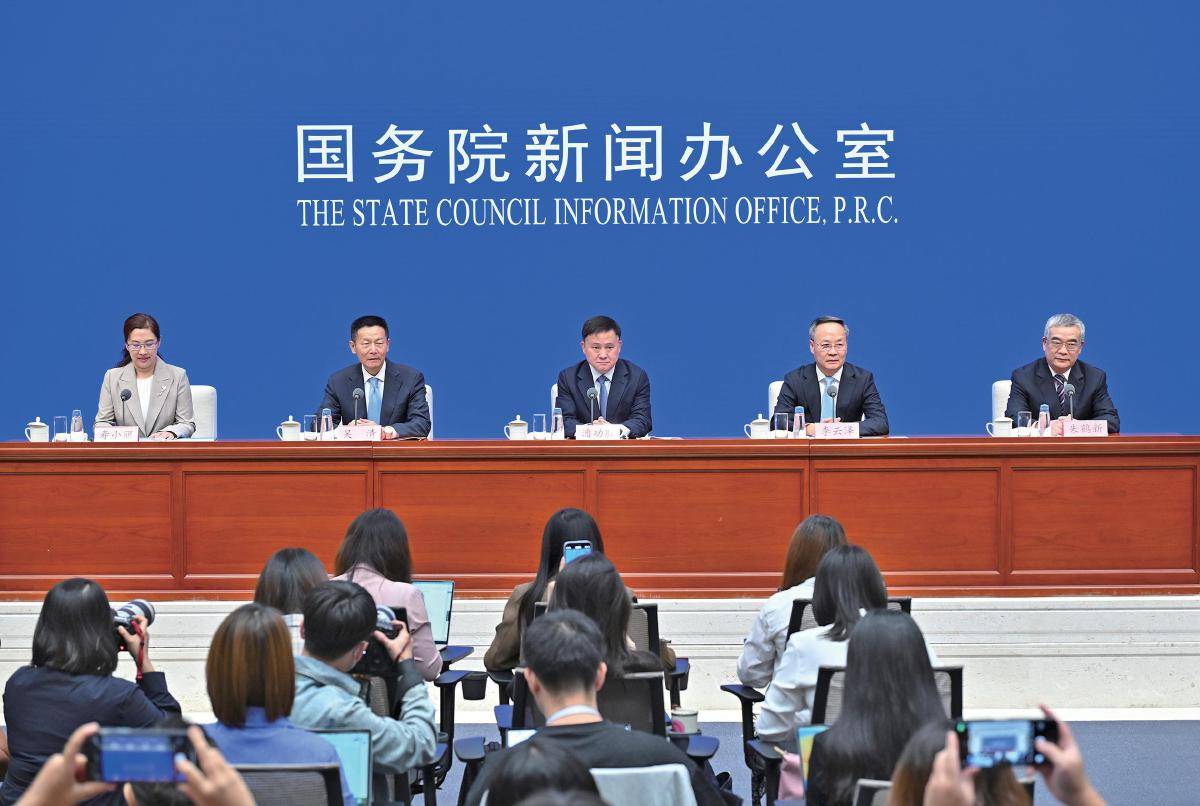
潘功胜:重点领域风险有序化解,融资平台数量下降超过60%|“十四五”成绩单
Zhong Guo Jing Ying Bao· 2025-09-22 14:58
Core Insights - The press conference highlighted significant achievements in China's financial sector during the "14th Five-Year Plan" period, with a focus on financial stability and risk management [2][5][10] Financial Sector Achievements - As of June 2023, China's banking sector total assets reached nearly 470 trillion yuan, ranking first globally; stock and bond market sizes ranked second worldwide; and foreign exchange reserves have maintained the top position for 20 consecutive years [6][10] - The financial system has seen improvements in green finance, inclusive finance, and digital finance, with the RMB cross-border payment clearing network nearly established and mobile payments leading internationally [6][10] Financial Reform and Risk Management - Financial reforms have deepened, with a restructuring of financial leadership and regulatory systems, enhancing the governance framework and modernizing financial services [7][10] - The number of financing platforms has decreased by over 60% and financial debt has dropped by more than 50% compared to the beginning of 2023, indicating effective risk mitigation in local government financing [5][9] Economic Support and Financial Services - The People's Bank of China (PBOC) has implemented a stable monetary policy, supporting major national strategies and addressing weak links in the economy, with annual growth rates for loans to tech SMEs, inclusive micro-enterprises, and green loans exceeding 20% [7][9] - The PBOC has also adjusted mortgage policies to alleviate financial burdens on over 50 million households, reducing interest expenses by approximately 300 billion yuan annually [9] Future Outlook - The PBOC aims to further explore and expand its macro-prudential and financial stability functions, ensuring the prevention of systemic financial risks [10]
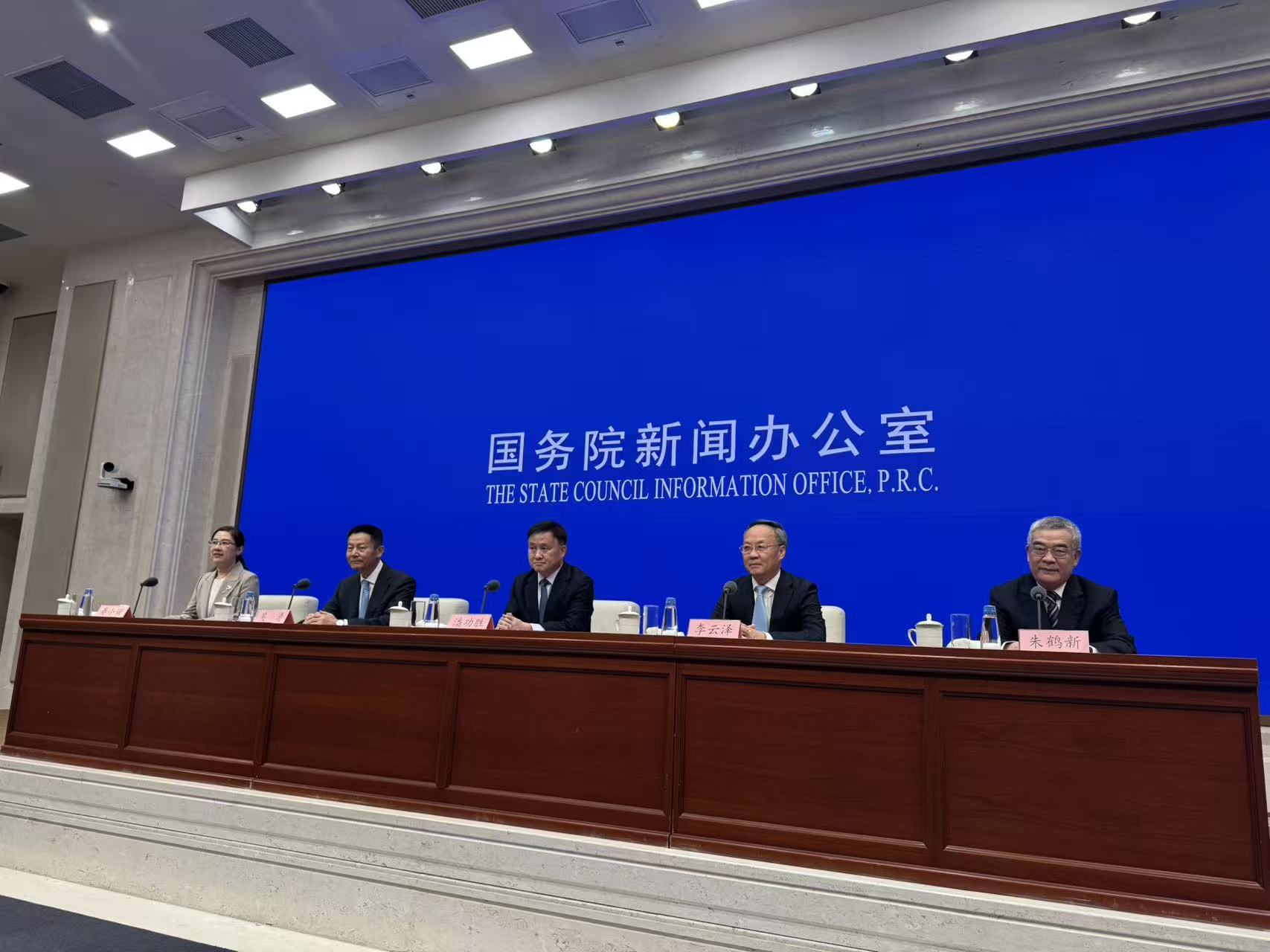
金融监管“掌门人”齐亮相,回顾“十四五”金融发展得失
Xin Jing Bao· 2025-09-22 14:31
Group 1: Financial Industry Overview - As of June 2023, China's banking sector total assets reached nearly 470 trillion yuan, ranking first globally; stock and bond market sizes are second in the world; foreign exchange reserves have been the largest for 20 consecutive years [1] - In August 2023, the total market capitalization of the A-share market surpassed 100 trillion yuan for the first time, with the Shanghai Composite Index's annualized volatility at 15.9%, a decrease of 2.8 percentage points compared to the "13th Five-Year Plan" [1] Group 2: Financial Risk Management - During the "14th Five-Year Plan" period, significant progress has been made in preventing and resolving financial risks, with a focus on high-risk small financial institutions, real estate, and local government debt [2] - Financial regulatory authorities have effectively reduced the number and scale of high-risk institutions, achieving a dynamic clearance of high-risk small institutions in several provinces [2][3] - Financial support for affordable housing and related projects exceeded 1.6 trillion yuan, with over 7 trillion yuan in loans for "white list" projects, aiding nearly 20 million housing units [2] Group 3: Currency and Exchange Rate Stability - The external environment has become increasingly complex, yet China has maintained basic stability in the RMB exchange rate, with cross-border receipts and payments projected at 14 trillion USD in 2024, a 64% increase from 2020 [4] - The RMB's share in cross-border trade has risen from 16% to nearly 30%, reflecting its strengthened role as a stabilizer in macroeconomics and international payments [4] Group 4: Capital Market Regulation - The capital market has faced significant challenges, with the CSRC focusing on controlling new risks and stabilizing existing ones, maintaining a bond default rate around 1% [6] - Over 7,000 zombie private equity firms have been cleared, and all problematic financial institutions have been dealt with, including the issuance of record fines against Evergrande and its auditing firm [6][11] Group 5: Monetary Policy Response - In response to the recent 25 basis point rate cut by the Federal Reserve, the People's Bank of China emphasized a policy of "self-determination," maintaining a supportive monetary stance to foster economic recovery [7][8]
潘功胜:“十四五”金融事业取得重大成就 我国金融风险总体可控
Xin Jing Bao· 2025-09-22 14:07
Group 1 - The core viewpoint is that during the "14th Five-Year Plan" period, China's financial sector has achieved significant accomplishments, with a focus on supporting high-quality economic development [1][2][4] - As of June 2023, China's banking sector total assets reached nearly 470 trillion yuan, ranking first globally, while the stock and bond market sizes ranked second [1] - The average annual growth rate of loans to technology-based small and medium-sized enterprises, inclusive finance for small businesses, and green loans exceeded 20% during the "14th Five-Year Plan" period [2][5] Group 2 - The People's Bank of China (PBOC) has established a modern monetary policy framework that effectively supports economic and social development goals [2][3] - The PBOC has implemented various monetary policy measures to stabilize market expectations and boost confidence, contributing to a sustained economic recovery [2][5] - The number of financing platforms has decreased by over 60%, and the scale of financial debt has dropped by over 50% compared to early 2023, indicating a significant reduction in local government financing platform risks [5][6] Group 3 - The PBOC is focused on enhancing the monetary policy and macro-prudential policy framework to achieve both currency stability and financial stability [3][4] - The PBOC has emphasized the importance of market-driven exchange rate formation and has maintained the basic stability of the RMB exchange rate amid external fluctuations [6][7] - The PBOC's monetary policy stance is characterized as supportive, with a commitment to moderate easing to foster economic recovery and stabilize financial markets [7][8]
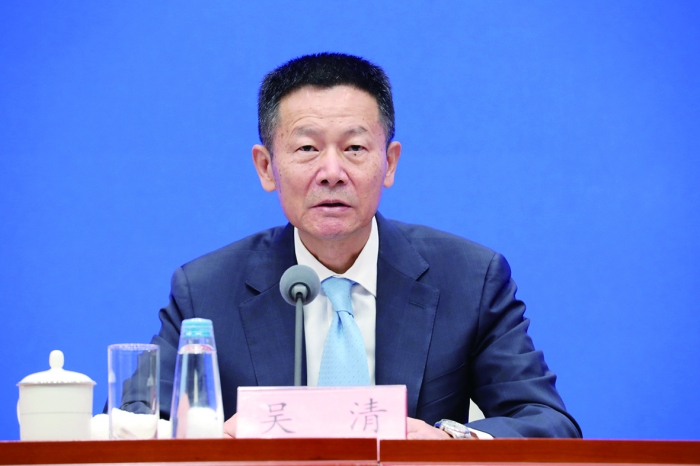
时报图说丨干货速览!潘功胜、李云泽、吴清、朱鹤新最新发声
Zheng Quan Shi Bao Wang· 2025-09-22 13:50
Core Viewpoint - The press conference highlighted the achievements of China's financial sector during the "14th Five-Year Plan" period, emphasizing the stability and growth of the financial system, as well as the advancements in various financial sectors such as green finance and digital finance [1][4]. Financial Sector Achievements - As of June 2023, China's banking sector total assets reached nearly 470 trillion yuan, ranking first in the world [3]. - The scale of China's stock and bond markets ranks second globally [4]. - The average annual growth rate of loans to technology-based SMEs, inclusive small micro loans, and green loans exceeded 20% during the "14th Five-Year Plan" [4]. Regulatory Developments - The financial regulatory environment has improved, with a total of 2,000 institutions penalized and 36,000 individuals held accountable since the beginning of the "14th Five-Year Plan" [6]. - The number of high-risk institutions and the scale of high-risk assets have significantly decreased, indicating that risks are under control [6]. - The regulatory framework has been enhanced, with 171 regulations issued over the past five years [7]. Capital Market Enhancements - The market capitalization of technology companies in the A-share market has increased, with the number of tech firms in the top 50 by market value rising from 18 to 24 [8]. - The total market value of the A-share market surpassed 100 trillion yuan for the first time in August 2023 [9]. - Direct financing's proportion has steadily increased, reaching 31.6%, up by 2.8 percentage points compared to the previous five-year period [8]. Future Outlook - The financial sector is expected to continue its supportive monetary policy stance, with a focus on enhancing the adaptability and inclusiveness of the financial system [11]. - The ongoing reforms aim to improve the quality and investment value of listed companies, fostering a more resilient capital market [11].
