茶饮

Search documents
六大新茶饮巨头半年“捞金”超55亿,靠外卖撑起“半边天”?
Xin Lang Cai Jing· 2025-09-16 08:20
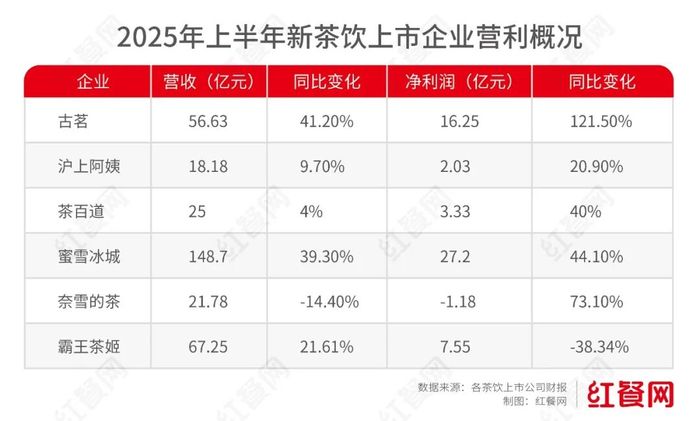
Group 1 - The core viewpoint of the article highlights the strong performance of major tea beverage brands in the first half of 2025, with total revenue exceeding 33 billion yuan and net profits surpassing 5.5 billion yuan despite a challenging market environment [1][2] - Six major tea brands reported significant revenue growth, with Mixue Ice City achieving 14.87 billion yuan in revenue and 2.72 billion yuan in net profit, reflecting year-on-year increases of 39.3% and 44.1% respectively [2][3] - The takeaway from the performance indicates that delivery services have become a crucial driver for revenue growth among tea brands, with platforms like JD.com reporting over 100 million orders for brands like Mixue Ice City within four months of launching [5][6] Group 2 - The industry is witnessing a trend of closing unprofitable stores, with over 2,500 franchise locations shut down by leading tea brands in the first half of the year, as companies shift focus from expansion to improving profitability [9][11] - Companies like Nayuki Tea and Guming have adopted strategies to enhance operational efficiency by closing underperforming stores while focusing on direct-operated models, resulting in improved sales performance [11][12] - The strategy of targeting lower-tier markets remains a priority, with brands like Guming increasing their store presence in second-tier and below cities, which now account for 81% of their total stores [12][13] Group 3 - Major tea brands are diversifying their product offerings, with coffee becoming a common strategic choice, as seen with Guming and others integrating coffee into their existing store formats [13][15] - Nayuki Tea has launched a new light food and beverage concept, expanding its product range to include healthy options and all-day dining, thereby broadening its consumer appeal [18] - The exploration of new store formats and product lines is seen as a key strategy for brands to capture additional market share and adapt to varying consumer needs across different city tiers [17][18]

瑞幸×崩铁: 买够周边要花近四百,预存十杯须15天喝完被吐槽
Xin Jing Bao· 2025-09-16 04:00
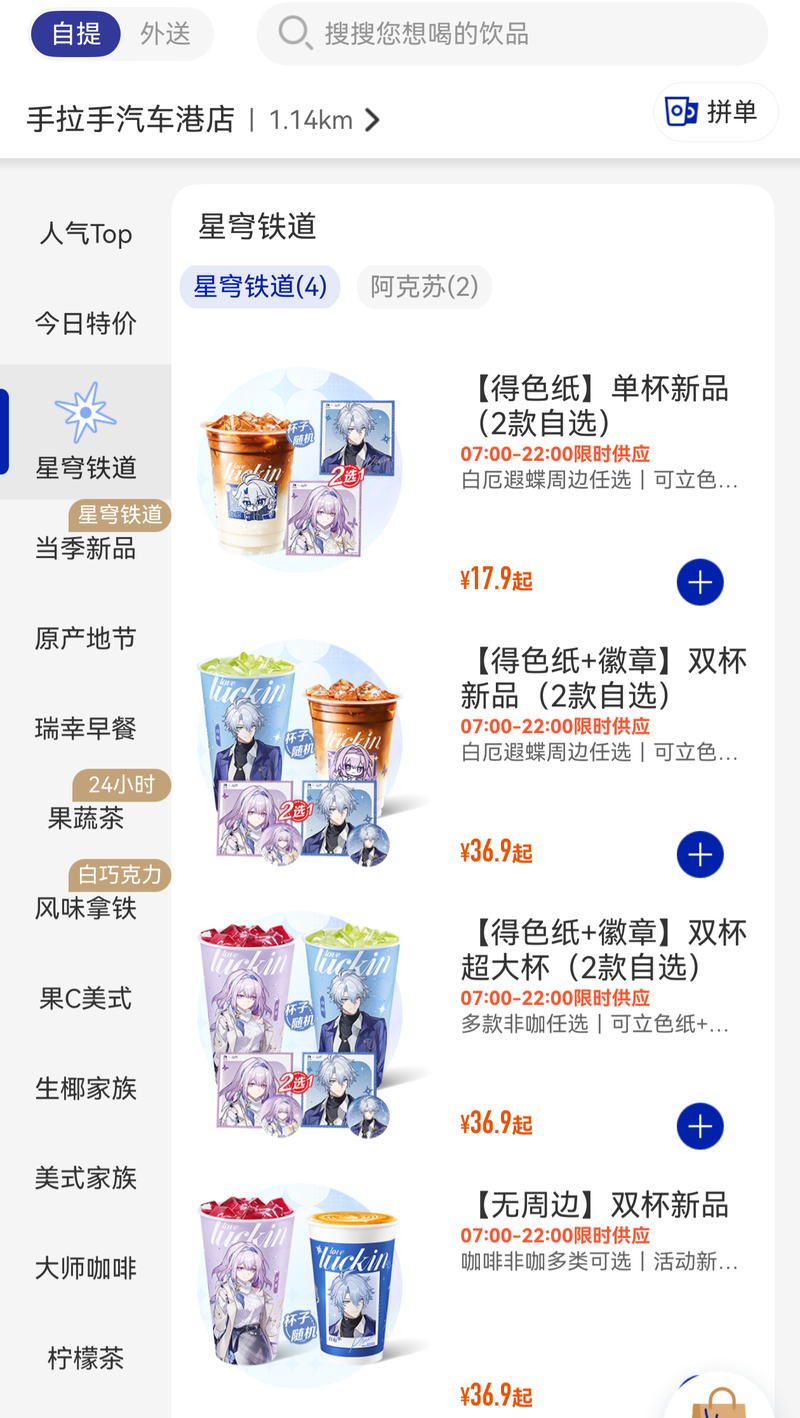
Core Viewpoint - Luckin Coffee has launched a collaboration with the game "Honkai: Star Rail," offering exclusive merchandise to consumers who purchase specific drink packages, raising questions about the appropriateness of such marketing strategies targeting underage fans [1][5][14]. Group 1: Collaboration Details - The collaboration consists of two phases, starting on September 15 and September 22, featuring popular characters "Xia Die" and "Bai E" from the game [1][4]. - Consumers can obtain merchandise such as acrylic stands, badges, and themed cups by purchasing drink packages, with a total cost of approximately 384.2 yuan required to collect all items [5][12]. Group 2: Consumer Reactions - Many consumers have expressed dissatisfaction with the high cost of obtaining the merchandise, particularly criticizing the marketing strategy as being exploitative towards underage fans [5][12]. - Parents have reported feeling pressured to assist their children in acquiring the merchandise, indicating a significant demand among younger demographics [5][12]. Group 3: Sales and Marketing Insights - Luckin Coffee's sales and marketing expenses have increased significantly, with first-quarter expenses rising by 52.4% year-over-year, attributed to higher advertising and promotional costs [15]. - The company has expanded its store count to 26,206, reflecting an 8.8% increase compared to the previous year, indicating robust growth in its operational footprint [15]. Group 4: Market Context - The game "Honkai: Star Rail" boasts a large player base of 50 million monthly active users, with over 60% of users aged 18-24, highlighting the potential market for such collaborations [14]. - Previous collaborations in the beverage sector, such as with the tea brand Gu Ming, have resulted in overwhelming consumer interest, leading to significant sales spikes and even system overloads on launch days [13][14].

西贝、百果园输掉的这场舆论战,真的证明公关很重要
3 6 Ke· 2025-09-16 01:14
Group 1 - The recent crises faced by companies like Xibei and Baiguoyuan were inevitable due to misunderstandings regarding public relations [1] - Many traditional consumer brands do not prioritize public relations, often lacking a dedicated PR director, leading to a lack of effective communication strategies [2][4] - When consumer brands do hire PR professionals, their roles are often misaligned with traditional PR functions, focusing instead on sales and marketing [2][4] Group 2 - Effective public relations in consumer goods requires managing the emotions and communication abilities of the business owner, which can be challenging due to the owner's strong personality [5][7] - Successful entrepreneurs often possess absolute confidence, which can lead to a disconnect between their perception of the brand and external consumer perceptions [5][26] - Public relations must address the gap between internal brand identity and external consumer perception to prevent crises [18][24] Group 3 - Public relations should focus on proactive crisis management rather than reactive measures, identifying potential issues before they escalate [28][30] - The personal branding of entrepreneurs can exacerbate public relations crises, suggesting a need for separation between the individual and the brand [31] - Companies should emphasize the social significance of their products and narratives, transforming from personal enterprises to socially responsible brands [33]

看见·活力河南丨甜蜜蜜,从河南到马来西亚
He Nan Ri Bao· 2025-09-15 23:37
Core Insights - The article highlights the successful expansion of Mixue Ice City in Malaysia, emphasizing its "high quality and affordable" philosophy that resonates with local consumers [2][4] - The brand has effectively localized its offerings by incorporating local flavors and obtaining Halal certification, which has helped establish a strong emotional connection with Malaysian customers [2][3] - Mixue Ice City has created over 3,000 job opportunities in Malaysia, contributing positively to the local economy and fostering cross-cultural team collaboration [3][4] Localization Strategy - Mixue Ice City has introduced new beverages tailored to local tastes and has integrated local elements into its branding, such as the "Snow King" mascot [2][3] - The brand's local team, with over 95% of members being Malaysian, focuses on genuinely serving the local community [2][3] Community Engagement - The brand engages with families through online activities like the "Snow King Drawing Contest" and community classes, enhancing its presence as a joyful part of local life [3] - Mixue Ice City is not just a beverage seller but also a facilitator of happiness and community interaction [3] Economic Contribution - The company has established a robust operational and supply chain system, which has been praised by local partners for its efficiency and innovation [4] - The collaboration between Henan and Malaysia has been strengthened, providing a conducive environment for Mixue Ice City's growth in the Malaysian market [4][5]

从好喝向喝好转型,现煮现卖的沪上阿姨推出“五色慢养瓶”
Nan Fang Du Shi Bao· 2025-09-15 14:00
Core Viewpoint - The company "沪上阿姨" has launched the "五色慢养" plan, introducing a new product line that emphasizes health and wellness through traditional Chinese dietary concepts, aiming to transform consumer habits from mere thirst-quenching to long-term nourishment [1][3][5]. Group 1: Product Launch and Features - The "五色慢养" plan includes the introduction of the "五黑焕发慢养瓶," which combines five black ingredients: 黄精, 黑芝麻, 黑米, 黑豆, and 黑枸杞, with a tea base of 武夷岩茶大红袍 [1][5]. - The product aims to enhance the overall flavor profile by incorporating classic ingredients like blood glutinous rice and thick taro paste, providing a rich and full taste experience [1]. - Additional products, "五红元气慢养瓶" and "五白美龄慢养瓶," are set to be launched in the future [1]. Group 2: Company Vision and Growth - The co-founder and chairman, 单卫钧, emphasized the brand's commitment to a healthy lifestyle, stating that the company has grown from one store in 2013 to 9,436 stores by mid-2025 [3]. - The company aims to promote a lifestyle that is more self-caring and mindful, aligning with the "五色慢养" philosophy [3][5]. Group 3: Industry Impact and Community Engagement - The "五色慢养" plan will collaborate with the Shanghai Huailan Psychological Counseling Center to host three public health lectures focusing on stress relief, emotional guidance, and dietary wellness [5]. - This initiative is intended to help consumers integrate self-care and scientific living habits into their daily lives, promoting a shift in the beverage industry from simply being a thirst quencher to becoming a partner in healthy living [5].

饮品新风口!一大波茶饮老板杀入“糖水”,业绩飙升200%
东京烘焙职业人· 2025-09-15 08:33
Core Insights - The beverage industry is witnessing a significant shift as many tea drink operators are entering the sugar water market, leading to impressive revenue growth and new business models [5][6][8][12]. Group 1: Market Trends - A wave of tea drink operators is transitioning to sugar water, with some reporting revenue increases of 200%, reaching monthly revenues of 700,000 to 800,000 yuan [5][12]. - The combination of tea drinks and sugar water is becoming a popular trend, with brands like Lucky Coffee and Gu Ming expanding their offerings significantly [8]. - The sugar water market is characterized by a high overlap in customer demographics with tea drinks, particularly targeting young consumers aged 15-40, predominantly female [22][26]. Group 2: Business Performance - Brands like "Sugar Narrative" have opened 160 stores, with daily revenues per store averaging 7,000 yuan, and some exceeding 20,000 yuan [12]. - The "Tea + Sugar Water" model has shown promising results, with 90% of upgraded stores experiencing revenue increases, some exceeding 200% [12][29]. - The sugar water category has over 200,000 stores nationwide, with more than 70,000 new openings in the past year, yet no brand has reached the scale of 1,000 stores [38][40]. Group 3: Challenges and Opportunities - The sugar water category faces challenges such as unclear product definitions and high operational costs, which may hinder the emergence of leading brands [40][45]. - There is a significant regional consumption difference, with sugar water being more popular in southern regions, while northern areas lack a strong consumption habit [48][52]. - The potential for sugar water to become a staple in consumers' lives, similar to tea drinks, will be crucial for the category's growth over the next decade [53].
春秋航空、蜜雪冰城、拼多多……为何越低价越赚钱?
3 6 Ke· 2025-09-15 04:49
Core Viewpoint - Spring Airlines has emerged as the most profitable airline in China for the first half of 2025, despite a decline in net profit, while major airlines like Air China, China Eastern, and China Southern continue to report significant losses [1][2]. Financial Performance - In the first half of 2025, Spring Airlines reported revenue of 10.304 billion yuan, a year-on-year increase of 4.35%, and a net profit of 1.169 billion yuan, a decrease of 14.11% [1]. - Air China, China Eastern, and China Southern reported losses of 1.806 billion yuan, 1.431 billion yuan, and 1.533 billion yuan respectively, with Air China and China Southern experiencing losses for three consecutive quarters and China Eastern for 22 consecutive quarters [1]. Market Reaction - Despite being the most profitable airline, Spring Airlines' stock price fell after the earnings report, declining from 56.83 yuan at the beginning of the year to 53.32 yuan by September 10, 2025, a drop of 6.2% [1]. - In contrast, Air China's stock price increased by 2% following its earnings report, while China Southern also saw a slight rise [1]. Cost Structure and Strategy - Spring Airlines employs a low-cost model, focusing solely on economy class, which allows for a higher seat capacity compared to competitors that offer multiple classes [6][8]. - The airline's cost control is evident, with sales and management expenses significantly lower than those of major competitors, at 1.248 billion yuan and 1.485 billion yuan for the first half of 2025 [7][6]. - Spring Airlines has a high passenger load factor of 90.6% in Q1 2025, compared to 78.5%, 79.1%, and 80.3% for Air China, China Eastern, and China Southern respectively [3]. Pricing Strategy - The airline's pricing strategy includes extremely low ticket prices, with fares as low as 9 yuan, which has contributed to its high load factor [3]. - Spring Airlines has reduced ticket prices by 5%, the lowest among major airlines, while competitors saw declines of 9%, 11%, and 8% [3]. Ancillary Revenue - Spring Airlines generates additional revenue through ancillary services, such as charging for meals and baggage, which has become a significant part of its income [24]. - In 2024, ancillary services contributed 1.03 billion yuan to Spring Airlines' revenue, marking a 14.4% increase year-on-year [24]. Competitive Positioning - The airline's unique operational strategies, such as high proportions of red-eye flights and direct sales channels, have allowed it to maintain a competitive edge in a challenging market [8][24]. - Spring Airlines' business model aligns with current consumer trends, focusing on cost-effectiveness and catering to price-sensitive customers [21][25].

【转|太平洋食饮-古茗深度】平价茶饮之王,供应链打造下沉市场领跑者
远峰电子· 2025-09-14 12:46
Core Viewpoint - The company, Guming, is positioned as a leading player in the affordable tea beverage market, focusing on high-quality products and rapid expansion into lower-tier cities, capitalizing on the growing demand for fresh tea drinks in China [3][22]. Company Overview - Guming was founded in 2010 and has grown to become the largest affordable tea beverage brand in China, with over 10,000 stores nationwide [3][8]. - The company has adopted a regional densification strategy, focusing on lower-tier markets, and has established a robust supply chain to support its operations [3][10]. Financial Performance - Guming's revenue is projected to grow significantly, with a CAGR of 26.1% from 2021 to 2024, reaching approximately 87.91 billion yuan in 2024 [12][14]. - The company's net profit is expected to increase at a CAGR of 319% during the same period, driven by store expansion and improved operational efficiency [12][14]. Market Dynamics - The ready-to-drink tea market in China is experiencing rapid growth, with the market size reaching 258.5 billion yuan in 2023, accounting for 50% of the ready-to-drink beverage market [22][24]. - The affordable tea beverage segment is leading the market, with a projected CAGR of 20.8% from 2024 to 2028 [24][27]. Competitive Landscape - The ready-to-drink tea industry is highly concentrated, with the top five brands accounting for 46.9% of the market share [25][27]. - Guming holds a significant market share of 17.7% in the affordable tea beverage segment, positioning itself as a leader in this competitive landscape [27][29]. Product Strategy - Guming's product offerings are primarily priced between 10-18 yuan, focusing on fresh fruit teas and milk teas, with continuous innovation in product formulations to maintain competitiveness [5][6]. - The company has a dedicated R&D team that collaborates with academic institutions to enhance product quality and meet consumer demands [5][6]. Store Expansion - Guming's store count has grown from 5,694 in 2021 to 9,914 in 2024, with a CAGR of 20.2% [8][12]. - The company has successfully penetrated lower-tier cities, with 80% of its stores located in second-tier cities and below, maximizing market potential [8][10]. Supply Chain and Logistics - Guming has established a cold chain logistics system that ensures fresh ingredients are delivered to stores within two days, enhancing product quality and customer satisfaction [3][10]. - The company operates approximately 300 cold chain delivery vehicles and over 20 warehouses nationwide, strengthening its supply chain capabilities [3][10]. Management and Governance - The company is led by founder Wang Yunan, who has a strong background in the tea beverage industry and has been instrumental in Guming's strategic direction and growth [19][21]. - Guming's ownership structure is concentrated, with major shareholders including well-known investment firms such as Meituan and Sequoia Capital [16].

社会服务行业2025H1业绩综述:盈利能力改善,结构性机会涌现
Changjiang Securities· 2025-09-14 12:41
Investment Rating - The report maintains a "Positive" investment rating for the consumer services sector [11] Core Insights - In H1 2025, the overall industry revenue increased by 1.0% year-on-year, indicating a stable upward trend, while the overall non-recurring net profit decreased by 7.1% year-on-year. However, in Q2 2025, the non-recurring net profit increased by 15% year-on-year, showing a recovery in profitability [2][19] - Structural opportunities are emerging across various segments, with notable improvements in profitability for human resources and hotel sectors [2][19] Revenue Overview - In H1 2025, the revenue growth was driven by a price-volume trade-off, with human resources, outbound tourism, education, dining, and scenic spots showing year-on-year increases of 10.7%, 8.6%, 3.4%, 3.3%, and 0.5% respectively. The duty-free sector is gradually recovering from a weak period, with a year-on-year decline of 10.1% [20][19] - The hotel industry faced pressure, with a year-on-year decline of 2.7% in performance [20] Profitability Analysis - The overall non-recurring net profit for the industry in H1 2025 decreased by 7.1%, but improved by 15% in Q2 2025. The human resources and hotel sectors saw increases of 6.4% and 1.0% respectively in H1 2025 [24][19] - The duty-free, dining, education, and scenic sectors experienced significant declines in non-recurring net profit, primarily due to weak consumer recovery in Q1 [24][19] Cash Flow Insights - The overall operating cash flow net amount decreased by 15.72% year-on-year in H1 2025, with the dining sector showing a positive growth of 28.89% [31][19] - By Q2 2025, the operating net cash flow for outbound tourism and education sectors turned positive, with increases of 38.51% and 18.02% respectively [31][19] Sector-Specific Highlights - **Tea Beverage**: The segment continues to thrive, with significant revenue and profit growth driven by delivery services and seasonal demand. Notable brands like Gu Ming are recommended for their robust growth potential [7][50] - **Dining**: The sector is recovering, but performance among listed companies varies. Brands with strong value propositions and rapid expansion are highlighted for investment [7][52] - **Education**: Quality institutions are experiencing steady growth, with a focus on AI applications enhancing revenue and profit margins. Recommended companies include Xue Da Education and Action Education [8][50] - **Human Resources**: The demand is structurally improving, with AI technology enhancing efficiency and reducing reliance on manual labor. Recommended companies include Keri International and Beijing Human Resources [8][50] - **Scenic Spots**: The tourism sector is witnessing growth in visitor numbers, supported by favorable policies. Recommended companies include Tianmu Lake and Songcheng Performance [8][50] - **Hotels**: The sector is under pressure, but major hotel groups are achieving cost reductions and efficiency improvements. Recommended companies include Shoulu Hotel and Jinjiang Hotel [9][50] - **Duty-Free**: The decline in offshore duty-free sales is narrowing, with positive trends in port stores. Recommended company is China Duty Free [9][50]
现在的奶茶名,像皇帝赐的封号...
东京烘焙职业人· 2025-09-14 08:32
Core Viewpoint - The evolution of tea drink naming reflects the intense competition in the new tea beverage market, with brands increasingly adopting complex and artistic names to stand out and attract consumers [6][15][16]. Group 1: Naming Trends - Recent discussions highlight the trend of increasingly complex and culturally rich names for tea beverages, with examples like "桃花酿" and "琉璃月" [6][10]. - Brands like 霸王茶姬 and 茶颜悦色 have introduced names that are poetic and artistic, which may confuse consumers unfamiliar with the products [8][12]. - The naming trend is seen as a response to market saturation and the need for differentiation, as brands strive to create unique identities [16][18]. Group 2: Market Dynamics - The new tea beverage market in China is projected to reach approximately 354.7 billion yuan in 2024, with a year-on-year growth of 6.4% [16]. - The competition has led to a focus on product innovation and differentiation, as brands seek to attract new customers while retaining existing ones [16][21]. - Seasonal trends, such as the popularity of lychee in summer, have prompted brands to launch new products that align with consumer preferences [21]. Group 3: Consumer Behavior - Unique product names serve as a "emotional password," appealing to younger consumers' desire for novelty and social media engagement [21][23]. - The concept of "情价比消费" suggests that consumers are increasingly valuing the emotional experience associated with products, not just their price [23]. - However, overly complex names can lead to increased cognitive load for consumers, potentially deterring them from making purchases [27]. Group 4: Marketing Strategies - Collaborative marketing strategies, such as IP partnerships, have become common, with 72 such collaborations reported in the first half of the year [23]. - Successful collaborations require innovative product offerings that can capture consumer interest and drive sales [23]. - Brands must balance unique naming with clarity to avoid alienating consumers who may struggle to understand complex names [27][28].