低空经济

Search documents
专家大咖云集 这场座谈会探讨金融与产业如何“双向奔赴”
Sou Hu Cai Jing· 2025-10-29 06:25
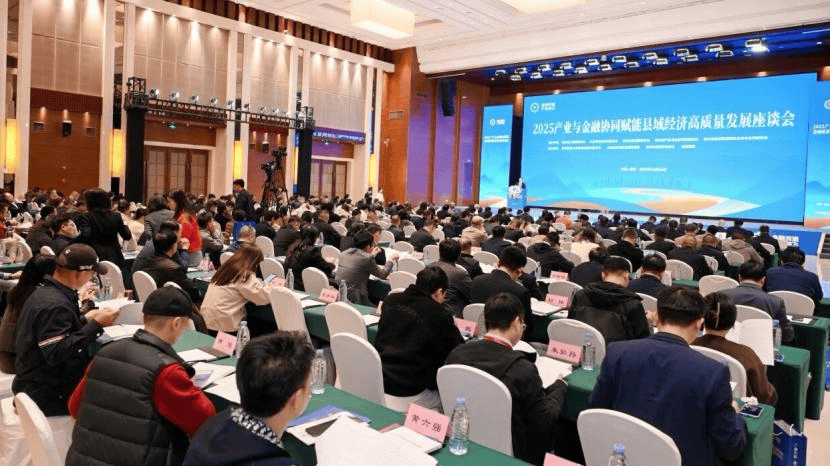
座谈会上,四川省县域经济学会会长、四川省委省政府决策咨询委员会副主任唐利民重磅发布《2025四川县域资本招 商典型案例研究报告》。该报告由四川省县域经济学会、省产业与金融发展促进会等共同编制,精选全省范围内10个 县域案例,深入剖析了产业基金引导、平台运作等多元资本招商路径,案例涵盖商业航天、低空经济、电子信息、新 材料等重点领域,为各地提供了可复制、可推广的资本招商方法论。 主题演讲环节亮点十足。多位行业大咖围绕并购、成果转化基金与县域政府招商等作了精彩发言,以实战经验为产融 协同发展献言献策;多位权威专家以"建设四川现代化产业体系的县域选择""发挥项目支撑引领作用,助力县域经济高 质量发展""推动县域经济绿色低碳高质量发展""四川县域经济的特征、挑战和建设"为题进行主旨演讲,为四川县域经 济高质量发展把脉。 2025产业与金融协同赋能县域经济高质量发展座谈会由四川省工商业联合会、九三学社四川省委员会、四川省县域经 济学会、四川省产业与金融发展促进会、四川省推进政府和社会资本合作研究会主办,开元数智工程咨询集团有限公 司、开元经济创新发展研究院、当代县域经济杂志社、通威集团协办。(来源:四川省产业与金融发展 ...

“十五五”规划建议稿解读:乘势而上,因势利导
Yin He Zheng Quan· 2025-10-29 05:44
Group 1: Economic Development - The "15th Five-Year Plan" is a critical period for achieving socialist modernization by 2035, with a target GDP growth rate of around 5% during this period[2] - The plan emphasizes high-quality development as the primary task, aiming for significant achievements in this area[2] - By 2035, the goal is to reach a per capita GDP level comparable to that of moderately developed countries, which is projected to be approximately 21,000 USD[25] Group 2: Industrial and Technological Advancement - The plan focuses on building a modern industrial system, highlighting advanced manufacturing as a leading sector[3] - Key areas for technological self-reliance include new energy, quantum technology, and artificial intelligence, aiming for international leadership in these fields[3] - Strengthening the integration of technological innovation with industrial innovation is a priority[3] Group 3: Domestic Market and Consumption - Enhancing domestic demand is crucial, with a strong emphasis on boosting consumer spending as a top priority[3] - The plan outlines strategies for effective investment expansion to stimulate economic growth[3] Group 4: Financial and Open Economy - The "15th Five-Year Plan" aims to accelerate the construction of a financial powerhouse and promote the internationalization of the Renminbi[3] - It emphasizes a cooperative and win-win approach to expand autonomous openness in the economy[3] Group 5: Agricultural and Cultural Development - Accelerating agricultural modernization and leveraging regional strategic advantages are key components of the plan[3] - The plan also stresses the importance of cultural confidence and the value of the cultural industry, aiming to stimulate cultural innovation and creativity[3]
\十五五\规划《建议》之解读
Bao Cheng Qi Huo· 2025-10-29 02:06
1. Report Industry Investment Rating No relevant content provided. 2. Core View of the Report The "15th Five-Year Plan" period is of great significance in the process of basically realizing socialist modernization. Boosting consumption and technological innovation will be the main drivers on the demand and supply sides respectively during the "15th Five-Year Plan" period. Policies conducive to expanding domestic demand and supporting technological innovation will continue to be promoted, and the relevant industries are expected to benefit from the policy advantages [3][4][20]. 3. Summary According to the Directory 3.1 "15th Five-Year Plan" 《Suggestions》 Main Content - The "15th Five-Year Plan" 《Suggestions》 has 15 parts and 61 articles, divided into three major sections. It positions the "15th Five-Year Plan" period as an important stage with a connecting role in the process of basically realizing socialist modernization [7]. - The development environment is characterized by both strategic opportunities and risks, with many uncertain and unpredictable factors. Internationally, the relationship between China and the United States is complex, but China has many favorable factors for shaping the external environment. Domestically, China has advantages such as a stable economic foundation, but also faces challenges such as unbalanced and insufficient development [7][8]. - The main goals include achieving significant results in high - quality development, greatly improving the level of technological self - reliance, and continuously improving people's living standards [9]. 3.2 Industry Construction - Prioritize optimizing and upgrading traditional industries to maintain the competitiveness of industries such as mining, metallurgy, and chemical engineering in the global division of labor. Cultivate and strengthen 4 strategic emerging industry clusters and 6 future industries [11]. - Expand the opening - up of the service industry to attract international capital and advanced business models, and moderately and ahead of time build new infrastructure to reserve development space [11]. 3.3 Technological Innovation - Strengthen original innovation and key core technology research in fields such as integrated circuits and industrial mother machines. Increase the proportion of basic research investment to achieve technological self - control [12]. - Promote the in - depth integration of technological innovation and industrial innovation, accelerate the transformation of scientific and technological achievements into productivity, and create new industries [12]. - Implement the "Artificial Intelligence +" action to lead the transformation of scientific research paradigms and empower various industries [12]. 3.4 Domestic Market - Adhere to the strategic basis of expanding domestic demand, combine improving people's livelihood and promoting consumption, and investment in objects and people. Promote the positive interaction between consumption and investment, supply and demand [13]. - Specific measures include boosting consumption (improving consumption scenarios and promoting residents' consumption ability), expanding effective investment (optimizing government investment and stimulating private investment), and removing obstacles to the construction of a unified national market [13][14]. 3.5 Macroeconomic Governance - Strengthen the coordination of fiscal and monetary policies, and maintain the continuity, effectiveness, and consistency of policies. Promote an economic development model driven by domestic demand and consumption [15]. - In fiscal and tax reform, improve the local tax and direct tax systems, and adjust the central - local fiscal relationship [15]. 3.6 Livelihood Security - Solve structural employment problems by strengthening the coordination between industry and employment, and promoting the healthy development of flexible employment [16]. - Improve the income distribution system to increase the income of low - income groups, expand the middle - income group, and form an olive - shaped distribution pattern [17]. - Improve the social security system, including pension and medical insurance, and focus on reducing the high - cost expenditures of residents in education, housing, etc. [17]. 3.7 Green Transformation - With the goal of achieving carbon peak by 2030, accelerate the construction of a new energy system and implement energy - saving and carbon - reduction reforms. The construction of the electricity market and carbon emission trading market is expected to accelerate [18]. - Reduce pollution emissions, strengthen pollution control, and promote the formation of a green production and lifestyle [18]. 3.8 Summary The "15th Five-Year Plan" 《Suggestions》 deploys strategic tasks and major measures in multiple fields. Boosting consumption and technological innovation will be the main focuses, and relevant industries are expected to benefit from policy support [19][20].
新的五年规划,释放了哪些信号?
Sou Hu Cai Jing· 2025-10-29 01:46
Core Viewpoint - The "14th Five-Year Plan" emphasizes economic construction, technological self-reliance, and high-quality development in real estate, indicating a shift in focus towards sustainable growth and innovation-driven development [1][3][20]. Economic Growth and Structure - The plan aims for a per capita GDP of approximately $25,000 by 2035, with current figures at $13,500, projected to exceed $14,000 this year [4][5]. - To achieve this goal, an average GDP growth rate of over 4.4% is necessary over the next decade [6]. - The focus is shifting from investment-driven growth to consumption and innovation-driven growth, marking a significant structural change in the economy [11]. Regional Development - The plan highlights the need for optimized regional economic layouts and coordinated development, with major urban clusters like Beijing-Tianjin-Hebei, Yangtze River Delta, and Guangdong-Hong Kong-Macau Greater Bay Area identified as key growth areas [12][13]. - The strategy aims to address regional disparities, particularly the widening gap between northern and southern regions [13]. High-Tech Industry Development - A goal to establish a new high-tech industry over the next decade is set, with a focus on strategic emerging industries such as new energy, new materials, and aerospace [14]. - The high-tech sector is expected to reshape industrial structures and urban competitiveness, with significant market potential in areas like electric vehicles and low-altitude economy [15][16]. Real Estate Sector - The real estate sector is now positioned as a foundation for public welfare rather than a pillar of economic growth, indicating a transition from rapid expansion to quality development [20]. - Sales in the real estate market have declined significantly, with new and second-hand housing sales dropping from 1.93 billion square meters to 1.5 billion square meters since 2021 [22]. - The focus is shifting towards urban renewal rather than new construction, impacting land finance and necessitating new revenue sources for local governments [24]. Investment in Human Capital - The plan proposes measures to create a family-friendly society, including financial support for child-rearing and education, which may stimulate population growth [26][27]. - The expansion of free education is also highlighted, with a potential move towards 12 years of free education [27]. - Wage increases are anticipated, with recent adjustments to minimum wage standards across various provinces signaling a commitment to improving income distribution [29][31].
山东省委书记林武:努力打造北方地区经济重要增长极
Bei Jing Ri Bao Ke Hu Duan· 2025-10-29 00:50
Core Points - The 20th Central Committee's Fourth Plenary Session emphasizes the importance of the "14th Five-Year Plan" and the upcoming "15th Five-Year Plan," showcasing the strategic planning and responsibility of the central leadership under Xi Jinping [1][2][3] - The session aims to unify thoughts and actions around the significant achievements during the "14th Five-Year Plan" and to outline the strategic tasks for the "15th Five-Year Plan" [2][3] Summary by Sections Economic Development - Shandong's GDP is projected to increase from 7.44 trillion yuan in 2020 to 9.86 trillion yuan by 2024, with expectations to surpass 10 trillion yuan this year [5] - The high-tech industry accounts for 55.2% of the total industrial output, with over 35,000 high-tech enterprises [5] - The province's non-fossil energy installed capacity exceeds 130 million kilowatts, representing 53.4% of the total, with a cumulative reduction of 18.5% in energy consumption per unit of GDP over four years [5] Social Development - Shandong has implemented 20 key livelihood projects, maintaining a fiscal expenditure on people's livelihoods at around 80%, with an average annual growth of 6.4% in per capita disposable income over four years [5] Strategic Planning - The "15th Five-Year Plan" focuses on high-quality development, emphasizing the need for quality, efficiency, and innovation in economic growth [7][10] - The plan aims to address existing issues such as insufficient innovation capacity and regional development imbalances [8] Regional Coordination - The strategy includes promoting regional coordination and urban-rural integration, with a focus on the Yellow River's ecological protection and the development of a modern marine economy [12] Common Prosperity - The plan emphasizes enhancing public services and social security systems to ensure equitable access to resources and opportunities for all citizens [13] Safety and Security - The strategy incorporates a comprehensive approach to maintaining economic and social stability, addressing risks in various sectors, including finance and production safety [14] Implementation and Accountability - The emphasis is on strong execution of the plans, with clear timelines and responsibilities assigned to ensure that the objectives of the "15th Five-Year Plan" are met effectively [15][16][17]
中金:“十五五”规划建议明晰资本市场中长期建设方向 重点关注数字科技、空间经济、高端制造等领域
智通财经网· 2025-10-29 00:29
Core Viewpoint - The "15th Five-Year Plan" outlines a strategic direction for China's economic and social development, emphasizing long-term stability and growth in the capital market, with a focus on digital technology, space economy, high-end manufacturing, domestic consumption, and biotechnology [1][25]. Macro Environment - The "15th Five-Year Plan" is positioned as a crucial phase in achieving socialist modernization by 2035, with a target of doubling GDP per capita compared to 2020 levels, necessitating an average annual GDP growth rate of approximately 4.4% from 2026 to 2035 [2][3]. Key Changes in Development Environment - Significant changes from the "14th Five-Year Plan" include advancements in technological innovation, adjustments in financial cycles, and increased geopolitical tensions, leading to a greater emphasis on domestic demand and a more confident approach to opening up [3][4]. Industrial and Technological Focus - The plan prioritizes the construction of a modern industrial system, enhancing efficiency and security in supply chains, and emphasizes the importance of traditional industries while fostering emerging sectors such as renewable energy and quantum technology [4][5][20]. Consumer and Demand-Side Policies - The plan aims to boost consumer spending through supply-side and demand-side measures, including improving the quality of consumer goods and services, enhancing employment and income distribution, and removing unreasonable consumption restrictions [7][9][10]. Open Economy Strategy - The "15th Five-Year Plan" emphasizes proactive and autonomous opening up, with a focus on expanding market access, promoting balanced trade development, and enhancing financial openness to improve China's position in the global financial system [11][12][13]. Green Transition and Carbon Goals - The plan identifies the "15th Five-Year Plan" period as critical for achieving carbon peak goals, with a focus on controlling coal and oil consumption, implementing dual control of carbon emissions, and promoting green consumption [15][16][20]. Fiscal and Tax Reforms - Fiscal reforms during the "15th Five-Year Plan" will focus on enhancing sustainability and the effectiveness of active fiscal policies, with an emphasis on improving the tax system and increasing public service spending to support consumption [17][18][22]. Capital Market Outlook - The capital market is expected to exhibit a "long-term" and "steady" trend during the "15th Five-Year Plan," supported by government emphasis on market development and favorable economic conditions [25][26]. Investment Opportunities - Key sectors for investment during the "15th Five-Year Plan" include digital technology, space economy, high-end manufacturing, domestic consumption, and biotechnology, with specific focus areas such as AI, 6G, and innovative healthcare solutions [26].
广发证券:未来五年有哪些新重点:十五五和十四五规划建议稿的比较研读
Xuan Gu Bao· 2025-10-29 00:05
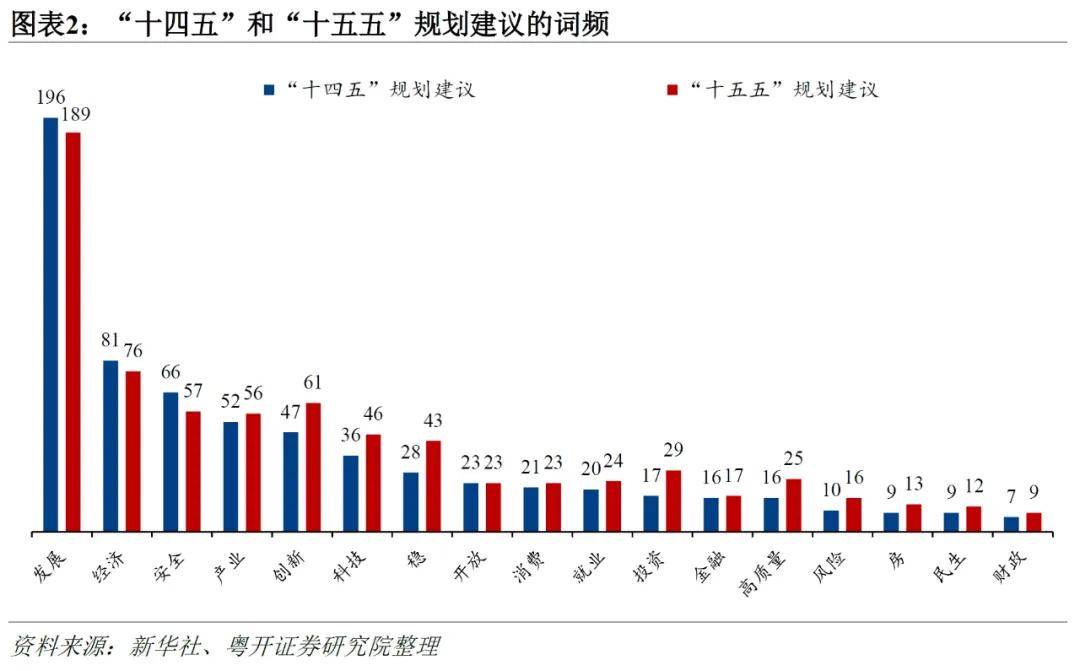
Core Insights - The "15th Five-Year Plan" emphasizes a shift towards high-quality development, focusing on effective demand and technological self-reliance, contrasting with the previous plan's broader economic growth goals [1][2][3] Development Environment - The "15th Five-Year Plan" acknowledges complex changes in the development environment, highlighting issues such as unilateralism and insufficient effective demand, indicating a stronger focus on total demand during this period [1][13][14] Development Goals - The plan sets seven specific goals, including significant achievements in high-quality development and a marked increase in technological self-reliance, with a clear target for improving the resident consumption rate [2][16][17] Industrial Development - Key changes in industrial development include a focus on optimizing traditional industries and nurturing emerging and future industries, with specific mention of sectors like quantum technology and hydrogen energy [3][18][19] Technological Innovation - The plan aims for decisive breakthroughs in critical core technologies through a new national system, emphasizing the importance of self-sufficiency in key areas such as integrated circuits and advanced materials [4][19][21] Expanding Domestic Demand - The strategy shifts to a dual approach of using new demand to drive new supply, with a focus on boosting consumption and effective investment, indicating a more proactive stance on domestic market dynamics [5][22][23] Institutional Reforms - The framework for institutional reforms is more focused, aiming to enhance the vitality of various business entities and improve macroeconomic governance, with specific measures for state-owned and private enterprises [6][24][25] Opening Up - The plan emphasizes the need for steady expansion of institutional openness, aligning with international high-standard trade rules and promoting the internationalization of the Renminbi [7][26][27] Rural Revitalization - The rural revitalization strategy remains consistent, with new measures to enhance rural infrastructure and public services, drawing on successful past initiatives [8][27] Regional Development - The plan highlights the importance of regional coordination and the role of key growth areas, promoting a more integrated approach to regional economic development [9][29][30] Green Development - The focus on green development is intensified, with a systematic approach to building a new energy system and achieving carbon peak and neutrality goals [9][31][32] Social Welfare - The plan prioritizes high-quality employment and income growth, with specific measures to enhance social security and address housing as a fundamental issue of public welfare [10][34][35]

长三角涌动“嘉”速度:科技人才浙江嘉兴话未来
Zhong Guo Xin Wen Wang· 2025-10-28 21:37
Core Insights - The article highlights the significance of talent integration in driving innovation and high-quality development in cities, particularly in Jiaxing, Zhejiang Province [2][3] Group 1: Talent Integration Initiatives - Jiaxing has launched the "Yangtze River Delta Talent Integration - Promoting Talent Flow and Shared Development" initiative, focusing on building shared platforms for talent flow and breaking down institutional barriers [2] - The city collaborates with regions like Shanghai and Suzhou to enhance talent mobility and service guarantees [2] Group 2: Talent Demand and Industry Development - Jiaxing's "Key Industry Talent Demand Directory" indicates that by 2025, the city aims to attract 22,400 new talents in advanced manufacturing, accounting for 26.7% of total talent intake, with a 5% increase from 2024 [3] - Over 80% of local enterprises have a high demand for technical and skilled talents, with integrated circuits, new materials, and next-generation network communications being key sectors [3] Group 3: Local Government Support - Jiaxing's government emphasizes the importance of talent in achieving its goal of becoming a significant center in the Yangtze River Delta urban agglomeration [4] - The city plans to host various events during the Technology Talent Week, focusing on talent integration, precise matching of talent and industry, and deep collaboration between industry and academia [4]
先进制造业地位凸显 新兴产业和未来产业蕴藏新机遇
Zhong Guo Zheng Quan Bao· 2025-10-28 21:10
Core Insights - The "14th Five-Year Plan" emphasizes the construction of a modern industrial system, reinforcing the foundation of the real economy, with a focus on intelligent, green, and integrated development [1][2] Group 1: Advanced Manufacturing - The plan highlights the importance of maintaining a reasonable proportion of the manufacturing sector, underscoring the critical role of advanced manufacturing in economic development [1][3] - Advanced manufacturing is identified as a key focus for future development, with institutions suggesting it will drive the transformation and upgrading of the economic structure [2][3] Group 2: Traditional Industries - The plan calls for the optimization and upgrading of traditional industries, aiming to enhance the global competitiveness of sectors such as mining, metallurgy, and machinery [2][3] - It emphasizes the need for technological transformation and the promotion of smart, green, and service-oriented manufacturing [2][3] Group 3: Emerging and Future Industries - The plan aims to cultivate and expand emerging and future industries, focusing on strategic sectors like new energy, aerospace, and low-altitude economy [3][4] - It outlines initiatives for large-scale application demonstrations of new technologies and products, accelerating the development of emerging industries [3][4] Group 4: Future Industry Development - The plan encourages exploration of diverse technological routes and business models in future industries, including quantum technology and hydrogen energy [4] - It highlights the potential of sectors like energy storage and solid-state batteries, which are expected to drive growth in emerging industries [4]
“十五五”建议稿的十大信号(申万宏观·赵伟团队)
赵伟宏观探索· 2025-10-28 16:03
Core Viewpoint - The article discusses the key points from the Central Committee's suggestions for the 15th Five-Year Plan, emphasizing the analysis of risks and challenges, economic growth targets, structural optimization, and the importance of national security in the context of China's modernization efforts [2][3][4]. Economic Analysis - The suggestions highlight the complex external economic environment, noting an increase in geopolitical tensions and the need for China to actively manage its international space [3][4]. - Internally, the focus has shifted from reform and innovation to addressing issues such as insufficient effective demand, challenges in domestic circulation, and the need for structural transformation [3][4][36]. Key Goals - The main goals include maintaining economic growth within a reasonable range, increasing the resident consumption rate, and enhancing the integration of technological and industrial innovation [4][36]. - A new emphasis on national security has been introduced, aiming to strengthen the national security framework [4][36]. Industrial Modernization - The plan prioritizes the optimization and upgrading of traditional industries, with a focus on enhancing global competitiveness in sectors like mining, metallurgy, and chemicals [5][37]. - It outlines strategic emerging industries such as new energy, new materials, aerospace, and low-altitude economy, along with future industries like quantum technology and biomanufacturing [5][37]. Domestic Demand Expansion - Specific measures are proposed to boost domestic demand through both consumption and investment, including increasing public service spending and enhancing the supply of quality consumer goods [5][37]. - The investment strategy emphasizes raising the proportion of government investment in livelihood projects and stimulating private investment [5][37]. Technological Modernization - The suggestions define technological modernization as a crucial support for China's modernization, advocating for extraordinary measures to achieve breakthroughs in key technology areas [6][38]. - The plan includes a comprehensive implementation of "Artificial Intelligence +" initiatives to empower various industries [6][38]. Reform and Market Integration - The construction of a unified national market is highlighted as a key reform area, focusing on eliminating barriers to market integration and enhancing regulatory frameworks [7][39]. - Financial and fiscal reforms are seen as essential for improving macroeconomic governance, with an emphasis on policy coordination and enhancing local fiscal autonomy [7][39]. Social Development - The plan addresses high-quality development in employment, income, real estate, and population, with a focus on structural employment issues and improving social security systems [8][40]. - It emphasizes the importance of green development, proposing measures to build a new energy system and achieve carbon peak goals [8][40]. Conclusion - The article encapsulates the strategic direction for China's economic and social development over the next five years, focusing on modernization, security, and sustainable growth [2][3][4].