巴西莓冰淇淋

Search documents
搭乘“进博快车” 共享中国机遇
Bei Jing Wan Bao· 2025-11-10 06:56
Core Insights - The eighth China International Import Expo (CIIE) is witnessing a significant increase in trade activities, with over 700 trade sub-groups and a professional audience registration reaching 449,500 [1] - Major signing events are taking place, with nearly 200 buyers and exhibitors reaching intended cooperation agreements [1] - The event is facilitating international trade relationships, as evidenced by successful partnerships between Chinese and foreign companies [2] Group 1: Trade Activities - A total of 43 trade delegations and over 700 trade sub-groups are participating in the expo, indicating strong international interest [1] - The signing area has hosted over 70 concentrated signing activities, showcasing the active engagement of buyers and sellers [1] - China Eastern Airlines signed 19 procurement agreements with suppliers from 9 countries, totaling $1.211 billion, marking a significant achievement for central enterprises [1] Group 2: International Cooperation - The Southern Airlines Group achieved a signing amount exceeding $2 billion, setting a new high in the past six years [2] - E-commerce platforms are evolving into "buying groups," with Meituan Health signing agreements with seven global pharmaceutical companies [2] - Schneider Electric showcased multiple original Chinese innovations and signed agreements with over 40 key clients across various industries [2] Group 3: Sector-Specific Developments - The Brazilian pavilion highlighted the growing agricultural cooperation between Brazil and China, with significant investments from both sides [1] - A Ningxia wine company secured its first direct order from a Portuguese cork factory, demonstrating the expanding trade relationships [1] - Novo Nordisk, a Danish biopharmaceutical company, presented 13 innovative drugs and announced several important collaborations at the expo [2]


当“地球之肺”邂逅中国市场,进博会上的“亚马孙热”
Di Yi Cai Jing· 2025-11-10 02:57
Group 1 - Brazil has been China's largest trading partner for 16 consecutive years, with bilateral trade exceeding $100 billion for seven consecutive years [6] - The 8th China International Import Expo (CIIE) highlighted a "green" theme, coinciding with the opening of COP30 in the Amazon region, emphasizing its importance in global climate governance [1][3] - Brazilian companies showcased products and technologies derived from renewable resources, aiming to contribute to a low-carbon, high-quality economy [1][3] Group 2 - The Brazilian government announced a temporary capital move to Belém during COP30 to underscore the Amazon's significance in global environmental agendas [3] - Companies like Suzano are focusing on biodiversity restoration and have developed a decarbonization white paper aligned with China's carbon neutrality goals [3][5] - The event provided opportunities for Chinese companies to collaborate with Brazilian partners, particularly in green finance, renewable energy, and sustainable agriculture [5][6]



蜜雪亮相进博!既是巴西咖啡豆大买家,也是限定冰激凌的花样玩家
Qi Lu Wan Bao· 2025-11-07 10:07
Core Insights - The eighth China International Import Expo featured a collaboration between Mixue Ice City and the Brazilian Export and Investment Promotion Agency, launching a limited edition "Brazilian Berry Ice Cream" that has quickly gained popularity among attendees [1] - Mixue Group is deepening its coffee industry cooperation in Brazil, the world's largest coffee producer, which accounts for one-third of global coffee production and is a major exporter of Arabica coffee beans [1] - The company has over 9,500 stores nationwide and integrates the entire supply chain, with a smart coffee production facility in Hainan, capable of producing 22,000 tons annually [1] Investment Plans - In May, Mixue Ice City signed a memorandum with the Brazilian Export and Investment Promotion Agency to invest at least 4 billion yuan in coffee beans, fruit products, and other agricultural products over the next 3-5 years, aiming to create 25,000 jobs and expand store presence and supply chain [2] - The company operates over 53,000 stores across 12 countries and has a procurement network spanning 38 countries, promoting Sino-Brazilian economic and cultural exchanges through high-quality and affordable products [2]
进博会上,河南元素绽放异彩
Zheng Zhou Ri Bao· 2025-11-07 00:53
Core Points - The China International Import Expo (CIIE) showcases the unique cultural and economic elements of Henan province, emphasizing its rich heritage and modern innovations [1][2] - The event features various sectors including traditional Chinese medicine, food, beverages, and arts, highlighting Henan's diverse offerings [1] - Companies like Haoxiangni and Yangshao Wine are leveraging the expo to promote their products and expand their market reach [2] Group 1: Traditional Medicine and Food - The "Medicine in Henan" section features traditional Chinese medicine products from companies like Zhongjing Wanxi Pharmaceutical, aiming to promote Henan's medicinal heritage globally [1] - The "Food in Henan" section showcases renowned local delicacies such as Daokou Roast Chicken and Baijia Cake, enhancing the culinary experience for visitors [1] - Haoxiangni Health Food Company presents its innovative "安心枣" (Safe Dates), addressing dietary concerns for specific consumer groups [1] Group 2: Beverages and Modern Innovations - Yangshao Wine's participation marks its debut at the expo, introducing various product lines to promote Henan's wine culture [2] - The modern tea brand Mixue Ice City adds contemporary elements to the Henan pavilion, launching a limited edition "Brazilian Berry Ice Cream" in collaboration with Brazil's investment promotion agency [2] - Mixue Ice City plans to localize its operations in Brazil, focusing on developing products that incorporate local fruits [2] Group 3: Exhibition and Future Plans - The "City Reception Hall" at the expo features the Xuchang pavilion, which will serve as a long-term exhibition space, hosting over 50 events by 2026 [2] - Local products from companies like Rebekah Wigs and Pang Donglai Foods are showcased, attracting significant attention from attendees [2]
需求收缩,乳业价格战加剧?丨消费参考
2 1 Shi Ji Jing Ji Bao Dao· 2025-11-06 09:57
Group 1: Dairy Industry Overview - The dairy market has experienced a significant decline in demand, with overall sales down 16.8% year-on-year in September, and offline sales down 21.3% [1] - Major dairy companies reported revenue declines in Q3, with Yili's revenue down 1.70% to 28.631 billion yuan, Bright Dairy's liquid milk revenue down 8.44% to 3.54 billion yuan, and San Yuan Dairy's liquid milk revenue down 4.42% to 2.917 billion yuan [1] - A price war is ongoing in the dairy industry, with significant price reductions observed in various milk products [1] Group 2: Yili's Strategy and Market Position - Yili has adopted a light inventory management strategy to maintain channel health and mitigate risks for distributors, leading to cautious stocking behavior among distributors [2] - Yili aims to avoid exacerbating the price war while focusing on product innovation and marketing strategies to meet consumer demand [2] Group 3: Market Conditions and Future Outlook - The macroeconomic environment remains weak, contributing to intense price competition in the dairy sector due to ample raw milk supply [1][2]

蜜雪冰城入驻进博会巴西国家馆,将深化咖啡产业合作
Bei Ke Cai Jing· 2025-11-05 14:09
Group 1 - The core viewpoint of the news is that the company Mixue Ice City is expanding its presence in the Brazilian market by launching a new product and signing a memorandum for significant investment in local resources [1][2] - Mixue Ice City participated in the China International Import Expo, showcasing its new "Brazilian Berry Ice Cream," which is developed using local Brazilian fruits and will be launched in Brazil and South America [1] - The company plans to invest at least 4 billion yuan in Brazil over the next 3-5 years, focusing on sourcing local agricultural products such as coffee beans and fruit products, which is expected to create 25,000 jobs [1] Group 2 - Brazil is the world's largest coffee producer and exporter, accounting for one-third of global coffee production, and is a key supplier of Arabica coffee beans [2] - Mixue Group has established deep cooperation in the coffee industry with Brazil, sourcing coffee beans for its brands, including Mixue Ice City and Lucky Coffee, primarily from Brazil's Minas Gerais region [2] - As of now, Lucky Coffee has over 9,500 stores nationwide, indicating significant growth and market penetration [2]
入驻第八届进博会巴西国家馆 蜜雪冰城成网红打卡点
Zheng Quan Shi Bao Wang· 2025-11-05 13:36
Core Insights - The eighth China International Import Expo (CIIE) has officially opened, showcasing products like the "Brazilian Berry Ice Cream" developed by Mixue Ice Cream in collaboration with the Brazilian Export and Investment Promotion Agency [1][2] Group 1: Product Development and Market Expansion - Mixue Ice Cream has launched a limited edition "Brazilian Berry Ice Cream" that incorporates local Brazilian fruits, aiming to penetrate the Brazilian and South American markets [2] - The company plans to localize its operations in Brazil, including store openings and supply chain development, with an investment of no less than 4 billion yuan over the next 3-5 years [2] - This investment is expected to create approximately 25,000 jobs and includes procurement of Brazilian agricultural products such as coffee beans and fruit products [2] Group 2: Coffee Industry Collaboration - Brazil, being the largest coffee producer and exporter globally, supplies coffee beans for Mixue's brands, including "Mixue Ice Cream" and "Lucky Coffee" [3] - The "Lucky Coffee" brand primarily uses Arabica beans from Minas Gerais, Brazil, and has expanded its presence to over 9,500 stores nationwide [3] - Mixue has established a smart supply chain factory in Hainan with an annual production capacity of 22,000 tons, focusing on coffee and related products [3] Group 3: Cultural and Economic Exchange - Mixue is not only sourcing foreign ingredients but also integrating Chinese business models, such as store operations and supply chain management, into foreign markets [4] - The company aims to promote cultural exchange between China and Brazil by introducing Brazilian agricultural products to China while sharing Chinese tea culture with Brazil [4]
蜜雪集团入驻进博会巴西国家馆 将实现巴西本土化运营
Zheng Quan Ri Bao Wang· 2025-11-05 12:46
Core Insights - The eighth China International Import Expo was held in Shanghai, where Mixue Group launched a limited edition "Brazilian Berry Ice Cream" in collaboration with the Brazilian Export and Investment Promotion Agency, becoming a popular attraction at the event [1] - Mixue Group aims to deepen its coffee industry cooperation with Brazil and localize its operations in the Brazilian market [1][2] Group 1: Product Development and Market Expansion - The "Brazilian Berry Ice Cream" is a new product developed by Mixue Group using Brazilian fruits, with plans for future launches in the Brazilian and South American markets [2] - Mixue Group is preparing to localize its operations in Brazil, including store openings and supply chain development, with a commitment to providing high-quality and affordable products [2] - A memorandum of understanding was signed in May 2023, with plans to invest at least 4 billion yuan in Brazilian agricultural products over the next 3-5 years, creating approximately 25,000 jobs [2] Group 2: Coffee Industry Collaboration - Brazil is the world's largest coffee producer and exporter, accounting for one-third of global coffee production, and is a key supplier of Arabica coffee beans [3] - Mixue Group has established deep cooperation in the coffee industry with Brazil, sourcing coffee beans for its brands "Mixue Ice City" and "Lucky Coffee" from Brazil and other key regions [3] - The company operates an intelligent supply chain factory in Hainan with an annual production capacity of 22,000 tons, ensuring high-quality coffee through a rigorous selection and roasting process [3] Group 3: Global Presence and Cultural Exchange - Mixue Group has over 53,000 stores globally, covering 12 countries, and its procurement network spans six continents and 38 countries [4] - The company integrates Chinese industry practices into overseas markets, promoting cultural exchange between China and Brazil through its products [4] - China has been Brazil's largest trading partner for 15 consecutive years, with Mixue Group facilitating the introduction of Brazilian agricultural products to China while sharing Chinese tea culture in Brazil [4]
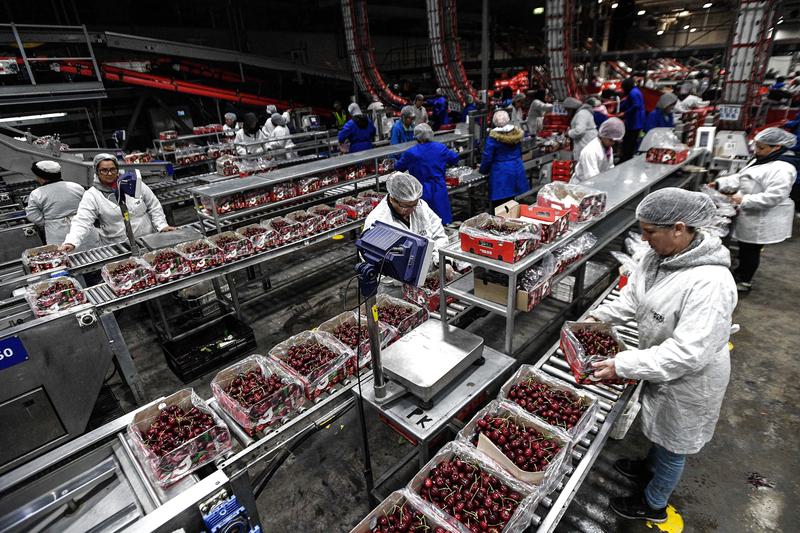
从车厘子到光伏电站,中拉经贸让“地球两端”不再遥远
Di Yi Cai Jing· 2025-05-15 14:11
Core Insights - China has become the second-largest trading partner for Latin America and the Caribbean, with a strong focus on agricultural products such as Ecuadorian shrimp, Chilean cherries, and Brazilian beef [1][8] - The recent China-Latin America and Caribbean Countries Forum held in Beijing resulted in over 100 cooperation projects for the next three years, indicating a deepening economic relationship [1][3] Trade Dynamics - The trade volume between China and Latin America reached $518.467 billion in 2024, with imports from Latin America amounting to $241.466 billion, reflecting a 46% increase over five years [8] - Chilean cherries have become a significant import, with exports to China exceeding $3.091 billion in 2024, over 90% of which are directed to the Chinese market [4][5] Emerging Opportunities - The cooperation between China and Latin America is shifting towards emerging sectors such as renewable energy and artificial intelligence, driven by China's advancements in these areas and Latin America's interest in participating in the Fourth Industrial Revolution [3] - The establishment of the "Belt and Road" initiative has further strengthened infrastructure cooperation, with significant projects like the Bogotá Metro and the construction of the Chancay Port in Peru enhancing trade logistics [9][10][11] Agricultural Products - Latin American agricultural products are increasingly popular in China, with Chile being the second-largest source of fresh fruit imports, particularly cherries, which benefit from seasonal advantages [4][5] - Peru's unique products, such as the Amaryllis flower, have gained traction in the Chinese market, supported by favorable trade agreements that reduce tariffs on imports [5] Future Prospects - The expansion of visa-free travel for citizens of Brazil, Argentina, Chile, Peru, and Uruguay starting in 2025 is expected to facilitate greater people-to-people exchanges and enhance bilateral cooperation [13] - The ongoing trade relationship is projected to continue growing, with trade volumes expected to surpass $510 billion in 2024, doubling since the establishment of the China-Latin America Forum [13]