氢氨醇

Search documents
氢能领域开年首场大型盛会在京开幕,有哪些新看点?
中国能源报· 2026-03-27 03:34
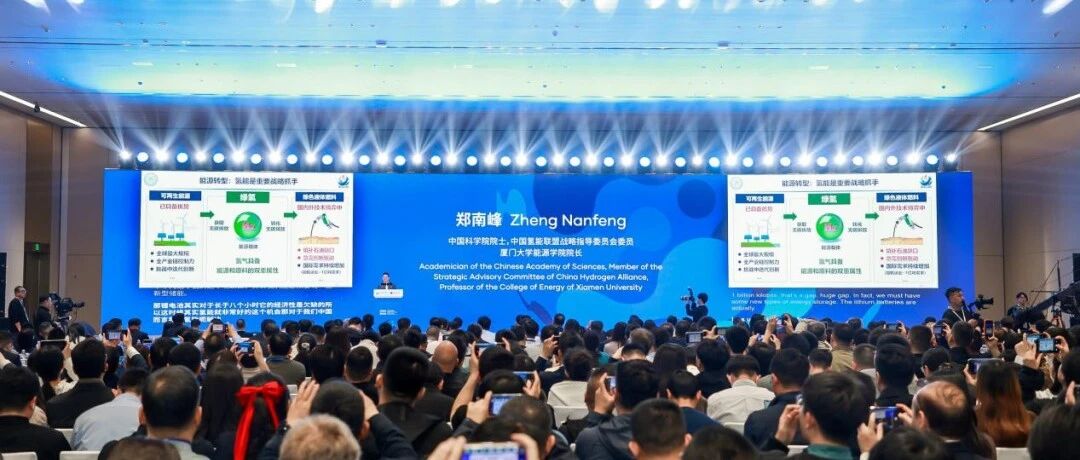
Core Viewpoint - The 2026 China Hydrogen Energy Exhibition and International Hydrogen Energy Conference serves as a significant platform for showcasing innovations and promoting commercial applications in the hydrogen energy sector, emphasizing the importance of hydrogen energy in China's "14th Five-Year Plan" and its role in achieving carbon neutrality goals [1][3][11]. Group 1: Event Overview - The conference, themed "Towards New and Green, Co-creation and Win-win," features a comprehensive activity system including large exhibitions, forums, and international cooperation discussions [1]. - Over 1,300 representatives from government, industry, academia, and research attended, highlighting the event's significance in guiding the hydrogen energy industry's direction [3]. - The event is supported by various governmental bodies, including the National Energy Administration and the Hong Kong Special Administrative Region Government [1]. Group 2: Industry Insights - The National Energy Group aims to drive the hydrogen energy industry through a "green hydrogen industry chain" and "hydrogen innovation service chain," focusing on key areas such as renewable energy and green chemicals [4]. - The China Hydrogen Alliance introduced a global carbon code identification system for the hydrogen industry, enhancing data management and carbon footprint tracking [4]. Group 3: Exhibition Highlights - The exhibition covers an area of 50,000 square meters, featuring over 400 leading hydrogen energy companies, showcasing a full industry chain from hydrogen production to storage and transportation [5]. - More than 60 innovative hydrogen energy technologies and products were launched during the event, facilitating the transition from technology demonstration to commercial application [7]. Group 4: International Collaboration - The conference included multiple forums focusing on global trends in green hydrogen markets and cross-border trading mechanisms, addressing key commercial challenges [9]. - The event attracted international participation from over 20 countries, fostering collaboration and knowledge exchange in the hydrogen energy sector [11]. Group 5: Strategic Importance - The successful hosting of the conference is seen as a strategic move to address global climate change challenges and enhance the integration of the hydrogen energy industry on a global scale [9][11].

【环保】氢能综合应用试点新政落地,持续重点推荐氢氨醇行业——碳中和领域动态追踪(一百七十九)(殷中枢/郝骞)
光大证券研究· 2026-03-18 07:58
Core Viewpoint - The article discusses the recent policy update from the Chinese government regarding hydrogen energy applications, emphasizing the comprehensive upgrade of the policy framework aimed at reducing costs and promoting a closed-loop ecosystem for hydrogen energy applications [4][5]. Group 1: Policy Framework and Goals - The new notification represents a continuation of national-level incentives for the hydrogen industry, significantly upgrading the previous fuel cell vehicle demonstration city cluster policy [5]. - The core of the new policy is "application-driven, scenario-based," establishing a comprehensive application system that includes one general fuel cell scenario, multiple industrial application scenarios, and various innovative application scenarios [5]. - By the end of 2025, the cumulative sales of hydrogen fuel cell vehicles in China are expected to reach nearly 40,000 units, with 574 hydrogen refueling stations built, and green hydrogen production capacity of approximately 250,000 tons [5]. - The 2030 quantitative targets include reducing the average terminal hydrogen price to below 25 yuan per kilogram, with a goal of 15 yuan per kilogram in advantageous regions, and doubling the number of fuel cell vehicles to 100,000 compared to 2025 [5]. Group 2: Pilot Program and Funding - The policy maintains a "reward instead of subsidy" standard, selecting five city clusters for a four-year pilot program, with a maximum central reward of 1.6 billion yuan per city cluster, totaling no more than 8 billion yuan in central financial subsidies [5]. - The funding disbursement will follow a "pre-disbursement followed by settlement" model, shifting the policy focus from addressing technological shortcomings in the supply chain to reducing costs through large-scale applications [5]. Group 3: Vehicle and Infrastructure Development - The vehicle segment continues to focus on heavy-duty commercial vehicles, with optimized requirements for application thresholds, assessment systems, and technical standards [6]. - The notification emphasizes the construction of hydrogen highways and corridors, promoting large-scale applications in heavy-duty transport and cold chain logistics [6]. - City clusters that primarily promote fuel cell vehicles are expected to deploy over 8,000 fuel cell vehicles and build more than 30 hydrogen refueling stations, along with establishing at least one hydrogen highway or corridor [6]. Group 4: Industrial Applications and Innovations - The new notification includes industrial hydrogen applications in the central financial reward scope for the first time, with green ammonia being a core expansion scenario [7]. - It covers hydrogen-based chemical raw material substitution, hydrogen metallurgy, and hydrogen blending combustion, as well as innovative scenarios in rail transit, shipping, and new energy storage [7]. - City clusters focusing on industrial applications are required to ensure that industrial application scenarios account for no less than 75% of their total applications, promoting cost reduction through collaboration between transportation and industrial sectors [7].
【电新环保】重点关注算电协同与HALO资产——电新环保行业周报20260308(殷中枢/郝骞/陈无忌/和霖/邓怡亮)
光大证券研究· 2026-03-08 23:04
Overall Viewpoint - The government work report emphasizes carbon dual control, hydrogen energy and green fuels, and computing power and electricity synergy, with the latter becoming a current market focus [4] - There is some divergence in the market regarding the targets for carbon dual control during the 14th Five-Year Plan period and the goal of reducing carbon dioxide emissions per unit of GDP by 17% and 3.8% by 2026, indicating that more efforts are needed to achieve these targets [4] - The outlook for hydrogen energy, particularly hydrogen, ammonia, and methanol, remains positive, with related stocks having accumulated certain gains, although short-term profit-taking may occur [4] - The government work report mentions "computing power and electricity synergy" for the first time, marking it as a strategic task for the start of the 14th Five-Year Plan, with power operation, source-network-load-storage, and virtual power plants being key components [4] Group 1: Electricity Operators - The investment logic for electricity operators is based on the bottom of the electricity price cycle and mid-term expectation reversal, with actual projects demonstrating the synergy between electricity and computing power [5] - The sector has a low price-to-book (PB) valuation, providing a safety cushion and reasonable odds for investment [5] Group 2: New Energy Projects - Microgrids, virtual power plant projects, and new power system logic are expected to continue to be implemented based on new energy consumption, green electricity direct connection, and zero-carbon parks [6] - Compared to North American electricity equipment targets, related stocks in this sector are still undervalued [6] Group 3: Emerging Technologies - The sectors of space photovoltaics, European offshore wind, and energy storage for residential and commercial use show favorable conditions and require ongoing monitoring [7]
电新环保行业周报 20260308:重点关注算电协同与 HALO 资产-20260308
EBSCN· 2026-03-08 11:13
Investment Ratings - The report maintains a "Buy" rating for both the power equipment and environmental protection sectors [1]. Core Insights - The government work report highlights key areas such as carbon dual control, hydrogen energy, and collaborative electricity computing, with the latter becoming a current market focus. There is some divergence regarding the targets for carbon emissions reduction during the 14th Five-Year Plan and by 2026, indicating a need for more effort to achieve these goals [3]. - The report expresses optimism about hydrogen energy, particularly in hydrogen, ammonia, and methanol, suggesting that these areas will present ongoing investment opportunities as more projects are expected to materialize throughout the year [3]. - The concept of collaborative electricity computing is introduced as a strategic task for the 14th Five-Year Plan, encompassing power operation, source-grid-load-storage, and virtual power plants [3]. Summary by Sections North America Power Supply - The report notes a power shortage in North America, with major tech companies committing to self-supply power for their data centers, indicating a strong trend that may lead to increased volatility in high-value stocks [4]. Investment Opportunities - The report suggests focusing on power operators, highlighting low PB valuations and safety margins, with recommended stocks including JinkoSolar, Gansu Energy, and others [4]. - It emphasizes the potential for microgrids and virtual power plants to continue developing, with suggested stocks like Guoneng Rixin and Anke Rui [4]. - The report also mentions the favorable outlook for space photovoltaics, European offshore wind, and energy storage, which require ongoing monitoring [4]. Energy Storage - The report discusses the impact of domestic energy storage capacity pricing policies and the ongoing power shortages in the U.S., suggesting that North American storage stocks may rebound significantly [6]. - It highlights the UK's "Warm Homes Plan," which aims to install 3 million solar systems by 2030, benefiting the energy storage market [6]. Wind Power - According to the National Energy Administration, China's onshore wind power capacity is expected to grow by 9.68% in 2024, while offshore wind capacity is projected to decrease by 40.85% [7]. - The report indicates a significant increase in wind turbine bidding capacity, with a 90% year-on-year growth expected in 2024 [11]. Steel Prices - Current steel prices as of March 6, 2026, are reported, with medium-thick plate prices at 3,382 CNY/ton and rebar prices at 3,312 CNY/ton [14]. Investment Suggestions - The report recommends focusing on European offshore wind and complete machine directions, as the industry is expected to see significant growth from 2026 to 2030 [16].
——2026年政府工作报告精神学习之联合报告:\开局之年\行稳致远,孕育资本市场新机遇
EBSCN· 2026-03-06 11:08
Macroeconomic Overview - The 2026 economic growth target is set at 4.5%-5%, indicating a pragmatic approach to economic recovery amidst complex external and internal challenges[12] - The government aims to stabilize prices, with a focus on reversing negative price trends and promoting moderate consumer price recovery[12] - A fiscal expansion of 230 billion yuan is planned, with an emphasis on investment and consumption support[13] Banking Sector - The banking sector is expected to maintain a certain level of balance sheet expansion, with a projected revenue growth of approximately 2% for listed banks in 2026[47] - Credit growth is estimated at 16.5 trillion yuan, with a year-end growth rate around 6.1%[34] - The total social financing (TSF) is projected to increase by 35 trillion yuan, maintaining a year-end growth rate of about 7.9%[34] Real Estate Market - The government emphasizes stabilizing the real estate market through targeted policies, including inventory reduction and supply optimization[47] - The report encourages the acquisition of existing properties for affordable housing, reflecting a shift towards quality over quantity in housing development[48] - Recent policies in major cities like Shanghai aim to stimulate the housing market, with significant changes in purchase restrictions and financing options[49] Investment and Consumption - A special bond issuance of 2.5 trillion yuan is allocated to support consumer goods replacement programs, benefiting sectors like automotive and home appliances[16] - The government plans to enhance investment in new economic drivers, focusing on emerging industries such as integrated circuits and aerospace[13] - The report highlights the importance of domestic demand and innovation as core themes for economic growth[15] Risks and Challenges - Potential risks include geopolitical tensions and the pace of domestic economic recovery, which may affect overall market performance[24] - The report identifies the need for ongoing risk management in key areas such as real estate and local government debt[41]
【光大研究每日速递】20260210
光大证券研究· 2026-02-09 23:06
Group 1: TMT Sector - TMT theme funds experienced significant net value decline, while passive funds increased their positions in TMT theme products. The overall stock market saw fluctuations, with consumer and new energy theme funds performing well, while other theme funds struggled. A total of 24.3 billion yuan flowed out of mid and large-cap theme ETFs, while Hong Kong stock ETFs saw inflows exceeding 10 billion yuan [5]. Group 2: Metals Sector - The prices of non-ferrous metals fell across the board, but gold, tungsten, molybdenum, and vanadium prices increased month-on-month. The financing environment index for small and medium enterprises rose by 6.62% to 50.27 in January. Weekly inventory levels for hot-rolled coils were at a five-year low, while the price of oriented silicon steel hit a new low since 2018 [5][6]. Group 3: Renewable Energy and Environmental Protection - The market remains optimistic about space photovoltaic developments, with a focus on auxiliary materials and equipment. The hydrogen and ammonia sector performed well, with expectations for future carbon policies to enhance green electricity consumption. The dual control of carbon and non-electric applications is anticipated to drive supply optimization [7]. Group 4: Public Utilities - The utilization rates for wind and solar power in 2025 were 94.3% and 94.8%, respectively, both showing year-on-year declines. There is a positive outlook for non-electric applications of renewable energy and direct connections for green electricity, with recommendations to focus on companies like Electric Investment Green Energy and Jinkai New Energy [8]. Group 5: Pharmaceutical Industry - The Ministry of Industry and Information Technology and other departments issued a plan for the high-quality development of traditional Chinese medicine, aiming for a collaborative system by 2030. This policy is expected to raise compliance thresholds and enhance industry concentration, benefiting leading companies with strong integration, quality control, and research capabilities [8]. Group 6: Company Analysis - Yujian Xiaomian - Yujian Xiaomian, a leading chain of Sichuan-Chongqing flavor noodle restaurants, is expanding its national presence through a combination of direct and franchise operations. The company has shown continuous revenue growth and profitability improvements, despite challenges such as high debt and rental costs. The management team is experienced, and operational optimization is expected to further enhance profitability [9].
【电新环保】国网“十五五”投资达4万亿,持续关注氢氨醇、AIDC电源、固态电池——行业周报20260118(殷中枢/郝骞/陈无忌/和霖/邓怡亮)
光大证券研究· 2026-01-18 23:04
Overall Viewpoint - The National Grid is expected to reach a fixed asset investment of 4 trillion yuan during the "14th Five-Year Plan," representing a 40% increase compared to the "13th Five-Year Plan," with an average annual compound growth rate of 7%, slightly exceeding expectations. This investment is driven by counter-cyclical adjustments, benefiting areas such as ultra-high voltage, main distribution networks, smart technology, and key projects like hydropower and clean energy bases [4]. Group 1: Hydrogen and Ammonia - During the "14th Five-Year Plan," the hydrogen and ammonia sector is expected to benefit from China's future industry developments and the EU carbon tariff in 2026. Shanghai is progressing rapidly, with plans to establish an international green fuel refueling and trading center by 2030, targeting a million-ton level for green methanol and biofuels [5]. Group 2: AIDC Power Supply - The domestic AIDC construction is promising and can align with AI applications for sector rotation. Internationally, the HVDC solutions are expected to expand, and progress in SST technology cooperation is anticipated. The capital expenditure for North American data centers in 2027 will be assessed during the US stock annual report period [5]. Group 3: Power Grid - A resonant pattern is expected to form between overseas and domestic power grid investments, with positive expectations for both. The construction of the hydropower grid and the integration of power and computing resources are areas that require close monitoring due to lower expectations [5]. Group 4: Lithium Battery and Energy Storage - The demand side for lithium batteries is currently competitive, with domestic energy storage tenders for 2026 still needing tracking. The overseas energy storage market is influenced by North American computing and electricity shortages, while domestic storage follows policy expectations and lithium material price trends. The lithium battery industry is currently thriving, but after the price increase expectations are realized, stock prices may lack upward momentum, making it essential to focus on new technologies like solid-state batteries [5].
——电新环保行业周报20260118:国网十五五投资达4万亿,持续关注氢氨醇、AIDC电源、固态电池-20260118
EBSCN· 2026-01-18 14:51
Investment Ratings - The report maintains a "Buy" rating for both the power equipment and environmental sectors [1]. Core Insights - The National Grid's fixed asset investment during the "14th Five-Year Plan" is expected to reach 4 trillion yuan, a 40% increase compared to the previous plan, with an average annual growth rate of 7%, slightly exceeding expectations. Key areas benefiting from this investment include ultra-high voltage, main distribution networks, smart technology, and major projects [3]. - The domestic energy storage project bidding scale for 2025 is projected to be 447 GWh, with a significant portion being non-collective bidding [3]. - The report highlights the potential for hydrogen, ammonia, and methanol industries, particularly in Shanghai, which aims to establish an international green fuel refueling and trading center by 2030 [4]. Summary by Sections Power Equipment and New Energy - The report emphasizes the importance of the National Grid's investment and its implications for various sectors, including ultra-high voltage and smart grid technologies [3]. - It suggests monitoring companies like TBEA, Pinggao Electric, and XJ Electric for potential investment opportunities [4]. Energy Storage - The report notes a continuous increase in the domestic energy storage market, with significant project bids already in place for 2026 [8]. - It highlights the ongoing demand for energy storage solutions in both domestic and international markets, particularly in North America and Ukraine [8]. Wind Power - The report indicates a substantial increase in new wind power installations, with a projected 82.5 GW added in 2025, marking a 59.42% year-on-year growth [10]. - It suggests that companies involved in offshore wind projects in Europe are likely to benefit from upcoming orders and market growth [23]. Lithium Battery and Materials - The report discusses the dynamics of lithium battery materials, noting a recovery in demand and price stabilization across various segments, including lithium carbonate and iron phosphate lithium [25][27]. - It emphasizes the potential for a surge in demand due to changes in export tax policies and the ongoing transition to solid-state batteries [28]. Environmental Sector - The report maintains a positive outlook on the environmental sector, driven by increased investments and policy support for clean energy initiatives [1][4]. - It suggests that companies involved in hydrogen and ammonia production, as well as those in the energy storage sector, are well-positioned for growth [4].
超级新能源基地为何建在这儿
Xin Lang Cai Jing· 2026-01-04 19:01
Core Viewpoint - The development of large-scale renewable energy bases in desert, Gobi, and barren areas is crucial for enhancing China's energy security and achieving a clean, low-carbon energy system by 2030, with a planned total installed capacity of 455 million kilowatts, equivalent to 20 Three Gorges Dam capacities [1][2]. Group 1: Renewable Energy Development - The focus on renewable energy is driven by China's high dependence on foreign oil and gas, with past fossil fuel combustion accounting for up to 88% of CO2 emissions [2]. - Utilizing abundant solar and wind resources in desert areas can help create energy bases that integrate energy development, climate governance, ecological restoration, and industrial growth [2][3]. - The establishment of these energy bases is expected to generate significant green electricity, addressing power shortages in eastern and central regions, and reducing reliance on foreign oil and gas [2][3]. Group 2: Ecological Restoration - Renewable energy bases can effectively mitigate ecological damage by reducing wind speed and sand transport, with solar panels decreasing surface evaporation by 15% to 30% [3]. - The integration of drought-resistant plants under solar panels can combat land desertification, transforming barren areas into energy oases [3]. Group 3: Challenges in Implementation - The construction of renewable energy bases faces ecological safety concerns due to the fragile environment of desert areas, which complicates planning and development [4]. - There are significant challenges in aligning the construction timelines of power generation, grid infrastructure, and energy storage, risking inefficiencies in energy distribution [4][5]. - The extreme conditions in desert areas lead to increased operational costs and maintenance challenges for renewable energy equipment [4][6]. Group 4: Strategic Planning and Technological Innovation - A comprehensive planning blueprint is necessary to address fundamental issues such as site selection, ecological preservation, and energy distribution [7]. - Enhancing infrastructure for high-voltage direct current transmission and developing hydrogen pipelines are essential for efficient energy transfer [7][8]. - The integration of advanced technologies across the energy generation and distribution chain is crucial for improving efficiency and reliability [8]. Group 5: Future Prospects - The envisioned renewable energy bases in desert areas could not only meet domestic energy needs but also position China as a global energy center, facilitating cross-border energy trade [9]. - The development of a complete industrial chain and the establishment of standards and technologies will enable these bases to become significant players in the global energy market [9].
【电新环保】本轮春季躁动,AIDC电源储能、锂电、氢氨醇为布局重点——行业周报251228(殷中枢/郝骞/陈无忌/何霖/邓怡亮)
光大证券研究· 2025-12-28 23:04
Overall Viewpoint - The AIDC power/storage sector is experiencing a positive outlook, with North American AI chain focusing on light modules, liquid cooling, AIDC power, and AI storage. Recent developments in liquid cooling have opened up new opportunities for AIDC power overseas orders, and the 26H2 HVDC technology solution is expected to see increased volume. Collaboration related to SST is also anticipated to yield results. The overseas energy storage market remains robust, with the logic of electricity shortages in the U.S. unchanged, and a temporary easing of U.S.-China relations. The market is currently less sensitive to BBB and 301-related legislation, warranting continued attention to AIDC power and overseas storage sectors [4]. Group 1: AIDC Power/Storage - The North American AI chain is prioritizing light modules, liquid cooling, AIDC power, and AI storage, with liquid cooling trends enhancing the potential for AIDC power overseas orders [4]. - The 26H2 HVDC technology solution is expected to facilitate increased production, while SST-related collaborations are projected to gradually materialize [4]. - The overseas energy storage market remains favorable, with the U.S. electricity shortage logic still intact, and a temporary thaw in U.S.-China relations [4]. Group 2: Lithium Battery - Recent environmental assessments for the Jiangxia lithium mine and Tianqi Lithium's decision to not use SMM pricing have influenced the market, with several lithium iron phosphate companies announcing production cuts to strengthen pricing negotiations [4]. - Changes in the supply side of lithium carbonate and the "anti-involution" logic are enhancing price support expectations, leading to a recovery in the lithium battery sector during the spring market [4]. - The investment hierarchy for lithium battery materials is as follows: lithium carbonate > lithium hexafluorophosphate > aluminum foil > separator > copper foil > anode [4]. Group 3: Hydrogen Ammonia and Wind Power - During the 14th Five-Year Plan, hydrogen ammonia is viewed as a significant direction for new energy consumption and non-electric applications, supported by future industry prospects and the EU carbon tariff in 2026 [5]. - The National Development and Reform Commission emphasizes the potential for coordinated, large-scale, and advanced construction of hydrogen ammonia projects [5]. - Although Goldwind Technology's stock has surged due to commercial aerospace trends, market expectations for hydrogen ammonia remain relatively low, indicating a need for continued focus [5].