海苔

Search documents
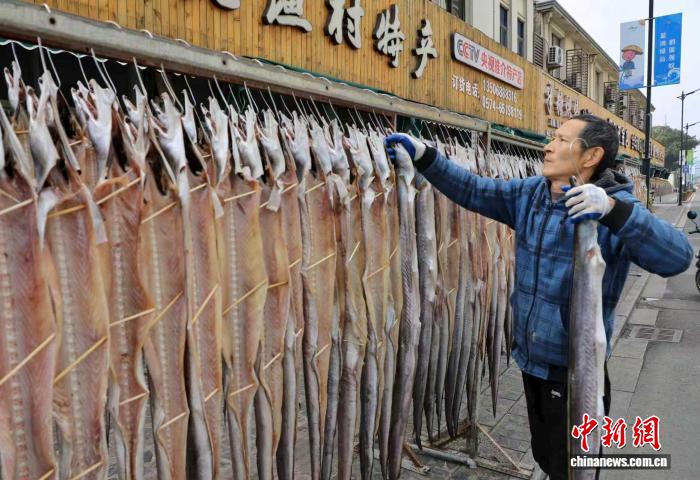
(新春走基层)风鳗飘香年味浓 浙江宁海湾渔村产销两旺促增收
Zhong Guo Xin Wen Wang· 2026-01-30 12:02
Core Viewpoint - The article highlights the booming sales of wind eel in Xiashan Village, Ninghai County, Zhejiang Province, as a traditional delicacy that symbolizes the local fishermen's hopes for prosperity during the Lunar New Year season [1][2]. Group 1: Production and Sales - Local villagers begin the preparation of wind eel in the twelfth lunar month, involving processes such as cleaning, salting, and drying, which are essential for creating the unique flavor of the product [2]. - The wind eel is well-received in the market due to its firm texture and savory taste, with online and offline sales reaching hundreds of units daily [2]. - The sales of wind eel have doubled compared to previous years, with one local store reporting an annual net income of approximately 300,000 yuan from this product alone [3]. Group 2: Tourism and Economic Impact - The rise in rural tourism has led to an increase in demand for wind eel, making it a must-buy item for many visitors, alongside other local seafood products [4]. - The local government has been promoting agricultural product sales through tourism, aiming for a total agricultural sales revenue of 59 million yuan by 2025, with wind eel and fish products expected to contribute over 20 million yuan to this figure [4].

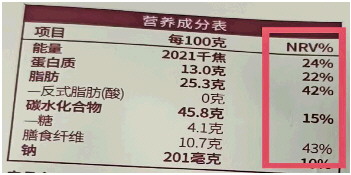
预包装食品上的“NRV%”让人看不懂
Xin Lang Cai Jing· 2026-01-18 17:25
Core Viewpoint - The article highlights the confusion among consumers regarding the Nutrient Reference Value percentage (NRV%) on food packaging, which lacks a unified calculation standard, leading to potential misinterpretation of nutritional content [1][2]. Group 1: Consumer Awareness - Many consumers are unaware of the meaning of NRV%, with some only having a vague understanding that it relates to nutrition [1][2]. - The lack of public knowledge about NRV% is attributed to the complexity of nutritional information and insufficient educational outreach [2]. Group 2: Calculation Standards - The calculation standards for NRV% vary significantly across different brands, creating a hidden trap for consumers [3]. - Most brands use different serving sizes for their nutritional information, which can mislead consumers about the actual intake of nutrients when consuming an entire package [3]. Group 3: New Standards Introduction - The National Health Commission has introduced a new standard for prepackaged food nutrition labeling, which includes the concept of "Serving Reference Values" [5]. - The new standard aims to ensure that the serving size is close to recommended reference values, allowing consumers to make more informed dietary choices [5].
韩国2025年全年水产品出口33亿美元,同比增长9.7%
Jing Ji Guan Cha Wang· 2026-01-15 07:04
Core Viewpoint - South Korea's Ministry of Oceans and Fisheries projects that the country's total seafood export value will reach $3.33 billion in 2025, representing a year-on-year increase of 9.7%, marking a historical high [1] Group 1: Export Performance - The export value of seaweed is expected to be $1.13 billion, with a year-on-year increase of 13.7% [1] - Mackerel exports are projected to reach $200 million, showing a significant year-on-year increase of 128.8% [1] - Squid exports are anticipated to be $110 million, reflecting a year-on-year increase of 48.7% [1] Group 2: Export Destinations - Exports to Japan are expected to total $680 million, with a year-on-year growth of 3.1% [1] - Exports to China are projected at $620 million, indicating a year-on-year increase of 8% [1] - Exports to the United States are anticipated to reach $520 million, showing a year-on-year growth of 9% [1]
2025年海味零食电商消费趋势
知行战略咨询· 2026-01-14 14:20
Investment Rating - The report does not explicitly provide an investment rating for the seafood snack industry Core Insights - The seafood snack industry is experiencing mixed performance across different e-commerce platforms, with significant growth in certain product categories while others are declining - Jinzai Foods, a leading brand in the seafood snack sector, reported a remarkable revenue growth of 16.79% year-on-year and a net profit increase of 39.91% for 2024, driven by the success of its flagship product, small dried fish, which sold over 1.5 billion units [6] - The overall sales of seafood snacks on e-commerce platforms are showing a downward trend, particularly on Taobao, where sales dropped by over 200 million [8][10] Summary by Relevant Sections E-commerce Sales Performance - Taobao's seafood snack sales declined by 18.6% year-on-year, with all subcategories experiencing a decrease, including instant fish (-19.8%) and seaweed (-16.2%) [10] - JD.com saw a slight overall growth of 1.6%, with instant fish showing a significant increase of 123.3%, while seaweed and instant squid faced declines [13] - Douyin's seafood snack sales decreased by 2.2%, with instant squid experiencing a growth of 17% [16] Category Performance - The top-performing categories in 2024 include: - Instant fish: 3.81 billion with a decline of 19.8% - Seaweed: 3.20 billion with a decline of 16.2% - Instant squid: 1.19 billion with a decline of 15.6% [11] - Notable growth categories on JD.com include: - Instant fish: 0.82 billion with a growth of 123.3% - Instant shrimp: 0.03 billion with a growth of 132.9% [14] Brand Rankings and Growth - Jinzai Foods ranked first in the seafood snack category with a sales figure of 0.31 billion and a growth rate of 48.4% [20] - Other notable brands include: - Good Time: 0.79 billion with a growth of 65.4% - Three Squirrels: 0.25 billion with a growth of 10.7% [20] - On Taobao, Jinzai Foods also led in the instant fish category with a sales figure of 74.56 million, despite a decline of 4.9% [21] Market Share Trends - Douyin's market share in the seafood snack category reached 52.5% in 2024, indicating a strong position compared to other platforms [8] - The overall market dynamics suggest a shift in consumer preferences, with some brands and categories outperforming others significantly [19]


知行数据观察:宝宝零食品类
知行战略咨询· 2026-01-14 14:07
Investment Rating - The report indicates a positive investment outlook for the baby snack industry, highlighting strong growth potential and market expansion opportunities. Core Insights - The baby snack market is experiencing steady growth, with China's market size projected to increase from 36.53 billion yuan in 2019 to 55.91 billion yuan in 2024, and further to 61.96 billion yuan by 2025, reflecting a robust growth trend [9][12]. - The demand for milk-flavored snacks is high, driven by parents' preferences for nutritious options that aid in their children's development, while there is a notable supply gap in high-calcium products [13]. - Safety and nutrition are the primary concerns for parents when purchasing baby snacks, with over 60% worried about unsuitable additives and nearly 50% concerned about nutritional value [16][19]. - Online platforms, particularly JD and Taobao, are the main purchasing channels for baby snacks, with a significant trend towards price comparison and promotional strategies among consumers [20][21]. Market Overview - The global baby snack market is expanding, with China's share steadily increasing due to rising parental awareness and improved living standards [9][11]. - The average price of baby snacks has been declining, with Tmall's average price dropping from 38.6 yuan to 21.3 yuan, a decrease of 44.8%, indicating a shift towards volume-driven sales strategies [23][24]. - Tmall's market share is decreasing, while Douyin is experiencing significant growth, with a 20.1% increase in sales for baby snacks, highlighting a shift in consumer purchasing behavior [25][31]. Product Segmentation - The report identifies key product categories within the baby snack market, including biscuits, puffs, and meat products, with baby biscuits showing a notable growth rate of 18% in sales [27][29]. - Douyin's product categories are showing strong growth, particularly in fruit strips and meat sausages, with some products experiencing explosive growth rates [31][33]. Brand Performance - The leading brand in the market is Xiao Lu Lan Lan, which holds a significant market share on both Tmall and Douyin, with a notable growth rate on Douyin [35]. - The report highlights the competitive landscape, noting that while Tmall has a higher concentration of top brands, Douyin's market is more fragmented with a diverse range of emerging brands [35][36].
第26届中日韩地方政府会议在盐城举办 韩国全罗南道举办主题日活动深化友好交流
Yang Zi Wan Bao Wang· 2025-10-17 13:47
Core Points - The 26th China-Japan-Korea Local Government Conference was successfully held in Yancheng, Jiangsu Province, with a delegation from Jeollanam-do, South Korea, led by Director Zhu Shunshan [1] - The conference included various friendly exchange activities to strengthen the traditional friendship between Jeollanam-do and Jiangsu Province [1] Group 1: Event Highlights - Jeollanam-do has deepened cooperation with Jiangsu Province since establishing friendly relations in 1996 [2] - The delegation featured an art troupe from Jeollanam-do, focusing on the "Jeollanam-do Theme Day" and "China-Korea Art Performance" [1] - A special exhibition showcased 55 types of local products from Jeollanam-do that have been approved for entry into the Chinese market, with popular items including seaweed, grapefruit tea, and beverages [1] Group 2: Cultural Exchange - The event included interactive experiences, such as a Korean-style gimbap making activity, which attracted 180 local participants using seaweed sourced from Jeollanam-do [1] - Traditional Korean culture was highlighted through activities like trying on Hanbok and photography, allowing local citizens to experience Korean heritage [1] - Officials from Jiangsu Province expressed appreciation for the successful exchange activities and anticipated further fruitful cooperation between the two regions [1]
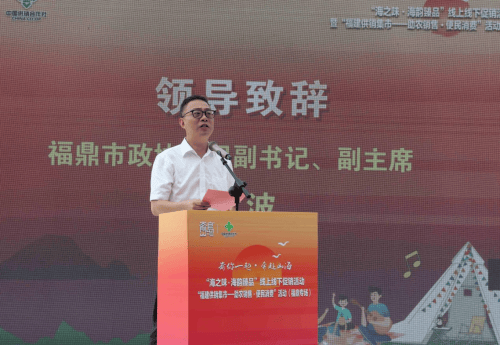
福鼎市工业和信息化局成功举办“海之味・海韵臻品”线上线下促销活动
Sou Hu Cai Jing· 2025-09-25 09:17
Core Insights - The event "Sea Flavor & Marine Essence" was held from September 19 to September 21, organized by the Fuding Municipal Government, showcasing local seafood and products to citizens and tourists [1][3]. Group 1: Event Highlights - The event featured an interactive auction, where local products like Fuding white tea wine were auctioned starting at 1 yuan, engaging attendees and promoting local industries [3]. - A live streaming segment allowed online viewers to purchase local specialties such as pre-packaged dishes and seafood, enhancing accessibility for those unable to attend in person [3]. Group 2: Industry Development - Fuding, recognized as one of the top ten marine economy counties in Fujian Province, has a vast marine area of 14,900 square kilometers and over 60,000 people involved in marine economic development [5]. - The city is implementing a "Marine Strong City" strategy, focusing on the transformation and upgrading of the aquatic processing industry, particularly for species like bass and yellow croaker [5][9]. Group 3: Future Plans - The event aims to expand the market for the aquatic processing industry, transitioning from primary processing to high-value-added end products, benefiting both enterprises and fishermen [9]. - Fuding plans to explore a long-term development model that integrates industry with cultural tourism, promoting "Fuding Fresh Flavor" to broader markets [9].

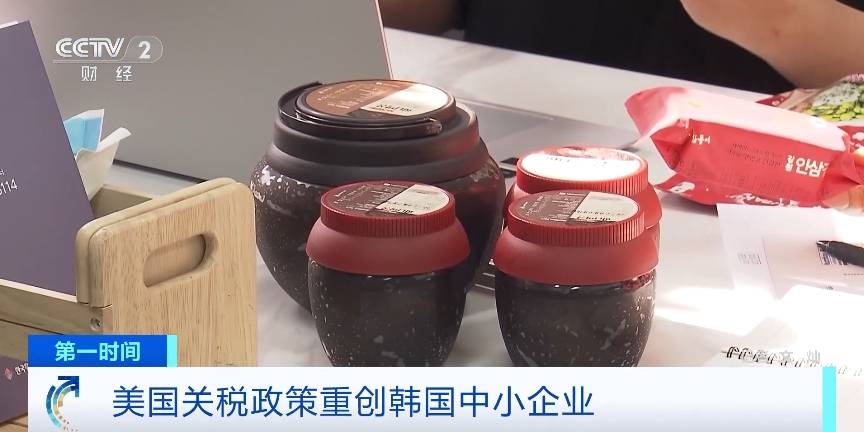
订单量骤减、生产线停摆…美国关税政策重创韩国中小企业
Sou Hu Cai Jing· 2025-06-07 08:09
Group 1 - The South Korean economy, being export-oriented, is significantly impacted by the U.S. tariff policies, leading to operational difficulties for many small and medium-sized enterprises (SMEs) involved in exports [1] - A food company in Chuncheon, South Korea, reports that over 80% of its exports go to the U.S., and due to the tariff policies, orders worth over 100 million KRW (approximately 530,000 RMB) have been abruptly interrupted [3] - The general manager of the food company indicates that the tariff policies have diminished price competitiveness, resulting in reduced orders from U.S. clients, leading to production line shutdowns and inventory accumulation [5] Group 2 - A recent survey reveals that 81% of SMEs in South Korea report severe impacts from U.S. tariff policies, with many experiencing delayed or canceled orders and financial difficulties, forcing some to consider layoffs or business closures [7] - The general manager of an automotive parts company notes that domestic suppliers for major brands like Hyundai and Kia are also affected, necessitating diversification in production systems and supply chains [9] - According to the Ministry of Trade, Industry and Energy, South Korea's export value decreased by 1.3% year-on-year in May, marking the first decline in four months, with significant reductions in exports of key products such as automobiles, steel, and machinery [9]