
算力中心

Search documents
国泰海通晨报-20260313
GUOTAI HAITONG SECURITIES· 2026-03-13 02:56
Coal Mining Research - The report discusses the historical impact of geopolitical conflicts on coal prices, suggesting that these conflicts may stabilize seasonal price declines and elevate average prices. The ongoing geopolitical tensions, particularly involving the US, Israel, and Iran, have led to higher oil and natural gas prices, which are expected to influence energy prices upward. International coal prices have risen by 20% in response to the surge in natural gas prices, leading to increased expectations for coal demand amid high energy prices [3][4] - Domestic coal supply remains stable, but a reduction in imports due to rising international coal prices may elevate domestic seasonal coal price bottoms, making significant price drops unlikely. The peak supply-demand pressure is expected to end around March-April, with a seasonal increase in electricity coal demand starting in May [3][4] Construction Engineering Research - China Power Construction Corporation (中国电建) is highlighted for its leadership in global clean energy construction, with a significant market share in wind, solar, and hydropower projects. The company has completed over 80% of river planning and more than 65% of large and medium-sized hydropower station construction in China, and it leads over 50% of the global market for large and medium-sized hydropower projects [6][7] - The report notes that the integration of computing and electricity has been included in government reports, which is expected to benefit companies involved in integrated computing and electricity operations. The company has signed contracts worth 210.06 billion yuan for digital transformation projects, including data centers and computing centers [5][7] Biopharmaceutical Research - Rongchang Biopharmaceutical (荣昌生物) is projected to enter a new growth phase starting in 2026, driven by the launch of new indications for its products RC18, RC48, and RC28, which are expected to enter medical insurance coverage. The company anticipates revenue of 32.51 billion yuan in 2025, increasing to 78.32 billion yuan in 2026, and 62.79 billion yuan in 2027 [8][31] - The report emphasizes the potential of RC148, a dual antibody product, which is expected to gain market share through partnerships and new indications, enhancing the company's competitive position in the global oncology market [9][32]


宏观经济专题:地方两会观察:内需和科技的新图景
KAIYUAN SECURITIES· 2026-02-13 07:43
Economic Growth Targets - The weighted average GDP growth target for 31 provinces in 2026 is set at 5.0%, down from 5.3% in 2025[2] - 17 provinces have lowered their targets, while 14 have kept them unchanged; 7 provinces set interval targets, indicating a likelihood of a national target range of 4.5% to 5%[2][13] - Economic powerhouses are expected to bear more responsibility for growth, with half of the top ten provinces maintaining their original targets[2][13] Investment Focus - The average fixed asset investment growth target has decreased from 6.3% to 5.1%, with all provinces either lowering or maintaining their 2025 targets[3][37] - Emphasis is placed on expanding private and livelihood investments, with many provinces encouraging private capital participation in various sectors[3][38] - Specific investment plans include a commitment of 721.46 billion yuan in Guangdong for livelihood projects[38] Consumption Trends - The weighted average target for social retail sales growth is approximately 4.8%, down from 5.4% in 2025[4] - Provinces are focusing on increasing residents' income through measures like raising basic pensions and providing subsidies[4] - New consumption models are being developed, particularly in sectors like health, culture, and entertainment, with a focus on "emotional economy"[4] Technological Development - The "Artificial Intelligence+" initiative is entering a comprehensive application phase, with local governments promoting AI in various sectors[5] - Emerging industries such as integrated circuits, aerospace, and renewable energy are prioritized, aligning with the "14th Five-Year Plan"[5] Real Estate Market - The main strategies for the real estate sector include revitalizing existing stock and improving housing quality[6] - Many provinces are initiating programs to purchase existing homes for affordable housing, marking a shift from previous strategies[6] National Conference Outlook - The national GDP growth target is likely to be set between 4.5% and 5%, with a focus on expanding domestic demand and technological breakthroughs[6] - Investment strategies will continue to support key projects and enhance livelihood investments, while the real estate sector will focus on revitalizing existing stock[6]
城地香江业绩预亏,算力中心项目调整,控股股东变更推进
Jing Ji Guan Cha Wang· 2026-02-13 04:39
Group 1: Financial Performance - The company expects a net profit attributable to shareholders for the year 2025 to be between -46 million and -69 million yuan, indicating a narrowing loss compared to the previous year, primarily due to credit impairment, asset impairment, and increased R&D expenses [2] Group 2: Project Developments - The company announced a significant adjustment to the Yangzhou computing power center project, where the original contract's B04-B05 machine room will be self-invested by the party due to changes in business conditions, leading to an expected revenue decrease of approximately 1.092 billion yuan, but a corresponding decrease in investment and liabilities, thus reducing operational risks [3] - The wholly-owned subsidiary, Xiangjiang System, has entered the candidate list for the bidding of the China Mobile Ningxia Zhongwei Data Center project, although a formal contract has not yet been signed [5] Group 3: Corporate Status - The company is in the process of introducing a central enterprise, China Electric Intelligent Computing, through a private placement announced in October 2024, which may lead to a change in control [4] Group 4: Stock Performance - On February 3, 2026, the company's stock price increased by 2.03%, with a cumulative increase of 19.08% for the year, although there was a net outflow of 8.2473 million yuan in main funds on that day, indicating short-term capital divergence [6]

普洛斯中国新CEO上任!向市场释放三大信号
21世纪经济报道· 2026-01-16 08:24
Core Viewpoint - GLP has appointed Zhao Mingqi as the CEO of GLP China, a newly established position, to lead logistics, industrial infrastructure, computing centers, new energy, and fund management in the Chinese market, reporting to global CEO Mei Zhimin [1][4] Group 1: Business Strategy and Leadership - The internal promotion of a senior executive reflects GLP's commitment to local talent development and succession planning, emphasizing the importance of business synergy in China's new economy [4][12] - Zhao Mingqi has played a crucial role in driving the rapid growth of GLP's China business since its entry into the market in 2003, including the incubation of new business models in the technology park sector [4][5] Group 2: Infrastructure and Market Position - GLP operates in over 70 cities with a logistics and industrial infrastructure covering 40 million square meters, serving over 2,500 clients, primarily focused on domestic consumption, manufacturing, and import-export trade [6][13] - The company has established 20 data centers across China, providing an IT load of 1.4 GW, and is among the top five service providers in the domestic computing center market [6][10] Group 3: New Infrastructure Initiatives - GLP's new infrastructure assets, including logistics parks and computing centers, are essential for supporting the digital economy, smart manufacturing, and green energy sectors, enhancing efficiency and innovation [7][10] - Recent projects, such as the Shanghai New Northwest Logistics Park, have achieved significant milestones, including a "zero carbon" certification, showcasing GLP's commitment to high standards in new infrastructure [10][9] Group 4: Focus on Domestic Market - GLP's strategy emphasizes deepening its presence in the Chinese market, with nearly 90% of its operational space serving domestic demand, and a client base consisting of 80% local enterprises [12][13] - The company has continuously adapted its warehousing standards to meet the evolving market environment and has actively participated in setting national and industry standards [12][13]


普洛斯中国新CEO上任!向市场释放三大信号
2 1 Shi Ji Jing Ji Bao Dao· 2026-01-16 07:29
Core Viewpoint - GLP has appointed Zhao Mingqi as the CEO of GLP China, a newly established position, to lead logistics, industrial infrastructure, computing centers, new energy, and fund management in the Chinese market, reporting to global CEO Mei Zhimin [1][3]. Group 1: Leadership and Strategic Direction - Zhao Mingqi has been with GLP since its inception in China in 2003 and has played a crucial role in driving the rapid growth of the business and building a strong industrial ecosystem [3][4]. - The appointment of an internal candidate reflects GLP's commitment to local talent development and succession planning, emphasizing the importance of business synergy in the new economy [3][4]. Group 2: Business Development and Infrastructure - Since 2003, Zhao has led the development of innovative industrial parks, catering to the emerging needs of R&D and high-tech enterprises, injecting new growth momentum into GLP's operations in China [4]. - GLP operates logistics and industrial infrastructure across 70 cities, with a total operational area of 40 million square meters, serving over 2,500 clients [4][10]. - The company has established 20 data centers nationwide, providing an IT load of 1.4 GW, ranking among the top five service providers in the domestic computing center market [4][5]. Group 3: New Infrastructure and Sustainability - GLP's core businesses, including logistics parks, computing centers, and new energy facilities, are crucial for supporting the upgrade of China's manufacturing sector and promoting green transformation [5][6]. - The company is committed to high-standard new infrastructure, as evidenced by the recent launch of the Shanghai New Northwest Logistics Park, which has received a "zero-carbon" certification [7][9]. - GLP is exploring the synergy between new energy and computing centers, aiming to transform traditional power consumption models into core collaborators in new energy systems [9][10]. Group 4: Market Position and Future Outlook - GLP's strategic moves indicate a strong belief in the potential of the Chinese market, with nearly 90% of its operational space serving domestic demand [10]. - The company has received backing from top investors like the Abu Dhabi Investment Authority (ADIA), opening new possibilities for capital market actions and further integration of its logistics, data center, and new energy advantages [11].

观点人物 | 赵明琪升任普洛斯中国CEO
Xin Lang Cai Jing· 2026-01-14 18:39
Core Viewpoint - Prologis Group announced the appointment of Zhao Mingqi as the CEO of Prologis China, overseeing a collaborative industrial ecosystem that includes logistics and industrial infrastructure, data centers, new energy, and fund management, reporting to global CEO Mei Zhiming [1] Group 1: Leadership Changes - Zhao Mingqi has been with Prologis since its inception and has played a crucial role in the rapid growth of its China operations and the establishment of a strong industrial ecosystem [2] - Zhuge Wenjing, the former Executive Vice Chairman of Prologis China, will take on a larger global leadership role while continuing as a board member of Prologis China [1] Group 2: Zhao Mingqi's Background - Zhao Mingqi has over 20 years of experience in real estate and infrastructure, with a comprehensive background in strategic planning, investment development, and operational management [2] - She holds an MBA from the Massachusetts Institute of Technology and Fudan University, and a bachelor's degree in engineering from Shanghai University [2] Group 3: Business Expansion and Strategy - Under Zhao's leadership, Prologis has expanded its business from Suzhou to a national scale, launching new business models such as the Prologis Co-Creation Industrial Park [3] - Prologis has adapted to market changes, recognizing that the Chinese market consists of multiple regional markets, each at different stages of development [4] Group 4: Market Position and Client Base - Prologis serves over 2,500 domestic and international clients across various sectors, with nearly 90% of its services focused on the domestic market [5] - The company has shifted its client base from 80% multinational enterprises to 80% local enterprises, reflecting a significant market transformation [4] Group 5: Infrastructure and Investment - Prologis manages approximately $79 billion in assets in China and operates nearly 50 million square meters of logistics and manufacturing infrastructure across 70 regional markets [6] - The company has established 20 data centers with an IT load capacity of 1.4 gigawatts, ranking among the top five service providers in the country [6] Group 6: Future Prospects - Prologis is reportedly planning an IPO in Hong Kong, potentially in the first half of 2026, with discussions ongoing regarding the scale and timing of the offering [7]
袁征:美国经济呈现复杂图景
Jing Ji Ri Bao· 2025-12-30 00:32
Economic Policy and Trade - In 2025, the U.S. government is pushing conservative economic policies and nationalist trade protectionism, implementing large tax cuts and reducing federal spending [1] - The government announced "reciprocal tariffs" on April 2, causing significant fluctuations in global trade and investment markets [1] Economic Growth and GDP - The U.S. GDP growth rates for the first three quarters of 2025 are projected to be -0.5%, 3.8%, and 4.3%, indicating a trend of low growth initially followed by a recovery [1] - Consumer spending, which accounts for about 70% of GDP, grew by 2.9% year-on-year in the first three quarters, but real demand indicators are weak [1] Technology Sector Performance - Major tech companies like Apple, Microsoft, and Google are maintaining revenue growth rates of 8% to 12% due to AI model development and enterprise AI solutions [2] - Startups are facing challenges, with total financing down 28% in 2025 due to high financing costs and increased R&D investment thresholds [2] Manufacturing Sector Challenges - The manufacturing sector is struggling, with a projected Purchasing Managers' Index (PMI) average of 48.5, indicating contraction [2] - The automotive manufacturing sector is particularly affected, with production down 3.2% year-on-year due to supply chain disruptions and weak consumer demand [2] Employment and Labor Market - As of November 2025, the U.S. unemployment rate is at 4.6%, reflecting a cooling labor market [4] - The tech industry is experiencing significant layoffs, while low wage growth and a shrinking private sector may further dampen consumer spending [4] Inflation and Consumer Prices - Inflation pressures are easing, with the Consumer Price Index (CPI) rising by 2.7% year-on-year in November, down from 3.0% in September [3] - Tariff policies are exacerbating price pressures, impacting manufacturing investment and global supply chains [3] Future Economic Outlook - Economic growth in 2026 is expected to be supported by private consumption and AI-driven corporate investment, with a projected growth rate of around 2.5% [6] - The sustainability of economic growth will depend on various factors, including tax policies, AI application across industries, and the overall labor market [6][7]
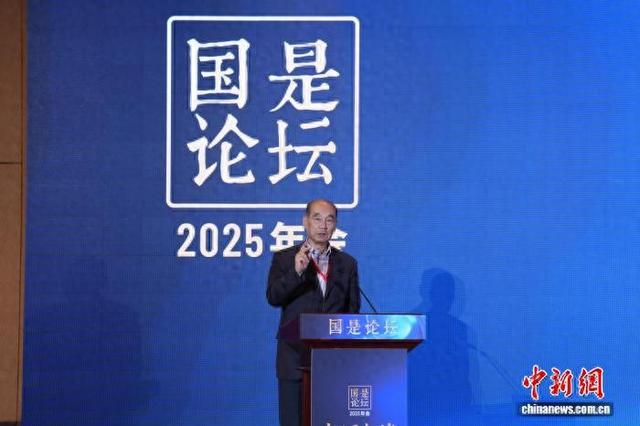
王忠民:AI算力的尽头是电力,电力尽头是绿电
Zhong Guo Xin Wen Wang· 2025-12-16 08:59
Core Insights - The forum emphasized the importance of green electricity as a fundamental requirement for AI capabilities, highlighting that the future of AI is closely tied to environmental sustainability [1][5] - The discussion pointed out that the end goal of AI is aligned with ESG (Environmental, Social, and Governance) principles, indicating a shift towards zero-carbon initiatives in various sectors [3][7] Group 1: AI and Energy - AI's computational power is fundamentally dependent on electricity, which in turn must transition to green energy sources to meet ESG goals [3][7] - The evolution of data centers from water cooling to liquid cooling is a significant advancement in reducing energy consumption and resource use [3][7] Group 2: Open Source and CVC - The concept of CVC (Corporate Venture Capital) is introduced as a means to invest in startups using open-source platforms, allowing for minimal initial costs for entrepreneurs [4][8] - The marginal cost of development approaches zero when utilizing open-source resources, enabling widespread access and innovation [4][8] - The potential for innovation costs to be nearly zero is highlighted, suggesting a transformative impact on the entrepreneurial landscape in the AI era [4][8]
以商业地产之力促产城融合发展
Zheng Quan Ri Bao· 2025-11-21 16:22
Core Viewpoint - The article emphasizes the importance of urban high-quality development during the "14th Five-Year Plan" period, highlighting the need for cities to transition from "quantitative accumulation" to "qualitative leap" through industrial integration and commercial real estate transformation [1] Group 1: Role of Commercial Real Estate - Commercial real estate is evolving into an "accelerator" for industrial innovation, responding to the diverse needs arising from emerging industries such as biomedicine and new energy vehicles, which significantly increase the demand for customized spaces like laboratories and industrial parks [3] - The expansion of digital economy infrastructure is driving a surge in demand for new types of real estate, such as data centers and smart office spaces, potentially leading to investment scales reaching trillions of yuan, representing a substantial market opportunity [3] Group 2: Multi-Industry Integration - The traditional commercial real estate model of merely building and renting properties is becoming obsolete; instead, there is a shift towards creating integrated "commercial bodies" that combine multiple industry functions and smart infrastructure [4] - Developers are encouraged to adapt their layouts and industry combinations based on urban development trends, capturing differentiated demand opportunities from regional industries and moving towards a composite functional development path that aligns with smart city initiatives [4] Group 3: Urban Renewal as a New Engine - Urban renewal is crucial for the high-quality development of large and mega cities, with a projected market capacity of approximately 20 trillion yuan during the "14th Five-Year Plan" period [5] - The focus of urban renewal should be on creating a new urban ecosystem through the integration of culture, technology, industry, and commerce, promoting the use of green and low-carbon products to reconstruct urban commercial spaces [5] Group 4: Challenges and Opportunities - Integrating cultural and industrial elements into commercial real estate poses challenges, as homogenized developments may not enhance value; thus, developers must strategize on resource integration to ensure a complete and orderly operational ecosystem [6] - Innovations in financial tools like REITs are opening new funding channels for commercial real estate, providing the necessary support for innovation and enhancing the role of commercial real estate as a driving force for urban renewal [6]
新基建开路 “十五五”抢先机 “适度超前”拓展增长空间
2 1 Shi Ji Jing Ji Bao Dao· 2025-11-04 23:24
Core Viewpoint - The development of new-type infrastructure is essential for achieving significant breakthroughs in the new quality productivity during the "15th Five-Year Plan" period, as highlighted in the Central Committee's suggestions for the national economic and social development plan [1][5]. Group 1: New-Type Infrastructure Construction - The "15th Five-Year Plan" emphasizes "appropriately ahead" construction of new-type infrastructure, including information communication networks, national integrated computing networks, and major scientific and technological infrastructure [1][2]. - The "14th Five-Year Plan" also called for accelerating the construction of new-type infrastructure, but the "15th Five-Year Plan" specifically mentions "appropriately ahead" deployment [2][3]. - Experts believe that "appropriately ahead" aligns with the urgent need for transitioning domestic economic development stages and upgrading growth momentum [5][6]. Group 2: Strategic Emerging Industries - The suggestions focus on building emerging pillar industries and accelerating the development of strategic emerging industry clusters such as new energy and low-altitude economy [1][9]. - Future industrial development heavily relies on the support of new-type infrastructure, particularly in computing and communication [1][9]. - The government aims to drive industrial upgrades through new infrastructure while managing debt risks, indicating a shift in fiscal policy towards digitalization, intelligence, and green sectors [6][9]. Group 3: Integration of Technology and Economy - The "15th Five-Year Plan" aims to promote deep integration of technological innovation and industrial innovation, as well as the integration of the real economy and digital economy [7]. - The plan outlines four key tasks: optimizing traditional industries, nurturing emerging industries, promoting high-quality service development, and constructing a modern infrastructure system [7][8]. - The focus on modern infrastructure is intended to provide a solid foundation for high-quality development across various industries, ensuring efficient operation of advanced manufacturing and modern service sectors [8][9]. Group 4: Implementation Strategies - "Appropriately ahead" requires identifying directions, controlling rhythms, and maintaining determination in new-type infrastructure investments, which are large-scale and long-term [9]. - The plan emphasizes dynamic planning, flexible design, and phased implementation to balance foresight and practicality [9]. - The government aims to avoid blind expansion and resource waste by ensuring that infrastructure development aligns with industrial needs, technological trends, and economic capacity [9].