
算力基建

Search documents
AI泡沫?三个维度拆解工业富联后市走向
Quan Jing Wang· 2025-11-07 01:55
Core Viewpoint - The AI concept stocks are experiencing increased volatility, raising questions about whether the current hype is a short-term capital speculation or a long-term opportunity driven by technological transformation [1] Capital Dimension - The high capital expenditure in the AI sector is driven by demand rather than blind investment, with Morgan Stanley predicting global capital spending by hyperscale cloud providers to reach $445 billion in 2025 and $582 billion in 2026, benefiting companies like Nvidia and Industrial Fulian [2] - The demand for AI is validated by its productivity enhancement, with Goldman Sachs estimating a 15% increase in U.S. labor productivity over the next decade due to generative AI, leading to increased corporate investment [2] - The explosive growth in computing power demand, with AI model scale growing at an annual rate of 400%, is outpacing the 40% annual decline in computing costs, creating a supply-demand gap that drives continuous capital influx [2] Industry Dimension - The necessity for companies to invest in AI has shifted from being optional to essential, as AI has become a critical area for competition, with the goal of establishing a "digital computing moat" [3] - Generative AI is projected to create $20 trillion in present value benefits, with $8 trillion directed towards enterprises, significantly impacting market share and profitability over the next decade [3] - Industrial Fulian reported a revenue of 603.93 billion yuan in the first three quarters of 2025, a 38.4% year-on-year increase, and a net profit of 22.49 billion yuan, up 48.52% year-on-year, highlighting its growth driven by AI server manufacturing and computing center construction [3] Market Dimension - The fluctuations in AI concept stocks are attributed to emotional volatility rather than a reversal of trends, with the AI industry following a spiral growth pattern characterized by technological breakthroughs and demand validation [5] - Investor sentiment in the emerging AI sector often leads to "expectation gaps," resulting in alternating periods of excessive optimism and pessimism, but long-term trends remain unaffected as AI's problem-solving capabilities improve [5] - The current market adjustments are seen as phase corrections rather than signs of a bubble burst, with rational capital investment and strategic necessity for AI positioning being key factors [6] Conclusion - The volatility in AI concept stocks is a phase adjustment rather than a trend reversal, with demand-driven capital investment and strategic importance of AI as a competitive field being crucial [6] - Investors are encouraged to focus on AI infrastructure, core chips, and vertical applications with demand support, considering companies like Industrial Fulian, New Yisheng, Cambrian, Tuwei Information, and Shenghong Technology as long-term tracking targets [7]

国泰海通 · 晨报0922|宏观、策略、海外策略、固收
国泰海通证券研究· 2025-09-21 13:55
Macro Overview - Overall consumption is improving, with notable increases in automobile retail and high-end liquor prices due to seasonal demand and base effects [4] - Service consumption indicators such as urban population flow and movie box office revenues are also showing improvement, although inter-city migration indices have turned negative year-on-year [4] - Investment in infrastructure is accelerating with special bond issuance, while real estate sales are recovering during the peak season, despite a cooling land market and low construction start data [4] - Production across most industries is declining, with sectors like power generation and steel adjusting due to demand or profit impacts [4] - Inventory levels are primarily focused on replenishment, with industrial prices rising and CPI showing divergence [4] - The dollar index has slightly increased, while the RMB has appreciated moderately [4] Strategy Insights - Market adjustments present opportunities, and the Chinese stock market is expected to continue its upward trajectory [7] - The "transformation bull market" is driven by the demand for assets and capital market reforms aimed at improving investor returns [7] - Recent communication between Chinese and U.S. leaders indicates a stabilization of short-term risks, while a weak dollar and overseas interest rate cuts favor Chinese monetary easing [7] - The consensus on economic expectations is overly cautious, but there are signs of stabilization in revenue and inventory growth for Chinese listed companies [8] - Emerging industries are entering a new capital expenditure expansion cycle, indicating increased certainty in economic development [9] Industry Comparisons - The technology sector remains a key focus, with recommendations for investments in internet, semiconductor, innovative pharmaceuticals, and robotics [9] - Financial stocks are suggested for gradual allocation due to potential increases in dividend returns after recent adjustments [9] - The shift in economic governance is expected to improve supply-demand dynamics for cyclical goods such as non-ferrous metals, chemicals, real estate, and new energy [9] - Recommendations for consumer sectors include national brands in retail and cosmetics, as well as traditional categories like agriculture and food and beverage [9] Thematic Recommendations - Positive outlook on domestic computing power infrastructure and increased penetration of domestic supply chains [10] - Favorable conditions for commercial aerospace investments due to satellite communication license issuance [10] - Anticipation of improved pricing expectations in sectors benefiting from economic governance changes, such as lithium batteries and energy storage [10] - Growth in embodied intelligence with accelerated equity financing in robotics and logistics [10] Hong Kong Dividend Assets - Hong Kong dividend assets are characterized by stable performance and sustainable cash flows, offering higher dividend yields compared to A-shares [15] - The average cash dividend payout ratio for Hong Kong stocks from 2017 to 2024 is 44%, significantly higher than A-shares at 36% [15] - The dividend yield for the Hang Seng Index is 2.9%, compared to 1.9% for the Wind All A Index, indicating a clear advantage for Hong Kong stocks [15] - Hong Kong dividend assets have a lower valuation level, with PE and PB ratios of 7.2x and 0.6x, respectively, compared to 7.9x and 0.8x for the CSI Dividend All Return Index [15] Market Dynamics - Both Hong Kong and A-share dividend assets exhibit defensive characteristics in weak markets, but absolute returns are positively correlated with market performance [16] - Hong Kong dividend assets face higher taxation and are more sensitive to U.S. Treasury yields compared to A-shares [16] - Current market conditions suggest that Hong Kong dividend assets may offer better value for allocation, especially as institutional demand for dividend stocks increases [17] - Long-term trends indicate a strengthening of dividend policies and a low-interest environment, enhancing the appeal of Hong Kong dividend assets for sustained investment [17]


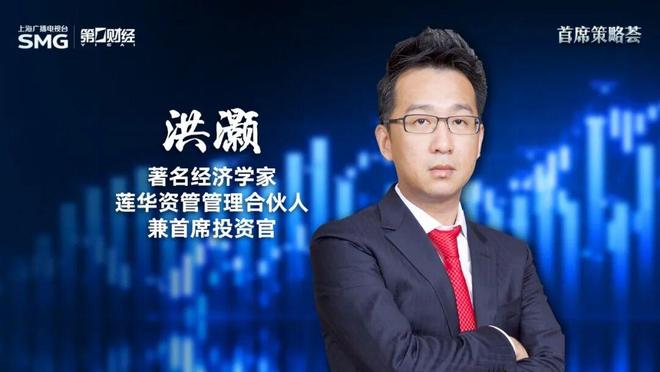
洪灏:当前A股上涨概率远大于下跌概率 只关心股市走势会错过很多板块机会
Di Yi Cai Jing Zi Xun· 2025-08-27 12:54
Core Viewpoint - The recent market correction is a normal occurrence after a strong rally, and the probability of A-shares rising in the second half of the year is significantly higher than that of falling [2][4][6]. Market Trends - The Shanghai Composite Index has seen a continuous rise for four months, nearing 3900 points, making the current pullback not surprising [4]. - The market's upward momentum is primarily driven by technology and financial sectors, with a focus on innovative drugs, new technologies, and new consumption [4][8]. Investment Opportunities - Many small-cap stocks and new leading stocks are achieving profitability, indicating that the current market is more about the realization of expectations [5]. - The influx of 5 trillion yuan in new bank deposits is providing ample liquidity, with funds shifting from fixed income to equities [6]. Sector Performance - The initial phase of the market rally was driven by valuation expansion, followed by the realization of profit growth [7]. - The technology sector, particularly in areas like AI, computing infrastructure, humanoid robots, and semiconductors, is expected to continue performing well [8]. A/H Share Dynamics - A-shares are anticipated to outperform H-shares in the second half of the year, with A-shares having unique stocks not available in the H-share market [7][8].
财信证券宏观策略周报(6.9-6.13):市场情绪回暖,重新关注科技方向-20250608
Caixin Securities· 2025-06-08 11:20
Group 1 - The report indicates a recovery in market sentiment, with a renewed focus on technology sectors, particularly in the context of the A-share market showing resilience despite geopolitical tensions [7][17][19] - The A-share market is expected to maintain upward momentum until late June, driven by favorable macroeconomic conditions and potential easing of US-China trade tensions [17][18] - The report highlights that the overall market is in a continuation phase of an upward trend since the 924 market rally, with the Wind All A Index currently at 5156 points, indicating room for further growth [17][24] Group 2 - Investment recommendations include a focus on technology growth sectors, particularly AI, which has seen reduced crowding and is expected to benefit from potential policy relaxations regarding technology restrictions [24][25] - The report emphasizes the importance of domestic consumption, particularly in emerging sectors such as health, tourism, and pet economy, as a counterbalance to uncertainties in overseas demand [24][25] - High dividend sectors are highlighted as having sustained value, with particular attention to banking, coal, public utilities, and transportation as potential investment areas [25][26] Group 3 - The report notes that the small-cap stocks represented by the CSI 2000 index have a high price-to-earnings ratio of 137.40 times, indicating accumulated risks in this segment [18][19] - The report anticipates that the upcoming Lujiazui Forum in June 2025 will be a key event for financial policy announcements, which could influence market dynamics [22][24] - The report also discusses the impact of US economic data, particularly the better-than-expected non-farm payrolls, which may delay Federal Reserve interest rate cuts and affect market sentiment [23]
财信证券宏观策略周报(5.12-5.16):指数震荡偏强,重回科技成长主线-20250511
Caixin Securities· 2025-05-11 11:13
Group 1 - The report indicates a strong rebound in the A-share market, with the Shanghai Composite Index rising by 1.92% to close at 3342 points, and the ChiNext Index increasing by 3.27% during the week of May 5-9, 2025 [8][11][18] - The report highlights that the market is supported by favorable news such as the U.S.-China trade talks, the implementation of a comprehensive financial policy to stabilize market expectations, and better-than-expected export and CPI data for April [18][21][22] - The report notes that the current valuation of the Wind All A Index is at 18.91 times earnings, which is at the 56.69% percentile of the last ten years, indicating that the valuation has largely recovered from the impacts of the tariff war [18][19][21] Group 2 - The report emphasizes the focus on the AI industry as a key investment theme, with significant increases in capital expenditures from major Chinese internet companies like Alibaba and Tencent, which saw increases of 80% and 113.98% respectively in Q4 2024 [18][29] - The report suggests that the domestic AI industry chain's performance is expected to significantly improve by mid-2025, potentially leading to a major upward trend in earnings [18][29] - The report recommends focusing on sectors with high earnings growth, including the AI industry chain, self-sufficiency initiatives, and consumer sectors benefiting from domestic demand expansion [29][30]
机构论后市丨科技行情短期可能延续;指数大概率或仍以震荡偏强为主
Di Yi Cai Jing· 2025-05-11 10:36
Group 1 - The A-share market is expected to maintain a strong oscillating trend in the short term, driven by increased market attention and the effectiveness of "stabilization funds" [1] - Focus areas include the AI industry chain, self-controllable sectors, and consumption sectors benefiting from domestic demand expansion, particularly in service consumption [1] - High dividend sectors are expected to continue attracting investment, especially in banking, coal, public utilities, and transportation [1] Group 2 - The market has recovered from previous negative impacts, but underlying negative factors have not been completely eliminated, suggesting a period of consolidation ahead [2] - It is recommended to adjust the current portfolio by reducing exposure to high-growth technology sectors and reallocating to financial, state-owned enterprises, and dividend-paying sectors [2] Group 3 - The technology sector is likely to continue its strong performance in the short term, with TMT (Technology, Media, and Telecommunications) expected to outperform the market [3] - Supportive policies and industry trends are driving the technology sector, with liquidity conditions also becoming more favorable [3] - Historical trends indicate that TMT typically shows strong performance relative to the market in May, driven by policy and industry catalysts [3]
财信证券宏观策略周报(4.28-5.2):政策加力应对外部冲击,聚焦扩内需与AI产业投资方向-20250427
Caixin Securities· 2025-04-27 12:28
Group 1 - The report emphasizes the need for policies to address external shocks, focusing on expanding domestic demand and investing in the AI industry [1][4][17] - The macro policy tone from the April Politburo meeting is described as both proactive and reserved, with an emphasis on implementing more active macro policies and enhancing counter-cyclical adjustments [1][17] - The report highlights the importance of service consumption as a key driver for expanding domestic demand, alongside a strong focus on technological innovation and the implementation of the "AI+" initiative [1][17] Group 2 - The A-share market showed a mixed performance, with the Shanghai Composite Index rising by 0.56% and the Shenzhen Component Index increasing by 1.38% during the week of April 21-25 [7][11] - The report notes that sectors such as automotive, beauty care, and basic chemicals performed well, indicating a recovery in the export-related industries [7][14][16] - The report suggests that the AI industry is expected to see significant growth, with major Chinese internet companies increasing their capital expenditures significantly in Q4 2024, indicating a strong future performance for the domestic AI industry chain [14][24] Group 3 - The report indicates that the overall market valuation is relatively low, with the Wan De All A Index's price-to-book ratio at 1.53, which is below historical averages, suggesting strong long-term investment value [14][41] - The report highlights the potential for structural market trends post-May Day holiday, with a focus on domestic demand expansion and the AI industry as key themes [15][24] - The report identifies specific sectors for investment, including service consumption, AI industry chain components, and self-sufficiency areas such as national defense and industrial machinery [24][25][26]