
红利质量指数

Search documents
多策略红利指数有哪些种类呢?|投资小知识
银行螺丝钉· 2026-02-11 13:54
Group 1 - The article discusses various multi-strategy dividend indices, which combine different investment strategies such as dividend strategy, low volatility strategy, and leading company strategy [2][5]. - There are three main categories of multi-strategy dividend indices: those that require specific stock selection criteria, those that focus on company quality, and those that address market volatility [3][4][10]. Group 2 - The first category includes indices that focus on state-owned enterprises and companies with strong profitability, such as the Central Enterprise Dividend Index and the Consumer Dividend Index [3]. - The second category emphasizes the quality of companies, selecting those with strong earnings potential to ensure stable dividends, including the Leading Dividend Index and the Dividend Quality Index [4][5]. - The third category incorporates a low volatility strategy, selecting companies with relatively low stock price volatility, which often indicates lower speculative trading and potentially lower valuations [10]. Group 3 - The article highlights the importance of combining dividend strategies with quality strategies to avoid issues like unsustainable dividends, as seen in past cases with high-debt real estate companies [7][8]. - A requirement for indices is that companies must have a history of continuous dividends over the past three years, which helps mitigate risks associated with dividend sustainability [8].


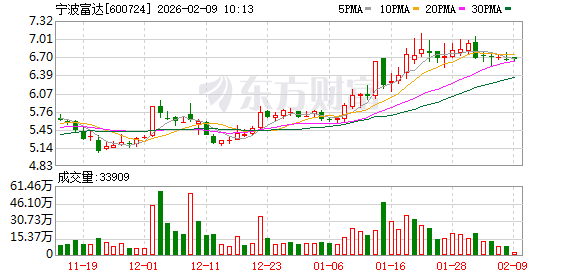
分红早知道|最近72小时内,宁波富达等1家A股上市公司发布分红派息实施公告!
Mei Ri Jing Ji Xin Wen· 2026-02-09 02:12
Group 1 - The Low Volatility Dividend Index (H30269.CSI) selects 50 securities with good liquidity, continuous dividends, moderate payout ratios, positive growth in earnings per share, high dividend yields, and low volatility, with a dividend yield of 4.53% as of February 6 [2] - The Low Volatility Dividend ETF (华夏 159547) is the ETF with the lowest comprehensive fee tracking this index, with quarterly assessments for dividends [2] - The Quality Dividend Index (931468.CSI) selects 50 listed companies with continuous cash dividends, high payout ratios, and strong profitability, with a dividend yield of 2.87% as of February 6 [2] Group 2 - The Quality Dividend ETF (159758) is the only ETF tracking the Quality Dividend Index, with associated funds A class (016440), C class (016441), and D class (024263) [2] - Ningbo Fuda announced a cash dividend of 0.07 yuan per share (tax included), with the record date on February 12, 2026, and the ex-dividend date on February 13, 2026 [2] - Ningbo Fuda is categorized under the real estate sector and is not part of the Low Volatility Dividend Index or the Quality Dividend Index [2]

分红早知道|最近24小时内,索宝蛋白、立讯精密、华秦科技和万达轴承等4家A股上市公司发布分红派息实施公告!
Mei Ri Jing Ji Xin Wen· 2026-02-06 02:12
Group 1 - The Low Volatility Dividend Index (H30269.CSI) selects 50 securities with good liquidity, continuous dividends, moderate payout ratios, positive growth in dividends per share, high dividend yields, and low volatility, with a dividend yield of 4.53% as of February 5 [1] - The Low Volatility Dividend ETF (华夏, 159547) tracks this index and has the lowest comprehensive fee rate among ETFs, with quarterly evaluations for dividends [1] - The Dividend Quality Index (931468.CSI) selects 50 securities with continuous cash dividends, high payout ratios, and strong profitability, with a dividend yield of 2.88% as of February 5 [1] Group 2 - Wanda Bearings announced a cash dividend of 2.10 RMB per 10 shares (tax included), with the record date on February 11, 2026, and the ex-dividend date on February 12, 2026 [2] - Huayin Technology declared a cash dividend of 0.06 RMB per share (tax included), with the same record and ex-dividend dates as Wanda Bearings [2] - Luxshare Precision announced a cash dividend of 1.60 RMB per 10 shares (tax included), also with the same record and ex-dividend dates [2] - Sobor Protein declared a cash dividend of 0.07 RMB per share (tax included), with the same record and ex-dividend dates [2]



分红早知道|最近24小时内,浙商证券1家A股上市公司发布分红派息实施公告!
Mei Ri Jing Ji Xin Wen· 2026-01-28 04:27
Group 1 - The Low Volatility Dividend Index (H30269.CSI) selects 50 securities with good liquidity, continuous dividends, moderate payout ratios, positive growth in dividends per share, high dividend yields, and low volatility, with a dividend yield of 4.59% as of January 27 [1] - The Low Volatility Dividend ETF (华夏 159547) is the ETF with the lowest comprehensive fee tracking this index, with quarterly evaluations for dividends [1] - The Quality Dividend Index (931468.CSI) selects 50 listed companies with continuous cash dividends, high payout ratios, and strong profitability, with a dividend yield of 2.95% as of January 27 [1] Group 2 - The Quality Dividend ETF (159758) is the only ETF tracking the Quality Dividend Index, with associated connection funds A (016440), C (016441), and D (024263) [1] - Zhejiang Securities announced a cash dividend of 0.07 yuan per share (tax included), with the record date on February 3, 2026, and the ex-dividend date on February 4, 2026 [1] - The announcement is sourced from the "Zhejiang Securities Co., Ltd. 2025 Third Quarter Equity Distribution Implementation Announcement" [1]

分红早知道|最近24小时内,巨化股份等1家A股上市公司发布分红派息实施公告!
Mei Ri Jing Ji Xin Wen· 2026-01-22 01:29
Group 1 - The Low Volatility Dividend Index (H30269.CSI) selects 50 securities with good liquidity, continuous dividends, moderate payout ratios, positive growth in dividends per share, high dividend yields, and low volatility, with a dividend yield of 4.84% as of January 21 [1] - The Low Volatility Dividend ETF (华夏 159547) is the ETF with the lowest comprehensive fee tracking this index, with quarterly assessments for dividends [1] - The Quality Dividend Index (931468.CSI) selects 50 listed companies with continuous cash dividends, high payout ratios, and strong profitability, with a dividend yield of 3.49% as of January 21 [1] Group 2 - The only ETF tracking the Quality Dividend Index is the Quality Dividend ETF (159758), with associated connection funds A class (016440), C class (016441), and D class (024263) [1] - Juhua Co., Ltd. announced a cash dividend of 0.18 yuan per share (tax included), with the record date on January 28, 2026, and the ex-dividend date on January 29, 2026 [1] - Juhua Co., Ltd. is classified under the primary industry of basic chemicals and is not part of the Low Volatility Dividend Index or the Quality Dividend Index [1]

分红早知道|最近72小时内,炬华科技、世运电路、长城证券等3家A股上市公司发布分红派息实施公告!
Mei Ri Jing Ji Xin Wen· 2025-12-15 04:23
Group 1 - The Low Volatility Dividend Index (H30269.CSI) includes 50 securities with good liquidity, continuous dividends, moderate payout ratios, positive growth in dividends per share, high dividend yields, and low volatility, with a dividend yield of 4.40% as of December 12 [1] - The Low Volatility Dividend ETF (159547) tracks this index and has the lowest comprehensive fee rate among ETFs, with quarterly assessments for dividends [1] - The Dividend Quality Index (931468.CSI) consists of 50 listed companies that provide continuous cash dividends, have high payout ratios, and exhibit strong profitability, with a dividend yield of 3.49% as of December 12 [1] Group 2 - Juhua Technology announced a cash dividend of 3.00 RMB per 10 shares (tax included), with the record date on December 18, 2025, and the ex-dividend date on December 19, 2025 [1] - Shenyuan Circuit declared a cash dividend of 0.30 RMB per share (tax included), with the record date on December 19, 2025, and the ex-dividend date on December 22, 2025 [2] - Great Wall Securities will distribute a cash dividend of 0.76 RMB per 10 shares (tax included), with the record date on December 18, 2025, and the ex-dividend date on December 19, 2025 [2]

如果此时满仓红利,该怎么办?
雪球· 2025-09-11 07:56
Core Viewpoint - The article discusses the current challenges faced by investors heavily invested in dividend stocks, highlighting the underperformance of dividend indices compared to broader market indices since June 23, 2025, and suggests strategies for adjusting portfolios to improve returns [7][9][21]. Group 1: Market Performance - Since June 23, 2025, broad-based and actively managed equity funds have seen gains of 20% or more, while dividend indices like the Shanghai Dividend and CSI Dividend have seen maximum gains of no more than 5% [7]. - The article notes that investors who are fully invested in dividend stocks may be experiencing significant discomfort due to the poor performance of these assets [8]. Group 2: Investor Strategies - For long-term investors who have held dividend stocks through various market cycles, the article suggests that they may not need to take any action, as they understand the nature of these assets [8]. - For newer investors who entered the market during the recent dividend bull run, the article provides actionable strategies to navigate the current market conditions [9][21]. Group 3: Transitioning Investment Focus - The article emphasizes that both dividend and growth assets cannot be effective or ineffective in the long term, suggesting a potential shift towards growth-oriented investments while maintaining a balanced risk profile [11]. - It proposes that investors consider reallocating from pure dividend holdings to deep value fund managers who have shown better performance relative to dividend indices [14]. Group 4: Upgrading Dividend Indices - The article recommends upgrading dividend indices by incorporating growth factors, suggesting two main investment directions: 1. Free Cash Flow series indices, which have outperformed traditional dividend indices since June 23, 2025 [16][17]. 2. Dividend Quality indices, which have also shown significant gains compared to pure dividend indices [18]. Group 5: Additional Optimization Methods - The article suggests considering large-cap broad-based or value-oriented indices, such as the CSI 300 or Shanghai Composite Index, as they are expected to outperform pure dividend strategies in the near term [19]. - It also recommends exploring dividend-paying stocks with growth attributes, particularly in sectors like consumer goods and liquor, which may offer better returns than traditional dividend stocks [20]. Conclusion - The article concludes that rather than making drastic changes to investment portfolios, investors should focus on optimizing their holdings to align with current market conditions while maintaining patience [21][22].

底仓再审视(一):红利与现金流,买在无人问津处
Guoxin Securities· 2025-08-14 13:28
Group 1: Report Industry Investment Rating - Not available in the provided content Group 2: Core Views of the Report - The high - dividend strategy's returns come from capital gains and dividend income, investing in mature - stage companies. It forms a positive cycle of "stable profits - continuous dividends - increased ROE", supporting its high win - rate [8]. - Market mainstream high - dividend indices include pure dividend indices, broad - based dividend enhancements, and Smart Beta dividend strategies, with significant differences in weighting methods, sampling constraints, number of components, and industry distributions [8]. - There are three key cognitive biases about the high - dividend strategy: it can outperform the market in various market conditions, not just in bear markets; interest rate movements have no significant overall impact; and the "ex - rights filling" market is not significant [8]. - The allocation of high - dividend assets should follow the principles of "long - termism, considering quality factors, avoiding crowded chips, and valuing expected dividends" [8]. - "Cash - cow" enterprises have abundant and stable cash flows, and their essence is related to business models, including resource allocation and profit - driving models [8]. - Different asset and liability structures form four cash - cow paradigms, and investing in cash - cow assets should combine business model paradigms and industrial cycles [8]. Group 3: Summaries According to the Table of Contents High - Dividend Strategy's Income Source and Nature - The high - dividend strategy's income comes from capital gains (due to stock price changes and value - restoration) and dividend income. Its essence is to invest in mature companies with limited investment returns, low revenue and net - profit growth, but strong profitability, high ROE, and good cash - flow protection [8][22][26]. - From 2014 to July 2025, the annualized returns of four typical dividend indices (CSI Dividend, Dividend Low - Volatility, 300 Dividend, and Dividend Value) reached 13.22%, 13.86%, 13.84%, and 15.72% respectively, with dividends contributing 71%, 68%, 71%, and 58% to these returns [30]. - High - dividend companies in the mature stage tend to pay dividends due to limited investment returns. Dividends are an important way to increase ROE, and high - dividend companies generally have strong cash - flow protection capabilities [33][37]. High - Dividend Strategy's Available Investment Tools - Mainstream high - dividend strategy indices include pure dividend indices, broad - based dividend enhancements, and Smart Beta dividend strategies. The products linked to the Dividend Low - Volatility and CSI Dividend indices have the largest scale [48]. - These indices differ in weighting methods (dividend - rate weighted, volatility weighted, comprehensive - score weighted, free - float market - value weighted), sampling methods (most require three - year continuous dividends and have dividend - payout ratio constraints), number of components (mostly 50 or 100), and other constraints (such as company attributes, ROE fluctuations) [58][61]. - In terms of industry distribution, CSI Dividend and Dividend Low - Volatility are relatively concentrated. The CSI Dividend Index has a bank weight of over 25%, and the Dividend Low - Volatility Index has a bank weight of up to 50% [64]. - Year - to - date, dividend indices have generally underperformed the Wind All - A Index. In the past 10 years, Smart Beta dividend strategies have been relatively dominant. High - dividend indices generally have a lower turnover rate relative to the All - A Index [67][81]. Three Cognitive Gaps in the High - Dividend Strategy - The high - dividend strategy is not just a "bear - market haven". It can outperform the market in bull markets, volatile markets, and during bull - bear transitions, such as in the 2006 - 2007 bull market, the 2008 and 2022 bear markets, and the 2015 - 2018 bull - bear transition [8][98]. - Interest rate movements have little impact on the high - dividend strategy. In the interest - rate up - cycle, inflation supports pro - cyclical assets; in the down - cycle, the dividend - income advantage is magnified, and absolute - return funds flow in [141]. - The "ex - rights filling" market is not significant. The probability of positive returns after ex - rights and ex - dividends is often less than 50% in the short - term, and the "ex - rights filling" market usually occurs after 180 trading days [151]. Allocation of High - Dividend Assets - The allocation of high - dividend assets should follow the principles of long - termism, considering quality factors, avoiding crowded chips, and valuing expected dividends. Long - term holding works well in a balanced market. Strategies can include selecting indices, constructing "high - dividend + low - turnover" portfolios, and focusing on expected dividend rates [8][178]. - Operationally, the best way to invest in dividend assets is Buy & Hold. Different investment methods for bank stocks (fixed - point buying, continuous定投, and inverted - triangle adding) have different returns, and the combination of dividend and micro - cap stocks in certain weights can achieve a better risk - return ratio [184]. From "High - Dividend" to "Cash - Cow" - "Cash - cow" enterprises have abundant and stable cash flows, and understanding their essence requires considering business models, including resource allocation (reflected in the balance sheet) and profit - driving models (reflected in the income statement) [8]. Cash - Cow Paradigms in Heavy - Asset and Light - Asset Industries - Four cash - cow paradigms are formed by different asset and liability structures: heavy - asset high - liability industries rely on asset scale and quality; heavy - asset low - liability industries rely on cost control; light - asset brand + channel - driven industries rely on brand premium and channel efficiency; light - asset product + channel - driven industries rely on product and channel efficiency [8]. How to Invest in Cash - Cow Assets - Investing in cash - cow assets should combine business model paradigms and industrial cycles. The best time to invest is when the industrial cycle shifts from the growth stage to the exit stage, and high - quality companies within the paradigms should be selected [8].
聊聊几个投资红利基金的必要认知
天天基金网· 2025-07-23 11:42
Core Viewpoint - The article emphasizes the importance of dividend strategies in investment, highlighting their ability to provide stable returns through dual sources of income: dividend income and capital appreciation [2][11][48]. Group 1: Nature of Dividend Funds - Dividend funds are fundamentally equity assets, not fixed-income products, despite their high dividend yields [5][11]. - Investors often misinterpret dividend funds as low-risk investments, overlooking their inherent market volatility [8][9]. - The resilience of dividend funds is demonstrated by their performance during market downturns, where they have shown a tendency to recover faster than broader indices [13][14]. Group 2: Understanding Dividend Distribution - Dividend distribution is not a zero-sum game; it reflects a company's financial health and commitment to shareholder returns [18][20]. - Companies that consistently pay dividends are typically in a mature phase with stable cash flows, indicating strong operational performance [19][21]. - The reinvestment of dividends can lead to significant compounding effects over time, enhancing overall returns [21][22]. Group 3: Types of Dividend Indices - There are three main types of dividend indices: traditional dividend strategies focusing on high dividend yields, enhanced dividend strategies incorporating additional factors, and Hong Kong stock dividend strategies benefiting from unique market conditions [30][34][36]. - Enhanced dividend strategies have shown higher excess returns compared to pure high-dividend strategies, albeit with increased volatility [36]. - The concentration of dividend indices in the banking sector necessitates careful consideration for investors concerned about potential market fluctuations [36]. Group 4: Dynamic Nature of Dividend Strategies - Dividend indices are dynamically updated, ensuring that they maintain a relatively high dividend yield by replacing underperforming stocks with new candidates [40][41]. - The relationship between stock price and dividend yield is complex, with market dynamics influencing both [42][43]. - The article concludes that understanding the nuances of dividend strategies can help investors make informed decisions and achieve stable cash flows over the long term [48].

质量策略指数,投资价值如何?(精品课程)
银行螺丝钉· 2025-03-20 13:53
文 | 银行螺丝钉 (转载请注明出处) 有朋友问, MSCI质量、红利质量、500质量成长、300质量成长低波···有何区别? 不同的质量指数有啥特点,当前估值如何?有哪些对应的指数基金可以选择呢? 针对大家的这些疑问,螺丝钉也通过直播课,进行了讲解。 长按识别下面二维码,添加 @课程小助手 微信,回复「 0307 」即可观看直播回放。 (提示:回复后可以耐心等待几秒哦~) 质量策略指数:挑选高ROE的股票 A股常见的指数,主要分为四类: 宽基指数、策略指数、行业指数和主题指数。 其中,策略指数大多是历史上一些投资大师或机构,所采用的经典投资策略。 将这些策略的规则进行提炼,就得到了策略指数。 主流的有6大策略: 除了这6大类之外,还有一些后起之秀,比如基本面、护城河、自由现金流、ESG等策略。 未来这些策略的规模发展壮大,也可能成为主流策略指数。 其中,质量策略指数就属于策略指数中的一类。 通常是挑选高 ROE 的股票。 ROE=盈利/净资产,代表净资产收益率,可以衡量上市公司运作资产的效率。 ROE越高,代表公司运作资产的效率越高。 巴菲特以前就提到过:"如果非要我选择用一个指标进行选股,我会选择ROE" ...