纳指100ETF

Search documents
美国政界三大股神:特朗普画K线,佩洛西靠内幕,万斯直接躺平
雪球· 2026-03-18 13:31
Core Viewpoint - The article discusses the investment strategies of three prominent figures in American politics: Donald Trump, Nancy Pelosi, and Mike Pence, highlighting their unique approaches to wealth accumulation and market manipulation. Group 1: Donald Trump - Trump's investment strategy relies on leveraging his political power to influence market movements through social media, particularly Twitter, where he can create volatility and capitalize on it [5][6]. - An example includes a tweet that led to a significant drop in the stock market, followed by another tweet suggesting it was a good time to buy, resulting in a 2100% increase in some options [7]. Group 2: Nancy Pelosi - Pelosi's investment success is marked by a staggering return of 16,930% on her stock investments during her 38 years in Congress, compared to the 2300% increase in the Dow Jones index [9][10]. - Her strategy involves high-risk investments in large tech stocks and frequent use of options, often executing trades just before key legislative votes, raising concerns about potential insider trading [11][12][13]. Group 3: Mike Pence - Pence's investment approach is more conventional, focusing on major ETFs like the Nasdaq 100, S&P 500, and Dow Jones Industrial Average, while also diversifying into gold, oil, bonds, and cryptocurrencies [16][17]. - This strategy balances aggressive and conservative investments, allowing for potential gains during market upswings while providing stability during downturns, with an estimated return of 30% during his time campaigning for Trump [19].


收好不谢!容易出现高溢价的基金清单~
Sou Hu Cai Jing· 2025-12-26 10:17
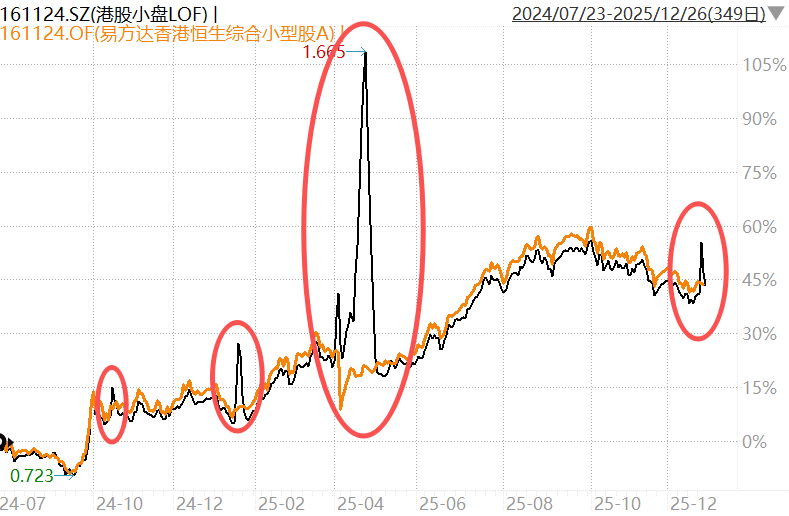
Group 1 - The article discusses the phenomenon of certain funds, particularly small-cap Hong Kong funds, being sold at high premiums intermittently, suggesting a potential trading strategy to buy during low premium periods and sell during high premium periods [5][6][10] - Specific funds that have shown high premiums include "Hong Kong Small Cap LOF" with a premium of 9.69% and "Guotou China Value LOF" with a premium of 8.63% as of September 24 [7][6] - The underlying reason for these high premiums is attributed to the small scale of the funds, making them susceptible to speculative trading [6][10] Group 2 - QDII commodity funds, particularly those related to gold, frequently experience high premiums due to factors such as purchase limits and rising underlying asset prices [10][12] - The "Gold Theme LOF" is highlighted as a fund that often sees significant premiums, with a recent premium of 18.43% [12] - The article also notes that the "National Investment Silver LOF" had a high premium but historically has not maintained such levels consistently [10][12] Group 3 - QDII stock funds, especially those linked to the Nasdaq and S&P 500, are also mentioned as having premiums due to quota restrictions and the strong performance of U.S. stocks [17][18] - The Nasdaq Technology ETF has been noted for maintaining a long-term premium of around 20% [17] - The article suggests that if premiums disappear, investors holding related funds might consider converting their holdings from off-market to on-market [17]
警惕ETF高溢价!多家公募基金提示风险
Guo Ji Jin Rong Bao· 2025-11-22 09:16
Core Viewpoint - Multiple cross-border ETFs tracking overseas indices have issued premium risk warnings, indicating that their secondary market trading prices are significantly higher than the reference net asset values, which may pose risks to investors [1][2][3]. Group 1: Premium Risk Warnings - As of November 21, several ETFs, particularly those tracking the Nasdaq index, have shown high premiums, with the Invesco Nasdaq Technology ETF trading at an 18.28% premium and the Huatai-PineBridge Nasdaq 100 ETF at a 10.65% premium [2]. - Other Nasdaq-related ETFs from various fund companies also reported premiums exceeding 5% [2]. - Fund companies, including Invesco and Dazhong, have issued warnings and may implement temporary suspensions to alert the market about these risks [3]. Group 2: Market Adjustment and Investor Sentiment - The high premiums of cross-border ETFs are attributed to strong investor interest in U.S. stocks, particularly in the Nasdaq index, despite limited gains this year [4]. - Constraints on QDII quotas and limited off-market subscriptions have led to overheated secondary market sentiment, driving up premiums [4]. - The overall performance of Nasdaq ETFs has been significantly lower than that of Hong Kong-related ETFs, with Nasdaq ETFs showing a maximum increase of 31.8% this year, while many Hong Kong ETFs have exceeded 30% [4]. Group 3: Future Risks and Market Dynamics - The high premium status of these ETFs may not be sustainable, and a cooling market sentiment could lead to a rapid decline in premiums [4][5]. - Concerns about potential adjustments in the Nasdaq index due to AI bubble fears could result in a dual impact of net asset value declines and premium contractions for high-premium cross-border ETFs [5]. - Current valuations of A-shares remain low compared to the historically high valuations of Nasdaq-weighted stocks, suggesting that A-shares may rebound first while overseas markets stabilize later [6].
ETF收评 | 跨境ETF领跌,纳指100ETF、日经225ETF分别跌4.99%、4.27%
Ge Long Hui· 2025-11-18 08:38
Market Overview - The Shanghai Composite Index fell by 0.81%, while the ChiNext Index declined by 1.16% [1] - The lithium battery industry chain experienced a widespread downturn, with electrolyte and solid-state battery sectors leading the decline [1] - The steel, chemical, coal, and non-ferrous metal industries also saw significant drops [1] Sector Performance - AI application themes remained active, with internet e-commerce concepts performing well against the trend [1] - In the ETF market, commodity ETFs led the gains, with Huaxia Fund's soybean meal ETF rising by 2.44% [1] - AI application themes showed resilience, with GF Fund's media ETF and Penghua Fund's media ETF increasing by 2.38% and 2.35%, respectively [1] - The semiconductor materials and equipment sectors strengthened, with both the招商基金 semiconductor equipment ETF and 易方达 semiconductor equipment ETF rising by 2% [1] ETF Performance - Cross-border ETFs were the biggest losers, with the Nasdaq 100 ETF and Nikkei 225 ETF dropping by 4.99% and 4.27%, respectively [1] - The battery sector experienced a comprehensive pullback, with the battery 50 ETF, battery ETF, and lithium battery ETF all declining by 4% [1] - Hong Kong automotive stocks fell, with both the Hong Kong automotive ETF and the Hong Kong automotive ETF dropping by 4% [1] - The chemical sector weakened, with the chemical 50 ETF decreasing by 3.74% [1]
美股牛市“重要支柱”出现裂痕!泡沫担忧浮现,散户“逢低买入”意愿下降
智通财经网· 2025-11-17 13:44
Group 1 - Retail investors' confidence in the U.S. stock market's rebound is gradually weakening, with a noticeable decline in their enthusiasm for buying low-priced stocks [1][2] - Retail investors have been a significant driving force behind the market rebound this year, helping the market recover from sell-offs and reach new highs [1] - Vanda Research reported that retail investors are no longer exhibiting the strong confidence seen earlier this year, which previously fueled significant stock market increases [1][2] Group 2 - Vanda Research noted that retail investors' purchasing volume was the weakest since May and among the lowest for 2025, indicating a shift in market behavior [2] - There has been a trend where retail investors are increasingly directing their funds towards more speculative stocks, such as uranium mining companies and meme stocks [2] - Since September, retail investors have shown a decline in purchasing individual stocks and have shifted towards broader market ETFs, although recent data indicates a reduction in ETF purchases as well [2][3] Group 3 - Other firms, including Bank of America Securities, have also observed signs of diminishing interest from retail investors, noting that they have become net sellers for the first time since late September [3] - Despite the cautious sentiment among retail investors, some analysts believe it is premature to issue alarms regarding their behavior, as their sentiment remains in a positive zone [4] - Analysts emphasize that without the support of retail investors, any market rebound would become increasingly challenging [4]
上周ETF市场净流入近300亿元,股票ETF净流入173亿元,SGE黄金9999、科创50、创业板人工智能“吸金”居前
Ge Long Hui· 2025-11-17 09:33
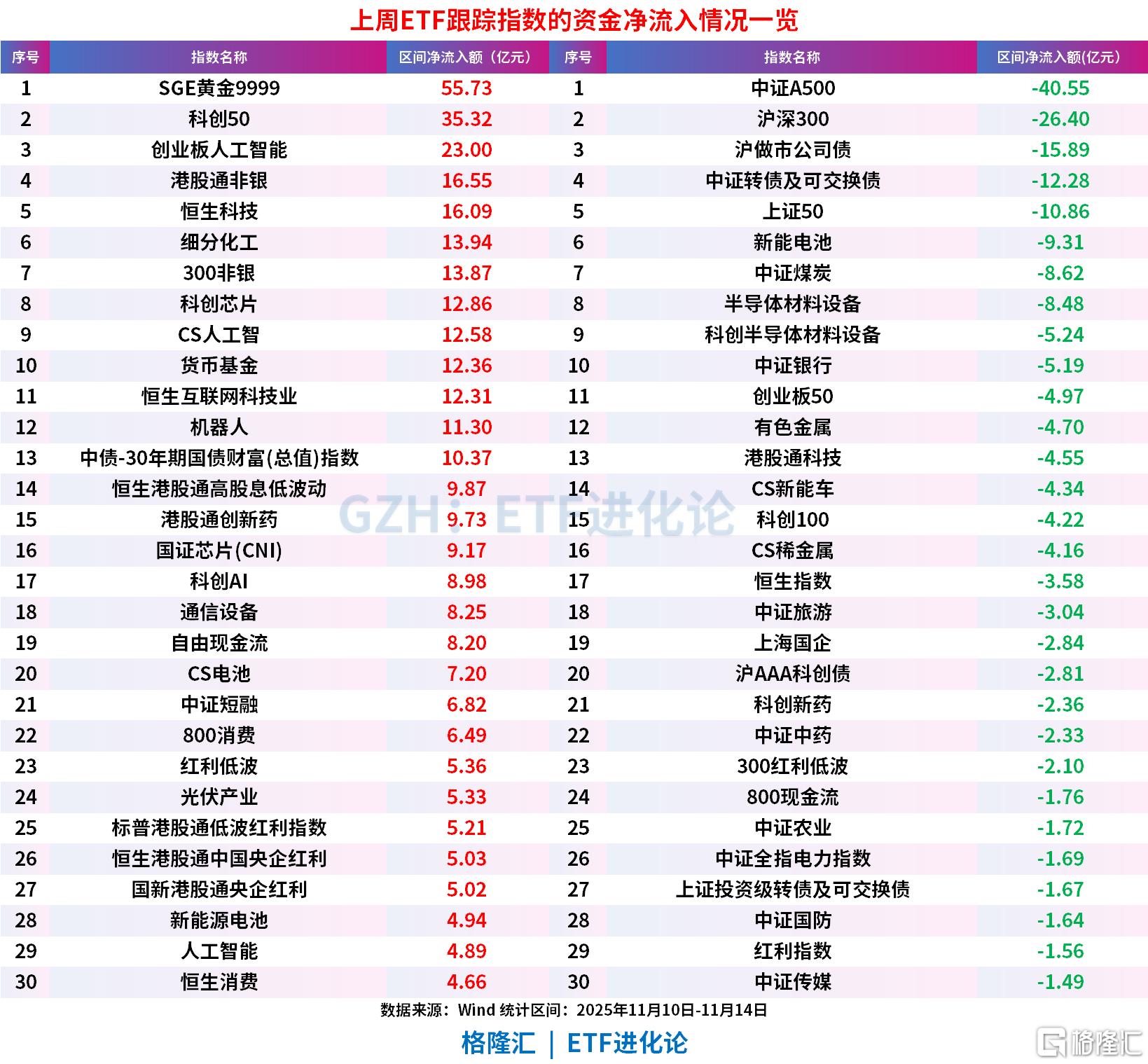
Market Overview - The A-share market experienced a decline across major indices last week, with the Shanghai Composite Index, CSI 1000, and CSI 300 showing returns of -0.18%, -0.52%, and -1.08% respectively. In contrast, the STAR 50, ChiNext Index, and SME Board Index had poorer performances with returns of -3.85%, -3.01%, and -1.71% respectively [1] - In terms of industry performance, consumer services, textiles and apparel, and pharmaceuticals led with returns of 4.81%, 4.43%, and 3.29% respectively, while communication, electronics, and computers lagged with returns of -4.90%, -4.44%, and -3.72% respectively [1] Fund Flow - The ETF market saw a net inflow of 29.317 billion yuan last week, with stock ETFs contributing 17.352 billion yuan, QDII stock ETFs 5 billion yuan, commodity ETFs 5.957 billion yuan, money market fund ETFs 1.236 billion yuan, and bond ETFs experiencing a net outflow of 0.276 billion yuan [2] - Specific indices that saw significant net inflows include SGE Gold 9999 (5.573 billion yuan), STAR 50 (3.532 billion yuan), and ChiNext AI (2.300 billion yuan) [4] - Conversely, indices such as CSI A500 and CSI 300 experienced notable net outflows of 4.055 billion yuan and 2.640 billion yuan respectively [2][4] ETF Performance - The median weekly return for stock ETFs was -1.09%, with the CSI 50 ETF showing the highest median return of 0.02% among broad-based ETFs. Consumer ETFs had a median return of 2.10%, the highest among sectors [11] - Top-performing ETFs included the Hong Kong Stock Connect Innovative Drug ETF (10.92%), Hang Seng Innovative Drug ETF (10.80%), and Tourism ETF (9.30%) [12][14] - In contrast, ETFs such as 5G Communication ETF and Communication ETF saw declines of -7.03% and -6.89% respectively [16][18] New Fund Activity - A total of 56 funds were reported last week, an increase from the previous week, including one QDII and several thematic ETFs [20] - 25 new funds were established with a total issuance scale of 14.173 billion yuan, which is a decrease compared to the previous week [20] - 41 funds entered the issuance phase last week, with 33 more expected to begin issuance this week [21] Hot News - Several cross-border ETFs have been flagged for premium risks due to significant discrepancies between market trading prices and net asset values [22] - The "Southbound ETF" program expanded on November 10, adding six ETFs to the Hong Kong Stock Connect list, increasing the total number of products from 17 to 23 [23]

跨境ETF供需两旺 溢价风险成关键词
Zhong Guo Zheng Quan Bao· 2025-11-12 20:18
Core Insights - The launch of the first cross-border ETFs investing in Brazil by Chinese public funds has garnered significant attention, with the products selling out on the first day of release [1] - The demand for cross-border ETFs is increasing as investors seek to diversify their portfolios and capture opportunities in overseas markets, leading to a surge in the total scale of these ETFs [2] - Recent warnings about premium risks associated with cross-border ETFs have been issued by multiple fund companies, indicating potential challenges for investors [3] Group 1: Investment Opportunities - The first cross-border ETFs focused on the Brazilian market were launched by E Fund and Huaxia Fund, selling out on the first day, highlighting strong investor interest [1] - The public fund industry is rapidly expanding its overseas product offerings, with various new ETFs established this year targeting different international markets [1][2] - The total scale of cross-border ETFs in the market has surpassed 900 billion yuan as of October 30, indicating robust growth in this investment category [2] Group 2: Market Trends - The cross-border ETF market is becoming increasingly diverse, with funds now available for investment in markets such as Germany, France, Saudi Arabia, Singapore, India, and Vietnam [2] - The popularity of cross-border ETFs is attributed to their high transparency, flexible trading, and lower costs, making them an important tool for risk diversification [2] - As of October 30, 2023, the leading fund company in terms of cross-border ETF scale is GF Fund, with a total of 10 ETFs amounting to 100.77 billion yuan [2] Group 3: Risks and Warnings - Recent premium risks have been highlighted, with some cross-border ETFs showing high premium rates, such as the Invesco Nasdaq Technology ETF at 17.42% as of November 11 [3] - Multiple fund companies, including E Fund and Huaxia Fund, have issued warnings regarding premium risks for various ETFs, indicating a growing concern in the industry [3] - The primary reason for the premium risks is the insufficient QDII quotas for fund companies, which limits their ability to manage arbitrage effectively [3]
美股ETF溢价避坑指南!小心高位站岗
Xin Lang Cai Jing· 2025-11-12 12:32
Core Insights - The article explains the concept of premium rate in ETFs, which represents the percentage of "extra money" spent compared to the actual value of the ETF [1] - It highlights the risks associated with high premium rates, including price corrections, liquidity issues, and the impact of U.S. stock market fluctuations [1] - The article provides guidelines for safely investing in U.S. stock ETFs, emphasizing the importance of scale, liquidity, and understanding the reasons behind premium rates [1] Premium Rate Overview - Premium rate is calculated using the formula: (Market Price - Net Asset Value) ÷ Net Asset Value × 100% [1] - Example provided: An ETF with a net value of 1 yuan and a market price of 1.18 yuan results in a premium rate of 18% [1] Risks of High Premium Rates - Price correction risk: Prices may revert to net asset value once market sentiment cools [1] - Liquidity risk: Low trading volumes in niche ETFs can lead to difficulties in selling without incurring losses [1] - Dual volatility risk: U.S. stock ETFs may reflect market expectations that could differ from actual market performance [1] Investment Guidelines - Prioritize ETFs with larger scale and higher trading volumes to ensure liquidity [1] - Analyze the reasons for premium rates to distinguish between genuine market strength and speculative trading [1] - Monitor year-to-date performance to avoid "chasing highs" as U.S. stocks can also experience corrections [1] - Pay attention to the timing of net asset value updates, as domestic trading uses estimated values during U.S. market hours [1] Latest U.S. Stock ETF Premium Rates - The table lists various ETFs along with their scale, year-to-date performance, and premium rates, indicating that the Nasdaq Technology ETF has a premium rate of 18.52% with a scale of 146.50 billion and a year-to-date increase of 40.19% [2] - Other notable ETFs include the Nasdaq 100 ETF with a premium rate of 13.09% and a scale of 42.39 billion, and the Nasdaq ETF with a premium rate of 9.12% and a scale of 185.44 billion [2]

新股发行及今日交易提示-20251110
HWABAO SECURITIES· 2025-11-10 13:29
New Stock Issuance - The stock code 300277 (海联讯) has a subscription period for acquisition rights from November 12 to November 18, 2025[1] - Stock code 603388 (*ST元成) reported severe abnormal fluctuations[1] - Stock code 002478 (常宝股份) announced a significant event with a value of 23[1] Trading Alerts - Stock code 601061 (中信金属) has a trading alert issued on November 8, 2025[1] - Stock code 600078 (澄星股份) has a trading alert issued on November 8, 2025[1] - Stock code 601179 (中国西电) has a trading alert issued on November 8, 2025[1] Abnormal Fluctuations - Stock code 000892 (欢瑞世纪) reported abnormal fluctuations on November 4, 2025[1] - Stock code 603876 (鼎胜新材) reported abnormal fluctuations on November 4, 2025[1] - Stock code 603595 (ST东尼) reported abnormal fluctuations on November 5, 2025[1]





ETF龙虎榜 | 大涨 溢价率飙升!基金提示风险
Zhong Guo Zheng Quan Bao· 2025-10-28 17:03
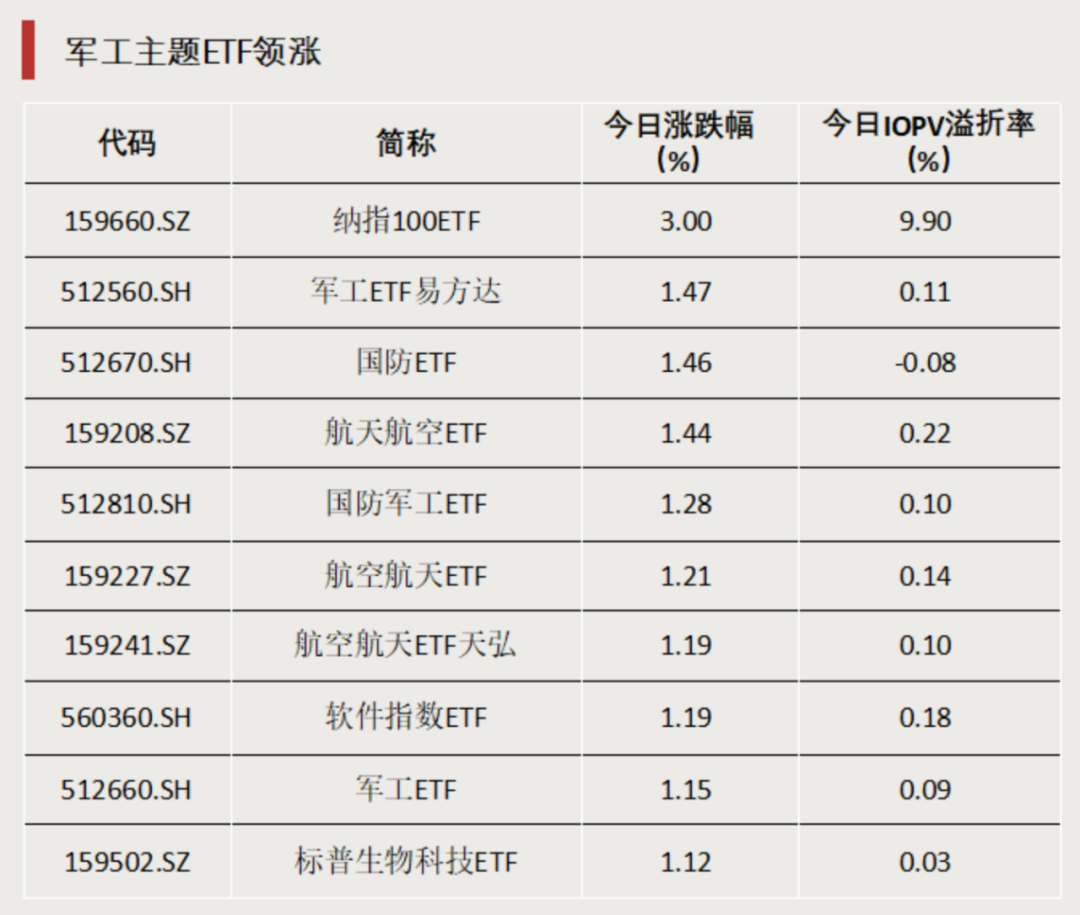
Market Overview - On October 28, the A-share market experienced a high and then a pullback, with the Shanghai Composite Index briefly surpassing 4000 points, marking a ten-year high [4] - The military, software, and lithium battery sectors showed strong performance, with several military and defense ETFs rising over 1% [4] ETF Performance - The Nasdaq 100 ETF (159660) led the gains with a 3% increase, and its premium rate surged to 9.9%, the highest since January of this year [4] - Various military and defense ETFs, including the military ETF (1.47%) and defense ETF (1.46%), also reported positive performance [5] Gold Market - In contrast, gold-themed ETFs continued to decline, with gold stock ETFs, gold ETFs, and Shanghai gold ETFs all dropping over 3% [2][6] - The total net outflow from gold ETFs exceeded 1.5 billion yuan, with some products experiencing five consecutive days of net outflows [2][8] Bond Market - Following the central bank's announcement to resume public market treasury bond trading, the bond market showed signs of recovery, with bond ETFs generally rising [3][7] - The 30-year treasury bond ETFs saw an increase of 0.61%, and trading volumes for short-term bond ETFs surged significantly [7] Investment Trends - The technology and cyclical sectors are expected to attract attention, with a focus on modern industrial systems and national security themes [9] - The market may experience a phase of volatility, with a potential slowdown in capital inflows into A-shares in the fourth quarter [9] New ETF Launches - The first public products investing in the Brazilian market, including the E Fund Itaú Brazil IBOVESPA ETF and the Huaxia Bradesco Brazil IBOVESPA ETF, are set to launch on October 31 [11]