航空航天

Search documents
张瑜:向前看,顺势而为——四大趋势的必然兼论两会学习心得 & 张瑜旬度会议纪要No.134
一瑜中的· 2026-03-12 14:34
Core Viewpoint - The article emphasizes the importance of adapting to the current economic transformation in China, suggesting that the government should focus on supporting new economic drivers and structural changes rather than merely addressing short-term weaknesses in the economy [4][5][20]. Group 1: Economic Structure Transition - The current government work report reflects a stable economic structure, indicating that the transition from old to new economic drivers is underway, with significant changes expected by 2025 [4][5]. - The report highlights that by 2025, the new economy (including information technology, rental and business services, and midstream manufacturing) will surpass the old economy (real estate, construction, and upstream materials) in terms of GDP contribution, marking a pivotal shift in economic dynamics [6][8]. Group 2: Policy Adjustments - In response to the ongoing economic transformation, the policy focus should shift from "补弱补短" (addressing weaknesses) to "培优培强" (nurturing strengths), aligning with the natural progression of economic development [5][20]. - The government work report outlines specific support for new economic sectors, including integrated circuits, low-altitude economy, aerospace, biomedicine, future energy, quantum technology, and 6G, reflecting a commitment to fostering new growth areas [8]. Group 3: Consumer Behavior Changes - Since 2016, the growth rate of service consumption has consistently outpaced that of goods consumption, with an average annual growth rate of 6.7% for services compared to 4.4% for goods, indicating a significant shift in consumer preferences [9]. - The government report introduces measures to enhance service consumption, such as promoting paid leave and creating new consumption scenarios, which align with the trend of upgrading consumer behavior [9]. Group 4: Wealth Structure Evolution - By 2025-2026, the total value of financial assets held by Chinese residents is expected to approach that of urban residential properties, indicating a significant shift in wealth structure [13][14]. - The government work report emphasizes the need for capital market reforms to adapt to this changing wealth landscape, focusing on deepening investment mechanisms and enhancing investor protection [14]. Group 5: Global Supply Chain Dynamics - The article notes a shift in China's demand structure since 2000, with a transition from upstream raw materials to midstream manufacturing becoming the new focus for investment opportunities [17][18]. - The global geopolitical landscape is driving a demand for industrial intermediates, presenting a strategic opportunity for China's manufacturing sector to enhance its global pricing power [18].


郑栅洁主任在十四届全国人大四次会议经济主题记者会上答记者问
国家能源局· 2026-03-07 02:20
Core Viewpoint - The article discusses the strategic focus of China's economic development, emphasizing the establishment of six emerging pillar industries and six future industries, alongside significant investments in energy and infrastructure projects to support modernization and enhance living standards [4][5][6]. Group 1: Emerging and Future Industries - The six emerging pillar industries include integrated circuits, aerospace, biomedicine, low-altitude economy, new energy storage, and intelligent robotics, with an estimated output value approaching 6 trillion by 2025 and potentially doubling to over 10 trillion by 2030 [5]. - The six future industries encompass quantum technology, biomanufacturing, green hydrogen energy, nuclear fusion energy, brain-computer interfaces, embodied intelligence, and the nascent 6G technology, which are on the brink of technological breakthroughs [5]. Group 2: Major Energy Projects - The "14th Five-Year Plan" outlines 109 major projects, including the continued advancement of significant energy projects such as the Yaxia Hydropower, "Shagao Desert" new energy base, and offshore wind power bases, each involving investments exceeding 1 trillion [6]. - These projects aim to ensure national modernization and improve the quality of life for citizens, while also focusing on energy conservation and carbon reduction initiatives [6]. Group 3: Infrastructure and Investment - The construction of the "Six Networks" (water network, electricity network, computing power network, new communication network, urban underground pipeline network, and logistics network) is prioritized, with an estimated investment exceeding 7 trillion [8]. - The government aims to enhance domestic consumption and investment, implementing new policies to stimulate consumption and increase government investment while encouraging private sector participation [8].

学习规划建议每日问答丨加紧国防科技创新和先进技术转化需要把握哪些重点
Xin Hua She· 2026-02-18 04:06
Group 1 - The core viewpoint emphasizes the necessity of accelerating defense technology innovation and the transformation of advanced technologies to maintain military competitiveness and modernize the armed forces [1] - The importance of science and technology as the core combat capability is highlighted, with advancements in various strategic high-tech fields such as artificial intelligence, big data, and quantum technology significantly impacting military development [2] - The need for independent and original innovation in defense technology is stressed, as core military technologies cannot be purchased, and there is a focus on optimizing the innovation environment and accelerating breakthroughs in key technologies [3] Group 2 - The article discusses the importance of effectively converting advanced technological achievements into combat capabilities, addressing the slow conversion rates and long cycles currently faced [4] - It emphasizes the necessity of aligning technological innovation with military development to enhance the speed of transformation and reduce the time required to generate combat capabilities [4] - The need for a comprehensive approach to improve the management and operational mechanisms of technology innovation is outlined, including the establishment of a robust evaluation system and policy reforms to facilitate rapid conversion of technological achievements [4]
18个省份跑赢“全国线” 新质生产力成关键驱动力
Zheng Quan Ri Bao· 2026-01-30 00:41
Core Insights - The economic performance of various provinces in China for 2025 shows a clear tiered structure, with Guangdong, Jiangsu, and Shandong entering the "10 trillion club" in GDP, while 18 provinces outpaced the national growth rate of 5%, with Tibet leading at 7% [1][2] Economic Performance - In terms of GDP totals for 2025, Guangdong, Jiangsu, and Shandong reported figures of 14.58 trillion yuan, 14.24 trillion yuan, and 10.32 trillion yuan respectively, while Zhejiang, Sichuan, Henan, Hubei, Fujian, Shanghai, and Hunan followed, each exceeding 5 trillion yuan [2] - The GDP growth rates for 2025 indicate that 18 provinces, including Tibet, Gansu, and Hebei, surpassed the national average, while Jilin and Fujian matched it [2] Regional Development Characteristics - Urban agglomerations like the Yangtze River Delta and Chengdu-Chongqing are accelerating integration, enhancing industrial collaboration and efficiency in resource allocation [3] - The economic gap between northern and southern provinces is narrowing, with Shandong achieving significant growth, indicating increased economic vitality in northern regions [3] - The integration of land and sea, along with urban-rural fusion, is improving the capacity for industrial transfer to inland areas, with notable progress in county economies and rural revitalization [3] Industrial Growth and Transformation - In 2025, Jiangsu's industrial output value increased by 6.5%, with the equipment manufacturing sector growing by 8.8%, contributing 74.6% to the overall industrial growth [4] - Guangdong is advancing its industrial economy by optimizing traditional industries and fostering emerging sectors, achieving a 7.6% growth in industrial output, with equipment manufacturing rising by 11.4% [4] Future Development Strategies - Various provinces are focusing on new and emerging industries for 2026, with Zhejiang aiming for strategic emerging industries to account for 35% of industrial output, and a 7% growth in digital economy sectors [6] - Fujian plans to enhance its real economy by fostering new productive forces and implementing multiple actions to accelerate the development of emerging industries [7] Key Recommendations for 2026 - Emphasis on innovation-driven growth, optimizing industrial layouts, expanding effective domestic demand, and enhancing regional collaboration are suggested as key strategies for 2026 [8] - The focus should be on leveraging local advantages to avoid homogeneous competition and ensuring sustainable consumer demand through improved income expectations and social security [8]

广东人大会议:各大省直部门一把手围绕“增创新优势、实现新突破”主题,总结十四五 展望十五五
Zhong Guo Fa Zhan Wang· 2026-01-29 07:05
Group 1: Economic Development and Employment - Guangdong aims to invest more in human resources, emphasizing that the greatest investment potential lies in people, with over 7 million new urban jobs created during the 14th Five-Year Plan period [1] - The province plans to implement a series of measures to enhance social welfare, including expanding employment support for key groups such as college graduates and veterans [1][2] - By 2025, Guangdong's foreign trade is projected to reach 9.49 trillion yuan, with a growth rate of 4.4%, maintaining its position as the largest in the country for 40 consecutive years [7][8] Group 2: Education and Health - Guangdong will improve the allocation of educational resources to adapt to population changes, expand inclusive preschool education, and enhance the quality of compulsory education [2] - The province is committed to strengthening healthcare infrastructure and expanding access to quality medical resources, while also addressing aging and declining birth rates [2] Group 3: Industrial Development - Guangdong is focusing on high-quality development in manufacturing, with over 76,000 industrial enterprises and an expected revenue exceeding 19 trillion yuan, contributing approximately 50% to GDP growth [2][3] - The province plans to support traditional, emerging, and future industries, with a focus on sectors like new energy, smart vehicles, and biotechnology, aiming to create significant industrial clusters [3][4] Group 4: Technological Innovation - Guangdong is enhancing cross-border collaboration in technology innovation, with over 6 billion yuan in research funding allocated to Hong Kong and Macau, and the establishment of high-level innovation platforms [4][5] - The province aims to build a globally competitive open innovation ecosystem, fostering collaboration in education and technology talent development with Hong Kong and Macau [5] Group 5: Agricultural Development - Guangdong has completed a comprehensive survey of agricultural genetic resources, collecting 368,000 samples, and is focusing on the revitalization of seed industries to support local economic development [6][7] - The province has achieved significant breakthroughs in key agricultural technologies, including the development of new rice varieties and advancements in aquaculture breeding [6] Group 6: Foreign Trade and Market Expansion - Guangdong is actively promoting high-quality foreign trade development, with plans to organize over 300 overseas exhibitions to help more than 26,000 companies explore international markets [8][9] - The province is also focusing on expanding imports and fostering new trade dynamics, with initiatives to strengthen major import bases and support small and medium-sized foreign trade enterprises in digital transformation [8][9]
中信证券港股2月展望:春季行情延续 关注三大主线
Zhi Tong Cai Jing· 2026-01-29 01:21
Core Viewpoint - The report from CITIC Securities indicates that the Hong Kong stock market is expected to continue its spring rally from late December 2025, with a focus on large-cap stocks before the Lunar New Year and better performance in growth sectors supported by policy directions [1] Group 1: Market Performance and Trends - The performance expectations for Hong Kong stocks have significantly adjusted, with a slowdown in the downward revision of earnings forecasts since late December 2025 [1] - The average return of the Hang Seng Index during the spring rally over the past eleven years is 2.4%, with a weekly win rate of 70.8%, particularly strong in 2019, 2021, and 2023, averaging a 10.6% increase [2] - The upcoming earnings reports for Hong Kong stocks are expected to be concentrated from late March to early April, indicating a period of performance vacuum [1][2] Group 2: Investment Focus Areas - Short-term investment focus should be on three main lines: 1) "14th Five-Year Plan" policy directions including biomanufacturing, embodied intelligence, and 6G; 2) food delivery platforms and real estate benefiting from policy-driven expectations; 3) non-bank financials benefiting from the spring rally [1] - The "15th Five-Year Plan" is expected to guide long-term investment opportunities, with strategic emerging industries like new energy, new materials, and quantum technology likely to receive policy support [3] Group 3: Liquidity and Market Dynamics - The liquidity outlook for Hong Kong stocks is expected to improve as the market approaches the next peak of stock unlocks, with significant reductions in unlock amounts in January and February 2026 [1] - Historical data shows that net inflows from southbound trading in January and February account for an average of 19.3% and 27.9% of the annual total, respectively [2]

专访粤开证券罗志恒:加大国资收益上缴,用于提高居民养老金
Nan Fang Du Shi Bao· 2026-01-25 04:49
Group 1 - The core focus of the article is on China's economic outlook for 2026, emphasizing the importance of "resident income increase" and "investment in people" as key strategies to boost domestic demand and enhance economic growth [2][7] - The article highlights that in 2025, China's economy is expected to surpass 140 trillion yuan, with a growth rate of 5%, driven by strong exports, a robust capital market, and ongoing structural optimization [5][6] - It notes that the real estate market is still undergoing significant adjustments, with a projected 17.2% decline in real estate investment in 2025, indicating challenges in the housing sector [6] Group 2 - The article discusses the need for income distribution reform to address weak consumer demand, suggesting measures such as establishing a "special fund for urban and rural resident income increase" and adjusting pension policies to improve income for low-income groups [8][9] - It emphasizes the importance of "investment in people" to enhance human capital, advocating for increased public service investment and improved access to education and training [10][11] - The article outlines the expected continuation of the A-share bull market in 2026, driven by macroeconomic policies, industry transformation, and capital market reforms, with a focus on technology and industrial metals as key investment opportunities [12][13]
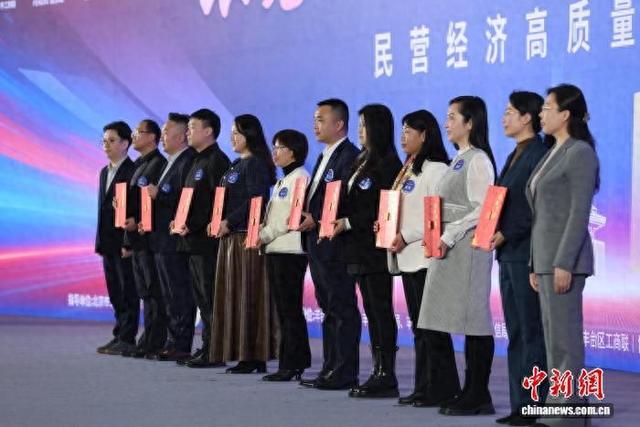
民营经济高质量发展丰台大会召开 北京民企科创中心成果发布
Xin Lang Cai Jing· 2026-01-21 14:27
Core Viewpoint - The Fengtai District of Beijing is emphasizing the importance of private enterprises, with 98% of its 207,000 businesses being private, and is actively promoting a high-quality development environment for these enterprises [1][3]. Group 1: Event Overview - The "High-Quality Development of Private Economy Fengtai Conference" was held, attended by over 400 participants including government officials, entrepreneurs, and experts [1][3]. - The conference highlighted the commitment of the Beijing municipal government to create a stable legal environment, efficient business environment, strong innovation environment, and a harmonious government-business relationship to support the private economy [3]. Group 2: Economic Statistics - Fengtai District has over 20,700 enterprises, with private enterprises making up 98% of the total [3]. - The district has more than 4,100 technology-based enterprises, with 93.4% being private [3]. - Fengtai is projected to have the highest growth rate of newly established enterprises in Beijing by 2025 [4]. Group 3: Initiatives and Programs - Fengtai District has launched a "Seven Ones" initiative to enhance the service system for the high-quality development of the private economy, which includes various components such as a platform, training, and funding [4][6]. - The Beijing Private Enterprise Technology Innovation Center was introduced as a dedicated innovation service platform for private enterprises, having hosted over 40 events and served more than 2,000 enterprises [5]. - The "Beijing Future Entrepreneurs Training Camp" has trained over 200 innovative private entrepreneurs through a systematic approach [5][6]. Group 4: Support Structures - A special fund, the "Beijing Future Entrepreneurs Special Fund," has been established to support the training camp and promote the development of innovative and growing private enterprises [6]. - The "Beijing Future Entrepreneurs Promotion Association" was launched to serve as a comprehensive empowerment platform for private entrepreneurs [6]. - The "Beijing Fengtai District Private Economy Promotion Center" was inaugurated to provide coordinated services and support for private enterprises [7]. Group 5: Innovation and Technology - The conference featured a "Private Enterprise Technology Achievements Exhibition," showcasing over 100 cutting-edge products and technologies from more than 30 technology companies in various fields [7].
湖南飞沃科技预计2025年度业绩扭亏为盈 深耕高端制造开辟新赛道
Zheng Quan Ri Bao Wang· 2026-01-20 06:12
Core Viewpoint - Feiwo Technology (301232) is expected to achieve an annual revenue of 2.5 billion yuan and a net profit attributable to shareholders of 32 million to 45 million yuan for the year 2025, marking a significant turnaround from a loss of 157 million yuan in the previous year, contributing positively to the development of high-end equipment manufacturing in Hunan [1] Group 1: Company Performance - Feiwo Technology has successfully turned around its net profit and net profit after deducting non-recurring gains and losses, achieving profitability for the first time [1] - The company specializes in the research and manufacturing of high-strength fasteners, primarily for the wind power sector, and has expanded its product offerings to other high-end equipment fields such as aerospace and nuclear power [1][2] Group 2: Market Position and Growth - The company is recognized as a national-level "specialized and innovative" small giant enterprise, positioning itself as a hidden champion in the fastener industry, with products widely used in key sectors like wind power and aerospace [2] - Feiwo Technology's main products in the wind power sector are experiencing strong demand, with high capacity utilization, leading to significant improvements in performance due to increased sales, higher prices, and reduced costs [2] Group 3: Strategic Initiatives - In 2025, Feiwo Technology signed a strategic cooperation agreement with German aerospace component giant Heggemann to enter the aerospace core component market, leveraging technical collaboration in precision manufacturing [2] - The company also signed a memorandum of understanding with GEVernova, a leader in the energy sector, marking a significant step in collaboration for gas turbine equipment manufacturing [2] Group 4: Financial Strategies - Feiwo Technology announced a stock incentive plan for 2025, planning to grant a total of 1.55 million restricted shares at a price of 13.73 yuan per share to 64 key personnel [3] - The company received support from China Bank's Changde branch for a stock repurchase loan, with a total repurchase fund of no less than 25 million yuan and not exceeding 50 million yuan, optimizing its financial structure and ensuring liquidity for future business expansion [3]
玄元投资2026年市场展望及投资策略:跃龙在渊 进无咎 重点关注的三大方向
Xin Lang Cai Jing· 2025-12-26 03:07
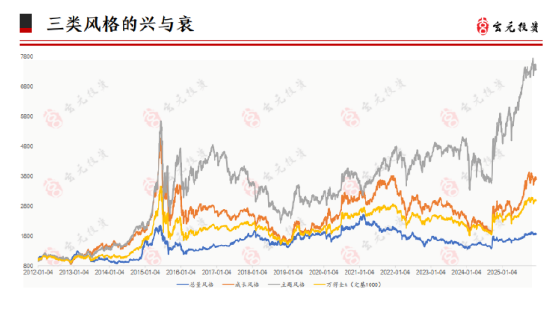
Core Viewpoint - The market is currently in a position where it can either advance or retreat, with the emphasis on the need for economic fundamentals to improve for sustained growth [1][4]. Investment Framework and Style Tracking - The investment framework is based on the equation "Stock Price = EPS × PE," highlighting that valuation (PE) fluctuations are typically larger than earnings (EPS) changes in the A-share market [2][20]. - The market opportunities can be categorized into three styles: macro style, growth style, and thematic style, with macro style being influenced by the China-US interest rate differential [2][21]. Judgments for 2026 - The market is still in a bull phase, but the rhythm of growth will differ from the past, with the current A-share market capitalization to household savings ratio at approximately 0.65, indicating that the bull market is not over yet [7][25]. - The current market is driven by liquidity and risk appetite, but this type of market has a clear "ceiling," as seen in historical liquidity-driven markets [8][26]. - Economic fundamentals are expected to gradually improve in the second half of next year, which may trigger a style switch from growth and thematic to value and cyclical stocks [9][27]. - Bull markets may experience more severe pullbacks, with historical data showing that pullbacks in bull markets are typically around 10% at the index level, but certain broad indices may see declines exceeding 20% [9][28]. Key Areas for Fundamental Improvement - Exports have been growing, but the "price for volume" model is unsustainable, with China's export price index down approximately 20% compared to developed countries, which may suppress long-term profit margins [11][28]. - Fixed asset investment has seen a decline for the first time in 36 years, influenced by various factors including a significant drop in land revenue [11][28]. - The real estate market shows high inventory levels, particularly in second-tier cities, indicating a need for stronger demand-side policies [11][29]. - There is a shift towards service consumption, with a focus on sectors such as cultural tourism, elderly care, and emotional consumption [11][29]. Policy Perspective - The current policy focus includes addressing "involution" competition, promoting technological innovation, and expanding domestic demand, with expectations for substantial policy implementation around mid-next year [14][33]. - Historical patterns suggest that policy effects are gradual and may take time to manifest, as seen in past housing reform policies [12][31]. Style Switching Considerations - A sustainable style switch from growth and thematic to value requires solid fundamental data support, as historical trends indicate a strong correlation between total style relative returns and revenue growth rates [15][34]. - Short-term style switches may occur due to trading factors, but these are often less sustainable without fundamental backing [16][34]. Focus Areas for 2026 - Key investment opportunities will revolve around three main themes: addressing involution competition, fostering new productive forces, and expanding domestic demand, with a particular emphasis on service consumption [17][35][36].