MDI/TDI

Search documents
策略周报20260315:锚定能源主权,布局制造优势-20260315
Orient Securities· 2026-03-15 13:47
Core Viewpoints - The index is expected to continue in a fluctuating pattern, with the new energy manufacturing sector likely to lead the next phase of mid-cap blue-chip market performance [3][12]. Market Analysis - The ongoing geopolitical tensions, particularly in the Middle East, have limited direct impacts on the domestic market, maintaining a "chaotic external environment but stable internal conditions" scenario. The index is anticipated to face some short-term pullback pressure but is expected to remain within a defined fluctuation range [4][13]. Industry Comparison - Investment opportunities are shifting towards mid-cap blue-chip stocks, particularly in the manufacturing sector. The new energy industry in China, including photovoltaic, wind power, and power transmission, is identified as a core focus area due to its global competitive advantages. Attention is also directed towards machinery and military sectors. While maintaining views on previously recommended cyclical sectors, expectations for upward potential should be moderated as market anticipations become more fully priced [5][14]. Thematic Investment - The concept of energy sovereignty is emerging as a key investment theme. The global urgency for energy sovereignty is transforming into a rigid demand for energy infrastructure, elevating energy construction from an economic cycle issue to a strategic security concern. China's new energy manufacturing is positioned to meet this global security demand, with specific investment opportunities highlighted in photovoltaic, offshore wind, and power transmission sectors. Additionally, resource sovereignty remains a focus, with strategic resource assets being reassessed under the new geopolitical order, emphasizing the importance of pricing power in sectors like rare earths and other critical materials [6][15].
主题策略周报 20260308:外乱内稳,周期趋势加强-20260308
Orient Securities· 2026-03-08 15:26
Group 1 - The core viewpoint indicates that external disturbances lead to internal stability, and the overall market will continue to experience fluctuations, with a strengthened performance in mid-cap blue-chip stocks and a focus on resource sovereignty [7][10]. - The assessment of the domestic market's impact is manageable, and the oscillating situation remains unchanged, as the recent Middle Eastern events serve as a short-term stress test without altering the mid-term market dynamics [11][12]. - Global risk evaluation is on the rise, reinforcing existing trends, while short-term risk appetite is expected to decline but will likely recover in the mid-term as uncertainties resolve [11][12]. Group 2 - In terms of industry comparison, the short-term events are believed to have a limited negative impact on previously favored sectors, instead reinforcing existing trends, with continued optimism for cyclical sectors such as non-ferrous metals, chemicals, transportation, agriculture, coal, and natural gas [12]. - The theme of investment prioritizes resource sovereignty, emphasizing that strategic resource assets are being re-evaluated under the new geopolitical order, shifting demand from traditional economic cycles to "manufacturing upgrades" and "strategic security" [3][12]. - The technology manufacturing sector is closely following developments in AI and space, with a focus on domestic computing power advancements and the emerging space industry, which is expected to see significant growth due to increased satellite networking demands [4][13][14].
中国银河证券:冲突升级油气双高 哪些化工板块值得重视
智通财经网· 2026-03-05 01:33
Core Viewpoint - The recent geopolitical conflicts, particularly involving Iran and the closure of the Strait of Hormuz, have led to significant price increases in the energy and chemical sectors, presenting various investment opportunities and risks [1][2][3][4][5][6][7]. Group 1: Oil and Gas Sector - The geopolitical tensions have caused a surge in oil prices, with Brent crude currently priced at $80 per barrel, reflecting expectations of supply losses from the Middle East [1]. - Iran's oil production is projected to be 3.37 million barrels per day by 2025, accounting for 4.3% of global production, with current production levels remaining stable despite the conflict [1]. - The closure of the Strait of Hormuz, which handles 26.6% of global seaborne oil trade, could lead to severe supply delays and increased transportation costs, further driving up global energy prices [1]. Group 2: Natural Gas Sector - Qatar Energy has announced a halt in LNG production due to military attacks, which could lead to substantial supply losses in the LNG market, where Qatar holds a 20% global market share [2]. - The combination of the Strait of Hormuz being blocked and major producers halting operations is expected to create a significant supply shortage in the LNG market, with prices likely to remain strong in the short term [2]. Group 3: Chemical Sector - The geopolitical situation is expected to impact methanol imports, with Iran accounting for 59.9% of the Middle East's methanol production capacity, leading to potential price increases due to supply disruptions [3]. - Iran's urea production capacity is approximately 9 million tons per year, and any disruptions could lead to increased prices in the international market, especially given the uncertainty surrounding its production and export [4][5]. - European chemical production, particularly for methionine and vitamins, faces significant uncertainty due to reliance on natural gas, which constitutes about 30% of direct raw materials [6]. Group 4: Bromine Market - The geopolitical tensions may lead to supply shortages in bromine, with Israel and Jordan being major producers, and increased shipping costs could further elevate bromine prices [7].

中国银河证券:冲突升级油气双高 建议关注高分红油气标的等投资主线
Zhi Tong Cai Jing· 2026-03-04 07:47
Core Viewpoint - The geopolitical tensions in the Middle East have led to significant fluctuations in the global energy and chemical markets, with rising prices for key products in the energy and chemical sectors. The report suggests focusing on high-dividend oil and gas stocks, improving profitability in coal-to-olefins, coal-to-methanol, urea, and bromine, and the potential competitive advantage for domestic companies in Europe due to the impact on natural gas chemicals [1]. Group 1: Oil Market Dynamics - The situation in the Strait of Hormuz has caused a spike in oil prices, with Iran's oil production expected to be 3.37 million barrels per day by 2025, accounting for 4.3% of global production. Current production remains stable, with January 2026 figures showing 3.3 million barrels per day [1]. - The Strait of Hormuz is crucial for oil transport, with 20.1 million barrels per day passing through, representing 26.6% of global maritime oil trade. Any disruption could lead to significant supply delays and increased transportation costs, pushing global energy prices higher [1]. - Current oil prices around $80 per barrel reflect some expectations of Middle Eastern supply losses, with future prices dependent on geopolitical developments. If negotiations progress, prices may drop to the $60-$70 range; if the Strait remains blocked, prices could rise to $90-$100 [1]. Group 2: Natural Gas Market Impact - Qatar Energy announced a halt in LNG production due to military attacks, impacting about 20% of global LNG supply. This, combined with low European gas inventories and increased demand from China, is expected to keep natural gas prices strong in the short term [2]. - The geopolitical situation has led to a significant reduction in LNG supply, with Qatar being a major player in the market. The combination of supply disruptions and seasonal demand is likely to maintain upward pressure on prices [2]. Group 3: Methanol and Urea Market Trends - Iran's methanol production capacity is significant, with 1,739 million tons per year, and the country accounts for 59.9% of the Middle East's methanol capacity. The expected import volume for China in 2025 is 14.41 million tons, with 69.4% coming from the Middle East [3]. - The geopolitical tensions may lead to a decrease in methanol shipments from the Middle East, potentially resulting in higher prices due to supply constraints and demand recovery [3]. - Iran is a major urea producer, with a capacity of nearly 9 million tons per year. Recent geopolitical changes have caused uncertainty in urea production and exports, which could lead to a temporary supply gap in the international market, pushing prices higher [4]. Group 4: Chemical Industry Challenges - The European chemical industry faces uncertainty due to rising natural gas prices, which account for about 30% of direct raw materials. The impact of the ongoing geopolitical situation could mirror past energy crises, affecting production capacities for key chemicals like methionine and vitamins [5][6]. - The rising costs of shipping and extended delivery times due to geopolitical tensions may lead to increased bromine prices, as Israel and Jordan are major suppliers, and any disruptions could create supply shortages [7].
政策指引+价格回暖+业绩预喜,化工行业ETF易方达(516570)汇聚“三桶油”与细分领域化工龙头
Sou Hu Cai Jing· 2026-01-27 11:18
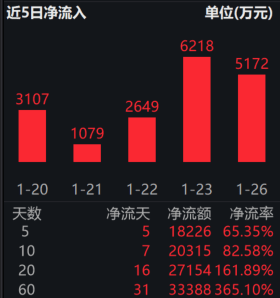
Group 1 - The global chemical industry is transitioning from "overcapacity" to "high-quality supply" by 2026, driven by national growth policies, marginal recovery in overseas demand, and the initiation of a restocking cycle, leading to a stabilization and rebound in the prices of basic chemicals and a significant improvement in industry profit expectations [1][3]. - The E Fund Chemical Industry ETF (516570) has become a core tool for investors to capitalize on the petrochemical industry's recovery, with the index it tracks rising by 15.10% in the past month and 51.39% over the past year as of January 26, 2026 [1][5]. - The ETF has attracted significant capital inflow, with over 180 million yuan in net inflows in the past five days and over 270 million yuan in the past twenty days [1][5]. Group 2 - The "High-Quality Development" policy framework has been established, emphasizing the control of new refining capacities and the scientific regulation of ethylene and paraxylene production, marking a shift from quantity-driven growth to quality and efficiency improvements [3][4]. - A global restocking cycle has commenced, with widespread price increases for chemical products, including a 550 yuan/ton increase for butadiene and a 100 yuan/ton increase for bisphenol A, alongside sulfur prices reaching near ten-year highs [3][4]. - Major international companies like BASF and Dow have also raised prices for MDI/TDI, indicating a strong performance in the polyurethane market, supported by increased global oil demand projected at 950,000 barrels per day for 2026 [4][5]. Group 3 - Chemical companies are expected to report positive earnings, with Salt Lake Co. forecasting a net profit of 8.29 to 8.89 billion yuan for 2025, representing a year-on-year growth of 77.78% to 90.65%, and other companies like Juhua Co. and Cangge Mining also projecting significant profit increases [5][6]. - The E Fund Chemical Industry ETF (516570) tracks the CSI Petrochemical Industry Index, with top holdings including major companies like Wanhua Chemical and China Petroleum, covering over 56% of the index, thus providing a balanced exposure to both energy security and growth in new materials [5][6]. - The ETF has a low comprehensive fee rate of 0.20% per year, making it an ideal tool for participating in the current economic upturn in the chemical sector [5][6].




MDI供给或受美国寒潮影响!化工ETF天弘(159133)近30日净流入超7亿元
Mei Ri Jing Ji Xin Wen· 2026-01-27 01:20
Group 1 - The A-share market showed a mixed performance on January 26, with the chemical sub-index declining. The Tianhong Chemical ETF (159133) closed down 0.46%, with a trading volume of 82.02 million yuan [1] - The Tianhong Chemical ETF has seen continuous capital inflow over the past 18 trading days, with a net inflow of 744 million yuan in the last 30 trading days, reaching a new high of 1.408 billion yuan as of January 23, 2026 [1] - The Tianhong Chemical ETF tracks the chemical sub-index, with over 93% of its holdings in three major industries: basic chemicals, petroleum and petrochemicals, and power equipment, including leading companies and quality SMEs across various segments [1] Group 2 - A cold wave began affecting the U.S. on January 23, causing snowfall in parts of Texas, Oklahoma, and Kansas, with extreme weather expected to impact two-thirds of the country, potentially leading to widespread power outages [2] - The U.S. has a high capacity share of MDI/TDI, and the extreme weather may significantly affect supply, as U.S. MDI/TDI prices are notably higher, with relatively high operating rates [2] - The chemical industry is entering a turning point of supply-demand improvement and high-end transformation, with structural differentiation expected to continue in 2026, particularly in oil chemicals and polyester sectors [2]
化工行业景气回升,化工ETF嘉实(159129)把握行业复苏机遇
Xin Lang Cai Jing· 2026-01-06 05:32
Group 1 - The core viewpoint is that the chemical industry is experiencing a recovery phase from a cyclical bottom, with chemical product price indices expected to stabilize and improve profitability as downstream companies replenish inventory [2] - The China Chemical Industry Association and the Phosphate Fertilizer Association held a meeting to ensure the supply of sulfuric acid resources for phosphate fertilizer production, stabilizing agricultural supply for the spring farming season [1] - Wanhua Chemical has continuously raised global prices for core products such as MDI and TDI since December 2025, in line with international giants like BASF and Dow, driven by industry-wide maintenance and rising raw material costs [1] Group 2 - The top ten weighted stocks in the CSI Sub-Industry Chemical Theme Index account for 45.31% of the index, with major companies including Wanhua Chemical, Salt Lake Industry, and Hengli Petrochemical [2] - The chemical industry is seeing new growth engines from emerging applications in AI, OLED, and robotics, with semiconductor materials expanding due to demand from computing power [2] - The chemical ETF managed by Harvest (159129) closely tracks the CSI Sub-Industry Chemical Theme Index, focusing on the new economic cycle amid the "anti-involution" backdrop [2][3]


强势拉升,狂掀涨停潮
Zhong Guo Ji Jin Bao· 2026-01-06 05:01
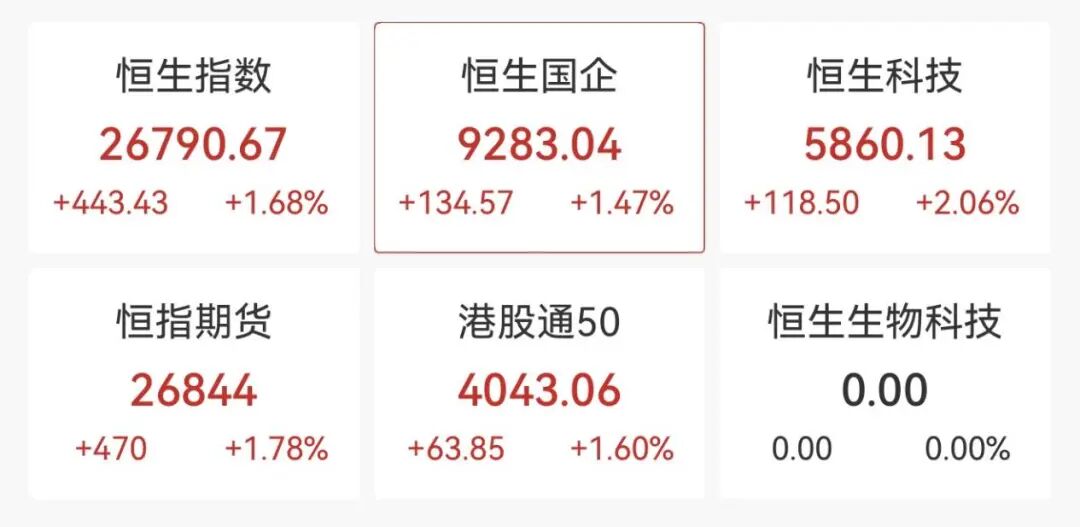
Market Overview - The A-share market showed mixed performance on January 6, with the Shanghai Composite Index rising over 1% to reach a ten-year high, closing up 1.14% at 4069.38 points [1][2] - The Shenzhen Component Index increased by 0.81%, while the ChiNext Index slightly declined by 0.04% [1][2] Sector Performance - The precious metals, chemicals, and large financial sectors experienced significant gains, while sectors such as communication equipment, optical modules, and motorcycles faced notable declines [2][10] - The non-ferrous metals sector strengthened again, with industrial metals like copper and aluminum leading the gains; Zijin Mining's stock rose over 6%, reaching a historical high with a market capitalization exceeding 100 billion [6] Notable Stocks - In the Hong Kong market, the Hang Seng Technology Index rose over 2%, with companies like JD Health, SenseTime, and NetEase showing significant gains [4] - JD Health's stock price increased by 6.44%, with a market cap of 198.8 billion; SenseTime rose by 6.70% to a market cap of 96.6 billion; NetEase increased by 4.04% with a market cap of 733.7 billion [5] Chemical Sector Insights - The chemical sector saw a rally, particularly in the salt chemical direction, with stocks like Chlor-Alkali Chemical and Bofei Electric reaching their daily limit [10][11] - PVC futures rose over 3% in a single day, with a cumulative increase of over 15% since mid-December [11][12] - Wanhua Chemical announced a price increase for core products like MDI/TDI starting December 2025, aligning with international giants, driven by rising raw material costs and industry-wide maintenance [12]
强势拉升!狂掀涨停潮!
中国基金报· 2026-01-06 04:37
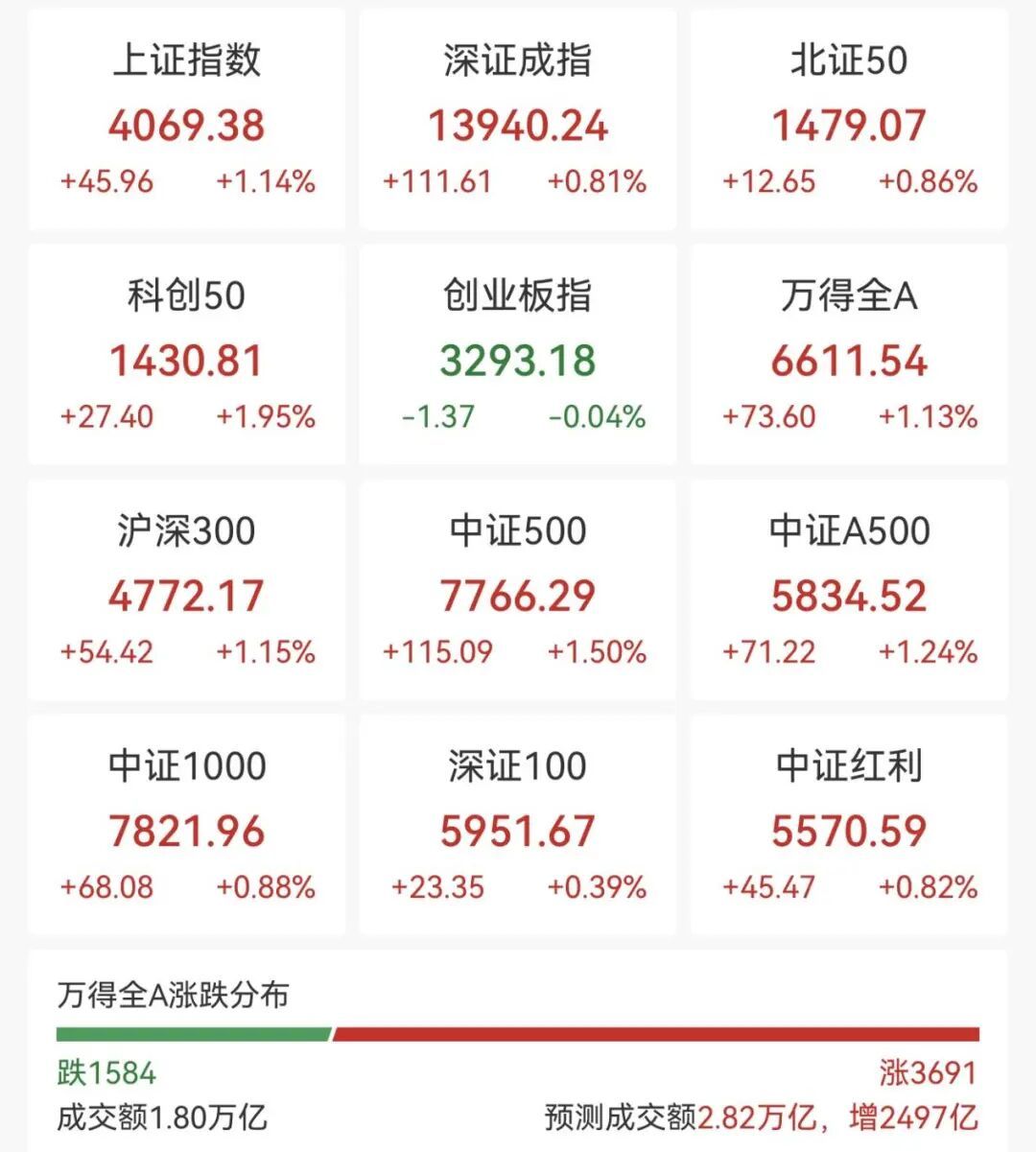
Market Overview - The A-share market showed mixed performance on January 6, with the Shanghai Composite Index rising over 1% to reach a ten-year high, closing at 4069.38, up 1.14% [2][3] - The trading volume reached 1.80 trillion CNY, with a predicted total of 2.82 trillion CNY, an increase of 249.7 billion CNY [3] Sector Performance - The non-ferrous metals, chemical, and large financial sectors experienced strong upward movements, while sectors like communication equipment and motorcycles saw significant declines [4][16] - The non-ferrous metals sector, particularly copper and aluminum, led the gains, with Zijin Mining's stock price rising over 6%, reaching a historical high and a market capitalization exceeding 1 trillion CNY [9][11] Chemical Sector Insights - The chemical sector also saw a notable rise, particularly in the salt chemical segment, with several stocks hitting the daily limit [17] - PVC futures rose over 3% in a single day, accumulating a rise of over 15% since mid-December [19] - Wanhua Chemical announced price increases for core products starting December 2025, aligning with international giants like BASF and Dow, driven by rising raw material costs [20] Notable Stocks - Zhite New Materials surged by 20%, while other stocks like Liyuan Co., Chang Aluminum, and Anning Co. also hit the daily limit [11] - In the chemical sector, stocks such as Dongyue Yicai and Chlor-Alkali Chemical saw increases of over 10% [18] Precious Metals Market - Domestic precious metals futures continued to rise, with silver and platinum contracts increasing by over 7% [13] - The price of gold jewelry in China rose to 1390 CNY per gram, an increase of 12 CNY from the previous day [13]



强势拉升!狂掀涨停潮!
Zhong Guo Ji Jin Bao· 2026-01-06 04:17
Market Overview - The A-share market showed mixed performance with the Shanghai Composite Index rising over 1%, reaching a ten-year high, while the Shenzhen Component Index increased by 0.81% and the ChiNext Index slightly declined by 0.04% [1] - The Hong Kong market saw the Hang Seng Technology Index rise over 2%, with notable gains from JD Health, SenseTime, and NetEase [1] Sector Performance Non-ferrous Metals - The non-ferrous metals sector strengthened, with industrial metals like copper and aluminum leading the gains. Zijin Mining's stock surged over 6%, hitting a historical high with a market capitalization exceeding 1 trillion yuan [4] - Other stocks such as Zhite New Materials and Liyuan Co. also reached their daily limit up [4] Precious Metals - Domestic precious metals futures continued to rise, with silver and platinum contracts increasing by over 7%. The price of gold jewelry also saw an uptick, with prices for 24K gold jewelry reported at 1390 yuan per gram, up by 12 yuan from the previous day [6][8] Chemical Sector - The chemical sector experienced a rally, particularly in the salt chemical segment, with stocks like Chlor-Alkali Chemical and Bofei Electric hitting their daily limit up [9] - PVC futures rose over 3% in a single day, accumulating a rise of over 15% since mid-December [11] - Wanhua Chemical announced a price increase for core products starting December 2025, aligning with international giants like BASF and Dow, driven by rising raw material costs and industry-wide maintenance [12] - The chemical industry is expected to benefit from a recovery in supply-demand dynamics, with a projected upward cycle in industry prosperity due to policies aimed at reducing competition [12]