Nemotron 3 Super

Search documents
Nvidia Corp (NVDA) Sets Sights on a $600 Billion Market With Palantir Pact
Yahoo Finance· 2026-03-19 01:19
Group 1 - Nvidia Corp (NASDAQ:NVDA) has partnered with Palantir to launch a sovereign AI operating system architecture aimed at governments and enterprises, focusing on data sovereignty, security, and performance [1][6] - The global sovereign AI market is projected to grow from $150 billion in 2025 to $600 billion by 2030, indicating significant growth potential for Nvidia's offerings in this space [1] - Nvidia announced the launch of the Nemotron 3 Super AI model, designed for building complex agentic AI systems, which boasts high efficiency and accuracy and is available for deployment in various environments [2] Group 2 - Nvidia designs graphics processing units and specialized AI chips, along with software that supports a wide range of applications including data centers, gaming, robotics, and autonomous vehicles [3] - The company's technology is also utilized in creating platforms for developing 3D content that can be sold as NFTs, highlighting its involvement in the NFT market [3]

传媒互联网行业周报:苹果下调中国应用商店佣金率,腾讯版“小龙虾”WorkBuddy正式上线
Guoyuan Securities· 2026-03-17 05:45
Investment Rating - The report maintains a "Recommended" investment rating for the media and internet industry [4] Core Insights - The media industry experienced a decline of 3.23% from March 9 to March 15, 2026, while the Shanghai Composite Index decreased by 0.70% and the Shenzhen Component Index by 0.76% [12] - Key sectors such as gaming, television broadcasting, film, advertising, digital media, and publishing saw respective declines of 3.45%, 1.70%, 4.18%, 3.83%, 3.36%, and 0.78% [12] - The report highlights significant developments in AI applications, gaming, and film sectors, indicating potential growth areas [8][36] Summary by Sections 1. Market Performance - The media industry (Shenwan) declined by 3.23% during the week of March 9-15, 2026, compared to a 0.19% increase in the CSI 300 index [12] - The gaming sector specifically saw a decline of 3.45% [12] 2. Key Industry Data 2.1 AI Applications - OpenRouter platform token call volume reached 16.9 trillion, up 14.19% week-on-week, with domestic models dominating the top five [18] - Notable downloads for AI applications on iOS included Deepseek at 31.13 million, with a week-on-week increase of 7.39% [18] 2.2 Gaming - Apple reduced the commission rate for in-app purchases in China from 30% to 25%, and for eligible small businesses from 15% to 12% [3] - The top five mobile games on iOS in China as of March 14, 2026, were "Honor of Kings," "Peacekeeper Elite," "Fearless Contract: Source Action," "Delta Action," and "Endless Winter" [22] - The overseas revenue for Chinese mobile games in February saw a significant increase of 221% [25] 2.3 Film - Domestic box office revenue for the week of March 9-15 was 372 million yuan, with 13 films set to release the following week [31] - The top film was "Racing Life 3," grossing 128.99 million yuan, accounting for 34.60% of the total box office [34] 3. Industry Key Events and Announcements - Tencent's AI assistant "WorkBuddy" was officially launched on March 9, 2026, enhancing productivity tools [35] - Nvidia introduced the Nemotron 3 Super AI model, featuring 120 billion parameters, significantly boosting throughput [35] - Baidu launched a zero-deployment service called DuClaw, facilitating easier access to AI tools [35] 4. Investment Recommendations - The report expresses optimism towards AI applications and cultural exports, recommending focus on gaming, IP, short dramas, marketing, and publishing sectors [36] - Specific companies highlighted for potential investment include Giant Network, Perfect World, and Mango Super Media among others [36]






传媒互联网行业周报:苹果下调中国应用商店佣金率,腾讯版“小龙虾”WorkBuddy正式上线-20260317
Guoyuan Securities· 2026-03-17 04:33
Investment Rating - The report maintains a "Recommended" investment rating for the media and internet industry [4] Core Insights - The media industry experienced a decline of 3.23% from March 9 to March 15, 2026, while the Shanghai Composite Index decreased by 0.70% and the Shenzhen Component Index by 0.76% [12] - Key sectors such as gaming, television broadcasting, film, advertising, digital media, and publishing saw respective declines of 3.45%, 1.70%, 4.18%, 3.83%, 3.36%, and 0.78% [12] - The report highlights significant developments in AI applications, gaming, and film sectors, indicating potential growth areas [8][35] Summary by Sections 1. Market Performance - The media industry (Shenwan) declined by 3.23% during the week of March 9-15, 2026, compared to a 0.19% increase in the CSI 300 index [12] - The gaming sector specifically saw a decline of 3.45% [12] 2. Key Industry Data 2.1 AI Applications - OpenRouter platform token usage reached 16.9 trillion, a week-on-week increase of 14.19% [18] - The top five models on the platform were dominated by domestic models [18] 2.2 Gaming - Apple reduced the commission rate for in-app purchases and paid apps in China from 30% to 25% [3] - The top five mobile games on iOS in China as of March 14, 2026, were "Honor of Kings," "Peacekeeper Elite," "Fearless Contract: Source Action," "Delta Action," and "Endless Winter" [22] - The overseas revenue of Chinese mobile games in February saw a significant increase of 221% [25] 2.3 Film - The total box office for domestic films was 372 million yuan during the week of March 9-15, 2026 [31] - The top three films were "Racing Life 3," "Bounty Hunter: Wind Rises in the Desert," and "Silent Awakening" [34] 3. Industry Key Events and Announcements - Tencent's AI assistant "WorkBuddy" was officially launched on March 9, 2026 [35] - Notable financing events included Aishi Technology's completion of a Series C round led by Dinghui [35] 4. Investment Recommendations - The report expresses optimism about themes such as AI applications and cultural exports, recommending focus on gaming, IP, short dramas, marketing, and publishing sectors [36]
黄仁勋抢吃龙虾:英伟达新核弹10倍算力提升,OpenClaw自由了
3 6 Ke· 2026-03-17 00:16
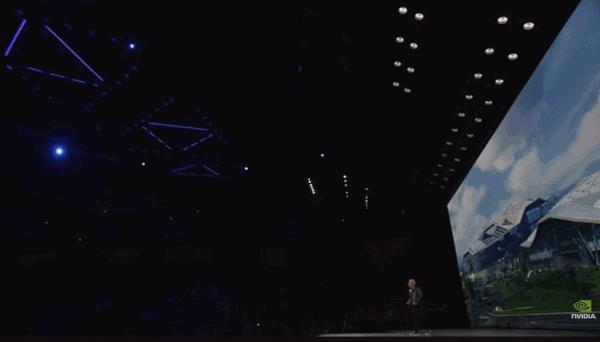
Core Insights - NVIDIA's GTC conference highlighted a significant transformation in computing, likening it to the personal computer and internet revolutions, with a projected market growth to $1 trillion between 2025 and 2027, primarily driven by large-scale cloud computing [3][5]. Group 1: AI and Computing Transformation - NVIDIA's CEO Jensen Huang emphasized that AI has reached an "inference inflection point," marking a shift from training to reasoning and generation, indicating a surge in demand for computational power [5][6]. - The new Vera Rubin architecture, specifically the NVL72 system, is designed to optimize AI inference tasks, achieving a 50-fold increase in token performance per watt compared to previous architectures [6][13]. - The data center's role is evolving from mere file storage to becoming factories for generating tokens, with inference workloads becoming the new commodity [10][12]. Group 2: Vera Rubin Architecture - The Vera Rubin NVL72 system integrates 72 Rubin GPUs and 36 Vera CPUs, achieving a tenfold increase in inference throughput while reducing the cost per token to one-tenth of previous systems [13][14]. - The architecture is tailored for large-scale AI factories, allowing seamless expansion with Quantum-X800 InfiniBand and Spectrum-X Ethernet, enhancing GPU cluster utilization and reducing overall ownership costs [15][20]. - The upcoming Vera Rubin Ultra NVL576 will connect multiple NVL racks, enabling developers to scale up to 576 GPUs, showcasing NVIDIA's commitment to high-performance computing [16][18]. Group 3: Language Processing Unit (LPU) - The introduction of the LPU, developed in collaboration with Groq, aims to enhance low-latency inference and token decoding efficiency, addressing challenges faced by traditional GPU servers [21][22]. - The Groq LPX architecture, optimized for trillion-parameter models, can potentially increase inference throughput by up to 35 times, unlocking significant revenue potential for AI service providers [21][22]. - The LPX rack features a fully liquid-cooled design and is built on the MGX infrastructure, allowing for seamless integration into the next-generation Vera Rubin AI factory [24]. Group 4: NemoClaw and OpenClaw - NVIDIA introduced NemoClaw, a secure enterprise-level platform built on OpenClaw, designed to facilitate the deployment of AI agents while ensuring data security [29][31]. - NemoClaw allows for the integration of local and cloud-based models, providing a robust framework for AI agents to operate under privacy and security constraints [33][35]. - The platform supports various coding agents and is designed to enhance the capabilities of AI agents in executing complex tasks efficiently [31][35]. Group 5: Physical AI and Robotics - NVIDIA showcased advancements in physical AI, partnering with major automotive manufacturers to implement NVIDIA DRIVE Hyperion technology for L4 autonomous vehicles [38][40]. - The company plans to launch a fully autonomous fleet powered by NVIDIA DRIVE AV software in 28 cities by 2028, indicating a significant step towards widespread adoption of AI in transportation [40]. - NVIDIA's new Isaac simulation framework and Cosmos models aim to enhance the development and deployment of next-generation intelligent robots, further solidifying its position in the physical AI landscape [38][40].

黄仁勋抢吃龙虾:英伟达新核弹10倍算力提升,OpenClaw自由了
机器之心· 2026-03-16 22:59
Core Viewpoint - The keynote by NVIDIA's CEO Jensen Huang at the GTC conference emphasizes a significant transformation in computing, likening it to the personal computer and internet revolutions, with a projected market growth to $1 trillion between 2025 and 2027, primarily driven by large-scale cloud computing [4][6]. Group 1: AI Computing and Infrastructure - NVIDIA's new Vera Rubin architecture represents a complex AI computing system, with the NVL72 model achieving a 50-fold increase in token performance per watt, significantly exceeding Moore's Law [10][18]. - The Vera Rubin NVL72 system integrates 72 Rubin GPUs and 36 Vera CPUs, achieving a tenfold increase in inference throughput while reducing token costs to one-tenth compared to previous architectures [18][19]. - The introduction of the Vera Rubin Ultra NVL576 allows for vertical scaling of up to 576 GPUs, enhancing the efficiency of large-scale AI factories [21][22]. Group 2: AI Processing Units - The new Language Processing Unit (LPU) architecture, developed in collaboration with Groq, optimizes inference pipelines and enhances performance, achieving up to 35 times higher throughput per megawatt [31][34]. - The LPX architecture is designed for trillion-parameter models, balancing power consumption, memory, and computational efficiency, with the potential for significant revenue growth for AI service providers [41][34]. Group 3: AI Deployment and Security - NVIDIA's NemoClaw platform enhances the OpenClaw framework by providing enterprise-level security, enabling safe deployment of AI agents in corporate environments [46][49]. - The integration of local and cloud models within NemoClaw allows for continuous learning and capability expansion while adhering to privacy and security protocols [53][56]. Group 4: Physical AI and Robotics - NVIDIA is expanding its AI capabilities into the physical world, partnering with major automotive manufacturers to develop L4 autonomous vehicles using NVIDIA DRIVE Hyperion technology [60][62]. - The introduction of the NVIDIA Isaac simulation framework and new open models aims to facilitate the development and deployment of next-generation intelligent robots [60].
英伟达GTC大会前瞻:三大看点!
美股IPO· 2026-03-16 01:26
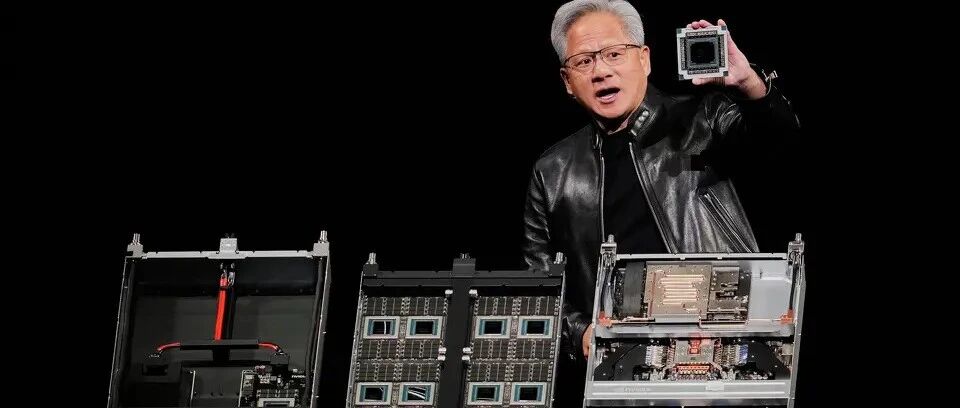
Core Viewpoint - The upcoming NVIDIA GTC conference is expected to signal a significant shift in the AI industry, particularly focusing on the transition from training to inference and adjustments in supply chain strategies [3][4][5]. Group 1: Key Signals from GTC - NVIDIA may leverage the integration of Groq technology to make a substantial entry into the AI inference market [5][6]. - The chip manufacturing process may shift from TSMC to Samsung, marking a potential break from TSMC's long-standing monopoly [5][7]. - The ecosystem for physical AI and open-source models is anticipated to expand further [5][10]. Group 2: Inference Market Focus - The AI industry is transitioning from a "training-first" approach to a "inference-driven" model, with NVIDIA's strategy being closely monitored [6]. - NVIDIA is expected to announce a new chip system that integrates Groq technology, which was acquired for approximately $20 billion [6]. - Groq's chips, known as Language Processing Units (LPU), are optimized for inference workloads, representing NVIDIA's first integration of another company's AI processor into its server architecture [6]. Group 3: Supply Chain and Client Developments - The Groq LPU is projected to be manufactured by Samsung in the latter half of the year, which could signify a shift in NVIDIA's reliance on a single supplier [7][8]. - OpenAI is expected to be one of the first customers for the new chip system, potentially utilizing it for AI tasks such as coding [8]. Group 4: Architectural Changes and Future Technology - The new system architecture will differ significantly from existing setups, featuring 256 Groq chips per rack, with Intel processors managing communication [9]. - NVIDIA is exploring deeper integration of LPU into future product roadmaps, including a potential single-chip solution combining Groq processors with next-generation Feynman GPUs [9]. Group 5: AI Application Ecosystem Expansion - NVIDIA's advancements in robotics and physical AI are gaining attention, especially in the context of the rapidly developing humanoid robot industry in China [10]. - The company is also progressing in the open-source model space, having released a 120 billion parameter model and planning to launch a new model with four times the parameters, which could lower AI inference costs and improve ROI [10]. Group 6: Long-term Industry Impact - The signals released at this GTC conference are likely to significantly influence the AI industry landscape by 2026 [11].
英伟达GTC大会前瞻:整合Groq技术大举进攻推理芯片,三星首度代工生产,OpenAI或成首批客户
Hua Er Jie Jian Wen· 2026-03-16 01:07
Core Insights - The upcoming NVIDIA GTC conference is expected to signal a strategic shift from training to inference in the AI industry, with significant implications for investors [1] - Key developments include the integration of Groq technology, a shift in supply chain dynamics, and the expansion of physical AI and open-source model ecosystems [1] Group 1: Shift to Inference Market - NVIDIA is transitioning from a "training-first" approach to a "inference-driven" strategy, responding to competition from companies like Cerebras that offer faster and cheaper solutions [2] - The company is expected to announce a new chip system that integrates NVIDIA and Groq technologies, following a $20 billion investment in Groq technology licenses [2] - Groq's chips, known as Language Processing Units (LPU), are optimized for inference workloads, marking NVIDIA's first integration of another company's AI processor into its server architecture [2] Group 2: Supply Chain Restructuring - The Groq LPU is anticipated to be manufactured by Samsung in the second half of the year, representing a significant shift away from NVIDIA's long-standing reliance on TSMC for chip production [3] - This change may be temporary, as future LPU production could return to TSMC to ensure tighter integration with NVIDIA's upcoming AI chips [3] - OpenAI is expected to be one of the first customers for the new chip system, which may be utilized for AI-related tasks such as coding execution [3] Group 3: Architectural Changes and Future Technology Roadmap - The new system architecture will feature 256 Groq chips per rack, with Intel processors managing communication, indicating that the integration of LPU with existing systems is still in progress [4] - NVIDIA is exploring deeper integration of LPU into its future product roadmap, potentially merging Groq processors with the next-generation Feynman GPU to enhance performance and reduce costs [4] Group 4: Expansion of Physical AI and Open-Source Models - NVIDIA's focus on the AI application ecosystem is highlighted by its advancements in robotics and physical AI, particularly in the context of the rapidly growing humanoid robot industry in China [6] - The company has released a 120 billion parameter model, Nemotron 3 Super, and plans to introduce a new model, Nemotron 4 Ultra, with four times the parameters, which could lower AI inference costs and improve ROI for enterprises [6] - The signals from this GTC conference are likely to significantly influence the AI industry landscape by 2026 [6]
英伟达“龙虾”乐园即将开张
3 6 Ke· 2026-03-13 11:43
Core Insights - Nvidia will hold its annual GTC conference next week, featuring new product launches and interactive sessions, including a unique activity where attendees can build an AI assistant called "Lobster" [1][4] - The event is expected to attract over 30,000 participants from more than 190 countries, with a significant number being professional developers, indicating a strong focus on AI advancements [6] Product Announcements - Nvidia's CEO Jensen Huang will deliver a keynote speech, which is anticipated to cover the latest product roadmap, including new chips and technologies [8] - Key areas of focus include the latest products extending to the Feynman architecture, new collaborative designs, and proprietary optical interconnect technologies for large-scale systems [8] - Speculation surrounds a "never-before-seen chip" that may be a collaboration with Groq, aimed at enhancing AI inference capabilities, which is crucial for the widespread adoption of AI applications [9] Strategic Developments - Nvidia is expected to discuss its partnership with Groq, which involves a $20 billion investment for patent licensing and integration of Groq's team into Nvidia [9] - The company plans to launch an open-source platform named NemoClaw, designed for enterprises to build and deploy AI agents capable of executing multi-step tasks [12] Industry Trends - The theme of this year's roundtable discussion led by Huang will focus on the current state and future of open models in AI, featuring industry leaders from various innovative companies [13] - Nvidia has committed to investing $26 billion over the next five years in open-source AI model development, significantly surpassing the costs associated with training models like GPT-4 [16]

全球大公司要闻 | 半导体涨价潮再起,寒武纪首现年度盈利
Wind万得· 2026-03-13 00:42
Group 1: Semiconductor Industry - The global semiconductor industry is experiencing a new wave of price increases, with Texas Instruments, NXP, and Infineon notifying customers of price hikes effective April 1, with Texas Instruments seeing increases of up to 85% on some products [2] - Infonion's mainstream products are expected to rise by 5% to 15%, with some high-end products potentially increasing even more [2] Group 2: AI and Technology Developments - Nvidia announced a $26 billion investment over the next five years to develop open-source AI models, transitioning from an AI chip manufacturer to a leading model laboratory, directly challenging companies like OpenAI [2] - Cambricon achieved its first annual profit, projecting a net profit of 2.059 billion yuan for 2025, a significant turnaround from losses, with revenues of 6.497 billion yuan, marking a 453.21% year-on-year increase [2] Group 3: Automotive Innovations - Tesla unveiled its third-generation humanoid robot at AWE 2026, planning to start production by the end of the year with a long-term capacity target of 1 million units [3] - The new driverless taxi, Cybercab, has officially rolled off the production line and is set to begin mass production in April, with plans to produce hundreds of units weekly [3] Group 4: Financial Performance of Companies - Tencent is developing an independent AI model for WeChat, expected to be operational by 2026, aimed at enhancing the mini-program ecosystem [5] - Citic Securities confirmed that its Hong Kong subsidiary is under investigation by the Hong Kong Securities and Futures Commission and the Independent Commission Against Corruption, with ongoing monitoring of the situation [5] - Victory Technology reported a revenue of 19.292 billion yuan for 2025, a 79.77% increase year-on-year, with a net profit of 4.312 billion yuan, up 273.52% [6] - Li Auto's Q4 2025 revenue totaled 28.8 billion yuan, a 35% decrease year-on-year, with a net profit of 20.2 million yuan, down from 3.5 billion yuan the previous year [6] Group 5: International Business Developments - Amazon plans to move its 2026 Prime Day sales event from July to June to stimulate sales growth earlier in the year [9] - Microsoft and Meta have committed nearly $100 billion in new data center leases, pushing the total global data center leasing commitments to over $700 billion [9] - FedEx's market capitalization has surpassed UPS for the first time, becoming the leading package delivery company in the U.S. [10]





OpenAI电商转化不足1%,苹果最贵折叠屏9月面世 | 财经日日评
吴晓波频道· 2026-03-13 00:29
Group 1: Inflation and Economic Indicators - In February, the US CPI increased by 2.4% year-on-year, matching expectations and previous values, while the month-on-month increase was 0.3%, slightly above the previous 0.2% [2] - The core CPI remained at 2.5%, the slowest growth in five years, with housing prices contributing to the inflation dynamics [2] - The release of strategic oil reserves by the IEA, amounting to 400 million barrels, is a response to potential global energy supply disruptions due to Middle Eastern conflicts [4] Group 2: Energy Market Dynamics - The IEA's release of oil reserves is the largest coordinated action in its history, but it is insufficient to cover the supply gap caused by disruptions in the Strait of Hormuz, leading to a rise in Brent crude prices [4] - High global oil prices could increase inflation while simultaneously slowing economic growth, complicating monetary policy adjustments for central banks [5] Group 3: Transformer Supply and Demand - The IEA predicts a significant increase in global electricity demand, driven by AI applications, leading to a 30% supply gap in transformers [6] - China's transformer exports reached a record value of 64.6 billion yuan in 2025, with a nearly 36% year-on-year increase, indicating strong demand and competitive advantages in the industry [6] Group 4: Technology and AI Developments - Nvidia plans to invest $26 billion over the next five years to develop open-source AI models, aiming to challenge the market positions of companies like OpenAI [12] - The launch of Nvidia's Nemotron 3 Super model, with 128 billion parameters, showcases its commitment to advancing AI technology [12][13] Group 5: Consumer Electronics and Market Trends - Apple's first foldable phone, iPhone Fold, is set to launch in September, with expected prices ranging from 14,000 to 20,000 yuan, highlighting the premium positioning of the product [8][9] - The introduction of AI-driven applications by Chinese smartphone manufacturers indicates a competitive push in the AI space, with a focus on enhancing user experience and device interconnectivity [10][11]