
Ke Ji Ri Bao

Search documents
“低储高放”模式助电动重卡变身“移动充电宝”
Ke Ji Ri Bao· 2025-12-18 01:01
Core Insights - The first megawatt-level electric heavy truck interactive charging station in China has been operational since September, providing rapid charging capabilities for electric heavy trucks [1][2] - The station has charged a total of 21.26 million kilowatt-hours, serving over 4,172 vehicle trips, demonstrating its effectiveness in high-frequency operational areas [1][2] - The station utilizes V2G technology, allowing for low-cost charging during off-peak hours and the ability to send energy back to the grid during peak hours, creating new revenue streams for logistics companies [1][2] Group 1 - The charging station features dual charging guns with a power capacity of up to 600 kilowatts, enabling simultaneous ultra-fast charging for multiple heavy trucks [1] - The "low storage, high discharge" model allows electric heavy trucks to act as "mobile power banks," effectively participating in grid peak regulation [1] - The integrated design of the station ensures stable operation across a wide temperature range from -30°C to 60°C [1] Group 2 - The station addresses the rapid charging challenges faced by electric heavy trucks operating between ports and steel enterprises, providing a replicable solution for high-frequency operational areas [2] - The initiative supports the electrification of commercial vehicles and contributes to the development of a smart low-carbon logistics system, facilitating regional energy transition [2] - The vision for green logistics is being accelerated through the establishment of this charging station [2]
我国成功研制高通量单细胞质谱仪
Ke Ji Ri Bao· 2025-12-18 00:59
Core Insights - The article highlights a significant breakthrough in single-cell mass spectrometry technology, marking a key advancement in China's high-end life science instruments [1][2]. Group 1: Technological Advancements - China has successfully developed a high-throughput, high-sensitivity single-cell mass spectrometer capable of automated qualitative and quantitative analysis of multi-polar metabolites within single cells [1]. - The new technology addresses limitations of traditional mass spectrometry devices, such as detection throughput, sensitivity, and compound coverage, which have previously hindered advancements in the field [1]. Group 2: Applications and Impact - The technology has significantly improved detection efficiency and data reliability, and is currently being demonstrated in basic life science research and clinical medicine [2]. - This advancement provides a solid technical foundation for enhancing China's capabilities in single-cell analysis and the development of high-end scientific instruments that are independently controllable [2].
氢能时代 铂金科技价值“看涨”
Ke Ji Ri Bao· 2025-12-18 00:59
Core Viewpoint - The price of platinum has surged significantly, driven by factors such as declining supply, increasing industrial demand, and a shift in investment focus towards precious metals amid a weakening dollar [2][3]. Group 1: Reasons for Platinum Price Increase - The rise in platinum prices is attributed to three main factors: a shift in investment towards precious metals due to risk aversion, a continuous decline in platinum supply, and strong industrial demand [2]. - South Africa, which produces over 70% of the world's platinum, faces challenges such as power shortages and rising operational costs, leading to a projected market shortfall of 30 tons by 2025 [2]. - Industrial demand for platinum is expected to reach 95 tons by 2025, accounting for 38% of total demand, driven by its critical role in hydrogen energy applications and automotive catalysts [2]. Group 2: Value of Platinum in Hydrogen Industry - Platinum is recognized for its chemical stability and catalytic properties, making it essential in high-tech industries, particularly in green hydrogen technology [3]. - It serves as a core catalyst in proton exchange membrane (PEM) fuel cells, influencing power density and energy conversion efficiency [3]. - The demand for platinum in hydrogen fuel cell vehicles is projected to reach 43.8 tons by 2025, highlighting its importance in the growth of electric and new energy vehicles [3]. Group 3: Strengthening Platinum Supply Chain - The global distribution of platinum resources is highly concentrated, with significant reliance on imports, particularly in China, where over 80% of platinum is imported [4][5]. - To address resource shortages, it is crucial to enhance the strategic importance of platinum in mineral directories and improve domestic mining efficiency [5]. - Encouraging local companies to invest in platinum-rich regions and increasing recycling efficiency are recommended strategies to secure the platinum supply chain [5].
电泵浦片上纠缠量子光源亮度提升6个数量级
Ke Ji Ri Bao· 2025-12-18 00:59
Core Insights - The research team from the University of Science and Technology of China has successfully integrated a high-brightness polarization-entangled quantum light source on an electrically pumped chip, marking a significant step towards integrated quantum information processing [1] Group 1: Quantum Light Source Development - The entangled quantum light source is a core resource in quantum information science, traditionally requiring external laser pumps, which limits integration and scalability [1] - The new electrically pumped scheme allows for direct current injection on-chip, enhancing the integration and scalability of the entangled source [1] - The team achieved a brightness of 4.5×10^10 pairs/second/milliwatt and a bandwidth of 73 nanometers, significantly improving brightness by six orders of magnitude and bandwidth by one order compared to previous silicon-based sources [1] Group 2: Experimental Results and Applications - The entangled source demonstrated a fidelity greater than 96% across multiple wavelength channels and exhibits broadband multiplexing capabilities, with a compact device size of 15mm x 20mm [2] - This device is suitable for applications in wavelength division multiplexing for fiber network quantum key distribution, satellite-based quantum communication, and entanglement-based quantum precision measurement [2]
正式投产!创多项世界纪录
Ke Ji Ri Bao· 2025-12-17 14:33
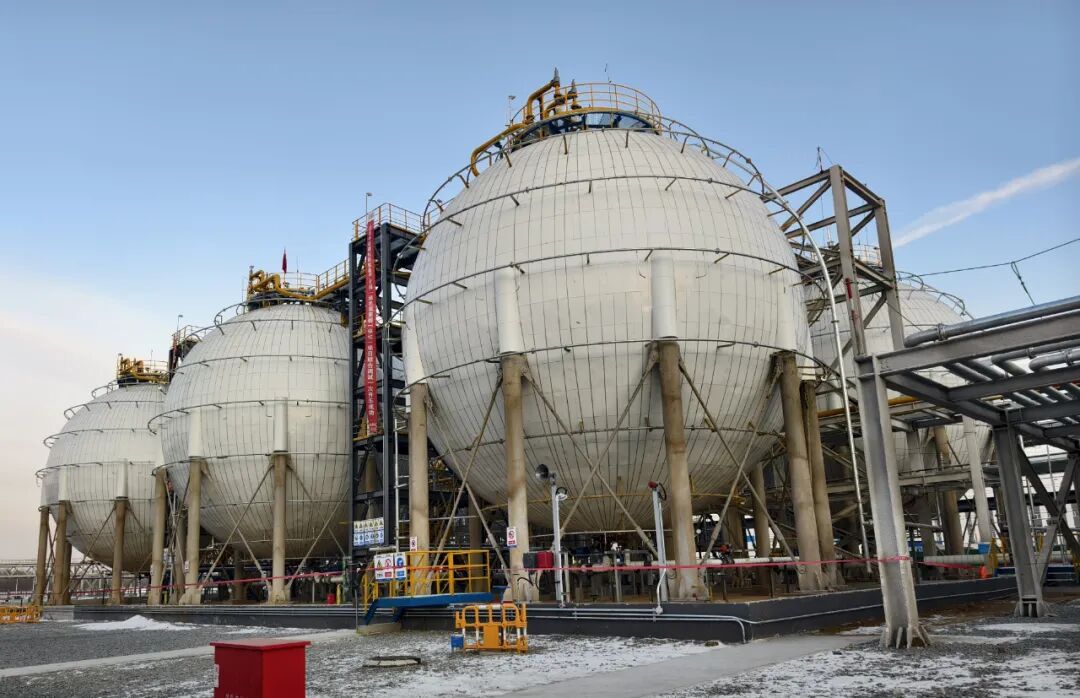
Core Insights - The China Energy Construction Group has officially launched the first phase of the Songyuan Hydrogen Energy Industrial Park, which is the largest integrated green hydrogen and ammonia project globally [1][2] - The project has signed the world's first contract for green ammonia as a marine fuel, marking a significant milestone in the industry [1] Project Overview - The Songyuan project commenced construction in September 2023, located in Songyuan City, Jilin Province, with a planned capacity of 3 million kilowatts of renewable energy generation, 800,000 tons of green synthetic ammonia, and green methanol [2] - The first phase includes 800,000 kilowatts of renewable energy generation, capable of producing 45,000 tons of green hydrogen and 200,000 tons of green ammonia and methanol annually, which equates to saving approximately 600,000 tons of standard coal and reducing carbon dioxide emissions by 740,000 tons each year [2] Technological Innovations - The project utilizes direct supply of green electricity from wind and solar power to the chemical park, employing water electrolysis to produce green hydrogen [2] - It combines green hydrogen with nitrogen or carbon dioxide through a multi-stable flexible chemical process to synthesize green ammonia or green methanol [2] - The project has achieved several world records, including the largest scale of hydrogen-ammonia-methanol integrated production, maximum hydrogen storage capacity, and the largest alkaline electrolysis hydrogen production equipment [2]


“天目山一号”无人机创世界纪录
Ke Ji Ri Bao· 2025-12-17 11:43
Group 1 - The "Tianmu Mountain No. 1" drone has set a world record for the longest distance flown by a hydrogen fuel cell-powered multirotor drone, achieving a distance of 188.605 kilometers in 4 hours and 17 minutes [1] - The flight data of "Tianmu Mountain No. 1" was monitored and verified by Guinness World Records, confirming the stability of its power system and excellent control performance throughout the flight [1] - "Tianmu Mountain No. 1" is designed for long-duration low-altitude operations and is applicable in various fields such as ecological inspections, oil and gas pipeline monitoring, renewable energy plant operations, urban traffic management, and emergency rescue [1] Group 2 - The Tianmu Mountain Laboratory, established in June 2022, focuses on advanced aviation technology and high-performance aviation materials, aiming to support the development of low-altitude economy in Zhejiang Province [2] - The laboratory collaborates with Beihang University to create a complete innovation ecosystem that spans from basic research to key technology breakthroughs and efficient transformation of results [2] - The initiative is aligned with national strategies and emerging industry needs, contributing to the construction of a strong civil aviation province and the development of a low-altitude economy [2]
肝细胞癌治疗领域新突破!mRNA疗法攻克实体瘤难题
Ke Ji Ri Bao· 2025-12-17 11:42
Core Viewpoint - The article highlights the promising results of the MTS-105 mRNA encoding drug developed by Jitai Technology, which has shown the ability to eliminate tumors and prevent recurrence in a mouse model of liver cancer, marking a significant advancement in cancer therapy [1] Group 1: Drug Development - Jitai Technology's MTS-105 utilizes targeted delivery technology to release T cell connectors locally within tumors [1] - The drug has received orphan drug designation from the FDA, indicating its potential for treating rare diseases [1] - MTS-105 is positioned to become the world's first mRNA encoding T cell connector (TCE) therapy for solid tumors [1] Group 2: Technological Innovation - The efficiency of MTS-105 is enhanced through an AI-driven nano-delivery platform [1] - This innovative approach represents a significant leap in the application of mRNA technology in oncology [1]
技术赋能,科特派盘活高原菌菇产业
Ke Ji Ri Bao· 2025-12-17 08:48
科技日报记者 张添福 临近冬至时节,走进青海省海南州兴海县最大的日光温室基地,泥土与菌类的特有清香扑面而来。 平菇像一把把撑开的小伞,菌盖肥厚、圆润;香菇像褐色的小精灵,星星点点从菌棒里钻出来…… 兴海县位于三江源国家级自然保护区,当地产业以牧为主、农牧结合。2022年以来,该县001号科 技特派员工作站扎根此间,建立示范基地、开展技术培训、攻克高原食用菌栽培难关。不过,初到此地 时,他们面对的是一堆"烂摊子"。 2022年,兴海县001号科技特派员工作站站长、青海省农林科学院土壤肥料研究所副所长李松龄带 领工作站成员下田地、访农户,兴海县唐乃亥乡72个日光温室成为他们的主战场。然而,李松龄和工作 站成员一一摸排"家底"后发现,72个日光温室几近废弃,一些日光温室即便仍在种植,也只是零散种植 韭菜、黄瓜、西红柿,难以发挥规模经济效益。 如何盘活兴海县最大的日光温室?化验土质、实验、试种及进行适应性评价后,李松龄团队锚定食 用菌产业。 羊肚菌享有"菌中之王"美誉,出菇期时,喜凉不喜热,温度需控制在16—18摄氏度。"在青海种植 羊肚菌,有天然优势。青海夏季即便烈日当空,但只要遮阴、通风,日光温室内也能确保较低温 ...
“5G揽海”十大应用场景亮相
Ke Ji Ri Bao· 2025-12-17 08:48
Core Insights - The "5G Ocean" integration application development conference was held in Baoshan District, Shanghai, focusing on advancing the "5G Ocean" initiative to enhance intelligent shipping in the Yangtze River Delta region [1] - The conference showcased the achievements of the "5G Ocean" initiative over the past two years and released ten key application scenarios for the 14th Five-Year Plan period [2] Group 1: Event Overview - The conference gathered experts and representatives from transportation, communication, marine, and shipping sectors to discuss the integration of 5G technology with maritime and economic activities [1] - The "5G Ocean" action plan was jointly developed by the Shanghai Municipal Communications Administration, Shanghai Port Management Committee, and Shanghai Maritime Bureau in August 2023 [1] Group 2: Key Application Scenarios - The ten application scenarios released during the conference include green port automation, intelligent remote supervision, smart pilotage and ship-shore collaboration, digital twin shipping control, maritime security and emergency rescue, shipping carbon monitoring and energy consumption intelligence control, low-altitude cross-sea logistics intelligent networking, and marine renewable energy facility operation and maintenance [2] - These scenarios provide a clear practical path for leveraging 5G technology to promote high-quality development in the marine economy [2] Group 3: Regional Development - Baoshan District, the conference venue, is strategically located at the confluence of the Yangtze River, Huangpu River, and Wanzhao River, making it a hub for various maritime activities [2] - The district is focusing on building the Sanjiang Innovation Forum scenario center and organizing the "5G Ocean" innovation scenario competition to foster the incubation of 5G marine application scenarios and the implementation of innovative projects [2]
科技日报:2025鸿蒙生态人才大会将于12月在武汉举办
Ke Ji Ri Bao· 2025-12-17 07:01
12月16日,记者从湖北武汉东湖高新区获悉,以"新生态、新人才、新动能"为主题的 2025鸿蒙生态人才大会将于12月27日在光谷举办。 本次大会由全球智慧物联网联盟主办,鸿蒙生态服务(深圳)有限公司、鸿蒙生态(武 汉)创新中心联合承办,覆盖鸿蒙人才产业链上下游全生态,共商鸿蒙人才培养体系建设, 共话产业生态协同发展新路径。 目前,武汉已率先出台全国首个城市级开源鸿蒙建设实施方案,明确实施开源人才聚智 工程,壮大从业者队伍、培养后备人才,鼓励武汉大学、华中科技大学、武汉理工大学等高 校构建开源教学育人体系,开展鸿蒙人才培养专项行动。到2027年,计划汇聚100万开源开 发者,共同繁荣产业生态。 近日,武汉东湖高新区发布的《东湖高新区顶尖人才(团队)专项实施办法》(即"光 谷顶尖人才政策")与鸿蒙生态人才培育布局高度契合,二者均锚定人才驱动发展核心,在 引育方向、合作模式与发展目标上深度匹配。光谷通过"揭榜挂帅""校企合作"等灵活机制引 育人才,提供资金、安居、服务等多维支持,与鸿蒙高校人才发展论坛推出的课程体系、万 名开发者计划及校企合作育人模式形成互补,共同构建"人才培养—产业落地"的完整闭环。 编辑:胡之澜 ...