
2 1 Shi Ji Jing Ji Bao Dao

Search documents
21深度|比亚迪闯关:守擂之年 下一个增长点是什么?
2 1 Shi Ji Jing Ji Bao Dao· 2026-03-03 23:23
Core Insights - BYD is facing increasing competition and challenges in maintaining its market share, particularly in the entry-level electric vehicle segment, as competitors like Geely and Wuling ramp up their offerings [3][16] - The company is undergoing strategic adjustments, focusing on product innovation and marketing to better align with consumer demands and market dynamics [19][20] - BYD's technological advancements, such as the DM-i technology and blade battery, have been pivotal in its growth, but the company must continue to innovate to stay ahead of competitors [5][9][24] Sales Performance - In early 2026, BYD's sales were impacted by seasonal factors, with January and February sales dropping to 210,000 and 190,200 units, representing year-on-year declines of 30% and 41.1% respectively [2] - Geely's sales in the same period were 270,000 and 206,000 units, indicating a competitive threat to BYD's market position [2][13] - BYD's Dolphin and Seagull models are facing pressure from new entrants in the market, particularly as Geely's Star Wish model has shown significant growth [18] Product Strategy - BYD is focusing on launching new models to reclaim market share in the under 200,000 yuan electric vehicle segment, which is seen as a critical area for growth [3][16] - The company is also adjusting its pricing strategy, with the Qin PLUS DM-i's price dropping significantly over the years to maintain competitiveness [6] - The introduction of the Super e-platform is part of BYD's strategy to innovate and meet evolving consumer needs, with expectations for new technology releases by 2026 [4][20] Technological Innovation - BYD's DM-i technology has set a new standard in fuel efficiency, with a thermal efficiency of 43.04% and a fuel consumption of 3.8L per 100 km, outperforming many competitors [5] - The blade battery technology has allowed BYD to maintain a competitive edge in the electric vehicle market by offering lower costs and longer ranges [8][9] - The company is aware of the rapid pace of technological advancement in the industry and is committed to continuous innovation to avoid losing its competitive advantage [14][20] Market Dynamics - The competitive landscape is shifting, with traditional automakers like Toyota and Honda lagging in electric vehicle adoption, allowing BYD to capture significant market share [9][11] - The overall market for electric vehicles is expanding, with projections indicating continued growth in exports and international sales for Chinese automakers, including BYD [26] - BYD's overseas sales have surpassed domestic sales for the first time, indicating a strategic shift towards international markets [24] Brand Positioning - BYD is working to enhance its brand perception and emotional connection with consumers, moving beyond technical specifications to focus on user experience [19] - The company is also exploring high-end market segments with new brands like Tengshi and Fangchengbao, aiming to establish a presence in the luxury vehicle market [21][22] - The success of Fangchengbao, particularly with its Titanium series, highlights BYD's ability to adapt its product offerings to meet specific consumer needs [22]


21深度|比亚迪闯关:守擂之年,下一个增长点是什么?
2 1 Shi Ji Jing Ji Bao Dao· 2026-03-03 23:17
Core Insights - BYD is facing increasing competition and challenges in maintaining its market share, particularly in the 10-20 million yuan segment, as competitors like Geely and Wuling ramp up their efforts in the electric vehicle market [2][13] - The company is undergoing a strategic shift from aggressive market share acquisition to focusing on building barriers to protect its existing market position [1][3] - BYD's success has been largely driven by its competitive pricing and technological innovations, but it now needs to adapt to changing consumer demands and market dynamics [8][11] Sales Performance - In January and February 2026, BYD's sales were 210,000 and 190,200 units, representing year-on-year declines of 30% and 41.1% respectively [1] - Geely's sales during the same period were 270,000 and 206,000 units, indicating a competitive threat to BYD's market position [1] Product Strategy - BYD is focusing on launching new models to regain market share in the under 200,000 yuan electric vehicle segment, which is seen as crucial for its future growth [2][13] - The company has implemented a pricing strategy that includes reducing the starting price of models like the Qin PLUS DM-i, which has seen significant price cuts since its launch [6][4] Technological Innovation - BYD's technological advancements, such as the DM-i technology and blade battery, have allowed it to maintain a competitive edge in the electric vehicle market [4][7] - The company is aware of the rapid pace of technological change and the need to continuously innovate to stay ahead of competitors [11][12] Market Dynamics - The automotive market is experiencing a shift, with increasing competition from both established players and new entrants, making it essential for BYD to adapt its strategies [8][9] - The company is also focusing on expanding its presence in international markets, with overseas sales surpassing domestic sales for the first time in early 2026 [20][21] Brand Positioning - BYD is working on enhancing its brand image and marketing strategies to appeal to a broader audience, particularly in the high-end market segment [14][17] - The introduction of new brands like Fangcheng Leopard aims to fill gaps in the market and target specific consumer demographics [17][19]
江铃汽车:1—2月整车总销售5.06万辆,同比增长17.91%
2 1 Shi Ji Jing Ji Bao Dao· 2026-03-03 11:14
Group 1 - The core point of the article is that Jiangling Motors reported a total vehicle sales of 23,800 units and a total vehicle production of 21,500 units in February 2026, with a cumulative vehicle sales of 50,600 units from January to February, representing a year-on-year increase of 17.91% [1]

没有意外还是第一,比亚迪2月销售19万辆说明什么|车界观察
2 1 Shi Ji Jing Ji Bao Dao· 2026-03-03 10:09
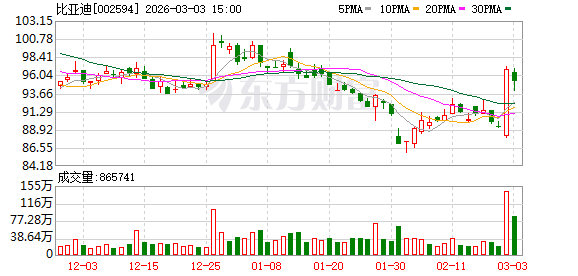
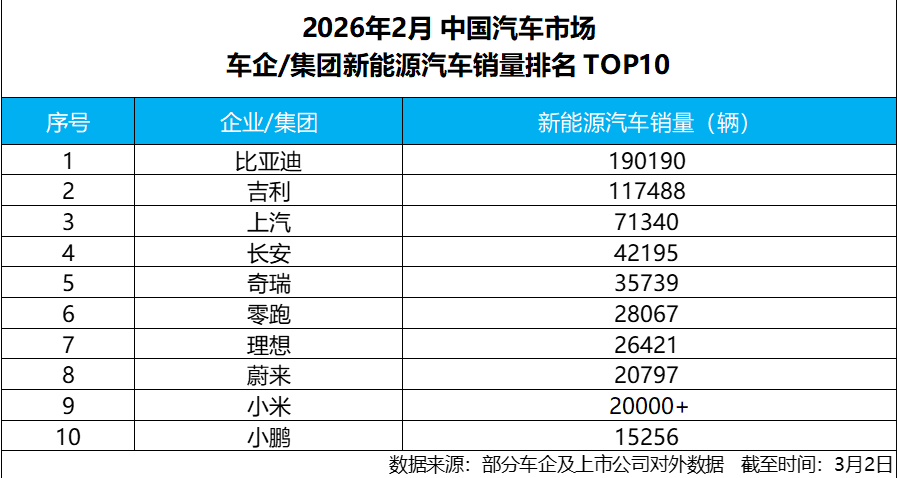
Core Insights - The competition landscape in China's new energy vehicle (NEV) market has become clearer as of early 2026, with BYD Group leading the industry with a sales volume of 190,190 units in February, maintaining a significant advantage over competitors [1][4]. Group 1: Sales Performance - BYD has maintained its position as the top seller in China's NEV market for 57 consecutive months since June 2021, with cumulative sales surpassing 15.5 million units [3]. - In February, BYD's overseas sales of passenger cars and pickups reached 100,151 units, marking a year-on-year growth of 41.4%, with total overseas sales for January-February 2026 at 200,160 units, up 42.3% year-on-year [4]. Group 2: Market Position and Strategy - BYD's strong performance in February signals its ability to build systemic advantages in the NEV market, indicating that its leadership is structural rather than coincidental [4]. - The company is set to hold a groundbreaking technology release on March 5, which has already positively impacted its stock price, reflecting investor confidence in its technological capabilities [5]. Group 3: High-End Market Development - BYD's high-end brands, including Fangchengbao, Tengshi, and Yangwang, achieved combined sales of 23,000 units in February, showing significant growth and enhancing the company's product structure and profitability [5]. - The increasing share of high-end products is expected to strengthen BYD's brand value and market influence [5]. Group 4: Future Considerations - Despite the positive outlook, BYD must focus on advancements in intelligent driving technology to compete effectively against rivals like Huawei and new entrants [5]. - The company faces challenges related to geopolitical risks as its overseas sales grow, including trade policies, tariff barriers, and localization requirements [5].
A股军工股大跌,煤炭逆势走强,陕西黑猫涨停,港股赣锋锂业跌超10%
2 1 Shi Ji Jing Ji Bao Dao· 2026-03-03 07:50
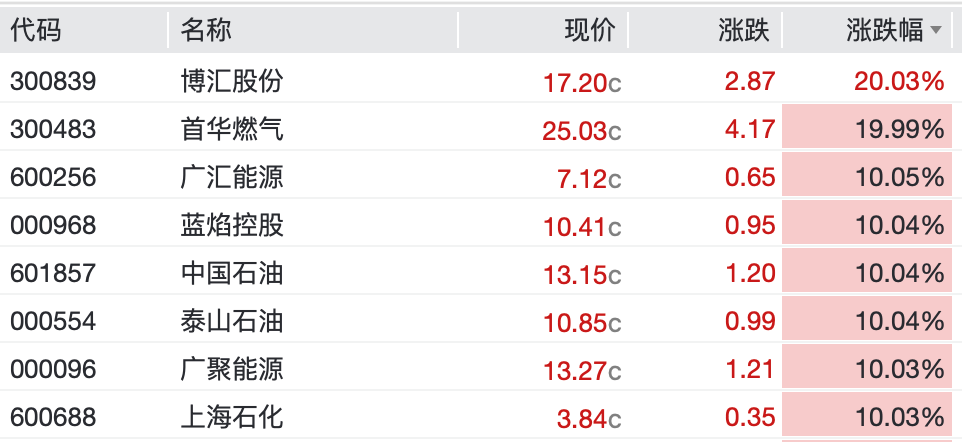
Group 1 - The Asia-Pacific markets experienced a collective decline on March 3, with major indices in A-shares and Hong Kong all weakening, while Japanese and South Korean markets saw significant drops. The Shanghai Composite Index fell over 1%, the ChiNext Index dropped over 2%, and the Shenzhen Component Index declined by more than 3% [1] - Over 4,800 stocks in the market declined, with the total trading volume in the Shanghai and Shenzhen markets exceeding 3 trillion yuan, an increase of over 110 billion yuan compared to the previous day [1] Group 2 - The military, non-ferrous metals, computer, media, electronics, and chemical sectors saw significant declines, with aerospace and military stocks leading the drop. Several stocks, including AVIC Control and AVIC Technology, hit the daily limit down, while others like Zhenxin Technology fell over 15% [2] - The rare earth sector also faced heavy losses, with stocks like Northern Rare Earth and Baotou Steel hitting the daily limit down. The semiconductor industry chain declined, with over ten stocks, including Purun and Dongwei Microelectronics, dropping more than 10% [2] - Conversely, the oil and gas and shipping sectors maintained strong performance, with over 30 stocks, including China Petroleum, hitting the daily limit up. China Petroleum's stock price reached a new high since March 2008 [2] Group 3 - In the Hong Kong market, the Hang Seng Index fell over 1%, and the Hang Seng Tech Index dropped over 2%. Tech stocks collectively declined, with companies like Li Auto and NIO falling over 6% [3] - The non-ferrous metals sector led the decline in Hong Kong, with Ganfeng Lithium dropping over 10% and other companies like Jiangxi Copper and Zijin Mining falling over 7% [3] Group 4 - The Japanese and South Korean stock markets both closed lower, with the Nikkei 225 index down 3.1% and the KOSPI index down 7.24%, marking the largest single-day drop since August 5, 2024 [4] - International oil prices surged, with WTI crude oil rising over 2% to exceed $73 per barrel, while Brent crude increased by over 3%. Gold and silver prices experienced sharp declines, with silver dropping over 7% at one point [4]



英伟达官宣CPO两大投资;iPhone 17e发布升杯没涨价 | 科技风向标
2 1 Shi Ji Jing Ji Bao Dao· 2026-03-03 03:08
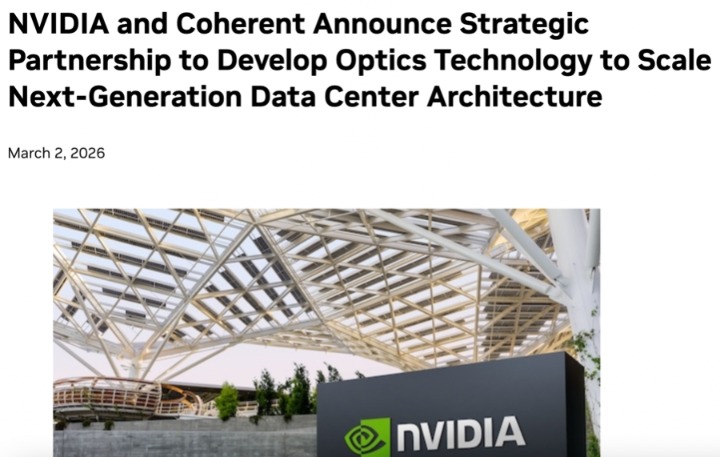
Group 1: Nvidia Collaborations - Nvidia announced a strategic agreement with Coherent to advance optical technology, including a multi-billion dollar procurement commitment and a $2 billion investment to support R&D and manufacturing capabilities in the U.S. [2] - Nvidia also entered a multi-year strategic agreement with Lumentum to accelerate innovation in optical technology, with a similar investment of $2 billion to enhance manufacturing capacity [2] Group 2: Xiaomi Robotics - Xiaomi's humanoid robots have begun "internships" in automotive factories, achieving a 90.2% success rate in self-installing self-tapping nuts over a continuous 3-hour operation [5] Group 3: Apple Product Launch - Apple launched the iPhone 17e and iPad Air M4, with starting prices of 4499 yuan and 4799 yuan respectively, maintaining the same price for the 256GB version of iPhone 17e as the previous generation's 128GB version [7][8] Group 4: Meizu's Future Plans - Meizu's CMO revealed that the Meizu 22 series and other models will not see price increases, and the Meizu 23 has completed development but will not be released to the market [8] Group 5: Alibaba's AI Model Branding - Alibaba unified its AI model branding under "Qwen," with significant user engagement, achieving a DAU of 73.52 million during the Spring Festival, marking a 940% increase [11] Group 6: ZTE's Network Experiment - ZTE and Turkey's telecommunications completed the world's first C+L integrated 1.6Tbps optical network trial, enhancing system capacity and supporting high-speed transmission [12] Group 7: Gree Electric's Dividend Policy - Gree Electric responded to rumors about discontinuing dividends, affirming its commitment to investor returns through cash dividends and share buybacks, with future plans based on strategic and financial assessments [13] Group 8: Qualcomm's Wearable Platform - Qualcomm introduced a new flagship wearable chip platform with significant performance improvements, including up to 5 times higher single-thread CPU performance and enhanced AI capabilities [16] Group 9: Pricing Adjustments in Semiconductor Industry - Xidian Micro announced price increases for some products due to structural supply-demand imbalances in the mature process sector, affecting consumer and automotive electronics [17] Group 10: MiniMax Financial Performance - MiniMax reported a revenue of $79.038 million for the year ending December 31, 2025, a 158.9% increase, with a gross profit of $20.079 million, reflecting a 437.2% growth in gross margin [21]

英伟达官宣CPO两大投资;iPhone 17e发布升杯没涨价
2 1 Shi Ji Jing Ji Bao Dao· 2026-03-03 02:55
Group 1: Nvidia Collaborations - Nvidia announced a strategic agreement with Coherent to advance optical technology, including a multi-billion dollar procurement commitment and a $2 billion investment to support R&D and manufacturing capabilities in the U.S. [2] - Nvidia also entered a multi-year strategic agreement with Lumentum to accelerate innovation in optical technology, with a similar investment of $2 billion to enhance manufacturing capacity [2] Group 2: Xiaomi Robotics - Xiaomi's humanoid robots have begun "internships" in automotive factories, achieving a 90.2% success rate in self-installing self-tapping nuts over a continuous 3-hour operation [3] Group 3: Apple Product Launch - Apple launched the iPhone 17e and iPad Air M4, with starting prices of 4499 yuan and 4799 yuan respectively, maintaining the same price for the 256GB version of iPhone 17e as the previous generation's 128GB version [4] Group 4: Meizu's Future Plans - Meizu's CMO revealed that the Meizu 22 and Note 16 series will continue to sell without price increases, while the Meizu 23 has been developed but will not be released to the market [5] Group 5: Douban Apology - Douban issued an apology for a system error that allowed users to claim a "200 off 200" coupon, leading to significant losses from abnormal orders [6] Group 6: Didi's New Lab - Didi Autonomous Driving established the DiDi Voyager Labs to collaborate with Tsinghua University on advanced multi-modal and reinforcement learning technologies for autonomous driving [7][8] Group 7: Alibaba's AI Brand - Alibaba unified its AI model brand under "Qwen," with significant user engagement, achieving a 940% increase in daily active users during the Spring Festival [9] Group 8: ZTE's Network Trial - ZTE and Turkey's telecommunications completed the world's first C+L integrated 1.6Tbps optical network trial, enhancing system capacity and supporting high-speed transmission [10] Group 9: Gree Electric's Dividend Policy - Gree Electric responded to rumors about discontinuing annual dividends, affirming its commitment to investor returns through cash dividends and share buybacks [11] Group 10: Renesas Leadership Change - Renesas Electronics appointed Yvonne Liu as the new President of Renesas Electronics China, effective March 1, 2026, to enhance operations and strategic execution in the Chinese market [12] Group 11: Qualcomm's Wearable Platform - Qualcomm launched a new flagship wearable chip platform with significant performance improvements, including up to 5 times higher CPU single-thread performance and enhanced AI capabilities [13] Group 12: Heda Microelectronics Price Increase - Heda Microelectronics announced a price increase for certain products due to cost pressures from supply-demand imbalances in the mature process sector [14] Group 13: Zhenbao Technology IPO - Zhenbao Technology is set to raise approximately 119.75 million yuan through its IPO to fund semiconductor production and R&D projects [16] Group 14: Sitan Technology Financing - Sitan Technology completed a B3 round financing, raising nearly 100 million yuan to accelerate commercialization in automotive projection and AR display technologies [17] Group 15: MiniMax Financial Performance - MiniMax reported a revenue of $79.04 million for the year ending December 31, 2025, with a 158.9% year-over-year increase, and a gross profit margin improvement to 25.4% [18]


港股锂电股全线走低 赣锋锂业跌超7%
2 1 Shi Ji Jing Ji Bao Dao· 2026-03-03 02:24
南方财经3月3日电,港股锂电股全线走低,截至发稿,赣锋锂业跌7.08%、天齐锂业跌4.74%、理士国 际跌4.41%。消息方面,碳酸锂期货主力合约触及跌停,跌幅13%,报150860元/吨。 ...

美股V型反弹,英伟达涨近3%,布油大涨7%,油气、国防股走强,白银深夜跳水4%
2 1 Shi Ji Jing Ji Bao Dao· 2026-03-02 23:36
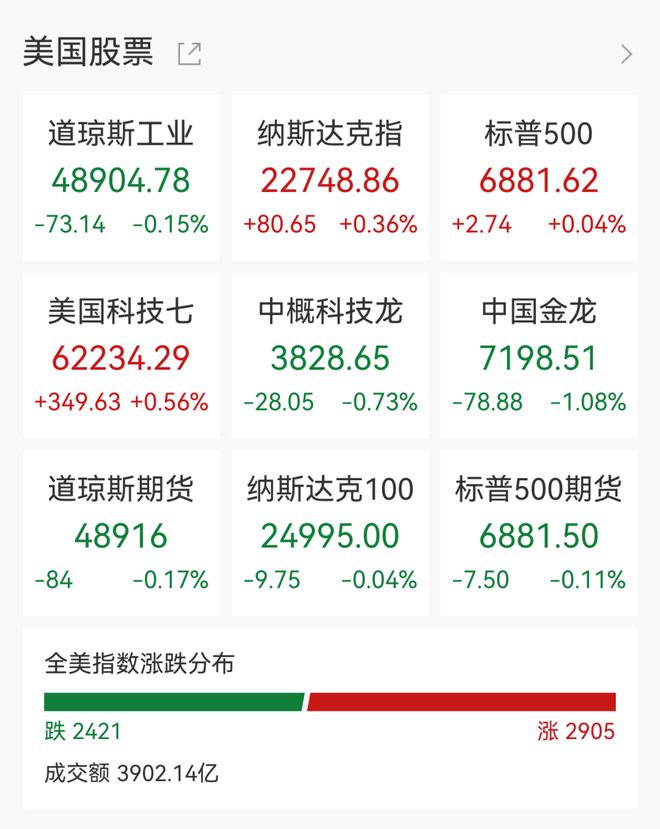
Market Performance - European stock markets mostly declined, with Germany's DAX and France's CAC40 indices dropping over 2% [1] - The US stock indices showed mixed results, with the Dow Jones down 0.15%, the S&P 500 up 0.04%, and the Nasdaq up 0.36% [1] Technology Sector - Major US tech stocks mostly rose, with the US Tech Giants Index increasing by 0.56%. Microsoft rose over 1%, while Apple, Tesla, Netflix, and Meta saw slight increases. Google fell over 1%, and Intel and Amazon experienced minor declines [3] Semiconductor and Energy Stocks - Nvidia rose approximately 3% after investing $2 billion each in Lumentum and Coherent, which saw their stocks rise over 11% and 15% respectively. The Philadelphia Semiconductor Index increased by 0.48% [4] - Oil and gas stocks generally rose, with ConocoPhillips up over 4%, EOG Resources up over 3%, and Occidental Petroleum up over 2% [4] Aerospace and Defense - Aerospace and defense stocks surged, with RCAT up over 17%, KRMN up over 5%, Kratos Defense up over 5%, Raytheon Technologies up over 4%, and Lockheed Martin up over 3% [4] Cryptocurrency Sector - Cryptocurrency-related stocks saw significant gains, with Figure up over 17%, Circle up over 15%, and Strategy up over 6% [5] Chinese Stocks - Chinese stocks mostly declined, with the Nasdaq Golden Dragon China Index down 1.08%. Notable declines included Kingsoft Cloud down nearly 5% and Vipshop down over 3%. However, JinkoSolar rose over 2% and Hesai Technology rose nearly 2% [5] Automotive Sector - Zeekr saw a significant increase of over 7% in February vehicle deliveries, totaling 23,867 units, marking a 70% year-on-year growth. NIO delivered 20,797 vehicles, a 57.6% increase year-on-year, while Li Auto delivered 26,421 vehicles in February 2026 [5] Precious Metals - As of March 2, spot gold rose by 0.99% to $5,330.29 per ounce, while COMEX gold futures increased by 1.87% to $5,346 per ounce. Conversely, spot silver fell by 4.54% to $89.491 per ounce [5] Oil Prices - WTI crude oil futures for April rose by 6.71% to $71.52 per barrel, while Brent crude oil futures increased by 7.59% to $78.40 per barrel [7][8] Geopolitical Events - Reports indicated that the Iranian Revolutionary Guard has closed the Strait of Hormuz, threatening to attack vessels attempting to pass through. US President Trump stated that military actions against Iran could last 4 to 5 weeks, with preparations for a longer duration [8] Trade and Economic Policy - A US appeals court has returned several lawsuits regarding tariffs to the International Trade Court, which may expedite the refund process for importers. This development could impact the Federal Reserve's interest rate decisions amid rising geopolitical tensions [9]
神玑“单挑”英伟达:蔚来要赌AI时代算力话语权
2 1 Shi Ji Jing Ji Bao Dao· 2026-03-02 23:04
Core Insights - The automotive industry's shift towards "intelligentization" is accelerating, particularly in the chip sector, as evidenced by NIO's announcement of a successful financing round for its chip subsidiary, Anhui Shenji Technology Co., Ltd, raising over 2.2 billion RMB with a post-investment valuation nearing 10 billion RMB [1][11] - The financing round attracted a mix of local state-owned enterprises and industry capital, indicating strong confidence in the semiconductor sector and NIO's strategic direction in autonomous driving and embodied intelligence [1][2] - NIO retains a 62.7% stake in Anhui Shenji, while external investors hold 27.3%, with 10% allocated for management incentives, allowing NIO to maintain control over core technologies while alleviating financial pressure [1][3] Company Developments - Anhui Shenji's financing comes at a pivotal moment as the global supply chain is being reshaped and AI technology is rapidly advancing, positioning car-mounted chips as strategic assets for automakers [2][6] - The "Shenji NX9031" chip, the world's first mass-produced 5nm automotive-grade high-performance driving chip, exemplifies NIO's commitment to self-research and development, avoiding reliance on ARM's public licenses [3][4] - The NX9031 chip features over 50 billion transistors, a 32-core CPU architecture, and a self-developed ISP capable of processing 6.5G pixels per second, providing significant cost advantages and performance improvements for NIO vehicles [4][5] Industry Trends - The automotive industry is undergoing a transformation where AI capabilities and chip performance are becoming the core competitive advantages, moving beyond traditional vehicle components [8][9] - Major players in the automotive sector, including Xpeng and Li Auto, are also investing heavily in chip development, indicating a broader industry trend towards self-reliance in AI technology [7][10] - The successful financing of Anhui Shenji reflects a revaluation of technology investments in the automotive sector, highlighting the strong market demand for advanced semiconductor capabilities [11]
