
Zheng Quan Ri Bao

Search documents
中国人民银行传递保持流动性充裕积极信号 2月份买断式逆回购净投放环比增加3000亿元
Zheng Quan Ri Bao· 2026-02-12 16:16
Group 1 - The People's Bank of China (PBOC) announced a reverse repurchase operation of 1 trillion yuan with a six-month term to maintain ample liquidity in the banking system, resulting in a net injection of 500 billion yuan after accounting for maturing operations [1] - In February, the net injection from reverse repos is expected to reach 600 billion yuan, an increase of 300 billion yuan compared to January, indicating a proactive approach to liquidity management [1] - Analysts suggest that the PBOC's actions signal a commitment to maintaining liquidity and stabilizing the financial market, especially during a month with increased credit demand and cash withdrawals due to the upcoming Spring Festival [1] Group 2 - The PBOC is expected to continue using both reverse repos and Medium-term Lending Facility (MLF) tools to inject liquidity, reflecting a sustained "moderately accommodative" monetary policy stance [2] - The PBOC's recent report emphasizes the importance of analyzing liquidity supply and demand, indicating a strategic approach to using various monetary policy tools to ensure liquidity remains ample [2] - Analysts believe that the urgency for a reserve requirement ratio (RRR) cut has decreased in the short term due to the large liquidity injections [2] Group 3 - The PBOC is focusing on improving the efficiency of existing policies rather than simply increasing them, suggesting a cautious approach to monetary policy adjustments [3] - While the possibility of an RRR cut remains, it is viewed as an important tool in the PBOC's policy arsenal, with potential for a more significant cut than the 0.5 percentage point reduction seen in 2025 [3] - The current average reserve requirement ratio stands at 6.3%, indicating room for future adjustments if necessary [3]
逾六成私募机构倾向于重仓过节
Zheng Quan Ri Bao· 2026-02-12 16:15
Group 1 - The private equity sector is experiencing a renewed discussion regarding stock positions as the Spring Festival approaches, with 62.16% of private equity firms preferring to hold heavy or full positions (over 80% allocation) despite market fluctuations, indicating a belief in structural opportunities [1] - In terms of investment direction, 41.18% of private equity firms favor a "low valuation blue-chip + technology growth" strategy, aiming for a balanced investment portfolio that combines safety and yield elasticity [1] - 29.41% of private equity firms are focusing on the technology growth sector, viewing it as the core market theme, while 17.65% are optimistic about resource stocks, particularly non-ferrous metals, believing there is still upward price potential [1] Group 2 - Overall sentiment among private equity firms regarding the post-holiday A-share market is optimistic, with 69.23% expecting a resumption of upward momentum after a sufficient consolidation period before the Spring Festival [2] - The Vice President of Beijing Xing Shi Investment Management Co., Ltd. expresses a positive outlook for the post-holiday market, noting that concerns about global liquidity tightening may have already been reflected in stock prices [2] - The Chairman of Shanghai Changli Asset Management Co., Ltd. prefers a moderately heavy stock position for the holiday, citing a stable market structure and reduced panic selling, alongside historical data showing a high probability of A-share gains post-holiday [3]
字节Seedance 2.0催化 传媒等主题基金走强
Zheng Quan Ri Bao· 2026-02-12 16:15
Core Insights - The A-share market has seen a strong rise in AI application-related sectors since February 2026, with significant interest in the film and gaming theme ETFs, driven by ByteDance's AI video generation model Seedance 2.0 undergoing gray testing, which has injected strong momentum into the media sector [1][4]. ETF Performance - The film and gaming theme ETFs have shown remarkable performance, with the Guotai CSI Film Theme ETF increasing by 11.67% and the Yinhua Fund's film ETF rising by 11.53% from February 9 to February 12, 2026. During the same period, these funds attracted net inflows of 742 million yuan and 701 million yuan, respectively, marking them as the most popular ETFs in the film sector [2]. - The animation and gaming theme ETFs also performed well, with net value increases of at least 8.50% for several ETFs during the same timeframe [2]. - Media ETFs also saw gains, with the Penghua CSI Media ETF and the GF CSI Media ETF rising by 5.93% and 5.89%, respectively, and the GF CSI Media ETF attracting over 400 million yuan in net inflows from February 9 to February 11 [2]. AI Industry Chain - The AI industry chain extension sectors have benefited as well, with 10 AI-related ETFs on the STAR Market showing net value growth exceeding 13% year-to-date, indicating sustained market interest in AI applications [3]. Technological Breakthrough - The Seedance 2.0 model's technological advancements are viewed as a core catalyst for the current market trend. Launched on February 7, 2026, it features capabilities for audio-visual synchronization and can complete image creation in 60 seconds, potentially reducing production costs for short films and videos significantly [4]. Market Sentiment and Future Outlook - Despite ongoing concerns regarding privacy, copyright, and ethical standards, institutions remain optimistic about the model's potential to drive industry transformation. Experts suggest that AI's application in lightweight content creation has already shown value, while its use in feature films is still in exploratory stages [5]. - The introduction of Seedance 2.0 is seen as a step towards commercializing AI video generation technology, with significant potential for efficiency improvements and cost optimization in the industry [6]. - As the AI application market continues to heat up, institutions express overall optimism regarding investment value in related sectors, with expectations for sustained benefits from technological advancements in film and gaming as direct applications of AI [6].
一栋办公楼的“第二次生长”——北京“商改保”样本调研
Zheng Quan Ri Bao· 2026-02-12 16:14
Core Insights - The article emphasizes the importance of optimizing the supply of affordable housing, with a focus on transforming idle commercial properties into affordable rental housing, known as "commercial-to-affordable" (商改保) [1] - Financial institutions play a crucial role in supporting these initiatives, exemplified by the establishment of a 30 billion yuan housing rental fund by China Construction Bank [1] - The successful transformation of a vacant office building into a rental housing project in Beijing demonstrates the viability of this model, achieving a rental rate of 92.8% within a year of operation [3][5] Group 1: Project Overview - The CCB Jianrong Home project in Beijing represents a collaboration between various entities, marking the first affordable rental housing project under the Jianxin Housing Rental Fund [2] - The project features modern amenities such as a shared lobby café, gym, and communal kitchen, catering to the needs of tenants while fostering community interaction [2] - The transformation from an idle office building to a functional living space involved modular design and efficient use of existing structures, enhancing operational returns [3][6] Group 2: Operational Efficiency - The project adopted an industrialized and modular renovation approach, reducing costs from an initial estimate of 2,500 yuan per square meter to approximately 2,300 yuan [6] - The renovation process was completed in a significantly shorter timeframe than industry averages, with key procedures finalized in just 66 days [6] - The integration of digital management systems allows for efficient monitoring and management of the property, enhancing tenant experience and operational efficiency [7] Group 3: Market Viability - The "commercial-to-affordable" model has proven effective in revitalizing underperforming assets, as evidenced by the project's success despite initial market skepticism regarding its location and competition [5] - The establishment of affordable housing REITs has become a pivotal mechanism for revitalizing idle assets and addressing housing supply needs, with eight such REITs successfully issued to date [8] - The financial structure provided by REITs addresses long-standing challenges in the rental housing sector, enabling a sustainable operational model for affordable housing projects [8][9]
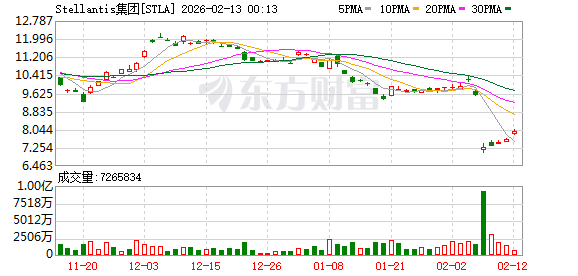
全球汽车巨头Stellantis“栽跟头”带来哪些警示
Zheng Quan Ri Bao· 2026-02-12 16:13
Core Viewpoint - Stellantis announced a significant impairment loss of approximately €22.2 billion, expected to result in a net loss of €19 billion to €21 billion in the second half of 2025, primarily due to adjustments in its electrification strategy and asset impairments [2] Group 1: Company Performance - The performance pressure on Stellantis is attributed to multiple factors, including misjudgments regarding market demand, policy environment, and cost changes during its electrification transition [2] - The company is facing intensified competition in the global automotive market, along with rising raw material and labor costs, which continue to suppress its profitability [2] - Stellantis plans to adjust its product mix and supply chain scale based on customer preferences and regulatory environments in different markets, indicating a need for better alignment between product competitiveness and cost control [3] Group 2: Industry Challenges - Stellantis's performance fluctuations reflect the challenges traditional large automakers face in managing the pace of transformation amid stricter carbon emission regulations and accelerated electrification [3] - The company’s multi-brand strategy, while expanding market coverage, also raises demands for resource allocation efficiency and internal control capabilities, making it more susceptible to increased adjustment costs during external fluctuations [4] - The current situation of Stellantis serves as a microcosm of the global automotive industry's transition, emphasizing the need for rational and prudent exploration of investment rhythms and profit models in an uncertain environment [4] Group 3: Insights for Chinese Automotive Industry - The recent recovery in China's new energy vehicle industry is attributed to improved cost control and market penetration, allowing companies to rebalance scale and profitability [5] - Chinese automakers must maintain a dynamic balance between technological investment, market feedback, and financial capacity during their transformation [5] - The experience of Stellantis highlights that aggressive and detached transformation strategies are outdated, with the focus shifting to understanding consumer needs and providing better products [5]

年内新成立公募FOF达31只 同比增长244.44%
Zheng Quan Ri Bao· 2026-02-12 16:13
Core Viewpoint - The public fund of funds (FOF) industry is experiencing rapid expansion, with a significant increase in the number of newly established funds driven by strong demand for stable and value-added investment products and continuous product innovation [1][2]. Group 1: Market Activity - On February 11 and 12, eight public fund institutions launched a total of nine new public FOFs, contributing to a total of 31 new public FOFs established in 2023, representing a year-on-year increase of 244.44% [1][2]. - The new public FOF market is active, with 13 public FOFs announcing early closure of fundraising this year [2]. Group 2: Investor Demand - In a low-interest-rate environment, traditional bank deposit yields are insufficient to meet investor needs, leading to a significant rise in demand for stable, low-volatility products [2]. - Public FOFs are becoming key vehicles for "deposit migration" funds, as they allow for cross-asset and multi-strategy allocation [2]. Group 3: Product Innovation - The asset allocation dimensions of public FOFs have expanded, with continuous product innovation, including the growth of ETF-FOF products that combine the advantages of both ETFs and FOFs [3]. - The configuration logic of public FOFs has evolved from a traditional stock-bond binary structure to a more diversified approach, including A-shares, QDII funds, public REITs, and commodity funds [3]. Group 4: Institutional Strategy - Public institutions are shifting their FOF product strategies towards cross-market, cross-asset, low-volatility, and high-liquidity configurations, focusing on building a "multi-asset + quantitative + systematic" capability [4]. - The traditional three-tier division of labor in FOF investment is evolving into a two-tier structure or even eliminating the division, allowing FOF managers to directly engage in asset allocation and seek excess returns [4][5].
全国统一电力市场体系建设为相关产业带来发展机遇
Zheng Quan Ri Bao· 2026-02-12 16:09
Group 1 - The core objective of the "Implementation Opinions" is to establish a unified national electricity market system by 2030 and fully complete it by 2035, with a preliminary goal set for 2025 [1] - The construction of the unified electricity market has made significant progress, focusing on breaking down existing barriers between regional power grids and provinces [2] - Key barriers to be addressed include institutional obstacles, technical bottlenecks, and differences in market rules, requiring reforms in management systems and the acceleration of key technologies [2][3] Group 2 - The reform emphasizes the participation of renewable energy sources in market transactions, with a focus on wind and solar power, which will be integrated into the electricity market [3] - The introduction of green electricity and green certificate mechanisms will provide pathways for renewable energy to compete fairly in the market [3] - The establishment of a unified electricity market is expected to benefit various industry segments, including power generation companies, grid companies, and the energy storage sector, enhancing operational efficiency and reducing costs [4]
积极响应再融资新规 多家上市公司推出相关预案
Zheng Quan Ri Bao· 2026-02-12 16:08
Core Viewpoint - The new refinancing policies introduced by the Shanghai, Shenzhen, and Beijing stock exchanges aim to enhance the flexibility and convenience of refinancing for listed companies, leading to a surge in refinancing proposals from these companies [1][2]. Group 1: Refinancing Policy Changes - The new refinancing regulations focus on supporting high-quality listed companies, optimizing review efficiency, adapting to the needs of innovative enterprises, simplifying application processes, and strengthening overall supervision [2]. - The exchanges have clarified that they will optimize refinancing reviews for companies with good governance and information disclosure, thereby improving refinancing efficiency [2]. - A new standard for "light asset, high R&D investment" recognition for main board listed companies is being researched to better accommodate technology innovation enterprises [2]. Group 2: Company Responses and Proposals - From February 10 to February 12, 18 listed companies disclosed refinancing proposals, including four companies planning to issue convertible bonds and 14 companies planning to conduct targeted placements [1]. - Zhongke Shuguang plans to raise up to 8 billion yuan through convertible bonds to invest in AI-related projects [3]. - Jiangsu New Energy plans to raise up to 1.24 billion yuan for a power generation project and working capital [4]. - Xinhang New Materials intends to raise up to 1 billion yuan for various production projects [4]. - Unisplendour plans to raise up to 5.57 billion yuan for acquisitions and R&D equipment [4]. Group 3: Market Sentiment and Future Outlook - The concentration of refinancing proposals indicates a positive market sentiment regarding the optimization of the financing environment, with companies eager to accelerate development through refinancing [4]. - Experts suggest that the new regulations will facilitate targeted funding for high-quality technology innovation enterprises, encouraging a focus on R&D and core business development [4][5].





20.5亿元“新春礼包”为假日消费添动能
Zheng Quan Ri Bao· 2026-02-12 16:06
Core Insights - The upcoming "longest Spring Festival holiday" is expected to stimulate consumer spending through various government initiatives, including a budget of 2.05 billion yuan allocated for consumer vouchers, subsidies, and red envelopes [1] - The government is implementing three major packages to boost consumption: trade-in programs, prize invoices, and financial support [1] - The combination of fiscal measures is designed to enhance durable goods consumption and stimulate frequent consumer scenarios through targeted financial incentives [1] Group 1 - The Spring Festival holiday will see a concentrated release of consumer demand for gifts, dining, and travel, with the marginal effects of policy stimulation expected to exceed normal periods [1] - The fiscal input, combined with central subsidies and financial support, is projected to create a social consumption increment of around 100 billion yuan [1] - The "longest Spring Festival holiday" combined with the return home and travel trends will facilitate rapid consumer decision-making, creating a cycle of "grabbing vouchers - consumption - sharing" [1] Group 2 - The "Lego New Spring" initiative is expanding consumption scenarios to cover diverse needs such as food, accommodation, transportation, tourism, and shopping [2] - There is a shift in consumption patterns from traditional goods to immersive experience consumption that integrates culture, commerce, tourism, and sports [2] - The combination of fiscal subsidies, financial support, and holiday demand is expected to generate a consumption total of approximately 40 billion to 50 billion yuan [2]
春节黄金市场面面观:有人排队采购 有人卖出离场
Zheng Quan Ri Bao· 2026-02-12 16:03
一德期货贵金属分析师张晨在接受《证券日报》记者采访时表示,随着近期贵金属价格波动显著加剧,不确定性持续上 升,对于国内的黄金珠宝品牌来说,除在交易日期间正常进行回购业务外,企业可以通过期货等衍生品工具进行风险管理,有 助于匹配风险敞口,实现稳健运营。 尽管短期国际金价波动剧烈,但民生银行首席经济学家温彬认为,在央行购金、黄金投资规模仍处于高位水平,同时地缘 风险、贸易摩擦风险层出不穷的局面下,黄金价格在较长期仍有支撑。 值得一提的是,面对近期"忽上忽下"的国际金价走势,已有部分实物黄金消费者将黄金ETF定投纳入其资产配置组合,以 应对黄金市场的剧烈波动。 君佩门店的购金热情并非个例。记者走访发现,在春节这一传统黄金消费旺季,兼具吉祥寓意与现代审美的轻量化金饰产 品持续热销。而这波消费热潮的背后,是国际金价的"过山车"行情:从1月29日伦敦金现货黄金价格最高触及5594.77美元/盎 司,到2月2日伦敦金现货黄金价格最低跌至4393.49美元/盎司,仅3个交易日,其区间最大振幅已超20%。截至2月12日记者发 稿,伦敦金现货黄金价格报5073.6美元/盎司,已连续四个交易日在5000美元/盎司至5100美元/盎 ...