
Xin Hua Cai Jing

Search documents
浙江将以“六化提升”工程优化电力营商环境
Xin Hua Cai Jing· 2026-01-23 01:26
Core Insights - The Zhejiang Electric Power Company is enhancing its "power access" service levels, focusing on reliable power supply, excellent service system construction, and promoting green transformation, with several core indicators ranking among the top in the country [1][2] Group 1: Power Supply Reliability - Zhejiang will launch a three-year action plan in 2025 to improve power supply reliability across the province, with low-voltage reliability management being the only provincial pilot in the country [1] - Cities like Hangzhou, Ningbo, Jiaxing, and Shaoxing will be established as high-reliability demonstration cities, with power service issues decreasing by 26.81% year-on-year [1] Group 2: Cost Reduction and Service Improvement - The province is expanding its "zero investment" service for low-voltage electricity to private economic organizations up to 160 kW, with some areas extending it to 200 kW, saving users a total of 2.898 billion yuan [1] - The implementation of a model allowing high-voltage users to start construction immediately upon land acquisition has reduced the time for major project power connections by nearly 40% compared to traditional methods [1] Group 3: Green Transformation Initiatives - The company is developing a "foreign trade electricity prosperity index" to assess economic trends and has introduced eight measures to support enterprises, reducing their burdens by 4.2 billion yuan throughout the year [2] - A market-oriented green heavy-duty truck transport line is set to operate in 2025, with daily charging volumes stabilizing at around 100,000 kWh, and public charging stations achieving 100% coverage in demand-driven townships [2] Group 4: Carbon Management and Innovation - Zhejiang is establishing the first carbon management system service center in the power industry, achieving the first international verification of carbon footprint, supporting regional dual carbon goals [2] - The company plans to enhance its carbon emission monitoring and accounting systems, offering comprehensive solutions for high-energy-consuming industries and industrial parks [3] Group 5: Future Development Plans - The company aims to optimize the business environment through the "Six Enhancements" project, focusing on quick power access, intelligent services, high-quality power supply, green electricity usage, inclusive services, and transparency [3] - Plans include building a modern smart distribution network in key urban areas and new urbanization regions, with a target of creating 1,000 electrified villages in rural areas [3]
【新华财经调查】自动驾驶行业遭遇剧烈洗牌 车路云一体化面临“四道坎”
Xin Hua Cai Jing· 2026-01-23 01:20
Core Insights - The automatic driving industry is facing a significant reshuffle, highlighted by the suspension of operations at the unicorn company Haomo Zhixing, which was once valued over $1 billion and seen as a leader in high-level autonomous driving in China [1] - Safety concerns are intensifying public trust issues in autonomous driving, with recent accidents involving autonomous vehicles in both China and the U.S. [1] - The current landscape shows nearly 500 domestic companies in the autonomous driving sector, indicating a seemingly prosperous market but underlying challenges due to capital withdrawal, technological bottlenecks, and safety anxieties [1] Technology Pathways - The debate over the technical routes for intelligent driving centers on how to safely advance towards full autonomy, with Tesla's pure vision approach contrasting with the multi-sensor fusion strategies of companies like Huawei and Momenta [2][3] - Tesla's advantage lies in its vast data collection from mass-produced vehicles, but it faces limitations in recognizing static objects and performing in low-visibility conditions [2] - Multi-sensor fusion solutions, while addressing some of Tesla's shortcomings, also present challenges such as complex data calibration between different devices [2] Levels of Automation - The "Automated Driving Classification" standard categorizes driving automation from L0 to L5, with L3 being a critical threshold for human intervention and system dominance [3] - Companies are cautious in their claims about automation levels, with some, like Huawei, using terms like "L2.9999" to describe their systems, while others boldly label their autonomous taxis as "L4" [3] Industry Challenges - The rapid expansion of low-speed autonomous vehicles in urban areas raises safety concerns, as these vehicles often violate traffic rules and create hazards [3] - The reliability of autonomous taxis is still dependent on multiple backup strategies and remote control, indicating that full operational capability is not yet achieved [3] Integration of Vehicle, Road, and Cloud - The industry is recognizing the need for a "vehicle-road-cloud" integration to address coordination gaps that lead to operational failures [5] - This integration aims to enhance safety and efficiency by providing advanced perception and decision-making capabilities beyond what individual vehicles can achieve [5][6] Pilot Projects and Efficiency Gains - Wuxi has emerged as a pilot city for vehicle-road-cloud integration, demonstrating significant improvements in traffic efficiency, with average traffic flow increasing by 15%-20% [6][7] - The cost-effectiveness of digital infrastructure is highlighted, as it requires only 1% of the investment compared to new road construction while achieving substantial efficiency gains [7] Future Challenges - Despite the potential of vehicle-road-cloud integration, challenges remain in data quality, investment returns, multi-party collaboration, and scalability across diverse urban environments [8][9] - The lack of unified data standards and governance can hinder the effective use of collected information, while the need for clear operational mechanisms and quantifiable benefits is critical for long-term success [8][9]

日本12月核心通胀放缓但仍高于央行目标水平
Xin Hua Cai Jing· 2026-01-23 00:31
日本12月核心CPI年率录得2.4%,为2024年10月以来最小增幅,但仍高于央行2%的目标水平,这维持了 市场对未来加息的预期。 (文章来源:新华财经) 日本央行行长植田和男可能不会就下次加息时机给出太多线索,因为首相高市早苗决定下月提前大选引 发新一轮市场波动,使得这一决策变得复杂。日本央行一方面需要通过鹰派言论抑制日元空头,另一方 面又不能因为高市早苗政府可能大幅增加支出的预期而引发债券收益率进一步上升,目前处境微妙。 日本政府周四发布的经济报告基本维持了对经济的谨慎乐观态度,同时警告美国贸易政策带来的下行风 险。内阁府在1月份的月度经济评估报告中重申,作为世界第四大经济体的日本经济正在温和复苏,但 强调了美国政策可能对日本汽车行业造成的影响。报告还强调需要密切关注市场动向。 牛津经济研究院表示,如果日本央行仍落后于形势,期限溢价很可能会上升。日本国债收益率的上升将 使财政状况恶化,削弱日元,并加剧通胀预期,进而导致曲线进一步变陡的压力加大。市场预计日本央 行会先行采取行动,但结果可能会令他们失望。预计日本央行在2026年年中之前仅再加息一次,达到 1%的最终利率水平。 数据显示,12月份剔除生鲜食品的 ...
美国三季度GDP上修至4.4% “K型”复苏显现
Xin Hua Cai Jing· 2026-01-23 00:31
Group 1 - The final GDP growth rate for Q3 2025 in the U.S. has been revised upward to an annualized rate of 4.4%, reflecting stronger-than-expected export performance and improved business investment outlook [1] - Personal consumption expenditures, which account for over two-thirds of U.S. economic activity, grew by 3.5% in Q3, with service spending reaching the fastest growth rate in three years [1] - Corporate profits increased by $175.6 billion in Q3, with fixed business investment rising by 3.2%, highlighting a continued expansion in technology capital expenditures [1] Group 2 - The core Personal Consumption Expenditures (PCE) price index for Q3 was reported at an annualized rate of 2.9%, consistent with previous estimates, indicating stable inflation [2] - Personal spending showed resilience with a 0.3% increase in November, while personal income grew by 0.1% and 0.3% in October and November, respectively [2] - Economic activity is exhibiting a "K-shaped" recovery, where high-income households benefit from stock market gains, while lower-income groups face greater cost pressures [2] Group 3 - The strong economic growth and stable job market, coupled with inflation above target, lead to expectations that the Federal Reserve will maintain the federal funds rate in the upcoming meeting [3] - Recent data reinforces the narrative of "high growth, low inflation, and structural divergence," providing complex but critical decision-making information for policymakers [3]
美国2025年三季度经济增速修正为4.4%
Xin Hua Cai Jing· 2026-01-23 00:15
Core Viewpoint - The U.S. Department of Commerce revised the GDP growth for Q3 2025 to an annualized rate of 4.4%, slightly above the initial estimate of 4.3% and the previous quarter's growth of 3.8% [1] Group 1: Economic Growth - The personal consumption expenditure, which accounts for about 70% of the U.S. economy, increased by 3.5% in the quarter [1] - Government consumption and investment rose by 2.2% [1] - Exports saw a significant increase of 9.6% [1] Group 2: Investment and Sales - Non-residential fixed investment, reflecting corporate investment conditions, grew by 3.2%, a notable decrease from the previous quarter's 7.3% [1] - Actual final sales to domestic private purchasers increased by 2.9%, lower than the initial estimate of 3% [1] Group 3: Price Index and Inflation - The personal consumption expenditure price index for the quarter was recorded at 2.8%, still significantly above the Federal Reserve's target of 2% [1] Group 4: Data Revision Context - The upward revision of data primarily reflects adjustments in export and investment figures, offset by a downward revision in consumption expenditure [1] - The revised data replaces the originally scheduled third estimate due to the impact of the government shutdown last year [1]
央行行长潘功胜:营造良好货币金融环境,有力支撑经济高质量发展
Xin Hua Cai Jing· 2026-01-22 23:43
Core Viewpoint - The article emphasizes the importance of financial systems in China's economic modernization and outlines the implementation of a moderately loose monetary policy as part of the "14th Five-Year Plan" to support economic stability and high-quality development [1][2]. Group 1: Implementation of Monetary Policy - The People's Bank of China (PBOC) will continue to implement a moderately loose monetary policy, focusing on stabilizing economic growth and ensuring reasonable price recovery [2]. - The PBOC plans to utilize various monetary policy tools, including reserve requirement ratio (RRR) cuts and interest rate reductions, to maintain ample liquidity and align social financing scale with economic growth targets [2][3]. - Structural monetary policy tools will be optimized, including a 0.25 percentage point reduction in the interest rates of various structural monetary policy tools and an increase in the quotas for agricultural and small enterprise loans [3]. Group 2: Financial System Development - The PBOC aims to construct a scientific and robust monetary policy system and a comprehensive macro-prudential management system to promote high-quality financial development during the "14th Five-Year Plan" [4]. - Key areas of focus include optimizing the monetary policy target system, improving the mechanism for basic currency issuance, and enhancing the market-based interest rate formation and transmission mechanisms [4][5]. - The PBOC will also work on improving the RMB exchange rate formation mechanism and increasing policy transparency to enhance market communication [6]. Group 3: Supporting Real Economy - The PBOC will guide financial institutions to support key areas such as domestic demand expansion, technological innovation, and small and micro enterprises [7]. - Specific measures include a dedicated 500 billion yuan for consumer and elderly care loans, enhancing financial product innovation, and improving the financing environment for consumption [7][8]. - The PBOC will also increase the quotas for loans to support agriculture and small enterprises, and establish a 1 trillion yuan special loan for private enterprises [8]. Group 4: Global Financial Governance - The PBOC will actively promote global financial governance reform and international financial cooperation, emphasizing multilateralism and the internationalization of the RMB [9][10]. - Efforts will include developing a secure and efficient cross-border payment system and participating in international financial governance and cooperation [11].
截至1月22日 全球最大黄金ETF--SPDR Gold Trust持仓较上日增加2吨 当前持仓量为1079.66吨
Xin Hua Cai Jing· 2026-01-22 23:29
截至1月22日,全球最大黄金ETF--SPDR Gold Trust持仓较上日增加2吨,当前持仓量为1079.66吨。 (文章来源:新华财经) ...
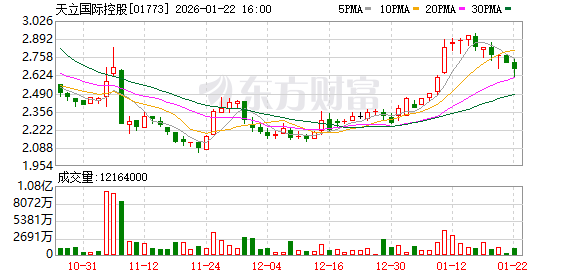
天立集团与腾讯战略合作 共探“学科大脑”新路径
Xin Hua Cai Jing· 2026-01-22 23:23
Core Insights - The strategic partnership between Tianli Group and Tencent aims to create AI education solutions that transcend mere technological empowerment, focusing on building an ecosystem centered around a "subject brain" [1][3] Group 1: Strategic Collaboration - Tianli International's AI education subsidiary, Tianli Qiming, will engage in deep co-creation with Tencent, marking a shift from product competition to ecosystem construction [3] - The collaboration is defined as a "benchmark strategic partnership," with Tianli Qiming focusing on demand definition and scenario validation, while Tencent provides technological support [4] Group 2: Technological Development - The partnership will prioritize joint research and development, leveraging Tencent's advanced AI capabilities to support Tianli's "subject brain" initiative, ensuring both educational depth and industrial stability [5] - The goal is to evolve from "tool assistance" to "cognitive empowerment," addressing the fundamental challenge of personalized education at scale [4][5] Group 3: Global Expansion and Social Responsibility - The collaboration will extend beyond domestic markets to explore international opportunities, combining Tianli's AI education model with Tencent's global technology and distribution networks [5] - Both companies intend to collaborate on Tencent's Sustainable Social Value (SSV) projects, focusing on rural education and educational equity, reinforcing the belief that technology can promote educational fairness [5][6] Group 4: Future Education Paradigm - The partnership aims to shape a prosperous new ecosystem for smart education, enhancing the dissemination of technological achievements and aligning with Tianli's long-term vision of promoting educational equity and high-quality development [7] - The integration of Tianli's educational insights with Tencent's cutting-edge AI is expected to create significant advancements beyond isolated technological innovations [7]


现货黄金和纽约黄金期货站上4950美元/盎司关口 再创历史新高
Xin Hua Cai Jing· 2026-01-22 23:22
(文章来源:新华财经) 现货黄金和纽约黄金期货站上4950美元/盎司关口,再创历史新高。 ...
【环球财经】美国2025年三季度经济增速修正为4.4%
Xin Hua Cai Jing· 2026-01-22 23:13
Core Viewpoint - The U.S. GDP growth for Q3 2025 was revised to an annualized rate of 4.4%, slightly above the initial estimate of 4.3% and higher than the previous quarter's growth of 3.8% [1] Economic Indicators - Personal consumption expenditure, which accounts for about 70% of the U.S. economy, increased by 3.5% in Q3 2025 [1] - Government consumption and investment grew by 2.2% during the same period [1] - Exports saw a significant increase of 9.6% [1] - Non-residential fixed investment, reflecting corporate investment conditions, rose by 3.2%, a notable decrease from the previous quarter's growth of 7.3% [1] Data Revisions - The upward revision of the GDP data was primarily due to adjustments in export and investment figures, although this was partially offset by a downward revision in consumption expenditure [1] - Actual final sales to domestic purchasers grew by 2.9%, lower than the initial estimate of 3% [1] - The personal consumption expenditure price index for the quarter was reported at 2.8%, significantly above the Federal Reserve's target of 2% [1] Reporting Context - The U.S. Department of Commerce typically conducts three estimates of quarterly economic data based on improving information [1] - Due to a record government shutdown in the second half of the previous year, this revised data will replace the third estimate originally scheduled for release on December 19 of last year [1] - The first estimate for Q4 2025 will be published on February 20, 2026 [1]