
Xin Hua Cai Jing

Search documents
汽车视点丨技术突围易,生态融入难?汽车隐形独角兽面临“成长的烦恼”
Xin Hua Cai Jing· 2026-01-20 08:23
Core Viewpoint - The article discusses the emergence of "invisible unicorns" in the Chinese automotive industry, highlighting their role in driving innovation and addressing structural growth challenges in a competitive market environment [1][2]. Industry Overview - The Chinese automotive industry is transitioning from an incremental market to a stock competition phase, with production expected to reach over 34 million vehicles by 2025, maintaining a range of 35 to 37 million in the following five years [2]. - Structural growth indicates a shift in focus from scale expansion to value creation and technological breakthroughs, providing a fertile ground for invisible unicorns to develop [2]. Technological Advancements - The penetration rate of new energy vehicles is projected to rise from 60% to 80% by 2030, with continuous iterations in key technologies like intelligent driving and smart cockpits injecting strong momentum into the industry [3]. - Despite a slight decrease in the number of automotive tech unicorns globally, their total valuation is expected to grow by 5.89% to 1.48 trillion yuan by 2025, indicating that technological value is becoming a key support for enterprise valuation [3]. Consumer Demand - Younger consumers prioritize new energy and smart features when purchasing vehicles, while older demographics may become significant users of intelligent vehicles due to advancements in smart driving technology [3]. Globalization Impact - China's automotive exports are anticipated to reach 8 to 9 million vehicles in the next five years, accounting for 30% of total production, thus providing new growth opportunities [3]. Unicorn Enterprises' Performance - Since 2018, 120 companies have been recognized as automotive invisible unicorns, with 40 establishing partnerships with major manufacturers, 3 becoming unicorns, and 4 going public [4]. - The total valuation of China's invisible unicorns is projected to exceed 2.2 trillion yuan by 2025, with an average valuation of 440 million yuan, and 34 companies in the automotive sector [4]. Challenges Faced - Nearly 40% of invisible unicorns are currently operating at a loss, with over 35% having profits of only 10 million yuan or less, indicating weak overall profitability [5]. - The automotive industry faces systemic challenges from macroeconomic conditions, industry ecology, and globalization, with over 50% of upstream companies expected to incur losses by mid-2025 [5][6]. Recommendations for Overcoming Challenges - Policy recommendations include enhancing innovation procurement and financial support, establishing a credit risk compensation mechanism, and creating a comprehensive financial support system for unicorns [10]. - The industry ecosystem needs to be restructured to foster open collaboration and innovation networks, with leading companies taking the initiative to build open innovation platforms [11]. - Unicorn enterprises should enhance their strategic resilience, focusing on sustainable profit models and adapting organizational structures and market strategies to navigate global expansion effectively [12].
量质双升、固本强基 国债期货2025年“压舱石”功能持续凸显
Xin Hua Cai Jing· 2026-01-20 08:14
Core Viewpoint - The development of the government bond futures market in China has shown significant growth in both volume and quality, reinforcing its role as a stabilizer and price discovery anchor in the bond market, amidst a complex global macroeconomic environment in 2025 [1][2]. Market Performance and Structure - Despite experiencing multiple fluctuations in 2025, the trading activity and depth of the government bond futures market have increased, with average daily positions reaching 636,400 contracts, a 29.46% increase from 2024, and average daily trading volume rising by 41.88% to 324,700 contracts [2]. - The trading volume for 30-year government bond futures reached 125,500 contracts, indicating a strong demand for long-term interest rate risk management tools among institutions [2]. - The correlation between government bond futures and corresponding cash bonds remained above 99%, providing a smooth risk exit for market participants during liquidity adjustments [3]. - Institutional participation in the government bond futures market has solidified, with institutions accounting for approximately 80% of trading and 90% of positions by November 2025, indicating a shift towards mainstream asset-liability management tools [3]. Product Ecosystem and Strategic Alignment - The government bond futures market has expanded its product offerings, covering key maturities from 2 to 30 years, and is expected to further develop options products to meet diverse risk management needs [4]. - The introduction of government bond options is anticipated to fill the gap in domestic interest rate options products, enhancing the ability of institutions to manage tail risks [4]. - The government bond futures market has evolved from merely managing risks to supporting macroeconomic policies and financing for the real economy, with increased government bond issuance in 2025 [4][5]. - The use of government bond futures by underwriters has improved their ability to hedge interest rate risks during the bond issuance process, facilitating smoother issuance of government and local bonds [5]. Impact on Financing Costs and Asset Allocation - The growth of the government bond futures market has indirectly reduced financing costs for the real economy, as institutional investors manage interest rate risks, enhancing liquidity and pricing efficiency in the credit bond market [6]. - Various types of long-term funds are increasingly utilizing government bond futures for asset allocation, transitioning from a risk stabilizer to a core component of asset allocation strategies [6][7]. - Insurance funds are leveraging 30-year government bond futures to extend the overall duration of their asset portfolios, addressing the challenge of duration mismatch between assets and liabilities [7]. - Pension funds are using government bond futures for tactical asset allocation, locking in future bond costs and hedging against equity market volatility [7]. - Public funds are employing diverse strategies with government bond futures, enhancing risk-adjusted returns and managing liquidity effectively [7]. Future Outlook - The government bond futures market is expected to continue evolving, with plans to ensure stable and regulated operations, enhance existing products, and broaden the participant base, thereby playing a crucial role in the development of China's capital market [8].
收评:创业板指跌1.79% 贵金属板块逆市大涨
Xin Hua Cai Jing· 2026-01-20 08:05
Market Overview - The A-share market saw all three major indices close lower, with the ChiNext index leading the decline, dropping nearly 2% [1] - The Shanghai Composite Index closed at 4113.65 points, down 0.01%, with a trading volume of 12.215 billion yuan; the Shenzhen Component Index closed at 14155.63 points, down 0.97%, with a trading volume of 15.563 billion yuan; the ChiNext Index closed at 3277.98 points, down 1.79%, with a trading volume of 7.093 billion yuan [1] Sector Performance - In terms of sector performance, there were more declines than gains, with the precious metals, chemical raw materials, cement building materials, and chemical fiber industries showing the largest gains, while sectors such as communication equipment, photovoltaic equipment, aerospace, power equipment, batteries, computer equipment, and electronic components experienced the largest declines [1] Hot Stocks - The chemical sector saw a surge, with over ten constituent stocks hitting the daily limit, including Hongbaoli, Shandong Heda, Weiyuan Co., and Hongqiang Co. [2] - The precious metals concept continued its strong performance, with Hunan Silver hitting the daily limit [2] - The real estate sector was active, with Dayue City and Urban Investment Holdings also hitting the daily limit [2] - In the AI application sector, stocks like Jiayun Technology, Yue Media, and Zhejiang Wenhe Internet also reached the daily limit [2] - Overall, more than 2100 stocks in the market rose, with over 60 stocks hitting the daily limit [2] Institutional Insights - According to Jifeng Investment Advisors, the market's short-term fluctuations are primarily due to capital switching, but the core logic for a positive market outlook remains unchanged, supported by resilient economic fundamentals and policy easing from the central bank [3] - CITIC Securities highlighted that the AI application sector has become a main line for 2026, with a year-to-date increase of 19%, leading the A-share market [4] - The semiconductor, consumer electronics, AI, robotics, and commercial aerospace sectors are recommended for mid-to-long-term investment opportunities [3] Policy Updates - Four departments announced a policy to provide a 1.5% interest subsidy on fixed asset loans for equipment updates, with a support period not exceeding two years, expanding the scope to include various sectors such as industrial, energy, transportation, and AI [5] - The Ministry of Finance and three other departments extended the personal consumption loan interest subsidy policy until the end of 2026, adjusting the terms to include credit card installment payments and removing previous limits on subsidy amounts [6]

科创板收盘播报:科创50指数跌1.58% 半导体类个股涨幅居前
Xin Hua Cai Jing· 2026-01-20 07:55
Core Viewpoint - The Sci-Tech Innovation 50 Index experienced a decline of 1.58% on January 20, closing at 1482.99 points, with a trading volume of approximately 97.76 billion yuan [1]. Group 1: Market Performance - The majority of stocks on the Sci-Tech Innovation Board fell, with 168 stocks rising and the average decline for 600 stocks being 1.19% [2]. - The average turnover rate for the stocks was 3.74%, with a total trading volume of 299.3 billion yuan and an average volatility of 5.18% [2]. Group 2: Sector Performance - Semiconductor and transportation equipment stocks showed active performance, while software services, biopharmaceuticals, and healthcare stocks had the largest declines [2]. Group 3: Individual Stock Performance - Zhongwei Semiconductor led the gainers with a rise of 19.99%, while Pinggao Co., Ltd. had the largest drop at 11.63% [3]. Group 4: Trading Volume - Cambricon Technologies had the highest trading volume at 11.95 billion yuan, while ST Pava had the lowest at 910.4 thousand yuan [4]. Group 5: Turnover Rate - Xinzhong Technology recorded the highest turnover rate at 22.82%, while Longteng Optoelectronics had the lowest at 0.23% [5].


债市日报:1月20日
Xin Hua Cai Jing· 2026-01-20 07:55
Core Viewpoint - The bond market showed slight recovery with interbank bond yields declining by approximately 1 basis point, while government bond futures rose across the board, particularly in the long-end segment [1] Market Performance - Government bond futures closed higher, with the 30-year main contract up by 0.52% to 111.49, the 10-year contract up by 0.13% to 108.18, the 5-year contract up by 0.09% to 105.875, and the 2-year contract up by 0.05% to 102.444 [2] - Interbank major bond yields slightly decreased, with the 10-year policy bank bond yield down by 0.95 basis points to 1.96%, the 10-year government bond yield down by 1.35 basis points to 1.827%, and the 30-year government bond yield down by 0.95 basis points to 2.295% [2] Funding Conditions - The central bank conducted a 7-day reverse repurchase operation with a fixed rate of 1.40%, with a total bid and awarded amount of 324 billion yuan, resulting in a net withdrawal of 34.6 billion yuan for the day [5] - The Loan Prime Rate (LPR) remained unchanged, with the 1-year LPR at 3.0% and the 5-year LPR at 3.5%, indicating stability in the pricing basis for January [5] Institutional Insights - Citic Securities forecasts a GDP growth of 4.5% in Q4 2025, with an annual target of 5%, aligning with market expectations. The central bank's stance is expected to be a key focus for the bond market in 2026 [7] - Dongfang Jincheng notes that the stability of policy rates suggests that the LPR for January is likely to remain unchanged, as major medium to long-term market rates have stabilized [7]
机构报告:预计2026年中国合成生物制造产业规模将突破千亿
Xin Hua Cai Jing· 2026-01-20 07:55
Core Insights - The synthetic biology manufacturing industry in China is experiencing rapid growth, with a projected market size nearing 80 billion yuan in 2024 and expected to approach 100 billion yuan in 2025, reflecting a growth rate of 26.2% compared to 2024 [1] - The industry has maintained a growth rate of over 25% for the past three years, driven by policy incentives and technological breakthroughs, leading to accelerated commercialization and increased market acceptance [1] Industry Overview - The primary products in China's synthetic biology manufacturing sector are currently biopharmaceuticals, which are expected to reach a market size of 33.43 billion yuan in 2024, accounting for 42.9% of the total industry [1] - The demand for biopharmaceutical products is anticipated to rise further due to the ongoing development of new therapies, such as cell and gene therapies, which will contribute to an increase in both product quantity and market demand [1] Future Projections - The synthetic biology manufacturing industry in China is projected to exceed 100 billion yuan by 2026 and reach approximately 170.37 billion yuan by 2027 [1]
人民币兑美元升破6.96关口 创32个月新高
Xin Hua Cai Jing· 2026-01-20 07:40
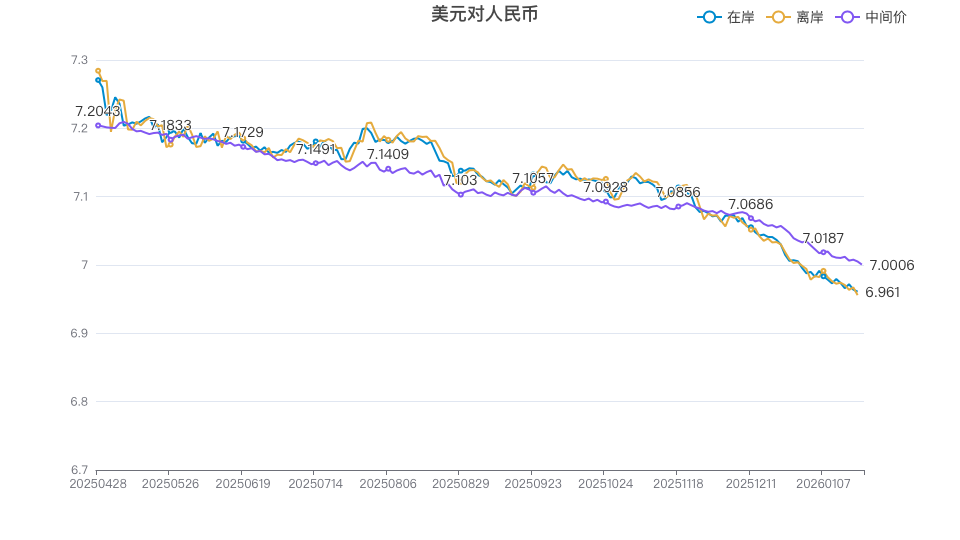
Core Viewpoint - The Chinese yuan has strengthened significantly against the US dollar, reaching a 32-month high in the onshore market and a new high since May 15, 2023, in the offshore market, driven by seasonal demand for currency settlement and expectations of continued appreciation due to internationalization efforts and easing trade tensions [1][4]. Group 1: Currency Performance - The onshore yuan against the US dollar broke the 6.96 mark, reaching a peak of 6.9593 [1]. - The offshore yuan peaked at 6.95285, marking the highest level since May 15, 2023 [1]. - The central parity rate of the yuan against the US dollar was adjusted up by 45 points to 7.0006, the highest since May 18, 2023 [3]. Group 2: Year-to-Date Appreciation - Year-to-date, the onshore yuan has appreciated by 0.4% against the US dollar, while the offshore yuan has appreciated by 0.3% [4]. - Historical data indicates that the yuan typically appreciates by 0.5% and 0.8% in December and January, respectively, with appreciation probabilities of 75% and 67% [4]. Group 3: Future Outlook - Analysts from China International Capital Corporation (CICC) suggest that the recent strengthening of the yuan is significantly influenced by seasonal settlement demand, particularly in December and January [4]. - Citigroup economists predict that the yuan will strengthen further due to China's efforts to internationalize the currency and mitigate trade tensions, forecasting a rise to 6.80 against the US dollar in the next 6 to 12 months [4]. - Chief economist Zhao Wei from Shenwan Hongyuan anticipates that the yuan will enter an appreciation phase starting in 2025, potentially appreciating by at least 2-3% annually over the next several years, leading to a total appreciation of over 30% in about a decade [4].

山西华阳股份以法治力量赋能高质量发展新征程
Xin Hua Cai Jing· 2026-01-20 07:36
Core Viewpoint - Compliance is essential for sustainable business operations and high-quality development, serving as a foundation for the company’s growth and responsibility as a state-owned enterprise [2]. Compliance Governance - The company recognizes that compliance is a mandatory requirement, not an option, and integrates compliance awareness into its corporate culture through top-down mobilization and bottom-up self-inspection [3]. - A comprehensive compliance management system is established, focusing on decision-making, management, and operational compliance, guided by national policies and regulations [4]. - The company has revised its governance documents to enhance decision-making processes and prevent compliance risks, ensuring clear responsibilities across its subsidiaries [4]. Operational Compliance - The company has implemented various compliance documents, including a compliance management manual and safety operation guidelines, to cover critical areas such as coal production and new energy projects [5]. - A four-dimensional supervision system has been created, combining disciplinary inspection, internal auditing, risk prevention, and public oversight to ensure compliance [6]. Cultural Integration - The company promotes a compliance culture as a core part of its corporate identity, conducting extensive training and awareness programs to instill compliance values among employees [7]. - Innovative methods for compliance education have been adopted, utilizing social media platforms to engage employees and promote compliance knowledge [8]. High-Quality Development - Compliance is viewed as a driver for high-quality development, with the company integrating compliance management into its operational strategies to enhance safety and efficiency in coal production [9]. - In the new energy sector, compliance has facilitated project approvals and market expansion, contributing to the company’s recognition in the capital market and various awards [10]. Future Outlook - The company aims to enhance its compliance management system in response to evolving regulations and market conditions, focusing on integrating compliance with digital management systems and fostering a unique compliance culture [12].

天气好转提振需求 本周山东汽柴油成交或小幅好转
Xin Hua Cai Jing· 2026-01-20 07:35
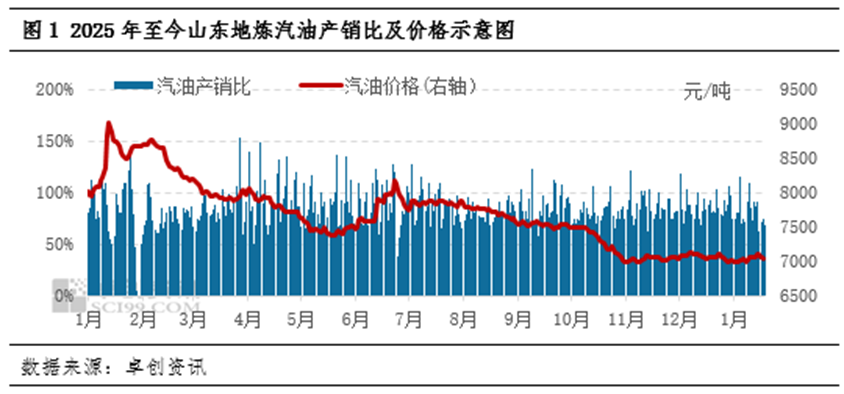
Core Viewpoint - The oil market experienced fluctuations last week, with limited support due to adverse weather conditions affecting gasoline and diesel demand, leading to inventory digestion as the primary focus [1] Group 1: Gasoline Market - Gasoline production in Shandong reached 511,700 tons for the week ending January 18, reflecting a 1.15% increase week-on-week and an 8.62% increase year-on-year, which slightly increased supply and negatively impacted the gasoline market [2] - The average gasoline sales-to-production ratio in Shandong was 78%, down 4 percentage points from the previous week, indicating that it did not reach the balance line [2] - As of January 18, the average price of 92 gasoline in Shandong was 7,039 yuan per ton, a decrease of 20 yuan per ton compared to the same period last week [2] Group 2: Diesel Market - Diesel production in Shandong was 1,013,600 tons for the week, showing a week-on-week increase of 2.39% and a year-on-year increase of 15.47%, which also slightly increased supply and negatively impacted the diesel market [5] - The average diesel sales-to-production ratio in Shandong was 84%, up 2 percentage points from the previous week, despite general weak demand [5] - As of January 18, the average price of 0 diesel in Shandong was 5,750 yuan per ton, down 18 yuan per ton from the same period last week [5] Group 3: Market Outlook - The oil price is expected to continue experiencing wide fluctuations, with the refined product market potentially improving as weather conditions improve and demand recovers [7] - No new refinery maintenance or startup plans are expected in the coming week, with most refineries operating steadily, and a new refinery is planned to start at the end of January [8] - Following the snow, road conditions are expected to improve, leading to increased activity in residential travel and logistics, which may result in a slight recovery in gasoline and diesel demand [8] - Overall, the gasoline and diesel market prices in Shandong are anticipated to show a trend of initially declining followed by a rise, although the average level may still experience a slight decrease [9]
2025年江西绿电交易量同比增长43.95%
Xin Hua Cai Jing· 2026-01-20 07:33
Core Insights - The article highlights the significant growth in green electricity transactions in Jiangxi Province, with 269 companies participating in 21,456 transactions by 2025, achieving a green electricity trading volume of 4.425 billion kilowatt-hours, representing a year-on-year increase of 43.95% [1] Group 1: Green Electricity Market Development - The consumption of green electricity has become a crucial pathway for companies to fulfill social responsibilities and achieve green transformation [1] - The Chinese government is reinforcing the consumption of green electricity, encouraging state-owned enterprises to increase their usage [1] - Companies utilizing green electricity can enhance their low-carbon brand image and directly reduce carbon emissions, fulfilling sustainability commitments [1] Group 2: Industry Participation and Innovations - Green electricity consumption in Jiangxi has expanded to key industries such as lithium batteries, photovoltaic manufacturing, electronic information, and rail transportation, with leading companies like Ganfeng Lithium, CATL, and JinkoSolar participating in green electricity trading [1] - To enhance the flexibility and integration of green electricity trading, the Jiangxi Electric Power Trading Center has innovated an hourly-level trading model, allowing for detailed tracking and sourcing of each kilowatt-hour of green electricity [1] - By 2025, companies in Jiangxi are expected to actively engage in the hourly-level green electricity trading model, with a projected trading volume of 797 million kilowatt-hours [1]