
Xin Hua Cai Jing

Search documents
丈量生态价值 融通可持续未来——证券公司参与绿色金融的实践与展望
Xin Hua Cai Jing· 2026-02-25 09:08
Core Insights - The central financial work conference in October 2023 emphasized the importance of five key areas in finance: technology finance, green finance, inclusive finance, pension finance, and digital finance, guiding the high-quality development of China's financial industry [1] - The China Securities Regulatory Commission (CSRC) issued implementation opinions in February 2025 to provide clear guidance for capital market participation in green finance practices [1] Group 1: Strategic Planning and Implementation - Securities firms are integrating green finance into their core strategies, with some leading firms establishing specialized departments for professional management of green finance [2] - Companies like Industrial Securities and China Merchants Securities have set up leadership groups to oversee ESG strategies and ensure the integration of green finance into all operational aspects [2] Group 2: Risk Management and Talent Development - Securities firms are embedding ESG factors into their entire business processes, treating them as critical evaluation dimensions alongside financial and market risks [3] - Professional talent development is crucial for green finance, with firms like Industrial Securities launching certification training programs to enhance employee expertise in ESG and green finance [3] Group 3: Business Practices in Green Finance - Securities firms are actively involved in green financing, including underwriting green bonds and equity financing, with CITIC Securities projected to underwrite 51.7 billion yuan in green bonds in 2024 [4] - Firms are also developing ESG-themed financial products, with Industrial Securities introducing over 260 green-themed financial products to meet investor demand [5] Group 4: Carbon Finance and Environmental Rights Trading - Securities firms are exploring carbon finance innovations and environmental rights financing, with Huatai Securities engaging in carbon trading and Industrial Securities completing the first national farmland carbon sink transaction [5][6] - Collaborative efforts with local governments and institutions are enhancing the capabilities of regional securities firms in environmental rights trading [8] Group 5: Research and Standard Setting - Leading securities firms are establishing ESG research teams to provide insights and participate in the formulation of industry standards for green finance [6] - These firms are involved in developing standards to prevent greenwashing and promote market regulation [6] Group 6: Regional Securities Firms' Contributions - Regional securities firms are leveraging local advantages to support green finance initiatives, such as issuing green bonds for urban development projects [7] - Collaborative models within groups are enabling comprehensive green finance solutions, combining various financial services to meet diverse client needs [8] Group 7: Innovation and Future Directions - The integration of digital technologies like AI and blockchain is enhancing the efficiency and transparency of green finance operations [9][10] - The product range in green finance is expanding, with new offerings such as green ABS and REITs being developed to support sustainable investments [10] - Talent development initiatives are being implemented to ensure a skilled workforce capable of navigating the complexities of green finance [11] Conclusion - The securities industry is transitioning from strategic planning to comprehensive implementation in green finance, with a focus on innovation, regional engagement, and international collaboration to support sustainable economic transformation and achieve carbon neutrality goals [12]
债市日报:2月25日
Xin Hua Cai Jing· 2026-02-25 08:22
Core Viewpoint - The bond market is experiencing fluctuations with a general downward trend, as government bond futures and interbank cash bonds show weakness, while the market awaits policy direction from an upcoming important meeting [1][2]. Market Performance - Government bond futures closed lower across the board, with the 30-year main contract down 0.47% to 112.7, the 10-year down 0.13% to 108.48, the 5-year down 0.10% to 106.065, and the 2-year down 0.06% to 102.458 [2]. - The yield on the 10-year government bond "25附息国债22" increased by 2 basis points to 1.81%, while the 30-year bond "25超长特别国债06" saw a yield rise of 1.25 basis points to 2.2330% [2]. International Market Trends - In North America, U.S. Treasury yields showed mixed results, with the 2-year yield rising by 2.73 basis points to 3.461% and the 10-year yield falling by 0.38 basis points to 4.031% [3]. - In Asia, Japan's long-term bond yields increased significantly, with the 30-year yield rising by 5 basis points to 3.325% [3]. - In the Eurozone, yields on 10-year bonds from France, Germany, Italy, and Spain all decreased slightly [3]. Primary Market Activity - The Ministry of Finance's recent bond auctions saw lower yields than market estimates, with the weighted average yield for the 91-day and 5-year bonds at 1.2110% and 1.4877%, respectively [4]. - Agricultural Development Bank's financial bonds also showed competitive yields, with the 10-year yield at 1.9490% [4]. Liquidity Conditions - The central bank conducted a 7-day reverse repurchase operation with a total of 4095 billion yuan at a rate of 1.40%, resulting in a net injection of 95 billion yuan for the day [5]. - Short-term Shibor rates mostly declined, with the overnight rate rising slightly by 1.6 basis points to 1.378% [5]. Institutional Insights - According to Everbright Futures, the liquidity in the market is expected to remain stable but slightly tighter as the month-end approaches, with significant government bond issuance planned [7]. - Xingzheng Fixed Income suggests that while the bond market may continue to see single-sided trends, the overall support from stable liquidity and slow economic recovery will influence market dynamics [7].
泰国央行意外降息至1.0% 力抗泰铢升值与经济低迷
Xin Hua Cai Jing· 2026-02-25 08:11
Core Viewpoint - The Bank of Thailand unexpectedly lowered the benchmark interest rate by 25 basis points to 1.0%, breaking market expectations, to address weak economic growth, excessive appreciation of the Thai baht, and downside risks to inflation [1][2]. Group 1: Economic Context - The Thai baht's strength is harming exporters, with the central bank noting that the current economic growth rate is below potential levels and inflation faces greater downside risks, necessitating policy intervention [1][2]. - Exports account for nearly 60% of GDP, and the continued appreciation of the baht has severely squeezed corporate profits, while domestic demand remains weak and private investment is insufficient [2]. Group 2: Policy Measures - In addition to the rate cut, the central bank announced a series of accompanying measures, including new regulations on financial institution fees, requirements for banks to report cash withdrawals exceeding 500,000 baht, and plans to support small businesses in obtaining credit [1][2]. - The central bank aims to implement a "policy mix" that combines fiscal and monetary policies along with financial regulatory reforms to boost investment, support SMEs, and curb deflation risks [2]. Group 3: Growth Expectations - The central bank governor indicated a nuanced adjustment in growth expectations, projecting economic growth close to 2.7% for the year while also stating a more cautious estimate of approximately 1.9%, reflecting concerns over external demand and the impact of the baht's appreciation on exports [3]. - Despite a stable financial system, the export-oriented economy is under pressure from the strong baht, with the governor emphasizing that structural issues are the root cause of low economic growth, suggesting that monetary policy alone cannot resolve these challenges [3].
【环球财经】日经股指收盘登上58000点关口
Xin Hua Cai Jing· 2026-02-25 07:59
Core Viewpoint - The Tokyo stock market indices continued to rise on February 25, with the Nikkei 225 index closing up 2.20%, surpassing the 58,000-point mark for the first time [1] Market Performance - The Nikkei 225 index closed at 58,583.12 points, up 1,262.03 points, while the Tokyo Stock Exchange index rose 27.18 points to close at 3,843.16 points [1] - The market was buoyed by a rebound in the three major U.S. stock indices the previous night, leading to a strong opening in Tokyo [1] Sector Performance - Most of the 33 industry sectors on the Tokyo Stock Exchange saw gains, with notable increases in sectors such as non-ferrous metals, electrical products, and real estate [1] - Conversely, nine sectors, including steel, banking, and mining, experienced declines [1] Influencing Factors - Market expectations for a quick interest rate hike by the Bank of Japan diminished due to comments from Prime Minister Fumio Kishida regarding the central bank's hesitance to raise rates soon [1] - The appointment of pro-inflation figures to the Bank of Japan's advisory committee also influenced market sentiment positively [1]
收评:主要股指显著上涨 金属股涨幅靠前 钛白粉、磷化工等板块延续升势
Xin Hua Cai Jing· 2026-02-25 07:33
Market Overview - The Shanghai and Shenzhen stock markets opened higher on February 25, with all three major indices showing significant gains by the end of the trading day. The Shanghai Composite Index closed at 4147.23 points, up 0.72%, with a trading volume of approximately 10,860 billion yuan [1] - The Shenzhen Component Index closed at 14475.87 points, up 1.29%, with a trading volume of about 13,766 billion yuan. The ChiNext Index rose by 1.41% to 3354.82 points, with a trading volume of around 6,269 billion yuan [1] Sector Performance - Metal stocks led the market gains, with significant increases in small metals, energy metals, steel, and non-ferrous metals. Other sectors such as titanium dioxide, phosphorus chemicals, and geothermal energy also continued their upward trend [1] - Conversely, sectors such as film and television, advertising marketing, and CPO concepts experienced notable declines [1] Investment Insights - According to institutional views, the overall market trend remains upward, with resource stocks like energy metals, steel, and rare earths showing strength. Investors are advised to look for buying opportunities in leading industries after recent corrections [2] - Long-term trends suggest that under policy stimulation, the A-share market is expected to align with economic growth, with a focus on high-growth sectors such as semiconductors, consumer electronics, artificial intelligence, and commercial aerospace [2] Technology Sector Analysis - The technology sector's performance can be assessed through forward-looking financial indicators and industry cycles. Key indicators include "pre-receivable accounts + contract liabilities," which can reflect order conditions in sectors like semiconductors and communication services [3] - The DRAM and NAND Flash markets are expected to see continued price increases due to sustained demand from AI servers and enterprise-level storage, making the storage industry a focal point for investment [3] Shipping Industry Outlook - The global new ship orders for 2025 are projected to be 2036 vessels, totaling 56.43 million CGT, reflecting a 27% year-on-year decline. However, a recovery in order volumes is anticipated in late 2025 and early 2026, driven by structural factors such as fleet renewal and decarbonization efforts [4] Energy Sector Developments - The National Energy Administration is focusing on enhancing oil and gas exploration and development, as well as improving infrastructure connectivity to ensure energy security and promote a green transition in the oil and gas industry [5] Real Estate Policy Changes - Shanghai has announced adjustments to its housing purchase policies, allowing eligible non-local residents to buy an additional property within the outer ring. The policy changes aim to optimize housing fund policies and support families with multiple children in purchasing homes [6] Market Regulation Updates - The Hong Kong Stock Exchange is set to consult the market on the implementation of a "T+1" settlement cycle and other regulatory reforms aimed at enhancing market efficiency and attracting issuers [7]
辽宁出台20条举措促进经济向新向好发展
Xin Hua Cai Jing· 2026-02-25 07:27
(文章来源:新华财经) 当前,辽宁正举全省之力发展人工智能核心产业。《政策举措》明确,对基于自主可控软硬件技术的算 力使用、应用场景示范、模型研发应用、产业创新服务平台等给予资金支持,促进人工智能核心产业发 展,推动重点行业领域赋能应用。对重点行业领域企业、高校、科研院所等主体购买算力服务给予每年 最高200万元资金补助;对重点行业领域符合条件的行业垂直大模型研发应用、获评国家和省级"人工智 能+"应用场景典型案例以及产业创新服务平台给予资金支持。 科技创新是推动新质生产力发展的关键力量。《政策举措》明确支持前沿技术科技攻关。对瞄准科技前 沿,布局实施原创性、颠覆性技术攻关的相关项目,给予最高300万元支持。支持建设未来产业科技创 新平台、专业化验证平台、孵化器等,提升技术熟化服务能力。强化创新场景供给,引导科技领军企业 开放应用场景,构建"技术创新—中试转化—产业应用"全链条体系。 同时,充分发挥"两城一园"科创资源集聚优势,建设综合孵化器,吸引集聚高水平的科创平台、人才团 队、中介服务机构、技术经理人队伍和投融资机构,加快科技成果落地转化。鼓励地方政府联合高校院 所,围绕本地特色产业领域,聚力打造产业领域 ...
2月24日中国汽、柴油批发价格分别为7515、6084元/吨
Xin Hua Cai Jing· 2026-02-25 07:17
Core Viewpoint - The wholesale prices of gasoline and diesel in China have increased compared to pre-Spring Festival levels, indicating a potential upward trend in fuel costs in the market [1]. Price Changes - As of February 24, the average wholesale price of 92 gasoline is 7,515 yuan per ton, which is an increase of 64 yuan per ton compared to February 14 [1]. - The average wholesale price of diesel (including low pour point) is 6,084 yuan per ton, up by 18 yuan per ton from February 14 [1]. Market Conditions - On February 23, international crude oil futures prices experienced a slight decline; however, the domestic retail price adjustment window for refined oil is set to open on February 24, suggesting continued positive market support [1]. - The market atmosphere for purchasing and selling is subdued due to the impact of the Spring Festival holiday [1]. Regional Price Variations - Gasoline wholesale prices have increased in regions such as Shaanxi, Sichuan, Hebei, Shanxi, Gansu, Hubei, Guangdong, Chongqing, Liaoning, and Beijing, while prices in Inner Mongolia have decreased [1]. - Diesel wholesale prices have risen in Hubei, Shanghai, Jiangxi, Shaanxi, Jiangsu, Guizhou, Gansu, Zhejiang, Fujian, and Anhui, but have fallen in Heilongjiang, Jilin, Xinjiang, Ningxia, Hainan, Shanxi, Yunnan, and Guangxi [1]. - In Shandong, both gasoline and diesel prices have decreased [1]. Data Source - The price data is published by the China Economic Information Agency and the China Petroleum Economic and Technical Research Institute's "Energy Big Data Laboratory," in collaboration with the Shanghai Petroleum and Natural Gas Trading Center, reflecting the overall situation of China's gasoline and diesel wholesale market [1].
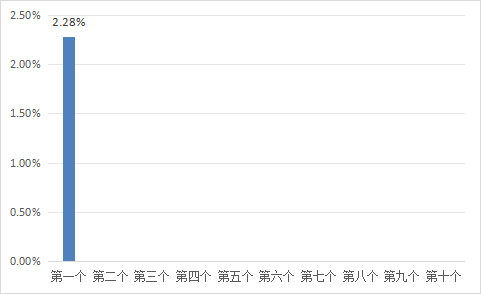
2月24日一揽子原油平均价格变化率为2.28%
Xin Hua Cai Jing· 2026-02-25 07:15
Group 1 - The average price change rate for a basket of crude oil was reported at 2.28% as of February 24 [1] - According to the oil price management regulations, domestic gasoline and diesel prices are adjusted every 10 working days based on international crude oil price changes, with the adjustment effective at 24:00 on the announcement date [3] - The National Development and Reform Commission announced that from 24:00 on February 24, domestic gasoline and diesel prices will increase by 175 yuan and 170 yuan per ton, respectively [3] Group 2 - The first working day of the current pricing cycle is February 25, with the next adjustment window set to open at 24:00 on March 9 [3]

AmSpec:马来西亚2月1-25日棕榈油出口量为922649吨
Xin Hua Cai Jing· 2026-02-25 06:37
据马来西亚独立检验机构AmSpec,马来西亚2月1-25日棕榈油出口量为922649吨,较上月同期减少 16.05%。 (文章来源:新华财经) ...
全国农产品批发市场猪肉平均价格为18.02元/公斤 较前一日下降0.7%
Xin Hua Cai Jing· 2026-02-25 06:37
(文章来源:新华财经) 据农业农村部监测,截至2月25日14:00时,全国农产品批发市场猪肉平均价格为18.02元/公斤,较前一 日下降0.7%;鸡蛋平均价格为7.78元/公斤,较前一日下降1.8%。 ...
