Guan Cha Zhe Wang

Search documents
宇树首店将在京东MALL开业
Guan Cha Zhe Wang· 2025-12-30 03:13
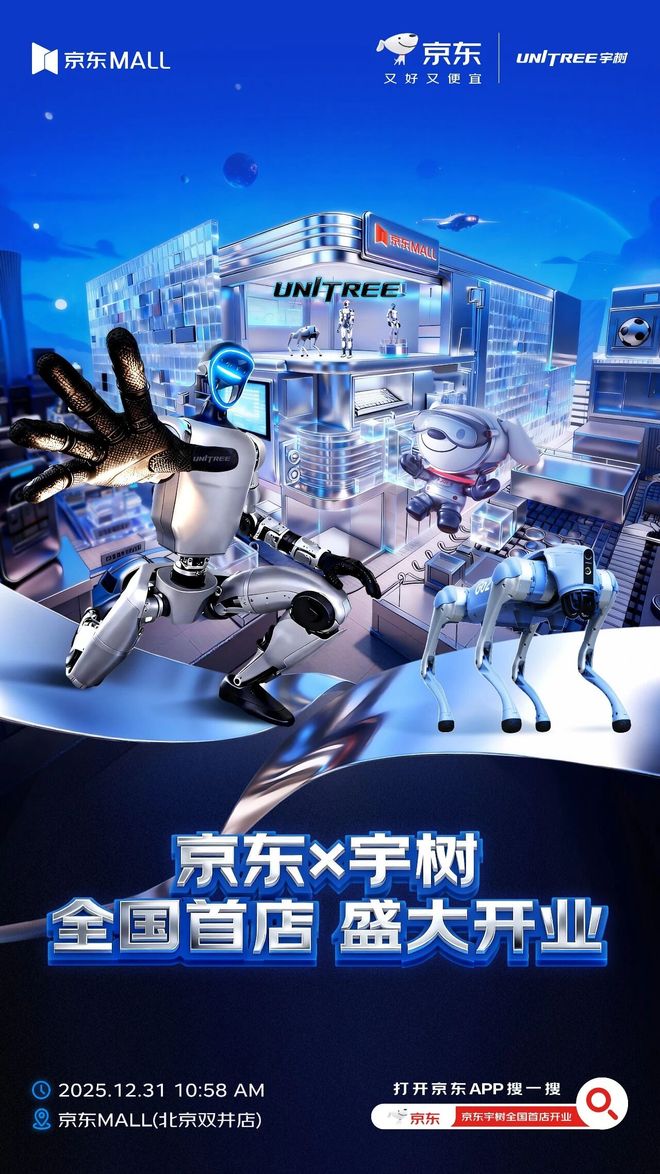
Group 1 - The first offline experience store of Yushu Technology, in collaboration with JD.com, is set to open on December 31, 2025, in Beijing's JD MALL [1] - The store will showcase various products including the G1 humanoid robot and the Go2 quadruped robot, allowing consumers to experience and purchase them on-site or order online for pickup or delivery [4] - Yushu Technology has launched multiple robots, with the G1 priced from 99,000 RMB, the R1 from 39,900 RMB, and the H1 at 650,000 RMB [4] Group 2 - The company introduced a new generation of bionic humanoid robot, the Unitree H2, in October 2025, which stands 180 cm tall and weighs 70 kg, resembling a human more closely [4] - Yushu Technology launched a humanoid robot application store named "App Store" on December 13, 2025, allowing users to download and deploy skills without programming [6] - The founder revealed that Yushu Technology's revenue exceeded 1 billion RMB in 2024, achieving continuous profitability, with its quadruped robots capturing approximately 69.75% of the global market share in sales [7] Group 3 - The company's IPO guidance work was completed on November 15, 2025, with plans to apply for a domestic listing [7]

孟晚舟新年致辞:这些是华为2026年的主战场
Guan Cha Zhe Wang· 2025-12-30 03:07
Core Insights - Huawei's rotating chairman Meng Wanzhou highlighted the company's achievements in 2025, including advancements in 5G-A, HarmonyOS ecosystem, autonomous driving technologies, and AI applications in various industries [1][3] - The company aims to leverage long-term strategic opportunities presented by the wave of intelligent transformation, focusing on vertical industry operations and enhancing its ecosystem [1][3] Group 1: Achievements in 2025 - Huawei made significant progress in 5G-A construction and the HarmonyOS ecosystem, enhancing user experience and industry applications [1] - The company developed key technologies such as Kunpeng, openEuler, Ascend, and super nodes, contributing to AI implementation and green energy solutions [1] - Notable efforts included overcoming challenges in extreme environments, such as high temperatures and high altitudes, to ensure network reliability and service delivery [3][4] Group 2: Strategic Focus for 2026 - Huawei's 2026 strategy emphasizes strengthening vertical industry operations and leveraging its diverse capabilities to facilitate intelligent transformation across various sectors [1] - The company plans to build an open-source ecosystem around Kunpeng and Ascend, enabling partners to develop products that meet diverse industry needs [1] - Initiatives include integrating AI into communication networks, enhancing consumer experiences through the HarmonyOS ecosystem, and improving AI data center efficiency [1][3]

大陆过去对台湾是“溺爱”,可惜台湾人没有意识到
Guan Cha Zhe Wang· 2025-12-30 02:39
Core Insights - The ongoing US-China tech war has reached a critical stage, with China making significant advancements in various technology sectors, indicating a shift in global power dynamics [1][9][26] Group 1: China's Technological Advancements - China has established a leading position in over 60 out of 70 key technology areas, significantly surpassing the US in many fields [5][21] - The "14th Five-Year Plan" emphasizes six key areas for technological breakthroughs, including integrated circuits and advanced materials, while also identifying new economic growth points such as quantum technology and hydrogen energy [2][4] - The focus on artificial intelligence application is expected to accelerate, leveraging China's extensive supply chain and market size [4][12] Group 2: Market Dynamics and Innovation - The shift from government-led to market-driven selection of technology winners is crucial for fostering innovation in China, allowing for a more dynamic and competitive environment [8][10] - Young tech entrepreneurs are emerging as key players, with their success contributing to a cycle of investment and innovation within the tech sector [9][21] - The ability to convert academic research into commercial applications remains a critical factor for China's technological success [5][21] Group 3: Implications for Taiwan - Taiwan's reliance on TSMC as its primary technological asset raises concerns about its long-term economic sustainability, especially if TSMC's operations are relocated [22][24] - The historical investment in the semiconductor industry has positioned Taiwan well, but there is a need for diversification to avoid over-dependence on a single entity [24][25] - The changing geopolitical landscape necessitates a reevaluation of Taiwan's role in the tech ecosystem, as it faces competition from mainland China's rapid advancements [22][26]

“中国蓝箭航天,挑战马斯克”
Guan Cha Zhe Wang· 2025-12-30 02:22
Core Viewpoint - Chinese commercial aerospace companies, particularly Blue Arrow Aerospace, are rapidly advancing in the reusable rocket sector, traditionally dominated by SpaceX, drawing attention from Elon Musk and international media [1][2]. Group 1: Company Developments - Blue Arrow Aerospace became the first Chinese company to conduct reusable rocket tests, aiming to become the second-largest player in this field after SpaceX [1]. - The company’s Zhuque-3 rocket experienced a setback during the first stage recovery but is viewed as a significant step in China's space exploration efforts [1][6]. - The CEO of Blue Arrow, Dai Zheng, emphasized that the failure was part of a learning process and not a definitive setback, highlighting the experimental nature of the launch [1][7]. Group 2: Market Position and Strategy - Blue Arrow aims to provide low-cost launch solutions similar to SpaceX's Falcon 9, which is crucial for China's plan to deploy up to 10,000 satellites in the coming decades [2][6]. - The company is reportedly preparing for an IPO on the Sci-Tech Innovation Board, potentially ahead of SpaceX, which is still speculated to be preparing for its own IPO [5][6]. Group 3: Industry Context and Future Outlook - The Chinese commercial space market is projected to grow by 8.3% in 2024, reaching approximately 713.32 billion yuan, indicating a robust industry outlook [6]. - Government initiatives, including the establishment of the National Venture Capital Guidance Fund, are expected to provide significant support to the aerospace sector, enhancing investment in early-stage projects [6]. - Despite setbacks, the Zhuque-3 rocket's second stage successfully completed a 1400-second glide, laying the groundwork for future improvements in payload capacity [7].

A股三大指数集体低开,贵金属等板块领跌
Guan Cha Zhe Wang· 2025-12-30 01:52
Core Viewpoint - The A-share market opened lower on December 30, with all three major indices declining, indicating a bearish sentiment in the market [1] Market Performance - The Shanghai Composite Index fell by 0.44% - The Shenzhen Component Index decreased by 0.52% - The ChiNext Index also dropped by 0.44% [1] Sector Performance - The precious metals, energy metals, and other metal sectors led the decline - Other sectors such as trade, solid-state batteries, retail, commercial aerospace, and photovoltaics also experienced losses - Conversely, sectors like beer, outbound tax refunds, facial recognition, digital marketing, and multimodal AI concepts showed strength [1]
白银急涨,马斯克拿中国出口管制说事:这不好,很多生产需要白银
Guan Cha Zhe Wang· 2025-12-30 01:51
Core Viewpoint - Silver prices have surged significantly, making it the highest-gaining precious metal of the year, driven by tight physical supply and speculative fervor, while concerns have been raised regarding China's upcoming silver export licensing regulations [3][4]. Group 1: Market Dynamics - Silver prices have increased nearly 150% this year, attributed to multiple factors including tight global supply, strong industrial demand, geopolitical tensions, and expectations of interest rate cuts by the Federal Reserve [6][14]. - The recent spike in silver prices was followed by a sharp decline, with silver futures dropping nearly 9% on October 29, influenced by profit-taking and increased margin requirements by the Chicago Mercantile Exchange [5][13]. - Analysts suggest that the recent price drop may be a temporary correction within an overall upward trend, although there are concerns about potential further declines if selling pressure continues [6][15]. Group 2: Supply and Demand Factors - Demand for silver is at an all-time high across various sectors, including jewelry, medical devices, electric vehicles, and notably, solar panel production, which consumes nearly 30% of the global silver supply [7][14]. - The supply side is constrained, with little potential for large-scale new production, as most current silver output comes as a byproduct of mining other metals like copper and zinc [7][14]. Group 3: Regulatory Environment - China has announced that starting January 1, 2024, silver exports will require government licenses, a measure that is a continuation of existing regulations aimed at protecting domestic resources and the environment [3][4]. - This regulatory change has drawn criticism from figures like Elon Musk, who expressed concerns about its impact on industrial processes reliant on silver [3][4].

心智观察所:围堵华为四年后,NEC注定要黯然离场
Guan Cha Zhe Wang· 2025-12-30 01:11
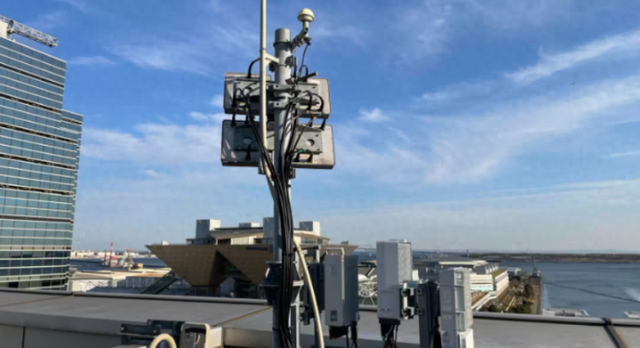
Core Viewpoint - NEC's withdrawal from the 4G and 5G public base station development market signifies the complete collapse of the Japanese telecommunications equipment industry, highlighting the challenges faced by Japanese companies in the face of fierce competition from Chinese firms like Huawei and ZTE [1][5]. Group 1: NEC's Strategic Withdrawal - NEC's president, Takashi Morita, announced that the company will no longer invest in the public base station development sector, marking a significant shift from their previous goal of capturing 20% of the global market by 2030 [1][3]. - The company's market share has dwindled, with NEC and Fujitsu together holding less than 2% of the global base station market, while Huawei, Ericsson, and Nokia control nearly 80% [3][4]. - The competitive landscape for 5G has fundamentally changed, requiring higher technical standards and larger scale effects, which NEC, with a market share of less than 1%, cannot sustain [3][4]. Group 2: Structural Crisis in Japanese Telecommunications - NEC's exit reflects a broader crisis within the Japanese telecommunications equipment sector, with other companies like Fujitsu also divesting from similar businesses [5]. - The historical reliance on a closed domestic market has weakened Japanese firms' ability to compete globally, leading to their marginalization as they struggle to match the performance and cost-effectiveness of international competitors [5][6]. - NTT Docomo, Japan's largest mobile operator, has shifted its procurement strategy to favor foreign suppliers like Ericsson, further indicating the decline of domestic brands [6]. Group 3: NEC's Strategic Shift to Private Networks - Despite exiting the public base station market, NEC is pursuing a strategic pivot towards providing private 5G network solutions in collaboration with Cisco, targeting enterprise clients in Europe and the Middle East [7]. - This shift reflects NEC's recognition of the competitive landscape, where the enterprise private network market is less concentrated and allows for more customized services, an area where NEC has expertise [7]. Group 4: Challenges of Open RAN - NEC's previous involvement in Open RAN technology, which aimed to democratize the telecommunications equipment market, has not yielded the expected results, with deployment lagging behind initial projections [8][9]. - The challenges faced by Open RAN include technical maturity, total cost of ownership uncertainties, and system integration complexities, which hinder its widespread adoption [9][10]. Group 5: Rise of Chinese Competitors - In stark contrast to Japanese firms, Chinese companies like Huawei and ZTE have solidified their positions in the global 5G market, with Huawei holding 58% and ZTE 31% of the domestic market [11]. - Chinese firms are not only competitive on price but also lead in technological innovation, with Huawei's solutions significantly enhancing capacity and reducing energy consumption [11][12]. - The rapid advancement of technologies like 5G-A and RedCap by Chinese firms has established a generational gap in capabilities compared to their Japanese counterparts [12][14]. Group 6: Future Outlook and Implications - As Japan grapples with its telecommunications industry's decline, China is positioning itself for future advancements in 6G technology, leveraging its existing infrastructure and technological capabilities [14][15]. - The competitive landscape in telecommunications is evolving, with the importance of scale and continuous innovation becoming critical for survival in a technology-driven market [18].

财务“救命稻草”?英伟达购入英特尔50亿美元股份
Guan Cha Zhe Wang· 2025-12-29 14:47
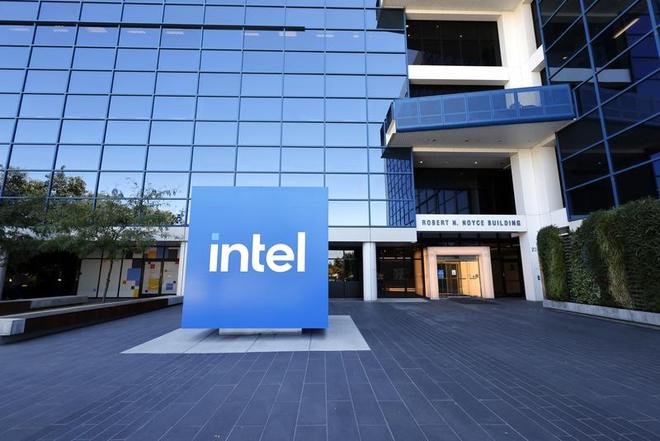
【文/观察者网 陈思佳】据路透社12月29日报道,美国半导体巨头英伟达当天提交的一份文件披露,该 公司已经按照9月达成的协议,购入英特尔公司价值50亿美元的股份。由于近些年的战略失误和耗资巨 大的产能扩张导致英特尔财务状况紧张,这笔交易被视为该公司的"救命稻草"。 此前,特朗普政府8月宣布与英特尔达成一项收购协议,通过向英特尔普通股投资89亿美元,收购了该 公司约10%的股份,使美国政府成为其大股东。其中57亿美元来自美国政府《芯片与科学法》已批准但 尚未拨付的补助资金,另外32亿美元来自政府资助项目。 美国加州圣克拉拉市,英特尔公司总部 IC photo 对于美国政府这笔交易,英特尔表示,美国政府不会寻求在英特尔董事会直接派驻代表,不拥有董事会 席位或其他"治理或信息权"。美国政府还同意,除少数例外情况外,将在需要股东投票批准的事项上与 公司董事会的立场保持一致。 根据今年9月公布的协议,英伟达同意以每股23.28美元的价格,购入英特尔普通股。交易完成后,预计 英伟达将持有英特尔约4%的股票,成为该公司的重要股东之一。英伟达首席执行官黄仁勋当时表示, 美国政府没有参与交易,但美国总统特朗普给予了支持。 英特 ...


赵鹏从民生银行、大家保险“消失”,此前为安邦接管组成员
Guan Cha Zhe Wang· 2025-12-29 14:31
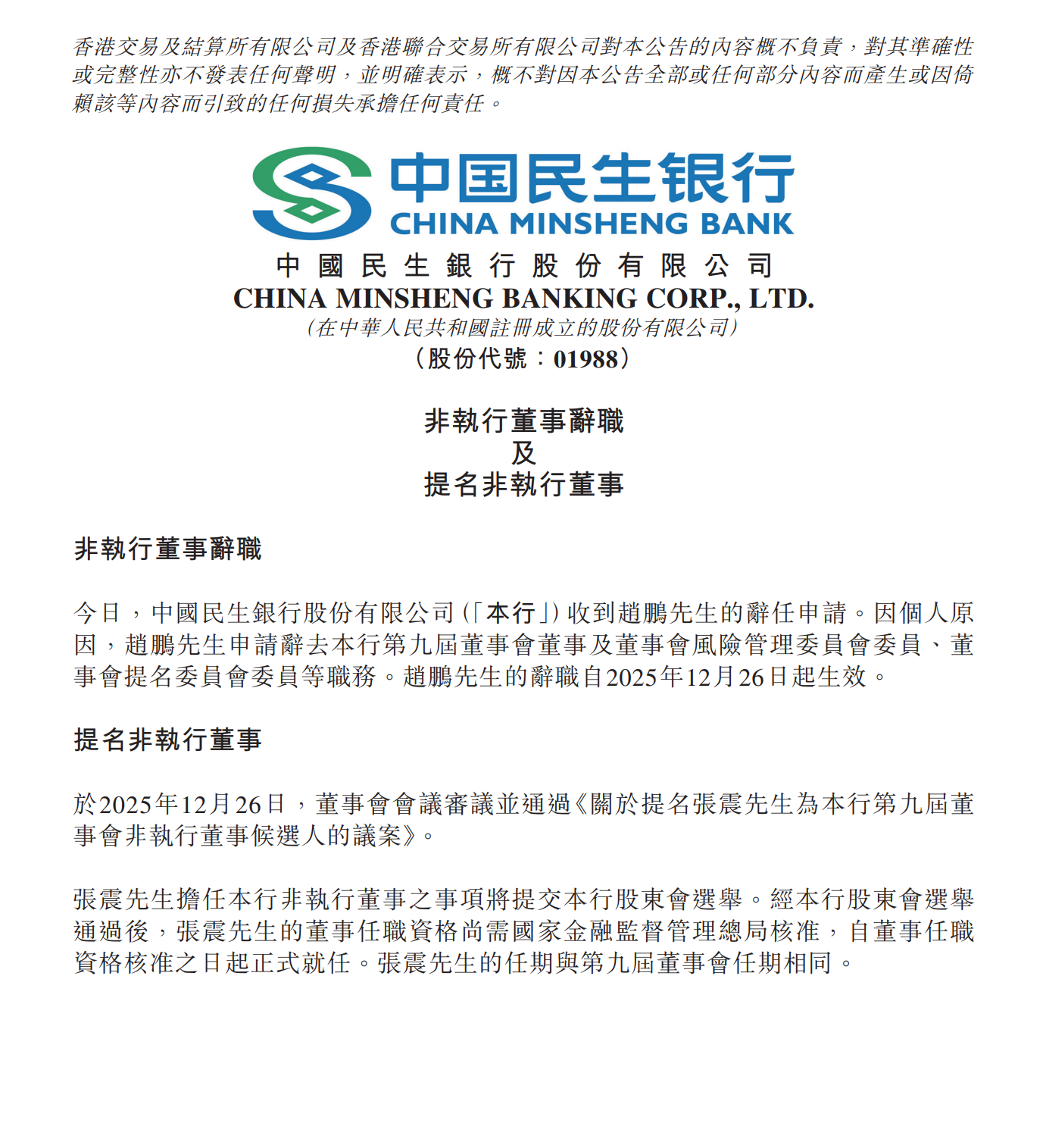
【文/羽扇观金工作室】 安邦保险多年前已轰然坍塌,但是余波到现在似乎都没止息。 近日,又一位原安邦接管组成员、工作组综合组组长赵鹏被民生银行及安邦保险重整后的受让企业大家保险除名。 12月26日,中国民生银行股份有限公司(下文简称为"民生银行")发布公告称,董事赵鹏因个人原因申请辞去该行董事及董事会风险管理委员会委员、董事 会提名委员会委员等职务,辞职自2025年12月26日起生效。辞职后,赵鹏不在公司及控股子公司工作。 2019年,安邦重组为大家保险后,他未回归监管体系,而是选择留在大家保险,担任总经理助理兼董事会秘书,分管公司投资业务。此外,赵鹏还曾任北京 同仁堂股份有限公司董事、金融街控股股份有限公司副董事长、远洋集团控股有限公司董事。 几乎同一时间,大家保险集团官网信息更新,其中原本担任总经理助理兼董事会秘书的赵鹏,其相关信息已不可见。 赵鹏曾任职银保监,作为安邦接管组成员转任大家保险高管,双重薪酬引关注 大家保险目前是民生银行的境内法人第一大股东,持有该行73亿股,在流通股中占比16.79%,而赵鹏是大家保险集团派驻民生银行的董事。 | 四八五日 中国民生银行股份有限公司 | | | --- | - ...
杭州官方回复《燕云十六声》时装事件:没有违法内容
Guan Cha Zhe Wang· 2025-12-29 12:10
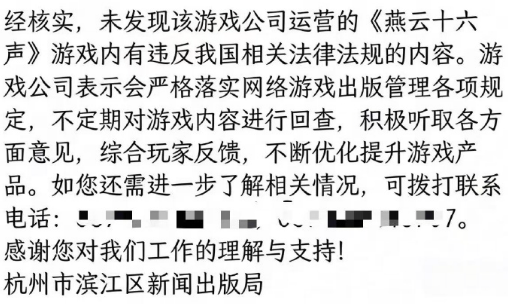
Core Viewpoint - The game "Yanyun Sixteen Sounds" has faced controversy following the launch of new costumes, but government responses indicate no violations of relevant laws and regulations have been found [1] Group 1: Game Updates and Issues - The game previously acknowledged issues with the "Fei Bai Cheng Shi" costume series, which experienced technical problems during live demonstrations, prompting an emergency fix on the same day [2] - An official announcement revealed that the dyeing issue for the female version of the "Fei Bai Cheng Shi" costume was first addressed on December 25, restoring dyeing functionality, while the male version is still undergoing urgent repairs [2][4] - Customer service responses confirmed that the dyeing effect issues for the female version's upper body and skirt areas were fixed, along with errors in the model details on the back [3]