
Guan Cha Zhe Wang

Search documents
内斗不止,分红530亿:科兴生物遭纳斯达克驱逐退市
Guan Cha Zhe Wang· 2025-11-21 08:57
Core Viewpoint - Sinovac Biotech, once a leading player in the vaccine industry, is facing a severe delisting crisis due to a prolonged internal power struggle rather than market competition or business decline [1] Group 1: Company Background - Sinovac Biotech was founded in 2001 by Yin Weidong and Pan Aihua, combining technical expertise and capital investment [2] - The company expanded its product line from hepatitis A vaccine to various vaccines, including those for influenza and SARS [2][3] - Sinovac successfully went public on NASDAQ, but internal conflicts began to emerge as the company grew [3] Group 2: Internal Conflicts - Fundamental disagreements arose between the founders regarding the ownership and control of the company, leading to factionalism among shareholders [3] - The conflict escalated in 2018, resulting in physical altercations at the company’s facilities and significant financial losses, including the destruction of 6 million vaccine doses [3] - NASDAQ suspended trading of Sinovac shares in 2019 due to the company's failure to provide required information, leading to a stagnant stock price of $6.47 and a market cap of approximately 28 billion RMB [3] Group 3: Financial Performance and Dividends - The COVID-19 pandemic provided a temporary revival for Sinovac, with the company earning a net profit of $8.46 billion (approximately 600 billion RMB) in 2021 from its vaccine [4] - Despite the financial success, internal disputes meant that not all founders benefited equally, with Pan Aihua receiving no dividends and facing legal issues [4] - A controversial "liquidation-style dividend" proposal was introduced, offering up to $124 per share, totaling around 74.4 billion USD (approximately 530 billion RMB), which was overwhelmingly supported by shareholders [6] Group 4: Current Situation and Future Outlook - The company is currently in a precarious position, having failed to publish its annual report on time, leading to NASDAQ's decision to delist it on November 21 [6][7] - Sinovac has appealed the delisting decision, but the situation appears more dire than previous instances [6][7] - The internal power struggle has left the company in a state of decline, with no clear winners among the founders or shareholders [7]
日系“铁壁”被攻破,“中国车首次登顶印尼”
Guan Cha Zhe Wang· 2025-11-21 08:53
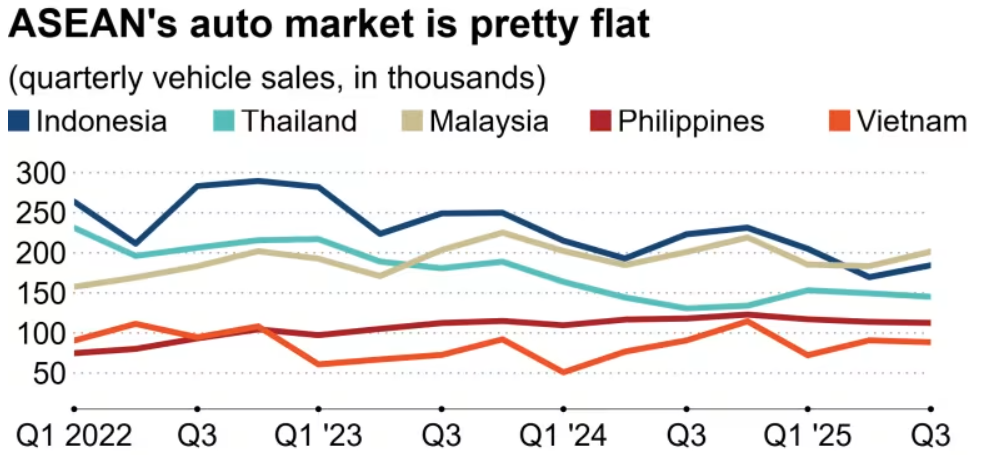
Core Insights - The long-standing dominance of Japanese automakers in Southeast Asia's automotive market is being challenged as demand shifts towards electric vehicles, with Chinese brands like BYD gaining significant traction [1][4] Group 1: Market Overview - In Q3 2023, total automotive sales in the five major Southeast Asian markets reached 731,900 units, a year-on-year decline of 4% but a quarter-on-quarter increase of 4% [4] - Indonesia's automotive sales fell by 17% year-on-year to 184,403 units, marking a 26% drop compared to two years ago, significantly impacting Japanese manufacturers who hold 90% market share [4] - Toyota remains the market leader in Indonesia with a 33.4% market share, but its Q3 sales dropped by 26%, while Daihatsu's sales fell by 24% [4] Group 2: Brand Performance - BYD's Atto 1 electric vehicle surpassed Toyota's Innova and Avanza in sales for the first time in October, with 9,396 units sold [4] - Astra International, Indonesia's largest automotive dealer, reported a 20% year-on-year decline in sales to 34,888 units, with market share dropping from 54% in September to 47% [4] - In Malaysia, automotive sales increased by 3% year-on-year to 201,588 units, supported by a 5.2% GDP growth [5] Group 3: Competitive Landscape - Chinese automakers are reshaping the Malaysian market, with Chery's sales reaching 25,631 units in the first ten months of the year, a 78.2% increase year-on-year, while BYD's electric vehicle sales grew by 56.5% [5] - Chery's growth began in Q3 2023, and it has surpassed Mitsubishi in sales for the first time in Q1 2024, and is on track to overtake Mazda in Q3 2024 [8] - The shift in consumer preference from sedans to SUVs is evident, with Chery's competitively priced models attracting buyers who previously considered Japanese sedans [8]


受美股拖累,日韩股市收盘大跌
Guan Cha Zhe Wang· 2025-11-21 07:44
Market Performance - The Nikkei 225 index closed down 2.40% at 48,625.88 points, with a cumulative decline of 3.29% for the week [1] - The South Korean Composite Index fell by 3.79% to 3,853.26 points, marking a weekly drop of 5.52% [1] Influencing Factors - The recent downturn in Asian stock markets is primarily attributed to significant volatility in the US stock market [1] - On the previous evening, all three major US indices closed lower due to market fears surrounding an AI bubble, with the Dow Jones down 0.84%, the S&P 500 down 1.56%, and the Nasdaq down 2.15% [1] - The Chicago Board Options Exchange Volatility Index (VIX) rose to 26.42, the highest level since April, indicating increased market fear [1] Economic Indicators - The US Labor Department reported that non-farm payrolls increased by 119,000 in September, slightly above expectations, but the unemployment rate rose by 0.1 percentage points to 4.4%, the highest level in four years [1] - The probability of a Federal Reserve interest rate cut in December has slightly increased to around 40%, with market uncertainty regarding the potential rate cut next month [1]
外媒紧盯中国稀土出口:对美出口量9个月来最高,有人替日本担心
Guan Cha Zhe Wang· 2025-11-21 07:23
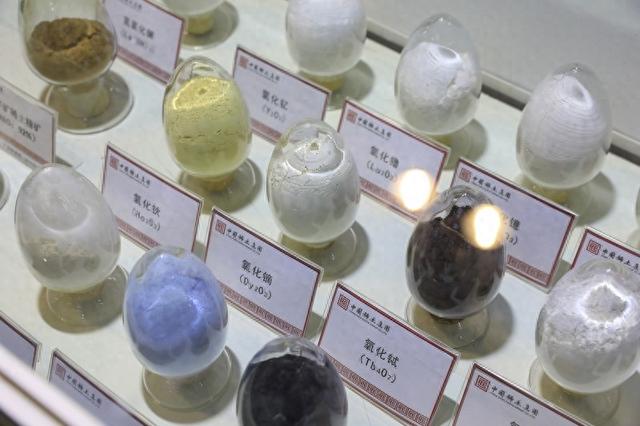
Core Insights - China's rare earth magnet exports in October decreased by 5.2% month-on-month, marking the second consecutive month of decline, but exports to the U.S. surged to the highest level in nine months [1] - The total export volume of rare earth magnets from China reached 5,473 tons in October, down from 5,774 tons in September, but up 15.8% compared to 4,725 tons in the same month last year [1] - Exports to the U.S. saw a significant month-on-month increase of 56.1%, reaching 656 tons, the highest since January of this year [2] Export Data Summary - The cumulative export volume of rare earth magnets from China for the year reached 45,290 tons, reflecting a year-on-year decline of 5.2% [1] - The largest export destinations for China's rare earth magnets in October were Germany, the U.S., South Korea, Vietnam, and India [1] - Exports to Germany increased by 55.9% year-on-year, totaling 1,118 tons, while exports to South Korea reached 569 tons, up 31.3% year-on-year [2] Market Dynamics - Amidst stalled negotiations between China and the U.S., China's rare earth magnet exports to the U.S. dropped to 46 tons in May but rebounded to 619 tons in July before declining again in August and September [2] - Exports to Japan in October increased by 30.2% year-on-year, reaching 226 tons, although when including semi-finished products, the total saw an 18.3% year-on-year decline to 538 tons [2][3] - Experts noted that the export of heavy rare earths to the U.S. and Japan remains limited despite China's dominant position in global rare earth production [4]

比亚迪2026款夏上市:补贴价19.68万起,售价较年初大幅下探
Guan Cha Zhe Wang· 2025-11-21 07:08
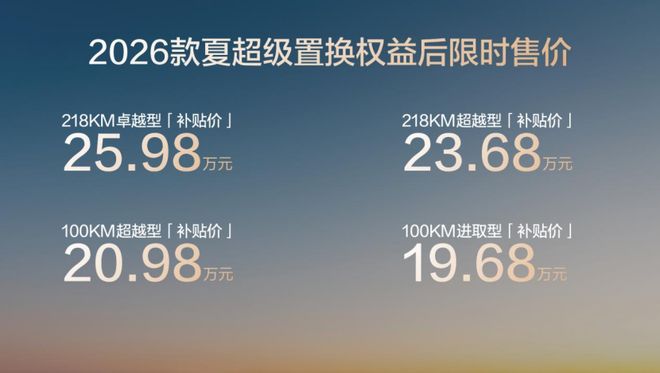
Core Insights - BYD's 2026 model "Xia" is positioned to capture the family MPV and SUV market after a significant price reduction, differentiating itself from the business-oriented Tengshi D9 [1][8] Pricing Strategy - The 2026 model "Xia" is priced between 219,800 to 279,800 yuan, with a limited-time subsidy bringing the price down to 196,800 to 259,800 yuan [1][3] - Compared to the 2025 model, the 2026 model's guidance price has decreased by 30,000 yuan, and the subsidized price has dropped by over 50,000 yuan, even falling below 200,000 yuan [3][8] Technical Specifications - Both the 2026 and 2025 models feature the same battery configurations of 20.39 kWh and 36.6 kWh, with the lower-end models maintaining a pure electric range of 100 km, while the mid to high-end versions have improved to 218 km [3][5] - The 2026 model "Xia" includes a 1.5T hybrid engine, with the overall range increasing from 1,060 km in the 2025 model to 1,163 km in the 2026 model, and the NEDC fuel consumption decreasing from 5.3 L to 4.9 L per 100 km [3][5] Design and Features - The 2026 model "Xia" focuses on the family market, featuring new color options to enhance its appeal in family usage scenarios [3][8] - Interior features include a four-way adjustable passenger seat with massage and heating functions, and a third row that can be easily folded to expand trunk space to 2,036 liters [5][8] Smart Technology - The vehicle is equipped with upgraded "Tianshen Eye-B" driver assistance technology, supporting various driving and parking assistance functions [7][8] - The "Xia" model supports home integration features, allowing users to remotely control home appliances like air conditioning and hot water systems [8] Market Positioning - With the significant price drop, BYD aims to capture the growing demand for MPVs in the 200,000 to 300,000 yuan range, while competing against declining sales of joint venture fuel MPVs [8]
AI崛起挤压芯片产能,小米未来可能涨价
Guan Cha Zhe Wang· 2025-11-21 06:55
据路透社报道,韩国三星电子和SK海力士等头部供应商都在将产能分配给利润更高的HBM芯片。HBM 则是人工智能处理器的重要组成部分。这也导致传统数据中心、个人电脑、手机和汽车中使用的更传统 的数据存储半导体的产能突然受到挤压。值得一提的是,直到2023年,这个市场还供大于求。 另一方面,人工智能企业间的竞赛恰逢迭代周期,导致不少企业开始升级或更换五年前的服务器。 【文/观察者网 潘昱辰 编辑/高莘】日前,小米集团总裁卢伟冰在小米2025年第三季度业绩媒体电话会 议上表示,未来可能通过涨价和产品结构升级来平滑成本压力。卢伟冰表示,成本升高的原因在于内存 价格上涨,主要由于人工智能(AI)带来的高带宽内存(HBM)需求激增,且是长周期行为,而非传 统手机、笔记本行业的周期波动。 小米 东方IC 卢伟冰还透露,小米已提前布局与合作伙伴签订2026年供应协议,确保全年供应不受影响。在小米电话 会议后,花旗分析师将其2026年的预测毛利润大幅下调了10%。此外中芯国际本月早些时候也曾表示, 供应的不确定性导致包括汽车品牌在内的客户推迟了明年第一季度的订单。小米方面也预计,2026年汽 车业务的毛利率将下降。 伯恩斯坦的分 ...

时隔6年,印度航空将重返上海
Guan Cha Zhe Wang· 2025-11-21 04:43
时隔6年,印度航空公司(成立于1932年,是印度首家航空公司)将重返中国大陆航空市场。 【文/观察者网 邓军 编辑/赵乾坤】 另据航班管家DAST向观察者网提供的数据,目前上海直飞德里的航班每周只有3班,执飞航司为东 航。 上海至德里航线是中印之间最具战略意义的空中通道之一。作为两国重要的经济中心城市,上海与德里 之间的紧密连接,将有力促进双方在经贸、文化等多领域的全面交流,为"龙象共舞"注入新活力。 2025年10月2日,印度驻华大使馆宣布将恢复中印直航。消息发布后,资本市场反应积极,亚洲地区的 航空、物流及跨境电商类股普遍上扬。 TTR Weekly分析指出,印度航空恢复上海航线,是在中印两国近期签署外交协议、重启自2020年初暂 停的直飞航班之后采取的具体举措。 2025年11月9日,中国东方航空MU563航班搭载248名乘客,从上海浦东国际机场起飞前往印度德里, 东航由此成为2025年首家恢复中印定期客运航班的国内航空公司。据悉,该航班去程客座率超过95%。 东航地面服务部浦东旅客服务中心相关负责人在首航当天表示,上海至德里航线在未来一周(11月9日 至15日)的预订率均保持在90%以上,显示出市场对 ...
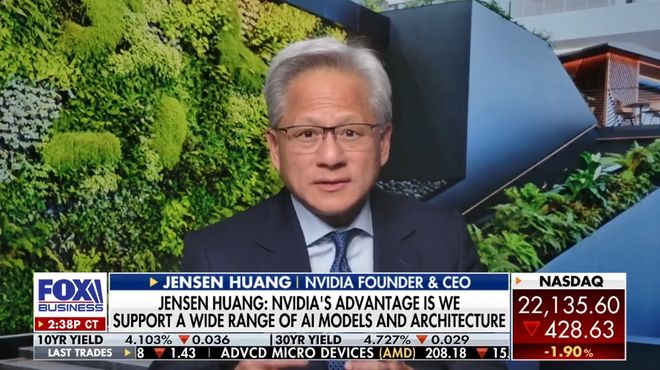
黄仁勋:很遗憾!零!零!还是零!
Guan Cha Zhe Wang· 2025-11-21 04:33
Core Insights - Nvidia's CEO Jensen Huang expressed concerns over U.S. export restrictions leading to a halt in chip sales to China, predicting zero sales for the next two quarters [1][3] - The Chinese AI chip market is currently valued at approximately $50 billion and could grow to $200 billion by the end of 2030, but U.S. companies are unable to participate due to restrictions [1][3] - Nvidia reported a record revenue of $57 billion for Q3, with a 62% year-over-year increase, but sales in China dropped significantly by 63% to $3 billion [1][4] Group 1 - Huang emphasized the importance of improving U.S.-China trade relations for maintaining U.S. competitiveness in the AI sector [3] - He noted that re-entering the Chinese market would benefit both the U.S. and China, enhancing the technological ecosystem in both countries [3][4] - Nvidia's CFO Colette Kress highlighted that geopolitical issues and fierce competition in China hindered the company from securing large orders from the region [4] Group 2 - Huang revealed that Nvidia's market share in China has plummeted from 95% to 0%, indicating a complete exit from the Chinese market [5] - There are mixed signals regarding U.S. legislation affecting Nvidia's ability to sell AI chips to China, with reports suggesting the White House is urging Congress to reject a bill that would restrict such sales [6] - However, despite some positive developments, there are still indications that the U.S. government will not allow Nvidia to sell its latest AI chips to China [6]

从“住有所居”到“住有优居”:华润置地引领新时代居住革命
Guan Cha Zhe Wang· 2025-11-21 03:48
Core Insights - The concept of "good housing" has been officially recognized in government reports, emphasizing safety, comfort, sustainability, and intelligence as core standards for residential needs in the new era [1][2] - China’s housing development is shifting focus from mere availability to quality, aiming to enhance residents' living standards and happiness through tailored solutions for diverse demographics [2][4] Group 1: Good Housing Framework - The "good housing" framework is built on respect and care for individuals, transitioning from "having housing" to "having good housing" [2] - The "good housing" system by China Resources Land includes "good products, good communities, and good services," supported by a "ten energy system" to ensure comprehensive living experiences [1][4] Group 2: Full-Cycle Renewal Technology - The "full-cycle renewal technology" allows flexible adjustments in living spaces using modular, industrialized, and column-free designs, enabling homes to adapt to changing family needs [4] - A comprehensive home renovation service system is established to cater to families with children and the elderly, ensuring homes remain aligned with evolving needs [4] Group 3: Affordable Rental Housing - The "Nest" brand under China Resources Land offers a multi-tier rental supply system, including compact units designed for young urban residents, maximizing functionality in limited space [6] - The rental model encourages tenant participation in community space improvements, fostering a sense of belonging [6] Group 4: Complete Community Development - The concept of a "complete community" is defined by a 15-minute living circle, integrating essential services like healthcare, childcare, and shopping within close proximity [8][9] - China Resources Land's diverse business operations, including commercial properties and asset management, support the development of these complete communities [9][10] Group 5: Operational Excellence - The operational strategy, termed "good maintenance," integrates housing management, community governance, and urban operations, enhancing overall service delivery [15][16] - Advanced technologies such as AI and IoT are employed to create smart community management systems, improving efficiency and safety for residents [17] Group 6: Urban Operations Model - The "Nanshan Model" exemplifies successful urban operations, focusing on integrated city services and community engagement, which can be adapted to various urban contexts across China [19] - The holistic approach to housing and community development positions "good housing" as a vital link between individual lives, community warmth, and urban growth [19]


套现172亿创A股纪录,宁德时代创始股东黄世霖拿这笔钱去干什么?
Guan Cha Zhe Wang· 2025-11-21 03:47
Core Viewpoint - Huang Shilin, the third-largest shareholder of CATL, is planning to sell approximately 45.63 million shares, representing 1% of the company's total shares, which will result in a cash-out of 17.163 billion yuan, setting a record for the largest share reduction in the A-share market [1][2] Summary by Sections Share Reduction Details - The initial transfer price for Huang Shilin's shares is set at 376.12 yuan per share, which is a 4% discount from the market price at the time of the announcement [1][3] - The share transfer will be conducted through a non-public inquiry transfer, which is considered a more moderate approach compared to secondary market reductions, and has attracted 55 valid bids from various institutional investors [3][4] Market Reaction - Following the announcement of the share reduction, CATL's stock price experienced fluctuations, dropping from 404.12 yuan to 379.39 yuan, a decline of over 6% [4] - The significant scale of the share reduction and Huang Shilin's identity as a key figure in the company contributed to the market's volatility [4] Huang Shilin's Background and New Ventures - Huang Shilin, a co-founder of CATL, has transitioned to establish new companies in the energy storage sector after leaving CATL [2][6] - He holds over 90% of shares in two new companies focused on energy storage technology, indicating his continued commitment to the renewable energy industry [6][7] Financial Performance of New Ventures - Despite the optimistic outlook for the "light-storage-charging-detection" industry, the new company, Times Star Cloud Technology, has reported losses, with revenues of 9.03 billion yuan in 2023 and a loss of 390 million yuan [8] - The financial struggles of the new ventures raise questions about the potential use of funds from the share reduction, as Huang Shilin may need to invest further to support the growth of these companies [8][9]
