Hua Xia Shi Bao

Search documents
北京二手房成交连续两月破1.5万套!“小阳春”可期,新房仍待发力
Hua Xia Shi Bao· 2026-02-04 13:44
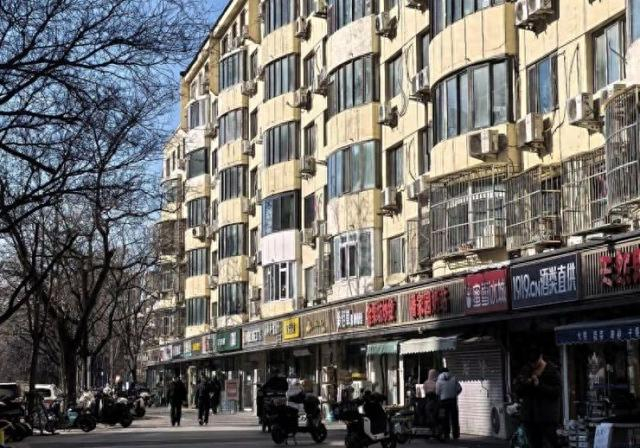
北京二手房。董红艳/摄 本报记者 董红艳 北京报道 2026年开年以来,北京二手房市场迎来成交放量行情,不仅周度成交量显著攀升,2025年12月份和2026 年1月份,网签量更是连续两月突破1.5万套,同比增长超20%。购房者议价空间明显收窄。 近日,《华夏时报》记者实地走访潘家园、高米店等北京典型片区发现,不同板块二手房市场呈现差异 化特征,而在政策稳预期加持下,市场底部特征显现,购房者入市意愿提升,核心城市楼市"小阳春"行 情可期,不过新房市场仍与二手房形成冷热分化格局。 成交放量 近日,《华夏时报》记者实地走访北京朝阳区潘家园片区。该片区地处东三环,紧邻古玩城、眼镜城, 交通便捷,距地铁10号线潘家园站、17号线潘家园西站步行距离在300至800米。在潘家园从业超十年的 房产经纪人马林(化名)向记者介绍了当地二手房市场现状。 潘家园周边住宅小区以老旧社区为主,多建成于上世纪80至90年代。"这边多数小区的居住环境相差无 几,仅部分小区的楼道维护更整洁些。"马林说。 "近期链家在北京的周成交量已突破2000套(非全市总成交量),此前周成交仅约1600至1700套。"马林 表示,当前二手房市场已进入活跃度提 ...

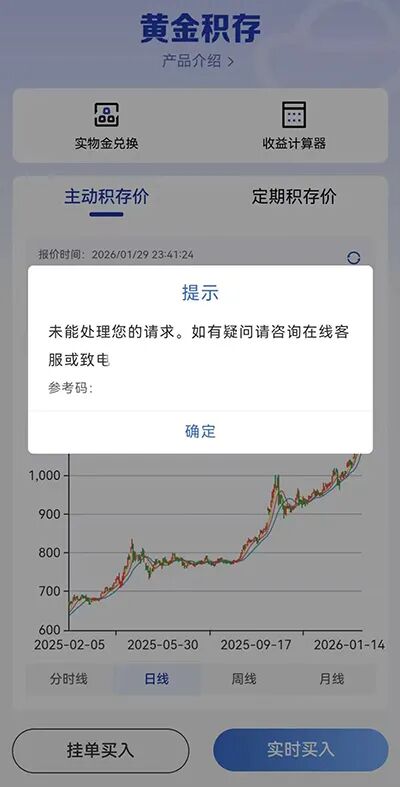
“密码按烂了都买不进”,金价暴跌,年轻人抄底黄金却被“拒之门外”
Hua Xia Shi Bao· 2026-02-04 11:49
Core Viewpoint - The recent surge in trading demand for gold accumulation products has overwhelmed the banking system's capacity, leading to transaction failures and delays, which are attributed to operational issues rather than systemic market risks [1][5][6]. Group 1: Trading Demand and Market Behavior - There has been a significant increase in trading activity for gold accumulation products, driven by fluctuations in gold prices, which has exceeded the banks' operational capabilities [1][6]. - Investors have reported difficulties in executing trades during periods of high demand, with many experiencing failed transactions and system overloads [5][6]. - The current trading frenzy is characterized by a mix of speculative behavior and a lack of available trading platforms, leading to frustration among investors [4][5]. Group 2: Bank Responses and Policy Adjustments - Several banks have raised the minimum purchase amounts for gold accumulation products in response to the increased trading volume and associated risks [7][8]. - Banks are likely to implement stricter trading limits, adjust transaction fees, and enhance their product offerings to manage the surge in demand and mitigate risks [6][9]. - Risk assessment requirements for investors have been tightened, with banks now requiring a risk tolerance evaluation before allowing participation in gold accumulation activities [8][9]. Group 3: Future Outlook and Recommendations - Analysts predict that the growth rate of gold accumulation products will slow down, shifting the focus from scale to quality in the industry [9]. - There is a call for improved risk education and information disclosure from banks to help investors make informed decisions based on their risk tolerance [9]. - The market is expected to evolve towards more standardized and differentiated products, potentially including structured products linked to gold for various risk profiles [9].





被问爱泼斯坦案,特朗普“破防”怒怼记者,对克林顿夫妇将因此案在国会作证“表示遗憾”
Hua Xia Shi Bao· 2026-02-04 10:37
美国前总统、民主党人克林顿及其妻子希拉里2月2日同意在国会众议院就爱泼斯坦案调查作证。据美国 《国会山报》报道,两人出席作证的日期公布后,美国总统特朗普就此回应称,他感到很"遗憾"。 据环球网援引今日俄罗斯4日报道,当地时间2月3日,美国总统特朗普在椭圆形办公室对美国有线电视 新闻网(CNN)记者凯特兰·柯林斯厉声斥责,不仅称她是"最差劲的记者",还因她在追问爱泼斯坦案 相关问题时表情严肃,对其大加指责。 特朗普称:"CNN收视率这么低,就是因为有你这种人。我认识你都十年了,印象里你脸上就没露出过 一丝笑容。"柯林斯当即表明,自己是在询问关于爱泼斯坦性侵受害者的相关问题,却被特朗普打断。 特朗普称:"你知道自己为什么不笑吗?因为你心里清楚,自己说的都不是真话。" "坦白说,我觉得很遗憾。我一直很喜欢他(克林顿)。至于她(希拉里)?是的,我得这么说,她是 个很有能力的女人,辩论能力比其他一些人强得多。她更聪明,是个聪明的女性。"特朗普表示,"从很 多方面来说,我都不愿看到这种情况。" 特朗普还再次否认与爱泼斯坦案有关联。报道说,特朗普称自己是"清白的"。他补充称,"我本不该有 这种感觉,但我为他们不得不经历那些 ...
六增一降,全年累计新签合同额超14万亿元!七家建筑央企成绩单来了
Hua Xia Shi Bao· 2026-02-04 10:32
Group 1 - The core viewpoint of the article highlights that seven major state-owned construction enterprises in China have signed new contracts exceeding 14 trillion yuan for the year 2025, demonstrating resilience in infrastructure amid economic pressures and structural adjustments in the real estate sector [2][4] - The industry shows characteristics of concentration among leading firms, overall stability, localized pressure, and structural transformation, with the top three companies accounting for over 70% of the total new contracts signed [2][5] - The shift from scale expansion to quality improvement in domestic infrastructure investment is emphasized, with traditional construction demands declining while new energy, water conservancy, and rail transport projects are on the rise [3][7] Group 2 - The total new contracts signed by the seven construction state-owned enterprises reached over 14 trillion yuan, achieving the annual goal of stability, structural optimization, and strong resilience [4] - The leading three companies, China State Construction, China Railway Construction, and China Railway, dominate the industry, with their combined new contracts exceeding 10.3 trillion yuan, representing over 70% of the total [5] - The only company experiencing a decline in new contracts is China Metallurgical Group, which saw a 10.8% decrease due to shrinking demand in traditional metallurgy and construction markets [5][9] Group 3 - The construction sector is undergoing a profound restructuring, with traditional construction and heavy asset sectors slowing down, while infrastructure, clean energy, overseas projects, and urban renewal are becoming the main growth drivers [7][8] - The overseas market has become a significant growth engine for construction state-owned enterprises, with substantial increases in new contracts signed abroad, particularly in regions like Southeast Asia and Africa [8] - The article notes that while the order scale exceeds 14 trillion yuan, the industry still faces challenges such as profit pressure, slow payment cycles, and high debt ratios [9][10] Group 4 - The article anticipates that the new contract growth rate for construction state-owned enterprises will remain stable in 2026, with an expected increase of about 5% to 10% [11] - The central government's policies are expected to support investment stabilization and potentially accelerate infrastructure investment, benefiting leading firms in the sector [11]





有色板块“炸锅”!“超级牛股”飙涨,公募基金却“躲着走”?
Hua Xia Shi Bao· 2026-02-04 09:17
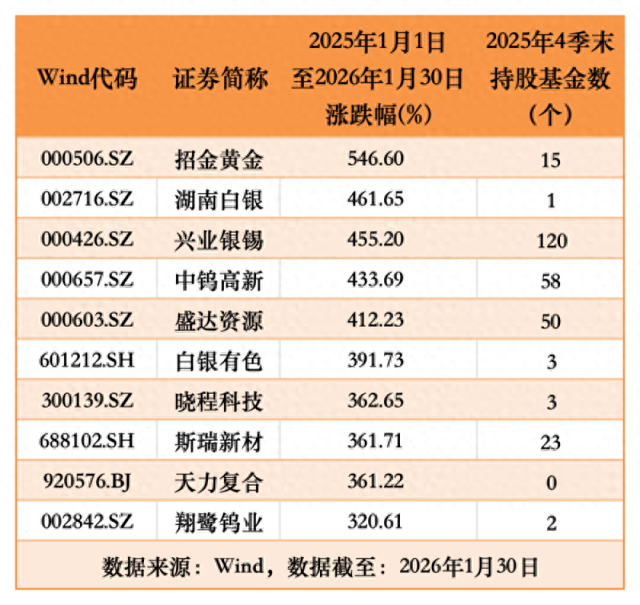
Core Insights - The article highlights a paradox in the non-ferrous metals sector where despite a significant bull market, very few public funds have captured the top-performing stocks [1][2] - The analysis indicates that institutional investors are generally avoiding stocks with historical governance issues or high uncertainty, even if market expectations are strong [2][3] Group 1: Stock Performance and Fund Holdings - Some non-ferrous metal stocks have seen remarkable price increases, with Zhaojin Gold rising over 540% and Xiaocheng Technology increasing over 362% since 2025 [2] - As of the end of 2025, Zhaojin Gold was held by only 15 funds, Xiaocheng Technology by 3 funds, and Hunan Silver by just 1 fund, indicating a lack of institutional interest in these high-performing stocks [2][4] Group 2: Institutional Investment Behavior - Public funds are constrained by strict compliance frameworks and risk management systems, leading to cautious investment decisions regarding companies with historical flaws or high operational uncertainty [3][4] - The preference for larger, more stable companies is evident, as only 17 non-ferrous stocks are held by over 100 funds, primarily those with market capitalizations exceeding 50 billion [4][5] Group 3: Market Trends and Future Outlook - The current non-ferrous metal market is supported by a multi-dimensional logic, including global liquidity easing and anticipated continued monetary and fiscal stimulus [6][8] - Supply constraints and new demand from sectors like AI and energy transition are focal points for institutional investors, with copper, gold, and aluminum identified as key investment directions [8][9]






关于地缘经济的几点宏观思考
Hua Xia Shi Bao· 2026-02-04 09:01
Core Insights - Geoeconomics has evolved from an academic concept to a significant topic in global economics and policy, shifting from cooperation in globalization to competition driven by economic means [2] - The analysis by CICC Research Institute and CICC Research Department explores the implications of geoeconomic competition on macroeconomic policies and frameworks [2] Group 1: Historical Context and Policy Shifts - Since the late 1970s, economic liberalism, centered around neoclassical economics, has dominated, leading to globalization and financialization [3] - The macroeconomic policy framework has focused on controlling inflation, with a combination of inflation targeting, floating exchange rates, and trade and financial liberalization [4] - The rise of financial crises and increasing wealth disparity have prompted reflections on neoclassical economics, leading to a shift towards protectionism and increased financial regulation post-2008 financial crisis [5] Group 2: Geoeconomic Competition and Macroeconomic Policy - Geoeconomic competition emphasizes the importance of economies of scale in international trade and global supply chains, challenging traditional trade theories [6] - Technological advancements have become a core area of competition among nations, necessitating increased government involvement in research and development [7] - The non-neutrality of money may manifest in new forms, affecting economic structures and necessitating responses to supply chain risks and trade protection measures [8] Group 3: Supply Constraints and Global Trade Dynamics - The increase in supply constraints has implications for long-term economic growth, with economies of scale being a key driver of global trade expansion [9] - Geoeconomic competition has led to the use of trade protectionism and technology export restrictions, impacting the efficiency of economies of scale [10] - The competition between the U.S. and China highlights the significance of economic scale, with China as a trade surplus nation and the U.S. focusing on enhancing its manufacturing capacity [11] Group 4: Technological and Economic Shifts - The transition to green energy and the rise of the digital economy are significant trends that promote economies of scale, contrasting with the constraints imposed by geoeconomic competition [12] - The dynamics of technological advancement and innovation are critical in understanding the evolving landscape of geoeconomic competition [13] Group 5: Geoeconomic and Technological Interplay - The emergence of "geoeconomic technology" reflects the growing importance of technology in geoeconomic competition, with nations vying for dominance in strategic technologies [14] - The U.S. and China are engaged in intense competition over high-tech resources, impacting global supply chains and economic structures [15] Group 6: Fiscal Policy and Financialization - The trend of de-financialization is evident in the increasing number of financial sanctions and the rising role of fiscal policy in the global economy [18] - U.S. fiscal deficits have risen significantly, impacting monetary supply and economic demand, with implications for inflation and trade balances [19][20] - The increase in defense spending among nations reflects a shift in fiscal priorities, influencing demand without directly enhancing supply capabilities [21] Group 7: Economic Scale and Global Competition - The competition between large economies emphasizes the importance of absolute economic scale, with smaller economies facing challenges in achieving economies of scale [23] - The future of geoeconomic competition will be primarily centered around the U.S. and China, with implications for manufacturing, digital economy, and monetary finance [24] - China's manufacturing sector benefits from economies of scale, while the U.S. leverages its consumer market to influence global trade dynamics [25] Group 8: Conclusion and Future Outlook - The interplay between supply capabilities and demand dynamics is crucial for understanding the ongoing geoeconomic competition, with both nations needing to address structural weaknesses [27] - Fiscal expansion is necessary for maintaining economic stability and supporting the transition to new growth drivers in the face of geoeconomic challenges [28]

连吃两个跌停板!黄金股ETF上演“过山车”行情,后续如何投资
Hua Xia Shi Bao· 2026-02-04 09:00
| 名称 | 最新, | 涨幅↑ | 涨跌。 | | --- | --- | --- | --- | | 黄金股ETF工银 159315 | 2.084 | -10.02% | -0.232 | | 黄金股票 ETF 159321 | 1.977 | -10.01% | -0.220 | | 黄金股票 ETF 517400 | 2.006 | -10.00% | -0.223 | | 黄金股ETF 517520 融 | 2.537 | -10.00% | -0.282 | | 黄金股ETF 159562 ■ | 2.762 | -10.00% | -0.307 | | 黄金股票ETF ... 159322 | 2.043 | -10.00% | -0.227 | 国际金价的剧烈波动传导至国内黄金ETF上,在过去一周里同步上演了"过山车"行情。 "从来没有想到ETF产品也能出现跌停,而且连续两个交易日都是集合竞价百万手级别跌停封单,根本 没法卖出。好在我持有的黄金股ETF在1月30日冲高回落之际就清仓了,如果多放两天,盈利至少回撤 25%。虽然我对黄金走势长期看好,但是短期与黄金挂钩的ETF产品波动还是会比较大 ...
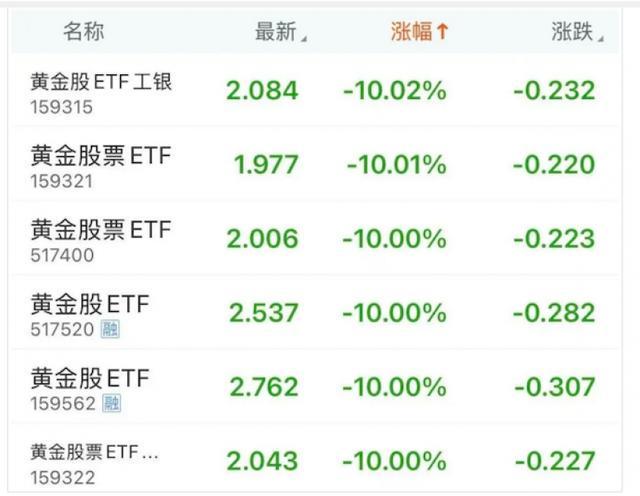
业绩扭亏路上CEO失联,高鑫零售转型关键期再遭变数
Hua Xia Shi Bao· 2026-02-04 08:54
Core Viewpoint - The unexpected disappearance of CEO Li Weiping poses new uncertainties for the transformation of Gao Xin Retail, which is currently seeking to shift towards community retail amidst ongoing losses in the traditional supermarket sector [2][3]. Company Situation - Gao Xin Retail's board announced that they could not contact CEO Li Weiping, who had only been with the company for about two months since joining on December 1, 2025 [2]. - Li Weiping's previous experience at Hema, where he held several key positions, was expected to contribute positively to Gao Xin Retail's strategic planning and business development [3]. - The company reported a revenue of 30.502 billion yuan for the first half of the 2025 fiscal year, a decrease of 12.1% year-on-year, and a net loss of 123 million yuan, compared to a profit of 206 million yuan in the same period the previous year [3]. Transformation Strategy - Gao Xin Retail is undergoing a significant transformation, focusing on community retail as part of a broader industry trend initiated by competitors like Yonghui Supermarket and Wumart [5]. - The company aims to create a retail model that balances experience and efficiency within a three-kilometer radius, planning to eliminate inefficient stores and transition to community life centers [5]. - The introduction of "front warehouses" as a key development area marks a shift in strategy, allowing for rapid delivery of fresh and fast-moving consumer goods [5]. Operational Impact - Despite Li Weiping's disappearance, Gao Xin Retail stated that its operations remain normal and that the chairman, Hua Yuneng, is overseeing management to ensure stability [4]. - New retail expert Bao Yuezhong believes that the impact of Li Weiping's absence will be minimal, as the company is a leading player in the supermarket sector [4][7]. - The recent opening of a new Dailunfa Supermarket in Dongying, which features a modern retail approach, has received positive market feedback, indicating that the transformation efforts are still progressing [6][7].

韩建河山披露重组预案,三大问题遭监管关注:股价提前涨停是否泄密?
Hua Xia Shi Bao· 2026-02-04 08:41
Group 1 - The core point of the article is that Han Jian He Shan (603616.SH) has announced a significant restructuring plan to acquire 99.9978% of Liaoning Xingfu New Materials Co., Ltd. and is facing regulatory scrutiny due to stock price fluctuations prior to the announcement [2][6][9] - Following the announcement, Han Jian He Shan's stock price surged to 6.85 yuan per share, marking a 9.95% increase and bringing its market capitalization to 2.68 billion yuan [2] - The restructuring plan involves issuing shares at a price of 4.38 yuan per share to raise funds from no more than 35 specific investors [2][3] Group 2 - Han Jian He Shan primarily engages in the production of prestressed concrete pipes (PCCP) and concrete additives, while the target company, Xingfu New Materials, focuses on the research, production, and sales of aromatic products, particularly PEEK intermediates [3] - The acquisition aims to enhance Han Jian He Shan's revenue and profit growth by leveraging Xingfu New Materials' complete PEEK intermediate synthesis chain and advanced production technology [3] Group 3 - Xingfu New Materials has shown a significant decline in performance, with revenues dropping from 777 million yuan in 2022 to an estimated 386 million yuan in 2025, and net profits fluctuating from 101.24 million yuan to a loss of 7.37 million yuan [4] - The Shanghai Stock Exchange has raised concerns regarding the reasons behind Xingfu New Materials' declining performance and has requested additional disclosures about its major clients and the sustainability of its profitability [4][5] Group 4 - Han Jian He Shan's cash reserves were reported to be only 68 million yuan as of the end of Q3 2025, prompting the exchange to inquire about the company's cash payment arrangements for the acquisition and its impact on financial stability [5] - The stock price of Han Jian He Shan experienced a surge just before the announcement of the restructuring, leading to questions about potential insider trading and the management of confidential information [6][8]


“存储饥渴”催生业绩牛股!佰维存储、江波龙等利润暴增,业内预测涨价潮贯穿2026
Hua Xia Shi Bao· 2026-02-04 08:20
Core Viewpoint - The semiconductor sector, particularly memory chip stocks, is experiencing significant stock price volatility despite strong fundamentals, with expectations of continued price increases in the memory industry through 2026 [1][2][3]. Group 1: Stock Performance - Major memory chip companies saw substantial stock declines on February 2, with companies like Zhongwei Semiconductor down 13.67% and Puran shares down 13.01% [2]. - The recent downturn is attributed to profit-taking after a period of gains and concerns over weakening DRAM spot prices, alongside negative sentiment from the U.S. semiconductor market [2][3]. Group 2: Earnings Forecasts - Companies in the memory sector are projecting strong earnings for 2025, with Bawei Storage expecting revenue between 10 billion and 12 billion yuan, a year-on-year increase of 49.36% to 79.23% [3][4]. - Jiangbolong anticipates revenue of 22.5 billion to 23 billion yuan, reflecting a growth of 150.66% to 210.82% compared to the previous year [3][4]. Group 3: Market Dynamics - The global shift in memory production and rising prices are benefiting Chinese memory companies, driven by increased demand from AI servers and edge computing [6]. - The demand for high-profit memory products is expected to rise, with significant growth in AI server shipments projected for 2024 [6]. Group 4: Price Trends - Predictions indicate that memory product prices will continue to rise, with NAND Flash prices expected to increase by 33% to 38% and DRAM prices by 55% to 60% in the first quarter of 2026 [7][8]. - TrendForce has revised its forecasts, now expecting DRAM contract prices to rise by 90% to 95% and NAND Flash prices by 55% to 60% in the same period, reflecting ongoing supply-demand imbalances [8].