Hua Xia Shi Bao

Search documents
美联储降息对中国货币政策有何影响?潘功胜:坚持以为我主、兼顾内外平衡|快讯
Hua Xia Shi Bao· 2025-09-22 09:57
Core Viewpoint - The People's Bank of China (PBOC) emphasizes a balanced approach to monetary policy, focusing on both domestic and international factors while ensuring liquidity remains ample in response to macroeconomic conditions [2][3]. Group 1: Monetary Policy and Economic Support - The PBOC will utilize various monetary policy tools to maintain sufficient liquidity based on macroeconomic performance and changing circumstances [2]. - During the 14th Five-Year Plan period, the PBOC aims to enhance financial support for the real economy while also prioritizing the prevention of financial risks and maintaining stability [3]. Group 2: Financial Risk Management - The PBOC has successfully reduced the number of financing platforms by over 60% and decreased the scale of financial debt by more than 50% compared to the beginning of 2023, significantly lowering the risk levels associated with local government financing platforms [3]. - The PBOC is committed to maintaining stable financial markets and has supported the Central Huijin Investment Ltd. in acting as a "stabilization fund" to improve the long-term mechanisms supporting the capital market [3]. Group 3: Legislative and Institutional Framework - The PBOC is advancing legislative reforms, including the Financial Stability Law and the People's Bank Law, to enhance the monitoring, assessment, and early warning systems for financial risks [3]. - A financial stability guarantee fund has been established, and the deposit insurance mechanism is operating smoothly to ensure resource security [3]. Group 4: Future Outlook - The PBOC's overall assessment indicates that financial risks are manageable, and the financial system is robust, providing strong support for high-quality economic development during the 14th Five-Year Plan [3]. - Discussions regarding the 15th Five-Year Plan and future financial reforms will be communicated after central government directives [3].

证监会主席吴清:外资持有A股市值3.4万亿元|快讯
Hua Xia Shi Bao· 2025-09-22 09:57
Core Insights - The China Securities Regulatory Commission (CSRC) Chairman Wu Qing highlighted the steady expansion of high-level institutional opening in the capital market over the past five years [2] - The "14th Five-Year Plan" aims to fully remove foreign ownership limits in various sectors and enhance the Qualified Foreign Institutional Investor (QFII) system [2] - The establishment of improved mechanisms for cross-border listings and mutual recognition of funds is emphasized, alongside support for Hong Kong's status as an international financial center [2] Summary by Categories Market Opening - The capital market is advancing a dual opening strategy, balancing openness with security [2] - A total of 13 foreign-controlled securities, fund, and futures institutions have been approved to operate in China during the "14th Five-Year Plan" [2] Foreign Investment - Foreign ownership in A-shares has reached a market value of 3.4 trillion yuan [2] - There are currently 269 companies listed overseas, indicating an expanding international presence [2] Institutional Development - The CSRC has optimized mechanisms such as the Shanghai-Hong Kong Stock Connect, Shanghai-London Stock Connect, and mutual fund recognition [2] - The introduction of the "Five Measures to Benefit Hong Kong" aims to bolster Hong Kong's financial center status [2]

迈向中等发达国家:“十四五”经济回顾与“十五五”增长目标测算
Hua Xia Shi Bao· 2025-09-22 09:25
Group 1 - The "14th Five-Year Plan" period (2021-2025) has shown strong resilience in China's macroeconomic performance despite facing complex internal and external challenges, with nominal GDP expected to exceed 140 trillion yuan by the end of this period, an increase of over 35 trillion yuan compared to the end of the "13th Five-Year Plan" [3][4][5] - During the first four years of the "14th Five-Year Plan," China's GDP experienced an average annual real growth rate of 5.5% and a nominal growth rate of 6.9%, with the nominal GDP growth rate projected to be around 4.5% for the entire year of 2025 [3][5][6] - The economic growth achievements during the "14th Five-Year Plan" have laid a solid material foundation for modernizing the economy and have provided strong support for stabilizing employment and improving people's livelihoods [4][5] Group 2 - The "15th Five-Year Plan" period (2026-2030) is crucial for achieving the strategic vision of reaching a per capita GDP level of a moderately developed country by 2035, with a minimum nominal GDP average growth rate requirement of 5% [9][10][14] - The core guiding principle for economic growth in the "15th Five-Year Plan" is to achieve a per capita GDP of 27,000 USD by 2035, reflecting a shift from focusing on total GDP growth to per capita income improvement [10][12][14] - To meet the 2035 target, the nominal GDP growth rate during the "15th Five-Year Plan" should ideally be around 6%, with a minimum requirement of 5%, depending on factors such as actual GDP growth, price levels, and exchange rate fluctuations [14][16][18] Group 3 - The "15th Five-Year Plan" should consider setting clear economic growth targets to address demand insufficiency and promote supply-demand balance, which is essential for achieving full employment and improving living standards [19][20] - A comprehensive target system around nominal GDP growth should be established, including a core target of 5% nominal GDP growth and 4.8% real GDP growth, alongside specific goals for consumption and investment growth [21][22][23] - Policies should focus on expanding domestic demand, particularly through boosting consumption and stabilizing infrastructure investment, to ensure necessary growth rates are met [23][25][26]

证监会主席吴清:5年来上市公司派发“红包”10.6万亿元|快讯
Hua Xia Shi Bao· 2025-09-22 09:00
Core Insights - The past five years have been unusual for the capital market, with a continuous improvement in the coordination of investment and financing functions [2] - Total financing through stock and bond markets reached 57.5 trillion yuan, with the proportion of direct financing increasing by 2.8 percentage points to 31.6% compared to the end of the 13th Five-Year Plan [2] - Over 90% of newly listed companies in recent years are technology enterprises or have high technological content, with the market capitalization of the A-share technology sector exceeding 25% [2] - Listed companies have significantly increased their awareness of returning value to investors, distributing a total of 10.6 trillion yuan through dividends and buybacks, which is over 80% higher than during the 13th Five-Year Plan [2] Financing and Market Trends - The capital market has accelerated its service to technological innovation, with a notable increase in the proportion of technology-related companies [2] - The market capitalization of technology companies is now significantly higher than that of banking, non-banking financial, and real estate sectors combined [2] - The China Securities Regulatory Commission is actively working to improve the capital formation mechanism and encourage long-term capital inflows into the market [2]

证监会严打财务造假等违法行为,近5年来罚没414亿元|快讯
Hua Xia Shi Bao· 2025-09-22 08:40
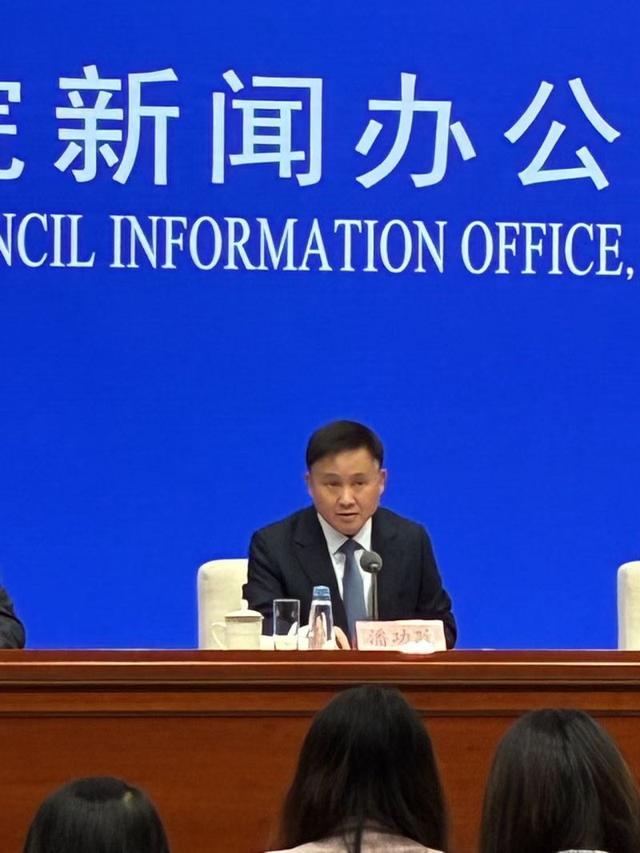
编辑:麻晓超 9月22日下午,在国新办举行的"高质量完成'十四五'规划"系列主题新闻发布会上,中国证监会主席吴 清表示,对资本市场来说,过去五年是极不寻常的五年。证监会与各方一起认真抓好贯彻落实,一体推 进防风险、强监管、促高质量发展,合力稳市场、稳预期、稳信心,推动市场健康稳定发展的态势持续 形成并不断巩固。 吴清介绍,证监会坚持监管"长牙带刺"、有棱有角,不断完善全链条监管体系,坚决打击违法违规行 为。"十四五"期间,对财务造假、操纵市场、内幕交易等案件作出行政处罚2214份,罚没414亿元, 较"十三五"分别增长58%和30%,执法震慑进一步增强,透明度进一步提高,市场生态进一步净化。 文/帅可聪 ...
从“看管”到科学干预,中国阿尔茨海默病照护进入精准化时代
Hua Xia Shi Bao· 2025-09-22 08:24
Core Insights - The article highlights the challenges faced by families caring for loved ones with dementia, emphasizing the emotional toll and the need for understanding the disease's progression [1][8] - It introduces the "Five Color Butterfly Model" developed by Taikang Home, which categorizes dementia into five stages, each requiring different care approaches [5][6] Group 1: Understanding Dementia Care - The article discusses the emotional and psychological challenges of caring for dementia patients, noting that over 17 million people in China are affected [1] - Taikang Home aims to address the core issue of misunderstanding the disease's stages and the psychological needs behind behaviors [1][4] Group 2: Therapeutic Approaches - Various therapeutic methods such as music therapy, nostalgia, and multi-sensory stimulation are integrated into Taikang Home's care model to enhance the quality of life for dementia patients [2][3][7] - The "Five Color Butterfly Model" is explained in detail, with each color representing a different stage of dementia and corresponding care strategies [6][7] Group 3: Impact of Care Models - The article presents evidence that Taikang Home's approach has led to a 90% improvement rate in residents exhibiting Behavioral and Psychological Symptoms of Dementia (BPSD) [7] - Families report significant relief and improved emotional connections with their loved ones after receiving professional care, highlighting the importance of a person-centered approach [8]
农银汇理基金最新投研观点来了!
Hua Xia Shi Bao· 2025-09-22 07:29
Group 1: AI in Daily Life Services - A food delivery platform is testing an AI service called "Xiao Mei," which allows users to place orders with a single sentence, streamlining the ordering process and personalizing recommendations based on past consumption habits [1] - The integration of AI services simplifies the complex process of searching, comparing, and ordering into an efficient model where users can simply state their needs [1] - The collaboration between "Xiao Mei" and Gaode Map's "Street Ranking" could create a closed-loop service that enhances user experience by combining discovery and purchasing [1] Group 2: AI in Office Collaboration - AI tools like Notion AI and Feishu are transforming office collaboration by generating project plans, meeting minutes, and market research reports from natural language inputs, significantly improving efficiency [2] - The evolution of office AI from executing commands to understanding context and providing suggestions indicates a restructuring of human resources, with repetitive tasks being automated [2] - This shift allows human resources to focus more on creative decision-making, leading to a redefinition of job roles [2] Group 3: AI in Healthcare - AI is advancing in the healthcare sector, moving from post-diagnosis assistance to pre-diagnosis support, with AI models achieving human-level performance in medical exams [3] - AI applications assist throughout the entire medical process, from initial patient assessment to follow-up care, potentially lowering barriers to healthcare access [3] - The emergence of AI as a personal health assistant could significantly benefit areas with uneven healthcare resource distribution [3] Group 4: AI in Creative Fields - AI is evolving from a passive executor to an active co-creator in the creative industry, with tools capable of generating high-quality visual and textual content quickly [3] - This transformation lowers the barriers to content creation, enabling more individuals to become content creators [3] - The ability of AI to understand and refine creative inputs through dialogue enhances the creative process for writers, video producers, and designers [3] Group 5: Investment Implications of AI Evolution - The evolution of AI indicates a shift from passive tools to proactive intelligent agents, changing the competitive landscape where understanding user preferences becomes crucial [4] - Investment in AI applications can be categorized into three stages: usable, useful, and replacement, with current focus on companies that can quickly implement AI solutions [4] - As AI matures, attention will shift to companies that integrate processes across verticals and those that successfully navigate industry-specific models and scenarios [4]
PRI中国区负责人罗楠:可持续投资迎考,机构开出“十大金融工具”药方|2025华夏ESG管理体系大会
Hua Xia Shi Bao· 2025-09-22 06:57
Group 1 - The conference on ESG management in China highlighted the increasing complexity and challenges in sustainable investment due to factors like climate risks, financing gaps, and disruptive technologies [1][3] - The Responsible Investment Principles Organization (PRI) identified ten financial tools to assist investors in allocating funds to sustainable projects, aiming to create a favorable investment environment [1][5] - Asset owners, such as pension and insurance institutions, play a crucial role in influencing market trends and should enhance communication with investment managers to align long-term sustainability goals [2][5] Group 2 - Sustainable investment faces multiple challenges, including regulatory slowdowns in the EU, the rise of "anti-ESG" sentiments in the US, and increasing climate physical risks, which threaten financial stability [3][4] - The estimated annual funding gap for biodiversity is $700 billion, with only $35 billion currently invested, indicating a significant shortfall in necessary financing [3] - Investors encounter practical challenges such as lack of incentives, market imperfections, inconsistent policies, and insufficient transparency and credibility in data [4][5] Group 3 - PRI emphasizes the importance of integrating economic policies with regulatory frameworks to effectively address sustainability challenges [6] - Investors are encouraged to incorporate sustainability issues into investment policies and governance, particularly asset owners who can significantly influence asset management practices [7] - Active engagement with policymakers is essential for investors to reflect their needs and participate in the formulation of relevant policies [7]
9月LPR维持不变:1年期3%,5年期以上3.5%|快讯
Hua Xia Shi Bao· 2025-09-22 06:57
Core Viewpoint - The People's Bank of China has maintained the LPR rates for both 1-year and 5-year terms at 3.0% and 3.5% respectively for four consecutive months, aligning with market expectations [2] Group 1: LPR Rates - The 1-year LPR remains at 3.0% and the 5-year LPR at 3.5%, unchanged for four months [2] - The stability in policy rates, particularly the central bank's 7-day reverse repurchase rate, indicates no changes in the pricing basis for LPR this month [2] Group 2: Future Expectations - Industry experts anticipate a potential new round of interest rate cuts and reserve requirement ratio reductions in the fourth quarter, which may lead to a decrease in LPR rates [2] - A significant reduction in loan rates for enterprises and residents is expected, aimed at stimulating internal financing demand and promoting consumption and investment [2] - There is an expectation for stronger policies to stabilize the real estate market, potentially leading to a more substantial decrease in residential mortgage rates through targeted adjustments to the 5-year LPR [2]

发生了什么?财达证券高管密集变动,国资股东减持套现,股价下滑超11%
Hua Xia Shi Bao· 2025-09-22 06:57
Management Changes - Zhao Jingliang, the deputy general manager of Caida Securities, has resigned due to work changes and is set to join Guosheng Securities as the new general manager [2][4] - Another deputy general manager, Guo Aiwen, also left the company for work adjustments but remains the chairman of Caida Futures [2][4] - The company stated that these changes are part of routine management and will not impact operations [5] Stock Performance - Caida Securities' stock price has declined significantly, dropping over 11% from a high of 8.1 yuan on August 21 to 7.2 yuan by September 19 [2][6] - The company has experienced continuous net outflows of capital, totaling 480 million yuan over the past 20 days [6] - Shareholder Hebei Guokong reduced its holdings by 26.34 million shares, decreasing its stake from 13.67% to 12.86% [6] Financial Performance - For the first half of 2025, Caida Securities reported revenue of 1.239 billion yuan, a year-on-year increase of 13.39%, and a net profit of 375 million yuan, up 55.64% [9] - The asset management business saw a decline, with net commission income dropping by 7.93%, marking it as the only segment with negative growth [9][10] Future Strategy - The company aims to enhance its asset management business by optimizing product layout, strengthening customer service, and deepening business collaboration [10] - Caida Securities plans to focus on industry development trends and improve its service capabilities to support the real economy [10] Compliance Issues - An employee of Caida Securities was penalized for privately accepting client orders for securities trading, leading to a warning and a fine of 150,000 yuan [11][12] - The company emphasized its commitment to compliance and risk management, stating that it has established a comprehensive compliance management system [12]