Hua Xia Shi Bao

Search documents
特定小额逾期贷款记录不再上征信,信用修复有时限
Hua Xia Shi Bao· 2025-12-22 09:43
华夏时报记者卢梦雪北京报道 而在修复机制与体现方面,政策不区分贷款机构、贷款类型,也不限制笔数。整个信用修复过程"免申即享",由央行征信系统自动识别处理,不收取任何 费用。同时,政策设置了三个月的宽限期,个人只要在2026年3月31日前足额偿还逾期债务,可以同样适用该项政策。 当前,个人信用报告中的逾期信息主要通过每月的"还款状态"和"逾期金额"两个数据项进行反映。一次性信用修复政策实施后,对于符合条件的逾期信 息,这两个数据项的具体展示情况将会出现相应的调整。"还款状态"将由逾期标识调整为正常标识,"逾期金额"将由1万元以下的"非0"数值调整为"0", 这个调整将会在信用报告中的"信息概要"和"信贷交易信息明细"模块予以同步体现。 12月12日,中国人民银行发布通知,一次性信用修复政策正式落地。 根据政策,符合相关条件的逾期信息,不限制笔数,将不会在个人信用报告中予以展示。此外,政策实行"免申即享",个人无需申请和操作,也无需提交 证明材料,由央行征信系统进行自动识别和统一处理。 相关分析人士指出,从政策价值来看,这一调整标志着我国信用体系建设从"侧重约束惩戒"向"惩戒与修复并重"的重要转型。在目前经济回升 ...


廿三同行,光耀新程:北大方正人寿举办23周年司庆暨新价值文化发布盛典
Hua Xia Shi Bao· 2025-12-22 07:46
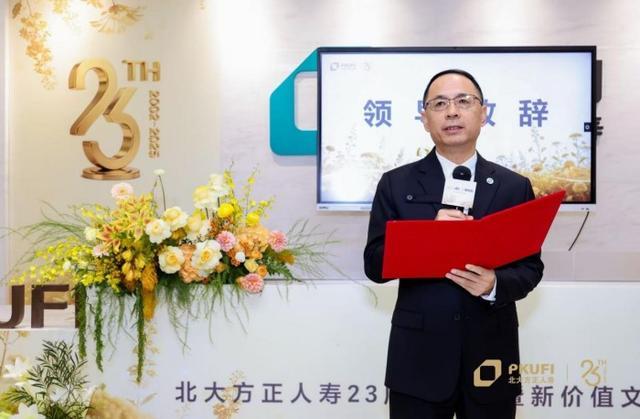
双庆同辉:司庆邂逅文化新生 "廿三同行,光耀新程,这既是对一路同行的感恩,更是对共赴新程的号召。"公司领导在致辞中表 示,"我们在二十三周年这一特殊时刻,正式发布公司全新价值文化体系,以'愿景- 战略 - 专业 - 成长 - 文化'五大篇章,为北大方正人寿的未来发展锚定精神航向。这不是一次简单的口号更新,而是对'我们 为何而存在、将走向何方'的系统回答,是刻进每一位方正人心里的行动准则。" 近日,北大方正人寿保险有限公司迎来二十三周年华诞。公司以"廿三同行,光耀新程"为主题,将文化 焕新与司庆盛典深度融合,旨在回顾峥嵘历程,凝聚奋进力量,开启高质量发展新篇章。 12月19日,北大方正人寿总部及全国各分支机构职场焕然一新,洋溢着喜庆与庄重的氛围。上午,总公 司举行特别司庆晨会,揭幕全新企业价值文化体系手册及文化IP形象"方灵",标志着酝酿已久的文化建 设工程正式成果落地。 ·"文化新生":举办"2025新价值文化大使"评选,分享他们践行公司价值观的动人故事。 这些活动打破了文化宣贯的单向灌输,通过全员共创、榜样引领的方式,让文化理念真正"活起来""走 下去"。 廿三载风雨同行,积淀的是信任与实力;新时代光耀新程 ...
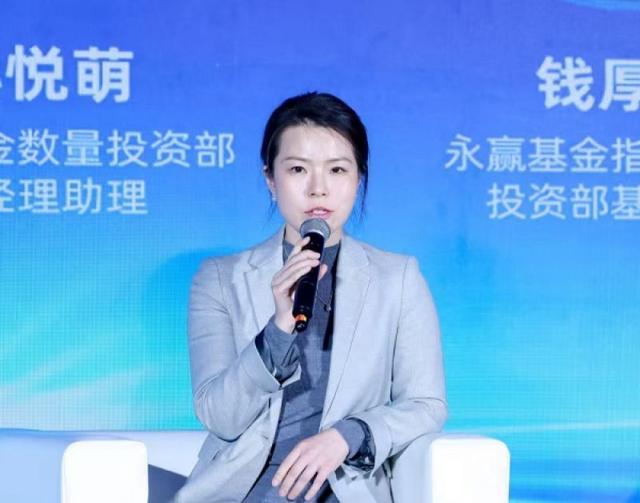
对话建信基金孙悦萌:在量化理性与人性温度之间,搭建一座稳健的桥梁
Hua Xia Shi Bao· 2025-12-22 04:57
Core Viewpoint - The interview with Sun Yuemeng highlights her approach to investment management, emphasizing the importance of aligning investment solutions with clients' real-life scenarios rather than relying solely on quantitative models [2][3]. Group 1: Investment Philosophy - Sun Yuemeng's background in mathematics and financial engineering allows her to deconstruct complex systems, but she recognizes the need for a broader perspective in investment beyond academic models [3]. - She has developed a "three-layer adjustment" framework that incorporates tactical adjustments based on quantitative signals while maintaining flexibility in investment style [3][4]. - The ultimate goal of her investment strategies is to enhance clients' real wealth experiences, focusing on stability and reassurance in their investment journeys [4][5]. Group 2: Client-Centric Approach - Sun Yuemeng views her role as a "solution provider" rather than merely a "product seller," emphasizing the importance of accompanying clients through market volatility [5][6]. - She believes that the core challenge for investors is not a lack of knowledge but the need to adapt psychologically to market fluctuations, advocating for a mindset that sees manageable volatility as a pathway to long-term returns [5][6]. - Her investment strategy includes a dual-track framework that balances strategic odds with macro factors to assess tactical probabilities, aiming to minimize unnecessary losses during uncertain market conditions [5][6]. Group 3: Gender Perspective in Investment - As a female fund manager, Sun Yuemeng perceives her gender traits as a characteristic that influences her decision-making style, favoring a balanced approach rather than extreme style shifts [6]. - She seeks to connect with investors who appreciate a steady investment style and are focused on long-term holding experiences, fostering a mutual growth journey [6]. - Sun Yuemeng emphasizes the need for investors to transition from a mindset of guaranteed returns to an understanding of the necessity of tolerating controlled volatility for achieving reasonable long-term returns [6].
特稿|屏之战:站在三星对面的“人”
Hua Xia Shi Bao· 2025-12-22 03:46
Core Viewpoint - The competition in the OLED 8.6 generation line is intensifying, with Chinese manufacturers aiming to challenge Samsung's dominance in the display industry, particularly in the mid-size OLED market, which is projected to see significant investment and growth by 2025 [2][3][24]. Group 1: Industry Dynamics - The OLED 8.6 generation line competition is set to involve nearly 150 billion yuan in investments from Chinese manufacturers, including BOE, TCL, and Visionox, as they seek to capture market share from Samsung [3][5][6]. - Samsung's revenue from OLED displays is projected to be 44% of the global market, while BOE's share is only 12%, indicating a significant gap that Chinese companies aim to close [10][24]. - The shift from LCD to OLED technology is driven by the increasing demand for mid-size screens in devices such as laptops and tablets, with OLED penetration rates expected to rise significantly by 2026 [7][24]. Group 2: Key Players and Investments - TCL is investing 29.5 billion yuan in the world's first G8.6 generation printed OLED production line, with plans for mass production by 2027 [5][6]. - BOE has announced that its B16 production line will begin mass production in the second half of 2026, ahead of Samsung's A6 line, marking a significant shift in the competitive landscape [8][10]. - Visionox and Hefei Guoxian are also entering the G8.6 generation OLED market, with substantial investments aimed at establishing a foothold in this emerging sector [6][24]. Group 3: Historical Context and Future Outlook - The historical rivalry between Chinese manufacturers and Samsung has evolved, with Chinese companies now positioned to directly compete in the OLED market, a shift from their previous focus on LCD technology [13][24]. - The upcoming competition in the OLED 8.6 generation line is expected to be fierce, with industry experts predicting that the first major battle for market dominance will occur between 2027 and 2028 [16][24]. - The capital-intensive nature of the OLED industry requires significant investment and strategic planning, as companies navigate the cyclical nature of the display market [17][20].




1年期、5年期以上LPR均连续7个月保持不变|快讯
Hua Xia Shi Bao· 2025-12-22 02:54
文/刘佳 12月22日,中国人民银行授权全国银行间同业拆借中心公布最新一期LPR报价,其中1年期LPR报 3.0%,上月为3.0%;5年期以上LPR报3.5%,上月为3.5%。至此,两个期限品种的LPR报价均连续7个月 保持不变。 业内人士分析认为,自6月以来LPR报价一直按兵不动,背后的根本原因是受年初以来出口持续超预 期、国内新质生产力领域较快发展等支撑,今年宏观经济顶住外部环境剧烈波动压力,增长韧性超出普 遍预期;下半年以来经济增长动能有所弱化,但实现全年"5.0%左右"的经济增长目标已没有悬念。因 此,年底前逆周期调节加力的迫切性不高,货币政策保持较强定力。 "往后看,着眼于稳定2026年一季度经济运行,货币政策有望结束观察期,进入发力阶段。"东方金诚首 席分析师王青对《华夏时报》记者表示,2026年一季度央行有可能实施新一轮降息降准,不排除春节前 靠前落地的可能。这将带动两个期限品种的LPR报价跟进下调,引导企业和居民贷款利率更大幅度下 行,激发内生性融资需求。这是现阶段促消费扩投资、有效对冲外需放缓的一个重要发力点。 编辑:冯樱子 ...

央行:不收费、不需第三方代理,个人一次性信用修复“免申即享”|快讯
Hua Xia Shi Bao· 2025-12-22 02:34
文/刘佳 12月22日,据中国人民银行官微消息,央行对外发布一次性信用修复政策有关安排。根据安排,一次性 信用修复政策实行"免申即享",个人无需申请和操作,也无需提交证明材料,由中国人民银行征信系统 对符合条件的逾期信息进行自动识别和统一处理。 政策适用对象上,央行表示,限定于个人在中国人民银行征信系统中展示的信贷逾期信息;适用时间区 间要求逾期信息产生于2020年1月1日至2025年12月31日期间;适用金额为单笔逾期金额不超过1万元; 适用前提是个人在2026年3月31日(含)前足额偿还逾期债务。符合上述条件的逾期信息,将不会在个 人信用报告中予以展示。 央行相关人士介绍,根据个人逾期债务的结清时间,符合条件的逾期信息将分两种情形完成调整处理、 发生展示变化。第一种情形,个人已经于2025年11月30日(含)前足额偿还逾期债务的,征信系统自 2026年1月1日起不予展示相关逾期信息。第二种情形,个人于2025年12月1日至2026年3月31日之间足额 偿还逾期债务的,征信系统于次月月底前不予展示相关逾期信息。 此外,央行还提醒公众,一次性信用修复政策不收取任何费用、不需要第三方代理,任何以该政策名义 索要 ...

银河通用完成超3亿美元融资,人形机器人一级市场年底“收官冲刺”
Hua Xia Shi Bao· 2025-12-21 10:30
Core Insights - The humanoid robot sector is experiencing a surge in investment as companies approach year-end, with significant funding rounds being announced, including a recent $300 million round by Galaxy General, setting a record for single-round financing in embodied intelligence [3][4][6] - Galaxy General has transitioned from a laboratory phase to commercial operations, with thousands of orders in the smart city service sector, indicating a shift in market valuation towards commercial viability [3][6] Financing and Valuation - The recent financing round raised over 4.5 billion yuan, led by China Mobile's Chain Long Fund, with participation from major investment platforms and international investors [4] - Following this round, Galaxy General's valuation has reached 19.5 billion yuan, reflecting a significant increase in market confidence [6] Corporate Structure and IPO Plans - Galaxy General has completed a corporate restructuring, changing its name and type, which is often seen as a precursor to an IPO, although the company has denied immediate plans for going public [5][7] - The company has raised a total of over 4.5 billion yuan since its establishment in May 2023, indicating strong investor interest and support [7] Market Trends and Future Outlook - The humanoid robot industry has seen a rapid increase in investment activity, with 160 investment events reported in 2023 alone, compared to only 14 in 2022, suggesting a growing interest in this sector [8] - Experts predict a potential capital winter in the humanoid robot sector in the coming years, prompting companies to secure funding while advancing commercialization efforts [9] Commercialization Efforts - Galaxy General is focusing on industrial-grade humanoid robots, achieving significant partnerships with major companies across various sectors, including manufacturing and smart city services [9][10] - The company has developed solutions for multiple fields, including industrial manufacturing, smart city services, and healthcare, with ongoing projects demonstrating practical applications of humanoid robots [9][10] Future Development and Challenges - While Galaxy General is exploring opportunities in the consumer market, the complexity of home environments poses challenges for robot integration, necessitating gradual advancements in technology [10] - The emphasis is shifting towards practical applications and real-world integration of humanoid robots in various sectors, moving beyond theoretical advancements to tangible value creation [10]

证监会挺忙!一周两次“喊话”深化改革,稳预期下2026年A股如何演绎?
Hua Xia Shi Bao· 2025-12-21 06:39
本报(chinatimes.net.cn)记者王兆寰 北京报道 近日,在中央经济工作会议结束后的一周里,监管层着实忙碌,一周两次对外发声,从传达学习会议精 神,到研究部署,最后到组织专家座谈听取资本市场"十五五"规划编制和2026年资本市场工作的意见建 议。 中国证监会主席吴清指出,证监会将持续深化资本市场投融资综合改革,稳步扩大制度型高水平对外开 放,持续提高资本市场制度包容性吸引力,更好服务经济高质量发展和中国式现代化大局。 南开大学金融发展研究院院长田利辉在接受《华夏时报》记者采访时表示,2026年深化资本市场改革 是"十五五"实体经济提质的关键抓手,对A股核心是"筑基赋能"。 田利辉指出,改革将聚焦"三提升":提升市场稳定性,完善基础制度与监管机制,减少非理性波动;提 升包容性,推进注册制改革向纵深发展,让创新企业更便捷上市;提升吸引力,优化投资者结构,吸引 长期资金入市。 田利辉认为,短期以改革信号稳预期、降波动,中期通过制度优化提升标的质量、引入中长期资金,长 期将夯实市场韧性。 提高制度包容性吸引力 2025年12月召开的中央经济工作会议指出,做好2026年经济工作要坚持稳中求进工作总基调,纵深 ...

冲刺“全球大模型第一股”!智谱叩开港股大门,大模型“淘金热”进入资本成色检验时刻
Hua Xia Shi Bao· 2025-12-21 00:47
Core Viewpoint - The large model sector is transitioning from explosive growth to a critical phase, with the value of "water sellers" being tested as Zhiyu prepares for its IPO, potentially becoming the first global large model stock [1][2]. Group 1: Company Overview - Zhiyu is positioned to be the first large model company to go public in Hong Kong, having initiated its listing process over six months ago [1]. - The company has achieved rapid revenue growth, with projected revenues of 57.4 million yuan in 2022, 124.5 million yuan in 2023, and 312.4 million yuan in 2024, reflecting a compound annual growth rate of 130% [2]. - As of 2024, Zhiyu holds a 6.6% market share among independent large model developers in China, ranking second overall [2]. Group 2: Financial Performance - Zhiyu has reported significant losses, with figures of 143.7 million yuan in 2022, 788 million yuan in 2023, and projected losses of 2.958 billion yuan in 2024 [3]. - The company's gross margins have fluctuated, with rates of 54.6% in 2022, 64.6% in 2023, and 56.3% in 2024, indicating challenges in profitability [3]. - Research and development expenditures have been substantial, amounting to 84.4 million yuan in 2022, 528.9 million yuan in 2023, and projected at 2.195 billion yuan in 2024 [3]. Group 3: Business Model and Strategy - Zhiyu has adopted a dual business model, combining a scalable MaaS (Model as a Service) approach with high-margin enterprise services tailored for the Chinese market [5][6]. - The company has established a robust MaaS platform with over 2.7 million developers and enterprise users, making it one of the most active large model API platforms in China [5]. - Zhiyu's international model business has generated over 100 million yuan in annual recurring revenue, with rapid growth in developer engagement [6]. Group 4: Market Position and Future Outlook - The company has a strong presence in the B2B market, particularly among large enterprises, which has helped validate its business model and support its IPO ambitions [7]. - Analysts predict that if Zhiyu successfully lists as the "first global large model stock," it will attract significant attention and investment, especially given the lack of pure AI stocks in the Hong Kong market [7]. - Long-term success will depend on sustained growth in MaaS revenue and a reduction in losses, with a clear path to profitability being crucial for its status as a quality tech stock [7].
从“独行”到“共生”:中国企业探寻向善新范式
Hua Xia Shi Bao· 2025-12-20 12:54
Core Viewpoint - Corporate philanthropy in China is a significant and undervalued force, contributing 76.85% of total social donations, with private enterprises being the main contributors [2][4] Group 1: Corporate Philanthropy and Social Value - Corporate donations accounted for 76.58% of total social donations in 2023, with private enterprises contributing 80% of this amount [3][4] - The economic foundation of China's philanthropic efforts is primarily established by private enterprises and entrepreneurs [4] - A report indicates that the total donations from the 34 most active Chinese philanthropists over the past decade exceed 230 billion [4] Group 2: Strategic Opportunities for Enterprises - Chinese enterprises are transitioning from a focus on scale growth to social value innovation, which is expected to be a core competitive advantage during the 14th Five-Year Plan [3] - Digital technology is reshaping sustainable development pathways, making charitable actions more quantifiable and manageable [3] - With the advancement of China's dual carbon goals, the country is transitioning from being a standard executor to a co-developer of global standards, enhancing its international influence [3] Group 3: Trends in Corporate Philanthropy - Six new trends in corporate philanthropy have emerged, including deeper involvement of entrepreneurs in charitable activities and a focus on using core business capabilities to address social issues [4] - There is an increasing emphasis on the exit strategies of philanthropic projects, and scientific philanthropy is gaining traction, particularly in higher education and technological innovation [4] Group 4: Collaborative Ecosystems - The consensus among industry leaders is to move from isolated efforts to collaborative ecosystems to tackle complex social issues [6] - Tencent, along with other companies, has established a "Sustainable Social Value Ecosystem" to pool resources and capabilities for greater social impact [6][7] - The foundation of ecosystem building is the core capabilities of enterprises, which must be transformed into social value production [7] Group 5: Technological Empowerment - Technology is viewed as a bridge to enhance the efficiency and inclusivity of charitable efforts, with companies developing solutions for underserved communities, such as the hearing-impaired [9][10] - Innovations in AI and smart devices are being utilized to provide personalized care in childcare and elderly care sectors [10] Group 6: Future of Corporate Social Responsibility - The future of corporate growth is expected to balance self-interest with altruism, integrating efficiency with meaningful social contributions [11] - The success of enterprises will increasingly be measured not just by financial metrics but also by their contributions to a better society [11]