
Zhong Guo Neng Yuan Wang

Search documents
福建石油化工集团增资至102.65亿,增幅约13%
Zhong Guo Neng Yuan Wang· 2026-01-15 06:13
福建石油化工集团有限责任公司成立于1998年3月,法定代表人为陈华泽,经营范围为从事对炼油、化 工的投资开发,化工产品的经营。股东信息显示,该公司由福建省能源石化集团有限责任公司、福建省 能化石化产业股权投资合伙企业(有限合伙)共同持股。 天眼查工商信息显示,近日,福建石油化工集团有限责任公司发生工商变更,注册资本由91亿人民币增 至约102.65亿人民币,增幅约13%,同时部分主要人员发生变更。 ...
陕鼓动力“绿色心脏”助推天钢低碳转型 核心空分机组试车成功
Zhong Guo Neng Yuan Wang· 2026-01-15 02:34
Core Viewpoint - The successful trial operation of the air separation compressor unit by Xi'an Shaangu Power Co., Ltd. for Tianjin Steel Group marks a significant advancement in Tian Steel's energy-saving and consumption-reduction project, enhancing its green and efficient operational capabilities [1][2] Group 1: Project Overview - The air separation equipment upgrade project aims to improve energy efficiency by over 14%, saving approximately 30.72 million kilowatt-hours of electricity annually, which is equivalent to reducing coal consumption by over 9,000 tons and cutting carbon dioxide emissions by about 27,000 tons [1] - This project reflects Tian Steel's commitment to the "dual carbon" goals and demonstrates Shaangu's capability in supporting customers' green development through high-end equipment [1] Group 2: Industry Context - The project aligns with national strategies for large-scale equipment upgrades and the optimization of traditional industries, promoting green and low-carbon development [1][2] - The demand for high-quality and safe industrial gases is expected to continue growing as China's traditional manufacturing sector undergoes transformation and upgrading [2] - The successful collaboration between Shaangu and Tian Steel serves as a model for energy-saving and carbon reduction in the steel industry, providing a practical path for similar enterprises in equipment upgrades and energy-saving transformations [2]

智元机器人等在上海成立智能科技公司,注册资本500万
Zhong Guo Neng Yuan Wang· 2026-01-15 02:14
天眼查工商信息显示,近日,上海临界点创新智能科技有限公司成立,法定代表人为邓泰华,注册资本 500万人民币,经营范围包括人工智能硬件销售、智能机器人销售、智能机器人的研发等。股东信息显 示,该公司由智元机器人关联公司智元创新(上海)科技股份有限公司、上海智翎新创科技合伙企业(有限 合伙)共同持股。 ...

双重压力下SC原油承压!中东过剩 + 美委风波,价差或持续弱势
Zhong Guo Neng Yuan Wang· 2026-01-15 01:36
Core Viewpoint - The U.S. has imposed sanctions and seized Venezuelan oil tankers, leading to a potential intervention in Venezuela's oil industry by allowing major U.S. oil companies to invest billions to restore production, with limited immediate impact on international oil prices but potential long-term production growth for Venezuela [1][2]. Short-term Impact on Venezuela's Oil Exports - Venezuela's current oil production ranges between 900,000 to 1,100,000 barrels per day, with approximately 800,000 barrels per day allocated for export [2]. - In December 2025, Venezuelan oil exports decreased by 280,000 barrels per day to 550,000 barrels per day due to U.S. sanctions and tanker seizures [2]. - The U.S. embargo is expected to keep Venezuelan oil exports low in January 2026, with a potential recovery starting in February [2]. Long-term Production Potential for Venezuela - U.S. oil companies like Chevron, ConocoPhillips, and ExxonMobil may restore production in Venezuela, potentially increasing output [3]. - Chevron's current production in Venezuela is 250,000 barrels per day, with the possibility to increase to 300,000 barrels per day in the short term [3]. - Significant challenges remain for production increases, including the need for substantial investment (over $100 billion) and a stable political environment [3]. - If conditions improve, Venezuela's oil production could increase by 200,000 to 300,000 barrels per day within six months, and potentially reach 1.5 million barrels per day within two years [3]. Middle East Market Dynamics - The Brent-Dubai futures spread has widened to its largest level since August 2025, indicating increased supply pressure [4]. - Saudi Aramco's official selling prices are expected to decrease, with a 35% increase in long-term supply to Chinese refineries in January [4]. - The Middle East market is experiencing oversupply, which is expected to continue affecting SC crude oil prices negatively [4].
锚定能源强国建设目标 提升天然气在新型能源体系中的价值
Zhong Guo Neng Yuan Wang· 2026-01-15 01:35
Core Viewpoint - The 20th Central Committee's Fourth Plenary Session emphasizes the construction of a new energy system aligned with the "dual carbon" goals and energy security strategy, highlighting natural gas as a key player in this transition, serving dual roles in supporting transformation and ensuring security [2][4]. Group 1: Natural Gas as a Key Player in Energy Transition - Natural gas is positioned as a major force in replacing high-carbon energy sources, with significant advantages in carbon emission intensity and minimal pollution compared to coal and oil [3]. - In industrial sectors such as metallurgy and chemicals, natural gas has substantial potential to replace coal, with current coal consumption in China's industrial sector at approximately 790 million tons per year, leading to over 1.4 billion tons of CO2 emissions [4]. - The "coal-to-gas" initiative in residential heating has shown significant results, with Beijing's coal consumption dropping from 20.19 million tons in 2013 to less than 600,000 tons by 2024, while natural gas consumption doubled to 19.5 billion cubic meters, accounting for one-third of the city's total energy consumption [4]. Group 2: Enhancing System Resilience with Natural Gas - Natural gas power generation's flexibility addresses the intermittency and volatility of renewable energy sources, making it an essential partner for the development of renewables [5][6]. - In regions with high renewable energy installations, gas power plants have been observed to start and stop over 300 times a year, showcasing their superior adjustment capabilities compared to coal [5]. - By 2025, China's installed capacity for wind and solar is expected to exceed 1.8 billion kilowatts, necessitating increased reliance on gas for peak load support during periods of low renewable output [6]. Group 3: Natural Gas as a Pillar of Energy Security - Natural gas is crucial for energy security, with China's resources being relatively abundant, including the addition of 19 new large gas fields during the 14th Five-Year Plan, expected to yield 260 billion cubic meters by 2025 [7][8]. - The construction of pipelines and LNG facilities enhances import capacity and supply resilience, with the East Route pipeline projected to transport over 120 billion cubic meters by 2030 [8]. - A comprehensive storage system, including 40 operational gas storage facilities, is expected to reach a capacity of 80 billion cubic meters by 2030, ensuring rapid response during supply fluctuations [8]. Group 4: Driving Strategic Implementation through Innovation and Cooperation - The industry must focus on technological innovation to enhance domestic production and competitiveness, with an emphasis on optimizing traditional oil and gas operations alongside accelerating the transition to renewables [9]. - A rational pricing mechanism is essential to stimulate market demand, with projections indicating that domestic natural gas prices will remain high, potentially limiting growth if not addressed [10]. - Strengthening international cooperation, particularly in resource-rich countries along the Belt and Road Initiative, will expand development opportunities and enhance China's influence in the global natural gas market [11].


史上最严?危化品安全法落地,监管刚性拉满,个人追责成亮点
Zhong Guo Neng Yuan Wang· 2026-01-15 01:22
Core Viewpoint - The newly passed "Dangerous Chemicals Safety Law" marks a significant legislative step in regulating the safety of hazardous chemicals in China, establishing a comprehensive legal framework for safety management across the entire supply chain of hazardous chemicals [1][2]. Group 1: Legislative Upgrade - The Dangerous Chemicals Safety Law elevates the previous "Regulations on the Safety Management of Dangerous Chemicals" from administrative regulations to national law, indicating a shift from fragmented administrative oversight to a systematic legal governance approach [2]. - This transition enhances regulatory rigidity, particularly in the oil and gas sector, providing clearer and more stable safety boundaries for enterprises [2]. Group 2: Responsibility System - The law reinforces the "three musts" principle, mandating that safety must be managed at all levels of industry, business, and production operations, and requires oil and gas companies to implement a comprehensive safety production responsibility system [3]. - It clarifies the responsibilities of various regulatory bodies, including emergency management, public security, market supervision, and ecological environment departments, delineating regulatory boundaries [3]. Group 3: Comprehensive Supervision - The law encompasses the entire process from planning and production to emergency response, creating a pervasive regulatory network for the oil and gas industry [4]. - It mandates that new or expanded hazardous chemical production projects must generally be located in chemical parks, addressing historical risks associated with proximity to densely populated areas [4]. - Provincial governments are authorized to recognize and regularly review chemical parks, requiring comprehensive safety risk assessments at least every three years [4]. Group 4: Operational Management - The law mandates real-time monitoring of vehicles and drivers in hazardous chemical transportation, promoting a shift from reactive to proactive public safety governance [5]. Group 5: Enhanced Penalties - The Dangerous Chemicals Safety Law significantly increases fines for various violations and allows for penalties against responsible individuals, thereby holding decision-makers accountable and creating a strong internal pressure mechanism [6]. Group 6: Implementation Focus - The next steps involve promoting awareness and effective implementation of the law, with relevant departments and hazardous chemical units required to integrate legal education into daily training to enhance safety capabilities [7].
警惕单边碳壁垒!CBAM瞄准中国钢铝,95%钢铁产品碳成本超800元/ 吨,应对指南来了
Zhong Guo Neng Yuan Wang· 2026-01-15 01:21
Core Viewpoint - The implementation of the EU Carbon Border Adjustment Mechanism (CBAM) starting January 1 will significantly impact China's high-carbon industries, particularly steel and aluminum exports to the EU, which account for approximately 3.5% of China's total exports to the EU [2][3]. Group 1: Short-term Impact - The initial pressure from CBAM is manageable, with a starting carbon cost of only 2.5%, allowing Chinese companies to maintain competitive pricing in the short term [4]. - The default emission values set by the EU for Chinese products are generally higher than the global average, creating an unfair barrier for Chinese exporters [4]. - The steel industry, in particular, may face increased export tariffs and competitive pressure, especially for companies that do not conduct their own carbon assessments [3][4]. Group 2: Compliance and Adaptation - Chinese exporters need to shift from relying on default values for carbon reporting to establishing their own carbon monitoring and reporting systems [5][6]. - Over 90% of Chinese companies used global average default values during the trial phase, which will lead to increased carbon costs once country-specific values are published [5]. - Companies are encouraged to engage with third-party certification bodies to enhance the credibility of their carbon data and compliance [6]. Group 3: Long-term Strategy - The transition to low-carbon operations should be a key focus for companies aiming to expand in international markets, with an emphasis on developing green products and processes [8]. - The CBAM will expand to include around 180 downstream products by 2028, necessitating a comprehensive approach to carbon footprint management across the entire supply chain [8]. - Companies should evaluate potential partners based on their carbon data transparency and low-carbon transition plans to ensure compliance and competitiveness in the future [8]. Group 4: External Environment and Policy - The Chinese government advocates for fair trade practices and is prepared to take necessary measures against any unfair trade restrictions imposed by the EU [9]. - There is a call for improvements in the domestic carbon market, including the introduction of auction mechanisms and negotiations with the EU for recognition of China's carbon pricing [9].
美伊冲突升级,伊朗顺丁橡胶对中国有何影响?
Zhong Guo Neng Yuan Wang· 2026-01-14 10:20
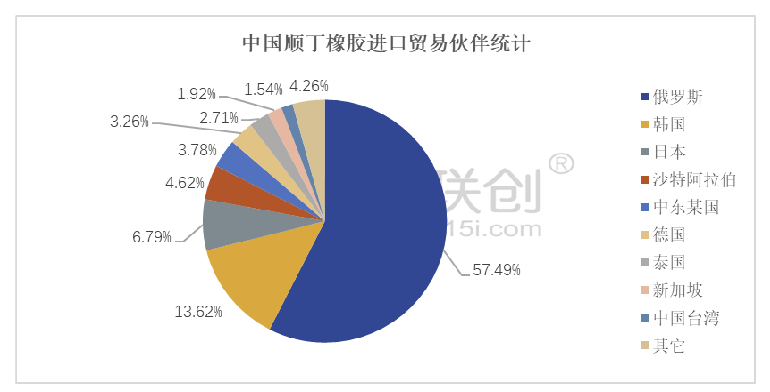
【据美国有线电视新闻网(CNN)报道,美国总统特朗普12日在社交媒体发文称,任何与伊朗有商业往来的国家在与美国 进行任何商业往来时将被加征25%的关税。】 中东地缘政策持续发酵,伊朗局势动荡导致全球能源波动。2025年1月,由于伊朗原油禁止停靠山东港引发原料担忧, 对于市场整体行情形成较大的波动。对于目前地缘冲突再次升级,部分能化产品受到较大冲击。对于顺丁橡胶的影响 究竟有多大呢? 首先,进口方面来看。2025年1-11月中国顺丁橡胶进口总量为25.44万吨,进口来源国依次是俄罗斯、韩国、日本、沙 特阿拉伯及中东某国等,分别占比为57.49%、13.62%、6.79%、4.62%、3.78%。自2022年俄乌冲突以来,由于地理位 置以及价格的优势,俄罗斯顺丁进口量长期居于首位。伊朗顺丁橡胶通过中东某国转口至中国的顺丁橡胶占比为 3.78%,虽然进口量占比位于前列,但由于俄罗斯顺丁橡胶的进口量体量远远超过伊朗顺丁橡胶,同时国内下游工厂对 于伊朗顺丁橡胶接受程度有限,因此对于中国市场影响较小。其次,中国顺丁橡胶自身供应来看。随着中国顺丁橡胶 产能不断增速,截至2025年中国顺丁橡胶总产能在217.2万吨,产能不断 ...
宁德时代申请宁的神马商标
Zhong Guo Neng Yuan Wang· 2026-01-14 10:10
Core Viewpoint - Ningde Times (300750) has applied for multiple trademarks including "Shenma," "Ning's Shenma," and "Ningde Times Shenma," indicating a strategic move to expand its brand presence in various sectors [1] Group 1: Trademark Registration - The trademarks are classified under international categories such as scientific instruments, transportation tools, and design research, currently awaiting substantive examination [1] Group 2: Industry Standards - A mandatory safety standard for mining lithium batteries is set to be implemented on December 1, 2025, marking a significant regulatory development in the industry [1] - The standard is being developed through collaboration between China Pingmei Shenma Group and Ningde Times, emphasizing the integration of technology and practical applications [1]

世界首台新型混合换相换流阀在灵宝换流站投运
Zhong Guo Neng Yuan Wang· 2026-01-14 09:55
近日,我国完全自主研发、世界首台基于IGCT器件的新一代直流输电换流阀—混合换相换流阀(以下简 称"新型HCC换流阀")在国家电网公司河南灵宝背靠背换流站投入商业运行,标志着困扰全球直流输电 领域半个多世纪的"换相失败"关键技术难题得以攻克。 换流阀是直流输电工程中实现交流电与直流电转换的核心设备,就像是直流输电工程的"心脏"。目前, 世界上直流输电工程普遍采用的传统晶闸管换流阀,受制于晶闸管固有只能控制开通不能控制关断 的"半控"特性,交直流电转换过程中存在"换相失败"风险,引起电能输送过程"骤停",影响大电网安全 稳定运行。 此次投运的新型HCC换流阀一举解决了以上难题,实现了微秒级时间内电流的精准识别、快速切断, 能开能关("全控"特性),从根本上解决"换相失败"问题。目前,该技术先后被列入国家工业和信息化部 2024年首台(套)重大技术装备推广应用指导目录、国家能源局第五批能源领域首台(套)重大技术装备名 单。中国机械工业联合会组织召开的鉴定会意见指出,该产品"性能指标达到国际领先水平""建议加快 工程应用"。 党的二十届四中全会提出,加快高水平科技自立自强,加强原始创新和关键核心技术攻关,推动科技创 ...