Zhong Guo Jing Ying Bao

Search documents
上海迪士尼实行阶梯式退票标准:到访日7天前申请可全额退款
Zhong Guo Jing Ying Bao· 2025-12-10 15:35
Core Points - Shanghai Disneyland will optimize its ticket refund policy starting January 12, 2026, allowing full refunds for tickets if applications are submitted at least 7 days before the visit date [2] Group 1: Refund Policy Details - Visitors can apply for a full refund if they submit their refund request by 23:59, 7 days prior to their visit [2] - A tiered refund standard will be implemented, where requests made between 6 days and 1 day before the visit will incur a service fee of 80 RMB per ticket [2] - Tickets purchased through official channels must not have used any promotional coupons and must not have undergone any date changes to qualify for the new refund standards [2]

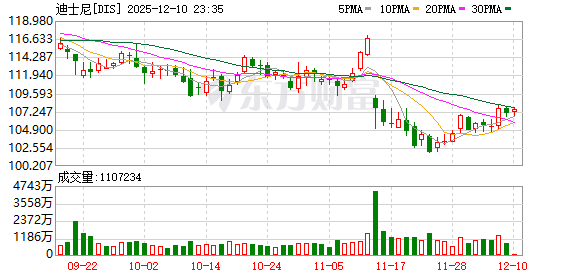
元气森林:穿越周期,探寻新消费下的“价值回归”与创新哲学
Zhong Guo Jing Ying Bao· 2025-12-10 14:29
Core Insights - The forum "Trends Above, Faith Below" focused on new consumption trends and market dynamics, emphasizing the importance of brand value resonance with consumers in a rational consumption environment [1] Group 1: Consumer Behavior - The shift from "cost-performance" to "value recognition" reflects deeper consumer needs, where consumers are willing to pay for products they resonate with [3] - An example shared highlighted that consumers may value a product not just for its utility but for the emotional connection it provides, as seen with a product that brought joy due to its design [3] Group 2: Innovation in Traditional Industries - Innovation is not exclusive to high-tech sectors; traditional industries can achieve significant advancements through new processes, termed as "new processes reshaping old experiences" [4] - The company has invested in innovative cooking processes for its products, demonstrating a commitment to quality despite initial cost concerns [4] Group 3: Marketing and Product Quality - The essence of marketing lies in the quality of the product itself, with the company emphasizing that all marketing efforts should circle back to product excellence [4] - The company fosters a culture of "allowing trial and error," which encourages innovation and acknowledges that mistakes are part of the process [4] - The philosophy of "slow is fast" in the beverage industry suggests that thoroughness and quality should take precedence over speed in product development [4]

大窑刘辉:锚定年轻化、场景化,以“人货场”逻辑破局汽水市场
Zhong Guo Jing Ying Bao· 2025-12-10 14:29
Core Insights - The forum "Trends Above, Faith Below" highlighted the evolving consumer landscape and the need for brands to innovate and adapt to new consumption trends [1] Group 1: Consumer Trends - Consumers are increasingly seeking high-quality products at reasonable prices, moving away from blind loyalty to either high-priced or low-priced items [3] - The concept of "rational consumption" is transforming into an opportunity for brands to adopt a "high quality-price ratio" strategy [3][4] - The unified guiding price for a 520ml glass bottle of soda from the company is set at 5 yuan, establishing a consensus that "large bottles equal high quality-price ratio" [3] Group 2: Product Strategy - The company emphasizes strict quality control in raw material selection and continuous innovation in production processes to enhance product quality [4] - Initiatives like the "Kiln Fruit Juice Traceability" activity aim to improve consumer product experience [4] Group 3: Market Positioning - The company focuses on high-frequency consumption scenarios such as family gatherings and outdoor activities, optimizing product adaptability to these contexts [5] - The brand's identity is closely tied to its classic packaging and the emotional resonance it creates with consumers, reflecting a straightforward and authentic expression [5][6] Group 4: Marketing and Distribution - The company's success is attributed to a combination of targeting a specific consumer demographic, product alignment with consumption scenarios, and deep engagement in the restaurant channel [6][7] - The brand has evolved its marketing strategies, moving from practical messaging to emphasizing emotional connections and shared experiences [6][7] - The company is also expanding its reach into instant retail, enhancing supply chain capabilities to better serve consumers [7]

1919集团李宇欣:万物即时零售时代来临,抓紧布局酒饮前置仓
Zhong Guo Jing Ying Bao· 2025-12-10 14:29
Core Insights - The consumption market in 2025 is undergoing profound changes, shifting from "product consumption" to "emotional consumption" and from "mass conformity" to "individual needs" [1] - The 1919 Group is positioning itself as a leader in the liquor retail sector by leveraging instant retail, aiming to establish 100,000 liquor front warehouses in collaboration with Taobao Flash Purchase [1][6] Industry Changes - The liquor industry is facing five core transformations, including a disruption in cycle recognition, generational shifts in consumer demographics, a migration of consumption scenarios towards self-satisfaction, diversification of product categories, and a transition to instant purchasing methods [3][4] - The traditional consumer base for white liquor is rapidly declining, influenced by policy changes and a shrinking business dining environment, while younger consumers are emerging as a significant market segment [3][4] Consumption Trends - There is a notable shift from formal dining to home consumption, with "self-satisfaction" needs gaining prominence, leading to a decline in traditional dining channel sales [4] - The market is moving from a dominance of white liquor to a more diverse product landscape, with new brands emerging that cater to different consumer preferences [4] Instant Retail Practices - The "Double 11" shopping festival marked a significant turning point for the industry, with a focus on healthy growth and user experience rather than just GMV, resulting in a drop in average transaction value from 358 yuan to 70 yuan [5] - The increase in order volume by five times during "Double 11" indicates a structural change in consumption patterns, with instant retail becoming a key growth driver for the 1919 Group [5] Future Strategy - The 1919 Group aims to establish 100,000 liquor front warehouses to capitalize on the instant retail opportunity, emphasizing the importance of rapid fulfillment capabilities [6][7] - The new front warehouse model will be smaller and more efficient, located within dining establishments, and will support local restaurants by providing inventory and order fulfillment assistance [7]
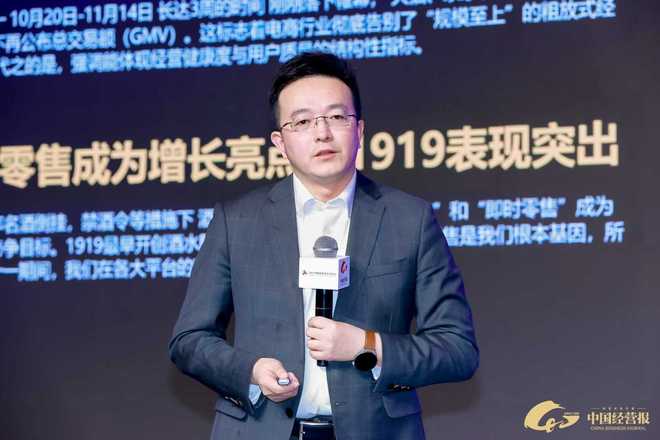
从首匹实现年盈利“黑马”到首次季度亏损 理想汽车将重返创业模式
Zhong Guo Jing Ying Bao· 2025-12-10 14:29
Core Viewpoint - Li Auto is experiencing significant challenges in its tenth year, transitioning back to a startup management model to address new market and technological challenges [1][6]. Financial Performance - In Q3 2025, Li Auto reported revenue of 27.4 billion yuan, a year-on-year decline of 36.2% and a quarter-on-quarter decline of 9.5% [2][3]. - Vehicle sales revenue was 25.9 billion yuan, down 37.4% year-on-year and 10.4% quarter-on-quarter [2]. - The total vehicle delivery in Q3 was 93,200 units, a decrease of 39.0% year-on-year, marking the first quarterly loss after 11 consecutive profitable quarters, with a net loss of 624 million yuan [3][4]. Challenges Faced - Li Auto is facing multiple challenges, including product cycle issues, supply chain constraints, and increased competition in the market [4][5]. - The company has reached a growth ceiling in its range-extended vehicle segment, compounded by the introduction of competing products at similar price points [1][4]. Recall and Safety Measures - Li Auto initiated a large-scale recall of 11,411 units of the 2024 MEGA model due to safety concerns, marking the first major recall in the company's history [4]. - The recall is expected to impact the delivery of the 2025 MEGA model as resources are redirected to address the recall [4]. Strategic Shift - The company plans to focus on "embodied intelligence" and has launched its first AI glasses product, marking a cross-industry technology expansion [1][10]. - Li Auto's CEO emphasized the importance of returning to a startup management model, prioritizing organizational structure, product development, and technology innovation [6][7]. Future Outlook - For Q4 2025, Li Auto expects vehicle deliveries to range from 100,000 to 110,000 units, a year-on-year decrease of 30.7% to 37.0%, with total revenue projected between 26.5 billion and 29.2 billion yuan, reflecting a decline of 34.2% to 40.1% [5]. - The company is investing in AI technology, with a 15% increase in R&D expenses in Q3 2025, focusing on new models and smart driving technology [9].

川财证券陈雳:做好金融“五篇大文章” 赋能新质生产力发展
Zhong Guo Jing Ying Bao· 2025-12-10 14:29
中经记者 郭婧婷 北京报道 12月9日,由《中国经营报》主办的"2025中国企业竞争力年会"在京举行,在主题为"金融赋能实体经济 与新质生产力"圆桌论坛环节中,川财证券首席经济学家、研究所所长陈雳基于川财证券的央企控股背 景与实践,系统阐述了在新时代背景下,金融机构如何优化资源配置、聚焦国家战略,以及资本市场在 培育新质生产力中的独特作用。 川财证券首席经济学家、研究所所长陈雳 陈雳认为,在百年未有之大变局下,面对高度不确定的外部环境,我们更需练好内功,加快实现国产自 立与科技突破。资本市场也将大力做好"金融五篇大文章",齐心聚力支持新质生产力,树立价值投资理 念、做好耐心资本,为"十五五"高质量发展和中国企业竞争力提升再添一把火。 立足国企禀赋 做好绿色金融特色发展 "川财证券股东有四大发电集团之一的中国华电,核心围绕着'双碳'目标,进一步保障能源供给安全的 同时,推动绿色低碳转型。"陈雳指出,在这一定位下,川财证券将绿色金融视为落实金融"五篇大文 章"的重要抓手。 "绿色金融与华电的产业方向高度契合,也是近年来资本市场最具活力的增长领域之一。"陈雳介绍,川 财证券依托股东产融协同平台,整合了租赁、信托、保 ...
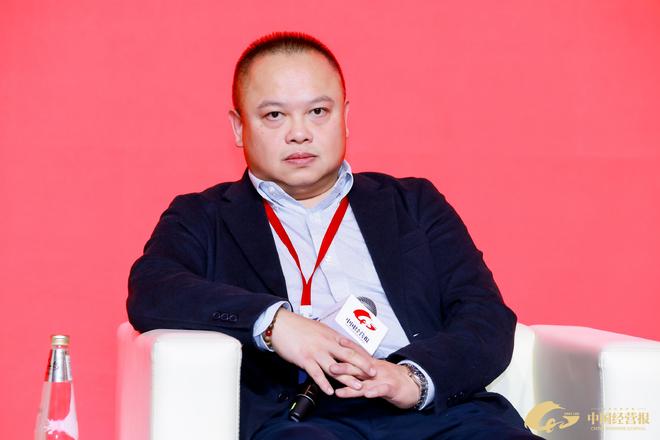
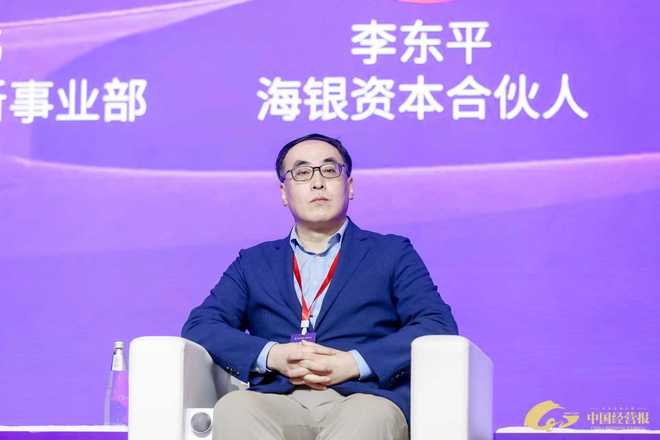
海银资本合伙人李东平:从科技创新到产业创新需要一个转化过程
Zhong Guo Jing Ying Bao· 2025-12-10 14:29
在李东平看来,"有了科技创新的基础之后,继续向行业应用发展就是产业创新,产业创新更多是做应 用开发、模式创新,甚至需要做一些企业内部管理的升级,这方面实际上做的是新产品、新服务、新需 求的挖掘。" "我们认为,如果真正把AI应用到产业,可能需要做到两点:第一是场景深入化。以云迹科技为例,其 实这家企业就是在场景的深入化方面做了很多扎实的工作,他们在酒店里面把人工智能、机器人的应用 做得很深,为酒店的消费者提供有力的服务支撑。人们在酒店中看到云迹科技的机器人跑来跑去,其实 它后面有一套人工智能的大脑在帮助机器人有效运作。"李东平说。 李东平表示,第二是场景创新化,也就是新需求的挖掘。很多人说消费者有什么需求,创业者应该找消 费者去了解,去做所谓的市场调研。不过苹果公司创始人乔布斯有一个观点,就是消费者的需求是调研 不出来的,需要从各个角度去挖掘。等到新产品、新服务出来之后,消费者才知道这就是人们需要的。 所以创业团队在做场景创新的时候,主要任务是挖掘新需求,这样才会在规模化和产业化方面有更多的 应用空间。 中经记者 李昆昆 李正豪 北京报道 12月10日,海银资本合伙人李东平在中国经营报社、中经传媒智库联合主办 ...
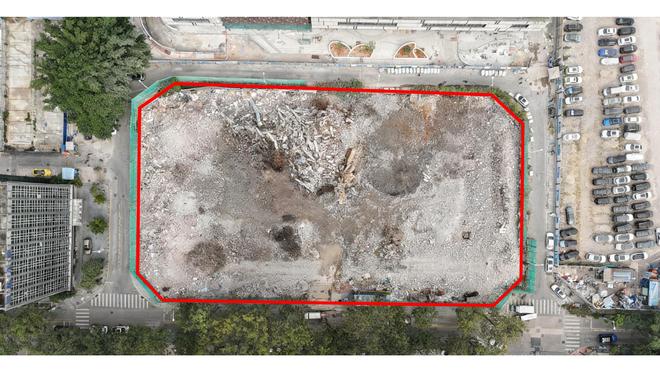
溢价率高达65% 中铁置业7.92亿元竞得深圳梅林地块
Zhong Guo Jing Ying Bao· 2025-12-10 14:29
Core Viewpoint - The recent land auction in Shenzhen indicates a structural recovery in the real estate market, with a significant premium on land prices reflecting the scarcity of core area land and the dominance of state-owned enterprises in the market [1][4]. Group 1: Land Auction Details - The B405-0308 plot was sold for 792 million yuan, with a premium rate of approximately 65%, resulting in a floor price of 42,695.42 yuan per square meter [1]. - This plot, located in the core area of Futian District, is the first publicly auctioned residential land in 16 years and the last residential land to be auctioned in Shenzhen for 2025 [1][3]. - The auction attracted eight bidders, including major real estate companies, and concluded after 148 rounds of bidding [1]. Group 2: Market Implications - The B405-0308 plot is designated for "现房销售" (selling completed homes), which may influence future land sale policies and accelerate industry restructuring, favoring high-quality developments over high turnover [3]. - The total land area sold in Shenzhen for residential purposes in 2025 reached approximately 234,400 square meters, with a total transaction value of about 29.09 billion yuan and an average premium rate of 32.81% [4]. - The real estate market in Shenzhen has shown signs of recovery, with new and second-hand home transactions reaching approximately 111,500 units from January to November, marking a 12% increase compared to the previous year [4]. Group 3: Policy Changes - New housing provident fund policies in Shenzhen aim to support diverse housing consumption needs, allowing for easier access to funds for down payments and facilitating loan processes [5].
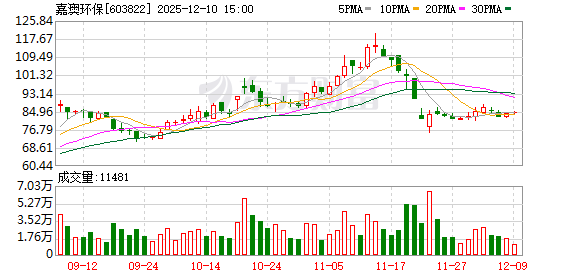
嘉澳环保财务造假被ST 两年虚增净利润2569.96万元
Zhong Guo Jing Ying Bao· 2025-12-10 14:21
Core Viewpoint - Jiaao Environmental (603822.SH) has been found to have falsified financial data in its 2022 and 2023 annual reports, resulting in a cumulative inflated net profit of 25.6996 million yuan, leading to regulatory penalties and a change in stock status to "ST Jiaao" [2][5] Financial Misconduct - The China Securities Regulatory Commission (CSRC) issued a notice regarding Jiaao Environmental's suspected information disclosure violations, leading to an administrative penalty [3] - The financial misconduct was attributed to improper accounting treatment of a core project by its wholly-owned subsidiary, which failed to transfer a completed project to fixed assets, resulting in inflated profits for 2022 and 2023 [4] Financial Data Adjustments - In 2022, Jiaao Environmental reduced operating costs by 13.4442 million yuan and financial expenses by 5.7675 million yuan, inflating total profit by 19.2117 million yuan, which was 28.91% of the reported profit [4] - In 2023, the company reduced operating costs by 13.5582 million yuan, inflating total profit by 13.5582 million yuan, which was 63.72% of the reported profit, and net profit turned from a loss to a profit [4] Regulatory Actions - The Zhejiang Securities Regulatory Bureau proposed a warning and a fine of 5.5 million yuan for Jiaao Environmental, with additional fines for the chairman and CFO for their roles in the misconduct [5] - Jiaao Environmental has submitted a written rectification report to the regulatory authority and has made adjustments to its financial statements for 2022 and 2023 [7] Financial Performance - Jiaao Environmental reported a revenue of 3.211 billion yuan in 2022, a 67.59% increase, but incurred a net loss of 32.4401 million yuan, a 131.79% decline [8] - In 2023, revenue decreased by 16.98% to 2.666 billion yuan, with a net loss of 7.5402 million yuan [8] - For 2024, the company reported revenue of 1.274 billion yuan, a 52.23% decline, and a net loss of 367 million yuan [8] Industry Context - The industry is currently facing challenges, with over 60% of companies experiencing losses, influenced by rising raw material costs and increased competition [9] - The key to short-term profitability for Jiaao Environmental lies in accelerating the production capacity of its new bio-jet fuel business and controlling costs [9]

关于“多晶硅收储平台” 大全能源最新回应!
Zhong Guo Jing Ying Bao· 2025-12-10 14:18
Core Viewpoint - Beijing Guanghe Qiancheng Technology Co., Ltd. is established as a "polysilicon storage platform" with a registered capital of 3 billion RMB, aiming to promote strategic cooperation among companies in the photovoltaic industry [2][5][10]. Company Information - The company was officially registered on December 9, 2025, with a registered capital of 30 billion RMB [3][5]. - The legal representative is Hou Yicong, and the company is classified as a limited liability company (foreign-invested and domestic joint venture) [3][5]. Shareholder Composition - Guanghe Qiancheng has 10 shareholders, including notable companies such as Xinte Energy, Qinghai Lihua New Energy Technology, Tongwei Photovoltaic Technology, Daqo Energy, and others [5][10]. - The largest shareholder is Tongwei Photovoltaic, holding 30.35% with a subscribed capital of 910.5 million RMB [8][10]. - Other significant shareholders include Shanghai Dongfang Hope New Energy (11.3%), Daqo Energy (11.13%), and Xinte Energy (10.12%) [8][10]. Financial Contributions - Tongwei Photovoltaic's contribution is 910.5 million RMB, while Daqo Energy and Xinte Energy contributed 333.9 million RMB and 303.6 million RMB, respectively [10]. - The company also has contributions from other shareholders, including 503.7 million RMB from GCL-Poly Energy and 153.9 million RMB from Qinghai Lihua [10]. Management and Personnel - The company has disclosed information about 13 personnel, including Hou Yicong as the legal representative and Qian Cheng as the chairman [10][11]. - The board includes industry professionals such as Ding Xiaoke from Tongwei and Liu Yiyang from the China Photovoltaic Industry Association [10][11]. Industry Context - Guanghe Qiancheng is viewed as a platform to facilitate strategic cooperation in the polysilicon sector amid ongoing efforts to reduce "involution" in the photovoltaic industry [10][12]. - The company aims to explore potential collaborations and promote healthy industry development, although specific acquisition operations remain unclear [10][12].