
Zhong Guo Qi Che Bao Wang

Search documents
竣工 + 新品双落子!一汽解放无锡研发基地激活商用车“芯动能”
Zhong Guo Qi Che Bao Wang· 2025-10-20 04:25
Core Insights - The completion of the FAW Jiefang (Wuxi) R&D base marks a significant step in enhancing the company's core competitiveness and supporting the development of the powertrain industry [1][3] - The project aims to provide robust support for FAW Jiefang's strategic goal of becoming "China's first and a world-class" provider of green and intelligent transportation solutions [3][4] Strategic Foundation - The core of commercial vehicle technology and product success lies in the power system, which is crucial for FAW Jiefang's competitiveness and its strategic goals [4] - In 2022, FAW Jiefang initiated a series of strategic actions, including the integration of engine, transmission, and axle businesses into a powertrain division [4] - The company has innovatively proposed the "power domain" concept, focusing on collaborative development between chassis and vehicle systems [4] Manufacturing and Global Expansion - FAW Jiefang has invested nearly 4 billion in three "super factories" located in Wuxi, Changchun, and Dalian, ensuring high-quality delivery of power domain products [5] - The company has established dedicated R&D teams for overseas markets, aiming to customize products based on in-depth research of user scenarios [5] Market Strategy and Performance - FAW Jiefang is addressing the cyclical challenges in the commercial vehicle industry by implementing four competitive strategies to enhance its core competitiveness [6] - The company has seen significant market success, with new products like the T-shift AMT transmission achieving monthly sales exceeding 1,000 units [7] - In the non-road sector, FAW Jiefang is expanding its product line and capacity, targeting specific applications such as generators and excavators [8] Future Development Blueprint - The Wuxi R&D base plays a critical role in FAW Jiefang's global R&D layout, focusing on rapid market response and product development [9] - Future product planning includes a clear roadmap for various power domains, such as green low-carbon, pure electric, hybrid, and fuel-cell technologies [10] - The company aims to leverage the Wuxi base as a new starting point to strengthen its industry leadership and support the transition to a greener and smarter commercial vehicle sector [10]



保时捷任命Michael Leiters为公司CEO
Zhong Guo Qi Che Bao Wang· 2025-10-20 03:00
Core Viewpoint - Porsche has appointed Michael Leiters as the new CEO, effective January 1, 2026, while Oliver Blume will continue as the CEO of Volkswagen Group [1] Company Summary - Michael Leiters previously served as the CEO of McLaren Automotive from July 2022 to April 2025 [1] - Before McLaren, Leiters was the Chief Technical Officer at Ferrari [1] - Leiters has over thirteen years of experience at Porsche, where he was responsible for the Macan and Cayenne model lines before leaving [1]
以科技为引擎、以全球为舞台 山东重工持续领跑中国装备制造业
Zhong Guo Qi Che Bao Wang· 2025-10-20 02:25
Core Insights - Shandong Heavy Industry Group has demonstrated strong competitiveness and brand influence in both domestic and international markets, achieving nearly 440 billion RMB in revenue with over 9% growth in the first nine months of the year, and export revenue of 72.7 billion RMB, a year-on-year increase of 6% to 7% [1][8] Group 1: Technological Innovation - The core strategy of Shandong Heavy Industry emphasizes technological innovation for healthy development, with a planned R&D investment of 13.6 billion RMB in 2024, representing a research intensity of 4.2%, placing it among the industry leaders [2][5] - The company has established a comprehensive power solution covering traditional, clean, and new energy sectors, supported by 30,000 R&D personnel and numerous national and international innovation platforms [2][5] Group 2: Competitive Edge in Power Systems - In the power systems sector, Weichai Power has set a global benchmark with the highest thermal efficiency diesel engine, exceeding 53%, while China National Heavy Duty Truck has introduced innovative hydrogen internal combustion engines [5][7] - The sales of new energy heavy trucks have surged by 189% year-on-year, positioning the company as an industry leader in this segment [5][7] Group 3: Integrated Industry Chain - Shandong Heavy Industry operates multiple well-known brands across various sectors, enhancing overall risk resistance and creating strong internal synergy [5][7] - The company has developed a full value chain system covering research, production, supply, sales, service, and finance, facilitating local assembly and manufacturing in over 30 countries [7][8] Group 4: Globalization Strategy - The company has transitioned from "product export" to "industry globalization," with 60% of its overseas business revenue coming from local manufacturing and sales [8][10] - In the first nine months, export revenue reached 72.7 billion RMB, with significant growth in emerging markets, particularly in Africa where sales of heavy trucks and construction machinery increased by over 30% [8][10] Group 5: Future Directions - Shandong Heavy Industry aims to focus on three strategic directions: new energy, digitalization, and aftermarket services, promoting high-end, intelligent, and green transformations [10][11] - The company emphasizes the importance of local operations and cultural respect in its global strategy, aiming to build a win-win ecosystem with global partners [10][11][13]
合规新纪元 智领全球化 | 2025全球汽车法规认证峰会圆满落幕
Zhong Guo Qi Che Bao Wang· 2025-10-20 02:15
Core Insights - The "2025 Global Automotive Regulations Certification Summit" successfully concluded in Hangzhou, with over 500 participants from various countries discussing the challenges and opportunities for the Chinese automotive industry in international markets [3][5][24] - The summit highlighted the importance of compliance with diverse global regulations as a foundation for the sustainable development of Chinese automotive enterprises abroad [22][24] Group 1: Summit Overview - The summit was co-hosted by multiple organizations, including the China Council for the Promotion of International Trade Automotive Industry Branch and the China Quality Certification Center, focusing on regulatory and market access consultations for Chinese automotive exports [3][5] - Key representatives from automotive certification agencies and government units from over ten countries participated, emphasizing the global nature of automotive regulations [10][14] Group 2: Industry Challenges and Strategies - The president of the China Council for the Promotion of International Trade Automotive Industry Branch noted that the global automotive industry is at a historical crossroads, with increasing complexity in regulations and standards across different regions [5][24] - Chinese automotive companies are encouraged to develop a systematic response capability that includes policy research, localization, and compliance certification to navigate international markets effectively [5][7] Group 3: Market Insights and Future Directions - The Chinese automotive export volume reached nearly 5 million units from January to August 2025, marking a 13.7% year-on-year increase, with export value surpassing $84.3 billion, up 10.8% [18][20] - The summit underscored the necessity for Chinese automotive brands to adapt to local cultures, consumer habits, and regulatory environments to build trust and recognition in foreign markets [7][20] Group 4: Collaborative Efforts - The summit served as a platform for Chinese automotive manufacturers to engage directly with international experts, facilitating deeper understanding of various market requirements and compliance challenges [14][22] - The collaboration between domestic and international research and certification institutions is seen as vital for advancing technology and standard-setting in the automotive sector [7][9]

芯动力·强引擎·向未来 一汽解放(无锡)研发能力提升项目竣工
Zhong Guo Qi Che Bao Wang· 2025-10-20 02:14
Core Insights - The completion ceremony of the R&D capability enhancement project of FAW Jiefang (Wuxi) was held on October 18, marking a significant step towards high-quality development in China's automotive industry [3][6] - The project aims to strengthen the core competitiveness of FAW Jiefang's powertrain and enhance its technological innovation system [6][11] Group 1: Project Overview - The total investment for the R&D capability enhancement project is 423 million yuan, featuring a comprehensive R&D building with a total area of 46,000 square meters [19][20] - The project was initiated on September 26, 2023, and is expected to be completed by September 30, 2025 [20] Group 2: Leadership and Government Support - Wuxi's Deputy Mayor Zhou Wendong emphasized the importance of this project for innovation and development, aiming to create a new model of cooperation between government and enterprises [8] - FAW Jiefang's Chairman Li Sheng highlighted the project's role in sustainable development and its significance in the company's R&D layout [11] Group 3: Technological Advancements - The project will establish a first-class non-road engine environmental test platform, covering various engine working conditions globally [24] - The newly launched products, including the HDRE400 and HSRE400, address key pain points in mining applications, showcasing FAW Jiefang's commitment to innovation [26][29] Group 4: Market Impact - The new products are designed to enhance operational efficiency, with a power output of 400 kW and improved energy conversion efficiency, reducing fuel costs by 5-10% [29] - FAW Jiefang aims to leverage this project to deepen R&D innovation and convert technological achievements into market value, contributing to the high-quality development of the automotive industry [32]

J.D. Power中国汽车品牌NPS®指数:结构性挑战突出,多数品牌陷入“三态失衡”
Zhong Guo Qi Che Bao Wang· 2025-10-20 02:14
Core Insights - J.D. Power has released the 2025 China Automotive Brand Reputation Index NPS, marking its first study in China, covering 72 brands in both fuel and new energy vehicle markets with a total sample size of 97,695 [1][2] Group 1: NPS Methodology - The fuel vehicle brand NPS is calculated based on New Vehicle Quality Study (IQS), Automotive Performance, Execution and Layout Study (APEAL), Technology Experience Index (TXI), Sales Satisfaction Index (SSI), and Customer Satisfaction Index (CSI) [2] - The new energy vehicle brand NPS is derived from New Energy Vehicle New Car Quality Study (NEV-IQS), NEV-APEAL, TXI, NEV-SSI, and NEV-CSI [2] - The study includes a comprehensive analysis of user experience across three dimensions: product strength NPS, sales strength NPS, and service strength NPS, providing a detailed user experience competitive landscape [5] Group 2: Brand Performance - In 2025, luxury fuel vehicle brands scored an average of 51.8, while mainstream brands scored 46.3; new energy luxury brands averaged 44.7, and mainstream brands scored 40.2 [6] - Only 8 out of 72 brands achieved a healthy balance across product, sales, and service dimensions, indicating that 89% of brands are in a state of imbalance [6] Group 3: User Experience Dynamics - The study reveals a "dual-track" user experience in the fuel vehicle market, where 42% of experience indicators are "threshold" indicators, while in the new energy vehicle market, 58% are "charm" indicators [7] - The research indicates a shift in competition rules, where user loyalty is now determined by balanced performance across product, sales, and service dimensions, rather than relying on a single strength [8] Group 4: Sales and Trust Issues - The sales process is identified as the largest negative contributor to brand NPS, with 38% of fuel vehicle sales strength NPS being weak due to traditional dealership practices that conflict with consumer expectations for transparency and trust [9] - In the new energy vehicle sector, 42% of sales strength NPS is weak, stemming from an immature sales system that fails to build trust with consumers [9] Group 5: Service Experience - Fuel vehicle service strength NPS shows that 38% are in a healthy state, but struggle to create emotional value, while new energy vehicle service strength NPS indicates 32% are weak, facing issues like long wait times and lack of brand identity [10] - Future service competition will focus on emotional resonance rather than just speed of service, with brands needing to enhance customer loyalty through meaningful experiences [10] Group 6: Product Performance Challenges - The report highlights that nearly 30% of products fall into a "mediocre" or "polarized" dilemma, where fuel vehicle brands show a 35% middle-ground performance, lacking standout features that drive recommendations [11] - New energy vehicle brands exhibit a 26% polarization, where some brands attract early adopters but risk alienating conservative consumers due to aggressive innovations [11]

2025奇瑞全球创新大会开幕:凝聚全球智慧,创新驱动未来
Zhong Guo Qi Che Bao Wang· 2025-10-20 01:51
Core Insights - The 2025 Chery Global Innovation Conference, themed "Innovation Leading the World," showcases Chery's latest achievements in electrification, connectivity, intelligence, and sharing, emphasizing innovation as a driving force for brand advancement and global ecosystem connectivity [1][3][15] Group 1: Event Overview - The conference features prominent figures from academia and industry, including Chinese and foreign academicians, university leaders, and executives from various organizations, highlighting the collaborative spirit of innovation [3] - Chery's Chairman, Yin Tongyue, emphasizes the importance of sustainable globalization, focusing on user affordability, quality, and a new image for Chinese automobiles [4][5] Group 2: Technological Advancements - Chery has achieved significant breakthroughs in five areas: sales scale, new energy, exports, brand recognition, and capital market performance, with over 17.72 million global users, including more than 5.43 million overseas [4] - The company has developed a global technology innovation system, transitioning from an "explorer" to a "leader" in global new energy, with plans to release over ten leading technologies, including the Kunpeng engine with a 48% thermal efficiency [6][8][12] Group 3: Collaborative Innovation - The establishment of the Kaiyang Laboratory and the signing of strategic alliances aim to enhance the efficiency of transforming research outcomes into market competitiveness [5][13] - Chery plans to set up 26 overseas R&D centers to strengthen local market competitiveness and develop products tailored to local user needs [13] Group 4: Future Vision - The conference serves as a platform for Chery to present its technological philosophy and achievements, aiming to accelerate its transformation into a global technology company and enhance the global presence of Chinese automotive brands [15]

技术创新驱动 智能网联迈向新阶段
Zhong Guo Qi Che Bao Wang· 2025-10-20 01:51
Group 1 - The 2025 World Intelligent Connected Vehicle Conference was held in Beijing, marking a critical period for the large-scale development of intelligent connected vehicles in China [1] - China is leading in policy support and infrastructure development, achieving breakthroughs in key areas such as autonomous driving technology and vehicle-road collaboration [1] - The penetration of urban auxiliary driving features has expanded from high-end vehicles to models priced below 150,000 yuan, with 2025 expected to be a pivotal year for the popularization of intelligent driving in China [1] Group 2 - Xiaopeng Motors highlighted four core development trends in the intelligent connected vehicle sector: electrification, intelligence, globalization, and diversification [2] - Great Wall Motors emphasized its advantages in market penetration, technological breakthroughs, and user recognition, focusing on the evolution of electronic architecture to create intelligent driving and space [2] - Horizon's executive projected that L4 capabilities could be achieved in the next three to five years, with full support for L4 by 2030, indicating a significant leap in intelligent driving development [2] Group 3 - The exhibition showcased the latest technologies and products in the intelligent connected vehicle sector, with various companies presenting their advancements [3] - The "Star Flash Short-Distance Communication Technology Digital Key Blue Paper" was released, detailing the collaboration of 25 member units in developing standards and testing for digital car keys [3] - Several vehicle models from manufacturers like Seres, JAC, BAIC, Chery, Dongfeng, and BYD are set to support or are already equipped with the Star Flash digital car key technology [3]
持续深化海外市场 LANDKING科技新品全球发布
Zhong Guo Qi Che Bao Wang· 2025-10-20 01:35
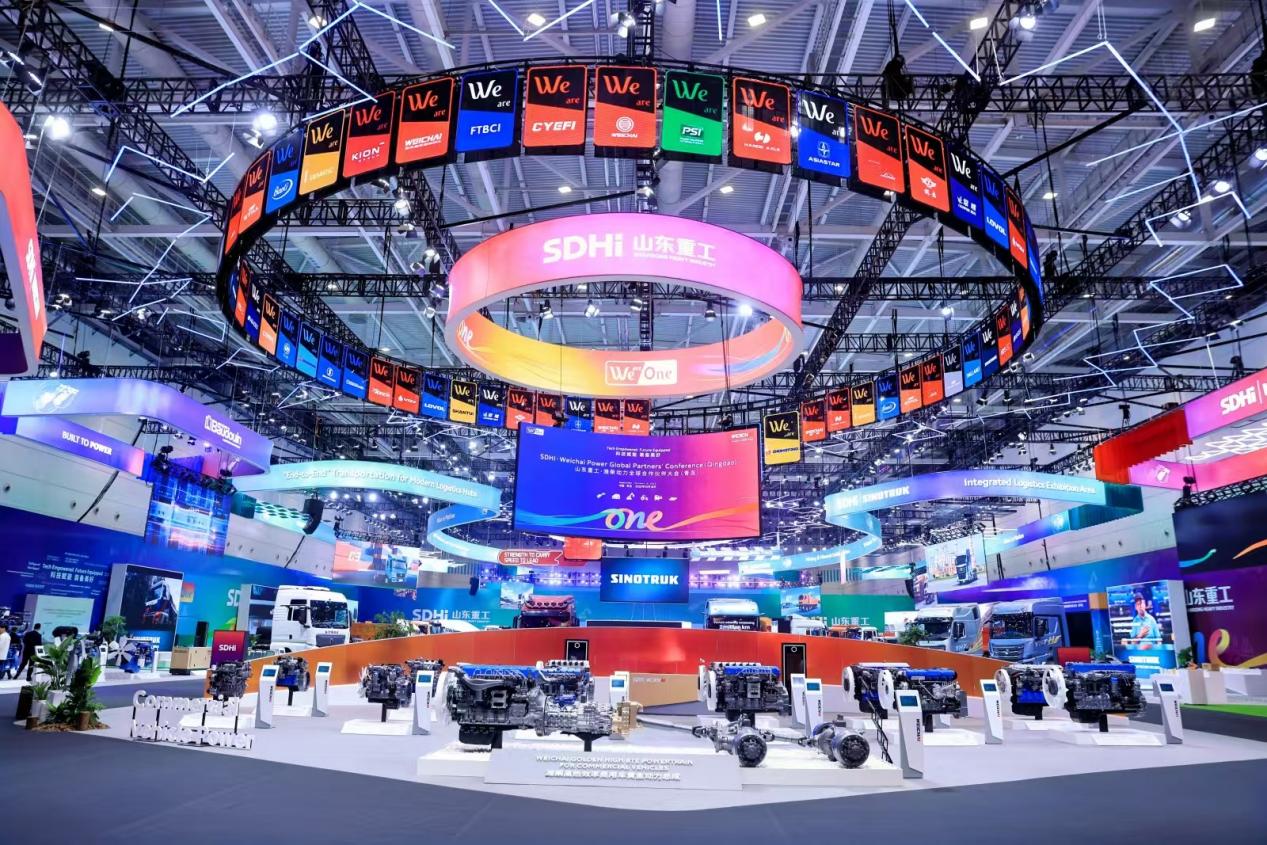
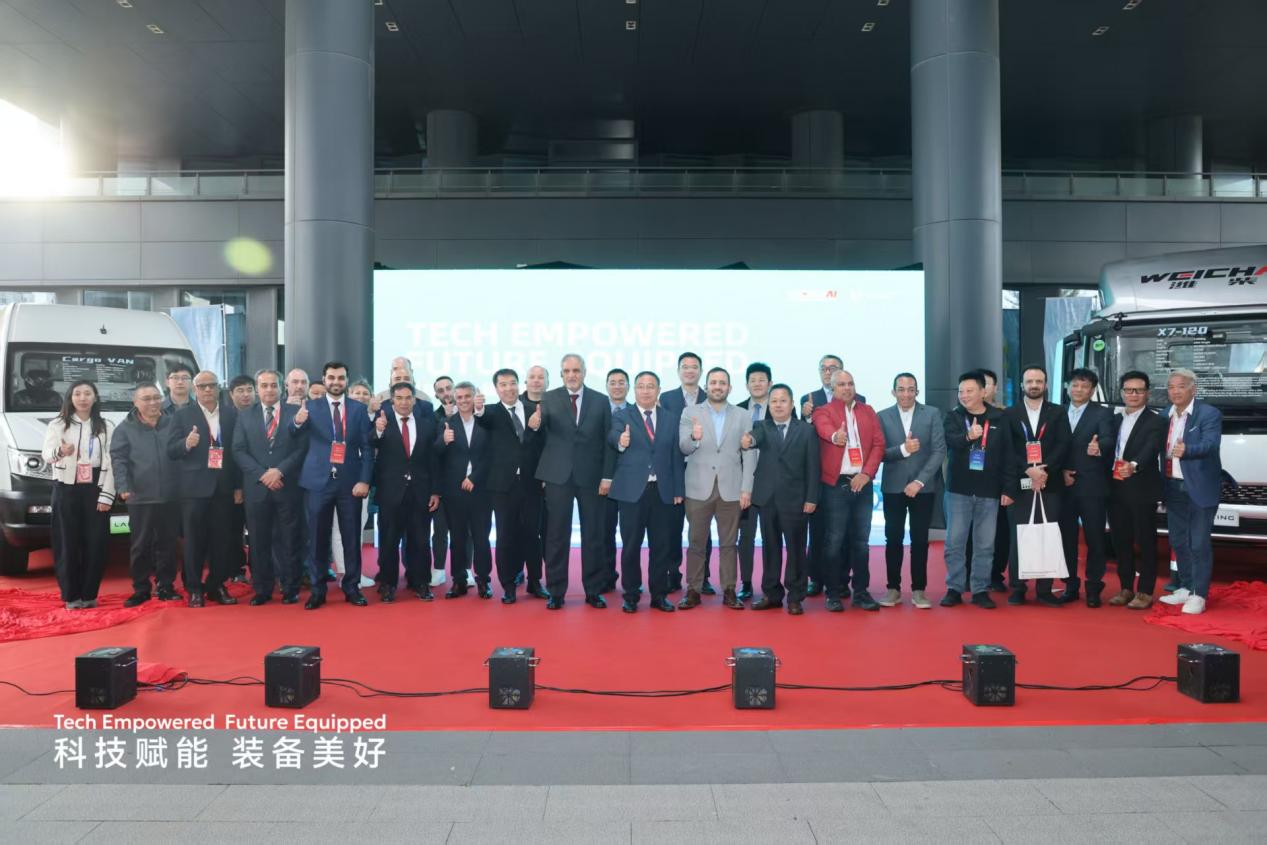
10月18日,青岛——以"科技赋能 装备美好"为主题的山东重工·潍柴动力全球合作伙伴大会·潍柴新能源商用车分会隆重举行。海外战略品牌LANDKING 携全新一代科技产品矩阵耀世登场,以领先技术实力与精准场景适配,开启全球新能源商用车新篇章,为海外市场注入强劲动力。 引领全球新能源商用车发展 作为潍柴集团全资子公司,潍柴新能源商用车深度融入集团全球创新网络,依托覆盖150多个国家及地区的产业根基与近3000家服务站点,构建起从动 力总成到整车的全链条技术护城河。 面对"打造中国第一轻卡品质与品牌,引领全球新能源商用车发展"的企业使命,潍柴新能源商用车已完成了2.5吨至18吨全系列产品布局,并前瞻性地 布局纯电、混动、氢燃料电池及清洁柴油、天然气等多技术路线。通过"销售一代、生产一代、研发一代"的滚动开发机制,确保产品始终贴合用户需求、持 续引领市场趋势。 具体来看,X7系列新能源轻卡拥有2120mm超宽驾驶室,带来卓越驾乘感受;新能源平地板设计,空间利用率高,副驾座椅下设大容量储物箱,电池容 量高达200kW·h,为轻卡行业最高配置;智能能量回收系统,基于负载调节制动与滑行回收,续航能力领先,搭载L2+高级驾驶 ...
至 前所未至!纵横G700正式上市32.99万元起,塑豪华越野新坐标
Zhong Guo Qi Che Bao Wang· 2025-10-20 01:21
Core Insights - The launch of the Zongheng G700 marks a significant milestone for the Chinese automotive industry, positioning it as a strong contender in the global luxury off-road SUV market [6][20] - The G700 is designed to redefine luxury in the off-road segment, combining advanced technology and user experience to create a new standard for luxury SUVs [5][17] Product Overview - The Zongheng G700 is positioned as an "all-terrain luxury off-road SUV" with a price range of 329,900 to 414,900 yuan, and a limited-time promotional price starting at 304,900 yuan [1] - The vehicle features a powerful output of 904 horsepower, comparable to luxury V8 engines, and has achieved notable performance in competitive events [13][20] Technological Innovations - The G700 incorporates advanced features such as a satellite communication system, allowing connectivity in remote areas without mobile signal coverage [15] - It boasts an IP68 waterproof rating and a maximum wading depth of 970mm, making it suitable for various challenging environments [11] User Experience and Benefits - The launch includes ten exclusive purchase benefits, such as cash subsidies, financing options, and lifetime warranty for the first owner [3] - The vehicle aims to provide a luxurious experience with features like a multi-screen setup, advanced driving assistance systems, and high-quality audio systems [17][19] Market Positioning - The G700 represents a shift in the Chinese automotive industry from being a follower to a leader in the luxury off-road segment, challenging the dominance of international brands [6][20] - The vehicle is seen as a response to the global demand for luxury and innovative off-road capabilities, showcasing China's technological advancements [5][20]

