
Zhong Guo Qi Che Bao Wang

Search documents
天枢智能座舱+7座大空间,长安CS75PRO限时价7.59万元起
Zhong Guo Qi Che Bao Wang· 2025-10-17 06:36
Core Insights - The Changan CS75 series has achieved cumulative sales of over 2.8 million units since its launch in 2014, establishing itself as a prominent player in the SUV market [1] - The newly launched Changan CS75PRO is the only 7-seater model in the CS75 series, targeting family users with a starting price of 75,900 yuan [3][19] Product Features - The CS75PRO is designed to meet the diverse needs of multi-person households, featuring a spacious interior with dimensions of 4742mm x 1870mm x 1720mm and a wheelbase of 2786mm [4] - The second-row seats have a sliding range of 120mm and 12 adjustable positions, accommodating both child safety seats and providing ample legroom for adults [6] - The vehicle offers a leading trunk capacity of 358L in 7-seat mode and up to 780L in 5-seat mode, along with 26 practical storage spaces throughout the cabin [8] - The seats can be fully reclined to create a flat space of 190cm, enhancing comfort for outdoor camping or long trips [10] Intelligent Features - The CS75PRO is equipped with the Tian Shu intelligent cockpit system, featuring a dual-screen setup with a 10.25-inch instrument panel and a 14.6-inch central display, both with 2K resolution [11][13] - The system supports seamless smartphone connectivity through various platforms, enhancing user experience with a smooth interface and voice interaction capabilities [15] - Safety features include a 540° panoramic imaging system, lane-keeping assist, and multiple active safety configurations to ensure family safety during travel [16] Powertrain and Efficiency - The vehicle is powered by the "500Bar ultra-high pressure direct injection new Blue Whale engine" paired with a new generation 7-speed wet dual-clutch transmission and an intelligent energy management system [17] - The engine delivers a maximum power of 141kW and a peak torque of 310N·m at low RPMs, ensuring strong performance across various driving conditions [18] - The transmission boasts a 94.3% efficiency, contributing to a fuel cost of less than 0.5 yuan per kilometer, while only requiring 92-octane gasoline for daily use [19]



CSAE汽车技术预见系列之《2025年汽车智能座舱技术趋势》报告发布
Zhong Guo Qi Che Bao Wang· 2025-10-17 04:24
Core Insights - The automotive industry is undergoing a wave of smart technology, with the evolution of intelligent cockpits becoming a key insight into the future of the industry [1] - The China Society of Automotive Engineers (CSAE) released the "2025 Automotive Intelligent Cockpit Technology Trends" report during the 2025 International Automotive Intelligent Cockpit Conference, outlining key innovation trends and development paths for the next three years [1][25] Group 1: Technological Innovations - Hardware and algorithm innovations are accelerating the optimization of large model architectures, model compression, and acceleration technologies for cockpit applications, enhancing immersive and secure user experiences [3] - The transition of electronic and electrical architecture from distributed to centralized computing platforms will break down data barriers between vehicle domains, gradually enhancing the intelligent cockpit [10] - The integration of HUD technology will evolve through optical innovations and algorithm advancements, increasing driving safety and user trust in intelligent driving systems [14] Group 2: User Experience Enhancements - Future intelligent cockpits will go beyond simple functionality stacking, providing immersive and integrated user experiences through multi-agent collaboration [7][9] - The development of multifunctional interiors is shifting from providing a single comfort experience to integrating visual, tactile, and biometric sensing technologies for a more enjoyable environment [16][18] - Modular design and ecological interactivity will transform cockpits from single-function spaces to customizable environments, leveraging expanded interfaces and software ecosystems [19][22] Group 3: Industry Trends and Future Outlook - The rapid development of intelligent cockpits is just a glimpse of the overall smart upgrade in the automotive industry, driven by systematic collaboration in vehicle electronic architecture, software platforms, and intelligent technologies [25] - The CSAE has been conducting ongoing research since 2021 on the overall direction of automotive technology, with the latest report being a deep exploration into intelligent cockpits [25] - The upcoming release of the "2026 Annual China Automotive Technology Trends" report is anticipated during the 32nd CSAE Annual Conference, highlighting continued advancements in the sector [26]

比亚迪何以成为多国元首座驾?
Zhong Guo Qi Che Bao Wang· 2025-10-17 03:40
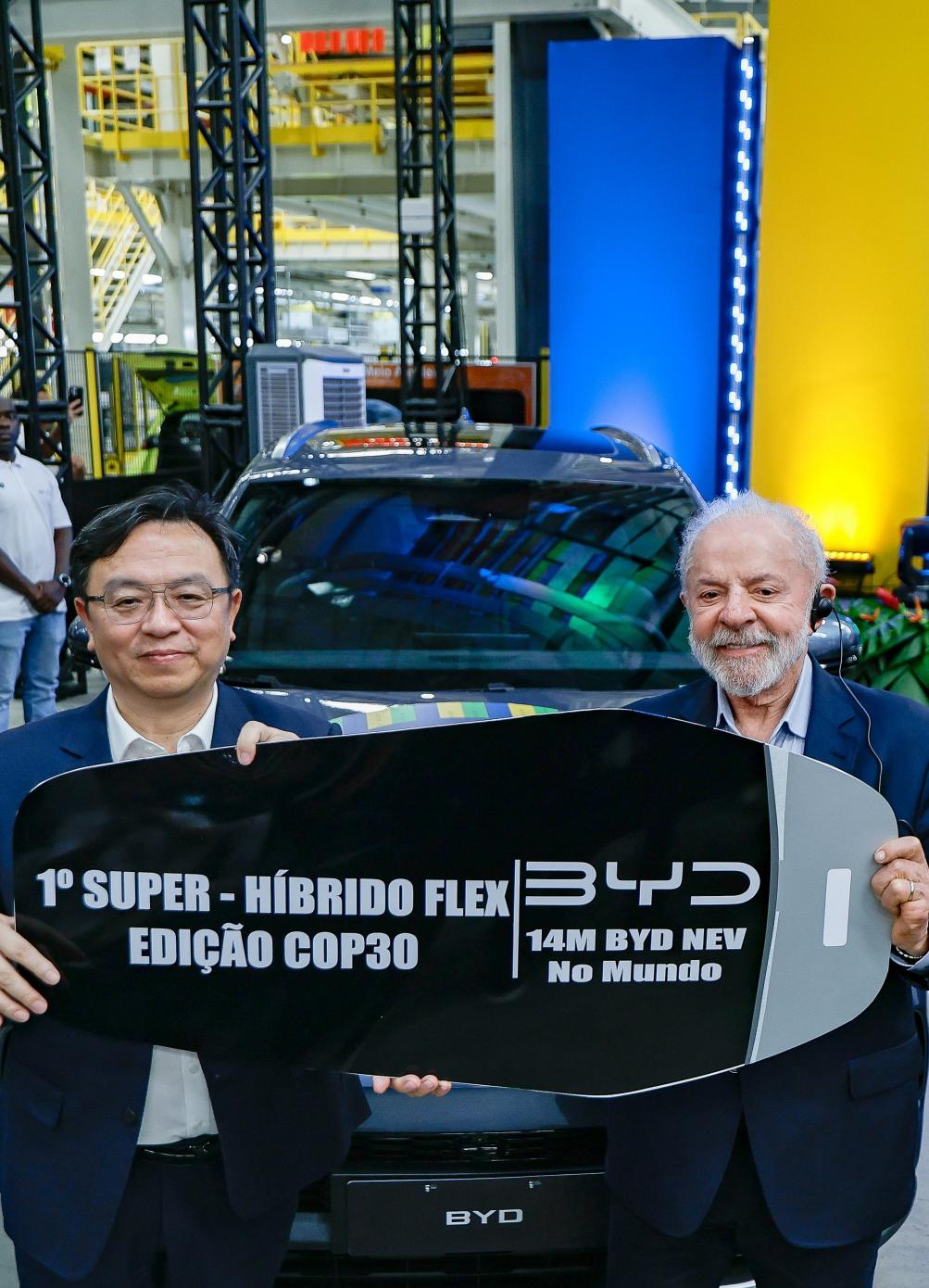
Core Insights - BYD has become the choice of multiple national leaders for their official vehicles, showcasing the competitive strength of its products in the global market [1][3][4] Group 1: Market Performance - BYD's factory in Brazil celebrated the production of its 14 millionth electric vehicle, with the latest model, Song Pro, being delivered to Brazilian President Lula [3] - Since entering the Brazilian market, BYD has sold 77,000 vehicles from January to September 2025, becoming the top seller of electric vehicles in Brazil [4] Group 2: International Recognition - The President of Uzbekistan, Mirziyoyev, received the Yangwang U8 from BYD during a visit to the company's headquarters, highlighting the vehicle's advanced technology [4] - Jordan's Queen Rania has chosen the Yangwang U8 as her official vehicle, reflecting her commitment to social progress and recognition of Chinese technological innovation [4] Group 3: Technological Leadership - BYD's comprehensive control over the entire supply chain, including battery, motor, and electronic control technologies, has established it as a leader in the electric vehicle sector [7] - The safety features of BYD vehicles, described as "mobile fortresses," are a significant factor in their selection by national leaders [7][8] Group 4: Brand Philosophy - BYD's focus on core technology rather than flashy marketing aligns with the pragmatic image of modern national leaders, enhancing its appeal [8] - The company's commitment to not only exporting products but also technology and value has garnered widespread recognition from local governments and communities [8][9]

汇智聚能 网联无限,科技东风亮相2025世界智能网联汽车大会
Zhong Guo Qi Che Bao Wang· 2025-10-17 03:33
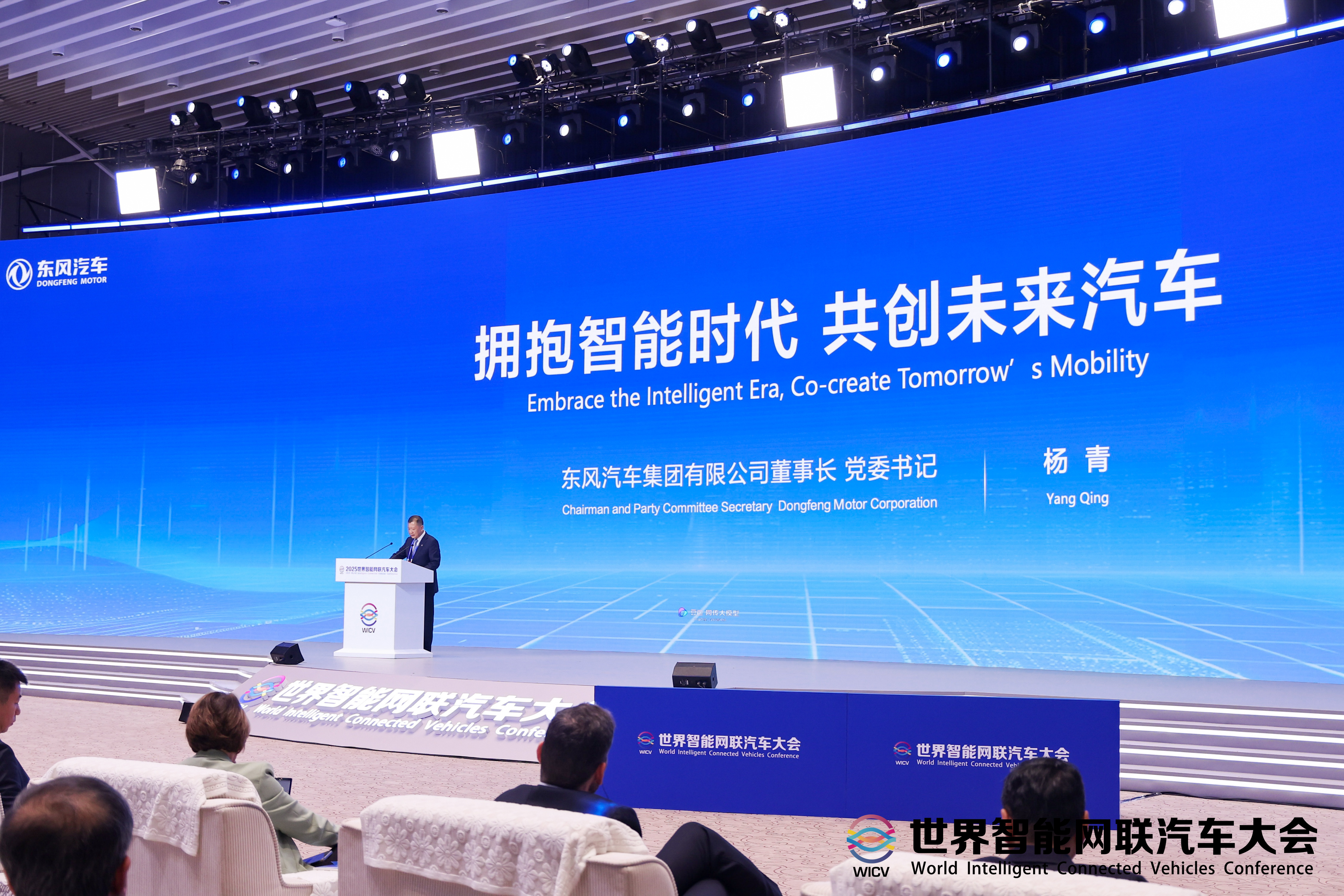
Core Insights - The 2025 World Intelligent Connected Vehicle Conference opened in Beijing, focusing on the theme "Gathering Wisdom and Energy, Connecting the Infinite" [1] - Dongfeng Motor Corporation's Chairman Yang Qing emphasized the transformative impact of artificial intelligence and large models on the automotive industry, redefining vehicles as intelligent entities [4][11] Group 1: Technological Advancements - The integration of AI and large models is revolutionizing driving and cabin experiences, transitioning cars from mere transportation tools to "third living spaces" [4] - Dongfeng showcased several innovative technologies and products, including five vehicle models and four core technology exhibits, highlighting its strength in technological innovation [5][8] Group 2: Research and Development Transformation - The automotive R&D paradigm is shifting from engineer-led to user co-creation, and from experience-driven to data-intelligence-driven approaches [4][11] - Dongfeng has established a comprehensive R&D system centered around the "Taiji Large Model" and "Tianyuan Architecture," focusing on integrated smart driving and cabin technologies [11] Group 3: Market Position and Future Strategy - Dongfeng's passenger vehicle segment has achieved a 90% penetration rate for auxiliary driving functions, while commercial vehicles are undergoing autonomous driving trials in 40 cities [11] - The company aims to enhance its core competitiveness in electrification and intelligence, committing to a high-quality development path centered on technological independence and ecosystem collaboration [12]

2025世界智能网联汽车大会 || 宝马集团董事高乐:宝马携手中国合作伙伴以责任守护创新,以合作开创未来
Zhong Guo Qi Che Bao Wang· 2025-10-17 02:27
Core Insights - BMW emphasizes the importance of independent innovation and open collaboration in navigating the significant transformation of the global automotive industry [2][3] - The company views China as not only its largest single market but also a key driver of technological innovation and automotive industry transformation [2] - BMW is accelerating the development of a smart ecosystem in China, collaborating with technology partners like Huawei and Alibaba to enhance core technologies in smart cockpits and autonomous driving [3] Group 1 - BMW's strategy focuses on integrating local innovation with its core technological advantages to meet Chinese consumer expectations for smart mobility [2] - The new generation of vehicles showcases BMW's advancements in electric, digital, and sustainable development, featuring technologies like the sixth-generation eDrive and panoramic iDrive [2] - The company advocates for responsible use of artificial intelligence, ensuring that all smart technologies undergo rigorous safety testing before implementation [3] Group 2 - BMW aims to drive the automotive industry towards a smarter and more sustainable future by leveraging its R&D capabilities and local partnerships in China [3] - The emphasis on safety as a non-negotiable baseline reflects BMW's commitment to responsible innovation in the automotive sector [3]

我国《两轮车智能化技术发展路线图(2025-2035)》编制工作正式启动
Zhong Guo Qi Che Bao Wang· 2025-10-17 02:08
Core Insights - The launch of the "Two-Wheeler Intelligent Technology Development Roadmap (2025-2035)" marks a significant step in advancing the intelligent technology in China's two-wheeler industry, which is the largest in the world in terms of production, sales, and ownership [4][6] Industry Overview - China has over 350 million electric bicycles in social circulation, indicating a massive market potential for intelligent technology integration [4] - The two-wheeler industry is undergoing a critical transformation driven by technological integration, market changes, and policy support [4] Challenges and Opportunities - The industry faces challenges in battery safety, riding safety, urban governance, and traffic coordination, necessitating a fundamental breakthrough through intelligent technology [4] - There is a need for a unified approach to integrate resources across the entire industry chain, including chips, sensors, algorithms, cloud platforms, and communication services [5] Standardization and Development - The roadmap aims to establish a unified intelligent technology and standard system, facilitating deep integration of key technologies and application scenarios [6] - The roadmap will provide clear guidance on key technology development priorities and implementation milestones for all industry participants, reducing blind investments and trial-and-error costs [6] Research Focus - The roadmap will focus on five key areas: overall intelligent architecture and safety systems, integrated perception and communication, intelligent control and driving assistance, cloud and human-machine interaction, and verification and common support [7] - The development cycle for the roadmap is set for nine months, with plans to release it to the industry by mid-2026 [7] Industry Collaboration - Nearly 50 industry units, including major two-wheeler manufacturers and key technology companies, are participating in the roadmap's development, indicating strong industry collaboration [7]

裁员潮汹涌 德国汽车业急救市
Zhong Guo Qi Che Bao Wang· 2025-10-17 02:04
冰冷的财报数据以及密集的裁员公告,正将德国汽车业的转型阵痛具象为刺骨寒意。继大众集团将2025年营 业利润率最新预期下调近一半之后,宝马集团也紧随其后下调了全年业绩展望,大众集团旗下豪华品牌保时捷甚 至发布了今年第4次盈利预警……曾经支撑起"德国制造"荣光的巨头们,如今在转型浪潮与市场寒意下步履维艰。 再加上美国汽车关税的沉重打击,多重压力使得车企盈利空间持续收窄,下调预期成为无奈的现实选择。 裁员潮的蔓延更让德国汽车业的危机显得触目惊心。继9月底博世集团宣布额外裁减1.3万个工作岗位后,另一家德 国汽车零部件巨头采埃孚在10月1日宣布裁员7600人。而在此前,大众汽车已与工会达成协议,计划2030年前在德 国裁员超过3.5万人。裁员潮已经从主机厂席卷至整个供应链,中小型零部件厂商破产数量同比激增。德国,这个 曾经机器轰鸣不息的欧洲汽车工业"心脏"正逐渐失速。 下调业绩展望"没完没了" 大众集团又一次下调了公司2025年业绩展望。其中,2025年集团营业利润率被下调至2%~3%,而公司此前预期 为4%~5%,分析师预期为4.78%;预计全年汽车净现金流为零,原本预计为10亿~30亿欧元。 这已经不是大众集团今 ...

一家破局 万马跟进 众车企细分市场里拓乾坤
Zhong Guo Qi Che Bao Wang· 2025-10-17 01:56
Group 1 - The core viewpoint of the articles highlights the shift in the Chinese automotive market from mainstream competition to a focus on niche segments, driven by diverse consumer demands and the urgency among companies to explore these markets [2][3][4][12] - The emergence of the light off-road vehicle market, initiated by Great Wall's strategic positioning, has led to a surge in new models, with over 20 variants expected by 2024, indicating strong market interest [4][5] - The large three-row pure electric SUV segment is experiencing intense competition, with NIO's new ES8 and Geely's flagship model contributing to the market's vibrancy [5][6] Group 2 - The competition in the A0-level pure electric vehicle market, exemplified by the Wuling Hongguang MINIEV, has evolved from small-sized vehicles to larger, higher-quality models, enhancing consumer choices and market dynamics [15][16] - The rise of the new energy MPV market is characterized by traditional brands and new entrants competing for market share, with Buick GL8 and BYD's offerings targeting family consumers [6][12] - The overall automotive market is transitioning into a phase of limited growth, where new energy vehicles are increasingly displacing traditional fuel vehicles, leading to a competitive landscape where companies must adapt quickly to maintain their market positions [12][13]

北京现代首款纯电平台SUV EO羿欧开启预售
Zhong Guo Qi Che Bao Wang· 2025-10-17 01:29
Core Viewpoint - Beijing Hyundai officially launched the pre-sale of its first pure electric platform SUV, EO Yiou, marking a significant step in its electrification transformation and establishing a "quality first" competitive stance in the 150,000 RMB pure electric SUV market [1][9] Group 1: Pre-sale Policy - The pre-sale policy allows users to pay a deposit of 88 RMB to secure a total value of 12,000 RMB in benefits, including priority delivery rights and various subsidies [2][3] - Users can enjoy six major benefits during the pre-sale period, such as a 5,000 RMB vehicle exchange subsidy, 2,000 RMB for exclusive car colors, and a 2,000 RMB home smart charging pile [3][5] - The "Worry-Free Service Package PLUS" includes nine practical services covering common user scenarios, enhancing the overall ownership experience [3][6] Group 2: Product Quality and Features - EO Yiou is positioned as the "best quality pure electric SUV under 150,000 RMB," with features that compete with higher-priced models in display, interaction, safety, and durability [6][9] - The vehicle is equipped with a 27-inch ultra-thin 4K display, a high-performance Qualcomm 8295 chip, and a robust safety structure designed to protect passengers and the battery during collisions [6][8] - The car boasts a CLTC range of 722 km, an 88.1 kWh battery, and a charging time of approximately 27 minutes from 30% to 80%, with a 100% charging success rate across various charging stations [8][9] Group 3: Market Positioning and Strategy - The launch of EO Yiou is seen as a pivotal moment for Beijing Hyundai to redefine its image as a "new force in joint ventures" and to shift the market focus from "parameter competition" to "quality competition" [9] - The company aims to establish a "quality benchmark" in the 150,000 RMB pure electric SUV market, promoting rational competition and enhancing brand trust in the new energy sector [9]

斯堪尼亚如皋工业生产基地开业:年产能5万辆,卡车市场迎来“洋”面孔的本地玩家
Zhong Guo Qi Che Bao Wang· 2025-10-17 01:23
Core Points - Scania's new industrial production base in Rugao, Jiangsu, officially opened on October 15, 2025, with an annual production capacity of 50,000 vehicles, representing a significant investment of €2 billion (approximately 16.6 billion RMB) and creating over 3,000 jobs [1][3] - This facility marks Scania as the first European commercial vehicle manufacturer to receive a wholly-owned truck factory production license in China following the lifting of foreign ownership restrictions in 2022 [1][3] Investment and Production - The Rugao base is Scania's largest global investment to date, covering an area of 800,000 square meters and aimed at serving both Chinese and international markets [1] - Scania plans to produce a range of vehicles, including customized operational leasing solutions starting at a monthly rental of 19,000 RMB, alongside its SUPER standard vehicles with prices ranging from 688,000 RMB to 778,000 RMB [5] Localization Strategy - Scania emphasizes its commitment to becoming a "local player" in the Chinese market, having expanded its initial plans from a small assembly plant to a comprehensive facility that includes R&D and production [6] - The company aims to leverage local supply chains and high-quality suppliers to enhance product quality while reducing reliance on international supply chains [7] Innovation and R&D - Scania has established a local R&D center to better cater to the unique demands of the Chinese market, integrating advanced technologies and modular systems into its products [9] - The company is preparing to introduce electric vehicles, reflecting its commitment to sustainability and innovation in response to China's achievements in the automotive sector [9] Market Positioning - The opening of the Rugao facility is seen as a strategic move to mitigate uncertainties arising from global trade policies, such as the 25% import tariff on heavy trucks announced by the U.S. [11][12] - Scania's investment in China is viewed as a long-term commitment to the market, with plans to utilize the Rugao base to export vehicles to Southeast Asia, benefiting from China's numerous free trade agreements [14]
