
Zhong Guo Qi Che Bao Wang

Search documents
奥迪中国:以“双品牌”战略坚定推进在华电动化转型
Zhong Guo Qi Che Bao Wang· 2025-09-28 15:38
Core Insights - The seventh World New Energy Vehicle Conference (WNEVC) was held in Haikou, Hainan, showcasing Audi's commitment to the Chinese market with the display of two flagship electric models: Audi Q6L e-tron and Audi E5 Sportback [1][3] - Audi's strategy emphasizes "For China, in China," highlighting the company's determination to deepen its presence in the Chinese market amid increasing competition from local manufacturers [3][4] Market Context - According to CounterPoint Research, domestic manufacturers have captured nearly 90% of the Chinese electric vehicle market in the first half of the year, putting significant pressure on multinational companies like Audi [3] - China is not only the largest automotive market globally but also a key source of technological innovation, making it essential for Audi to focus on this market to navigate the ongoing industry transformation [3] Product Development - The Audi Q6L e-tron, produced on the luxury electric platform PPE, sets new standards in driving performance, charging capabilities, and overall efficiency, featuring a 107 kWh CATL lithium-ion battery and advanced Bank Charging technology [4] - The Q6L e-tron offers a maximum range of 765 kilometers under CLTC conditions, with the ability to add 294 kilometers of range in just 10 minutes of charging, addressing consumer range anxiety [4] Technological Innovations - The Audi E5 Sportback, launched as part of Audi's new brand strategy, features an AI-driven cockpit system with advanced voice recognition and seamless application connectivity, tailored for the Chinese market [5] - Audi has developed a customized advanced driver assistance system for the Q6L e-tron in collaboration with Huawei, making it the first international luxury brand to implement such technology in China [7] Safety and Testing - Audi prioritizes safety, having met new national battery safety standards ahead of their official implementation, and conducts extensive testing under extreme conditions to ensure user safety [7] Strategic Goals - In the past 50 days, Audi has launched five new models, including three electric and two internal combustion engine vehicles, as part of its dual-brand and multi-platform strategy to maintain competitiveness [8] - Audi plans to continue its aggressive product rollout in China, with more new models expected by the end of the year, marking the largest product layout in the brand's history [8]


2025年中国经典车拉力赛暨新能源汽车集结赛(HAINAN 1000)新闻发布会在京举行
Zhong Guo Qi Che Bao Wang· 2025-09-28 15:30
Core Insights - The 2025 China Classic Car Rally and New Energy Vehicle Gathering (HAINAN 1000) aims to merge classic car culture with new energy technology, creating a cultural event that bridges history and the future [1][4][18] Event Overview - The event is co-hosted by the China Automobile and Motorcycle Sports Association and the Qionghai Municipal Government, emphasizing the integration of sports tourism and automotive culture [1][4] - The event will take place from November 7 to November 10, 2025, starting in Haikou and concluding in Danzhou [23] Industry Significance - The event aligns with the Ministry of Commerce's guidelines to enhance the classic car industry and enrich automotive cultural experiences [2] - It is seen as a significant step for Qionghai in promoting the integration of sports, culture, and tourism, leveraging the unique resources of Hainan [4][6] Economic Potential - The classic car industry is recognized for its cultural value and economic potential, with opportunities for IP development and cultural tourism integration [8] - The event is expected to create a new economic growth engine by combining classic and new energy vehicles [8][18] Collaborative Efforts - Various organizations, including the Qionghai Municipal Government and automotive associations, are collaborating to ensure the event's success [19] - A strategic cooperation agreement was signed among key stakeholders to enhance resource integration and support for the event [19] Cultural Impact - The event is positioned as a platform for international exchange and aims to elevate classic car culture from a niche interest to a more industrialized sector [17][18] - It is anticipated to foster a sustainable "sunshine industry" that connects the past and future through automotive culture [18]

保时捷携全新一代中国专属车载信息娱乐系统亮相2025世界新能源汽车大会
Zhong Guo Qi Che Bao Wang· 2025-09-28 11:06
Core Insights - The 2025 World New Energy Vehicle Conference (WNEVC) took place in Haikou, Hainan, showcasing the automotive industry's future development, with a focus on electric vehicle transformation and global expansion [1][2] - Porsche, in collaboration with Volkswagen Group (China), presented its electric models, Taycan GTS and the pure electric Macan 4, highlighting its commitment to electrification [1][2] Company Developments - The Macan 4, designed specifically for the Chinese market, features advanced equipment such as chassis protection, adaptive air suspension, and exclusive driving modes, enhancing driving experiences [3] - Porsche introduced a new generation of its China-exclusive in-car infotainment system during the conference, emphasizing its strategy of "In China, For China" [5][7] - The infotainment system was developed by a local team in China with support from the German headquarters, showcasing rapid development and collaboration with local partners [7] Technological Innovations - The new infotainment system incorporates immersive human-machine interaction design, providing a clear and intuitive interface for drivers [9] - Features include 3D vehicle display for easier interaction, AI voice assistant for seamless communication, and compatibility with major smartphone platforms [9][11] - The system aims to enhance the driving experience without overwhelming users with excessive features, focusing on real user needs and integrating popular digital ecosystems in China [11] Market Strategy - Porsche's commitment to local development and partnerships is aimed at strengthening its position in the competitive Chinese automotive market [11] - The company anticipates that its innovative experiences in China will benefit its global market strategy, contributing to a faster transition in the global automotive industry towards electrification and intelligence [11]

玲珑轮胎:入选“国际质量管理融合创新”典型案例,成轮胎行业唯一获此殊荣企业
Zhong Guo Qi Che Bao Wang· 2025-09-28 10:20
Core Insights - Linglong Tire has been recognized as the only tire company selected in the "International Quality Management Integration and Innovation" case collection, highlighting its achievements in quality management innovation and international integration [1][3][12] Group 1: Case Selection Authority - The case collection event received 154 submissions from various sectors across 27 provinces, with only 25 cases selected, showcasing the high level of competition and authority in the evaluation process [3] - The selection was guided by the National Market Supervision Administration and organized by the China Quality News, ensuring professionalism and standardization in the evaluation [3] Group 2: Quality Management Practices - Linglong Tire's success is attributed to its long-term commitment to quality, evolving from "product excellence" to "system leadership" through a comprehensive quality management system [5] - The company has implemented a three-pronged approach to enhance product quality: upgrading manufacturing standards, increasing R&D investment, and enforcing lean management practices [5] Group 3: Global Quality Management Model - Linglong Tire has developed a "three-network interconnection and three-body collaboration" quality management model to address global quality challenges across its "7+5" production base layout [7][11] - The "three-network interconnection" integrates innovation, industry, and marketing networks to ensure responsive product development and supply chain management [9] - The "three-body collaboration" establishes a comprehensive quality system that includes lifecycle traceability, lean quality management, and employee training to maintain high-quality standards across global operations [10] Group 4: Future Directions - The company plans to further enhance its quality management model by integrating international quality management concepts and adapting to diverse overseas market needs [11] - Linglong Tire aims to empower the global supply chain by improving quality levels and enhancing resilience across the industry [11]

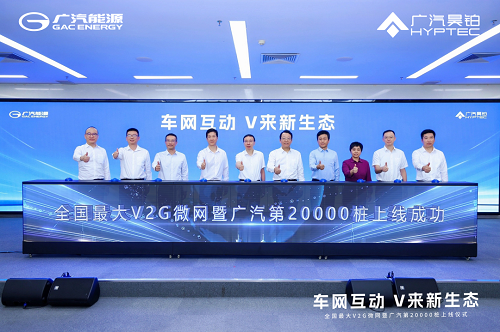
广汽集团落地全国最大V2G微网+第20000桩上线:补能生态与车网互动实现双重突破
Zhong Guo Qi Che Bao Wang· 2025-09-28 09:50
Core Insights - GAC Group launched its 20,000th self-operated charging pile, marking a significant milestone in the development of its energy network and vehicle-to-grid (V2G) technology, contributing to the construction of a new power system in Guangzhou and supporting the "dual carbon" goals [1][3] Group 1: Charging Network Development - GAC Group has established a comprehensive charging network across 31 provinces and 204 cities in China, achieving a significant milestone with the launch of 20,000 charging piles [3] - The company leads in the number of 1000V high-speed charging piles among automakers, utilizing its self-developed technology that allows for a 200 km range with just 5 minutes of charging [3] - The charging network has served over 7 million new energy users, positioning itself as a benchmark in the industry for scale, efficiency, and coverage [3] Group 2: Vertical Integration Strategy - GAC Group's energy strategy encompasses the entire lifecycle of energy, creating a vertically integrated supply chain from resource extraction to charging infrastructure [3] - The company invests in securing key resources like lithium and cobalt to strengthen its energy supply foundation [3] - GAC Group has developed core technologies in battery systems and electric drive systems to enhance vehicle energy efficiency [3] Group 3: V2G Technology Advancement - The newly launched V2G microgrid is the largest in China and the first to implement a 10kV medium-voltage grid connection, indicating a shift from technology validation to large-scale application in vehicle-grid interaction [5] Group 4: Diverse New Energy Brand Matrix - GAC Group has created a diversified new energy brand matrix, including GAC Aion for mainstream markets, GAC Haobo for high-end markets, and GAC Trumpchi for family scenarios, along with a high-end brand "Qijing" in collaboration with Huawei [4]

电池企业与车企联姻,一场格局重塑与创新效率的双向奔赴
Zhong Guo Qi Che Bao Wang· 2025-09-28 09:13
Core Insights - The joint venture model between core battery suppliers and automotive companies is gaining traction in the automotive industry due to its synergistic effects in scale growth, collaborative innovation, and cost reduction [1][4][6] Joint Ventures and Collaborations - Li Auto and Aoxin Wanda Electronics' subsidiary, Aoxin Wanda Power Technology, have established a 50:50 joint venture named Shandong Li Auto Battery Co., Ltd., focusing on the production and sales of lithium-ion power batteries for electric vehicles [1] - Aoxin Wanda Power is not the first to partner with automotive companies; it has previously collaborated with Dongfeng Group to establish Hubei Dongyu Xinshi New Energy Co., Ltd., marking a significant milestone in their deep cooperation in the power battery sector [4][5] Technological Advancements - Aoxin Wanda Power has made significant technological breakthroughs in collaboration with Renault-Nissan, focusing on high power, long life, and safety in battery technology, which has been integrated into Dongfeng Nissan's products [5] - The establishment of Dongyu Xinshi has led to rapid production capacity growth, supporting Dongfeng's electric vehicle transformation [5][6] Industry Trends - The relationship between automotive companies and core suppliers is evolving from a simple supplier-customer dynamic to a collaborative partnership, emphasizing joint innovation and co-creation [6][9] - Aoxin Wanda Power's Vice President highlighted the importance of understanding both B-end (automakers) and C-end (consumers) needs, indicating a shift in the supplier's role towards a more integrated approach [9][18] Market Performance - Dongfeng Nissan's N7 model achieved a monthly sales record of over 10,000 units, reflecting the successful collaboration with Aoxin Wanda Power, which has been the exclusive battery supplier for this model [10][13] Production Efficiency - The establishment of a smart manufacturing line at Dongyu Xinshi has significantly improved production efficiency and product quality, achieving over 98% improvement compared to traditional automation methods [13][17] - The focus on production efficiency and cost-effectiveness is crucial for the competitiveness of new ultra-fast charging battery projects [17] Sustainable Development - Aoxin Wanda Power is actively participating in the global battery alliance and is involved in the development of battery passport standards, aiming to promote sustainability in the battery industry [18][19] - The company is also contributing to the digital platform for battery ID, enhancing lifecycle traceability and management for automotive companies [19]

售价38.98万~44.98万元,腾势N9全系标配横风稳定护航功能
Zhong Guo Qi Che Bao Wang· 2025-09-28 09:10
Core Insights - The 2026 Tengshi N9 SUV has been launched, featuring advanced safety technologies aimed at ensuring travel safety during extreme weather conditions like Typhoon "Hagupit" [1][9] - The vehicle is equipped with the "Crosswind Stability Guard" function, which utilizes three electric motors and rear-wheel independent steering to enhance stability in high winds [3][9] Product Features - The 2026 Tengshi N9 is available in three models: the Honor version priced at 389,800 yuan, the Excellence version at 409,800 yuan, and the Flagship version at 449,800 yuan [1] - All models come standard with the "Easy Three-way" system, which integrates four core technologies: independent drive of three motors, rear dual-motor independent steering, VMC vehicle motion control, and hybrid CTB battery integration [1] - The vehicle offers a pure electric range of 230 km and a comprehensive range of 1,330 km [2] Safety Innovations - The "Crosswind Stability Guard" function allows the vehicle to detect dangerous crosswinds and adjust torque and steering in milliseconds to maintain control [3][5] - The 2026 Tengshi N9 can remain stable even at speeds of 180 km/h during a tire blowout, showcasing its high safety standards [7] - The vehicle has set a world record for high-speed evasive maneuvers, achieving a speed of 210 km/h without rolling over, further emphasizing its safety capabilities [7][9] Market Positioning - The 2026 Tengshi N9 aims to redefine luxury SUV safety standards, embodying the philosophy that "safety is the greatest luxury" [9] - The launch of this model signifies a shift for Chinese brands from being followers of global safety standards to becoming leaders in defining them [9]

极狐T1全国交付开启,专属关爱礼遇同步上线
Zhong Guo Qi Che Bao Wang· 2025-09-28 09:02
Core Insights - The delivery of the ARCFOX T1 has officially commenced in 11 cities across China, with a significant event held in Beijing where key executives from BAIC Group participated in the ceremony [1] - The event coincided with the 7th anniversary of BAIC New Energy's listing on the Shanghai Stock Exchange, marking a milestone in the company's journey from being the first domestic new energy vehicle manufacturer to having over 800,000 customers globally by 2025 [4] Group 1 - The ARCFOX T1 is positioned as an A0-class vehicle but features a wheelbase and loading capacity comparable to B-class vehicles, challenging traditional perceptions of space in this category [6] - The design of the ARCFOX T1 combines avant-garde, sporty, and technological elements, receiving praise from owners for its stylish appearance [6] - The company has implemented a range of user engagement initiatives, including free vehicle inspections and roadside assistance during the holiday period, as well as exclusive benefits for T1 users through the ARCFOX app [6] Group 2 - To ensure smooth deliveries, the factory is operating at full capacity, and the after-sales service network has expanded to 316 locations across 31 provinces and 267 cities, with an additional 143 locations under construction [9] - Following the delivery ceremony, owners were invited to tour the Blue Valley Testing Center to learn more about the technological foundation of the ARCFOX brand [9] - The ARCFOX T1 aims to meet user expectations for quality travel and to enhance their lifestyle experience [9]

产业变革持续加速,“新汽车时代”需要什么样的汽车人才?
Zhong Guo Qi Che Bao Wang· 2025-09-28 08:22
Group 1 - The automotive industry is undergoing a profound transformation driven by trends such as electrification, digitalization, and globalization, necessitating a new talent perspective to empower this transition [2][5] - A new automotive talent perspective must align with the demands of the evolving industry and the future global landscape, emphasizing the need for innovative thinking and cross-disciplinary integration [3][4] - Companies that have successfully adapted to the new automotive era have prioritized the establishment of a talent perspective that aligns with contemporary industry developments, leading to significant organizational changes and market competitiveness [6][8] Group 2 - The emergence of new talent perspectives is crucial for companies to navigate the rapid changes in the automotive sector, as demonstrated by a domestic automaker's leadership overhaul during its transition to electric vehicles [4][7] - The influx of talent from technology and internet sectors into the automotive industry has introduced fresh ideas and methodologies, enhancing companies' ability to innovate and respond to market demands [7][8] - The new talent perspective is essential for fostering a culture of innovation and efficiency within companies, which is vital for competing in the global automotive market [8][9] Group 3 - The development of a robust talent management framework is necessary to cultivate innovative and versatile talent that can drive the automotive industry forward, addressing challenges such as market competition and technological advancements [9][10] - The transition from being a major automotive producer to becoming a strong automotive nation requires a foundational shift in talent values and perspectives, which is critical for achieving sustainable growth and innovation [10]

英轮凯旋(上海)商贸有限公司召回 进口Daytona 660型摩托车
Zhong Guo Qi Che Bao Wang· 2025-09-28 08:22
Core Points - The company, 英轮凯旋(上海)商贸有限公司, has filed a recall plan with the National Market Supervision Administration of China due to safety concerns related to certain motorcycle models [1] - The recall involves 344 units of the imported 凯旋 Daytona 660 motorcycles produced between January 8, 2024, and March 9, 2025 [1] - The safety issue arises from potential air entering the lubrication system during rapid deceleration, which can lead to unstable oil pressure and engine wear, posing a safety risk [1] - The company will provide free replacement of the oil dipstick and add the appropriate amount of oil to meet the new oil level standards to eliminate the safety hazard [1]