Zhong Guo Qi Che Bao Wang

Search documents
经纬恒润:中标龙拱港项目 重载自动驾驶破解钢卷运输难题
Zhong Guo Qi Che Bao Wang· 2025-12-11 01:44
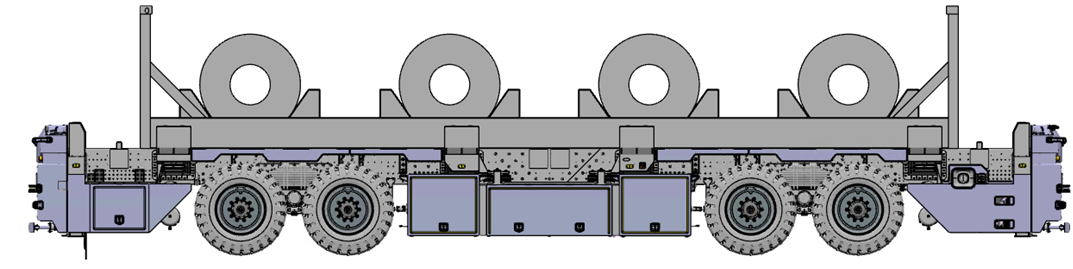
Core Insights - The company successfully won the bid for the unmanned horizontal transportation project of steel coils at Longgong Port, marking a new scenario in the "piece cargo" unmanned transportation field and deepening cooperation for port intelligent upgrades [1][6] Industry Challenges - Steel coil transportation faces dual challenges of efficiency and safety, with three main pain points: - Prominent safety risks due to human intervention during loading and transfer, leading to potential accidents and damage to high-value steel coils [2] - Low standardization in manual operations affecting precision and stability in high-frequency port operations, limiting overall process efficiency [2] - Strict driving control requirements due to the physical characteristics of steel coils, necessitating high stability in vehicle operations to prevent accidents [2] Technological Solutions - The company has developed a solution to address industry pain points by upgrading flatbed trucks to create "smart movers" capable of multi-scenario operations, integrating advanced perception, intelligent decision-making, and precise control algorithms [3] - Key upgrades include: - Core technology adaptations for unmanned operation, ensuring precise responses in complex port environments and developing intelligent scheduling systems for efficient task management [3] Value Creation - The upgraded unmanned flatbed trucks have achieved multiple efficiency breakthroughs in port operations: - Enhanced logistics turnaround efficiency through automated operations, allowing for 24/7 operation and significantly increasing equipment utilization and daily output [4] - Expanded operational scenarios beyond traditional container transport, adapting to diverse material transfer needs within the port [4] - Implemented dual safety mechanisms for high-risk scenarios, ensuring controlled operations and minimizing safety risks during manual interventions [4] Future Outlook - Winning the bid for the steel coil unmanned transportation project signifies recognition of the company's technical strength and capability, establishing a new paradigm for unmanned transportation of piece cargo and providing replicable practices for the intelligent upgrade of the port logistics industry [6]


两家百年汽车巨头联手了!
Zhong Guo Qi Che Bao Wang· 2025-12-11 01:38
Core Viewpoint - Renault Group and Ford Motor Company have officially announced a strategic partnership to jointly develop two affordable electric vehicle models for the European market, aiming to reduce costs and address increasing competition [1] Group 1: Strategic Collaboration - The collaboration focuses on the electrification transition and product layout in the European market, with both companies set to launch two new Ford-branded electric vehicles based on Renault's Ampere platform, produced in the ElectriCity facility in northern France [2] - The new models will be small, affordable electric vehicles, with the first expected to hit the European market in early 2028, filling a gap in Ford's electric vehicle offerings in Europe while maximizing Renault's platform capacity [2] Group 2: Commercial Vehicle Development - In addition to passenger vehicles, the two companies have signed a memorandum of understanding to explore joint development and production of specific light commercial vehicles under both Renault and Ford brands [3] - Historically, Renault has partnered with Nissan and Daimler, while Ford's previous collaborations in Europe were primarily with Volkswagen, focusing on mid-sized and larger electric vehicles [3] Group 3: Market Challenges - Both companies face significant challenges in the European market, with Renault reporting a revenue of €27.6 billion in the first half of 2025, a 2.5% increase, but a net loss of €11.143 billion, largely due to a €9.3 billion impairment on its Nissan stake [7] - Ford's market share in Europe has declined from over 10% in the 1990s to 4% in 2023, with a reported market share of 3.3% for the first ten months of 2025 [9] - The collaboration is seen as a necessary step for both companies to share resources, reduce transformation costs, and strengthen their positions in the competitive European market [9]


央企履责典范!中国一汽优秀案例入选《中央企业社会责任蓝皮书》
Zhong Guo Qi Che Bao Wang· 2025-12-10 10:23
12月5日,由国务院国资委社会责任局主办的"勇担新使命 践行新担当,中央企业和地方国资国企社会责任蓝皮书发布会"在北京成功召开。国务院国资 委党委委员、副主任庞骁刚莅临指导并致辞,国务院国资委社会责任局局长李军作成果发布解读。中国一汽总经理、党委副书记刘亦功代表中国一汽参会并 作中国一汽履行社会责任实践成果分享发言。 ▲中国一汽总经理、党委副书记刘亦功作中国一汽履行社会责任实践成果分享发言 中国一汽作为共和国汽车工业长子,自诞生之日起就牢记"产业报国、工业强国"的初心使命。一直以来,中国一汽坚定履行新时代中央企业的使命责 任,秉承创领人·车·社会美好未来的责任理念,聚焦主责主业,持续引领产业发展;聚焦绿色转型,积极建设美丽中国;聚焦社会民生,坚定共享发展成 果;聚焦企业改革,全面提升治理效能,持续以高标准履行社会责任驱动企业高质量发展。 活动现场发布了《中央企业社会责任蓝皮书(2025)》《中央企业上市公司环境、社会及公司治理(ESG)蓝皮书(2025)》《国资国企社会责任蓝皮 书(2025)》。 本年度,中国一汽案例《厚植责任文化沃土,筑牢高质量发展根基》,系统总结在社会责任管理方面的卓越实践和突出成效,成 ...


提升金融获得率,缓解车市“成长痛”
Zhong Guo Qi Che Bao Wang· 2025-12-10 10:15
Core Insights - The integration of finance with the entire automotive lifecycle is emphasized as essential for industry development, highlighting the need for financial services to support manufacturing, circulation, and consumer segments [2][3] - A series of government policies aimed at boosting consumption have positioned finance as a critical enabler in the automotive sector, with initiatives to enhance financial services for consumers and businesses alike [2][3] Group 1: Financial Integration and Policy Support - Financial services are being integrated across the automotive supply chain, from supply chain finance to consumer financing for new and used cars, as well as insurance and leasing services [2] - Recent government policies, including the guidance from the People's Bank of China and other departments, aim to enhance financial support for consumption, thereby stimulating market activity [2][3] Group 2: Automotive Financial Market Dynamics - The automotive financial sector is transitioning from traditional credit growth and price competition to structural optimization and product innovation, with a focus on rational development [5] - The penetration rates of automotive finance companies have been declining due to high-interest competition, prompting a shift towards quality and service rather than scale and price [6] Group 3: Risk Management and Technological Integration - The automotive finance industry is increasingly focusing on risk management and service quality in response to heightened competition and regulatory scrutiny [6][9] - The application of big data, artificial intelligence, and blockchain is reshaping the financial landscape, driving innovation in product offerings and enhancing operational efficiency [7][12] Group 4: Challenges and Solutions for Dealers - Automotive dealers are facing significant operational challenges, including cash flow deficits and increased financial risks, exacerbated by high inventory levels and price wars [9][10] - Initiatives like the "Dealer Health Monitoring" product aim to provide financial institutions with real-time insights into dealer operations, helping to mitigate risks and ensure stable financial support [10][12] Group 5: Future Outlook and Strategic Directions - The automotive supply chain finance is at a critical juncture, with rising risks prompting a shift towards more refined operational strategies and collaborative relationships among industry stakeholders [13] - The focus on data-driven decision-making and risk monitoring is expected to enhance the resilience and sustainability of the automotive finance sector [12][13]

中国孕育新能源智造加速度,乐道385天完成10万辆交付里程碑
Zhong Guo Qi Che Bao Wang· 2025-12-10 09:19
国家能源局统计数据显示,在刚刚结束的国庆中秋假期,新能源汽车充电量创下历史同期新高,这一数据侧面反映我国新能源汽车市占率与使用率加 速提升。从数据来看,2024年我国新能源汽车保有量达3140万辆,较"十三五"末增长5倍多。另一方面,《新能源汽车产业发展规划(2021—2035年)》 目标提出,到2025年新能源汽车新车销售量应达到汽车新车销售总量的20%左右,而今年前8月该数据已达45.5%,这意味着产业规划目标已大幅超额完 成。 新能源汽车的发展对我国经济与全球市场都有着显著贡献。数据显示,我国新能源汽车整车消费超过2万亿元,带动产业链上下游发展,形成了巨大 的经济社会效益;而在30万元以上的中高端产品层面,中国品牌涌现出一批可圈可点的车型,成功打破BBA在这一价位区间的主导地位,实现"规模领 先"向"价值引领"的转型。 我国新能源汽车的快速发展,源于国内超大规模市场、完善供应链、强工程化能力、快技术迭代、企业家精神,以及国家战略支持与基建"超前布 局"。这种全方位创新突破,重塑全球汽车产业竞争格局与供应链,为世界贡献"中国样板"。在此背景之下,一批出色的新能源汽车企业不断涌现出来, 包括最先入局新能源市 ...

富奥智慧:引入战略投资落地 获2000万元增资深耕电池循环产业
Zhong Guo Qi Che Bao Wang· 2025-12-10 09:11
Core Insights - Fuao Smart Energy Technology Co., Ltd. has made significant progress in attracting strategic investors, marking a key step in enhancing its battery recycling industry layout [1] - The strategic investment agreement with Jilin Green Power Automotive Industry Private Equity Investment Fund will provide Fuao Smart with both financial and resource support, facilitating its growth in the battery recycling sector [2] Financial Aspects - The investment of 20 million yuan will effectively supplement Fuao Smart's operational funds, ensuring robust financial backing for technology research, capacity expansion, and market development in the battery recycling field [2] - Following the capital increase, Fuao Smart's registered capital will rise from 65 million yuan to 83.6794 million yuan, optimizing its equity structure while maintaining Fuao's absolute control with a 77.68% shareholding [1] Strategic Collaboration - The Green Power Fund is not a typical financial investor; it is established to support the development of the power battery recycling sector in alignment with the strategic goals of China FAW Group, providing deep automotive industry resources and strategic synergy [1] - The collaboration aims to foster comprehensive cooperation in the battery recycling industry, exploring paths for technological innovation and business model upgrades, which could lead to significant advancements for Fuao Smart and contribute to the construction of a green circular ecosystem in the automotive industry [2]

五菱柳机轻量化车间揭牌:锚定产业变革,赋能“工业强桂”新征程
Zhong Guo Qi Che Bao Wang· 2025-12-10 09:03
12月5日,在集团所属五菱柳机即将迎来建厂97周年的重要节点,其轻量化车间正式揭牌。这一举措不仅是五菱柳机深耕汽车产业的关键布局,更在 广西"工业强桂"战略引领下,为企业加速新材料技术成果转化、构建全链条产业化能力注入强劲动力,标志着其在轻量化赛道上迈出坚实一步。 协同聚能构建创新生态,全链条发力轻量化领域。在轻量化技术研发上,五菱柳机打造了"内聚外联"的协同体系:内部设立广西华智铝合金构件研究 院,汇聚包括多名国家级高层次人才在内的跨学科专家团队,专攻新能源汽车专用铝合金材料及构件的研发、测试与产业化;外部联动高温轻合金及应用 技术全国重点实验室等多个高端平台,以需求为导向开展协同研发,形成"基础研究—技术开发—工程应用"的完整转化闭环。 链式赋能推动规模发展,锚定未来拓展产业边界。当前,五菱柳机正积极参与政企校共建轻量化铝合金零部件产业集群,推进广西泛铝件先进制造基 地建设,并通过研究院平台完善型材构件、铝合金重力铸造等先进制造能力,强化全产业链协同,助力广西铝业及新能源汽车产业高质量发展。未来,企 业将聚焦高性能铝合金材料、高精度塑性成形工艺、智能制造三大方向攻关,推动技术成果向地面交通及低空飞行器等新 ...

纳芯微港股上市再出发 开启全球优先新征程
Zhong Guo Qi Che Bao Wang· 2025-12-10 08:09
Core Insights - Naxin Micro, a leading domestic analog chip company, officially listed on the Hong Kong Stock Exchange on December 8, becoming the first company in Suzhou to achieve dual listing in A-shares and H-shares, setting a new record in the domestic analog chip industry [1][14] Company Performance - Naxin Micro has achieved continuous revenue growth for 10 consecutive quarters from Q2 2023 to Q4 2025, with quarterly revenue increasing from 250 million yuan to 840 million yuan, a growth rate exceeding 236% [4] - Even excluding the additional revenue from the acquisition of Maige, the revenue growth rate for Q1-Q3 2025 remains at 50%, maintaining a leading position among domestic analog chip companies [4] Strategic Focus - The company emphasizes its commitment to the energy and automotive electronics sectors, which are experiencing significant structural changes and demand for new chips due to the transition to new energy and intelligent systems [5] - Naxin Micro's product matrix has expanded rapidly, increasing from over 800 sales items in 2021 to over 4,000 by Q3 2025, covering all scene demands in its two core sectors [5] Automotive Business Growth - By 2029, Naxin Micro aims for its automotive business revenue to exceed 50%, becoming the company's largest core business, supported by explosive growth in the electric vehicle market [9] - Revenue from automotive chips is projected to double from 386 million yuan in 2022 to 719 million yuan in 2024, with expectations to reach 1.2 to 1.3 billion yuan in 2025 [9] - The company has shipped over 980 million automotive chips, with an expected annual shipment of over 70 million chips in 2025, translating to approximately 1.92 million chips per day [9] Product Development and R&D - Naxin Micro has established a three-tier product system of "mature production + rapid growth + newly produced," with mature products contributing about 70% of automotive business revenue [10] - The company has over 100 ongoing R&D projects and aims to release hundreds to thousands of new products annually, adhering to strict quality management standards [11] Global Strategy - The listing in Hong Kong is seen as a key step in Naxin Micro's globalization strategy, with plans to use Hong Kong as a hub for overseas operations and sales [14] - The company has already established production supply relationships with 15 leading global automotive parts manufacturers in Europe and eight major battery and automotive parts companies in East Asia [14] - Naxin Micro aims for overseas revenue to account for about 20% by 2029, with established entities in Europe, Japan, South Korea, and the United States [15] Future Outlook - The company has a clear development blueprint focusing on target industries, application innovation, core capability consolidation, and global market operations [16] - With the increasing number of chips required for smart vehicles, Naxin Micro is positioned to become a preferred supplier in the global automotive analog and mixed-signal chip market [16]


从学徒工到CEO,他如何实现逆袭上位?
Zhong Guo Qi Che Bao Wang· 2025-12-10 07:53
Core Viewpoint - BMW Group has appointed Milan Nedeljković as the new CEO, effective May next year, succeeding Oliver Zipse, who is retiring [2]. Group 1: Background of Milan Nedeljković - Milan Nedeljković, who started as an apprentice at BMW, has a strong academic background with degrees from top institutions including RWTH Aachen University and MIT, and a PhD from the Technical University of Munich [4]. - He has extensive hands-on experience in various production processes at BMW, having worked his way up from a technical apprentice to managing key factories in Oxford, Leipzig, and Munich [5]. Group 2: Achievements and Experience - While managing the Oxford plant, Nedeljković implemented significant reforms that improved production efficiency by 30%, allowing for multi-model production and meeting rising market demands for the MINI brand [5]. - He has been responsible for BMW's global production operations, leading the transformation of production lines to accommodate flexible manufacturing of various powertrain models [6]. Group 3: Strategic Vision and Challenges Ahead - Nedeljković's tenure will focus on launching the "Neue Klasse" vehicle series, which represents BMW's largest investment project to date, with the first model, the iX3, already exceeding market order expectations [8]. - The company plans to introduce 40 new models by the end of 2027, which will require effective production management and market strategies, areas where Nedeljković's experience will be crucial [9]. - He aims to balance profitability in the combustion engine segment while accelerating electric vehicle development, addressing challenges posed by EU regulations and competition from companies like Tesla [10].

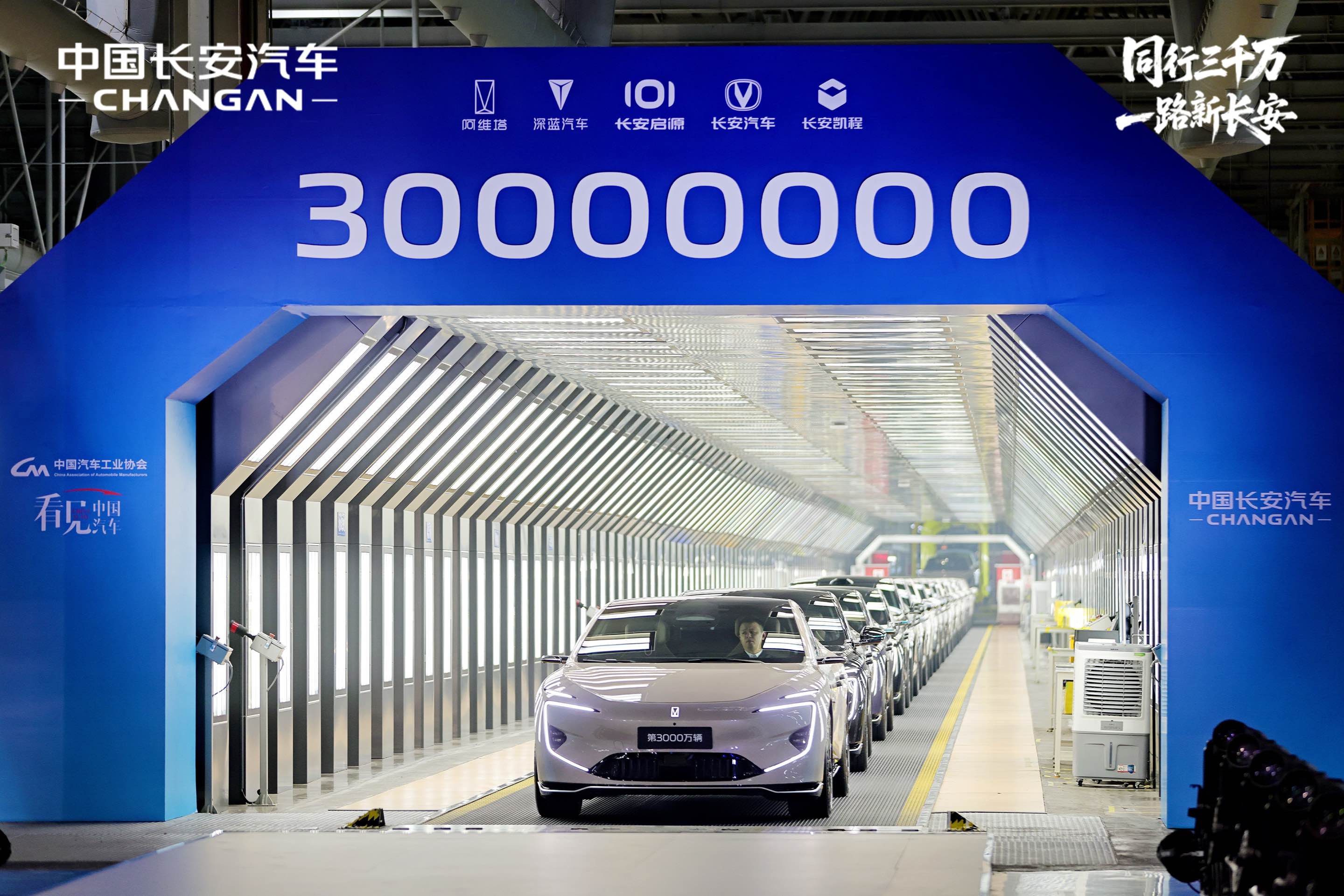
最快达成!中国长安迎来中国品牌3000万辆里程碑
Zhong Guo Qi Che Bao Wang· 2025-12-10 07:00
Core Insights - China Changan has achieved a significant milestone by producing its 30 millionth vehicle, becoming the fastest Chinese brand to reach this figure, reflecting its rapid growth and market acceptance [1][11][27] Group 1: Achievements and Growth - The company has shown remarkable progress, reducing the time taken to produce each successive 10 million vehicles: 30 years for the first 10 million, 7 years for the second, and only 4.5 years for the third [11] - The automotive industry in China has seen a continuous increase in market share for domestic brands, with significant growth in exports and the adoption of new energy vehicles [4][8] Group 2: Innovation and Technology - Changan has emphasized technological innovation as a key driver of its growth, investing 5% of its annual revenue into R&D and establishing a global research network with over 24,000 personnel [18][22] - The company has developed a comprehensive safety system, extending beyond traditional vehicle safety to include health and psychological safety, under its "New Safety" initiative [16][18] Group 3: Strategic Plans - Changan's strategic blueprint for the future includes three major initiatives: "Shangri-La" for new energy, "Beidou Tianshu" for intelligence, and "Haina Baichuan" for globalization, aiming for 5 million vehicle sales by 2030, with over 60% being new energy vehicles [27][29] - The company plans to enhance its global presence and localize operations while continuing to innovate in key technology areas such as next-generation batteries and autonomous driving [29][31] Group 4: Brand Development - Changan has established a strong brand matrix with five key brands, including Avita and Deep Blue, which have shown impressive sales performance, contributing to the overall growth of the company [24][26] - The company has engaged customers through initiatives like the "I have a Changan car" campaign, reinforcing its commitment to customer-centric development [26]