Di Yi Cai Jing Zi Xun

Search documents
盘前必读丨“人工智能+制造”重要部署来了;多家公司预计2025年业绩亏损
Di Yi Cai Jing Zi Xun· 2026-01-07 23:17
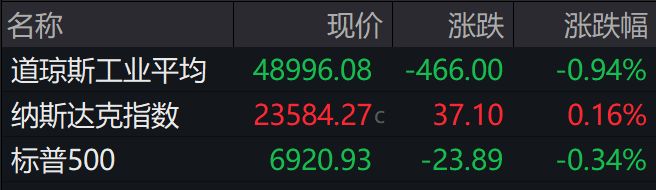
Market Performance - The US stock market showed mixed performance with the Dow Jones Industrial Average down by 0.94%, while the Nasdaq increased by 0.16% and the S&P 500 decreased by 0.34% [1] - Major tech stocks exhibited varied results, with Google rising by 2.5% and surpassing Apple in market capitalization, while Intel saw a significant increase of over 6% due to its approval of a $900 million acquisition of Mentee Robotics [1] Banking Sector - Large bank stocks experienced declines, with Bank of America down by 2.8%, JPMorgan down by 2.2%, and Goldman Sachs down by 1.5% [2] Commodity Prices - International oil prices weakened, with WTI crude oil down by 2.00% to $55.99 per barrel and Brent crude down by 1.22% to $59.96 per barrel [2] - Precious metals faced adjustments, with COMEX gold futures down by 0.73% to $4,449.30 per ounce and silver futures down by 4.22% to $77.135 per ounce [2] AI and Manufacturing Initiatives - Eight departments in China issued an implementation opinion for the "Artificial Intelligence + Manufacturing" initiative, aiming for reliable supply of key AI technologies by 2027 and promoting the development of high-performance algorithm models [2] - The Ministry of Industry and Information Technology released an action plan to enhance the integration of industrial internet and AI by 2028, targeting significant improvements in AI application capabilities [3][4] Pharmaceutical Sector - The National Medical Products Administration in China is optimizing the review and approval process for urgently needed foreign drugs to meet clinical demands, including expedited review timelines for rare disease medications [5] Central Bank Actions - The People's Bank of China announced a 1.1 trillion yuan reverse repurchase operation to maintain liquidity in the banking system, set to take place on January 8, 2026 [5] Corporate Earnings Forecasts - Zhongke Lanyun expects a net profit increase of 367%-377% for 2025, while Chuanjinnuo anticipates a 144.24%-172.64% increase [7] - Companies like Koushijiao and Zhongchuan Technology forecast significant losses for 2025, with Koushijiao projecting a 50%-60% decrease in net profit due to declining sales of high-end products [7] Market Outlook - Citic Securities suggests that the appreciation of the RMB, positive signals from the tech sector, and improved macroeconomic expectations may drive the continuation of the A-share market's year-end rally [8] - The overall market trend remains upward, with many sectors finding support at the 60-day moving average, indicating the potential for a new round of upward momentum [8]

ADP止跌职位空缺却下滑,非农将如何影响美联储降息预期
Di Yi Cai Jing Zi Xun· 2026-01-07 23:12
Group 1 - The core economic data released this week indicates a partial recovery in the U.S. job market at the end of last year, but it has not fully overcome challenges. The Federal Reserve's interest rate futures pricing suggests the first rate cut could occur in the second quarter if the non-farm payroll data falls short of market expectations [1] - In December 2025, U.S. companies added 41,000 jobs, which is below the expected 48,000, indicating a weak labor market. Employee wage growth has also declined, with a year-on-year increase of 4.4%, matching the lowest level since the pandemic [2] - Job growth is concentrated in a few sectors, primarily healthcare, hospitality, and restaurants, highlighting the weakness of the labor market over the past year. The current labor market is characterized by low hiring and low layoffs, with no clear signs of a significant rebound in hiring [3] Group 2 - The U.S. Labor Department's JOLTS report shows a decline in job vacancies and hiring in November, with job openings dropping from nearly 7.5 million to about 7.1 million, and the hiring rate decreasing from 3.4% to 3.2% [4] - The upcoming non-farm payroll data, set to be released on January 9, is expected to be a key driver for market direction. In November, the U.S. non-farm payrolls increased by 64,000, but the unemployment rate rose to 4.6%, the highest in over four years [5] - The Federal Reserve's economic outlook for 2026 is generally optimistic, predicting accelerated economic growth and a stable unemployment rate, although concerns remain about the labor market's cooling [6] Group 3 - There are significant risks in the market, as inflation improvement has stalled and the labor market shows signs of weakness. The slowing job growth and declining wage pressure indicate a challenging economic environment [7] - The current labor market is not in an ideal state of equilibrium, and the "low hiring, low layoffs" model may not be sustainable. If consumer spending decreases, it could lead to a wave of layoffs [7] - The weakening labor market provides a rationale for the Federal Reserve to adjust its rate cut expectations, and if the non-farm report is too weak, it may signal more severe economic risks than currently anticipated [7]

7万亿年金基金三年期考核机制正式落地
Di Yi Cai Jing Zi Xun· 2026-01-07 15:40
Core Viewpoint - The long-term assessment mechanism for pension funds has been officially implemented, aiming to enhance the investment effectiveness of pension funds by extending the evaluation period and focusing on medium to long-term goals [2][3]. Group 1: Long-term Assessment Mechanism - The official guidance specifies that the management contracts for pension funds should have a minimum duration of three years, establishing a new standard for long-term assessment [3]. - The performance evaluation of pension funds will primarily rely on medium to long-term objectives, with an emphasis on indicators that span over three years [3]. - The new mechanism aims to reduce the pressure on fund managers to chase short-term performance, allowing for more stable and strategic investment decisions [4]. Group 2: Importance of Pension Funds - Corporate and occupational pension funds are a crucial part of China's second pillar of the pension system, with an investment scale exceeding 7.7 trillion yuan as of September 2025 [5]. - The investment returns from corporate pension funds during the 14th Five-Year Plan period are projected to exceed 756 billion yuan [5]. - The long-term nature of pension funds is essential for stabilizing the capital market and enhancing value discovery, which has been hindered by short-term performance pressures [5][7]. Group 3: Policy Implications - The guidance is part of a broader initiative to promote long-term capital investment across various financial sectors, including public funds and insurance companies [6]. - The implementation of long-term assessment mechanisms is expected to transform pension funds from being reactive to becoming proactive long-term capital [7]. - This policy is viewed as a significant upgrade to the infrastructure of China's capital market, addressing the fundamental conflict between long-term capital attributes and short-term investment behaviors [7].
美股黄金、白银股大跌
Di Yi Cai Jing Zi Xun· 2026-01-07 15:14
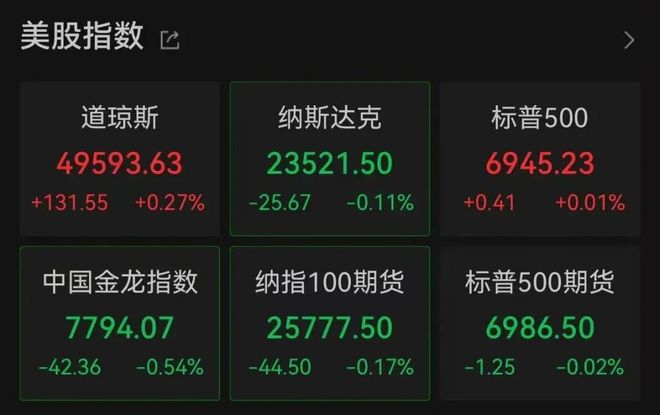
Market Overview - As of January 7, U.S. stock indices showed mixed performance, with the Dow Jones up by 0.27%, the S&P 500 slightly up by 0.01%, and the Nasdaq down by 0.11% [1]. - The Dow Jones index reached 49,593.63, gaining 131.55 points [2]. - The S&P 500 index stood at 6,945.23, with a minor increase of 0.41 points [2]. - The Nasdaq index was at 23,521.50, decreasing by 25.67 points [2]. Sector Performance - Gold and silver stocks experienced significant declines, with Hecla Mining and First Majestic Silver dropping over 5%, and Pan American Silver and Kinross Gold falling more than 4% [2]. - Barrick Gold saw a decline of over 2% [2]. - Spot gold prices fell by 1%, while spot silver prices dropped nearly 5% [2]. Technology Sector - The technology sector faced a majority of declines, with Western Digital falling over 5% and AMD down by more than 2% [2]. Chinese Stocks - Chinese stocks showed mixed results, with Zai Lab increasing by over 5% and Century Internet rising by more than 4% [2]. - However, Hesai Technology and NetEase both experienced declines of over 2% [2].



2026苏超“赞助商金额超2亿”?官方回应
Di Yi Cai Jing Zi Xun· 2026-01-07 14:54
经过2025年的爆火之后,2026年的苏超被很多人期待。近日,苏超2026年赞助金额达2.02亿元的消息在 网上疯传,"2亿赞助商"名单满天飞。据现代快报记者从相关部门了解到,该消息不实。 目前,2026年苏超的赞助商还未公布,预计相关部门将召开发布会,正式对外发布苏超赞助商的相关信 息。 ...
A股电网设备板块批量异动
Di Yi Cai Jing Zi Xun· 2026-01-07 14:41
Core Viewpoint - The electric grid equipment sector is experiencing a significant structural change, with domestic investments increasing while foreign capital is retreating, indicating a new growth phase for the industry in 2026 [2][4]. Group 1: Market Performance and Key Developments - On January 7, 2026, China XD Electric (601179.SH) saw a strong surge, nearing its historical high of 11.08 yuan, following its successful bid for a 1.447 billion yuan project from the State Grid [2][3]. - The electric grid equipment index rose by 1.88% on the same day, reaching a one-month high, with significant gains observed in other companies like Sanbian Technology (002112.SZ) and Far East Holdings (600869.SH) [3]. - In 2025, the electric grid equipment index increased by 33%, reaching a historical peak, driven by accelerated investments from the State Grid and high demand for overseas grid upgrades [3][5]. Group 2: Investment Trends and Structural Changes - The total market size for domestic electric grid equipment is projected to exceed 2 trillion yuan in 2025, with a year-on-year growth of 15%, supported by stable investments from the State Grid and Southern Grid [5]. - The bidding amount for State Grid's transmission and transformation equipment reached 91.9 billion yuan in 2025, reflecting a 26% year-on-year increase, with significant growth in the bidding for ultra-high voltage transformers and combined electrical devices [5]. - The structural changes in investment direction are leading to a divergence in the performance of different segments within the electric grid equipment industry, with high demand for main grid and transformer exports while some segments face pressure [5][6]. Group 3: Future Outlook and Opportunities - The acceleration of ultra-high voltage project approvals is expected to provide clear guidance for State Grid's investment growth in 2026, with projections for four new direct current lines to be approved [6]. - The demand for electric transformers is anticipated to remain high due to aging infrastructure in the U.S. and a significant supply gap, presenting a historic opportunity for domestic companies to expand internationally [7]. - The introduction of next-generation solid-state transformers, which can improve power supply efficiency to over 90%, is expected to be a key development in 2026, with domestic companies likely to benefit from high-margin orders [7].


黄金、白银,加速下跌
Di Yi Cai Jing Zi Xun· 2026-01-07 14:28
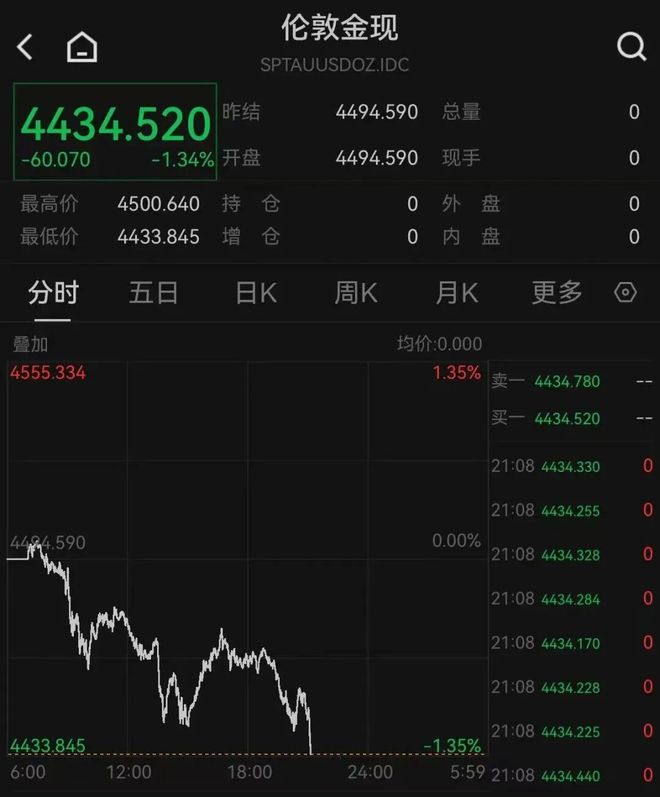
Group 1 - Gold and silver prices experienced a collective decline, with spot gold dropping by 1.34% to $4434.52 per ounce and spot silver falling by 4.34% to below $78 per ounce [1][2] - The Shanghai gold futures main contract decreased by 0.95%, settling at 995.74 yuan per gram, while the Shanghai silver futures main contract fell over 4%, reaching 18796 yuan per kilogram [3][4] Group 2 - The trading volume for gold was reported at 1.11 million contracts, with a highest price of 1000.56 yuan per gram and a lowest price of 995.20 yuan per gram [4] - For silver, the trading volume was 118,600 contracts, with a highest price of 19233 yuan per kilogram and a lowest price of 18726 yuan per kilogram [5]
一财社论:降低维权门槛,“围剿”财务造假
Di Yi Cai Jing Zi Xun· 2026-01-07 13:51
Core Viewpoint - The establishment of a comprehensive punishment and prevention system for financial fraud is fundamental to purifying the ecological environment of the capital market [1] Group 1: Regulatory Actions - The China Securities Regulatory Commission (CSRC) has made significant progress in combating financial fraud, with 159 cases investigated and 111 administrative penalties imposed since the beginning of 2024, amounting to fines of 8.1 billion [2] - The introduction of the special representative litigation system has enhanced the interconnectivity of administrative, criminal, and civil actions, contributing positively to a healthy investment environment [2] Group 2: Challenges in Enforcement - Sole reliance on judicial and regulatory enforcement is insufficient, as the complexity of financial fraud makes it difficult for regulators to detect all violations [3] - Financial fraud is characterized by private information and information asymmetry, necessitating a dual approach that combines public enforcement with market self-regulation [3] Group 3: Improvement of Legal Framework - The current special representative litigation system has limitations, with very few cases actually initiated despite numerous financial fraud incidents, indicating a need to lower the entry barriers for such lawsuits [4] - The complexity of defining eligible representatives and the ambiguity in compensation distribution hinder the effectiveness of the self-regulatory system [4] Group 4: Enhancing Market Self-Regulation - Reducing the barriers for the special representative litigation system will lower the costs of market self-regulation and increase the costs for financial fraud [5] - Establishing a civil compensation priority before administrative penalties could incentivize the special representative litigation system, addressing issues related to enforcement and compensation collection [5]
黄仁勋新年首场采访,谈了做CEO的秘诀
Di Yi Cai Jing Zi Xun· 2026-01-07 11:44
2026.01.07 今年的CES(国际消费电子展)演讲中,算力焦虑是一个不断被提起的话题。 当地时间1月5日,在与OpenAI总裁格雷格·布洛克曼(Greg Brockman)的对话中,AMD CEO苏姿丰笑 言,每次见到格雷格·布洛克曼,他都在说需要更多算力。 按照苏姿丰的预测,未来几年内需要将全世界的计算能力增加100倍。英伟达CEO黄仁勋给出的数据则 是,模型规模以每年10倍的速度增长,推理模型的输出每年增长5倍。为匹配算力需求,英伟达透露, 最新架构芯片吞吐量是前一代的10倍,苏姿丰则放话,有望4年内将AI芯片性能提升1000倍。 但如果考虑到芯片晶体管每年密度提升的速度,每年实现10倍的性能提升并不容易。在1月6日与第一财 经等媒体一个半小时的对话中,黄仁勋换上了一件新皮衣,谈话中多次提到芯片工艺技术逼近物理极 限,为了应对这个挑战,英伟达需要在半导体工艺之外做到更多。 本文字数:4318,阅读时长大约7分钟 作者 |第一财经 郑栩彤 刘佳 封图 |第一财经记者刘佳摄 英伟达走向了从芯片到整个计算机系统、数据中心的协同优化路径,在算力芯片之外看到更多。在对话 中,黄仁勋讲到英伟达在存储、能源、模型 ...


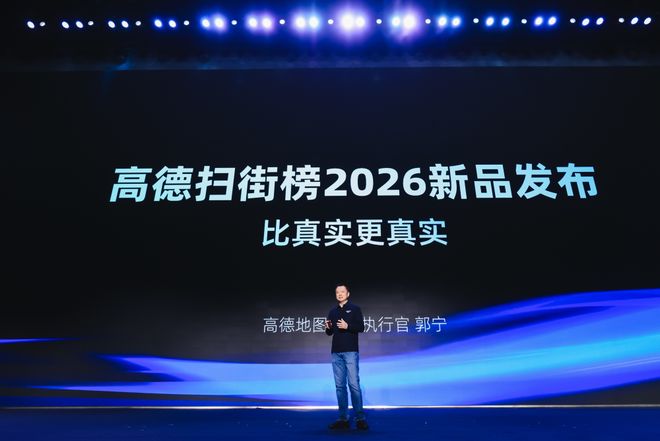
6.6亿用户“走”出增长神话:高德扫街榜成为本地生活超级入口
Di Yi Cai Jing Zi Xun· 2026-01-07 11:18
Core Insights - Gaode is transitioning from a mapping service to a local life service super entrance, as evidenced by the launch of the "Street Ranking" which has gained significant traction in a short period [1][5] User Growth and Engagement - The "Street Ranking" accumulated over 660 million users within 100 days of its launch, with more than 860,000 merchants actively joining the platform [1][5] - On the first day of its launch, the user base exceeded 40 million, and by October 2025, the daily active users surpassed 70 million, showcasing a "phenomenal" growth in a saturated market [3][5] Merchant Performance - The average revenue of the 860,000 merchants increased by over 270% month-on-month, indicating the platform's effectiveness in enhancing merchant operations [5] User Experience and Trust - The "Street Ranking" utilizes real user behavior data, such as navigation and in-store visits, to create rankings, thereby addressing issues of trust and authenticity in local service reviews [4][10] - Users reported a significant reduction in decision-making costs when selecting local services, as the platform provides reliable recommendations based on actual consumer behavior [7][10] Technological Advancements - The 2026 upgrade of the "Street Ranking" introduced 6,553 dynamic seasonal rankings and 1,550 category rankings, expanding its coverage to global listings across over 200 countries [8][10] - New features like "Flying Street View" and AR capabilities enhance user interaction and provide immersive experiences, showcasing Gaode's technological edge in the local service market [10][11] Market Positioning - Gaode's strategy positions it as a key player in the local life service sector, leveraging its extensive data assets and AI capabilities to create a differentiated credit system for local services [4][8][11] - The platform aims to reshape the local consumption credit system and growth logic, emphasizing the importance of genuine consumer experiences in driving business success [11]