Di Yi Cai Jing Zi Xun

Search documents
新财报季启幕,标普500能否闯关7000点
Di Yi Cai Jing Zi Xun· 2026-01-11 07:04
Core Viewpoint - The US stock market has regained momentum, driven by chip manufacturers like Broadcom, with the Dow Jones and S&P 500 indices reaching new historical highs, despite a weaker-than-expected non-farm employment report [2][4]. Economic Data Summary - The US labor market shows a "low hiring, low layoffs" trend, with December non-farm payrolls adding only 50,000 jobs, below the expected 70,000, and November's figures revised down from 64,000 to 56,000 [4][5]. - The unemployment rate decreased to 4.4%, better than the anticipated 4.5%, while average hourly earnings rose by 0.3% month-on-month, exceeding the 0.2% forecast, and the year-on-year increase reached 3.8%, above the expected 3.6% [5]. - The University of Michigan's preliminary consumer confidence index for January rose by 1.1 points to 54.0, the highest since September of the previous year, although it remains low compared to the previous year due to inflation and employment market concerns [5]. Federal Reserve Outlook - Market expectations for Federal Reserve interest rate cuts have cooled, with probabilities for rate cuts in upcoming meetings significantly reduced: January from 17% to 5%, March from 53% to 29%, and April from 79% to 51% [6]. - The consensus is that the next rate cut may occur in June, with a theoretical probability of 100%, as the Fed appears to be waiting for more data before making any policy changes [6]. Market Performance Summary - The S&P 500 index has seen broad gains, with a 5.8% increase in the consumer discretionary sector leading the way, while materials and industrial sectors rose by 4.8% and 2.5%, respectively [7]. - Fourth-quarter earnings for S&P 500 constituents are expected to grow by 8.3% year-on-year, marking the tenth consecutive quarter of growth, with revenue growth at 7.6% [7]. - The current expected price-to-earnings ratio for the S&P 500 is approximately 22 times, down from 23 times in November but still above the five-year average of 19 times [7]. Investment Trends - There is a noticeable shift in investment towards non-tech sectors, with healthcare, industrials, biotech, materials, and financials benefiting from this rotation [8]. - Despite the overall market rally, large-cap tech stocks have shown relative weakness, indicating a more selective investment approach among investors [8]. - Notable stock performances include Google rising by 4.5% to a new high and Amazon increasing by over 8%, while Apple and Nvidia saw declines of 4% and 1.6%, respectively [8]. Future Market Considerations - The 10-year US Treasury yield is expected to hold at a short-term pressure level of 4.20%, which could support the stock market [9]. - Upcoming earnings reports and monthly inflation data are anticipated to increase market volatility, with potential risks from unexpected inflation data or profit-taking reactions to favorable earnings [9].

马斯克称机器人4年后将完胜人类医生,顶级专家回应
Di Yi Cai Jing Zi Xun· 2026-01-11 05:12
Core Viewpoint - Elon Musk predicts that general artificial intelligence (AGI) will arrive by 2026, with robots surpassing human surgeons in surgical skills within three years and achieving complete superiority over any human surgeon in four years [2][4]. Group 1: Impact on the Medical Industry - Musk's statements have caused significant concern within the global medical community, suggesting a potential crisis for doctors [4]. - The concept of AGI refers to artificial intelligence systems that possess cognitive abilities comparable to or exceeding those of humans, capable of performing complex tasks and learning autonomously [4]. - Neuralink, Musk's brain-machine interface company, is already using robots for "brain insertion" surgeries, with over 10,000 patients reportedly waiting for procedures [4][5]. Group 2: Technological Advancements - Neuralink's surgical robots have dramatically reduced the time required to implant electrodes from 17 seconds to 1.5 seconds, aiming for a future where surgeries can be completed in a short time frame [5]. - The robots utilize a complex visual system that integrates multiple microscopes and optical coherence tomography (OCT) technology to enhance precision during surgeries [5]. Group 3: Challenges in Implementation - Significant engineering challenges remain in automating all decision-making processes for surgical robots, as current operations still require human oversight [6][7]. - The transition from experimental technology to widespread clinical application will necessitate a fully automated maintenance system for the robots [6]. Group 4: Perspectives from Medical Professionals - Experts believe that while AI will assist doctors, the complete replacement of human surgeons is not imminent, with many emphasizing the need for human oversight in surgical procedures [9][10]. - Current robotic systems, including the Da Vinci robot, still rely on human operators, and achieving fully autonomous surgical robots is seen as a long-term goal [10]. Group 5: Investment Landscape - The surgical robot market in China has become highly attractive for investors, with significant funding activity and several companies seeking to capitalize on this trend [12]. - The market is currently dominated by a few leading companies, making it challenging for new entrants to gain a foothold [12]. - The Chinese vascular intervention robot market is projected to grow significantly, with an estimated market size of 5.824 billion RMB by 2030, reflecting a compound annual growth rate of 90% [15]. Group 6: Regulatory Developments - The National Healthcare Security Administration in China is expected to release guidelines for the pricing of surgical robots and related technologies, which could positively impact the industry [14].


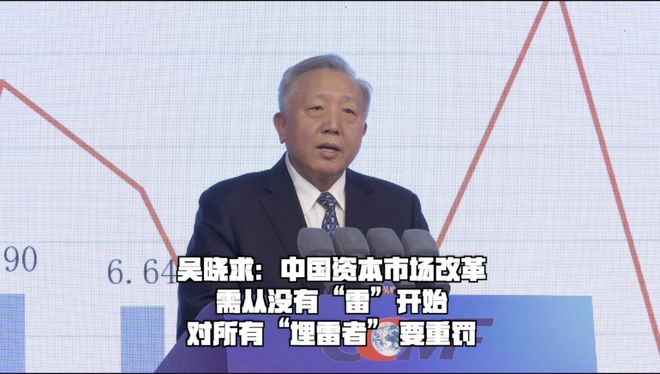
吴晓求称要对资本市场埋雷者重罚
Di Yi Cai Jing Zi Xun· 2026-01-11 03:12
2026.01.11 本文字数:951,阅读时长大约2分钟 作者 |第一财经 周楠 2026年伊始,A股市场表现强势,沪指一举突破4100点,两市成交额站上3万亿大关。 "险资就是一个例子,不是说险资不能进,是险资没法进,它的偿付能力指标就约束它了,把投资风险 市场的系数弄得很高,同时考核周期又很短。"他举例说。 吴晓求认为,推动投资端改革是本轮资本市场改革重点,核心目标是扩大市场流动性。 第三,制度端改革。吴晓求说,没有制度端的改革,前述两项改革很难见效,而制度端改革的核心是要 让市场有信心、有预期、有底线性。 他进一步解释称,制度端改革首先要确保市场透明度,要采取各种手段让发行人如实披露信息,不 能"埋雷"。 "现在有一些上市公司总想'埋雷',千方百计地'埋雷'。更有甚者欺诈上市,这样下去市场的'雷'该太多 了。"吴晓求说,资本市场改革要从没有"雷"开始。 那么,如何把"雷"去掉?对此,他建议,对"埋雷者"和"帮助埋雷者"重罚,对欺诈上市、财务造假、内 幕交易等行为的处罚,从行政处罚转变为进行刑事处罚、民事赔偿,并对帮助造假的中介机构同等处 罚。 "最近一年多来,特别是从2024年9月24日以来,中国资本 ...
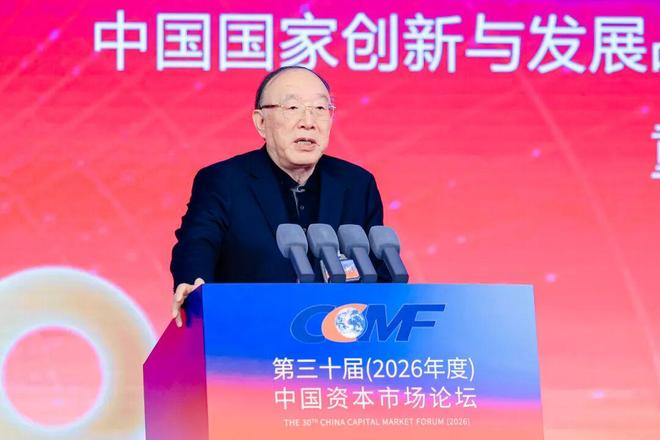
黄奇帆:资本市场两个“轮子”要一起转
Di Yi Cai Jing Zi Xun· 2026-01-10 15:09
Core Viewpoint - The capital market in China consists of two essential components: the stock market involving listed companies and securities firms, and the capital formation and supplementation mechanism for all enterprises, which includes the development of equity investment funds [2][3]. Group 1: Capital Market Structure - The capital market should not only focus on securities and listings but also encompass mechanisms for capital formation and supplementation for enterprises [2]. - The dual components of the capital market act as a significant driving force for the national economy, necessitating a sustainable capital supplementation mechanism to address issues of corporate efficiency and risk [3][4]. Group 2: Historical Context and Current Challenges - Historically, state-led initiatives in the 1990s, such as the bankruptcy write-off of state-owned enterprises and debt-to-equity swaps, played a crucial role in capital supplementation [3]. - By 2000, the capital of listed companies in China was over 70%, but by the present, corporate debt ratios have risen to around 70%, significantly higher than the 30%-40% seen in the US and Europe [3][4]. Group 3: Proposed Solutions for Capital Supplementation - To improve the capital structure, an additional 30 trillion to 40 trillion yuan is needed to raise the total capital of Chinese enterprises from approximately 200 trillion yuan to around 240 trillion yuan, potentially reducing the debt ratio to 55% or 50% [5][6]. - Four sources for this additional capital include: 1. Bank capital, where banks could allocate about 1 trillion yuan for equity investments [6]. 2. National social security funds, which could contribute approximately 2 trillion yuan [6]. 3. Commercial insurance funds, which could provide around 4 trillion yuan [6]. 4. Foreign exchange funds, which could be mobilized through special government bonds [7]. Group 4: Expected Benefits of Capital Injection - The formation of this additional equity capital could lead to improved corporate risk management, enhanced productivity, significant investment returns, and increased influence of state-owned enterprises on the national economy [7]. - An estimated average return of 8% on these investments could yield 3 trillion to 4 trillion yuan in returns, benefiting public finances and enhancing the returns for social security and insurance funds [7].
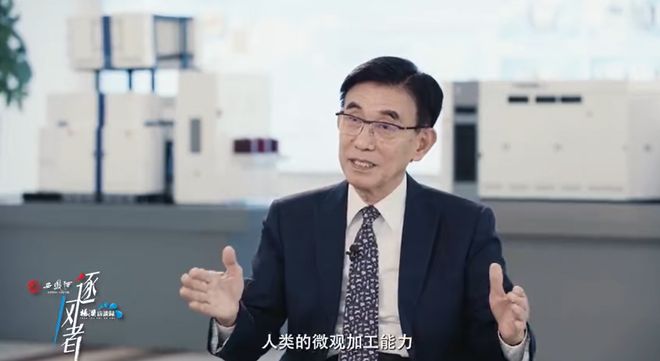
81岁芯片大佬放弃美国国籍,恢复中国籍,为交税拟减持套现近亿元
Di Yi Cai Jing Zi Xun· 2026-01-10 13:16
Core Viewpoint - The semiconductor leader Zhongwei Company (688012) announced plans for share reductions by major shareholders, including its founder and chairman, Yin Zhiyao, for personal and tax-related reasons [2][5]. Shareholder Reduction Plans - Xunxin (Shanghai) Investment Co., Ltd. holds 68.4739 million shares, accounting for 10.94% of the total share capital, and plans to reduce its holdings by up to 12.5229 million shares, or 2% of the total share capital, within three months after the announcement [2][5]. - Yin Zhiyao plans to reduce his holdings by up to 290,000 shares, representing no more than 0.046% of the total share capital, through centralized bidding within three months after the announcement [2][5]. Background of Yin Zhiyao - Yin Zhiyao, born in 1944, is a prominent figure in the semiconductor industry, having previously worked at Intel and Applied Materials before founding Zhongwei Company [7][8]. - He has led Zhongwei Company since its inception in 2004, achieving significant technological advancements in semiconductor equipment [8]. Company Performance - Zhongwei Company has reported a strong growth trajectory, with a 46.40% year-on-year increase in revenue to 8.063 billion yuan for the first three quarters of 2025, and a 32.66% increase in net profit to 1.211 billion yuan [8]. - The company aims to increase its coverage in the integrated circuit equipment sector to 60% over the next five to ten years, striving to become a leading international semiconductor equipment company [8].

吴晓求:“924”行情以来,中国资本市场发生了根本性变化
Di Yi Cai Jing Zi Xun· 2026-01-10 05:05
Core Viewpoint - The Chinese capital market has undergone fundamental changes over the past year, particularly since the "924" market rally, leading to a restoration of market confidence [1] Group 1: Market Reforms - The capital market requires three key reforms: asset side (restructuring of listed companies), investment side (expansion of market liquidity), and regulatory side (enhancing transparency and fairness of rules) [1] - Emphasis on removing "landmines" in the capital market, with severe penalties for those who create or assist in creating fraudulent listings [1] Group 2: Enforcement and Penalties - Proposed shift from administrative penalties to criminal prosecution and civil compensation for fraudulent activities in the capital market [1] - Equal penalties for intermediary institutions that assist in fraudulent activities [1]
“AI双雄”相聚港交所,中国大模型进入上市分水岭
Di Yi Cai Jing Zi Xun· 2026-01-10 03:37
Core Insights - Two major AI model companies, MiniMax and Zhipu, recently listed on the Hong Kong Stock Exchange, with valuations of approximately HKD 700 billion and over HKD 1 trillion respectively, reflecting high market sentiment [2] - MiniMax's stock surged nearly 110% on its first trading day, closing at HKD 345 per share, while Zhipu's stock rose over 20% to HKD 158.6 per share, indicating a significant market differentiation between the two [2][3] - The differing market responses to the two companies are attributed to their distinct commercialization paths, with MiniMax focusing on consumer (C-end) products and Zhipu targeting business (B-end) clients [4] Company Performance - MiniMax's IPO valuation was around HKD 500 billion, with a share price of HKD 165, raising approximately HKD 55.4 billion, while Zhipu's share price was HKD 116.2, raising about HKD 43.5 billion [3] - MiniMax's revenue for the first nine months of 2025 was USD 53.4 million (approximately RMB 380 million), showing a year-on-year growth of 174.7%, while Zhipu's revenue for the same period was RMB 190 million, with a growth of 325% [4] - MiniMax's revenue is expected to be primarily driven by its Talkie application, which is projected to account for nearly 64% of its income in 2024 [4] Market Dynamics - The market is witnessing a shift from the previously discussed "six small dragons" of AI models to a focus on "AI dual heroes," indicating a consolidation of market leadership [8] - MiniMax's diverse revenue structure and significant international capital backing, including investments from sovereign wealth funds, contrast with Zhipu's reliance on local government support [5] - Both companies are currently operating at a loss, with MiniMax's cumulative loss estimated at approximately RMB 9.2 billion and Zhipu's at over RMB 6.2 billion from 2022 to mid-2025 [5] Future Outlook - Industry experts predict that MiniMax needs to enhance its user monetization and cost control to maintain its valuation lead, while Zhipu must overcome scalability limitations in its B-end projects [6] - The listings of MiniMax and Zhipu are seen as a pivotal moment for the Chinese AI industry, marking a transition from pure technology competition to a focus on capital recognition and commercial value [7] - The competitive landscape may evolve further with the emergence of specialized model developers and hardware solution providers, alongside regulatory impacts on data security and cross-border operations [8]
超20家车企降价促销
Di Yi Cai Jing Zi Xun· 2026-01-10 02:55
Core Insights - The Chinese automotive market is experiencing a new wave of competition in 2026, with companies launching promotional discounts and new models with enhanced features without increasing prices [2][3] - The aggressive pricing strategies initiated by BMW have prompted over five joint venture brands to follow suit with significant discounts [2][4] Group 1: Promotional Activities - BMW announced price cuts on 31 models, with discounts reaching up to 300,000 yuan, sparking a competitive response from other brands [2][4] - More than 20 automakers have launched promotional activities since January 1, with over 75 models involved, utilizing various strategies such as cash subsidies and interest-free financing [2][5] - Joint venture brands like FAW Toyota and GAC Honda are offering substantial discounts, with some models seeing price reductions of up to 55,000 yuan [4][5] Group 2: Market Dynamics - The current round of price reductions is viewed as a rational adjustment rather than a price war, with expectations that this trend will continue throughout 2026 [3][6] - The introduction of new energy vehicle purchase tax increases has raised costs for consumers, impacting purchasing decisions [6] - Despite predictions of a market downturn in early 2026, factors such as early implementation of national subsidies and a surge in new model launches may lead to a positive market performance [6] Group 3: New Model Launches - The market is witnessing a significant number of new model launches, with companies like BYD and XPeng introducing upgraded vehicles that enhance features while maintaining competitive pricing [7][8] - The strategy of "adding features without increasing prices" is becoming prevalent among new models, contrasting with older models that are being discounted to clear inventory [8][9] - The automotive industry is also focusing on establishing a pricing mechanism based on production costs and market demand to maintain order in the market [9]



标普道指齐创收盘新高
Di Yi Cai Jing Zi Xun· 2026-01-10 00:54
Market Overview - The US stock market reached new historical highs driven by strong performance in chip stocks and a rotation into value sectors, with the S&P 500 index closing at 6966.28 points, up 0.65% [2] - The labor market showed signs of stability, with December non-farm payrolls adding 50,000 jobs, slightly below expectations of 73,000, while the unemployment rate fell to 4.4%, better than the anticipated 4.5% [5] - The S&P 500 index saw a weekly increase of 1.6%, the Dow Jones Industrial Average rose over 2.3%, and the Nasdaq Composite gained 1.9% during the first full trading week of 2026 [2] Sector Performance - Among the 11 sectors in the S&P 500, 9 sectors experienced gains, with the materials sector leading at 1.8% and utilities up 1.24% [2] - The Philadelphia Semiconductor Index rose by 2.7%, reaching a record high, with notable performances from companies like Lam Research, which surged 8.7%, and Intel, which increased nearly 11% following positive comments from President Trump [3] Notable Stocks - Major tech stocks showed mixed results, with Broadcom up 3.79%, Tesla rising 2.11%, and Meta Platforms increasing by 1.08%, while Nvidia saw a slight decline of 0.08% [3] - Vistra Energy's stock jumped 10.5% after Meta Platforms agreed to purchase power from its nuclear power plants [3] Economic Indicators - The Federal Reserve's interest rate expectations shifted, with traders now estimating a 4.8% probability of a rate cut at the January meeting, down from 11.6% prior to the employment data release [5] - The two-year US Treasury yield rose by 4.6 basis points to 3.534%, while the ten-year yield fell slightly by 1.4 basis points to 4.183% [5] Commodity Market - Oil prices increased, with light crude oil futures for February rising by $1.36 to $59.12 per barrel, a 2.35% gain [8] - Gold prices continued to show strength, with spot gold closing at $4496.09 per ounce, up 0.5%, and silver prices also rising significantly [9]
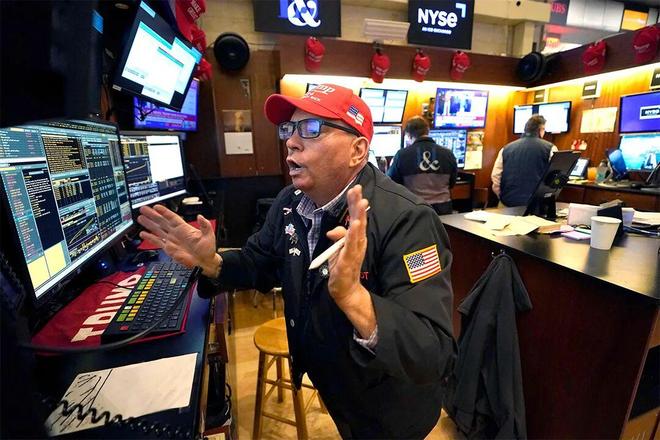
54岁基金经理因病逝世
Di Yi Cai Jing Zi Xun· 2026-01-09 15:27
Group 1 - Liu Hui, a fund manager at Yinhua Fund, passed away at the age of 54 due to illness [2] - Liu Hui held a PhD and joined Yinhua Fund in November 2016, serving as the head of the equity investment management department [2] - He managed three funds with a total scale of 3.281 billion yuan, including Yinhua Domestic Demand Selected Mixed Fund, Yinhua Tongli Mixed Fund, and Yinhua ChiNext Two-Year Open Fund [2] Group 2 - Liu Hui's notable fund, Yinhua Domestic Demand Selected, achieved a return of 160.12% and an annualized return of 11.43% [2] - The management and staff of Yinhua Fund expressed deep condolences and gratitude for Liu Hui's significant contributions [2]