Di Yi Cai Jing Zi Xun

Search documents
市场化下光伏产业链面临价值重估
Di Yi Cai Jing Zi Xun· 2026-01-11 11:37
Group 1 - The core viewpoint of the article highlights a significant policy shift in the photovoltaic (PV) industry, marked by the cancellation of export VAT rebates and the cessation of industry self-regulation, indicating a historical turning point for the sector [2][3]. - The Ministry of Finance and the State Taxation Administration announced the cancellation of export VAT rebates for PV products starting April 1, 2026, transitioning the industry into a "no rebate subsidy" phase [3]. - The cancellation of the export VAT rebate follows a period of declining export prices and increased competition in overseas markets, leading to substantial losses across the industry [3][4]. Group 2 - The market reacted sharply to these changes, with significant declines in the prices of polysilicon futures and related stocks, indicating a loss of investor confidence [4][8]. - The recent discussions between the State Administration for Market Regulation and leading companies in the PV sector, including Tongwei Co. and Daqo New Energy, focused on addressing monopoly risks and enforcing compliance with new regulations [4][5]. - Despite rising prices for upstream materials like polysilicon and silicon wafers, downstream component prices have not followed suit, leading to squeezed margins for developers [5][6]. Group 3 - The first quarter is traditionally a slow season for the PV industry, and the anticipated price increases for components face resistance due to weak demand [6][7]. - The shift in policy is prompting a reevaluation of the PV sector's value in the capital markets, with significant sell-offs observed in the stock prices of major companies [7][8]. - Analysts suggest that while the overall valuation of the PV industry is at historical lows, the uncertainty surrounding future profitability and market dynamics poses challenges for attracting investment [8].




马斯克颠覆式提出能源终极方案
Di Yi Cai Jing Zi Xun· 2026-01-11 11:15
Group 1 - Tesla CEO Elon Musk proposed that the future measure of wealth will be in "watts," emphasizing energy control rather than currency [2] - Musk outlined a "three-step" plan for solar energy, starting with the use of Tesla's Megapack to store excess electricity and improve grid efficiency [2] - The second step involves launching solar AI satellites into space to maximize solar energy utilization, requiring approximately 8,000 launches to complete deployment [2][3] Group 2 - In 2025, Tesla's energy storage products achieved a total installation capacity of 46.7 GWh, a year-on-year increase of 48.7%, with a record quarterly installation of 14.2 GWh in Q4 [3] - The concept of space photovoltaics is gaining traction, with industry leaders noting that solar panels in space can generate 7 to 10 times more energy than those on Earth [4] - Companies like JinkoSolar and Trina Solar are advancing their plans for space photovoltaics, with JinkoSolar's chairman highlighting the potential for continuous energy generation in space [4][5] Group 3 - JunDa Co. announced a strategic partnership with Shangyi Optoelectronics to invest in perovskite battery technology for space energy applications, indicating the vast potential of the space photovoltaic market [5] - The space economy, including satellite internet and deep space exploration, requires stable energy sources, and space photovoltaics can provide high efficiency and continuous power generation [5]

证监会:进一步提高入市规模比例
Di Yi Cai Jing Zi Xun· 2026-01-11 07:44
在1月11日举行的第30届中国资本市场论坛上,中国证监会副主席陈华平发言表示,将持续完善长钱长 投的制度环境,合力推动各类中长期资金进一步提高入市规模比例,优化合格境外投资者等制度安排, 让各类资金愿意来,留得住,发展得好。截至去年末,各类中长期资金合计持有A股流通市值约为23万 亿元,较年初增长36%;权益类基金规模由去年初的8.4万亿元增长到11万亿元左右。 ...
CES访谈|盖茨、亚马逊抢投硅谷黑马,光学芯片如何驱动物理AI
Di Yi Cai Jing Zi Xun· 2026-01-11 07:19
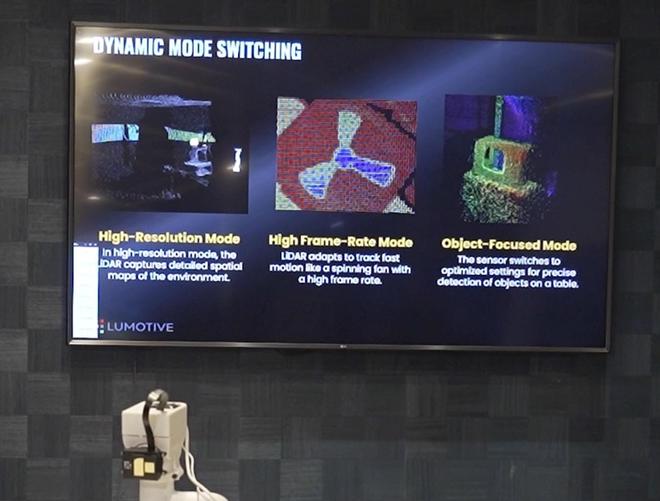
Core Insights - The focus of the 2026 CES is shifting from large language models (LLMs) to robotics and physical AI, emphasizing the importance of sensors, particularly optical semiconductors, in making AI applicable in the real world [1] - Lumotive's programmable optical chip, which operates without moving parts, is gaining attention for its ability to redefine laser radar (LiDAR) technology, making it smaller, more efficient, and easier to produce [1] Group 1: Technological Advancements - The bottleneck for physical AI is not in the models but in perception, highlighting the need for advanced sensors to enable robots to effectively interact with the real world [4] - Lumotive's optical semiconductors significantly enhance sensor performance by improving size, cost, durability, reliability, and efficiency, which are crucial for long-term operation in complex environments [4][5] - The software configurability of Lumotive's optical chip allows for the creation of multiple "virtual sensors," enabling dynamic switching between different perspectives, resolutions, and scanning strategies, thus fostering algorithm innovation [5] Group 2: Application Scenarios - Lumotive is actively collaborating in three main sectors: robotics, industrial automation, and smart infrastructure, all of which require high precision, safety, and reliability in sensors while being sensitive to cost and size [6] - The company is also exploring opportunities in commercial vehicles, heavy machinery, and forklifts, with a long-term vision for consumer vehicles and electronics [6] - The integration of LiDAR technology into high-end consumer devices, such as Apple smartphones, opens up possibilities for more consumer-grade 3D perception applications [6] Group 3: Investment Landscape - Notable investors in Lumotive include Bill Gates, Samsung, and Amazon, indicating strong confidence in the foundational technology rather than specific products [8] - The investment from strategic partners like Samsung and Amazon reflects their interest in the technology's applicability across consumer electronics, cloud computing, and smart devices [8] - Lumotive represents a paradigm shift where light is evolving from a physical component to a programmable, calculable, and scalable resource, similar to how CMOS cameras revolutionized smartphones [8]
顶级专家回应马斯克外科医生“失业论”
Di Yi Cai Jing Zi Xun· 2026-01-11 07:19
Core Viewpoint - Elon Musk predicts that general artificial intelligence (AGI) will arrive by 2026, with robots surpassing human surgical skills within three years and achieving complete superiority over human surgeons in four years [1][3]. Group 1: Impact on the Medical Field - Musk's statements have caused significant concern within the global medical community, suggesting a potential crisis for doctors [3]. - The concept of AGI refers to artificial intelligence systems that possess cognitive abilities comparable to or exceeding those of humans, capable of performing complex tasks and learning autonomously [3]. Group 2: Technological Developments - Neuralink, Musk's brain-machine interface company, is already using robots for "brain insertion" surgeries, with over 10,000 patients reportedly waiting for procedures [4]. - The surgical robots developed by Neuralink have significantly improved efficiency, reducing the time to implant a single electrode from 17 seconds to 1.5 seconds [4][5]. - The ultimate goal for Neuralink's surgical robots is to automate the entire surgical process, allowing procedures to be completed in a time frame suitable for a lunch break [4]. Group 3: Expert Opinions - Experts express skepticism about the feasibility of robots completely replacing human surgeons in the near term, emphasizing the need for human oversight in current robotic surgeries [7][8]. - Many medical professionals believe that while robots can enhance surgical efficiency, the complete autonomy of surgical robots is still a long way off, requiring significant advancements in technology and a shift in medical practice [7][8]. Group 4: Investment Landscape - The surgical robot market has seen a surge in investment, with significant funding rounds and IPOs indicating strong investor interest [9][10]. - The market for surgical robots is currently dominated by a few leading companies, making it challenging for new entrants to gain market share [10]. - The Chinese vascular intervention robot market is projected to grow significantly, with estimates suggesting a market size of 5.824 billion yuan by 2030, reflecting a compound annual growth rate of 90% [12].

徐高:美元全球大循环的衰落是一个长期、渐进的过程
Di Yi Cai Jing Zi Xun· 2026-01-11 07:17
Core Viewpoint - The core position is that the dominance of the US dollar in the global economy is entering a decline phase due to internal economic structures and policy choices in the US, rather than external challenges [1]. Group 1: Global Economic Changes - The global economic landscape is undergoing profound changes, leading to structural pressures on the dollar's core position in international trade and finance [1]. - The long-term imbalance in modern global trade has been sustained since the dollar decoupled from gold in 1971, allowing some countries to maintain trade surpluses while the US continues to act as a global liquidity provider [3]. Group 2: Risks to the US Dollar - The main risks to the dollar's global circulation stem from changes in the US domestic economic structure, including a declining manufacturing sector and widening income distribution gaps, making it difficult for the US to maintain balanced economic growth through globalization [3]. - The US faces a policy dilemma: continuing to push dollars abroad to sustain global demand may lead to structural issues and social conflicts domestically, while reducing dollar outflow to stabilize the domestic economy could decrease global trade demand [3]. Group 3: Implications for China - For China's economic development, three key insights are highlighted: 1. The internationalization of the renminbi should focus on maintaining trade stability rather than attempting to replace the dollar, as excessive pursuit of becoming a reserve currency may increase outflow pressures and impact domestic industrial structure [4]. 2. In response to the trend of reduced global demand from the US, China should accelerate domestic demand construction through consumption upgrades and investment to buffer export pressures [4]. 3. Short-term attention should be paid to the impact of US domestic policies on external demand, including adjustments in fiscal and monetary policies, which will directly affect China's exports and external demand trends [4]. Group 4: Long-term Outlook - The decline of the dollar's global circulation is expected to be a long-term and gradual process, potentially lasting 20 to 30 years [5]. - For China, the strategic focus should be on stabilizing external demand, accelerating domestic demand development, and promoting the steady internationalization of the renminbi, rather than pursuing a short-term goal of replacing the dollar [5].

新财报季启幕,标普500能否闯关7000点
Di Yi Cai Jing Zi Xun· 2026-01-11 07:04
Core Viewpoint - The US stock market has regained momentum, driven by chip manufacturers like Broadcom, with the Dow Jones and S&P 500 indices reaching new historical highs, despite a weaker-than-expected non-farm employment report [2][4]. Economic Data Summary - The US labor market shows a "low hiring, low layoffs" trend, with December non-farm payrolls adding only 50,000 jobs, below the expected 70,000, and November's figures revised down from 64,000 to 56,000 [4][5]. - The unemployment rate decreased to 4.4%, better than the anticipated 4.5%, while average hourly earnings rose by 0.3% month-on-month, exceeding the 0.2% forecast, and the year-on-year increase reached 3.8%, above the expected 3.6% [5]. - The University of Michigan's preliminary consumer confidence index for January rose by 1.1 points to 54.0, the highest since September of the previous year, although it remains low compared to the previous year due to inflation and employment market concerns [5]. Federal Reserve Outlook - Market expectations for Federal Reserve interest rate cuts have cooled, with probabilities for rate cuts in upcoming meetings significantly reduced: January from 17% to 5%, March from 53% to 29%, and April from 79% to 51% [6]. - The consensus is that the next rate cut may occur in June, with a theoretical probability of 100%, as the Fed appears to be waiting for more data before making any policy changes [6]. Market Performance Summary - The S&P 500 index has seen broad gains, with a 5.8% increase in the consumer discretionary sector leading the way, while materials and industrial sectors rose by 4.8% and 2.5%, respectively [7]. - Fourth-quarter earnings for S&P 500 constituents are expected to grow by 8.3% year-on-year, marking the tenth consecutive quarter of growth, with revenue growth at 7.6% [7]. - The current expected price-to-earnings ratio for the S&P 500 is approximately 22 times, down from 23 times in November but still above the five-year average of 19 times [7]. Investment Trends - There is a noticeable shift in investment towards non-tech sectors, with healthcare, industrials, biotech, materials, and financials benefiting from this rotation [8]. - Despite the overall market rally, large-cap tech stocks have shown relative weakness, indicating a more selective investment approach among investors [8]. - Notable stock performances include Google rising by 4.5% to a new high and Amazon increasing by over 8%, while Apple and Nvidia saw declines of 4% and 1.6%, respectively [8]. Future Market Considerations - The 10-year US Treasury yield is expected to hold at a short-term pressure level of 4.20%, which could support the stock market [9]. - Upcoming earnings reports and monthly inflation data are anticipated to increase market volatility, with potential risks from unexpected inflation data or profit-taking reactions to favorable earnings [9].

马斯克称机器人4年后将完胜人类医生,顶级专家回应
Di Yi Cai Jing Zi Xun· 2026-01-11 05:12
Core Viewpoint - Elon Musk predicts that general artificial intelligence (AGI) will arrive by 2026, with robots surpassing human surgeons in surgical skills within three years and achieving complete superiority over any human surgeon in four years [2][4]. Group 1: Impact on the Medical Industry - Musk's statements have caused significant concern within the global medical community, suggesting a potential crisis for doctors [4]. - The concept of AGI refers to artificial intelligence systems that possess cognitive abilities comparable to or exceeding those of humans, capable of performing complex tasks and learning autonomously [4]. - Neuralink, Musk's brain-machine interface company, is already using robots for "brain insertion" surgeries, with over 10,000 patients reportedly waiting for procedures [4][5]. Group 2: Technological Advancements - Neuralink's surgical robots have dramatically reduced the time required to implant electrodes from 17 seconds to 1.5 seconds, aiming for a future where surgeries can be completed in a short time frame [5]. - The robots utilize a complex visual system that integrates multiple microscopes and optical coherence tomography (OCT) technology to enhance precision during surgeries [5]. Group 3: Challenges in Implementation - Significant engineering challenges remain in automating all decision-making processes for surgical robots, as current operations still require human oversight [6][7]. - The transition from experimental technology to widespread clinical application will necessitate a fully automated maintenance system for the robots [6]. Group 4: Perspectives from Medical Professionals - Experts believe that while AI will assist doctors, the complete replacement of human surgeons is not imminent, with many emphasizing the need for human oversight in surgical procedures [9][10]. - Current robotic systems, including the Da Vinci robot, still rely on human operators, and achieving fully autonomous surgical robots is seen as a long-term goal [10]. Group 5: Investment Landscape - The surgical robot market in China has become highly attractive for investors, with significant funding activity and several companies seeking to capitalize on this trend [12]. - The market is currently dominated by a few leading companies, making it challenging for new entrants to gain a foothold [12]. - The Chinese vascular intervention robot market is projected to grow significantly, with an estimated market size of 5.824 billion RMB by 2030, reflecting a compound annual growth rate of 90% [15]. Group 6: Regulatory Developments - The National Healthcare Security Administration in China is expected to release guidelines for the pricing of surgical robots and related technologies, which could positively impact the industry [14].


吴晓求称要对资本市场埋雷者重罚
Di Yi Cai Jing Zi Xun· 2026-01-11 03:12
2026.01.11 本文字数:951,阅读时长大约2分钟 作者 |第一财经 周楠 2026年伊始,A股市场表现强势,沪指一举突破4100点,两市成交额站上3万亿大关。 "险资就是一个例子,不是说险资不能进,是险资没法进,它的偿付能力指标就约束它了,把投资风险 市场的系数弄得很高,同时考核周期又很短。"他举例说。 吴晓求认为,推动投资端改革是本轮资本市场改革重点,核心目标是扩大市场流动性。 第三,制度端改革。吴晓求说,没有制度端的改革,前述两项改革很难见效,而制度端改革的核心是要 让市场有信心、有预期、有底线性。 他进一步解释称,制度端改革首先要确保市场透明度,要采取各种手段让发行人如实披露信息,不 能"埋雷"。 "现在有一些上市公司总想'埋雷',千方百计地'埋雷'。更有甚者欺诈上市,这样下去市场的'雷'该太多 了。"吴晓求说,资本市场改革要从没有"雷"开始。 那么,如何把"雷"去掉?对此,他建议,对"埋雷者"和"帮助埋雷者"重罚,对欺诈上市、财务造假、内 幕交易等行为的处罚,从行政处罚转变为进行刑事处罚、民事赔偿,并对帮助造假的中介机构同等处 罚。 "最近一年多来,特别是从2024年9月24日以来,中国资本 ...
黄奇帆:资本市场两个“轮子”要一起转
Di Yi Cai Jing Zi Xun· 2026-01-10 15:09
Core Viewpoint - The capital market in China consists of two essential components: the stock market involving listed companies and securities firms, and the capital formation and supplementation mechanism for all enterprises, which includes the development of equity investment funds [2][3]. Group 1: Capital Market Structure - The capital market should not only focus on securities and listings but also encompass mechanisms for capital formation and supplementation for enterprises [2]. - The dual components of the capital market act as a significant driving force for the national economy, necessitating a sustainable capital supplementation mechanism to address issues of corporate efficiency and risk [3][4]. Group 2: Historical Context and Current Challenges - Historically, state-led initiatives in the 1990s, such as the bankruptcy write-off of state-owned enterprises and debt-to-equity swaps, played a crucial role in capital supplementation [3]. - By 2000, the capital of listed companies in China was over 70%, but by the present, corporate debt ratios have risen to around 70%, significantly higher than the 30%-40% seen in the US and Europe [3][4]. Group 3: Proposed Solutions for Capital Supplementation - To improve the capital structure, an additional 30 trillion to 40 trillion yuan is needed to raise the total capital of Chinese enterprises from approximately 200 trillion yuan to around 240 trillion yuan, potentially reducing the debt ratio to 55% or 50% [5][6]. - Four sources for this additional capital include: 1. Bank capital, where banks could allocate about 1 trillion yuan for equity investments [6]. 2. National social security funds, which could contribute approximately 2 trillion yuan [6]. 3. Commercial insurance funds, which could provide around 4 trillion yuan [6]. 4. Foreign exchange funds, which could be mobilized through special government bonds [7]. Group 4: Expected Benefits of Capital Injection - The formation of this additional equity capital could lead to improved corporate risk management, enhanced productivity, significant investment returns, and increased influence of state-owned enterprises on the national economy [7]. - An estimated average return of 8% on these investments could yield 3 trillion to 4 trillion yuan in returns, benefiting public finances and enhancing the returns for social security and insurance funds [7].