
Zhong Guo Huan Jing Bao

Search documents
生态赋能 借“绿”生“金”——浙江海宁市盐官镇以“潮”文化为纽带探索“两山”转化路径
Zhong Guo Huan Jing Bao· 2025-06-03 01:34
Core Viewpoint - Haining City in Zhejiang Province is implementing the development philosophy of "Lucid waters and lush mountains are invaluable assets," focusing on the integration of ecological and economic development through the exploration of the "Two Mountains" transformation path [1][2]. Group 1: Ecological and Economic Integration - The city is prioritizing ecological development and green growth by scientifically developing the Qiantang River International Tourism Corridor while balancing industrial relocation and the protection of century-old trees [1]. - Initiatives include promoting green transformation in social production and life, fostering "waste-free villages" and "waste-free enterprises," and implementing collaborative pollution reduction and carbon reduction governance [1][2]. - Efforts are being made to improve air quality through industrial emissions control, banning straw burning, and enhancing river management and biodiversity restoration [1]. Group 2: Ecological Product Value Realization - Haining is pioneering the accounting of Gross Ecosystem Product (GEP) and exploring mechanisms for realizing the value of ecological products [2]. - The development of unique cultural tourism projects leveraging the natural endowment of the Qiantang River has led to the creation of an "ecology + tidal culture" themed IP [2]. - The "Ecological Pavilion + Café" model has gained popularity on social media, and local agricultural products are being enhanced in value, with successful examples being recognized nationally [2]. Group 3: Future-Oriented Ecological Governance - The city is focusing on modernizing the ecological governance system by implementing the "One Line Green" indicator evaluation system, which addresses blue skies, clear waters, clean land, and ecological civilization [2]. - Village-level ecological initiatives are being established, with activities planned around the "Sixth Environment Day" to promote the "Two Mountains" philosophy and ignite community engagement in ecological transformation [2].

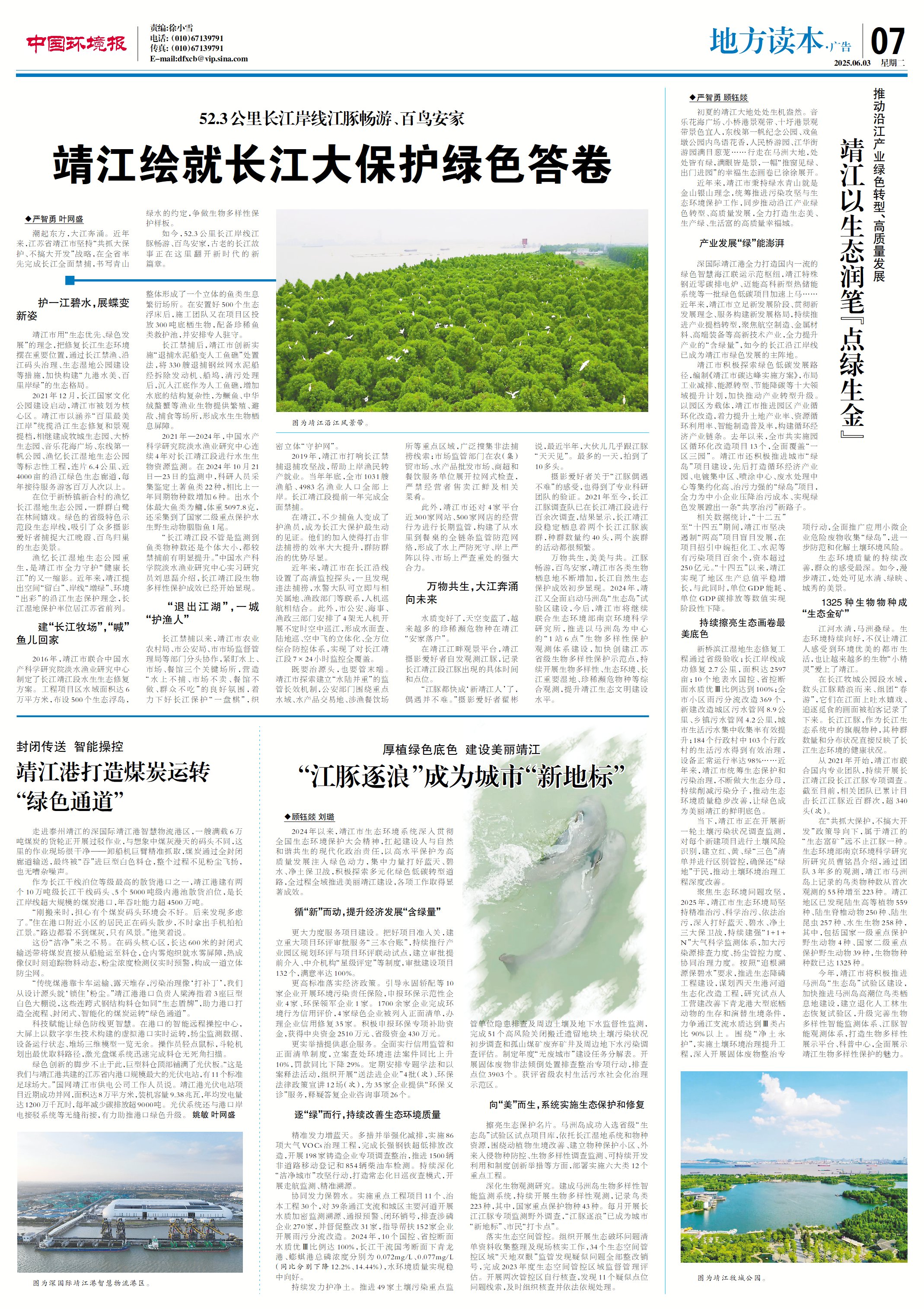
52.3公里长江岸线江豚畅游、百鸟安家——靖江绘就长江大保护绿色答卷
Zhong Guo Huan Jing Bao· 2025-06-03 01:34
Core Viewpoint - Jiangsu Province's Jingjiang City has implemented a "co-protection, no major development" strategy, achieving comprehensive fishing bans on the Yangtze River and focusing on ecological restoration and biodiversity protection [2][12]. Group 1: Ecological Protection Initiatives - Jingjiang City prioritizes ecological restoration through measures such as fishing bans, dock management, and the establishment of ecological wetland parks, aiming to create a beautiful ecological landscape along the river [2][13]. - The construction of the Yangtze National Cultural Park began in December 2021, with Jingjiang designated as a core area, leading to the development of several ecological parks and green corridors [2][13]. Group 2: Biodiversity and Aquatic Life Restoration - The city has established a "Yangtze Ranch" in collaboration with the Chinese Academy of Fishery Sciences, creating habitats for aquatic life by deploying ecological floating islands and artificial reefs [3][14]. - Monitoring from October 21-23, 2024, revealed an increase in native fish species to 22, with six new species identified compared to the previous year, indicating successful biodiversity recovery [3][15]. Group 3: Enforcement and Community Involvement - Since the fishing ban, local authorities have collaborated to monitor and enforce regulations across water bodies, markets, and restaurants, creating a comprehensive protective network [5][17]. - The city has transitioned former fishermen into conservation roles, enhancing the efficiency of illegal fishing deterrence through community involvement [5][17]. Group 4: Future Plans and Ongoing Monitoring - Jingjiang plans to establish an ecological island trial area and continue biodiversity monitoring in collaboration with environmental research institutions, aiming to enhance ecological civilization and biodiversity protection [19][21].
厚植生态文明建设内生动力——近年来生态环境系统生态文化建设盘点
Zhong Guo Huan Jing Bao· 2025-06-03 00:42
Core Viewpoint - The construction of ecological culture is essential for promoting ecological civilization and achieving harmonious coexistence between humans and nature, guided by Xi Jinping's ecological civilization thought and cultural thought [1][2]. Group 1: Ecological Culture Framework - The establishment of an ecological culture system based on ecological values is a priority, with a focus on behavior norms and value concepts that should be reflected in all aspects of social production and life [2][4]. - The Central Committee and the State Council emphasize the importance of cultivating ecological culture as a crucial support for ecological civilization [2][4]. Group 2: Implementation Strategies - The Ministry of Ecology and Environment is actively promoting ecological culture through top-level design, building communication platforms, and organizing cultural activities to foster consensus on ecological civilization [3][4]. - Various action plans and work schemes have been issued to enhance public awareness of ecological civilization, such as the "Beautiful China, I am an Actor" initiative [4]. Group 3: Cultural Activities and Engagement - Annual events like the National Main Event for World Environment Day have become significant platforms for promoting Xi Jinping's ecological civilization thought and showcasing ecological culture [5][10]. - The Ministry has organized literary activities and forums to promote ecological literature, resulting in a rich array of works that reflect ecological civilization concepts [7][8]. Group 4: Innovative Communication Methods - The use of modern technology, including AI and interactive media, is being leveraged to enhance the dissemination of ecological culture and engage the public [12][14]. - Various local initiatives, such as ecological literature weeks and environmental culture festivals, are being implemented to promote ecological values and practices [9][10]. Group 5: Public Participation and Impact - There is a growing enthusiasm among the public for participating in ecological protection activities, with over 35 million ecological environment volunteers reported [16]. - The integration of ecological culture with economic and social development is yielding positive results, such as traditional ecological practices contributing to sustainable tourism and rural revitalization [16]. Group 6: Future Outlook - The expectation is for ecological culture to continue evolving through innovation and development, with a more robust theoretical and practical foundation for ecological culture systems [18].
如何破解应急预案“重修订轻评估”问题?
Zhong Guo Huan Jing Bao· 2025-06-03 00:09
Core Viewpoint - Many companies' emergency response plans for environmental incidents are inadequately developed and often neglected after submission, leading to ineffective assessments and revisions [1] Group 1: Cognitive Issues - Companies often treat emergency response plans as mere compliance documents, resulting in ineffective drills and lack of engagement from employees [2] - Establishing a legal responsibility chain is essential, including mandatory safety training for management and linking performance to emergency plan management [2] - Implementing a platform for employees to suggest improvements can enhance participation and accountability [2] Group 2: Execution Issues - A "double random one public + special inspection" model is recommended to ensure compliance with emergency plan management [3] - Random checks should be incorporated into the management process, focusing on high-risk areas like chemical parks and hazardous waste disposal [3] - An upgraded intelligent supervision platform is suggested to include evaluation report submissions, promoting transparency and accountability [3] Group 3: Effectiveness Issues - A comprehensive management system is proposed to address the issues of ineffective corrections and lack of follow-up [4] - Establishing a dynamic management system for tracking issues and corrective actions is crucial for continuous improvement [4] - Implementing a dynamic early warning mechanism can ensure timely updates to emergency plans and enhance overall preparedness [4]
将生态财富转换为经济财富,国家重点生态功能区如何破解生态产业化困境?
Zhong Guo Huan Jing Bao· 2025-06-02 23:20
Core Viewpoint - The article discusses the challenges and pathways for the ecological industrialization of national key ecological function areas, emphasizing the need to convert ecological wealth into economic wealth to achieve common prosperity while addressing existing economic and social development issues in these regions [1][2]. Challenges Faced - National key ecological function areas are often located in ecologically sensitive regions, leading to strict controls on development activities and resource utilization, which results in local economic stagnation [2][3]. - Local governments may prioritize short-term gains from traditional industries over the long-term benefits of ecological industrialization due to economic pressures [2][3]. - The ecological protection goals are rigid, while economic development goals are flexible, creating conflicts in policy implementation [2][3]. - Many areas rely on traditional ecological industry models, such as eco-tourism and specialty agriculture, which have short supply chains and low added value, limiting long-term economic growth [2][3]. Policy Support Issues - There is insufficient policy support for ecological industrialization, with local execution often lacking, leading to ineffective policy outcomes [3][4]. - Existing ecological protection compensation mechanisms have low standards, failing to adequately cover opportunity costs for local economic development [3][4]. - Policies often do not consider regional differences in resource endowments and industrial characteristics, leading to mismatches in development needs [3][4]. Financial and Talent Constraints - Ecological industrialization requires long-term financial investment, but these regions typically have weak economic foundations and limited ability to attract social capital [4][7]. - The low compensation standards for ecological protection hinder local government and enterprise investment in ecological industries [4][7]. - There is a shortage of high-end talent in remote areas, which affects the ability to develop comprehensive professional capabilities necessary for ecological industrialization [4][7]. Community Involvement - Successful ecological industrialization relies on active community participation, but many areas see low engagement from local residents [4][8]. - The distribution of benefits from ecological projects often lacks fairness, leading to dissatisfaction among community members [4][8]. - Insufficient education and skills training for residents hinder their ability to adapt to new industry demands [4][8]. Pathways for High-Quality Advancement - Implement differentiated development strategies based on the natural resource endowments and ecological functions of each area to balance ecological protection and economic development [5][6]. - Promote diversified ecological industry development by integrating various sectors such as agriculture, tourism, and cultural creativity to enhance product value [6][7]. - Establish a targeted policy framework that considers regional characteristics and improves the ecological protection compensation mechanism [6][7]. - Develop funding mechanisms to enhance investment capabilities in ecological industries, including the establishment of special development funds [7][8]. - Create transparent benefit-sharing mechanisms to ensure local residents gain from ecological industrialization, enhancing their participation and support [8].
从“说教”走向“体验”,开放日在青少年心中播下绿色的种子
Zhong Guo Huan Jing Bao· 2025-05-30 03:10
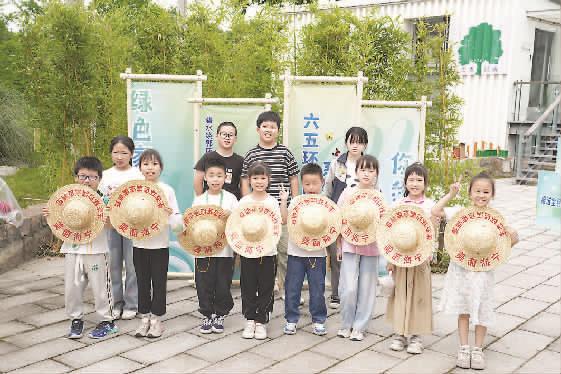
Core Viewpoint - The article highlights the importance of experiential learning in environmental education for students, showcasing how hands-on activities can foster a deeper understanding of ecological concepts and inspire proactive behaviors towards sustainability [1] Group 1: Event Overview - The environmental monitoring center of Langfang City, Hebei Province, organized a public open day event, inviting over 50 middle school students to engage with environmental protection facilities [1] - Students participated in immersive experiences, including operating PM2.5 monitoring equipment and observing the entire water quality testing process, which helped them appreciate the role of technology in ecological protection [1] Group 2: Educational Impact - The open day transformed the perception of scientific knowledge from passive learning to active exploration, allowing students to witness real-time data collection and analysis [1] - Students reported a significant shift in understanding, with over 80% indicating they would reduce the use of disposable utensils after learning about waste classification [1] Group 3: Recommendations for Improvement - To enhance future public open day events, a regular mechanism should be established, with fixed open days each semester and involvement from more primary and secondary schools [2] - Content differentiation is suggested, such as designing engaging experiments for younger students and advanced topics for high school students [2] - A dual-mode approach is recommended, combining offline deep experiences with online virtual laboratories and ecological knowledge games to broaden outreach [2]
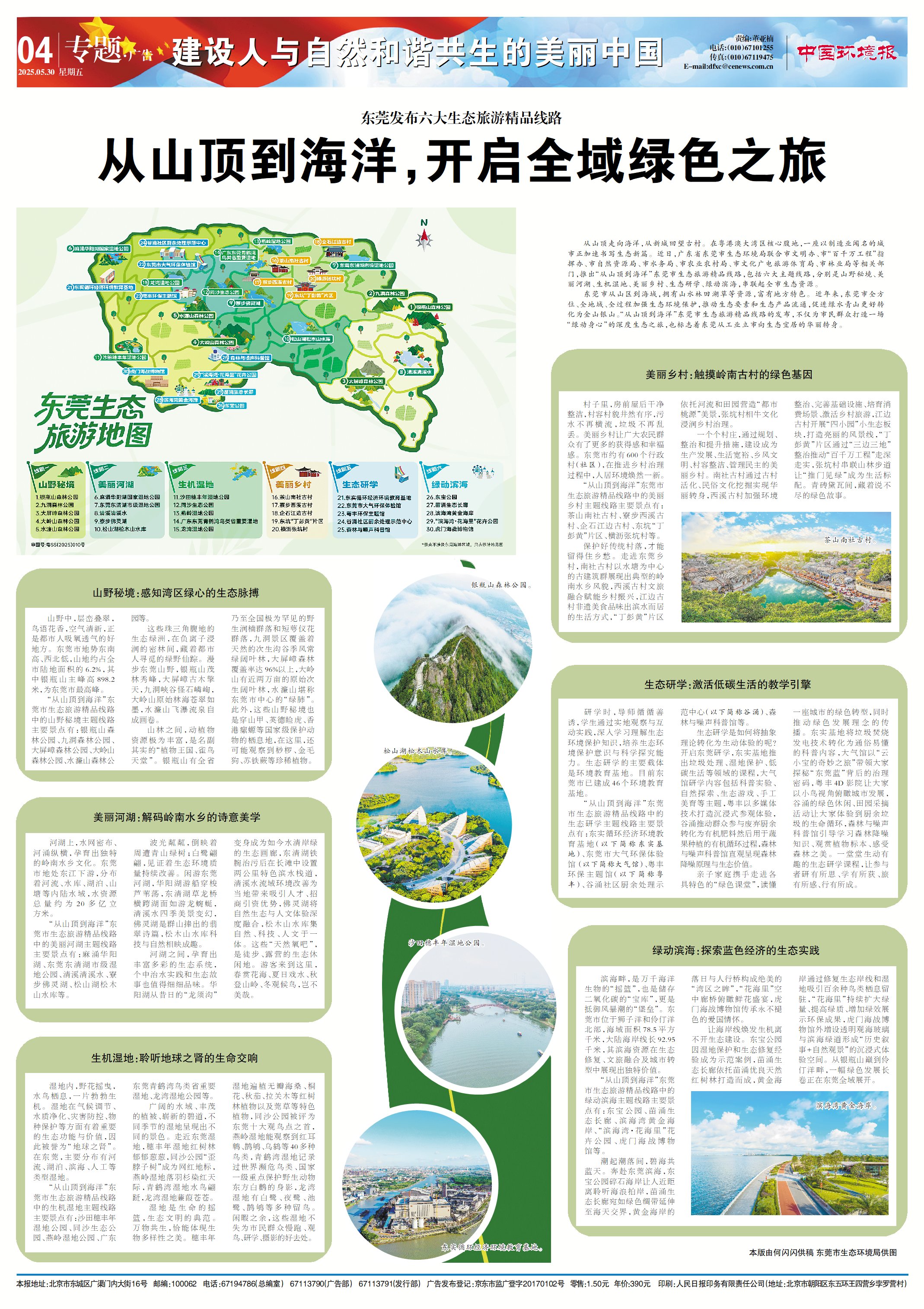
东莞发布六大生态旅游精品线路——从山顶到海洋,开启全域绿色之旅
Zhong Guo Huan Jing Bao· 2025-05-30 02:05
Core Viewpoint - Dongguan City is transitioning from an industrial base to an eco-friendly living environment, launching the "From Mountain Top to Ocean" ecological tourism routes to promote its rich ecological resources and enhance the quality of life for its residents [6] Group 1: Ecological Tourism Routes - The "From Mountain Top to Ocean" initiative includes six thematic routes: Mountain Wilderness, Beautiful Rivers and Lakes, Vibrant Wetlands, Beautiful Countryside, Ecological Research, and Green Coastal Activities, connecting various ecological resources across the city [6] - Dongguan's diverse geographical features include mountains, rivers, lakes, and coastal areas, with a focus on ecological protection and sustainable development [6] Group 2: Mountain Wilderness - The Mountain Wilderness route features key attractions such as Silver Bottle Mountain Forest Park and Big Screen Mountain Forest Park, showcasing rich biodiversity and unique plant species [8][10] - Silver Bottle Mountain, the highest peak in Dongguan at 898.2 meters, is home to rare wild plant communities and various protected animal species [8] Group 3: Beautiful Rivers and Lakes - The Beautiful Rivers and Lakes route highlights Dongguan's water resources, totaling over 2 billion cubic meters, with attractions like Huayang Lake and Dongqing Lake Wetland Park [11] - The route emphasizes the ecological restoration of water bodies, transforming areas like Huayang Lake from polluted sites to clean, green spaces [11] Group 4: Vibrant Wetlands - The Vibrant Wetlands route includes significant sites such as Shatian Suifengnian Wetland Park and Qinghe Bay, recognized for their ecological functions and biodiversity [13][14] - Wetlands in Dongguan serve as critical habitats for various bird species and play a vital role in climate regulation and water purification [13] Group 5: Beautiful Countryside - The Beautiful Countryside route features traditional villages like Nanshe Ancient Village and Xixi Ancient Village, showcasing the integration of cultural heritage and environmental improvement [17][18] - Efforts in rural governance have led to cleaner environments and enhanced community well-being, with a focus on sustainable development [17] Group 6: Ecological Research - The Ecological Research route promotes environmental education through established bases, including Dongshi Circular Economy Education Base and Atmospheric Environmental Experience Hall [20][21] - These educational initiatives aim to raise awareness about ecological protection and sustainable practices among the community [20] Group 7: Green Coastal Activities - The Green Coastal Activities route highlights Dongguan's coastal resources, with attractions like Dongbao Park and Golden Coast, emphasizing ecological restoration and tourism integration [24][25] - The coastal areas serve as vital ecosystems for marine life and contribute to carbon storage and storm protection [24]
发挥承诺免检制度作用,提升行政检查效能
Zhong Guo Huan Jing Bao· 2025-05-30 01:39
Group 1 - The Chongqing Ecological Environment Bureau has introduced a commitment exemption inspection system to standardize administrative inspections involving enterprises, allowing companies to apply for exemption from routine inspections if they meet compliance standards [1][2] - The number of administrative inspections conducted in a certain city in the Yangtze River Delta is significantly high, with nearly 45,000 inspections planned for 2024, while the number of environmental enforcement personnel is insufficient, leading to a heavy enforcement burden [1] - The trend of decreasing ecological environment penalty cases indicates an improvement in corporate compliance, suggesting a shift in inspection focus from widespread checks to targeted inspections of high-risk enterprises [2] Group 2 - The implementation of the commitment exemption system aims to reduce the number of inspections and enhance inspection efficiency, but it requires strict criteria for approval to ensure that only compliant enterprises are exempted [2][3] - Continuous management of exempted enterprises is crucial, with the use of online monitoring and other non-site data to oversee compliance, ensuring that any violations lead to severe penalties and revocation of exemption status [3] - Public involvement is encouraged in monitoring exempted enterprises, with mechanisms in place for reporting environmental violations, thereby enhancing accountability and compliance [3]
提升大学生“知信行”生态素养,要从重塑高校生态文明教育体系入手
Zhong Guo Huan Jing Bao· 2025-05-30 00:16
Core Viewpoint - The modernization in China emphasizes the harmonious coexistence of humans and nature, necessitating the cultivation of builders and successors with profound ecological civilization literacy, which is a fundamental requirement of Chinese-style modernization [1] Group 1: Current Challenges in Ecological Civilization Education - The current ecological civilization education for university students faces structural contradictions, including fragmented training models, lack of collaboration among educational stakeholders, and limitations in evaluation systems [2][3] - The education system elements operate relatively independently, with professional courses focusing on technical knowledge, general education limited to ethical teachings, and practical activities being formalized without effective integration [3] Group 2: Proposed Solutions for Education Reform - A systematic approach is needed to reconstruct the ecological civilization education model, integrating various educational activities and creating a cohesive "knowledge-capability-value" structure [4][5] - The evaluation system should be innovated using AI and big data to create a comprehensive assessment framework that includes ecological knowledge, awareness, and behavior, allowing for real-time tracking and dynamic feedback [6] Group 3: Implementation Strategies - Establish a university-level leadership group for ecological civilization education, develop interdisciplinary research platforms, and create a collaborative model that aligns academic disciplines with industry needs [7] - Implement a credit system for ecological courses and integrate ecological education into faculty performance evaluations, ensuring a multi-faceted approach to fostering ecological literacy among students [7]
用专业力量守护生态福祉——写在全国科技工作者日
Zhong Guo Huan Jing Bao· 2025-05-29 23:10
Core Viewpoint - The contributions of ecological and environmental scientists are essential for the protection and improvement of the environment, yet they often remain unrecognized and underappreciated in society [1][2][5]. Group 1: Contributions and Recognition - Ecological and environmental scientists play a crucial role in pollution control, ecological restoration, and the development of policies that support a beautiful China [1][5]. - Their work is often characterized by teamwork and systemic engineering rather than individual breakthroughs, making it difficult for the public to recognize their contributions [1][2]. - The efforts of these scientists are vital for achieving green and high-quality economic development, as they provide the necessary technological support for environmental governance [2][5]. Group 2: Challenges and Support - The perception of environmental protection as merely institutional constraints overlooks the significant role of ecological science in addressing environmental issues [2][3]. - Continuous innovation and exploration are required to tackle evolving environmental challenges, necessitating support for both advanced and exploratory research [3][4]. - There is a need to support both young, innovative researchers and experienced scientists, including retired professionals who continue to contribute to environmental protection [3][4]. Group 3: Legacy and Cultural Significance - The spirit of ecological and environmental scientists is characterized by a commitment to knowledge production and social practice, which is essential for addressing environmental justice and public understanding [4]. - There is a lack of comprehensive documentation of the contributions and stories of these scientists, with only a few published biographies in the field [4]. - Systematic efforts are needed to document and share the narratives of ecological scientists to build a foundation of confidence in ecological science [4].