
Zhong Guo Huan Jing Bao

Search documents
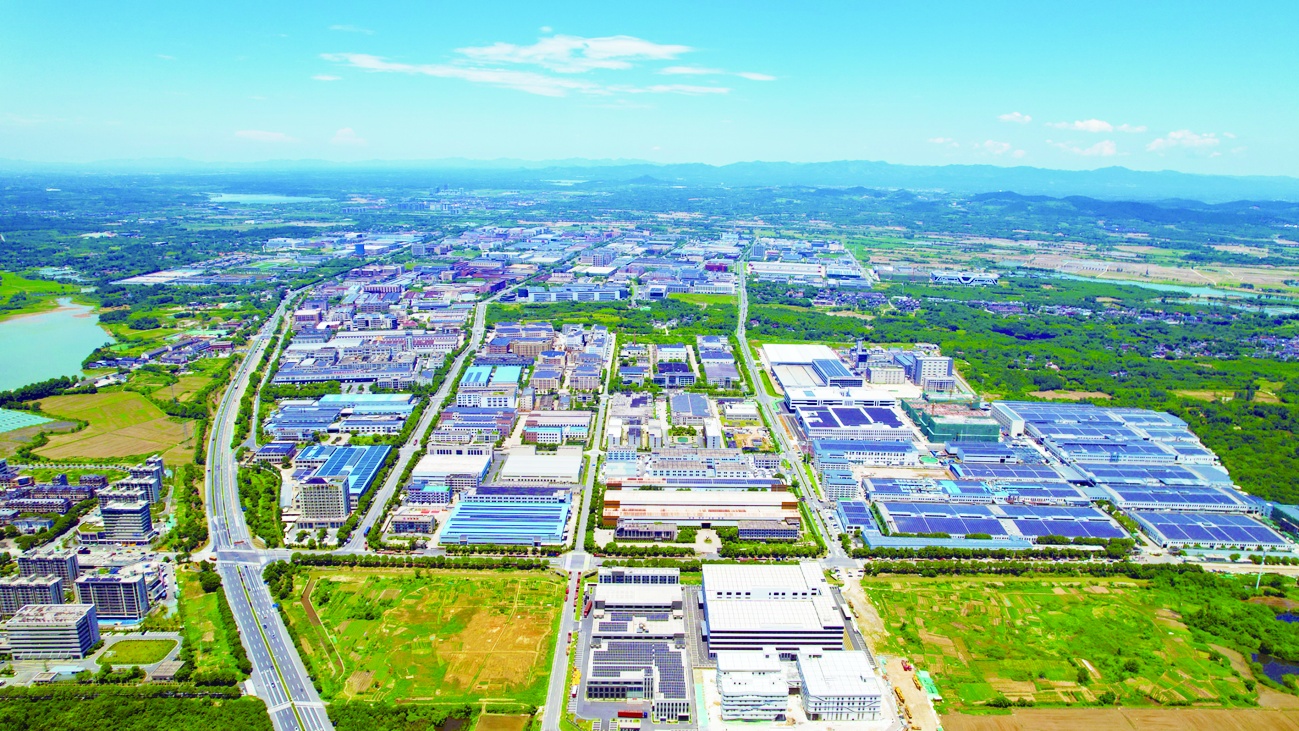
读图丨长三角(湖州)产业合作区构建全链条改革体系赋能高质量发展
Zhong Guo Huan Jing Bao· 2026-01-12 22:56
Core Viewpoint - The ecological environment bureau of Huzhou City, Zhejiang Province, is committed to empowering high-quality development and advancing the "delegation, management, and service" reform in the ecological environment sector [1] Group 1 - The Yangtze River Delta (Huzhou) Industrial Cooperation Zone is implementing a pilot program for environmental impact assessment (EIA) reform, focusing on the core of the "delegation, management, and service" reform [1] - A comprehensive reform system has been established, which includes "digital intelligence empowerment, institutional innovation, precise control, and infrastructure support" [1]

以“绿色+”引领农业高质量发展
Zhong Guo Huan Jing Bao· 2026-01-12 03:32
Core Viewpoint - The advancement of green agricultural development represents a profound revolution in agricultural development concepts, aiming to enhance ecological product supply to meet growing consumer demand [1] Group 1: Technological Empowerment - Strengthening the empowerment of technological elements is essential for enhancing the quality of green agriculture, with a focus on high-speed networks and IoT coverage in major agricultural production areas [1] - The cultivation of "new farmers" through a composite talent training program is encouraged, integrating disciplines such as agriculture, information technology, and ecological environment [1] - The introduction of "new capital" is vital, guiding venture capital and industry funds to focus on agricultural and food technology [1] Group 2: Multi-Subject Vitality - The innovation subject status of agricultural enterprises is reinforced, supporting leading agricultural companies to form "green agriculture" innovation alliances for technology integration [2] - Tax incentives are provided for small and medium enterprises developing integrated technologies and products [2] - The potential of research institutions is released through a mechanism for targeted research, transformation, and service, promoting rapid application of agricultural technologies [2] Group 3: Structural Optimization - The optimization of the entire industrial chain structure is crucial for expanding the efficiency of green agriculture, with a focus on future industries such as agricultural AI and synthetic biology [2] - Development of initial and deep processing technologies for functional agricultural products is emphasized, utilizing smart logistics and cold chain technologies [2] - The integration of agriculture with health, culture, and education is deepened, leveraging VR/AR and metaverse technologies to create cloud experience farms [2] Group 4: Governance and Assurance - A robust standard and regulatory system is established to accelerate the formulation of data security and interoperability standards for green smart agriculture [3] - An inclusive risk governance framework is constructed, incorporating climate change and market risks into smart decision-making models [3] - Advocacy for green consumption and value recognition is promoted, encouraging consumers to pay for safe, healthy, and sustainable agricultural products [3]
自然资源如何高效管理?九江探索委托代理新路径
Zhong Guo Huan Jing Bao· 2026-01-12 02:20
全民所有自然资源资产所有权委托代理机制(以下简称所有权委托代理机制)是指国家将全民所有的自 然资源资产,通过国务院授权自然资源部统一管理,再由自然资源部委托给省级、市级政府代为行使部 分管理职责。这一机制旨在解决自然资源资产"没人管、管不好、收益不落实"等问题,通过分级负责、 明确权责,实现资源的优化配置和保值增值。 作为全国所有权委托代理机制试点城市之一,江西省九江市坚持问题导向,着力解决自然资源资产底数 不清、权责不明晰、资源要素配置单一等问题,持续完善所有权委托代理机制,在明确试点原则、厘清 实践路径、凝聚多方合力等方面取得明显成效,为推动生态产品价值实现奠定了坚实基础。 坚持高位推动和市县联动相结合。自试点工作开展以来,九江市将其作为"一市一点"项目,为试点工作 提供全方位保障。试点初期,由市级层面做好顶层设计,明确了试点总体思路和总体目标,统一规划了 改革路径,授权指导各县(市、区)开展自然资源资产整体出让,不断丰富试点样本,形成市县联动良 好局面。 坚持国家要求和地方需求相结合。九江市以试点工作为契机,将"创新所有权管理方式、促进自然资源 资产高效配置和保值增值"的国家要求和"改变单一资源要素配置 ...
城水共生,深圳石岩水库成全国“美丽河湖”新标杆
Zhong Guo Huan Jing Bao· 2026-01-12 01:06
Core Viewpoint - The successful inclusion of the Shiyan River (Shiyan Reservoir) in Shenzhen into the fourth batch of beautiful rivers and lakes by the Ministry of Ecology and Environment highlights the city's innovative "city-water symbiosis" governance model, which has gained national recognition and serves as a replicable model for similar urban reservoirs [2][3]. Group 1: Urban Challenges - The Shiyan Reservoir, built in 1960 with a capacity of 31.98 million cubic meters, is the second-largest water supply reservoir in Shenzhen, providing an annual average of 360 million cubic meters of water [3]. - As urban development rapidly expanded, the reservoir became surrounded by dense construction, leading to challenges such as water resource shortages and unstable water quality from tributaries [3]. Group 2: Governance Solutions - Shenzhen implemented a systematic approach to governance, establishing a 108.02 square kilometer water source protection area and constructing over 105 kilometers of isolation fencing [4]. - The city executed a significant "one water demolition" campaign, removing 310,000 square meters of illegal constructions within the primary water source protection area in just eight months, a model now promoted nationwide [4]. Group 3: Technological Empowerment - A comprehensive monitoring network was established at the Shiyan Reservoir, including 35 automatic water quality monitoring stations and 11 AI ecological monitoring devices to detect illegal activities [5]. - The management team, consisting of nearly 100 personnel, ensures effective ground inspections to address issues promptly [5]. Group 4: Ecological Benefits - The water quality of the Shiyan Reservoir has improved to a stable level of Class II surface water, with an increased annual water supply capacity of 500 million cubic meters [6]. - The ecological restoration has led to a high natural ecological shoreline rate of 89.1% and a vegetation coverage of 91.4% in the buffer zone, supporting over 500 species of flora and fauna [7]. Group 5: Economic Transformation - The ecological improvements have transformed the Shiyan Reservoir into a "green engine" for high-quality regional development, enhancing both ecological and economic benefits [8]. - The area has attracted high-end talent and industries, with over 130,000 various talents introduced, showcasing the strong appeal of a livable ecological environment [8]. Group 6: Sustainable Development Model - The governance practices at Shiyan Reservoir provide a systematic model for managing urban reservoirs, emphasizing fine governance over large-scale demolition and promoting sustainable mechanisms instead of short-term fixes [9].

深化EOD模式创新,筑牢“两山”转化长效机制
Zhong Guo Huan Jing Bao· 2026-01-12 00:33
Core Insights - The article emphasizes the importance of the Ecological Environment-Oriented Development (EOD) model as a sustainable practice to convert ecological value into economic value, aligning with the concept of "lucid waters and lush mountains are invaluable assets" [1] - The EOD model is currently in a new phase of expansion and quality improvement, with 94 national pilot projects initiated under government guidance, particularly in provinces like Zhejiang, Jiangsu, and Fujian [1] - The article outlines the necessity for a multi-faceted approach involving local state-owned enterprises, market collaboration, and policy synergy to ensure the successful implementation of EOD projects [2][3] Group 1: EOD Model Implementation - The EOD model is based on ecological governance and industrial development, aiming for a quantifiable and sustainable transformation of ecological value into economic benefits [1] - As of July 2025, Zhejiang province has 50 EOD projects in national or provincial pilot status, attracting investments totaling 140 billion yuan [1] - The current practice of the EOD model is undergoing significant changes, including the decentralization of management authority and enhanced financial support [1] Group 2: Stakeholder Collaboration - Local state-owned enterprises play a crucial role in advancing EOD projects, and there is a need for strategic restructuring to enhance their dual functions in ecological restoration and market-oriented development [2] - Encouragement for collaboration among various market entities, including central enterprises and private companies, is essential for the planning, construction, and operation of EOD projects [2] - Establishing effective mechanisms for risk sharing, responsibility allocation, and profit distribution among stakeholders is vital for project success [2] Group 3: Policy and Market Mechanisms - Strengthening policy coordination and reforming natural resource asset rights are necessary to create a conducive environment for EOD projects [3] - The article highlights the importance of market mechanisms in optimizing resource allocation and reducing costs associated with EOD projects [4] - Developing a market-oriented mindset and enhancing the economic self-balancing capacity of EOD projects are critical for their sustainability [4] Group 4: Project Management and Risk Control - Comprehensive management throughout the project lifecycle is essential for the effective operation of EOD projects, ensuring they meet both project-specific and broader regional sustainability goals [6] - Establishing a robust quality supervision process and a project exit mechanism is necessary to address potential issues during implementation [6] - Enhancing risk assessment capabilities and monitoring for compliance with environmental standards are crucial for the long-term success of EOD initiatives [6]
“十五五”时期如何加快落实以排污许可制为核心的固定污染源监管制度?
Zhong Guo Huan Jing Bao· 2026-01-11 23:28
Core Viewpoint - The 20th Central Committee's Fourth Plenary Session emphasizes accelerating the implementation of a pollution discharge permit system as a core regulatory framework for fixed pollution sources, aiming for comprehensive ecological and environmental improvement during the "14th Five-Year Plan" period [1][2]. Group 1: Importance of Pollution Discharge Permit System - The fixed pollution source regulation is crucial for precise and scientific pollution control, as it accounts for over 80% of major pollutants like COD, NH3-N, SO2, and NOx in total emissions [2]. - The pollution discharge permit system serves as the core mechanism for managing fixed pollution sources, integrating various environmental management systems to form a unified and efficient regulatory framework [3]. - This system is essential for ensuring comprehensive monitoring throughout the entire lifecycle of enterprises, linking environmental assessments with pollution management and enforcement [3]. Group 2: Current Challenges - Despite the establishment of a basic regulatory framework over nearly 30 years, challenges remain in achieving quality improvement and system integration, with deep-rooted issues in the fixed pollution source regulatory system becoming increasingly apparent [5][6]. - There are shortcomings in the all-element and all-cycle management system, particularly in quantifying management mechanisms for total pollution discharge, which hampers effective control of key pollutants [6][8]. - Policy coordination and inter-departmental collaboration are insufficient, leading to fragmented management and a lack of unified standards for pollution discharge calculations [7][8]. Group 3: Future Directions - During the "14th Five-Year Plan" period, the focus will be on achieving comprehensive implementation of the pollution discharge permit system, enhancing environmental management efficiency, and ensuring clear responsibilities among departments [9][10]. - There is a need to improve the quantification and precision of pollution control mechanisms, establishing a total management system centered around pollution discharge permits [9]. - Strengthening the enforcement of the "one-permit" regulatory approach and enhancing inter-departmental collaboration will be crucial for creating a cohesive management framework [10].
如何持续系统抓好废弃矿洞治理?
Zhong Guo Huan Jing Bao· 2026-01-09 06:41
Core Viewpoint - The National Mine Safety Supervision Bureau is implementing a comprehensive action plan to address the risks associated with abandoned mines, which includes establishing a collaborative working mechanism with various departments and conducting inspections across 12 key regions in China [1][2]. Group 1: Current Situation and Actions - In 2025, nearly 100,000 abandoned mines were identified across 12 key regions, highlighting the significant scale of the issue [2]. - A total of 97,826 abandoned mines were inspected, with 91,332 successfully sealed, and 568 related cases were investigated, resulting in 338 administrative penalties and 102 cases referred to judicial authorities, leading to 403 criminal penalties [1]. Group 2: Management Strategies - A comprehensive database of abandoned mines is essential, requiring detailed records of their distribution, formation time, mining history, and potential safety and environmental impacts, ensuring targeted management efforts [2]. - Responsibility for managing abandoned mines should primarily lie with local authorities, with a clear accountability framework established for both existing mining enterprises and "orphaned" mines [2]. Group 3: Ongoing Challenges - The management of abandoned mines must be an ongoing process due to the historical and continuous nature of mineral resource development in China, necessitating dynamic management practices [3]. - Abandoned mines pose significant public safety and environmental risks, with incidents of illegal mining and accidents underscoring the need for sustained efforts in governance and remediation [3].
北京PM2.5年均浓度首次“破30”,北京大气治理成果带来哪些启示?
Zhong Guo Huan Jing Bao· 2026-01-09 03:28
Group 1 - Beijing achieved a significant milestone in air pollution control, with PM2.5 annual average concentration reaching 27.0 micrograms per cubic meter by 2025, marking a breakthrough as it is the first time it falls below 30 [1] - The number of days with good PM2.5 levels reached 348, an increase of 144 days compared to 2013, with the good air quality ratio rising from 55.9% to 95.3% [1] - The city has implemented a comprehensive strategy since 2013, focusing on reducing coal pollution, with a cumulative reduction of 13 million tons of coal by 2017 [1] Group 2 - Beijing utilized a data-driven approach to tackle pollution, identifying four major sources: vehicles, coal, industry, and dust, and continuously refining strategies based on data analysis [2] - A three-dimensional monitoring network was established, leveraging artificial intelligence for intelligent regulation, which includes automatic identification of violations in construction sites [2] - Collaborative pollution control mechanisms were developed with surrounding provinces, promoting a unified approach to air quality management [2] Group 3 - The achievement of 348 good air quality days reflects over a decade of persistent efforts in air pollution control, showcasing the commitment of various stakeholders including government, businesses, and citizens [3] - Continuous improvements in pollution control measures have been noted, with a focus on maintaining long-term efforts to ensure sustainable air quality [3]
行动计划发布,固体废物如何实现从“治理难题”向“发展资源”的转变?
Zhong Guo Huan Jing Bao· 2026-01-09 02:13
Core Viewpoint - The State Council has issued the "Comprehensive Solid Waste Management Action Plan," which clarifies the governance approach, objectives, and systematic measures for solid waste management, indicating a direction for future efforts [1] Group 1: Current Challenges and Progress - Solid waste is a significant pollution management challenge and a focus of ecological environmental protection inspections, with uneven progress in various regions [1] - Despite increased efforts in solid waste management, local issues persist, affecting regional ecological environments and public health, thereby hindering the advancement of a beautiful China [1] Group 2: Utilization and Resource Management - There is a need to deepen and expand the utilization of solid waste, which is a byproduct of production processes, to maintain a dynamic balance between waste generation and utilization [2] - The Action Plan emphasizes the importance of innovative utilization paths, including the extraction of valuable components and promoting diversified uses of coal gangue and straw [2] Group 3: Source Reduction Strategies - The Action Plan calls for increased efforts in source reduction, which is the most effective and economical method to lower solid waste generation [2] - New requirements include strengthening source control in industrial parks, promoting green design, and implementing waste emission limits in construction and municipal projects [2] Group 4: Special Rectification Measures - The Action Plan highlights the need for targeted special rectification in areas such as illegal dumping, environmental hazards from landfills, and historical solid waste storage sites [3] - Emphasis is placed on systematic, multi-dimensional governance to avoid simplistic approaches and ensure long-term effectiveness in solid waste management [3] Group 5: Long-term Goals and Collaboration - Solid waste management is described as a long-term battle, requiring collaboration and the establishment of a long-term mechanism to convert "misplaced resources" into new development advantages [3]
高质量推进省级温室气体清单编制,各地应如何发力?
Zhong Guo Huan Jing Bao· 2026-01-09 00:32
1月4日,生态环境部印发《省级温室气体清单编制指南(2025年版)》(以下简称新版指南)。新版指 南是对2011年试行版的首次全面修订,旨在进一步提升省级温室气体清单编制的科学性、规范性和可操 作性,更好与最新国家温室气体清单以及国际规则衔接,为全经济领域、所有温室气体排放控制提供坚 实的数据基础和方法学支撑。 一是边界范围更明确。废弃物处理领域,新增废弃物生物处理和焚烧处理甲烷和氧化亚氮排放内容,优 化了填埋处理计算方法;工业生产过程和产品使用领域,行业覆盖数量从12个增加至24个;二氧化碳捕 集、运输与地质储存首次纳入能源活动清单;土地利用、土地利用变化与林业领域,新增核算农地、草 地、湿地等其他土地利用类型。 新版指南将显著增加编制工作量 相比旧版指南,新版指南不仅是技术方法的更新,更是对"双碳"政策行动的深入贯彻,反映了十余年来 我国在温室气体监测、报告与核查(MRV)领域的技术进步和实践经验积累。总体上看,新版指南主 要有四点变化。 二是方法学更新。全面参考《2006年IPCC国家温室气体清单指南》及其2019年修订版,同步更新缩写 符并将全球增温潜势值更新至IPCC第五次评估报告中给出的数值;土地 ...