
Zhong Guo Huan Jing Bao

Search documents
深圳诞生全省首个黄金珠宝无氰镀金绿色园区
Zhong Guo Huan Jing Bao· 2025-12-10 05:55
Core Viewpoint - The establishment of a cyanide-free gold plating green park in Shenzhen's Yantian District marks a significant step towards the high-quality development of the traditional gold jewelry industry, addressing environmental concerns and aligning with market demands for sustainable practices [1][3]. Group 1: Industry Challenges - The gold jewelry industry in Shenzhen faces challenges due to traditional cyanide plating processes, which are toxic and environmentally harmful, making it difficult to meet the increasing market demand for lightweight and high-craftsmanship products [2]. - There is a pressing need for the application of cyanide-free plating technology among gold jewelry enterprises, driven by the limitations of traditional methods and the push for sustainable development [2]. Group 2: Policy and Institutional Innovation - Shenzhen has implemented a collaborative mechanism involving city departments, district governments, and leading enterprises to facilitate the adoption of cyanide-free technology, including regular meetings and comprehensive tracking of the entire process [3]. - The city has revised its environmental impact assessment management catalog to create a streamlined pathway for the compliance and application of cyanide-free plating technology, thus addressing regulatory bottlenecks [3][4]. Group 3: Green Park Development - The green park initiative aims to revitalize old industrial areas by promoting the cyanide-free plating process, which is expected to reduce wastewater emissions by 80% and carbon emissions by 20%, while also lowering production costs by 30% [5]. - The green park is projected to attract over 20 quality enterprises and generate an additional industrial output value of over 10 billion within three years, showcasing the potential for high-quality development in the industry [5].
遏制无人机狩猎乱象刻不容缓
Zhong Guo Huan Jing Bao· 2025-12-10 05:35
Core Viewpoint - The emergence of high-tech hunting methods using drones equipped with thermal imaging and metal arrows poses significant risks, transforming from a tool for agricultural protection to a potential weapon of terror [1] Group 1: Risks of Drone Hunting - The danger of drone hunting extends beyond wild boars to include livestock and wildlife, with incidents reported in Hunan and Shanxi where drones have killed poultry [1] - Law enforcement in multiple regions, including Jiangxi, Hunan, and Chongqing, has uncovered cases of illegal hunting of protected wildlife using drones [1] - There is a risk to human safety, as individuals have mistakenly targeted people while using drones for hunting, highlighting the potential for serious accidents [1] Group 2: Causes of the Problem - The low technical barrier for modifying civilian drones into "aerial guns" and the widespread availability of thermal imaging technology contribute to the rise of drone hunting [1] - Regulatory gaps exist, as current regulations do not clearly define "dangerous goods," leading to ambiguity regarding the classification of items like "airdrop toothpicks" [1] - Legal definitions are unclear, with wildlife protection laws prohibiting certain tools but not explicitly mentioning drones or arrows, and local regulations are not standardized [1] Group 3: Solutions to Address the Issue - A multi-faceted approach is needed, including banning unregistered use of drones and thermal imaging devices for hunting or harming wildlife and livestock [2] - E-commerce platforms should enhance oversight and remove related products to prevent the sale of illegal tools [2] - Joint law enforcement efforts by police and forestry departments should be strengthened to impose strict penalties on illegal hunting activities [2] - Public awareness and legal education should be promoted to discourage participation in and dissemination of dangerous behaviors [2]
生活噪声归公安管!真正落地见效还要“三跟上”
Zhong Guo Huan Jing Bao· 2025-12-10 03:13
三是执法力度要跟上。公安机关作为执法主体,应提前组织开展执法人员专业培训,重点围绕噪声污染 的现场取证、技术判定和规范执法等内容。要建立高效的投诉响应机制,确保接警及时、出警迅速、处 置依法。执法工作既要坚持原则,也要把握分寸,更需体现人文关怀。应制定分类处置指南,对初犯且 情节轻微的以教育劝导为主;对屡教不改、严重扰民的,则要坚决依法处理,采取拘留等强制措施,增 强法律威慑力。同时,应将噪声治理成效纳入相关部门工作考核体系,建立问责机制,确保执法责任落 实到位。 有效治理社会生活噪声污染,是改善人居环境、提升民生福祉的重要内容。新法的出台为推动声环境质 量改善提供了重要契机。因此,各职能部门应把握契机、主动担当,为人民群众创造宁静、和谐的生活 环境。 新修订的《中华人民共和国治安管理处罚法》将于2026年1月1日起施行。其中,第八十八条规定,违反 关于社会生活噪声污染防治的法律法规规定,产生社会生活噪声,经基层群众性自治组织、业主委员 会、物业服务人、有关部门依法劝阻、调解和处理未能制止,继续干扰他人正常生活、工作和学习的, 处五日以下拘留或者一千元以下罚款;情节严重的,处五日以上十日以下拘留,可以并处一千 ...
建立长效治理机制,让溶洞不再沦为“垃圾洞”
Zhong Guo Huan Jing Bao· 2025-12-10 01:51
Core Viewpoint - The repeated pollution incidents in natural caves highlight the limitations of passive and emergency responses, emphasizing the need for a long-term governance mechanism that balances protection and utilization of these ecological treasures [5] Group 1: Current Issues - Recent exposure of significant garbage accumulation in natural caves in Yunnan and Guizhou has raised public concern, revealing the inadequacies of the current "exposure-cleanup" reactive approach [1] - Long-term neglect and lack of effective governance have led to the continuous accumulation of pollution in caves, damaging their ecological integrity and undermining local public interests and sustainable development [1] Group 2: Legal and Regulatory Framework - Establishing a long-term governance mechanism requires advancing relevant laws from "principles" to "details," ensuring regular and precise implementation [2] - Existing laws provide a foundational legal framework for cave protection, but there are significant shortcomings in execution, such as vague definitions and lack of unified standards for cave classification [2] Group 3: Enforcement and Accountability - Legal accountability for pollution is crucial for effective long-term governance, with civil, administrative, and criminal liabilities outlined in various laws [3] - The focus should shift from reactive cleanup to proactive prevention, establishing a comprehensive protective system that includes source control, regular monitoring, and public participation [3] Group 4: Monitoring and Public Engagement - Regular monitoring is essential for early detection of hazards, with the integration of technology such as drones and remote sensing to enhance monitoring capabilities [4] - Public participation is vital for fostering a collective effort in protection, with the need for improved reporting channels and educational initiatives to engage local communities [4] Group 5: Sustainable Development - Protection does not equate to absolute closure; there is potential for developing educational and eco-tourism initiatives that can enhance public awareness and generate economic value for local communities [4] - A well-structured governance system that combines legal frameworks, technological support, and community involvement is necessary to transform caves from "garbage pits" into sustainable ecological assets [5]
企业破产,环境责任不能“破产”
Zhong Guo Huan Jing Bao· 2025-12-10 00:34
Core Viewpoint - The case highlights that corporate bankruptcy cannot be used as a shield to evade environmental responsibilities, emphasizing the principle that "the environment has value, and damage must be compensated" [1] Group 1: Case Summary - The ecological environment bureau in Anyang, Henan successfully handled an environmental damage compensation case involving a bankrupt enterprise that caused pollution due to malfunctioning waste gas treatment facilities [1] - Traditional recovery methods were challenging due to the company's bankruptcy and asset freeze, prompting enforcement officers to pursue the original shareholders' liability [1] - A compensation agreement was reached with the original shareholders after multiple communications and legal policy explanations, demonstrating proactive enforcement [1] Group 2: Key Factors - Three critical factors contributed to resolving the issue: the accountability of enforcement departments, accurate understanding of legal policies, and effective communication methods [1] - The case serves as a reference for handling similar situations where corporate bankruptcy complicates the pursuit of liability [1] Group 3: Recommendations for Improvement - There is a need to further improve work mechanisms by clarifying legal procedures and standards for tracing responsibilities, creating operational guidelines to assist grassroots enforcement personnel [2] - Strengthening inter-departmental collaboration and establishing communication mechanisms with judicial bodies are essential to ensure ecological damage compensation is enforced under various circumstances [2] - Continuous improvement of systems and methods is necessary to solidify the defense against ecological environmental protection [2]
从先行先试到全国推广,生态警务机制如何更好“联动”?
Zhong Guo Huan Jing Bao· 2025-12-09 23:29
Core Viewpoint - The issuance of the "Opinions on Strengthening the Construction of Ecological Policing Mechanism" by the Ministry of Public Security and nine other departments marks a significant step towards institutionalizing ecological policing at the national level, providing strong mechanisms to combat environmental resource crimes and ensuring the safety of ecological civilization construction [1] Group 1 - The establishment of the ecological policing mechanism is crucial for effectively addressing environmental crimes and has been a long-standing demand, with successful pilot programs in regions like Zhejiang and Jiangsu [1][2] - The implementation of the new Environmental Protection Law in 2015 allowed for the transfer of certain illegal activities to the public security authorities, significantly enhancing the efficiency of environmental law enforcement [1] - The current priority is to adapt the ecological policing mechanism to local conditions across the country, ensuring that it is supported by reliable personnel, funding, and institutional frameworks [2] Group 2 - Successful ecological policing relies on collaboration among various departments, requiring unified goals and effective communication to protect the environment [3] - The ultimate aim of ecological policing is not just to punish environmental crimes but to encourage proactive pollution control and ecological restoration by businesses and individuals [3] - The establishment of a robust ecological policing mechanism is essential for enhancing the overall effectiveness of environmental protection through legal means, contributing to high-quality development and ecological safety [4]
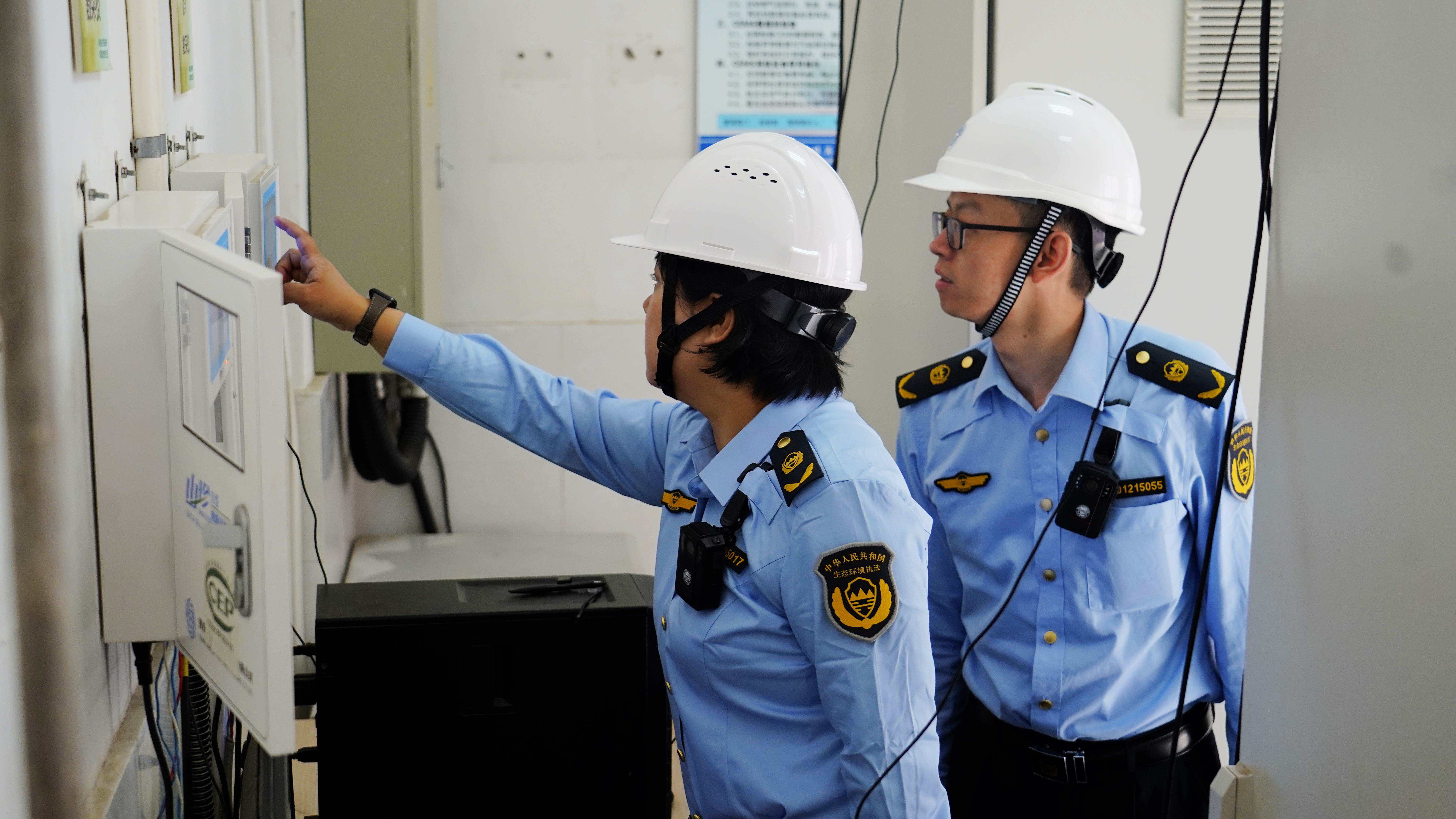
图片新闻|直击上海金山区信访处置现场
Zhong Guo Huan Jing Bao· 2025-12-09 05:11
Group 1 - The Shanghai Jinshan District Ecological Environment Bureau's law enforcement personnel received a public complaint and conducted verification of the online monitoring data of pollutant discharge at the enterprise's station [3]

锚定“双碳”目标促进“十五五”时期低碳产业发展
Zhong Guo Huan Jing Bao· 2025-12-09 03:25
Core Viewpoint - The "14th Five-Year Plan" period is crucial for China to achieve its carbon peak goal, emphasizing the development of low-carbon industries as a pathway for comprehensive green and low-carbon transformation of the economy and society [1] Group 1: Policy Optimization for Low-Carbon Industry Development - The "14th Five-Year" period requires a focus on time-sensitive carbon reduction efforts while capturing potential development opportunities, considering industry interconnections and overall carbon reduction [2] - Emphasis on orderly replacement of high-carbon industries, particularly in key sectors like electricity, non-ferrous metals, and chemicals, while enhancing carbon efficiency [2] - Policies should balance ecological impacts and carbon emissions, transforming challenges into opportunities, such as developing competitive lithium battery recycling industries [2] Group 2: Regional Advantages and National Policy Support - Regions rich in ecological resources should leverage their advantages to become national "carbon neutrality" pilot zones, exploring clean energy supply, carbon trading, and low-carbon industry cultivation [3] - A new production model should integrate industrial, innovation, talent, funding, and policy chains to promote high-quality regional development characterized by low-carbon efficiency [3] Group 3: Encouraging Diverse Participation in Low-Carbon Innovation - Innovation is essential for low-carbon industry development, requiring participation from government, enterprises, research institutions, and society [4] - The government should focus on supporting "dual carbon" technology research and enhancing green financial support for innovation [4] - Financial institutions are encouraged to engage in green technology innovation through investment and insurance products, fostering a supportive environment for small and innovative tech companies [4] Group 4: Supporting High-Quality Development through Innovation - Innovation goals should align with "dual carbon" objectives, particularly in key industries and technologies, such as deep processing of agricultural products in rural areas [5] - The integration of artificial intelligence and digital platforms is vital for optimizing resource utilization and enhancing product value [5] Group 5: Promoting Green Consumption - The "14th Five-Year" plan suggests establishing a green consumption incentive mechanism to promote energy-saving and low-carbon lifestyles [6] - Policies should include subsidies and tax reductions to lower the initial costs of green products, stimulating market demand [7] - A market-driven incentive mechanism should be developed to reward consumers for low-carbon behaviors, creating a positive cycle of ecological and economic benefits [7] Group 6: Infrastructure and Cultural Promotion for Green Consumption - Infrastructure for green consumption, such as electric vehicle charging networks, should be improved to alleviate consumer concerns [8] - Clear standards and labels for green products are necessary to facilitate consumer choices and promote recycling [8] - Public awareness campaigns should be conducted to embed green concepts into daily life, fostering a culture of sustainability [8]
一棵树可以实现多少功能?北京大兴让梨树成为“钱库+粮库”
Zhong Guo Huan Jing Bao· 2025-12-09 01:55
Core Insights - The article discusses the multifunctionality of pear trees in Daxing District, Beijing, highlighting their roles as a "grain bank" and "money bank" through innovative practices in the pear industry [1] Economic Value of the Pear Industry - The pear industry in Daxing District, particularly in Lianghua Village, is recognized for its historical and natural appeal, featuring over 30,000 ancient pear trees, including a 417-year-old tree that produces over 2,000 pounds of "Jinba Huang Duck Pear" annually [2] - The annual production of "Jinba Huang Duck Pear" across five core production areas reaches 20,000 tons, with a direct economic benefit of approximately 60 million yuan, alongside the development of five deep-processing products that enhance income by over 100,000 yuan [2] - The brand value of "Jinba Huang Duck Pear," supported by geographical indication certification, allows for a price premium over regular pears, with the implementation of an "Internet + field market + e-commerce" model to reduce costs and improve economic efficiency [2] Integration of Agriculture, Culture, and Tourism - Lianghua Village leverages local party organization leadership to promote rural revitalization, establishing a "demonstration village" initiative focused on brand, environmental, and cultural strength [3] - The village has developed 64 tourism reception households, providing employment opportunities and generating 1.4 million yuan in revenue from 120,000 visitors in 2024 [3] Support for the Pear Industry as a "Grain Bank" - Daxing District promotes the "big food concept," utilizing forest resources to enhance food production through the "forest-flower" model, which includes planting edible lilies for both food and tourism [4] - The introduction of circular agriculture practices, such as using fruit tree branches for mushroom cultivation and organic fertilizer production, enhances resource utilization and sustainability [4] Financial Support for the Pear Industry - Financial innovations in Daxing District include credit loans for farmer cooperatives, with 27.5 million yuan in credit extended to 23 cooperatives and individual loans for home renovation projects [5] - A mutual guarantee loan model has been implemented to lower financing barriers, allowing farmers to access loans of 200,000 to 300,000 yuan [5] - The integration of ancient tree resources, deep processing, and financial empowerment has successfully established the dual functions of "grain bank" and "money bank" in the pear industry [5]
以生态环保督察为抓手,助推经济高质量发展见行见效
Zhong Guo Huan Jing Bao· 2025-12-09 00:30
Group 1 - The core viewpoint emphasizes that ecological environment protection and economic development are not contradictory but are dialectically unified, providing a solid institutional guarantee and practical path for high-quality economic and social development [1] - The Central Ecological Environment Protection Supervision has shifted local governments' focus from growth at the expense of environmental protection to a sustainable development model, promoting the idea that protecting the ecological environment is equivalent to protecting productivity [2][4] - The supervision has encouraged enterprises to view ecological and environmental investments not as burdens but as opportunities for technological upgrades and efficiency improvements, leading to a strategic shift towards green development [2][4] Group 2 - The supervision has significantly enhanced public awareness of ecological responsibility, transforming individuals from passive observers to active participants and supervisors in environmental protection [3][8] - By addressing prominent ecological issues, the supervision has driven local governments to optimize industrial structures, eliminate outdated capacities, and promote a shift towards high-end, intelligent, and green industries [4][5] - The supervision has focused on improving environmental infrastructure, which directly enhances ecological quality and attracts high-end industries, thereby fostering new growth points in the economy [7][8] Group 3 - The supervision has effectively addressed issues such as the encroachment of natural protected areas, ensuring the integrity of ecosystems and promoting a transformation in local development concepts [7] - By resolving public concerns regarding ecological issues, the supervision has improved living standards and created a favorable environment for market expansion and the development of specialized industries [8] - The upcoming implementation of the Ecological Environment Protection Supervision Work Regulations in 2025 aims to institutionalize the achievements of supervision practices, further solidifying the legal foundation for ecological civilization construction [8]