
Jing Ji Wang

Search documents
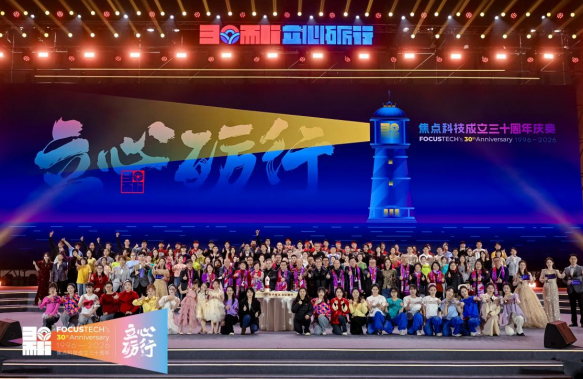
焦点科技成立三十周年:立心为锚,砺行为舟
Jing Ji Wang· 2026-01-12 08:01
Core Viewpoint - Focus Technology celebrates its 30th anniversary, reflecting on its journey and commitment to creating valuable products and services for customers [1][3][10]. Company Overview - Founded in 1996, Focus Technology has evolved into a multi-faceted internet enterprise covering foreign trade, cross-border services, AI applications, and financial insurance [3][10]. - The company operates several brands, including MIC International Station, Doba, inQbrands, and New Station Insurance Network, and has incubated projects in smart education [3]. Business Philosophy - The company's operational philosophy is centered around "truth, goodness, and beauty," which guides its mission to create customer-recognized value [5][7]. - Focus Technology emphasizes customer trust through accurate product data presentation and maintains a commitment to fairness in business practices [7]. Achievements and Recognition - Focus Technology has received numerous national recognitions, including being named a national pilot unit for information technology and a model enterprise for deep integration of industry and information technology [10]. - The company has also been awarded the "Wu Wenjun Artificial Intelligence Science and Technology Award," highlighting its contributions to the digital transformation of industries [10]. AI Strategy - The company has established a strategic focus on AI, launching the AI Foreign Trade Assistant "AI Mai Ke" in 2023, which has served over 15,000 Chinese suppliers, enhancing work efficiency and opportunity conversion rates [11][12]. - The introduction of SourcingAI 1.0 and SourcingAI 2.0 demonstrates the company's commitment to integrating AI technology into the foreign trade sector, providing intelligent search capabilities for buyers [11][12]. Future Outlook - As it enters its next phase, Focus Technology aims to continue leveraging its foundational values and technological advancements to navigate the global digital economy [12].


生态+品牌双重赋能,赤壁青砖茶走向世界
Jing Ji Wang· 2026-01-12 07:37
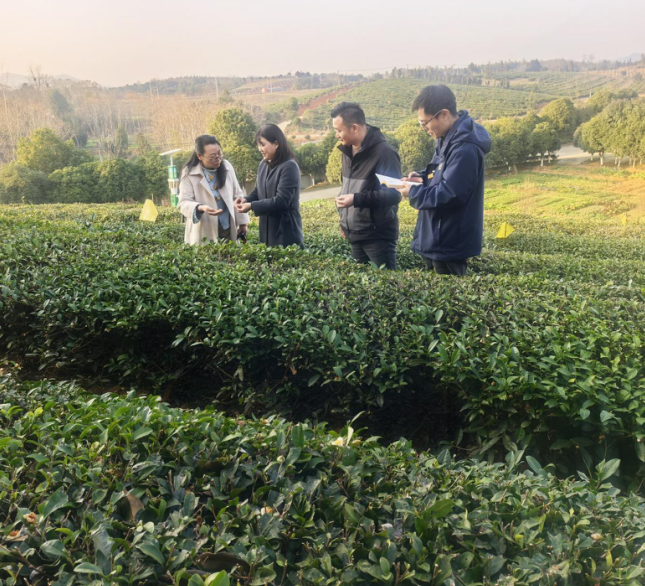
Core Viewpoint - The strategic partnership between Hubei Chibi Zhaolichao Tea Co., Ltd. and Russian e-commerce platform YUKTI INTERNATIONAL marks a significant step in expanding the international market for Chinese tea, particularly the Qingsong tea from Chibi, Hubei. Group 1: Company Background and Development - Hubei Chibi Zhaolichao Tea Co., Ltd. was founded by Wei Yanxiang, who transformed from a tea picker to an entrepreneur, taking over an abandoned tea plantation in 1998 and turning it into a successful enterprise with over 56,000 acres of tea gardens and an annual production capacity of 5,000 tons [3][4] - The company has integrated the mission of national tea reserve and production of ethnic specialty products into its development strategy since its inception, aiming for more than just commercial success [3][4] Group 2: Social Responsibility and Community Impact - The company has invested over 6 million yuan in initiatives promoting ethnic unity and progress, benefiting over 100,000 people through more than 200 activities [4] - In 2020, the company invested 20 million yuan to establish a factory in Xinjiang, creating 120 jobs and increasing local income by an average of 36,000 yuan per person annually, thus contributing to regional development and ethnic harmony [4] Group 3: Innovation and Cultural Integration - The company has embraced innovation by introducing smart production lines and focusing on the deep exploration and modern expression of tea culture [6] - Under the "Three Tea Integration" strategy in Hubei, the company has created a unique "Yellow Crane Tower" shaped Qingsong tea, blending traditional craftsmanship with modern aesthetics, transforming it into a cultural tourism product [6] Group 4: International Expansion and Market Strategy - The partnership with YUKTI INTERNATIONAL is seen as a milestone in reviving the "Silk Road Tea" trade, with Russian representatives expressing strong market potential for Qingsong tea in Russia [6][7] - The company is developing a modern supply chain and utilizing a combination of offline tasting events and online live streaming to enhance market reach and effectiveness [6]
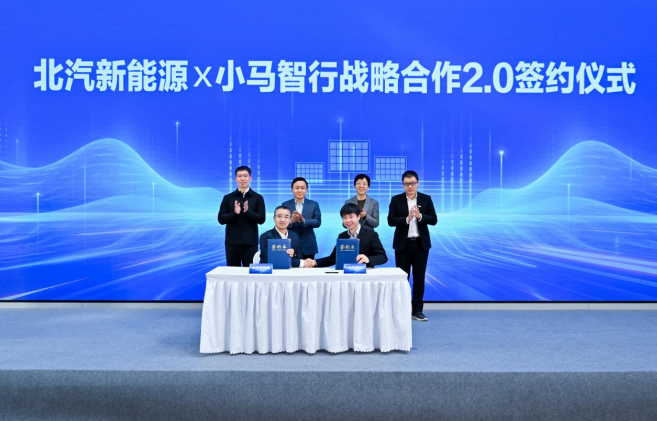
北汽新能源与小马智行战略合作步入2.0阶段,“五位一体”共拓全球智能出行版图
Jing Ji Wang· 2026-01-12 07:37
Core Insights - The strategic partnership between BAIC New Energy and Pony.ai aims to enhance the development of L4-level Robotaxi production and operations, establishing a benchmark for collaborative innovation in China's smart driving industry [1][3] Group 1: Partnership Details - The collaboration is characterized as entering a "2.0 era," focusing on creating a complete closed loop from technology development to commercial operation, rather than merely increasing vehicle production [3] - The partnership will leverage a ten billion investment to stimulate a trillion-level automotive intelligent driving industry collaboration [3] Group 2: Production Milestones - Since signing a technical cooperation agreement in November 2024, the partnership has achieved over 600 units of Robotaxi production, marking a significant milestone in the field [4] - The first mass-produced vehicle was launched in July 2025, with rapid delivery milestones: 100 units delivered within a month and 300 units within three months [4] - The Robotaxi operates in various complex driving scenarios, demonstrating a safety level exceeding human driving by over ten times [4] Group 3: Market Strategy - The Robotaxi sector is recognized for its clear commercialization path and substantial market potential, estimated in the hundreds of billions [6] - The partnership will focus on five dimensions: product co-creation, market expansion, supply chain integration, ecosystem development, and capital collaboration [6] Group 4: Global Competitiveness - The collaboration signifies a critical step for China's smart connected vehicle industry, transitioning from isolated technological breakthroughs to systematic ecological competition [7] - It aims to establish a sustainable smart mobility ecosystem, providing a replicable and sustainable "Chinese solution" for the global smart mobility market [7]

中国临床研究登顶《自然》主刊 硬科技正成为市场核心竞争力
Jing Ji Wang· 2026-01-12 07:37
Core Insights - The "Dreams Series" clinical research results for the drug Masitide have been published in the prestigious journal Nature, marking a significant milestone in the field of metabolic and endocrine diseases [1][2] - The studies demonstrate that Masitide significantly outperforms control treatments in blood sugar control and weight management, providing new evidence for treating type 2 diabetes and obesity in Chinese patients [1][3] Group 1: Research Findings - The two published studies, DREAMS-1 and DREAMS-2, are both Phase III clinical trials based on data from Chinese patients, focusing on the efficacy of Masitide in treating type 2 diabetes [1][2] - Results indicate that Masitide not only improves blood sugar levels but also shows positive changes in weight and various cardiovascular, liver, and kidney-related metrics [3][4] - The studies provide high-quality evidence for the need for treatment options that effectively manage both blood sugar and weight, addressing the growing burden of type 2 diabetes in China [3][6] Group 2: Market Implications - Masitide is the first GLP-1 drug to be published in both Nature and the New England Journal of Medicine, establishing it as a unique product in the market [2] - The drug's dual-target mechanism (GCG/GLP-1) offers a differentiated advantage in the weight loss market, particularly for Chinese patients who often face abdominal obesity and related metabolic disorders [5][6] - The increasing demand for personalized and diverse weight management solutions among Chinese patients highlights the potential for Masitide to capture a significant market share [7][8] Group 3: Future Developments - Masitide has received approval for diabetes and weight management indications in China and is currently involved in multiple Phase III studies targeting obesity and related complications [8] - The ongoing research aims to expand the drug's applications, including studies focused on adolescent obesity and severe obesity in adults [8] - The drug's development aligns with national health initiatives, emphasizing the importance of integrated weight management and metabolic disease treatment [6][7]
新年首罚!3家券商,领6张罚单
Jing Ji Wang· 2026-01-12 02:45
Core Viewpoint - Recent penalties have been imposed on several securities firms, including Xinda Securities, Jianghai Securities, and Guoxin Securities, highlighting issues related to compliance and risk management in the industry [1][5]. Group 1: Penalties and Compliance Issues - Xinda Securities' Wenzhou Oujing Road branch received a warning for inadequate control over margin trading, allowing clients to engage in prohibited activities [2]. - Jianghai Securities' Harbin Hongjun Street branch was penalized for insufficient execution of client follow-up procedures and improper management of employees, violating compliance regulations [5]. - Guoxin Securities' Nanchang Green Road branch faced penalties for providing investment advisory services without proper registration, indicating poor internal controls [6]. Group 2: Regulatory Environment - The China Securities Association issued guidelines to prevent clients from engaging in "circumventing margin trading" practices, emphasizing the need for strict monitoring and control measures [3]. - Since 2025, multiple securities firms have revised their margin trading contracts to prevent clients from executing prohibited transactions [4]. - Regulatory authorities have adopted a stringent approach towards the securities industry, issuing over 300 penalties affecting nearly 80 firms in 2025, with brokerage services being a major area of concern [7].

从资源大企迈向价值强企:中金岭南锚定“十五五”目标
Jing Ji Wang· 2026-01-09 07:57
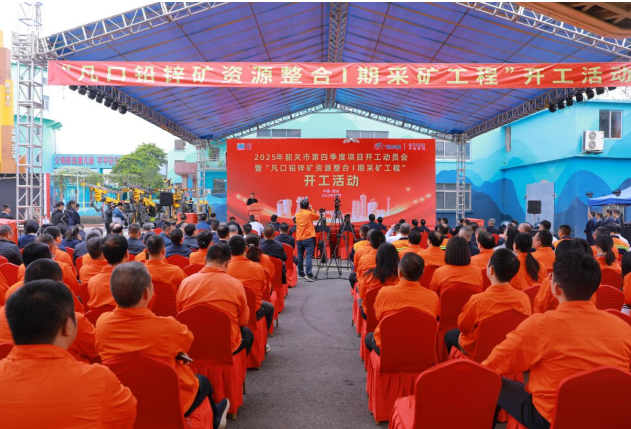
Core Insights - In 2025, Zhongjin Lingnan reported a total operating revenue of 48.505 billion yuan, a year-on-year increase of 11.81%, and a net profit attributable to shareholders of 841 million yuan, up 5.18% year-on-year, while also aiming to reduce costs and increase efficiency by approximately 200 million yuan for the year [1] - The company is undergoing a strategic transformation, focusing on enhancing quality and efficiency, and aims to lead in the comprehensive recycling of rare metals and the industrialization of new materials [1][4] Resource Security - The company emphasizes the importance of securing strategic mineral resources as a political responsibility and a foundation for survival and development, especially given the increasing global competition for resources [1] - Zhongjin Lingnan is actively working on domestic resource expansion and overseas diversification, with projects like the Fan口 lead-zinc mine resource integration and the expansion of the Guangxi mining project [3] New Materials Industry - The new materials industry is identified as a core engine for value enhancement, with a focus on transitioning from raw material sales to material production and solution provision [9] - Zhongjin Lingnan's subsidiary, Zhongjin Technology, has developed zinc-based battery storage materials that have entered the European and American supply chains, and is a leading supplier of mercury-free zinc alloy batteries in China [9][10] Innovation and R&D - The company has established a robust innovation system with 15 provincial-level R&D platforms and has signed 24 research projects with universities, resulting in 78 authorized patents in 2025 [10] - Zhongjin Lingnan aims to grow its new materials sector significantly by 2030, targeting over 10 billion yuan in revenue and focusing on high-end market breakthroughs [10] Green and Intelligent Development - The company has integrated carbon neutrality goals into its development strategy, aiming to peak carbon emissions by 2030 and implementing various low-carbon technologies [12] - Zhongjin Lingnan is advancing smart mining technologies, including autonomous systems for underground transport and intelligent production management [12] Reform and Talent Development - The company is implementing deep reforms, including competitive job placements and salary reforms, to enhance internal vitality [13] - Zhongjin Lingnan has introduced a talent development plan, recruiting industry experts and focusing on skill training, with several employees recognized for their excellence [13][14]

2026新疆以旧换新政策迎开门红 汇嘉时代领跑品质升级新消费
Jing Ji Wang· 2026-01-09 07:57
Group 1 - In December 2025, the national consumer price index (CPI) increased by 0.8% year-on-year and 0.2% month-on-month, with the annual CPI remaining flat compared to the previous year [1] - The core CPI, excluding food and energy prices, rose by 1.2% year-on-year in December 2025, driven by increased consumer demand due to effective policies and the upcoming New Year [1] Group 2 - The implementation of the "old for new" policy in Xinjiang starting January 1, 2026, is expected to stimulate the consumption market, with companies like Huijia Times (603101.SH) positioned to benefit from these policies [3] - Huijia Times reported approximately 80 million yuan in sales from "old for new" initiatives in 2025, marking an 81% year-on-year increase [5] - The company has actively participated in various promotional activities in Urumqi, becoming a key platform for the "old for new" policy, with strong performance in store traffic and sales [5] Group 3 - Xinjiang's strategic location in the Belt and Road Initiative and ongoing urbanization efforts are enhancing its consumption capacity, supported by improved logistics and rising resident incomes [5] - The local government emphasizes the need to unleash consumption potential in border areas, transitioning from "guarantee-type" to "quality-type" consumption [5] - With the continued support of the "old for new" policy and market demand, local enterprises like Huijia Times are expected to play a crucial role in promoting consumption, stabilizing employment, and improving livelihoods, contributing to high-quality regional economic development [6]

AI重构营销生态 2025中国互联网广告市场规模7257亿
Jing Ji Wang· 2026-01-09 07:49
Core Insights - The report predicts that the Chinese internet advertising market will grow steadily at a rate of 11.5%, reaching a scale of 725.7 billion yuan by 2025, marking a shift from traffic expansion to "deep value creation" [1] Group 1: AI and Marketing Transformation - AI is fundamentally restructuring consumer decision-making paths, shifting the marketing battlefield from "keyword ranking" to an "AI trust system" [2] - Brands are required to optimize authoritative evaluations and structured information through Generative Engine Optimization (GEO) technology, significantly reducing marginal costs by 60% [2] - AI-driven "super dynamic ecosystems" are enhancing creative productivity by over ten times, with tools like Flixor enabling batch production of compliant marketing materials [2] Group 2: AI Industry Evolution - The AI industry is transitioning from "training competitions" to "inference optimization," with multimodal deep reasoning and adaptive learning becoming mainstream technologies [3] - The investment in embodied intelligence has exceeded 40 billion yuan, indicating a shift towards physical interactions in AI applications [3] - By 2028, it is expected that 15% of marketing decisions will be autonomously made by AI, highlighting the importance of computational infrastructure [3] Group 3: Short Video and E-commerce Integration - Short video platforms have evolved into "comprehensive digital communities," seamlessly integrating entertainment, shopping, and learning [4] - The "short drama + e-commerce" model has led to an 18.85% year-on-year growth in video information flow advertising, making it the fastest-growing advertising format [4] - Knowledge content is emerging as a new highlight in internet marketing, with platforms like Douyin and Bilibili seeing significant user engagement in knowledge-based content [4] Group 4: Market Dynamics and E-commerce Advertising - E-commerce advertising continues to lead with a 38.55% market share, with interest e-commerce growing by 18.9%, becoming a major growth engine [5] - Douyin's advertising revenue surpasses Alibaba by 32.7 billion yuan, while Xiaohongshu achieves a 23.2% growth rate through its "community + search" model [5] - AI search is reshaping traffic entry points, with traditional search engine advertising revenue remaining flat, while "platform + AI search" categories have surged by 107.4% [5] Group 5: Future Market Predictions - The market size is expected to exceed 900 billion yuan next year, driven by "agent-based AI" and "full-scene integration" [6] - AI will autonomously complete the entire process from "insight to strategy to execution," creating a "seamless marketing" experience [6] - Brand competition is shifting from traffic acquisition to "ecosystem and value battles," with companies that build AI trust assets poised to gain a competitive edge in the smart marketing era [6]

罗兰贝格报告:展望2026汽车行业,AI技术成决胜关键
Jing Ji Wang· 2026-01-09 07:49
Core Insights - The report by Roland Berger highlights that the Chinese automotive industry will become a global technology innovation center by 2026, evolving along six main lines: deepening elimination competition, tackling transformation battles, advancing internationalization, determining outcomes through technology wars, emphasizing capital competition, and resolving AI battles [1][2]. Group 1: Deepening Elimination Competition - The market will see a more pronounced head-to-head effect, with leading companies in vehicle manufacturing, parts supply, and distribution gaining significant advantages, leading to a market structure of "a few leading companies, some mid-tier companies, and many tail-end companies" [1]. - The elimination of tail-end companies will accelerate comprehensively [1]. Group 2: Tackling Transformation Battles - The definition of automotive products is shifting from traditional transportation tools to "smart mobile devices," with cross-industry collaboration becoming more frequent, particularly in integration with chips, software, energy, and cloud computing [1]. Group 3: Advancing Internationalization - Chinese automotive companies will focus more on localized operations, transitioning from "export-oriented enterprises" to "truly internationally operating enterprises," enhancing global competitiveness through job contributions and product localization [1]. Group 4: Determining Outcomes through Technology Wars - Vehicles are evolving beyond traditional transport functions to "AI-driven intelligent entities," with cutting-edge technologies like smart connectivity, autonomous driving, and new materials becoming crucial [2]. - The speed of technological innovation may further widen the gap between China and other countries [2]. Group 5: Emphasizing Capital Competition - In a context of overall profit pressure in the industry, efficient capital leverage and operational optimization will be key for companies to maintain competitiveness and achieve growth, with mergers and acquisitions becoming a new focal point in the "capital race" [2]. Group 6: Resolving AI Battles - The integration of AI with automobiles will transition from concept to high-value commercial scenarios, with future product competitiveness increasingly reflecting the capability of being "AI-driven intelligent entities" [2]. - AI technology will reshape not only front-end products but also the entire value chain, including product development, manufacturing, marketing services, and internal management [2]. Conclusion - According to Zheng Yun, a global senior partner and head of automotive business in Asia at Roland Berger, the automotive industry will enter a phase of "balanced reconstruction" in the coming years, with innovation and transformation in the Chinese automotive market accelerating, further solidifying China's position as a global innovation center in the automotive sector [2].
今日视点:四大逻辑驱动A股投资者信心持续修
Jing Ji Wang· 2026-01-09 07:39
Group 1 - The core viewpoint is that the recovery of investor confidence in the A-share market is driven by a shift from "gambling on uncertainty" to "embracing certainty" supported by four main logical drivers [1] Group 2 - The first driver is the continuous improvement of the macroeconomic governance system, which solidifies the foundation of policy certainty, characterized by enhanced consistency in macro policy orientation and a well-coordinated policy mix [1] - The second driver is the realization of "new productive forces" performance, with certain emerging industries like semiconductors showing rapid revenue and profit growth, contributing to a solid performance foundation for investor confidence [2] - The third driver is the trend of declining risk-free interest rates, which highlights the long-term return advantages of equity assets, particularly high-dividend and growth-oriented stocks, leading to a systemic revaluation of equities [3] - The fourth driver is the deepening consensus among domestic and foreign capital, optimizing the funding ecosystem and enhancing the attractiveness of A-shares as a strategic allocation choice for global funds [4]