Tai Mei Ti A P P

Search documents
开勒股份战略投资深蕾科技,深度布局半导体赛道|融资动态
Tai Mei Ti A P P· 2026-01-08 05:44
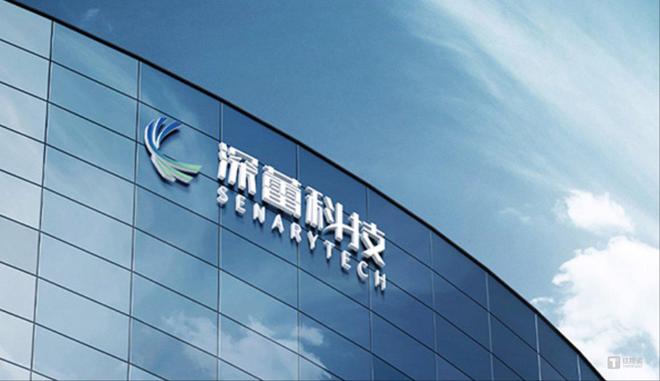
Group 1 - The core message of the news is that Kailer Co., Ltd. has strategically acquired a 4.3119% stake in Shenzhen Shenlei Technology Co., Ltd., making it the fourth largest shareholder, marking a significant breakthrough in its semiconductor industry layout [2] - The investment platform Hangzhou Leze, established by Kailer Co. and Hangzhou Suyuan, has a total investment of 120 million yuan, with Kailer contributing 70 million yuan, focusing on high-growth opportunities in the semiconductor industry [2] - Shenlei Technology is controlled by Shenlei Technology Development (Shenzhen) Co., Ltd., with notable shareholders including Qianhai Mother Fund, Tongchuang Weiye Fund, and Intel, specializing in electronic component distribution and integrated circuit application solutions [3] Group 2 - Shenlei Technology has two major subsidiaries: Shenzhen Xinlei Electronics Co., Ltd., a leading electronic component distributor, and Shenzhen Qianhai Shenlei Semiconductor Co., Ltd., focusing on chip design [3][4] - Xinlei Electronics has been recognized as one of the "Top Ten Chinese Brand Distributors" for nine consecutive years, distributing products from major brands like Broadcom and Panasonic, and is known for its strong customer development and technical support capabilities [3] - Shenlei Semiconductor specializes in audio and intelligent audio-video codec chips, with products supplied to well-known clients such as Lenovo, Honor, and Samsung, and is involved in various AI audio-video interaction scenarios [4] Group 3 - The investment by Hangzhou Leze allows Kailer Co. to leverage Shenlei Technology's channel and industry integration capabilities, enhancing its investment landscape and providing multidimensional support in electronic components, optical communication, and semiconductors [4] - This strategic move is expected to help Kailer Co. and Hangzhou Suyuan break through business growth bottlenecks and explore new profit growth points in high-growth sectors [4]

当咖啡机器人席卷CES:一场商用具身智能的消费革命
Tai Mei Ti A P P· 2026-01-08 05:24
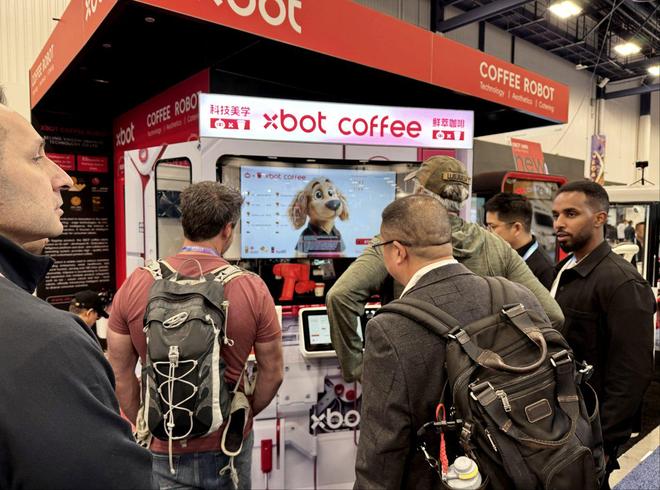
Core Insights - The CES 2026 showcased the XBOT coffee robot from Yingzhi Technology, which attracted significant attention for its practical application in consumer scenarios, marking a milestone in the commercialization of embodied intelligence [2][4] - The XBOT has achieved impressive sales figures, with 600 units deployed and 4 million cups of coffee sold, demonstrating a successful entry into high-frequency consumer markets [4] Technology and Innovation - XBOT is not just a coffee machine but a sophisticated robot capable of making high-quality coffee, utilizing a complete technology loop from data collection to algorithm calibration [5] - The robot can replicate the precision of human baristas, with a consistency error of ±0.3g compared to ±2g for human baristas, and can produce two cups of coffee in 110 seconds, exceeding 500 cups per day [5] - The robot's ability to create intricate latte art is achieved through advanced motion capture technology and a digital twin system, allowing for precise replication of barista techniques [5][6] Product Features - XBOT can produce over 30 types of coffee drinks and offers personalized options based on customer preferences, utilizing an AI-driven model to adjust recipes in real-time [8] - The robot features a 43-inch interactive screen and an AI digital persona, enhancing user engagement and emotional connection [11] Market Strategy - The product's design philosophy combines technology and aesthetics, focusing on emotional value, which is crucial for user experience [9][11] - The pricing strategy has seen significant reductions, with the initial model priced at 600,000 yuan, now down to 189,000 yuan for the Lite version, while improving functionality by 50% [12] Industry Impact - XBOT's deployment across various commercial settings, including real estate and cultural venues, has reached over 600 units globally, with plans to exceed 3,000 units by 2026 [14] - The robot's capabilities extend beyond coffee, with potential applications in other food and beverage categories, indicating a scalable model for future consumer products [15] Future Vision - The deployment of XBOT robots in high-traffic areas aims to create a data ecosystem that captures consumer behavior, enhancing service personalization and operational efficiency for businesses [17] - The company envisions a significant transformation in the offline consumer ecosystem, positioning itself at the forefront of a multi-trillion-dollar market for intelligent upgrades [18]

对话西门子中国董事长肖松:重塑产业新范式,AI的真正价值将在工业端充分释放|CES 2026
Tai Mei Ti A P P· 2026-01-08 05:24
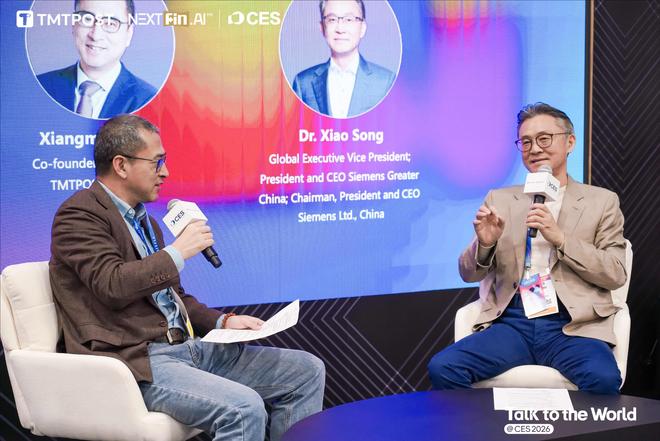
Core Insights - The role of AI is evolving from mere model competition to practical applications in various industries, focusing on "last mile" implementations, with consumer AI targeting individual users and industrial AI emphasizing reliability and foundational skills [1][3] - Industrial AI is seen as a significant value driver, but it is still in its early stages, with increasing customer acceptance and potential for China to lead in application [3][4] - Siemens is recognized as a key partner in the industrial AI space, leveraging its extensive industry knowledge and data to drive transformation [6][11] Group 1: AI Evolution and Industrial Applications - AI is transitioning to become a true collaborative entity, focusing on practical applications rather than just model performance [1] - The true value of AI is expected to be realized in the industrial sector, with current applications still in the early stages of development [3][4] - Siemens emphasizes the importance of digital twin technology, which allows for the creation of virtual models that can enhance production efficiency and quality [5][9] Group 2: Siemens' Strategic Positioning - Siemens plans to invest €1 billion over the next three years to expand its industrial AI ecosystem, focusing on creating foundational models and collaborating with partners [6][14] - The company aims to leverage its historical expertise and high-quality data to lead the industrial AI revolution, addressing complex industry needs [6][11] - Siemens' digital twin composer is a significant innovation that integrates real-time data with virtual models, enhancing operational efficiency [5][9] Group 3: Market Trends and Future Outlook - The industrial AI market is characterized by its complexity and the need for tailored applications across different sectors, with Siemens advocating for a focus on application rather than just model parameters [14][15] - The company believes that AI will not replace human expertise but will enhance it, allowing experienced workers to define and make decisions rather than just operate [4][23] - The future of AI in industrial applications is expected to see incremental breakthroughs rather than radical changes, with a focus on quality improvement and cost reduction [24][27]
阿里为什么非要打千问这场仗?
Tai Mei Ti A P P· 2026-01-08 04:45
Core Insights - Alibaba's Qianwen App achieved over 30 million monthly active users (MAU) within 23 days of its launch, setting a global record for AI application growth, reflecting the company's urgency to secure its future in the AI landscape [1] - The C-end market for AI technology has fully penetrated, with 515 million users in China by June 2025, and over one-third of internet users having engaged with AI applications, showing a preference for domestic models [2] - Alibaba's CEO emphasized the dual focus on AI to B and AI to C strategies, aiming to create an "AI-native super application" [3] Group 1: Competitive Landscape - Alibaba's obsession with maintaining its "entry point" stems from past experiences of being challenged in the internet space, particularly during the rise of third-party platforms that impacted its e-commerce ecosystem [4][5] - The shift to mobile internet intensified Alibaba's need for high-frequency entry points, leading to strategic failures in social media attempts, which resulted in costly and passive user acquisition [6] - Competitors like ByteDance and Tencent have successfully captured significant user engagement, with ByteDance's AI assistant surpassing 100 million daily active users (DAU) and Tencent's product ranking among the top three in the domestic market [6] Group 2: Strategic Initiatives - In December, Alibaba established the Qianwen C-end business group to consolidate its AI efforts, with a clear mandate to position Qianwen as the "super app" of the AI era [7] - The company is shifting its focus from a tool-based approach to an AI-native strategy, as evidenced by the appointment of a young technical expert to lead product development [8] - Alibaba is rebranding its "Tongyi" app to "Qianwen" to unify its technology and product branding, aiming to create a strong association between Alibaba AI and Qianwen in users' minds [9] Group 3: Ecosystem Integration - Qianwen is positioned as a core component of Alibaba's AI capabilities, integrating various services like food delivery, ticket booking, and shopping to become a daily life super entry point [12] - The app's integration with Gaode Map is just the beginning, with plans for deeper collaboration with platforms like Taobao and Alipay to streamline user experiences across services [17] - The complexity of integrating these systems poses challenges, especially in a tightening cash flow environment, but successful implementation is crucial for Alibaba's strategic objectives [17] Group 4: Market Dynamics - Alibaba's cash reserves have been surpassed by Pinduoduo for the first time, highlighting a significant shift in the competitive landscape and the urgency for Alibaba to focus its resources on AI [8] - The public cloud market for large models is rapidly evolving, with a projected 400% growth in model usage in the first half of 2025, emphasizing the need for cloud providers to control their models to avoid becoming mere service providers [20] - Alibaba's strategy involves using the C-end entry point to drive B-end growth, showcasing its AI capabilities to attract enterprise clients and maintain pricing power in the cloud market [18][21]

陈天桥携MiroThinker 1.5开年登场:跑赢万亿模型,实现小模型大智能
Tai Mei Ti A P P· 2026-01-08 04:45
Core Insights - MiroMind team has launched MiroThinker 1.5, a flagship search intelligence model, which emphasizes "discovery-based intelligence" as a path to true general artificial intelligence [2][3] - The model aims to reconstruct understanding of the world under unknown conditions, focusing on research, verification, and correction rather than sheer data accumulation [2] Model Performance - MiroThinker 1.5 operates with 30 billion parameters, achieving performance comparable to larger models with 1 trillion parameters, demonstrating a high efficiency-to-intelligence ratio [3] - The model's cost per call is as low as $0.07, which is 1/20th of the cost of its competitor Kimi-K2-Thinking, while also providing faster inference [5] Interactive Scaling Concept - MiroThinker introduces "Interactive Scaling," shifting the focus from internal parameter expansion to external information interaction, enhancing reasoning capabilities [6][9] - The model is designed to function like a "scientist," emphasizing verification and correction over memorization, thus avoiding the pitfalls of traditional large models [8][10] Training Mechanism - The training process incorporates a "reason-verify-correct" loop, allowing the model to engage with external data for validation, which helps mitigate logical errors [9][12] - MiroThinker employs a time-sensitive training mechanism that restricts the model to only interact with information available before a given timestamp, ensuring realistic decision-making [12] Verification and Correction - The model encourages breaking down key judgments into verifiable sub-hypotheses and actively seeking external evidence, making the evidence-gathering process the primary training goal [11] - It emphasizes iterative verification, where reasoning is treated as a revisable process, allowing for adjustments based on conflicting evidence [11]

高龄创始人的苦恼:双星“宫斗”事件背后的代际困境
Tai Mei Ti A P P· 2026-01-08 04:26
Group 1 - The core issue revolves around the public letter from Wang Hai, chairman of Qingdao Double Star Celebrity Group, announcing the severance of ties with his son Wang Jun and daughter-in-law Xu Ying, indicating doubts about Wang Jun's succession capabilities [1][3] - The Double Star Celebrity Group, originally a state-owned enterprise, has transformed into a leading brand in the sports shoe industry, but has faced increasing competition in recent years, leading to a decline in its market presence [3][4] - Wang Hai's public letter reflects broader challenges in the succession of private enterprises in China, highlighting the emotional and operational struggles faced by aging founders [3][4] Group 2 - Similar succession conflicts have occurred in other major consumer companies, such as Shuanghui Group, where founder Wan Long had a public dispute with his son over differing business philosophies [4][5] - The founders of these companies, including Wang Hai, Wan Long, Zhu Xinli, and Zong Qinghou, share common traits of having built their businesses during China's economic reforms, yet they now face difficulties in transitioning leadership to the next generation [5][6] - The aging founders are often reluctant to step back, leading to internal conflicts as they grapple with the future of their brands amidst changing market dynamics [10][11] Group 3 - The companies led by these founders have historically excelled in product quality, market channels, and scale, establishing strong brand identities in their respective sectors [10][11] - As the market evolves from scarcity to abundance, these once-dominant brands are encountering significant challenges, with some heirs willing to take over but facing resistance from their founders [11][12] - The ongoing legal disputes within Double Star indicate a deepening struggle for control, reflecting the complexities of succession planning in family-owned businesses [12]

宜家中国关闭7家商场,未来两年将开10家小型门店
Tai Mei Ti A P P· 2026-01-08 04:00
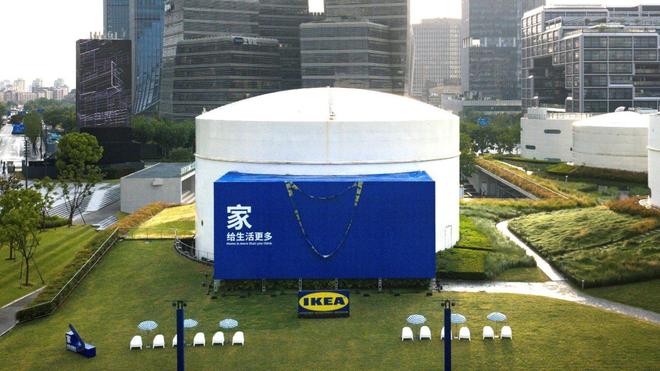
据宜家中国表示,宜家中国在对现有顾客触点进行全面审视和评估之后,决定自2026年2月2日起停止运 营包括宜家上海宝山商场、宜家广州番禺商场、宜家天津中北商场、宜家南通商场、宜家徐州商场、宜 家宁波商场和宜家哈尔滨商场在内的七个线下触点。 此外,宜家中国还将从规模扩张转向精准深耕,以北京和深圳作为重点市场进行探索,在接下来的两年 内开设超过十家小型门店,包括将于2026年2月开业的宜家东莞商场和将于2026年4月开业的北京通州商 场。并且还将继续加强线上布局,并对现有商场进行投资。 宜家中国表示,将持续评估并优化全渠道生态系统,通过更聚焦、更灵活的投资实现更高效的运营和更 好业务成果。近期的举措包括:融合家居灵感与社交体验的上海徐汇商场改造项目、在全国多地新开的 五家不同规模的全新门店,以及新近上线的宜家京东旗舰店。 自2026年2月2日起,停止运营7个线下触点调整后,宜家在中国仍拥有 34 个线下顾客触点、3个自有数 字化渠道以及2家电商平台旗舰店。 从降价到多渠道探索 根据宜家母公司英格卡集团财报数据,宜家中国区销售额从2019财年巅峰期的157.7亿元,一路下滑至 2024财年的111.5亿元,缩水近三成 ...
牛肉涨价,第一批“倒下”的会是谁?
Tai Mei Ti A P P· 2026-01-08 03:06
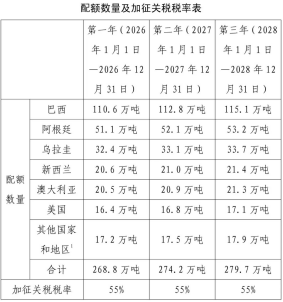
文 | 红餐供应链指南 一纸公文,让全球牛肉贸易商、中国养殖户和无数餐饮老板同时屏住了呼吸。 几天前,商务部发布公告,决定以"国别配额及配额外加征关税"的形式对进口牛肉采取保障措施,自2026年1月1日起实施,为期三年。按照新规,超出配 额的进口牛肉将在现行适用关税税率基础上加征55%。 这意味着,占据中国牛肉消费三成份额的进口牛肉,将告别"无限量供应"时代,也预示着一个新的、更复杂、也更分层的牛肉市场,或将加速形成。 贸易商抢购,进口牛肉价格涨起来了! 在上海从事牛肉贸易业务的李晓(化名)在跟红餐供应链指南交流时讲到,自己公司主要进口巴西牛肉,目前对外出售的这些进口牛肉价格已经上涨,1 月才过去几天,一斤价格已经涨了2、3块钱。 另据"中国新闻周刊"的报道,政策发布后,国内进口商争相"建仓"抢购,不少贸易商的联络清单从往常的两三家海外工厂,扩展到十几家,都想在配额用 光前尽快上车。 贸易商的紧张不是没有理由的。根据国别配额分配,2026年,巴西以110.6万吨居首,阿根廷、乌拉圭分别获得51.1万吨和32.4万吨,澳大利亚和新西兰各 约20万吨,合计约268.8万吨。 | 配额数量及加征关税税率表 | | ...
独家对话引元星河CEO李植宇:企业级AI进入“基础层与应用层协同爆发”周期
Tai Mei Ti A P P· 2026-01-08 02:08
Core Insights - The statement "AI is not a choice but a matter of survival" emphasizes the critical importance of AI in digital transformation for enterprises by the end of 2025 [2] - The role of CIOs is evolving from a cost center to a strategic partner in driving AI integration within organizations, with ultimate decision-making power resting with top executives [2][5] Industry Trends - Enterprise AI is transitioning from a phase of "barbaric growth" to a critical period of "collaborative explosion" between foundational and application layers, indicating a significant market evolution [3] - Global AI investment is projected to reach $315.9 billion in 2024 and grow to $1.2619 trillion by 2029, with a compound annual growth rate (CAGR) of 31.9% [3] China Market Focus - The Chinese enterprise AI service market is expected to reach 45.6 billion yuan by 2025, with a CAGR of 38.2% [4] - The AI Agent application market in China is projected to grow to 23.2 billion yuan by 2025, with an astonishing CAGR of 120% from 2023 to 2027 [4] Shifts in AI Demand - Companies are shifting their AI needs from merely providing tools to delivering value, indicating a maturation in the understanding of AI's role in business [5] - The focus is now on customized AI applications and quantifiable business outcomes, moving beyond traditional cost-cutting perspectives [5] AI Application Challenges - Only 12% of global enterprises are expected to achieve normalized AI application in core business decisions by 2025, highlighting significant barriers to adoption [8] - The primary challenge in core decision-making applications is the need for a closed-loop system of "data-insight-action," which many current AI systems struggle to achieve [9][10] Service Provider Landscape - Four main types of service providers have emerged in the enterprise AI space: large model technology providers, agent service providers, traditional software vendors, and data + AI vertical service providers [6] - New entrants like Yuan Yuan Xing He are attempting to redefine the market by offering end-to-end process reconstruction and organizational change capabilities [7] Future Directions - The future of enterprise AI is expected to evolve towards "controllable, collaborative, and ecological" systems, moving from mere tool empowerment to comprehensive system reconstruction [13][14] - The integration of AI into business processes is anticipated to enhance productivity significantly, with predictions that 60% of manufacturing enterprises will adopt integrated AI models by 2028 [14] Value Verification in AI Projects - The shift from traditional project delivery to value verification models is becoming crucial, with success rates for value verification projects significantly higher than traditional methods [11] - The complexity of measuring ROI in AI projects is a major reason for hesitance in investment, with 68% of companies citing difficulties in accurately assessing ROI [12]

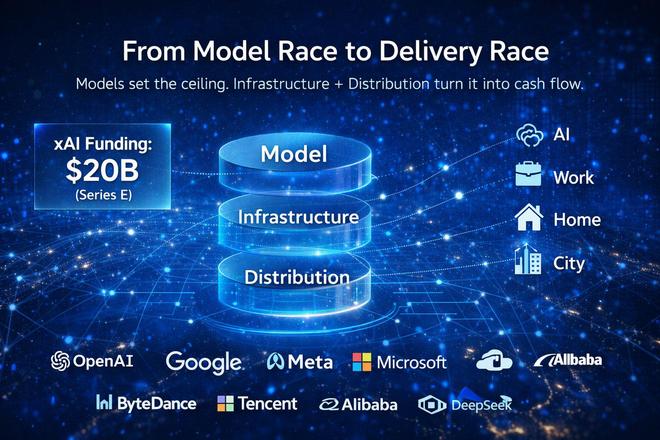
xAI 200亿美元之后:大模型竞赛开始拼交付
Tai Mei Ti A P P· 2026-01-08 01:43
Core Insights - The article emphasizes a shift in the AI industry from a model-centric competition to a delivery-centric competition, highlighting that while models determine the upper limits of capability, the infrastructure and delivery mechanisms are crucial for scaling and monetizing these capabilities [1][10][13] Group 1: Shift in Focus from Models to Delivery - The transition from model competition to delivery competition is driven by three constraints: rising costs of training and inference, accelerated capability diffusion, and the need for a robust commercial closure [2][8] - The marginal cost of achieving cutting-edge capabilities is increasing, making it essential for leading models to be supported by lower inference costs and stable delivery quality to realize their advantages in scalable scenarios [2][9] Group 2: xAI's $20 Billion Significance - xAI's $20 billion investment is aimed at enhancing its second and third layers of competitive capability, focusing on infrastructure and delivery systems rather than just model development [3][10] - The investment emphasizes the expansion of computational infrastructure and the establishment of a visible asset base with over one million H100 equivalent GPUs, thereby enhancing supply certainty [3][6] Group 3: Competitive Landscape and Capability Layers - The competitive landscape is structured into three layers: model and training methods (first layer), infrastructure and supply chain (second layer), and distribution and entry points (third layer) [3][4] - Major players like Google excel across all three layers, while others like OpenAI and Meta have strengths in specific areas, indicating a need for companies to enhance their infrastructure and delivery capabilities to remain competitive [6][10] Group 4: Future Competition Dynamics - The future competition is expected to resemble a platform war rather than a model elimination race, with a focus on scaling delivery capabilities and ensuring compliance and stability [10][11] - The probability of a single company dominating the global market is low due to the decentralized nature of user preferences and regulatory environments, leading to a scenario where platforms excel in delivery and compliance [11][13] Group 5: Key Indicators for Future Success - Companies should focus on three leading indicators: unit inference cost curves, entry penetration rates, and delivery capabilities to assess competitive positioning in the evolving landscape [9][13] - The ability to convert model capabilities into scalable cash flows will depend on performance in these three areas, marking a significant shift in how success is measured in the AI industry [9][10]