
Tai Mei Ti A P P

Search documents
realme为何在此时回归OPPO?
Tai Mei Ti A P P· 2026-01-08 01:26
"这是为进一步协同作战、整合资源......未来,OPPO与realme、一加将共同为全球用户提供更具创新力 和差异化的产品,以及更便捷周到的服务。"上述人士如此表示。 智通财经也在报道中指出,realme回归OPPO后将与一加合并,realme CEO 李炳忠(Sky Li)将领导整 体子品牌业务,一加中国区总裁李杰职责不变。 此后,一加将专注国内和部分海外线上市场,非中国区海外市场由realme和主品牌OPPO承接。 从现有信息看,realme回归OPPO,尚未涉及到更深层次的高管变动及组织架构调整。 realme新品也将如期发布,同时将全面接入OPPO售后服务体系。真我已于1月5日官宣,其2026年首款 新品真我Neo 8将于本月发布。 文 | 听潮TI,作者 | 许雯雯,编辑 | 张晓 1月7日,多家媒体报道,智能手机品牌realme将回归OPPO,成为旗下子品牌。 听潮TI已向OPPO相关人士证实,此消息属实。 从一加到realme:不同的市场环境、相似的回归剧本 市场对realme回归OPPO不算陌生,一加也走过相似的路径: 不同的市场环境下,核心高管脱离OPPO体系独立创业,做出一定成绩、被市场 ...


【钛晨报】直播电商监管新规出台,明确四类主体责任;工信部等八部门印发《“人工智能+制造”专项行动实施意见》;违反技术出口管制?Meta收购Manus案或生变数
Tai Mei Ti A P P· 2026-01-07 23:40
Regulatory Developments - The State Administration for Market Regulation and the National Internet Information Office jointly released the "Live E-commerce Supervision Management Measures," focusing on four main entities: platform operators, live room operators, marketing personnel, and service agencies, to enforce responsibilities and delineate behavioral boundaries [2][3] - The measures specify the responsibilities of live e-commerce platform operators, including identity verification, information reporting, training for marketing personnel, risk identification, and consumer rights protection [2] - Clear behavioral boundaries are established, prohibiting false advertising, commercial defamation, and the sale of illegal goods or services by live room operators and marketing personnel [2] Industry Impact - The measures aim to strengthen regulatory tools by incorporating traffic control and regulating AI-generated content, ensuring that new technologies do not facilitate the generation or dissemination of false information [3] - The implementation of these regulations is expected to enhance the operational integrity of the live e-commerce sector and protect consumer rights [2][3] Corporate Actions - ByteDance denied rumors regarding plans to enter the automotive industry, clarifying that there are no current intentions to manufacture vehicles [6] - Xiaomi's CEO Lei Jun confirmed that there are no plans for a new model, the Xiaomi SU3, amidst various speculations [7] Market Movements - The Chinese central bank reported an increase in gold reserves for the 14th consecutive month, with reserves reaching 7.415 million ounces (approximately 2306.323 tons) as of the end of December [27] - Domestic flight ticket prices have significantly dropped post-New Year, with some fares as low as 210 yuan (approximately 1.1% of the original price) for routes like Guangzhou to Shanghai [28]
国家队重注,押出普惠算力“中国答案”
Tai Mei Ti A P P· 2026-01-07 11:50
Core Viewpoint - The article emphasizes the critical importance of computing power as a national strength in the context of global AI competition, highlighting China's strategic shift towards making computing power more accessible and efficient for a broader range of users [1][4]. Group 1: Investment and Strategic Shifts - China's computing power industry is at a historic turning point, with domestic GPU penetration expected to exceed 59% by 2025, and significant investments in infrastructure driven by initiatives like "East Data West Computing" [3]. - The recent joint investment by two major AI state-owned funds in the AI infrastructure provider Jiuzhang Cloud is seen as a strategic decision to enhance computing sovereignty and promote efficiency and innovation [1][3][9]. - The focus of China's computing strategy is shifting from merely increasing capacity to maximizing the efficient use of existing computing resources, aiming for a utilization rate increase from 30% to potentially 70% or 80% [5][8]. Group 2: Challenges in the Industry - Despite the growth in computing power, high costs remain a barrier for many small and medium enterprises (SMEs) and research teams, with over 70% of R&D budgets directed towards computing power procurement [4][10]. - The current model of computing resource allocation often leads to underutilization, with many computing centers operating at less than 30% capacity, indicating a structural mismatch between supply and demand [4][5]. - The need for a dual innovation in business models and technical architecture is critical to address the high costs and inefficiencies in the current computing power market [10]. Group 3: Jiuzhang Cloud's Role and Innovations - Jiuzhang Cloud is positioned as a unique full-stack platform provider focused on "inclusive computing," aiming to democratize access to computing resources for a wide range of users, including SMEs and individual developers [16][17]. - The company has introduced a new pricing model, defining "1 degree of computing power" to allow users to access resources in a more flexible and cost-effective manner, akin to utilities like water and electricity [10][12]. - Jiuzhang Cloud's technological innovations, including a serverless architecture and AI-native cloud infrastructure, aim to enhance resource utilization and reduce complexity for users [12][14]. Group 4: Market Potential and Future Growth - The inclusive computing market in China is projected to experience significant growth, with estimates suggesting it could reach 410 billion yuan by 2028, driven by increasing demand across various sectors [8][9]. - The successful implementation of inclusive computing solutions is expected to unlock substantial economic potential, benefiting not only large enterprises but also a vast number of SMEs and research institutions [18]. - As computing power becomes more accessible, it is anticipated to catalyze innovation across multiple industries, including autonomous driving, AI pharmaceuticals, and smart city initiatives, thereby reinforcing the strategic importance of Jiuzhang Cloud in the national computing landscape [18].
1亿Token免费送:微信打响AI“抢人赛”
Tai Mei Ti A P P· 2026-01-07 11:50
Core Insights - Tencent has officially launched the "AI Application and Online Tool Mini Program Growth Plan" to support developers in creating AI mini programs within the WeChat ecosystem [1][3] - This initiative is seen as a significant step towards the long-anticipated WeChat Agent, aiming to enhance the practical application of AI technology [2][10] Group 1: Tencent's Strategy and Support for Developers - Tencent is providing substantial resources to developers, including cloud development resources, AI computing power, data analysis, advertising monetization, and traffic incentives [1][3] - The plan aims to lower barriers for AI development, making it easier for independent developers and small teams to create AI applications without the burden of backend infrastructure [4][10] - Tencent is offering 100 million tokens and 10,000 image generation credits to alleviate the financial burden on developers, allowing them to focus on user interaction without worrying about API costs [6][10] Group 2: Addressing Key Challenges in AI Development - The initiative addresses critical issues faced by AI developers, such as high development costs, expensive computing power, difficulty in gaining traffic, and slow monetization [3][5] - Tencent's approach includes providing free cloud development environments and backend capabilities, promoting a serverless development model [4][10] - The plan also includes free access to "We Analysis Professional Version" to help developers understand user behavior and improve retention [8][10] Group 3: Future Implications and Market Position - The growth plan is viewed as a large-scale "crowdsourcing" effort to build a diverse range of AI applications that will contribute to the future WeChat Agent [11][19] - Tencent's recent organizational restructuring and the appointment of a young AI scientist signal a shift towards strengthening its core AI capabilities [16][17] - Despite the delays in launching the WeChat Agent, the market remains optimistic due to Tencent's unique social ecosystem, which provides a high-frequency and sticky environment for AI applications [18][19]

200亿美元到账!马斯克的xAI成OpenAI最强对手?
Tai Mei Ti A P P· 2026-01-07 10:39
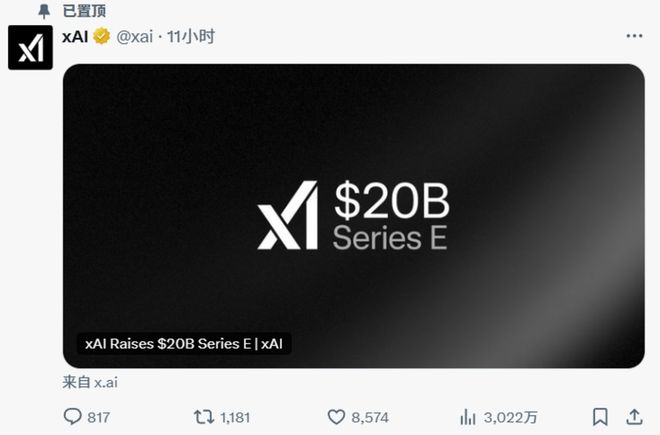
Core Viewpoint - Silicon Valley's large model companies are aggressively financing to expand their computing power, with xAI, founded by Elon Musk, recently completing an oversubscribed Series E funding round, raising $20 billion, significantly increasing its valuation [1][2]. Group 1: xAI's Funding and Valuation - xAI has raised a total of over $42 billion to date, with the latest funding round exceeding its initial target of $15 billion, leading to a valuation that could surpass $230 billion [1][2]. - Strategic investors in this funding round include Nvidia and Cisco, which are crucial partners in supporting xAI's rapid expansion of computing infrastructure [1][2]. Group 2: Competitive Landscape - Among top large model companies, Anthropic is valued at approximately $350 billion, while OpenAI's valuation reaches $830 billion [2]. - Other notable companies potentially heading for IPOs include SpaceX, valued at $1.5 trillion, and Databricks, valued at around $160 billion, with expectations of entering the secondary market within 1-2 years [2]. Group 3: Infrastructure Development - xAI aims to accelerate its infrastructure development with the latest funding, focusing on building the world's largest GPU cluster and enhancing its AI product offerings [1][4]. - The company plans to establish the Colossus II data center cluster, with capital expenditures expected to reach hundreds of billions of dollars [5]. Group 4: Revenue and Financial Outlook - Current annualized revenue for xAI is estimated to be around $1 billion, which is significantly lower compared to its capital expenditures [6]. - OpenAI's "Stargate" project is even more ambitious, with planned investments of $500 billion, while its projected annual revenue for 2025 is just over $20 billion [6]. Group 5: Market Dynamics and Risks - Companies like Meta are also investing in GW-level data center clusters, supported by partnerships with chip manufacturers and cloud service providers [7]. - The integration of xAI with other Musk-led ventures could complicate business operations and increase risks due to the interconnected nature of their investments and operations [7].


8次甩卖、屡屡被罚、利润七连跌,民生银行怎么把日子越过越惨
Tai Mei Ti A P P· 2026-01-07 10:02
近期,民生银行因一张来自国家金融监督管理总局宁波监管局的220万元罚单,再次被推至舆论的风口 浪尖。同时,该行全年近8000万元的累计罚款、年底超过274亿元的信用卡不良资产"大甩卖",以及连 续七个季度同比下滑的净利润,勾勒出这家昔日"小微之王"在转型深水区挣扎求索的复杂图景。 2025 年,该行股价累计下跌 2.5%,截至1月7日发稿,收盘价跌至3.85元,较十年前的高位缩水超 60%;银登中心公开挂牌口径显示,该行全年狂甩超 274 亿元信用卡不良资产包,创下单一机构个贷不 良处置规模新纪录;年内收到的监管罚单金额累计达 7975.86 万元,合规风险持续暴露;前三季度归母 净利润同比下滑 6.38%,已连续七个季度负增长。 从1996年破冰而出的民营银行标杆,到如今股价徘徊于低位、资产质量承压、合规问题频发的"困难 生",民生银行正深陷多重困局。 业绩滑坡与合规漏洞下的困局 民生银行近年来的困境,最直观地体现在其核心财务数据的"失速"上。2025年前三季度,该行实现营业 收入1085.09亿元,虽同比增长6.74%,止住了自2021年以来的下滑趋势,但归属于股东的净利润却同比 下降6.38%,仅为28 ...

AI泡沫退潮、落地为王,芯片巨头“拉帮结派”激战CES 2026
Tai Mei Ti A P P· 2026-01-07 08:01
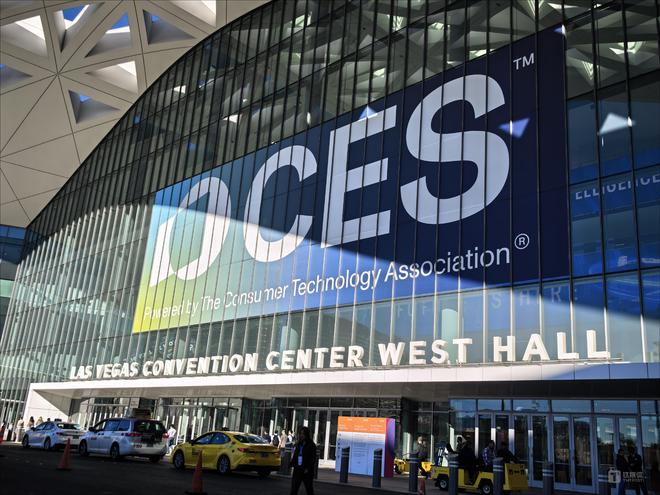
Group 1 - NVIDIA's founder Jensen Huang emphasized the shift of AI from mere model competition to practical applications, focusing on "last mile" implementations during his keynote at CES 2026 [2][6] - The industry is transitioning from a "technology demonstration phase" to a "value realization phase," centering around real user scenarios [2] - AI technology is moving from "cloud-side intelligence" to "edge-side integration," becoming a fundamental infrastructure for human-computer interaction [2][6] Group 2 - CES serves as a platform for both tech giants and startups, particularly for Chinese companies to convert algorithms and technologies into tangible hardware [3] - AMD's CEO Lisa Su highlighted that AI is becoming a default capability in PCs, with AI performance improved by 1000 times over the past four years [9] - Intel introduced its third-generation AI PC processor, showcasing advancements in energy efficiency and CPU performance [11] Group 3 - Qualcomm launched the Snapdragon X2 Plus platform, featuring a 35% increase in single-core performance and a 43% reduction in power consumption [13] - IDC predicts that global AI PC shipments will reach 150 million units by 2027, with a penetration rate of 79% [13] - Major home appliance brands are now integrating AI into their products, focusing on enhancing core functionalities rather than superficial features [18] Group 4 - Companies like Hisense and TCL are showcasing advanced display technologies and AI-integrated home appliances at CES, with Hisense's RGB-Mini LED technology expected to see a significant increase in shipments [18][20] - Samsung plans to increase the number of mobile devices equipped with Google Gemini AI to 800 million by 2026 [22] - The competition among chip manufacturers is intensifying as they seek to define the future of physical AI [17] Group 5 - The CES 2026 highlighted the emergence of embodied intelligent robots and AI+AR glasses, indicating a shift from demonstration to market-ready products [29][34] - Startups are increasingly participating in CES to showcase innovative technologies and seek market opportunities [45] - The event serves as a critical platform for companies to adapt their strategies in response to rapid industry changes [47]


价值判断:涨停板的投资机会和风险提示(1月6日)|证券市场观察
Tai Mei Ti A P P· 2026-01-07 07:28
Market Overview - On January 6, the A-share market experienced a broad-based rally, with the Shanghai Composite Index rising by 1.50% to close at 4083.67 points, and the Shenzhen Component Index increasing by 1.40% to 14022.55 points. The total trading volume in the Shanghai and Shenzhen markets reached 2.81 trillion yuan, significantly higher than the previous trading day [1][14]. - The market showed a balanced performance in terms of individual stocks, with 2371 stocks experiencing net inflows from large orders, while 2538 stocks saw net outflows. There was a clear trend of funds concentrating on high-growth sectors and undervalued stocks, indicating significant sector rotation [1][14]. Sector Performance - The non-bank financial sector was the strongest performer, with a net inflow of 6.437 billion yuan and a sector index increase of 3.73%. The metals sector followed closely, rising by 4.26% with a net inflow of 3.663 billion yuan. Other active sectors included optical electronics, chemical raw materials, and minor metals, which also saw significant inflows [1][14]. - Conversely, the telecommunications sector faced substantial outflows, with a net outflow of 7.564 billion yuan. Other sectors such as media, machinery equipment, and pharmaceutical biology also experienced net outflows, indicating a clear adjustment trend [1][14]. Investment Opportunities - **Binhu Chemical (601678)**: A leading chemical company with a focus on low valuation and industry upgrades. The stock hit the daily limit on January 6, closing at 4.75 yuan, with a five-day increase of 10.72%. The company is advancing green low-carbon industrial park construction and digital upgrades, indicating strong valuation recovery potential [2][3]. - **Jiahua Energy (600273)**: A quality energy chemical stock with a complete industrial chain. The stock also hit the daily limit on January 6, closing at 9.59 yuan, with a five-day increase of 14.44%. The company's performance is supported by steady growth and low valuation [4][5]. - **Rainbow Technology (600707)**: A leader in display panels, the stock closed at 7.05 yuan on January 6, with a five-day increase of 12.44%. The company is optimizing its business structure through collaboration with BOE, enhancing its growth prospects [6][7]. Risks in High Valuation Stocks - **International Medical (000516)**: A medical service stock that has shown two consecutive limit-ups but has a significant valuation bubble. The stock closed at 5.19 yuan on January 6, with a five-day increase of 15.59%. The company reported losses, indicating a lack of fundamental support [8][9]. - **Guosheng Technology (603778)**: A new energy stock that has also shown two consecutive limit-ups but lacks performance support. The stock closed at 21.3 yuan on January 6, with a five-day increase of 34.05%. The company continues to report losses, leading to a significant valuation bubble [10][11]. - **Aipeng Medical (300753)**: A medical device stock with high valuation premiums, closing at 39.96 yuan on January 6, with a five-day increase of 38.99%. The company has reported losses, and its stock price is driven by speculative trading rather than fundamental improvements [12][13]. Summary and Investment Strategy - The A-share market is showing a broad rally with significant trading activity, particularly in sectors with clear industrial logic and strong performance certainty. Companies like Binhu Chemical, Jiahua Energy, and Rainbow Technology are highlighted as undervalued opportunities with clear recovery potential [14][15]. - In contrast, stocks like International Medical, Guosheng Technology, and Aipeng Medical are identified as high-risk due to their reliance on speculative trading and lack of fundamental support. Investors are advised to focus on sectors with strong performance certainty while avoiding high-premium stocks lacking earnings support [14][15].




狂飙300万辆杀入全球前十,2026吉利汽车靠什么继续提速?
Tai Mei Ti A P P· 2026-01-07 05:42
Core Insights - Geely's sales in 2026 exceeded 3.02 million units, marking a 39% year-on-year increase, with over half being new energy vehicles, which surged by 90% to 1.69 million units [2][4] - The company achieved a revenue of 239.5 billion yuan in the first three quarters of 2025, a 26% increase, and a core net profit of 10.62 billion yuan, up 59% [2][7] - Geely has entered the "3 million club" of global automakers, alongside giants like Toyota and Volkswagen, securing a spot among the top ten global car manufacturers [2] Step One: Rapid Electrification Transformation - Geely's strategic focus on electrification has allowed it to thrive amid fierce competition, achieving a new energy penetration rate of 56% by 2025 [4][5] - The Galaxy brand has seen significant success, with annual sales reaching 1.24 million units, a 150% increase, and the Galaxy M9 becoming a key player in the mid-to-high-end market [4][5] - Geely's traditional fuel vehicle sales also grew by 3%, demonstrating a balanced approach to maintaining its core business while pushing for new energy growth [5] Step Two: Strategic Integration of "One Geely" - Geely completed the privatization and merger of Zeekr, enhancing resource synergy across R&D, procurement, and manufacturing, which is expected to lower costs and improve efficiency [7][8] - The merger is seen as a strategic move to consolidate efforts in the smart electric vehicle sector, allowing for better resource allocation and market positioning [8][9] - The company's financial performance reflects this integration, with Q3 2025 revenue reaching 89.2 billion yuan, a 27% increase, and core net profit growing by 19% [7][8] Step Three: Full-Scale AI Integration - Geely has established itself as a technology company by implementing a comprehensive AI system across all vehicle domains, including architecture, power, chassis, and intelligent driving [10][12] - The launch of the AI-driven H9 system for autonomous driving showcases Geely's commitment to advanced technology, with plans to introduce L3 and L4 functionalities in 2026 [12][15] - The integration of AI technologies into new models, such as the Galaxy M9 and Zeekr 9X, demonstrates Geely's ability to rapidly translate technological advancements into market-ready products [16] Growth Engines for 2026 - Geely aims for a sales target of 3.45 million units in 2026, with 2.22 million from new energy vehicles, supported by the launch of approximately ten new models [17][18] - The company is shifting towards a localized supply chain and manufacturing capabilities in key overseas markets, enhancing its global competitiveness [18][19] - Policy changes favoring higher-value vehicles are expected to benefit Geely, which has focused on high-value products and aims to leverage these changes for growth [19][20] Future Outlook - Geely's market valuation is approaching 200 billion HKD, with over 40 institutions providing positive ratings, indicating a reassessment of its technological capabilities [21][23] - The company is positioned to redefine its identity from a traditional automaker to a technology-driven enterprise, with a complete AI ecosystem in place [22][23] - Geely's strategic focus on integrating technology, enhancing product offerings, and expanding globally suggests a promising trajectory for future growth and innovation [24]


左手“保命钱”,右手“未来钱”:拆解黄仁勋的“双螺旋”经营术
Tai Mei Ti A P P· 2026-01-07 03:35
文 /胡华成私享论 ,作者 / 胡华成 历史从不青睐旧时代的优等生,它只奖励新时代的定义者。在计算范式迁移的惊险隘口,一位穿皮衣的 工程师,用十年时间完成了一场从"图形芯片供应商"到"AI时代奠基人"的身份跃迁。这不仅是商业的成 功,更是一套关于如何预见、构建并主宰未来的完整方法论。 序章:范式迁移的惊险一跃 商业史中真正的分野,从不在于谁在旧规则下做得更好,而在于谁定义了下一场游戏的新规则。 2015年,英伟达正享受着图形芯片王者的荣耀。游戏市场如火如荼,专业可视化领域无可匹敌,年营收 跨越50亿美元大关。然而,创始人黄仁勋看到的却是一个经典的"创始人困境":公司被困在了一间透明 的牢房里。窗外风景广阔(AI萌芽、数据爆炸),身边掌声不断(股价连创新高),但组织却寸步难 行——整个团队沉迷于优化图形渲染的"确定性充实",无人也无暇质问:我们这台"图形计算机器",是 否为下一个时代而生? 这个问题,拉开了此后十年一场史诗级战略重构的序幕。黄仁勋的答卷,不是一份产品路线图,而是一 套名为"激客"的思维操作系统——一套关于如何以终局为锚、重构规则、并让组织在确定性滋养可能性 的动态平衡中穿越周期的完整实践。 上篇 ...