投中网

Search documents
8200亿锂电扩产潮下,“宁王”下重金了
投中网· 2026-01-05 07:32
Core Viewpoint - The lithium battery industry is expected to experience explosive growth by 2025, driven by demand from energy storage and electric vehicle electrification, with significant investments and capacity expansions across the supply chain [5][6]. Investment and Capacity Expansion - In 2025, over 282 investment projects in China's lithium battery supply chain are anticipated, with total investments exceeding 820 billion yuan, marking a year-on-year increase of over 74% [6]. - Approximately 64 new lithium battery projects are planned, with a total capacity exceeding 1,100 GWh, representing a 105% year-on-year increase. The total planned investment for these projects is expected to reach 348.5 billion yuan, up 92% from the previous year [6]. - Investments in lithium battery materials, including cathodes, anodes, electrolytes, and separators, are projected to reach 308.5 billion yuan, a 127% increase year-on-year [6]. Strategic Partnerships and Supply Chain Dynamics - Battery manufacturers are forming deeper partnerships with upstream resource companies to secure future supply, as seen with CATL's investments in companies like Jiangxi Shenghua New Materials and Tianhua New Energy [7][9]. - Long-term contracts and equity binding mechanisms are being established to ensure raw material supply, with companies like Zhongxin Innovation and Huayou Cobalt planning significant purchases of lithium salt products over the next several years [9][10]. Market Trends and Pricing Dynamics - The lithium battery materials sector is witnessing a new round of capacity expansion, particularly in cathodes and electrolytes, driven by increased demand and rising production costs [14]. - The average price of lithium iron phosphate materials has seen a drastic decline, but there are expectations of price increases due to rising demand and cost pressures [16]. - The industry is shifting towards long-term contracts with flexible pricing mechanisms, indicating a more stable pricing environment compared to previous years [15]. Competitive Landscape and Future Outlook - The competitive landscape is evolving, with a focus on supply chain ecosystems centered around leading battery manufacturers, which are increasingly collaborating with material suppliers for joint development [18][19]. - The industry is expected to consolidate around a few major players, with a focus on technological advancements and supply chain synergies, leading to a more balanced supply-demand scenario in the coming years [20][21].



投中榜·2025年度榜单评选盛大开启
投中网· 2026-01-05 07:32
Core Viewpoint - The article emphasizes the transformation and value return in the Chinese private equity industry as it shifts from scale expansion to a focus on quality and deep value, marking a new phase in 2025 [2][3]. Group 1: Industry Trends - In 2025, the Chinese private equity sector has moved towards a focus on survival quality and deep value, with a rational fundraising market and an emphasis on optimizing investment portfolios and exit efficiency [3][4]. - The trend of "investing early, investing small, and investing in technology" has become irreversible, with over 10,000 investment cases recorded in the VC/PE market from January to November 2025, a year-on-year increase of over 30% [3][4]. - The electronic information sector contributed more than 3,000 investment cases, accounting for nearly one-third of the total market, followed by advanced manufacturing and healthcare sectors [4]. Group 2: Exit Strategies - The exit ecosystem in private equity is undergoing significant changes, with mergers and acquisitions (M&A) emerging as a core exit strategy alongside IPOs, driven by domestic capital market reforms and industry consolidation needs [4][5]. - The total transaction amount in the Chinese M&A market reached 12.7 trillion yuan from January to November 2025, a substantial year-on-year increase of 51.64% [4]. - The diversification of exit channels, including S funds, provides valuable liquidity for existing assets, indicating a more mature and flexible exit strategy focused on value realization [4][5]. Group 3: Policy and Market Environment - The year 2025 marks a critical turning point, with clear policy directions supporting the "financial powerhouse" strategy, the implementation of venture capital regulations, and optimized equity investment ratios for insurance funds [5]. - The acceleration of AI commercialization, continuous breakthroughs in renewable energy technologies, and a steady increase in the approval of innovative drugs in biomedicine provide rich investment opportunities [5]. - A diverse and stable funding structure is being established with participation from national mother funds, social security science and technology funds, local state-owned capital, industrial capital, and foreign funds [5]. Group 4: Future Outlook - The hard technology investment sector is entering a fruitful harvest period, with a noticeable return of capital wealth effects, particularly in semiconductor and AI fields [6]. - Notable companies in hard technology, such as Muxi Co., Moer Thread, and Biran Technology, have recently completed IPOs, providing substantial returns for investors [6]. - The return of the "Best Return Investor" award in the 2025 investment rankings signifies the maturation of the industry cycle and the diversification of exit channels, attracting more patient capital to invest in the future [6][9].

公司卖给英伟达,人均喜提3000万
投中网· 2026-01-05 07:32
Core Viewpoint - Nvidia has agreed to acquire Groq, a high-performance AI accelerator chip design company, for $20 billion in cash, marking Nvidia's largest transaction to date, nearly tripling Groq's previous valuation of $6.9 billion within three months [3][7]. Group 1: Acquisition Details - The acquisition involves key Groq executives, including founder and CEO Jonathan Ross, joining Nvidia while Groq will continue to operate as an independent entity [4]. - Groq, founded in 2016 by former Google engineers, focuses on high-performance AI accelerator chip design, particularly for inference tasks [4][11]. - Nvidia's acquisition strategy is seen as a form of "acqui-hire," allowing the company to gain talent and technology while avoiding potential regulatory hurdles associated with traditional acquisitions [4][8]. Group 2: Financial Implications - Nvidia's offer includes generous compensation for Groq's shareholders, with approximately 85% of the payment made in cash upfront, and the remaining distributed over the next few years [9]. - Groq employees, approximately 600, will receive substantial financial incentives, with potential equity values estimated at $5 million per employee [4][9]. Group 3: Strategic Significance - The acquisition is viewed as a strategic move to strengthen Nvidia's competitive edge in the GPU market, especially as AI model focus shifts from training to inference, where traditional GPUs face limitations [4][12]. - Nvidia's purchase of Groq is compared to Microsoft's acquisition of GitHub, emphasizing its strategic importance in the AI landscape [11]. - The deal is expected to lock in customers, as AI labs now face the choice of either purchasing Nvidia GPUs or adopting Groq's LPU technology, thereby consolidating Nvidia's market position [12]. Group 4: Industry Trends - The AI chip market is evolving, with a clear divide between GPU-centric and non-GPU architectures, as companies like Google and Groq push for alternatives to traditional GPUs [14]. - The global AI chip market is projected to reach $413.8 billion by 2030, with non-GPU architectures expected to capture over 21% of the market share [15]. - In China, the trend towards non-GPU solutions is accelerating, with the market for non-GPU accelerated servers expected to approach 50% by 2029 [16].

首发|移动、茅台出手,这家深圳公司一轮融了超10亿
投中网· 2026-01-05 00:00
Core Viewpoint - The article highlights the rapid growth and significant investment in RayNeo, a Shenzhen-based AR company, which is positioning itself as a leader in the AR market with innovative products and substantial backing from major investors [4][9]. Group 1: Company Overview - RayNeo was founded in 2021 by Li Hongwei, who recognized the potential of AR glasses as the next universal computing platform [5]. - The company has developed a complete product lineup, including the RayNeo X series and RayNeo Air series, focusing on both advanced technology and current market needs [7]. - By 2025, RayNeo sold hundreds of thousands of AR glasses, achieving significant market traction and user adoption [7][8]. Group 2: Investment and Financing - RayNeo completed its C round of financing, raising over 1 billion yuan, with investments from major players like China Mobile and China Unicom, marking a significant milestone for AR technology in China's communication infrastructure [4][11]. - The company has raised several rounds of funding, accumulating tens of billions in total, which has been crucial for its growth and technological advancements [9][10]. - The strategic partnerships with industry giants such as Qualcomm and Google have helped RayNeo build a comprehensive AI+AR ecosystem [10]. Group 3: Market Position and Future Outlook - RayNeo achieved a 24% market share in the global AR smart glasses market in Q3 2025, indicating its leading position [8]. - The AR industry is expected to reach a pivotal moment akin to the iPhone era between 2027 and 2028, with RayNeo aiming to leverage its technological advancements to gain a competitive edge [8]. - The company is focused on continuous innovation and product development, with plans to showcase its first eSIM AR glasses at CES 2026 [4][11].
震惊沙特的玻璃光计算来了,比Groq更好的AI推理“最终解”?
投中网· 2026-01-04 06:35
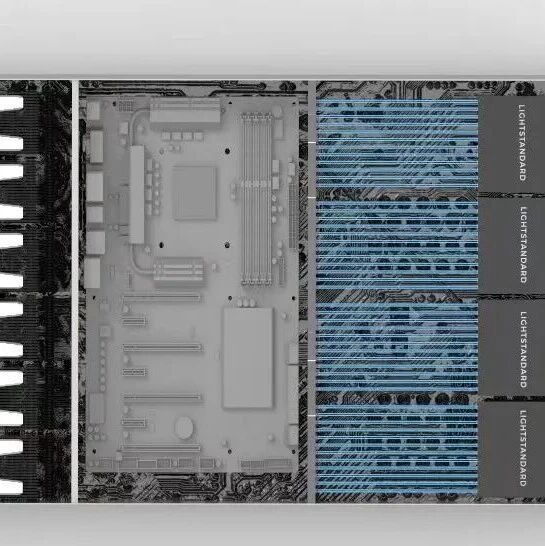
Core Viewpoint - The article discusses the potential disruption in the global AI computing landscape due to the advancements made by Guangbenwei Technology, which is set to launch the world's first commercially viable optical computing chip with a 128×128 matrix scale in 2024, utilizing glass instead of silicon as the substrate, thereby addressing the limitations of traditional computing methods [2][4][6]. Group 1: Company Overview - Guangbenwei Technology has completed five rounds of financing within three years, attracting investments from top venture capitalists, domestic internet giants, and state-owned funds from Shanghai and Suzhou [2]. - The company showcased its optical computing products at the Saudi Industrial Transformation Exhibition, receiving high praise from Saudi officials and extensive media coverage [2]. Group 2: Technological Advancements - The new optical computing chip is expected to achieve "thousand POPS-level computing power and thousand TOPS/W energy efficiency," significantly surpassing current GPU and TPU capabilities [2][4]. - Guangbenwei Technology's optical computing products are primarily designed for AI inference scenarios, which are projected to account for 75% of total AI computing by 2030, with a market size of $255 billion [3]. Group 3: Performance Metrics - The 200mm×200mm glass optical computing chip is anticipated to deliver a computing power of 2600 POPS, which is 1400 times that of Google's TPU and 1300 times that of NVIDIA's H200 [6][9]. - The energy efficiency of the glass optical computing chip is expected to exceed 1000 TOPS/W, over 200 times that of TPU, due to its unique material properties [9][11]. Group 4: Market Implications - The shift to glass as a substrate for optical computing chips is seen as a revolutionary step that could redefine the AI computing landscape, moving towards a "full optical era" and potentially disrupting the dominance of companies like NVIDIA [4][15]. - Guangbenwei Technology aims to establish a full-stack optical computing solution that caters to various user needs, from small-scale applications to large data centers, positioning itself as a key player in the upcoming technological revolution [16].
81.5亿,史努比被卖了
投中网· 2026-01-04 06:35
Core Viewpoint - The article discusses the investment by Sony in Peanuts Holdings LLC, the parent company of the iconic character Snoopy, highlighting its historical significance and commercial success over the decades [4][20]. Investment Overview - Sony announced an investment of $475 million (approximately 3.35 billion RMB) in Peanuts Holdings LLC, increasing its stake to 80% [4]. - The valuation of Peanuts Holdings is currently at $1.16 billion (approximately 8.15 billion RMB) [4]. Historical Context - Snoopy, created by Charles Schulz in 1950, has been a cultural icon for over 70 years, influencing various generations [3][6]. - The character has faced criticism for being perceived as shallow and not engaging with contemporary societal issues, yet it has maintained strong commercial performance [6][9]. Financial Performance - In 1953, Schulz earned $30,000 annually from Snoopy, equivalent to about $270,000 today (approximately 1.9 million RMB) [8]. - By 2000, Peanuts generated annual sales of around $1.1 billion [10]. IP Development and Challenges - The Peanuts IP faced challenges in the 2010s, leading to a sale of its rights to Iconix and later to DHX Media, which struggled with profitability [14][17]. - The transition to Sony marks a new phase in IP management, with expectations for revitalization through Sony's extensive media capabilities [20]. Future Prospects - Sony's investment is expected to enhance the Peanuts brand value, potentially leading to new animated content and crossovers with other IPs [20].


超40家VC押注,80后创始人冲刺水下机器人第一股
投中网· 2026-01-04 06:35
Core Viewpoint - The article highlights the growing interest and investment in the underwater robotics sector, particularly focusing on the company Deep Blue Technology, which is on the verge of becoming the first publicly listed underwater robotics company in China with an IPO plan to raise 1.5 billion yuan [5][7]. Company Overview - Deep Blue Technology has transitioned to the "Acceptance of Guidance" status for its IPO, with the guidance provided by China International Capital Corporation [6]. - The company aims to raise 1.5 billion yuan through its IPO, which, if successful, will mark a significant milestone as the first underwater robotics stock in China [7]. - Founded by Wei Jiancang, who has a strong technical background, Deep Blue Technology focuses on developing domestic underwater robotics capabilities, addressing a market that has been largely overlooked in China [9]. Product and Market Position - Deep Blue Technology has developed a diverse product line, including cable-controlled underwater robots, autonomous underwater vehicles, and underwater gliders, which are utilized in marine scientific research, hydropower, and emergency rescue operations [9][10]. - The company also has a consumer brand, Sublue, offering underwater sports products that have gained international traction, being sold in over 70 countries [10]. Financial Performance - The company has shown strong revenue growth, with revenues of 141 million yuan in 2022, projected to reach 235 million yuan in 2023 and 251 million yuan in 2024, reflecting a compound annual growth rate of 33.23% [13]. - As of mid-2025, the company reported revenues of 141 million yuan, matching the total for 2022, indicating a critical phase of revenue scale expansion [13]. - Despite high R&D costs leading to accumulated losses of 622 million yuan by mid-2025, the net loss has significantly decreased from 134 million yuan in 2022 to 6.78 million yuan in the first half of 2025 [13][14]. Industry Trends - The underwater robotics market in China has grown from 1.24 billion yuan in 2018 to 6.27 billion yuan in 2022, with expectations to exceed 30 billion yuan by 2027 [14]. - The global deep-sea robotics market is projected to reach 420 billion yuan by 2028, with the engineering service market potentially reaching 15 trillion yuan [14]. - The industry is characterized by high barriers to entry in defense and industrial-grade robotics, while the consumer market remains competitive but more mature internationally [14]. Investment Landscape - Over 40 investors, including Lei Jun, have shown interest in Deep Blue Technology, which has completed over ten rounds of financing, raising more than 1.3 billion yuan to date [8][10]. - The company has a strong and diversified shareholder structure, with the founder holding 23.64% of the shares, and institutional investors including Shenchuang Investment and others holding significant stakes [10].

月入数万元,年轻人把「梗」做成一门新生意
投中网· 2026-01-04 06:35
豹变 . 直抵核心。做最具穿透力、洞察力的商业观察,深度影响未来。 将投中网设为"星标⭐",第一时间收获最新推送 以下文章来源于豹变 ,作者高泽 解码"抽象经济"的流量魔力。 作者丨 高泽 作者丨 邢昀 来源丨 豹变 如果要评一个 "2025 年抽象产品排行榜 " ,九阳豆浆在 " 双 11 " 当日正式推出的 " 哈基米南北 绿豆浆 " 一定榜上有名。 据官网介绍, " 哈基米南北绿豆浆 " 是一款莲子百合绿豆沙饮品,包装共有 4 种,每袋价格 2 元 左右。产品包装上印有一只猫头,并搭配着 " 臣本哈基,躬耕于九阳 "" 既见哈基,为何不咪 " 等 改编名言名句、流行语的二创语句。 该产品上线首日即售罄,预售订单一度发货时间延长至 45 天。甚至还引发了前母公司九阳股份连续 两日涨停,使得 九阳股份 不得不公开声明 " 公司及其下属公司均不涉及食品、饮品类产品。 " 在 " 哈基米南北绿豆浆 " 之外,一个规模庞大,但往往被主流视为边缘的 " 抽象经济 " 市场正在 崛起。 什么是抽象经济?你可以简单理解为, 微博热搜、 B 站热梗的实物化 ,就是把一些转瞬即逝的网 络情绪、集体记忆和社群共鸣,快速封装成 ...

具身智能抢人大战:毕业一年,年薪300万元
投中网· 2026-01-03 06:32
Core Viewpoint - The competition for top talent in the field of embodied intelligence is intensifying, with salaries reaching unprecedented levels, reflecting the industry's urgent demand for skilled professionals [3][5][8]. Group 1: Talent Demand and Salary Trends - ByteDance's recruitment for senior algorithm experts in embodied intelligence offers salaries between 95,000 to 120,000 yuan per month, indicating a significant increase in compensation for skilled professionals [3]. - A recent graduate from a prominent embodied intelligence company is reportedly commanding an annual salary of 3 million yuan, excluding potential stock options, highlighting the lucrative opportunities available in this sector [3]. - Top candidates with experience in motion control can easily receive multiple job offers, with salaries for leadership positions nearing 10 million yuan [3][5]. Group 2: Recruitment Strategies and Market Dynamics - The demand for algorithm talent is particularly high, with a reported 6% year-on-year increase in job postings in the robotics industry, and a fourfold increase in positions related to humanoid robots [5]. - Companies are adopting aggressive recruitment strategies, including early engagement with PhD candidates and offering high signing bonuses and tailored projects to attract talent [6][9]. - The competition for talent is not limited to algorithm positions; hardware engineers are also in high demand, as their expertise is crucial for the successful implementation of embodied intelligence products [9]. Group 3: Industry Challenges and Future Outlook - The current talent shortage in the embodied intelligence sector is characterized by a significant imbalance between supply and demand, as the rapid growth of the industry outpaces the availability of qualified professionals [8][9]. - The industry is experiencing a phase of "irrational prosperity," with high salaries and aggressive recruitment seen as necessary to attract talent and overcome technical challenges [12][13]. - By 2027, the industry is expected to reach a critical juncture for large-scale production of embodied intelligence robots, with the current period viewed as a prelude to exponential growth [14][15].

陈立武的无限战争
投中网· 2026-01-03 06:32
Core Viewpoint - The article discusses the significant role of Chen Liwu in the rise of China's semiconductor industry, highlighting his achievements and the challenges he faces as CEO of Intel, particularly regarding potential conflicts of interest due to his extensive investment network [4][5][8]. Group 1: Chen Liwu's Background and Achievements - Chen Liwu is a prominent figure in the semiconductor industry, comparable to leaders like Jensen Huang and Lisa Su, having previously led Cadence, a major EDA company, and won the Robert N. Noyce Award in 2022 [4]. - His investment firm, Walden International, has been highly active in the semiconductor sector since 1987, investing in over 100 companies, including notable firms like SMIC and Zhaoyi Innovation [4]. - Chen's entry into China in 1993 marked a significant moment in the venture capital landscape, contributing to the growth of the industry from its nascent stages [4]. Group 2: Intel's Challenges and Chen's Role - Intel faced a record quarterly loss of $16.6 billion (approximately 116.9 billion RMB) before Chen's appointment as CEO, which led to a 25% increase in Intel's stock price on the day of his announcement [8]. - Following his appointment, Chen successfully attracted significant investments from SoftBank ($2 billion) and Nvidia ($5 billion) to support Intel's semiconductor manufacturing [5][8]. - Despite these successes, Chen's extensive investment network has led to internal trust issues at Intel, with employees expressing concerns over potential conflicts of interest [5][17]. Group 3: The Rivos Acquisition Controversy - Intel's interest in acquiring Rivos, a chip design company valued at $2 billion, has raised eyebrows as Rivos was incubated by Chen, who is also a board member and early investor [9][11]. - The acquisition bid has escalated Rivos's valuation to $4 billion due to competitive interest from both Intel and Meta, which complicates the situation further [9][10]. - Chen's involvement in the Rivos acquisition has led to accusations of potential conflicts of interest, prompting Intel's board to question his role in the decision-making process [14][17]. Group 4: Broader Implications for the Semiconductor Industry - The semiconductor industry is characterized by high R&D costs, often exceeding 20% of annual sales, necessitating significant investment and collaboration for growth [20]. - The article emphasizes that the future of semiconductor companies relies on strategic investments and acquisitions, particularly for established firms like Intel looking to adapt to new market demands [20]. - Chen's dual role as an investor and CEO highlights the complexities of navigating corporate governance and investment strategies in a rapidly evolving industry [19][21].