半导体芯闻

Search documents
存算一体瓶颈,中国团队实现突破
半导体芯闻· 2025-07-02 10:21
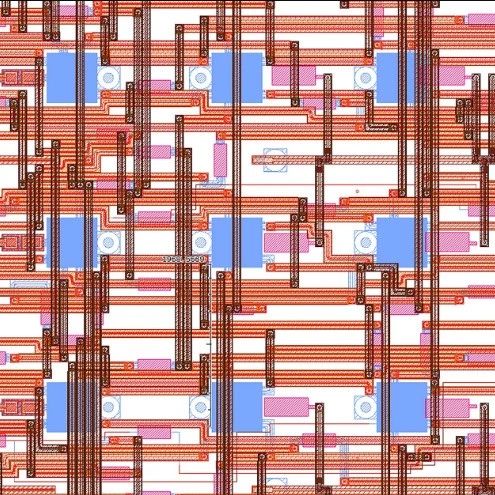
Core Viewpoint - The rapid development of artificial intelligence (AI) presents new challenges for chip computing power, particularly the "memory wall" issue, which arises from the limitations of the von Neumann architecture widely used in processors [1][3]. Group 1: Memory Wall Problem - The von Neumann architecture simplifies hardware design by storing data and instructions in the same memory, but it limits CPU execution capabilities due to sequential instruction processing [3]. - The performance of storage has not kept pace with CPU advancements, leading to significant delays as CPUs wait for memory read/write operations, thus degrading overall system performance [3][4]. Group 2: Processing-In-Memory (PIM) Technology - PIM, or Compute-in-Memory, is an emerging non-von Neumann computing paradigm aimed at addressing the "memory wall" problem by executing computations within memory, reducing data transfer time and energy costs [5][6]. - The development of PIM technology has evolved through various stages since the 1990s, with significant contributions from both academic institutions and companies like Samsung, SK Hynix, and Micron [6][8]. Group 3: Current PIM Technologies - Mainstream PIM technologies include digital PIM (SRAM/DRAM), analog PIM (RRAM, PCM), and hybrid PIM, each with distinct advantages and challenges [8]. - Companies and research institutions have been actively developing PIM prototypes since 2017, with notable advancements in traditional storage technologies [8][9]. Group 4: Sorting Challenges in AI - Sorting is a critical and time-consuming operation in AI systems, affecting applications in natural language processing, information retrieval, and intelligent decision-making [10][11]. - The complexity of sorting operations, particularly in dynamic environments, poses significant challenges for traditional computing architectures, leading to high time and power consumption [10][11]. Group 5: Breakthrough in Sorting Hardware Architecture - A team from Peking University has achieved a breakthrough in efficient sorting hardware architecture based on PIM technology, addressing the inefficiencies of traditional architectures in handling complex nonlinear sorting tasks [13][14]. - The new architecture reportedly enhances sorting speed by over 15 times and improves area efficiency by more than 32 times, with power consumption reduced to one-tenth of traditional CPU or GPU processors [15][17]. Group 6: Implications and Future Applications - This breakthrough is expected to support a wide range of AI applications, including intelligent driving, smart cities, and edge AI devices, providing a robust foundation for next-generation AI technologies [16][17]. - The successful implementation of this sorting architecture signifies a shift from application-specific solutions to broader, general-purpose computing capabilities within PIM systems [15][16].


NVIDIA十年AI布局,押注“物理AI”引领下一场机器人革命
半导体芯闻· 2025-07-02 10:21
Core Viewpoint - NVIDIA is at the forefront of AI development, transitioning from perception and generation to "Physical AI," which involves understanding real-world physics for autonomous decision-making and reasoning [1][3]. Group 1: NVIDIA's AI Evolution - Over the past decade, NVIDIA has pioneered the use of GPUs in voice and image recognition, establishing a foundation for deep learning with software stacks like CUDA and TensorRT [1]. - In recent years, NVIDIA's advancements in generative AI have enabled tools capable of text, image, and video generation, exemplified by technologies supporting ChatGPT [1]. Group 2: Physical AI and Robotics - The concept of "Physical AI" is seen as the next stage in AI evolution, with robots and autonomous vehicles serving as key applications [1][3]. - NVIDIA's focus on creating a safe environment for simulating and training AI to understand real-world rules is crucial for the development of Physical AI [3]. Group 3: Isaac GR00T and Robotics Development - Isaac GR00T N1.5 is an open-source humanoid robot model designed to enhance robot perception and control, integrating with NVIDIA's Omniverse for realistic motion data generation [5][6]. - The deployment of GR00T N1 in industrial settings, such as automotive manufacturing, marks a significant step in practical applications of humanoid robots [6]. Group 4: Data Generation and Simulation - NVIDIA introduced the Isaac GR00T-Dreams Blueprint, which generates synthetic training data from a single environmental image, significantly reducing costs and risks associated with data collection [10][11]. - The Isaac Sim platform provides a dedicated environment for robot simulation and synthetic data generation, enhancing the training process for robots [13]. Group 5: Jetson AGX Thor and Edge Computing - The upcoming Jetson AGX Thor platform represents a major leap in computational power for humanoid robots, offering up to 800 TFLOPS of AI performance [20]. - Jetson series products are designed for edge computing, enabling real-time data processing and decision-making capabilities in robots [19]. Group 6: Comprehensive Ecosystem - NVIDIA is building an end-to-end ecosystem for Physical AI, integrating chips, systems, software, simulation, and models to drive a transformation in robotic intelligence [22]. - The collaboration of cloud, simulation, and hardware platforms positions NVIDIA to lead the next wave of AI advancements that will significantly impact human productivity and lifestyle [22].

英特尔先进工艺,有变
半导体芯闻· 2025-07-02 10:21
Core Viewpoint - Intel's new CEO, Lip-Bu Tan, is considering significant changes to the company's contract manufacturing business to attract major clients, which may incur high costs compared to previous plans [1][2]. Group 1: Strategic Changes - The new strategy for Intel's contract manufacturing will not include marketing certain long-developed chip manufacturing technologies to external clients [1]. - Intel's 18A process, which has seen substantial investment, is reportedly losing appeal to new customers, prompting the need for potential write-downs [1][2]. - The company is focusing more resources on the 14A process, which is expected to be more competitive than TSMC's N2 technology, aiming to attract major clients like Apple and Nvidia [2]. Group 2: Financial Implications - Intel is projected to incur losses of up to $18.8 billion in 2024, marking its first loss since 1986 [3]. - The potential costs associated with the shift in strategy could lead to losses in the hundreds of millions or even billions of dollars [1][2]. Group 3: Production Plans - Intel plans to achieve mass production of the 18A chips later this year, with internal chips expected to be delivered ahead of external customer orders [4]. - The timely delivery of 14A chips to secure large contracts remains uncertain, and Intel may continue with its existing 18A chip plans [4][5].


华为海思何庭波,有新动态
半导体芯闻· 2025-07-02 10:21
Core Viewpoint - The semiconductor industry is at a critical juncture of transformation, with both challenges and opportunities for innovation and growth [8][9]. Group 1: Leadership Changes - He Tingbo, former president of Huawei HiSilicon, has been appointed as the head of Huawei's Senior Talent Compensation Department, effective July 1 [1]. - He Tingbo has a strong educational background in semiconductor physics and communication engineering, having joined Huawei in 1996 and held various key positions [3]. Group 2: Achievements in Semiconductor Business - Under He Tingbo's leadership since the establishment of HiSilicon in 2004, Huawei's semiconductor business has supported over 20 years of product development and innovation [4]. - Huawei has transitioned from a follower to a leader in the industry, expanding into advanced fields such as smartphone chipsets, optical chips, and AI processors, achieving significant milestones like the Kirin application processor and the Ascend AI processor [5]. Group 3: Industry Insights and Future Outlook - He Tingbo emphasizes that the semiconductor industry is facing a major crisis and transformation, where previously leading suppliers may lose their technological advantages, while lagging demanders could emerge as new leaders [8]. - The core elements of semiconductor development are advanced processing equipment and complex manufacturing processes, rather than rare natural resources [9]. - There is a strong belief in the potential for innovation driven by market demand and a solid technological foundation, suggesting a hopeful future for the semiconductor industry [9].

2nm大厂,伸手要钱
半导体芯闻· 2025-07-02 10:21
Core Insights - Rapidus aims to mass-produce 2nm chips by 2027 and is seeking funding from semiconductor-related companies, including Fujifilm, to support this initiative [1][2] - The company has initiated trial production lines for 2nm chips and plans to report on the trial results to partners on July 18 [1][2] - Rapidus was established in August 2022 with investments from eight Japanese companies, and additional funding efforts are underway to secure a total of 1 trillion yen [2] Funding and Investment - Rapidus is targeting to raise 1 trillion yen, with existing shareholders and potential investors like Honda expressing interest in contributing [2] - The estimated funding requirement for achieving the 2nm chip production goal is approximately 5 trillion yen, with the Japanese government committing around 1.72 trillion yen, leaving a funding gap of over 3 trillion yen [2] Market Context - In the advanced wafer foundry sector, TSMC dominates the market, particularly in securing AI chip orders from Nvidia [3] - There is an increasing demand from U.S. clients for alternative suppliers due to the U.S.-China decoupling, highlighting the strategic importance of Rapidus in the semiconductor supply chain [3]
台积电终止GaN代工
半导体芯闻· 2025-07-02 10:21
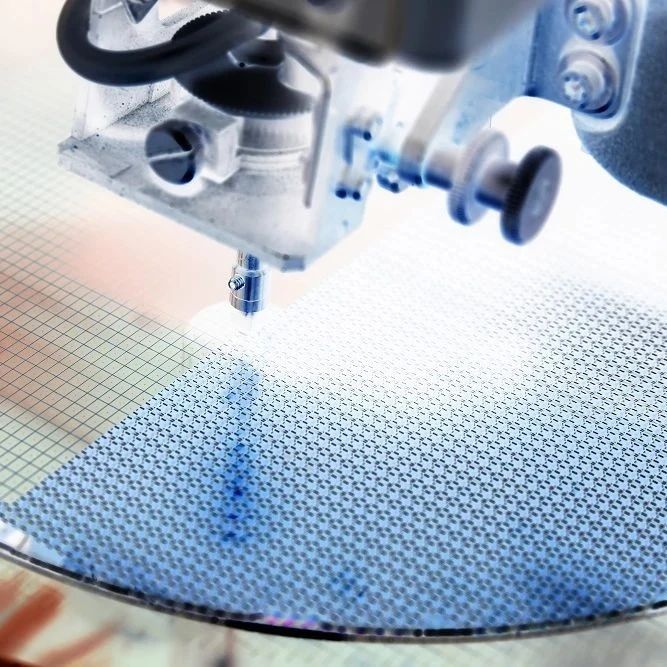
Core Insights - Navitas Semiconductor has announced a strategic partnership with Powerchip Semiconductor Manufacturing Corporation (PSMC) to produce and develop 200mm silicon-based gallium nitride (GaN) technology after TSMC plans to terminate its GaN foundry business by 2027 [1][2] - The collaboration aims to meet the growing demand for GaN products in 48V infrastructure, including large-scale AI data centers and electric vehicles, with initial devices expected to be certified by Q4 2025 [1][2] Group 1 - Navitas will utilize Powerchip's 200mm wafer production capabilities at its 8B fab in Taiwan, which has been operational since 2019, to support various GaN mass production processes [1] - Powerchip's advanced 180nm CMOS technology will enhance performance, power efficiency, integration, and cost-effectiveness of Navitas's GaN product lineup, which will range from 100V to 650V [1][2] - The first 100V series is expected to enter production in H1 2026, while the 650V devices will transition from TSMC to Powerchip within the next 12-24 months [1] Group 2 - Navitas has made several announcements in the AI data center, electric vehicle, and solar markets, including collaborations with NVIDIA and Enphase, showcasing its GaN and SiC technology [2] - The CEO of Navitas expressed excitement about the partnership with Powerchip, emphasizing the commitment to continuous innovation in product performance and cost efficiency [2] - Powerchip's general manager highlighted the long-standing collaboration with Navitas in GaN-on-Si technology and the nearing completion of product certification, paving the way for mass production [2]

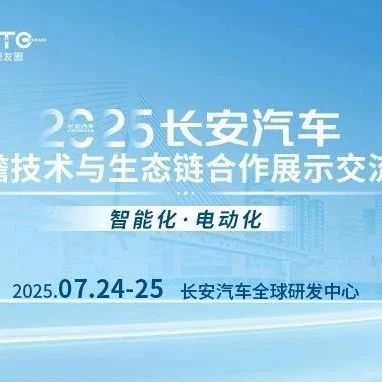
倒计时22天!@供应链伙伴,一张通往长安汽车生态链的黄金入场券,速领取~
半导体芯闻· 2025-07-02 10:21
Core Viewpoint - The article emphasizes the rapid transformation of the automotive industry towards smart electric vehicles, highlighting the competitive landscape and the strategic initiatives of Changan Automobile to adapt and thrive in this evolving market [1]. Group 1: Changan Automobile's Strategic Plans - Changan Automobile is accelerating its three major plans: "Shangri-La," "Beidou Tianshu," and "Haina Baichuan," focusing on the development of its three smart electric brands: Changan Qiyuan, Deep Blue Automobile, and Avita [1]. - The company aims for a total sales target of 3 million vehicles by 2025, with 1 million of those being new energy vehicles and another 1 million in overseas markets [1]. - By 2030, Changan targets global sales to exceed 5 million vehicles, with 3 million being new energy vehicles and 1.5 million in overseas markets [1]. Group 2: 2025 Forward-looking Technology and Ecosystem Cooperation Exhibition - The "2025 Forward-looking Technology and Ecosystem Cooperation Exhibition" will take place on July 24-25, aimed at fostering collaboration between Changan Automobile and over 100 industry-leading companies [2][4]. - This event serves as a platform for direct communication and cooperation, enhancing cross-industry connections and joint research efforts [4][10]. - The exhibition will feature various activities, including product displays, technology forums, and supply-demand matching sessions, providing a comprehensive interaction opportunity for participants [11]. Group 3: Industry Collaboration and Ecosystem Development - The initiative aims to integrate industry resources and leverage Changan's position as a "chain master" to drive collaboration among vehicle manufacturers, suppliers, and research institutions [7]. - The focus is on optimizing existing supply chains and identifying potential suppliers to build a new "partner" ecosystem [8]. - The event will create a "one-stop" cooperation platform for stakeholders in the smart electric vehicle sector, facilitating the exchange of new technologies and products [9].

华强北被要求禁售无3C认证充电宝
半导体芯闻· 2025-07-02 10:21
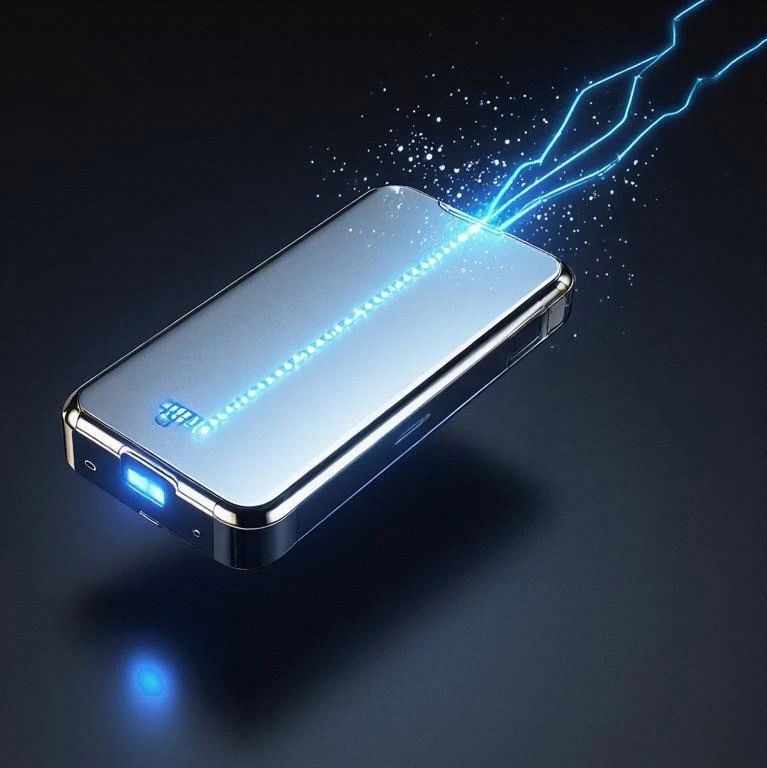
如果您希望可以时常见面,欢迎标星收藏哦~ 来源:内容综合自蓝鲸新闻。 7月2日,蓝鲸科技记者今日走访深圳最大电子交易市场华强北时,被多位华强北商家告知,日前深圳市场监督管理局已向华强北市场部下发通知, 不带3C认证的充电宝严禁在华强北市场销售。记者在华强北多个售卖充电宝柜台也发现,各柜台均明确标注所售充电宝为带3C认证产品。 另据商家透露,"目前华强北已有违规售卖无3C认证充电宝的商家,被市场监督管理部门罚款。当前不少商家正积极清理库存,将无3C认证的充电 宝下架,确保所售产品均符合规定。" 中国民航局回应为何发布有关充电宝的紧急通知 三是电池产品质量参差不齐。近期,国家市场监管总局通报移动电源质量国家监督抽查情况,在抽查的149批次移动电源中发现有65批次产品不合 格,不合格率占比达43.6%。目前,市场上充电宝的生产厂家众多,一些假冒伪劣的充电宝内部电池的电解液质量差、隔膜性能不佳,容易出现漏 液、短路等问题。有的充电宝在设计和制造过程中未充分考虑安全保护措施,缺乏有效的过充、过放、短路保护功能,在使用时存在较大安全隐 患。如果这些质量不过关的充电宝被携带上飞机,将极大增加航空运输安全风险。 据介绍,通知 ...
报名开启!第七届浦东新区长三角集成电路技能竞赛等你来“战”!
半导体芯闻· 2025-07-01 09:54
Core Viewpoint - The article announces the upcoming 7th Pudong New Area Yangtze River Delta Integrated Circuit Skills Competition, inviting participants passionate about integrated circuits to join this event focused on skills and craftsmanship [1] Group 1 - The competition aims to showcase skills in the integrated circuit industry, highlighting the importance of craftsmanship in this field [1] - Participants are encouraged to register quickly, indicating a sense of urgency and excitement surrounding the event [1]

IBM全新芯片设计与架构
半导体芯闻· 2025-07-01 09:54
Core Viewpoint - IBM has announced a new quantum computing architecture that significantly reduces the number of qubits required for error correction, supporting its goal to build a large-scale fault-tolerant quantum computer named "Starling" by 2029 [4][6]. Summary by Sections Quantum Error Correction - Quantum computers rely on qubits, which have inherent unreliability, making error correction essential for building reliable large-scale quantum devices. Error correction techniques create "logical qubits" by distributing information across multiple physical qubits for redundancy [4]. - The most common error correction method, "surface code," requires about 1000 physical qubits to form one logical qubit. IBM initially focused on this method but later recognized the engineering challenges involved [4][5]. New Error Correction Scheme - In 2019, IBM began exploring alternatives and introduced a new error correction scheme called quantum low-density parity-check (qLDPC) code, which requires approximately one-tenth the number of qubits compared to surface code [5][6]. Upcoming Developments - IBM plans to launch a processor named "Loon" later this year, which will feature couplers that connect distant qubits on the same chip, crucial for implementing the qLDPC code. This non-local interaction enhances efficiency compared to surface code [7]. - Following "Loon," IBM aims to release a processor called "Kookaburra" in 2026, which will include both logical processing units and quantum memory, marking the first demonstration of the foundational modules needed for subsequent systems [7]. Starling and Future Roadmap - The Starling quantum computer is expected to be built by 2028 and connected to the cloud the following year. It will be located in a new quantum data center in Poughkeepsie, New York, and will serve as a foundation for a future system, codenamed Blue Jay, with 2000 logical qubits [8]. - IBM's new architecture represents a significant breakthrough, with enhanced interconnectivity and support from advancements in 3D manufacturing. Achieving 200 logical qubits could propel quantum computing into practical problem-solving [8]. Engineering Challenges - One of the main challenges is improving the overall fidelity of gate operations, which needs to be reduced by an order of magnitude for the new architecture to succeed. Enhancing the coherence time of qubits is a key path forward [8][10]. - IBM has achieved an average coherence time of 2 milliseconds in isolated test devices, but translating this to large chips remains challenging. Recent progress on the Heron chip has increased coherence time from approximately 150 microseconds to 250 microseconds [9]. Infrastructure and Component Reduction - Significant engineering challenges remain in infrastructure support, including connectors and amplifiers. However, the new architecture's reduced qubit requirements also decrease the number of necessary components, which is a major advantage of the qLDPC codes [10].