半导体芯闻

Search documents
台积电1.4nm,加速
半导体芯闻· 2025-12-31 08:56
Core Viewpoint - TSMC has announced the mass production of its 2nm technology as scheduled this quarter, with expectations for the 1.4nm advanced process at the Zhongke facility to accelerate due to better-than-expected yield rates [1] Group 1: TSMC's Production Plans - TSMC's Zhongke 1.4nm process plant is expected to complete risk trial production by the end of 2027 and begin mass production in 2028 [1] - The construction of the Zhongke new plant includes four factories and office buildings, with a total investment estimated at NT$1.5 trillion, and initial revenue expected to exceed NT$500 billion [1] - The Zhongke area reported a revenue of NT$1.04 trillion last year, a year-on-year increase of 10.2%, marking the third highest in history [1] Group 2: Supply Chain and Market Impact - With TSMC's expansion in Zhongke, 17 semiconductor-related companies have been approved to enter the supply chain, and the revenue from the integrated circuit industry is expected to soon surpass NT$1 trillion [2] - TSMC's new plant in Arizona will introduce advanced processes ranging from 2nm to 1.6nm, while prioritizing 1.4nm mass production in Taiwan [2] - The Zhongke new plant is anticipated to become the world's largest production base for AI/HPC chips, providing advanced chip options for 2nm customers [2]


Arm,最新预测
半导体芯闻· 2025-12-31 08:56
如果您希望可以时常见面,欢迎标星收藏哦~ 世界与计算的关系正在发生变化——从集中式云到覆盖所有设备、表面和系统的分布式智 能。2026年,我们将进入智能计算的新时代——计算将更加模块化、节能高效,并在云 端、物理环境和边缘人工智能环境中无缝连接。 基于此,Arm预测以下20项技术将在2026年引领下一波创新浪潮。 1. 模块化芯片重新定义了硅设计 随着硅芯片行业不断突破技术极限,从单片芯片到模块化芯片设计的转变将加速。通过将计算、存 储和I/O分离成可重用的构建模块,设计人员可以混合使用不同的工艺节点,降低成本,并更快地 扩展规模。对模块化的日益重视将标志着芯片设计从"更大的芯片"向"更智能的系统"转变,使芯片 团队能够自由地混合使用不同的工艺节点,并快速定制片上系统 (SoC) 以适应各种工作负载。这 将推动可定制芯片的持续发展——这些高度可配置的模块将通用计算与特定领域的加速器、存储单 元或专用人工智能引擎相结合——使芯片团队无需从零开始即可构建差异化产品,从而显著缩短设 计周期并降低创新门槛。此外,预计行业标准化也将不断发展,新兴的开放标准将使来自不同供应 商的芯片能够可靠且安全地组合使用。这将降低集成 ...

三星HBM4,传获芯片巨头认证
半导体芯闻· 2025-12-31 08:56
Core Insights - Samsung Electronics' sixth-generation high-bandwidth memory (HBM4) achieved a record operational speed during technical tests led by Broadcom, outperforming competitors in performance validation for Google's eighth-generation AI accelerator, TPU v8 [1][2] - The HBM4 reached a speed of 11 Gbps during system-in-package (SiP) testing, marking it as the leader among the top three memory manufacturers, with superior thermal management ratings [1] - The results from the HBM4 tests are expected to strengthen the partnership between Samsung and Broadcom, as Google plans to offer TPU to external customers, potentially increasing Samsung's HBM supply significantly by 2026 [1] Industry Context - A senior industry executive noted that Samsung's record speed in Broadcom's tests demonstrates its competitive edge in integrating wafer foundry services with advanced packaging solutions, positioning Samsung favorably for securing Google supply chain orders in the coming year [2] - Alphabet Inc.'s latest "Gemini 3" chatbot has received positive reviews, with its in-house developed TPU becoming a crucial asset for supporting AI models [2] - Melius Research analyst Ben Reitzes highlighted that Google and Broadcom have been collaborating on custom ASICs since 2016, now reaching the seventh generation, with TPU being a significant player in AI workloads alongside Nvidia's GPUs [2]



这类芯片,威胁英伟达
半导体芯闻· 2025-12-31 08:56
Core Viewpoint - The article discusses the evolving role of integrated graphics (iGPU) in the PC market, highlighting its increasing capabilities and competition with discrete graphics (dGPU), particularly in the context of gaming and high-performance applications. [1][2] Group 1: Integrated Graphics Development - Integrated graphics have traditionally been seen as basic display solutions, but advancements have allowed them to handle more demanding tasks, such as gaming and 3D creation [1] - AMD's Phoenix platform introduced the 780M, which enabled laptops without discrete graphics to perform gaming tasks, leading to the development of the Z1 Extreme for Windows gaming handhelds [1] - Intel has maintained a leading market share in integrated graphics but has struggled to match AMD's performance until the introduction of Meteor Lake, which showed competitive capabilities under sufficient power conditions [1] Group 2: Intel's Strategic Response - Intel is responding to the competitive landscape with its Lunar Lake architecture, which, combined with TSMC's N5 process, positions its 140V integrated graphics to challenge AMD's top integrated graphics, the 890M [2] - The upcoming Panther Lake platform is expected to feature the new Xe3 architecture with a 50% increase in core count, potentially rivaling entry-level discrete graphics like the RTX 4050 [2] - This shift could allow users to experience near-gaming laptop performance in lightweight laptops without the drawbacks of heavier designs and noisy fans [2] Group 3: Market Dynamics and Pricing Challenges - Despite advancements, the new generation of integrated graphics may struggle to fully replace discrete graphics due to high production costs and rising prices of memory and SSDs, leading to higher retail prices for laptops [3] - The entry-level gaming laptop market remains highly competitive, with OEMs driving prices down, allowing them to maintain market space despite less impressive specifications [3] - NVIDIA's established presence in gaming and content creation, along with superior software support, continues to provide a competitive edge, even if integrated graphics show improved performance [3]


事关安世,商务部呼吁
半导体芯闻· 2025-12-31 08:56
Group 1 - The core viewpoint of the article emphasizes the necessity of strong measures against ASML by the Dutch government, as stated by Dutch Economic Minister Karremans [1] - The Chinese side has repeatedly highlighted that inappropriate administrative intervention by the Dutch side in ASML's internal affairs has led to a global semiconductor supply chain crisis, and the Dutch side must bear full responsibility for this [1] - The article expresses confusion over the Dutch government's indifference to global industry anxiety and its lack of responsible actions to ensure the stability and security of the global semiconductor supply chain [1]

当开放架构遇见专用计算浪潮:RISC-V × AI 生态大会暨 ArchitStudio 用户大会完满落幕
半导体芯闻· 2025-12-31 08:56
Core Viewpoint - The article emphasizes the growing importance of Domain-Specific Architectures (DSA) in addressing the challenges posed by the increasing complexity of AI models and the limitations of general-purpose chips in specific applications [1][2]. Group 1: DSA and Its Importance - The transition from "Cognitive AI" to "Applied AI" signifies that AI technologies are moving from experimental phases to practical applications across various industries [2]. - General-purpose chips often underperform in specific scenarios, while fully customized chips lack flexibility, highlighting the need for DSA to balance generality and specificity [2]. - RISC-V architecture is positioned as a natural bridge between edge AI and DSA due to its open-source, scalable, and barrier-free characteristics [2]. Group 2: Challenges in DSA Implementation - The development of traditional DSA processors is complex, requiring 30-50 engineers and 12-18 months, which poses high costs and long timelines for companies [2]. - Fragmentation of application scenarios creates a "trilemma" where devices must meet flexibility, power constraints, and size requirements simultaneously [3]. Group 3: ArchitStudio's Methodology - ArchitStudio redefines the processor development process from a "waterfall" model to a rapid iteration model focusing on demand, analysis, design, and verification [4]. - The platform allows users to input code, automatically identifying performance bottlenecks, thus shifting architecture design from experience-driven to data-driven [5]. - The use of RISCAL language simplifies architecture description, enabling engineers to customize instruction sets without deep technical knowledge [5]. - The platform automates the generation of processor RTL code and associated tools, significantly reducing development time [5]. Group 4: Practical Applications and Case Studies - A case study in industrial control demonstrated that ArchitStudio could reduce instruction count by 80% and improve real-time performance while maintaining compatibility with the RISC-V ecosystem [7]. - In the AES encryption algorithm case, ArchitStudio reduced code size by 97% and improved function performance by 33 times, showcasing DSA's potential in security applications [8]. Group 5: Ecosystem Development - The establishment of a DSA computing laboratory in collaboration with Shanghai Pudong Software Park aims to integrate resources from industry, academia, and research to foster innovation [9]. - The RISC-V community is focusing on lowering innovation barriers and integrating AI trends to stimulate new interconnected scenarios [9]. Group 6: Future Outlook - The semiconductor industry is poised for explosive growth driven by AI demand and advancements in domestic processes, with a clear strategy to leverage RISC-V and AI [10]. - The integration of RISC-V with AI is seen as a multiplier effect, enhancing hardware support and driving standardization [13].

越南芯片,史上首次
半导体芯闻· 2025-12-31 08:56
Core Viewpoint - FPT has successfully exported commercial semiconductor chips to Japan, marking a significant milestone for Vietnam in the semiconductor industry and demonstrating its capabilities in core technology [1][3]. Group 1: Product Development and Market Entry - FPT is building a comprehensive power integrated circuit ecosystem, including PMICs, LDOs, buck converters, LED drivers, and power MOSFETs, aimed at providing stable power and low-energy solutions for electronic devices [1]. - The recently exported power chips are specifically designed for high-performance multifunction printers (MFPs) in office and enterprise environments, ensuring reliable operation under high load conditions [1]. - A strategic cooperation agreement was signed between FPT and Restar during a high-tech and green transformation forum, with plans for Restar to distribute 10 million chips designed and manufactured by FPT in the Asia-Pacific region over three years [1][2]. Group 2: Quality Assurance and Compliance - The chips underwent extensive testing, including electrical characteristics analysis, stability, noise and load response assessments, JEDEC reliability testing, and compliance with Japanese industrial standards for overvoltage, overcurrent, and thermal stability [2]. - The products also meet environmental material requirements and manufacturing processes, utilizing the chemSHERPA tool for chemical substance information disclosure, ensuring compliance with green supply chain standards [2]. Group 3: Future Collaboration and Market Potential - Following the initial product delivery, FPT and Restar will continue to collaborate to increase delivery volumes to meet growing market demand, and they will jointly develop new semiconductor products for the Japanese market [2]. - The global power integrated circuit market is projected to reach approximately $59 billion by 2030, with the Japanese market alone expected to approach $3 billion during the same period, driven by increasing demand across various sectors [3]. - FPT's recent shipment coincides with a heightened need for supply chain diversification and reliable alternative suppliers due to recent disruptions in the semiconductor supply chain [3].
客户疯抢H200?传英伟达加单
半导体芯闻· 2025-12-31 08:56
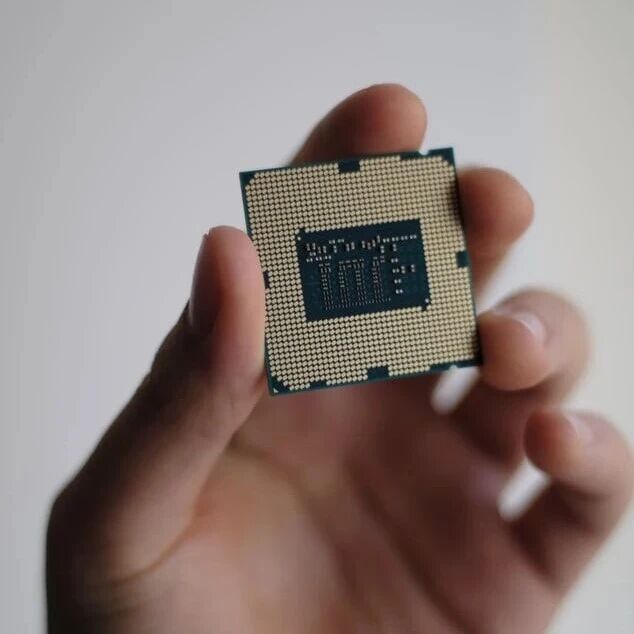
如果您希望可以时常见面,欢迎标星收藏哦~ 消息人士称,英伟达正努力满足中国科技公司对其H200人工智能芯片的强劲需求,并已与代工制 造商台积电接洽,以提高产量。 两位知情人士透露,中国科技公司已订购超过 200 万颗 H200 芯片,预计将于 2026 年交付,而 英伟达目前仅有 70 万颗库存。 他们表示,英伟达计划向台积电追加订购的具体数量尚不清楚。第三位消息人士称,英伟达已要求 台积电开始生产这些额外的芯片,预计将于2026年第二季度开始生产。 这些举措引发了人们对全球人工智能芯片供应是否会进一步收紧的担忧,因为英伟达现在必须在满 足中国强劲的需求和解决其他地区供应紧张的问题之间找到合适的平衡点。 这也可能加剧英伟达的风险,因为北京方面尚未批准任何H200芯片的出货。美国总统特朗普政府 直到最近才允许向中国出口H200芯片。 两位知情人士表示,2026 年超过 200 万颗芯片的订单主要来自中国大型互联网公司,这些公司 认为 H200 比他们目前可用的芯片有了显著的升级。 英伟达目前拥有 70 万颗芯片,其中约 10 万颗是 GH200 Grace Hopper 超级芯片,它将英伟达 的 Grace C ...
报告显示,我国已迈入制造强国行列!
半导体芯闻· 2025-12-30 10:24
Group 1 - The core viewpoint of the article highlights that China has made significant progress in its manufacturing sector, achieving a position among the world's manufacturing powerhouses, alongside the US, Germany, and Japan, as indicated by the Manufacturing Power Development Index for 2024 [1] - The report emphasizes that all sub-indices have shown positive growth, marking a successful first step in the strategic goal of becoming a manufacturing powerhouse [1] - The next decade is identified as a critical period for advancing manufacturing, with a focus on establishing manufacturing as a long-term national strategy and maintaining a reasonable proportion of the manufacturing sector in the economy [1] Group 2 - The article outlines the importance of innovation as a fundamental driving force for the manufacturing sector, highlighting the need for quality improvement and transformation [1] - It stresses the strategic significance of strengthening the industrial foundation and accelerating the integration of artificial intelligence into new industrialization [1] - The goal is set for 2035, aiming for China to achieve a new type of industrialization and rank among the leading manufacturing countries in the world [1]
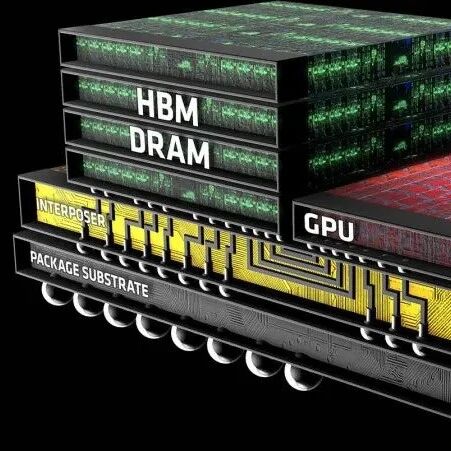
英伟达挑战HBM极限
半导体芯闻· 2025-12-30 10:24
Core Viewpoint - The explosive growth in AI computing power demand is pushing Nvidia to evaluate the feasibility of delivering 16-layer stacked HBM by Q4 2026, prompting major suppliers like Samsung, SK Hynix, and Micron to accelerate their R&D timelines [1][2]. Group 1: Nvidia's Influence on HBM Development - Nvidia's request for 16-layer stacked HBM has led to a reevaluation of development timelines among suppliers, including yield targets and initial production settings [1]. - The focus remains on the certification and mass production of 12-layer stacked HBM4, expected to enter full commercialization in early 2026, while Nvidia is already inquiring about the next generation [1][2]. Group 2: Technical Challenges and Innovations - Transitioning from 12-layer to 16-layer stacking involves significant advancements in semiconductor packaging technology, with the challenge being greater than the previous transition from 8-layer to 12-layer [2]. - Key challenges include packaging height and wafer thickness, with the industry estimating that 16-layer HBM will require wafer thickness to be reduced from 50 micrometers to around 30 micrometers [3]. Group 3: Competitive Strategies Among Suppliers - Samsung is considering adopting hybrid bonding technology for its 16-layer products to gain a competitive edge, while SK Hynix is focusing on extending the lifespan of its MR-MUF technology [2][3]. - Micron, while less frequently mentioned, is also relying on TCB technology and striving to remain competitive in the race for 16-layer HBM [3]. Group 4: Market Projections - HBM3E is projected to account for 66% of total HBM production in 2026, a decrease from 87% in 2025, but it will still dominate the market [4].