半导体芯闻

Search documents
美国撤销台积电南京厂豁免权
半导体芯闻· 2025-09-03 10:50
Core Viewpoint - The U.S. government has revoked TSMC's authorization to freely ship necessary equipment to its Nanjing plant in mainland China, which may limit the production capacity of this mature process chip factory [2][3]. Group 1: Impact on TSMC - TSMC confirmed it received notification from the U.S. government that its "Verified End Use" (VEU) authorization for the Nanjing plant will be revoked by December 31 of this year, and the company is assessing the situation and taking appropriate measures [2][3]. - The Nanjing plant, which initially focused on 16/12nm processes, has shifted to expand its 28nm capacity due to increasing U.S. export controls, with a monthly production capacity of 20,000 wafers for 16/12nm and 40,000 wafers for 28/22nm [3][4]. - TSMC's mainland operations generated approximately NT$26 billion in profit last year, making it an important source of revenue despite its relatively low contribution percentage [3]. Group 2: Broader Industry Implications - The U.S. government's actions are seen as a significant threat to the operations of major semiconductor companies in mainland China, particularly those from Taiwan and South Korea [3][4]. - The shift from blanket approvals to individual license applications for semiconductor equipment has introduced uncertainty regarding the timeline for obtaining necessary permits, which could impact operational continuity [4]. - The U.S. has imposed extensive restrictions on mainland China's access to materials and equipment used for advanced chip manufacturing, aiming to limit China's AI capabilities [4].


高数值孔径光刻机,SK海力士首次导入
半导体芯闻· 2025-09-03 10:50
Group 1 - SK Hynix has introduced the first mass-production High-NA EUV lithography machine in the memory industry at its M16 factory in Icheon, South Korea, which is expected to significantly enhance the precision of circuit patterning and improve resolution [2][3] - The new TWINSCAN EXE:5200B machine from ASML has an optical performance improvement of 40% compared to existing EUV machines, allowing for the production of circuit patterns with 1.7 times higher precision and a 2.9 times increase in integration density [3] - The introduction of this advanced equipment is crucial for meeting the future demands of the semiconductor market for ultra-fine processes and high integration, thereby reinforcing SK Hynix's position in the high-value memory market and solidifying its technological leadership [3] Group 2 - The global semiconductor market is becoming increasingly competitive, necessitating rapid development and supply of high-end products to meet customer needs, which SK Hynix aims to achieve through close collaboration with partners [3] - Since the introduction of EUV technology in the fourth generation 10nm DRAM in 2021, SK Hynix has been expanding its application in advanced DRAM manufacturing to enhance product performance and production efficiency [3]

英特尔研发投入,遥遥领先
半导体芯闻· 2025-09-03 10:50
如果您希望可以时常见面,欢迎标星收藏哦~ 来 源 :内容来自 technews 。 根据韩国中央日报引述TechInsights 的报导指出,芯片制造大厂英特尔(Intel) 在研发(R&D) 投入上遥遥领先其竞争对手三星和台积电,金额超过160 亿美元。然而,尽管投入大量资金,但英 特尔仍努力挣扎于推出具竞争力的芯片制程技术。 报导指出,英特尔的研发支出高达约165.5 亿美元。作为少数同时投资于芯片设计和制造能力的芯 片制造商之一,英特尔的这一投入规模在半导体业界中显得异常突出。这些庞大的投资金额,主要 为推动该公司的intel 18A 节点制程的技术突破所带动。之前有市场报告指出,英特尔的intel 18A 节点制程有着良率不稳定良率和产能不足等问题。 事实上,一直以来在美国半导体制造产业中,英特尔被视为重要资产,这也促使该公司必须维持其 高额的研发费用支出,以确保能提供有实力的最终解决方案。在前执行长Pat Gelsinger 的领导 下,英特尔的晶圆代工部门据称已投入了数百亿美元于其芯片制程开发中。然而,从财务角度来 看,英特尔的大量的资金支出并未如预期般带来成果,其晶圆代工部门已连续多季亏损。因此 ...

日本成立封装联盟
半导体芯闻· 2025-09-03 10:50
Core Viewpoint - Resonac has established an alliance named JOINT3, consisting of nearly 30 global companies, to develop advanced chip packaging technologies to meet the growing demand for artificial intelligence [2][3] Group 1: Alliance Formation - The JOINT3 alliance includes 27 companies, such as material manufacturers, equipment manufacturers, and chip designers, aiming to collaboratively develop materials, equipment, and design tools for chip packaging [2] - The alliance provides a practical platform for stakeholders to create and manufacture materials and technologies required for intermediary layers used in large panel manufacturing [2][3] Group 2: Importance of Intermediary Layers - Intermediary layers are critical components in chip packaging, facilitating communication between multiple chips integrated into a single module [2] - The demand for intermediary layers is expected to rise due to the increasing need for advanced packaging methods that can integrate more chips, as traditional methods of reducing transistor sizes become more challenging and costly [3] Group 3: Research and Development Initiatives - Resonac plans to establish a research and development center in Ibaraki Prefecture, northern Tokyo, which will house a prototype production line expected to be operational next year [3] - The five-year project is projected to cost 26 billion yen (approximately 174 million USD), funded and operated by participating companies [3] Group 4: Industry Trends - The rapid development of technologies such as generative artificial intelligence and autonomous driving is increasing the complexity of semiconductor technology requirements [3] - The current era is seen as a time for cross-company and cross-national collaboration to address technological challenges in the semiconductor industry [3]
印度首款芯片发布
半导体芯闻· 2025-09-03 10:50
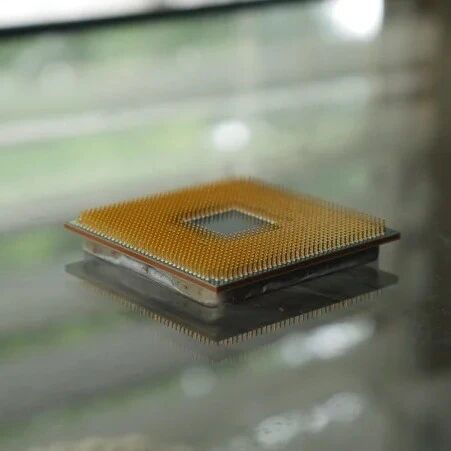
Core Insights - The Indian government celebrated a significant milestone in its semiconductor industry, showcasing ambitions to become a global competitor, although the showcased chip, Vikram 3201, may not be as impressive as claimed [2][3] - The Vikram 3201 processor, developed by the Semiconductor Laboratory (SCL) linked to ISRO, is based on 180nm technology and operates at 100MHz, which may not attract international buyers or demonstrate the manufacturing capabilities expected by foundry clients [2][3] Group 1 - The Vikram 3201 chip was presented at the "Semicon India 2025" conference, indicating India's readiness for growth in the semiconductor sector [2] - The Indian government has attracted several large semiconductor companies, with a notable joint venture between Taiwan's Powerchip Technology and India's Tata Group expected to begin operations in 2026 [3] - Despite being a source of semiconductor design talent, India's focus on service exports has become a crucial part of its economy, with the showcased chip serving more as a publicity opportunity than a technological breakthrough [3]
全球首发新品征集 | 湾芯展2025让您的新产品新技术C位出道!
半导体芯闻· 2025-09-03 10:50
Core Viewpoint - The Bay Area Semiconductor Industry Ecological Expo (Bay Chip Expo) aims to accelerate the promotion and application of new technologies and products in the semiconductor industry, facilitating the transformation of innovative achievements [4][21]. Group 1: Event Overview - The Bay Chip Expo will be held from October 15 to 17, 2025, at the Shenzhen Convention Center, focusing on key areas such as semiconductor wafer manufacturing equipment, components, materials, advanced packaging, IC design, and third-generation semiconductors [4][21]. - The event is organized by the Shenzhen Semiconductor and Integrated Circuit Industry Alliance and guided by the China International Engineering Consulting Corporation [2][21]. Group 2: New Product Launch - The expo will feature a global new product launch event, providing a platform for companies to debut their new products and technologies [5][9]. - There are four forms of product launches available: flagship releases, special sessions, dedicated booths, and online presentations, catering to different needs [6][11]. Group 3: Benefits of Participation - Participating companies will benefit from high visibility, with significant media coverage and exposure to thousands of professional audiences and hundreds of media outlets [10][12]. - The event will facilitate direct connections with over 3,000 quality buyers and project matching opportunities in major semiconductor industry cities [10][11]. Group 4: Industry Impact - The Bay Chip Expo serves as a comprehensive platform for chip design, wafer manufacturing, and advanced packaging, attracting global semiconductor elites and professional media [9][23]. - The expo aims to build a healthy development ecosystem for China's semiconductor industry by promoting collaboration across industry, technology, capital, and talent dimensions [23].

中国科大实现可编程拓扑声子芯片
半导体芯闻· 2025-09-02 10:39
图 1.GHz 频段的非悬空可重构拓扑声子芯片示意图 研究团队创新性地利用蓝宝石基底和氮化镓芯片材料的高声学折射率对比度,设计了微米尺度的波 导结构,成功将声波有效限制在芯片表面(图1b)。这项研究首次实现了工作频率达1.5 GHz的可重 构、非悬空、集成式拓扑声子波导阵列(图1a)。该芯片巧妙利用相邻波导间倏逝场耦合,构建 了 等 效 " 一 维 非 对 角 Aubry-André-Harper 模 型 " 的 拓 扑 声 子 晶 格 。 通 过 自 主 搭 建 的 高 灵 敏 度 (30fm/Hz)振动探测仪,成功观测到了拓扑声学边界态、Thouless泵浦效应,并验证了其对结构 缺陷的鲁棒性。此外,团队基于自主开发的声学模式展开算法,实现对厘米级长度的多波导复杂耦 合结构中声波传输的高精度、高效率的数值仿真计算,计算结果与实验结果高度吻合。 图 2. 基于声学马赫 - 曾德尔干涉仪的可重构拓扑声子线路 如果您希望可以时常见面,欢迎标星收藏哦~ 来 源 :内容来自中国科学技术大学-科研部门官网。 中国科大郭光灿院士团队邹长铃教授与清华大学交叉信息研究院孙麓岩教授、宾夕法尼亚州立大学 Mourad Oudi ...

芯片巨头员工,要求加奖金
半导体芯闻· 2025-09-02 10:39
工会批评称, "EVA 标准简直就是 ' 盲目的绩效奖金制度 ' ,员工根本无法理解其计算方式 " , 并表示 " 公司虽然成立了奖金制度改进工作组,并召开了多次会议,但至今未有任何进展或成果 " 。工会还表示, " 在 EVA 制度下,即使营业利润很高,但如果没有达到特定目标,奖金也可能降 为零,而且奖金上限也存在 " ,并表示 " 三星电子员工的士气和对公司的信任度已经跌至谷底。 我们要求公司至少做出一些改变的努力 " 。 如果您希望可以时常见面,欢迎标星收藏哦~ 来 源 :内容 编译自 businesskorea 。 由三星五家子公司工会组成的三星集团多公司工会向三星电子董事长李在镕致信,要求改进绩效奖 金制度。 据业界 2 日透露,工会向李健熙会长、三星电子设备解决方案( DS )本部长全永铉(副会长)、 设备体验( DX )本部长卢泰文(社长)递交了题为《过时的绩效奖金制度和一成不变的公司》的 信函。 工会在信中表示: "SK 海力士最近通过劳资协议敲定了 ' 基于营业利润的 10% 绩效奖金 '" , 并补充道: " 相比之下,三星电子的绩效奖金制度仍然沿用不透明的 EVA (经济增加值)方法。 ...

DRAM,SK海力士越战越强
半导体芯闻· 2025-09-02 10:39
Core Viewpoint - The DRAM industry is experiencing significant growth in revenue and pricing due to increased demand and supply constraints, particularly for conventional DRAM and HBM products, with projections indicating a revenue of $31.63 billion in Q2 2025, representing a 17.1% quarter-over-quarter growth [2][5]. Group 1: Major Suppliers Performance - SK Hynix reported a revenue of approximately $12.23 billion in Q2, a 25.8% increase, maintaining a market share of 38.7% [2]. - Samsung's revenue grew by 13.7% to $10.35 billion, with a slight decline in market share to 32.7% [2]. - Micron's revenue reached $6.95 billion, a 5.7% increase, with a market share decrease to 22% [2]. Group 2: Taiwanese Manufacturers - Nanya's revenue surged by 56% to around $340 million due to strong replenishment from PC OEMs and consumer clients [3]. - Winbond's revenue increased by 24.9% to $180 million, with a notable rise in shipment volume [3]. - PSMC's revenue grew by 86.4% to $20 million, driven by active replenishment from clients [3]. Group 3: Pricing Trends - The wholesale price of DDR4 8Gb reached approximately $4.28, marking a 4% increase, while the 4Gb product price rose to $3.26, also up by 4% [5]. - DDR4 prices have stabilized after significant increases, but contract prices continue to rise due to ongoing supply tightness [8]. - DDR4 16GB components saw a price increase of nearly 7% to $9.17, while DDR5 16GB components decreased by 3% to $5.99, widening the price gap [8]. Group 4: Supply Chain Dynamics - Major suppliers like Samsung, SK Hynix, and Micron are shifting production focus from DDR4 to next-generation DDR5 and HBM, leading to a deliberate reduction in DDR4 supply [6][9]. - The supply constraints have resulted in some DRAM manufacturers having orders that exceed their production capacity by eight times [6]. - The transition to HBM is prioritized due to its higher profit margins, impacting the availability of DDR4 [9]. Group 5: Future Outlook - Analysts expect contract prices to continue rising through the end of the year, with DDR4 demand anticipated to rebound in September as inventory levels normalize [10]. - Limited wafer capacity suggests that DDR4 buyers should not expect price relief, indicating a potential strategic advantage for those upgrading to DDR4 now [10].
中国光刻机,落后20年?
半导体芯闻· 2025-09-02 10:39
Core Viewpoint - Investment bank Goldman Sachs believes that Chinese lithography companies are at least 20 years behind their American counterparts in advanced lithography technology, which is a critical bottleneck in high-end chip manufacturing [2][4]. Group 1: Lithography Technology - Lithography is one of the steps in chip manufacturing, involving the transfer of chip designs from photomasks to silicon wafers. Advanced equipment like ASML's EUV and high numerical aperture EUV scanners can transfer smaller circuit patterns, enhancing chip performance [4]. - The report from Goldman Sachs emphasizes that ASML invested $40 billion over 20 years to transition from 65nm lithography to below 3nm technology, highlighting the significant time and capital required for such advancements [5]. Group 2: Current Industry Status - Leading chip manufacturers like Taiwan's TSMC are currently mass-producing 3nm chips and are accelerating the production of 2nm products, while Chinese lithography equipment manufacturers are still at the 65nm process stage [5]. - ASML's CEO, Christophe Fouquet, stated that due to the inability to obtain the most advanced EUV lithography equipment, Chinese companies lag behind industry giants like Intel, TSMC, and Samsung Electronics by approximately 10 to 15 years [5]. Group 3: Export Controls and International Relations - The U.S. government is pressuring ASML not to provide maintenance services for advanced DUV systems sold to China, in line with current sanctions against the Chinese semiconductor industry. However, the Dutch government has not agreed to these U.S. requests [6]. - ASML aims to retain control over its equipment to prevent sensitive information leaks, as allowing Chinese companies to take over maintenance could compromise this information [6].