半导体行业观察

Search documents
美光DRAM厂,延期五年
半导体行业观察· 2025-11-11 01:06
Core Viewpoint - Micron Technology has announced significant delays in the construction of its wafer fabrication plant in Clay, New York, now expected to begin production by the end of 2033, impacting the semiconductor production cluster in the region that was initially set to start in 2025 [2][6][7] Summary by Sections Project Delays - The construction timeline for the first wafer fab (Fab 1) has been extended, with the start of construction now pushed to late 2026, leading to a projected start of DRAM production around 2030, five years later than originally planned [2][3][6] - The construction start dates for subsequent fabs (Fab 2, Fab 3, and Fab 4) have also been delayed, with full completion of the Micron campus now expected by 2045, five years later than the initial schedule [3][6] Strategic Adjustments - Micron is accelerating the construction of its Idaho wafer fabrication plant and reallocating funds from the CHIPS Act to this facility, indicating a strategic shift in project priorities [2][7] - The revised timeline for the New York project has been attributed to the early initiation of the Idaho facility, which is set to be completed before the Clay site [7] Environmental Impact Reports - The environmental impact report indicates that the construction period for Fab 1 will extend from three years to approximately four years, affecting the overall project timeline, including hiring and operational plans [6][7]



世界上最小的GPU,拥有20万个晶体管
半导体行业观察· 2025-11-10 01:12
Core Viewpoint - The article discusses the significant update of the "TinyGPU" v2.0, a minimal GPU designed by Pongsagon Vichit, which is capable of rasterization, transformation, and lighting processing, similar to the GeForce 256 [2][5]. Group 1: Technical Specifications - TinyGPU v2.0 utilizes approximately 200,000 transistors and is designed for a maximum tile size of 4x4 [2]. - The performance of TinyGPU v2.0 is limited to a frame rate of 7.5 to 15 fps at a resolution of 320 x 240 pixels or lower, using a color depth of 4 bits [5]. - The GPU supports up to 1,000 triangles, backface culling, and features like dynamic directional lighting and flat shading [5][10]. Group 2: Comparison with Previous Versions - The first generation of TinyGPU could only support two polygons and achieved a frame rate of up to 60 fps at a resolution of 640 x 480 pixels with a 6-bit color depth [6]. - The advancements in TinyGPU v2.0 are notable compared to its predecessor, which had significantly lower capabilities [3][6]. Group 3: Production and Cost - TinyGPU v2.0 has been submitted for production through Tiny Tapeout, with an estimated cost of around $1,500 for the maximum allowed design of 16 tiles [6]. - The design includes two texture ROM images and utilizes a clock frequency of 50 MHz [10].
中国豁免安世芯片民用供应
半导体行业观察· 2025-11-10 01:12
Group 1 - The Chinese Ministry of Commerce has granted export control exemptions for Nexperia chips used in civilian applications, aiming to alleviate supply shortages for automotive manufacturers and suppliers [2] - This move signals a potential easing of export restrictions imposed on the global automotive industry following the Dutch government's takeover of Nexperia, a major chip manufacturer [2] - Nexperia, headquartered in the Netherlands, is owned by the Chinese company Wingtech Technology, and the Chinese government has indicated it will begin accepting exemption applications [2] Group 2 - The Chinese Foreign Ministry has expressed hope that the EU will increase efforts to urge the Netherlands to lift the seizure of Nexperia [3] - The Ministry emphasized that the responsibility for the current chaos in the global semiconductor supply chain lies with the Netherlands, and it welcomed the EU's influence in correcting the situation [4] - The Chinese government has taken measures to ensure the normal supply of compliant products related to Nexperia, reflecting a responsible attitude towards global semiconductor supply chain stability [4]


HBM 4,黄仁勋确认
半导体行业观察· 2025-11-10 01:12
Core Insights - Nvidia's CEO Jensen Huang announced the receipt of advanced memory samples from Samsung Electronics and SK Hynix, indicating strong support for Nvidia's growth in AI chip demand [3][4] - Huang expressed concerns about potential memory supply shortages due to robust business growth across various sectors, suggesting that memory prices may rise depending on operational conditions [3] - TSMC's CEO C.C. Wei acknowledged Nvidia's significant wafer demand, emphasizing the critical role TSMC plays in Nvidia's success [3] Memory Market Dynamics - SK Hynix, Micron, and Samsung are in fierce competition to dominate the HBM4 market, estimated to be worth $100 billion [6] - Micron has begun shipping its next-generation HBM4 memory, claiming record performance and efficiency, with bandwidth exceeding 2.8TB/s [6][7] - SK Hynix has also delivered 12-Hi HBM4 samples to major clients, including Nvidia, and plans to ramp up production [7][8] Future HBM Generations - The latest HBM generation, HBM4, supports bandwidth up to 2TB/s and a maximum of 16 layers of Hi DRAM chips, with a capacity of up to 64GB [10] - Future generations, HBM5 to HBM8, are projected to significantly increase bandwidth and capacity, with HBM8 expected to reach 64TB/s by 2038 [11][12][15] - HBM technology is evolving with new stacking techniques and cooling methods, enhancing performance and efficiency [12][13]


3D NAND,如何演进?
半导体行业观察· 2025-11-10 01:12
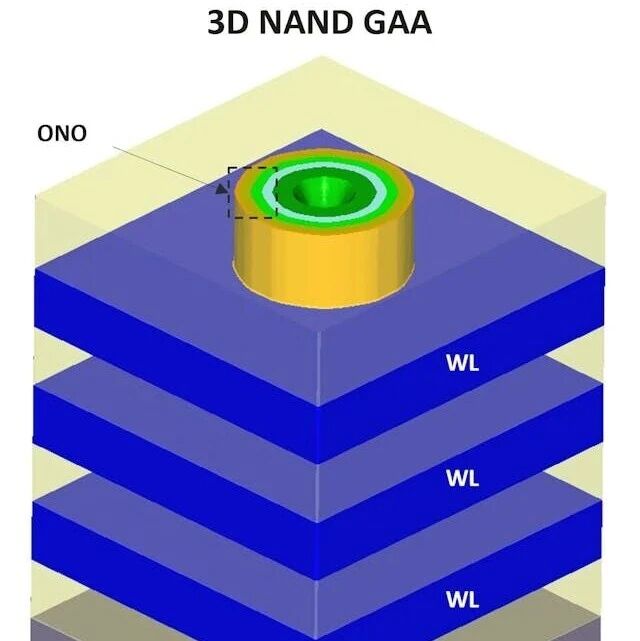
Core Insights - The article discusses the evolution and advancements in NAND flash memory technology, particularly focusing on 3D NAND and its implications for data storage density and performance [2][9][26]. Group 1: NAND Flash Memory Overview - NAND flash memory has fundamentally changed data storage and retrieval since its introduction in the late 1980s, being widely used across various electronic markets, including smartphones and data centers [2]. - The demand for data storage has surged, prompting chip companies to enhance NAND flash memory density and reduce costs per bit [2]. Group 2: Technological Advancements - The transition from 2D NAND to 3D NAND has allowed for increased storage density by stacking memory cells vertically and enhancing the number of bits stored per cell [2][9]. - Key advancements include the shift from floating gate transistors to charge trap cells, which improve read/write performance and enable higher storage densities [2][4]. Group 3: Future Directions - The semiconductor industry is exploring new technologies to further increase storage density, including vertical scaling and the integration of air gaps to reduce cell interference [3][15]. - Companies are investing in tools to enhance 3D NAND density, such as increasing the number of bits per cell and reducing the xy spacing of GAA cells [11][12]. Group 4: Challenges and Solutions - Maintaining uniformity in the manufacturing process while increasing the number of stacked layers poses significant challenges, including increased complexity and costs [9][12]. - The introduction of air gaps between adjacent word lines is proposed as a solution to mitigate cell interference, which has shown promising results in maintaining memory performance [15][21]. Group 5: Innovations in Memory Architecture - The article highlights the potential of charge trap layer separation to enhance the storage window and prevent charge migration within memory cells [22][25]. - Future developments may include innovative architectures that horizontally align conductive channels or utilize trench structures to significantly improve bit storage density [27].
低频噪声测试:把看不见的问题看清楚
半导体行业观察· 2025-11-10 01:12
Core Viewpoint - The semiconductor industry faces increasing challenges from low-frequency noise, which can significantly impact device performance and reliability as transistor sizes shrink into the nanometer range [2][5][6]. Group 1: Low-Frequency Noise Challenges - Low-frequency noise includes flicker noise (1/f), random telegraph noise (RTN), thermal noise, and shot noise, closely related to the imperfections in semiconductor crystal structures [2][5]. - As transistor sizes decrease, even a single trap can cause significant current disturbances, making low-frequency noise a potential source of device failure [2][5]. - Precise quantification of low-frequency noise is essential for optimizing manufacturing processes and enhancing circuit robustness, making it a critical aspect of high-end chip design and manufacturing [2][5][6]. Group 2: Impact on Circuit Design - In analog circuits, if the input signal is lower than the noise signal, the amplified output will be completely masked by noise, determining the circuit's sensitivity [5]. - Low-frequency noise can affect RF circuits through frequency conversion and manifest as random jitter in digital circuits, leading to timing degradation [5]. - For wafer fabs, noise serves as a sensitive probe reflecting process quality and material issues, with new materials potentially introducing additional trap states that increase low-frequency noise occurrence [5][6]. Group 3: Testing and Measurement Solutions - The industry has begun incorporating noise modeling into the PDK process since 28nm, with low-frequency noise models becoming crucial for advanced nodes below 14nm [6]. - High-quality low-frequency noise test data extraction is increasingly demanded, driving accelerated research in this area [6][19]. - The 981X series noise testing systems from Gokun Electronics are recognized as the "gold standard" in the semiconductor industry for low-frequency noise testing, supporting advanced process development and device modeling [12][21]. Group 4: Market Trends and Future Outlook - The global and Chinese electronic measurement instrument markets are projected to reach approximately 112 billion and 42.1 billion respectively by 2025, with steady long-term growth [21]. - The restructuring of the global semiconductor supply chain and the rising demand for domestic industry chain autonomy are driving the development of testing and measurement equipment [21][24]. - Gokun Electronics aims to build a closed-loop testing ecosystem centered on independent research and development, enhancing its competitive advantage in the domestic testing equipment sector [24][27].


这项技术,重塑芯片
半导体行业观察· 2025-11-10 01:12
Core Insights - The next significant leap in CPU design is expected to come from backside power delivery technology, which can transform performance, thermal management, and energy efficiency, particularly for enterprise markets and PC enthusiasts [2][3]. Group 1: Backside Power Delivery Technology - Backside power delivery (BSPD) involves relocating the power delivery network (PDN) from the front to the back of the silicon chip, allowing the front to be fully utilized for signal output and transistors [2][3]. - Intel's PowerVia PDN is the first commercial implementation of backside power delivery, initially planned for the 20A process node but now expected to debut with the Panther Lake architecture based on the 18A node in early 2026 [3][4]. Group 2: Performance and Efficiency Improvements - Power delivery is a critical yet often overlooked bottleneck that affects CPU performance limits, as every watt of power must be transmitted without interfering with logic signals [4]. - Intel's tests indicate that moving the power circuit to the chip's bottom can increase clock frequency by 6% and reduce voltage drop by 30% under the same process node and voltage [4]. Group 3: Thermal Management and Future Innovations - The relocation of power circuits to the back enhances thermal contact with integrated heat spreaders, potentially simplifying CPU cooling and reducing voltage spikes during load [4][5]. - Backside power delivery aligns well with future stacking technologies, enabling true logic stacking rather than just additional cache, which could lead to more efficient designs as manufacturing costs rise and silicon capabilities approach their limits [5].


大基金挂牌转让硅谷数模
半导体行业观察· 2025-11-10 01:12
Core Viewpoint - The article discusses the transfer of approximately 14.31% of shares of a semiconductor company, Silicon Number, by the National Integrated Circuit Industry Investment Fund at a price of 844 million yuan, highlighting the company's significant role in the semiconductor industry and its technological advancements [1][2]. Company Overview - Silicon Number is a provider of high-performance mixed-signal chips, with over 20 years of research and innovation in various technologies including high-speed SerDes signal transmission, mixed-signal circuit design, and protocol conversion [2]. - The company has established a strong product line focusing on display control chips and high-speed interconnect chips, serving well-known global consumer electronics brands [2]. - Silicon Number's products support multiple high-speed signal transmission protocols such as DP, eDP, USB, HDMI, and MIPI, catering to diverse applications in personal computers, displays, automotive electronics, and video conferencing systems [2]. Financial Information - The company reported a total revenue of approximately 70.83 million yuan for the year 2024, with a net profit of -12.83 million yuan [3]. - For the year ending August 31, 2025, projected revenue is around 41.81 million yuan, with a net profit of -6.25 million yuan [3]. - The total assets of the company are approximately 323.25 million yuan, with total liabilities of around 20.56 million yuan [3]. Shareholder Structure - The major shareholders include the National Integrated Circuit Industry Investment Fund with 14.31%, Guangzhou Bay Area Semiconductor Industry Group with 13.86%, and Shanghai Xinmao Enterprise Management Consulting with 8.87% [3]. - The remaining shares are held by various other shareholders, indicating a diversified ownership structure [3].

闪迪,传涨价50%
半导体行业观察· 2025-11-10 01:12
Core Insights - SanDisk has raised its NAND flash contract prices by 50% in November, indicating a tightening supply in the memory market driven by AI data center demand and severe wafer shortages [2] - Major memory suppliers like Transcend, Innodisk, and Apacer Technology have reported significant revenue growth, attributing this to the prioritization of high-margin DRAM production for AI applications [3][4] - DRAM prices have surged by approximately 172% year-on-year, making it a highly valuable asset across various applications [5][6] Group 1: Market Dynamics - The price increase by SanDisk has caused disruptions in the supply chain, leading manufacturers to pause shipments and reassess pricing strategies [2] - Transcend reported a Q3 revenue of NT$41.1 billion (US$1.33 million), a 27% quarter-on-quarter increase and a 63% year-on-year increase, with a gross margin of 45% [2] - Innodisk's revenue grew by 64% year-on-year to NT$38 billion (US$1.23 million), with net profit increasing nearly 250% [2][3] Group 2: Supply Chain Challenges - The focus on high-margin DRAM production has led to shortages of older DDR4 products, further driving up prices for downstream products [3] - Major Korean memory manufacturers like Samsung and SK Hynix are currently only fulfilling 70% of orders, impacting delivery rates for cloud service providers [6] - Smaller OEMs and distributors are facing projected order fulfillment rates of only 35% to 40% by Q1 2026, which could delay product launches and threaten expected revenues [6] Group 3: Price Trends - The price of a 16GB DDR5 chip has increased from US$7 to US$13 in just six weeks, significantly affecting profit margins for memory module manufacturers [6] - A G.Skill Trident Z5 Neo RGB 32GB memory kit has seen its price rise from approximately US$106 to US$239, confirming the upward price trend in the memory market [7] - Industry executives predict that the last quarter of the year will mark the beginning of significant price increases in the memory sector, with potential shortages lasting up to a decade [7]
拆解一颗苏联时代的芯片
半导体行业观察· 2025-11-09 03:14
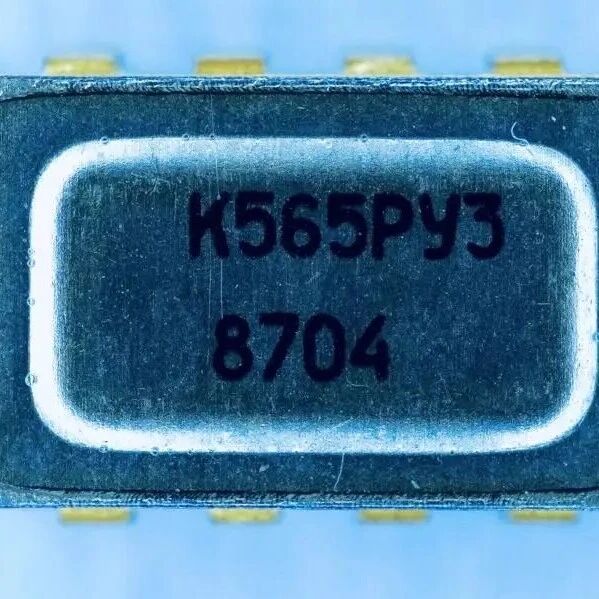
Core Viewpoint - The article discusses the disassembly and analysis of the K565PY3 chip, a Soviet-era DRAM chip that is a reverse-engineered clone of Intel's 4116 DRAM chip, highlighting its historical significance and technical details [2][9]. Group 1: Chip Analysis - The K565PY3 chip is a 16KB dynamic random access memory (DRAM) chip believed to have originated from a factory in present-day Moldova [2]. - The chip features a robust "fish can" structure, which was examined using various microscopy techniques to reveal its internal architecture [5]. - The internal structure consists of a 128 x 128 memory cell matrix, with further analysis showing details related to CAS (Column Address Strobe) and RAS (Row Address Strobe) functionalities, which are critical for memory performance [7]. Group 2: Historical Context - The K565PY3 is identified as a clone of the Intel 4116 DRAM chip, which was popular in the late 1970s and early 1980s, used in iconic computers like Apple II and IBM PC [9][10]. - The chip likely originated from Soviet home computers, which were often clones of Western technology, and was also utilized in embedded systems and industrial electronics in the Soviet Union [10]. - The reverse engineering of the K565PY3 is speculated to be based on samples from manufacturers like Mostek, indicating a broader context of technology transfer and adaptation during the Cold War [10].