半导体行业观察

Search documents
亚马逊投资了一家芯片公司
半导体行业观察· 2025-07-24 00:46
Core Viewpoint - Lumotive Inc. has raised $14 million in funding to advance its innovative chip technology that enables the direction of laser beams without moving parts, enhancing the reliability and cost-effectiveness of LiDAR sensors [3][4]. Funding and Financials - The recent funding round was led by Amazon's Industrial Innovation Fund and ITHCA Group, following a previous $45 million Series B round completed in February [3]. - The CEO of Lumotive, Sam Heidari, noted that the demand for this funding exceeded initial expectations, leading to the decision to reopen funding channels to existing investors [3]. Technology Overview - Lumotive's chips are designed to power LiDAR sensors, which create 3D maps of the environment using laser beams [3]. - The flagship chip, LM10, utilizes a technology called "light-controlling super-surface," which employs liquid crystal materials to manipulate the direction of light [5][6]. - The LM10 chip can be customized to reflect light at different angles through electrical control, making it versatile for various environments, such as urban settings and highways [5]. Applications and Market Potential - The technology is not limited to the LiDAR market; it can also be applied in data center switches to manage light flow in fiber optic cables, and has potential uses in devices ranging from smartphones to satellites [7][8]. - Lumotive plans to begin selling its chips in 2024 and aims to maintain a focused customer base while expanding its sales and marketing efforts with the new funding [4][8].


SK海力士利润暴增,HBM 4将量产
半导体行业观察· 2025-07-24 00:46
Core Viewpoint - SK Hynix's strong second-quarter performance is driven by robust demand for AI chips, particularly high-bandwidth memory (HBM) products, amidst significant investments in artificial intelligence by major global tech companies [3][4]. Group 1: Financial Performance - For the three months ending June 30, SK Hynix reported a net profit of 6.996 trillion KRW, approximately 50.9 billion USD, marking a 70% year-over-year increase, although slightly below analyst expectations of 7.087 trillion KRW [4]. - The company's revenue grew by 35% to a record 22.232 trillion KRW, with operating profit soaring 67% to a record 9.213 trillion KRW, surpassing the 4.6 trillion KRW forecast for larger competitor Samsung Electronics [4]. - SK Hynix's stock has risen 55% year-to-date, outperforming the 33% increase in the Korean Composite Stock Price Index (Kospi) [4]. Group 2: Market Position and Competition - SK Hynix has become a global leader in the HBM sector, with clients including Nvidia, and has surpassed Samsung in the global DRAM market for the first time in Q1 2023 [4][5]. - Counterpoint Research estimates that SK Hynix's DRAM and NAND revenue in Q2 matched Samsung's total, intensifying the competition for the top position in the global memory market [5]. - Analysts expect SK Hynix's dominance in the HBM market to continue in the short term, despite efforts from Samsung and Micron Technology to catch up [5]. Group 3: Future Outlook - SK Hynix anticipates strong demand for HBM products to persist until 2025, with plans to double HBM-related revenue compared to the previous year and prepare for HBM4 supply based on customer requirements [4][6]. - The company aims to mass-produce new advanced HBM4 products by the second half of 2025, potentially widening its lead over competitors [6]. - Despite the positive outlook, some analysts express caution regarding potential price declines in HBM products, which could impact SK Hynix's profit growth in 2026 [6][7]. Group 4: External Factors - The company faces potential threats from U.S. trade policies, including a 25% reciprocal tariff if a trade agreement is not reached by August 1 [7][9]. - There are concerns about increased competition in the semiconductor market, particularly from Samsung, as SK Hynix prepares to meet rising customer demand for AI-related products [9].
光刻机输家的反击
半导体行业观察· 2025-07-24 00:46
Core Viewpoint - The semiconductor lithography machine market is dominated by ASML, particularly in the EUV lithography segment, while Canon and Nikon, once industry leaders, are exploring new technologies to regain their competitive edge [1][3][5]. Group 1: Historical Context - Canon and Nikon were once the giants of the lithography machine industry, holding a significant market share in the 1980s and 1990s due to their advancements in step-and-repeat and scanning lithography technologies [2]. - The shift in industry dynamics was closely tied to technological choices, with Canon and Nikon falling behind due to misjudgments regarding the transition from DUV to EUV technology, allowing ASML to emerge as the leader [3]. Group 2: Canon's New Strategies - Canon is focusing on nanoimprint lithography (NIL) as a core development direction, which differs fundamentally from traditional optical lithography by directly imprinting patterns onto wafers [7]. - The introduction of Canon's FPA-1200NZ2C device, capable of achieving a minimum line width of 14 nanometers, marks a significant advancement, with aspirations to reach 10 nanometers, thus entering the advanced chip manufacturing domain [9][13]. - Canon's collaborations with companies like Kioxia and DNP aim to enhance NIL technology, addressing challenges in mask quality and pattern transfer precision [10][11]. Group 3: Advantages and Challenges of Nanoimprint Technology - Nanoimprint technology offers significant advantages over EUV lithography, including lower costs and reduced energy consumption, making it competitive in cost-sensitive markets like 3D NAND flash memory [12][15]. - Despite its potential, challenges remain in ensuring stability and yield in large-scale production, as well as compatibility with existing production lines [17]. Group 4: Nikon's Strategic Moves - Nikon is also actively pursuing new technologies, including the development of a new generation of ArFi lithography machines, aiming to regain market share in the immersion lithography segment [25][26]. - The upcoming ArF lithography equipment is designed to be compatible with ASML's ecosystem, facilitating easier transitions for existing users [20]. Group 5: Industry Trends and Future Outlook - The exploration of alternative technologies to EUV by various companies, including Inversion Semiconductor and Lace Lithography, indicates a shift towards a more diversified lithography landscape [36][37]. - The competitive landscape is evolving, with Canon and Nikon seeking to establish themselves in niche markets while addressing the challenges posed by ASML's dominance [41].


德州仪器继续暴跌,17年最惨
半导体行业观察· 2025-07-24 00:46
Core Viewpoint - Texas Instruments' stock dropped 13% due to cautious management tone and weak quarterly profit forecast, raising investor concerns about tariff impacts [1][2] Financial Performance - Texas Instruments reported Q2 revenue of $4.45 billion, a 16% increase year-over-year, with operating profit rising 25% to $1.56 billion [12] - The company expects Q3 revenue to be between $4.45 billion and $4.8 billion, with an average analyst expectation of $4.57 billion [2][12] - Q3 earnings per share are projected at approximately $1.48, slightly below average expectations [2] Market Dynamics - The automotive sector has not yet recovered, and management expressed concerns about the pace and strength of recovery due to tariffs disrupting global supply chains [4][5] - Analysts noted a significant shift in management's tone regarding geopolitical and tariff risks, indicating a more cautious outlook compared to previous quarters [5][13] Inventory and Demand - The company observed strong orders in early Q2, with some customers increasing inventory in response to tariff concerns, but inventory levels have since normalized [3][12] - There is uncertainty about how much of the previous quarter's revenue growth was driven by customers preemptively ordering to avoid tariffs [5][12] Industry Context - The semiconductor industry is facing pressure from rising costs of chip manufacturing equipment and reduced customer spending due to tariffs [5][8] - Major players like ASML and TSMC have also warned about uncertainties related to tariffs [6] Strategic Outlook - Texas Instruments remains confident in its long-term growth potential, expecting continued demand for semiconductors across various products [13] - The company plans to invest over $60 billion in expanding chip manufacturing facilities in Texas and Utah [9]

模拟芯片巨头,逆势扩产
半导体行业观察· 2025-07-24 00:46
Core Viewpoint - The semiconductor industry in the Northwest is facing significant challenges, with companies resorting to layoffs and production cuts due to a sharp decline in sales. However, ADI is expanding its operations and investing in workforce training, indicating a potential recovery in the sector [3][5]. Group 1: ADI's Expansion and Investment - ADI is completing a $1 billion expansion of its factory near Beaverton and continues to run worker training programs despite nearby semiconductor companies laying off thousands [4]. - The expansion will increase the cleanroom area to approximately 118,000 square feet and nearly double the internal production capacity for 180nm and above technology nodes, creating hundreds of new long-term jobs [8]. - Over 10% of the total investment is allocated for new advanced wafer fabrication equipment to enhance efficiency and adopt more environmentally friendly chemicals [8]. Group 2: Workforce Development - ADI is focused on training its own factory workers rather than hiring from other companies, ensuring they understand the manufacturing process for long-term operational stability [6][7]. - The company is establishing a Semiconductor Advanced Manufacturing University (SAMU) to provide training opportunities for various community groups, including veterans and existing operators [8]. Group 3: Market Position and Future Outlook - Despite a nearly 25% decline in sales last year due to global economic uncertainty, ADI's sales increased by 22% year-over-year to $2.6 billion in the last quarter [5]. - ADI's mixed manufacturing model, which includes both internal factories and external partners, enhances its operational management during economic cycles and improves supply chain resilience [9].

数字IC高手必看:华大九天 Liberal K库工具,破解定制单元的“特征密码”
半导体行业观察· 2025-07-24 00:46
Core Viewpoint - The article discusses the shift towards "highly customized" chip design driven by advancements in technologies such as AI, large models, intelligent driving, and the Internet of Things, highlighting the challenges and solutions in the context of K library characterization for non-standard cells [1][20]. Group 1: Customization in Chip Design - The traditional model of using standard cells for large-scale chip design is no longer sufficient to meet the increasingly refined and scenario-specific design requirements [1]. - Design teams are increasingly incorporating non-standard/custom cells to achieve better balance among area, power consumption, and performance [1][3]. - The introduction of non-standard cells, such as high-speed CDC modules and pulse latches, allows for targeted system optimization but also raises new challenges in EDA tool modeling capabilities [1][3]. Group 2: K Library Characterization - K library characterization is crucial for ensuring design progress and product reliability, acting as an "invisible engine" in the chip development process [1]. - K library serves as a "genetic map" that provides real physical behavior to standard cells through high-precision simulations, extracting key parameters like timing, power consumption, and noise [2]. - The complexity of non-standard cells necessitates advanced modeling techniques, as any minor deviation can lead to significant timing issues in subsequent designs [5][9]. Group 3: Specific Non-Standard Cells - High-speed CDC units are essential for ensuring safe and reliable data transmission across different clock domains, addressing metastability issues [3]. - Pulse latches utilize narrow pulses for data storage, significantly reducing power consumption, but require precise control of pulse width to avoid data storage errors [5][7]. - Dynamic registers, which store states using capacitors, present challenges in K library extraction due to their sensitivity to noise and the need for regular state updates [9]. Group 4: Liberal's Solutions - The Liberal product from Huada Jiutian offers a comprehensive K library solution, addressing the challenges of custom non-standard cell characterization with high efficiency and precision [2][15]. - Liberal's tools provide accurate simulation incentives and consider various noise factors, ensuring the accuracy of K library models [15][17]. - The introduction of Liberal has significantly improved efficiency and quality in K library extraction for high-performance chip designs, leading to timely delivery and high customer satisfaction [19]. Group 5: Future Outlook - As non-standard designs become more common with advancing process nodes, Liberal aims to continue enhancing K library extraction technology towards greater intelligence, efficiency, and precision [20].


芯片设备销售额,直逼1225亿美金
半导体行业观察· 2025-07-23 00:53
Core Viewpoint - The global semiconductor manufacturing equipment sales are projected to reach a record high of $125.5 billion in 2025, with a year-on-year growth of 7.4%, driven by demand for advanced logic, memory, and technology transformation [1] Group 1: Semiconductor Equipment Sales Forecast - The semiconductor manufacturing equipment sales are expected to continue growing, reaching $138.1 billion in 2026, supported by AI-driven chip innovation and capacity expansion [1] - The wafer fabrication equipment (WFE) sector is projected to grow by 6.2% to $110.8 billion by 2025, with a further increase of 10.2% to $122.1 billion in 2026, primarily due to foundry and memory application sales growth [2] - The backend equipment sector is anticipated to see a strong recovery, with semiconductor test equipment sales expected to grow by 23.2% to $9.3 billion in 2025, and assembly and packaging equipment sales projected to reach $5.4 billion, growing by 7.7% [3] Group 2: WFE Sales by Application - WFE sales for foundry and logic applications are expected to grow by 6.7% to $64.8 billion in 2025, with a further increase of 6.6% to $69 billion in 2026, driven by strong demand for advanced nodes [6] - NAND equipment sales are projected to recover significantly, with a growth of 42.5% to $13.7 billion in 2025, and a further increase of 9.7% to $15 billion in 2026, supported by advancements in 3D NAND stacking technology [6] - DRAM equipment sales are expected to rise by 40.2% to $19.5 billion in 2024, with subsequent growth of 6.4% and 12.1% in 2025 and 2026, respectively, to support AI deployment investments [6] Group 3: Regional Semiconductor Equipment Sales - By 2026, mainland China, Taiwan, and South Korea are expected to remain the top destinations for equipment spending, with mainland China leading despite a projected decline from a record $49.5 billion in 2024 [9] - All regions, except Europe, are anticipated to see significant growth in equipment spending starting in 2025, although increasing trade policy risks may impact growth rates [9]
Elon Musk要部署5000万个GPU
半导体行业观察· 2025-07-23 00:53
Core Viewpoint - The article discusses Elon Musk's ambitious plans for his AI company xAI, aiming to achieve computing power equivalent to 50 million Nvidia H100 GPUs within five years, significantly increasing the scale of AI investments in the industry [2][3]. Group 1: Musk's AI Ambitions - Elon Musk plans to acquire millions of Nvidia GPUs for AI training, with a goal of achieving computing power equivalent to 50 million H100 GPUs [2]. - Musk's xAI currently operates a supercomputer in Memphis with 230,000 GPUs, including 30,000 Nvidia GB200 chips, and is constructing a second data center to house 550,000 GPUs [3][5]. - Musk's previous prediction indicated that the limiting factor for AI development would be chips, leading to prioritization of GPU orders for xAI over Tesla [7]. Group 2: Competitive Landscape - Sam Altman, CEO of OpenAI, announced plans to run over 1 million GPUs by the end of the year and increase computing power by 100 times [2]. - Meta CEO Mark Zuckerberg has similar ambitions to build large data centers for developing super AI [2]. Group 3: Environmental Concerns - The operation of xAI's Colossus supercomputer relies on gas turbines, raising concerns about air pollution in Memphis [4][10]. - Local communities have protested against the energy-intensive operations, citing potential violations of the Clean Air Act due to emissions from the turbines [11].

拆解英伟达1.6T的网络模块
半导体行业观察· 2025-07-23 00:53
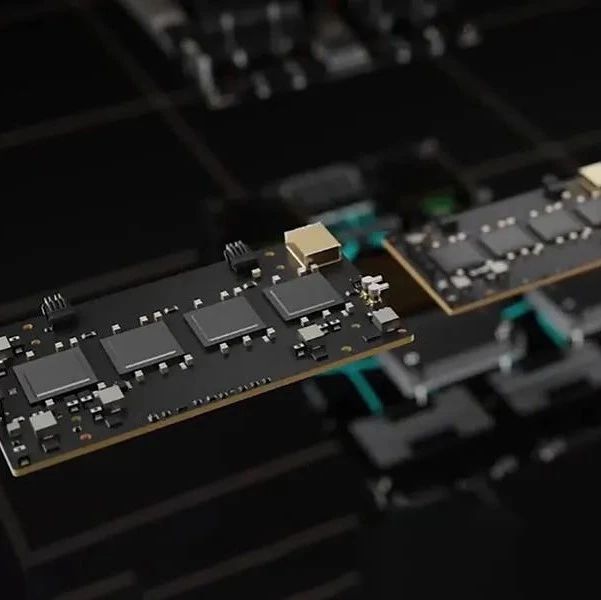
Core Viewpoint - The article discusses NVIDIA's transition from A100 to H100 series, highlighting the shift to PCIe Gen5 and the introduction of the Cedar module for enhanced network bandwidth and system efficiency [2][10]. Group 1: Technical Specifications - The DGX H100 utilizes Cedar modules, each equipped with four ConnectX-7 controllers, providing a total bandwidth of 3.2Tbps [4][12]. - Each ConnectX-7 controller offers 400Gbps of network bandwidth, contributing to a significant increase in data transfer capabilities [22][12]. - The Cedar modules are designed for better space efficiency compared to traditional PCIe cards, allowing for improved airflow and cooling within the system [10][35]. Group 2: Product Features - The Cedar modules are customizable and can be used by various vendors, indicating a broader application potential in AI systems [12][13]. - The DGX H100 is designed to accommodate both direct copper cables and standard optical modules for flexible connectivity options [7][10]. - The integration of BlueField-3 controllers alongside Cedar modules allows for dedicated tasks such as storage access, enhancing overall system performance [10][12]. Group 3: Market Implications - The introduction of Cedar modules is expected to meet the increasing bandwidth demands of next-generation AI models, positioning NVIDIA favorably in the competitive landscape [12][13]. - The shift to a more compact design with Cedar modules may influence future hardware designs in the industry, promoting efficiency and performance [35][36].
两颗AI芯片,重要进展
半导体行业观察· 2025-07-23 00:53
Core Viewpoint - The article discusses the advancements in AI chip technology, highlighting the launch of Hailo-10H by Hailo Technologies and the adoption of RNGD by FuriosaAI for LG's AI models, emphasizing their efficiency and performance in edge computing and AI applications [3][6]. Group 1: Hailo Technologies and Hailo-10H - Hailo Technologies launched its second-generation AI accelerator, Hailo-10H, which supports generative AI capabilities without relying on cloud connectivity [3][4]. - The Hailo-10H chip is designed for edge environments with a typical power consumption of only 2.5 watts, making it suitable for various applications from personal devices to automotive systems [4][5]. - The chip allows developers to run advanced visual and generative AI models directly on edge devices, enabling ultra-low latency real-time responses [4][5]. Group 2: FuriosaAI and RNGD - FuriosaAI secured a significant client in LG, which is utilizing its RNGD inference accelerator for powering servers running the Exaone series of large language models [6][7]. - The RNGD chip, while not the most powerful compared to AMD and Nvidia GPUs, operates at a power efficiency of only 180 watts, achieving up to 2.25 times the energy efficiency of LLM inference GPUs [8][9]. - LG's AI research department found RNGD to be an effective solution for deploying Exaone models, with specific performance targets set during testing [11][16]. Group 3: Performance and Efficiency - RNGD's performance is approximately 1.4 TeraFLOPS per watt, making it competitive in terms of efficiency, especially for inference tasks [10][17]. - The chip's memory bandwidth of 1.5TB/s is crucial for LLM inference, allowing for faster token generation [10][11]. - FuriosaAI's architecture is designed to minimize data movement and maximize efficiency, which is a significant advantage over traditional GPU architectures [9][10]. Group 4: Market Position and Future Outlook - FuriosaAI faces challenges in competing with Nvidia and AMD, which offer higher performance and efficiency, but the company is confident in its architecture's scalability [17][18]. - The demand for autonomous AI models and infrastructure is growing, positioning FuriosaAI favorably in the market despite the competition [16][18]. - The company plans to expand its architecture to compete with the latest GPU technologies, leveraging its established design and software stack [18].