半导体行业观察

Search documents
全球首颗光子处理器
半导体行业观察· 2025-07-23 00:53
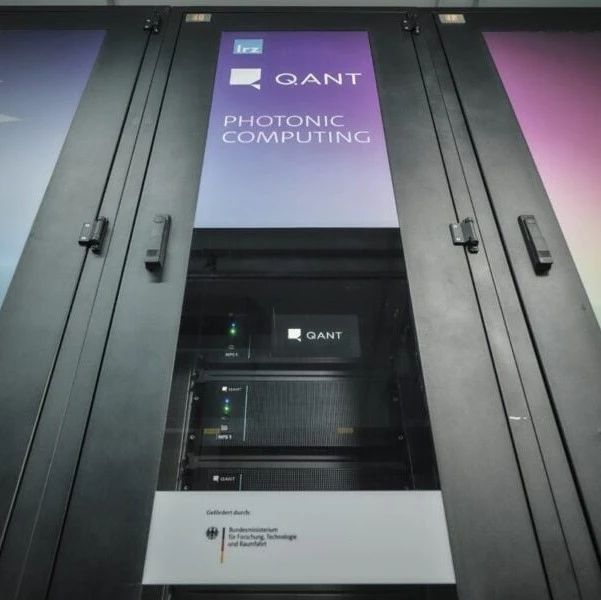
Core Viewpoint - The article discusses the significant advancements in photonic processors by Q.ANT, highlighting their integration into high-performance computing (HPC) environments and the potential for energy-efficient AI applications. Group 1: Q.ANT's Technological Advancements - Q.ANT has delivered its native processing server (NPS) to the Leibniz Supercomputing Centre (LRZ), marking the first integration of photonic processors into an operational HPC environment [2] - The deployment aims to evaluate AI and simulation workloads with significantly reduced energy consumption, establishing new benchmarks for applications like climate modeling and real-time medical imaging [2][3] - The NPS units can reduce power consumption by up to 90 times due to the absence of heat generation, allowing for faster and more efficient complex computations [3] Group 2: Funding and Production Expansion - Q.ANT raised €62 million in a Series A funding round, the largest in the European photonic processor sector, to expand production and develop 32-bit optical processors [4] - The photonic processor, developed from lithium niobate thin films, boasts a 30-fold increase in power efficiency and a 50-fold performance improvement without complex cooling systems [4][6] Group 3: Market Position and Future Outlook - The article emphasizes the need for Europe to prioritize self-developed technologies and manufacturing to maintain competitiveness in the semiconductor market [7] - Q.ANT's approach contrasts with traditional CMOS processors, which are nearing their physical limits, by leveraging light instead of electricity for processing [5][7] - The company aims to redefine the semiconductor market landscape for data centers, with the potential to significantly lower operational costs while enhancing performance for next-generation AI and HPC [7]

苹果芯片,一路狂飙
半导体行业观察· 2025-07-23 00:53
Core Insights - The article discusses the evolution of smartphone processors from the first iPhone in 2007 to the latest models in 2024, highlighting performance improvements and architectural advancements [6][31][34]. Group 1: Historical Development of Smartphone Processors - The first smartphone with gaming capabilities was the Nokia 6110 in 1998, featuring the Snake game [2]. - The first iPhone was released in June 2007, followed by the iPhone 3G in July 2008, marking the rise of the smartphone market [6]. - The iPhone 3GS, released in 2009, featured a significant performance upgrade with the Cortex-A8 core [8]. - Android's Nexus One was launched in January 2010, followed by Nexus S later that year, showcasing the competition in the smartphone market [10]. Group 2: Performance Metrics and Comparisons - The performance of the first iPhone to the iPhone 16 Pro represents a 384.9 times increase over 17 years, translating to an annual growth rate of approximately 40.5% [31]. - In contrast, Google's Nexus One to Pixel 9a shows a performance increase of about 76 times, with an annual growth rate of around 32.2% [33]. - The article notes that while Apple's performance growth has slowed since 2019, it still demonstrates significant improvements through architectural advancements [34][35]. Group 3: Architectural Innovations - ARM introduced the 64-bit instruction set ARM v8-A in March 2011, with Apple being one of the first to adopt it with the A7 chip [13]. - The big.LITTLE architecture was implemented in products starting in 2015, allowing for a combination of high-performance and low-power cores [17]. - The latest architecture, Armv9-A, was introduced in 2021, enhancing security and performance features [26][28].


担忧加剧,TI股价暴跌
半导体行业观察· 2025-07-23 00:53
Core Viewpoint - Texas Instruments Inc. faces concerns over the sustainability of demand driven by tariffs, despite a third-quarter earnings forecast that exceeds most expectations [3][4]. Group 1: Financial Performance - The company predicts third-quarter revenue between $4.45 billion and $4.8 billion, with an average analyst expectation of $4.57 billion [4]. - Revenue grew by 16% in the last quarter, but executives are uncertain how much of this was due to customers purchasing products to avoid tariffs [3][4]. - Earnings per share for the third quarter are estimated at approximately $1.48, slightly below the average expectation [4]. Group 2: Market Conditions - Analysts expressed concerns about a more pessimistic outlook for demand, particularly in the automotive market, which has not yet recovered [5][6]. - The Chinese market saw a 32% revenue growth in the second quarter, but executives are cautious about the current quarter's performance [7]. - Texas Instruments holds a leading position in the analog chip market, which converts real-world signals into electronic signals, making its reports significant indicators of industry demand [7]. Group 3: Strategic Outlook - The company remains confident in its strategy, believing that opportunities outweigh challenges, despite the cautious tone regarding future demand [5]. - Texas Instruments has invested heavily in new production facilities to enhance resilience amid increasing trade barriers [8]. - Approximately 20% of the company's revenue comes from China, where competition from local chip manufacturers is intensifying [7][8].


一颗野心勃勃的GPU
半导体行业观察· 2025-07-23 00:53
Core Viewpoint - The article discusses the emergence of Bolt Graphics, a startup aiming to redefine the GPU landscape with its new GPU called Zeus, which focuses on path tracing technology to challenge established giants like NVIDIA, AMD, and Intel [1][19]. Group 1: Path Tracing as a Breakthrough - Path tracing represents a significant advancement in rendering technology, providing a more accurate representation of light behavior compared to traditional real-time ray tracing [2]. - The computational demands of path tracing are substantially higher, requiring ten to a hundred times the power of standard GPUs for real-time applications [2]. Group 2: Bolt Graphics and Zeus GPU - Bolt Graphics was founded by engineers from major companies like NVIDIA, AMD, and Intel, with a mission to create a high-performance path tracing GPU [7]. - The Zeus GPU comes in three versions: Zeus 1c, Zeus 2c, and Zeus 4c, with varying power and performance specifications, including a path tracing performance of approximately 7.7 billion rays per second for the 1c version [7][8]. - The Zeus 4c version is designed for data centers, featuring a TDP of 500W and up to 2TB of DDR5 memory, aimed at high-performance computing (HPC) and rendering farms [8][10]. Group 3: Advantages of Zeus - Zeus GPUs utilize a unique memory architecture combining LPDDR5X for bandwidth and DDR5 for capacity, allowing for a total memory of up to 2.25TB, which is beneficial for both path tracing and HPC datasets [10]. - In terms of performance, Bolt claims that their GPUs can outperform NVIDIA's RTX 5090 by a factor of 10 in certain scenarios, significantly reducing the number of GPUs needed for complex rendering tasks [10][11]. Group 4: Ecosystem Development - Bolt is building an open and customizable ecosystem based on RISC-V architecture, which allows for greater flexibility and community engagement compared to traditional closed architectures [14]. - The company is developing a proprietary path tracing engine called Glow Stick, which aims to integrate with popular rendering tools and provide high-precision sampling and physical Monte Carlo integration [15][16]. Group 5: Challenges and Future Outlook - Despite its potential, Bolt faces significant challenges, including the timeline for mass production, which is projected for late 2026, and the need to establish a robust software ecosystem to support its hardware [17][18]. - The success of Bolt's Zeus GPU could redefine the graphics rendering landscape, particularly in gaming and HPC applications, if it can deliver on its promises of unprecedented visual fidelity and performance [19].


芯片碰到的又一个危机
半导体行业观察· 2025-07-22 00:56
Core Insights - The rapid energy consumption of AI data centers is approximately four times the rate of new power generation, necessitating a fundamental shift in power generation locations, data center construction sites, and more efficient systems, chips, and software architectures [2][4] - In the U.S., data centers consumed about 176 TWh of electricity last year, projected to rise to between 325 and 580 TWh by 2028, representing 6.7% to 12% of total U.S. electricity generation [2][4] - China's energy consumption for data centers is expected to reach 400 TWh next year, with AI driving a 30% annual increase in global energy consumption, where the U.S. and China account for about 80% of this growth [4][22] Energy Consumption and Infrastructure - The U.S. Department of Energy's report highlights the significant increase in energy consumption by data centers, emphasizing the need for a complete overhaul of the power grid to accommodate this growth [2][5] - The average energy loss during power transmission is about 5%, with high-voltage lines losing approximately 2% and low-voltage lines losing about 4% [5][9] - Key areas for improvement include reducing transmission distances, limiting data movement, enhancing processing efficiency, and improving cooling methods near processing components [7][9] Data Processing and System Design - The challenge of data processing proximity is crucial, as reducing the distance data must travel can significantly lower energy consumption [11][12] - Current AI designs prioritize performance over power consumption, but this may need to shift as power supply issues become more pressing [12][13] - Optimizing the collaboration between processors and power regulators can lead to energy savings by reducing the number of intermediate voltage levels [9][13] Cooling Solutions - Cooling costs for data centers can account for 30% to 40% of total power expenses, with liquid cooling potentially halving this cost [17][18] - Direct chip cooling and immersion cooling are two emerging methods to manage heat more effectively, though both present unique challenges [18][19] - The efficiency of cooling technologies is critical, especially as AI workloads increase the dynamic current density in servers [17][19] Financial and Resource Considerations - The semiconductor industry faces pressure to address sustainability and cost issues to maintain growth rates, particularly in AI data centers [21][22] - The total cost of ownership, including cooling and operational costs, will be a determining factor in the deployment of AI data centers [22][23] - The projected increase in AI data center power demand by 350 TWh by 2028-2030 highlights the urgent need for innovative solutions to bridge the gap between energy supply and demand [22][23]
中国团队披露新型晶体管,VLSI 2025亮点回顾
半导体行业观察· 2025-07-22 00:56
Core Viewpoint - The article focuses on the latest advancements in semiconductor technology presented at the VLSI conference, highlighting innovations in chip manufacturing, including digital twins, advanced logic transistors, and future interconnects, as well as comparisons between Intel's 18A process and TSMC's technologies [1]. Group 1: FlipFET Design - Despite various restrictions, China continues to advance in semiconductor R&D, with Peking University's FlipFET design gaining significant attention for its novel patterning scheme that achieves PPA similar to CFET without the challenges of monolithic or sequential integration [2]. - The FlipFET technology involves a process where NMOS is formed on the front side and PMOS on the back side of the wafer, showcasing good performance for both types of transistors [8][10]. - The main drawback of FlipFET is its cost, as it requires multiple back-end processes and is more susceptible to wafer warping and alignment errors, potentially affecting yield [12]. Group 2: DRAM Developments - DRAM is at a pivotal point in its five-year roadmap with two key advancements: 4F2 and 3D technologies, with 4F2 expected to increase density by 30% compared to 6F2 without reducing minimum feature size [16][23]. - The 4F2 architecture necessitates vertical channel transistors to fit within the unit size, presenting manufacturing challenges due to high aspect ratios [24][31]. - 3D DRAM is being developed concurrently, with Chinese manufacturers showing strong motivation to innovate in this area due to its independence from advanced lithography technologies [36]. Group 3: Digital Twin Technology - Digital twin technology is becoming essential in semiconductor design and manufacturing, allowing for design exploration and optimization in a virtual environment before physical production [79]. - This technology spans atomic-level simulations to wafer-level optimizations, enhancing productivity and yield in semiconductor fabrication [80][87]. - The implementation of "unmanned" fabs is a future goal, aiming for automated maintenance and operation without human intervention, which poses challenges in standardizing processes across different equipment vendors [92]. Group 4: Intel's 18A Process - Intel's 18A process, set to enter mass production in late 2025, combines Gate-All-Around transistors with a PowerVia back power network, significantly reducing interconnect spacing and improving yield [74][78]. - The 18A process claims a 30% reduction in SRAM size compared to Intel's 3rd generation baseline, with performance improvements of approximately 15% at the same power consumption [76]. - The process also features a reduction in the number of front metal layers and an increase in back metal layers to support the new architecture, indicating a shift towards more efficient manufacturing [77].

中国客户需求不振,芯片大厂不如预期,股价下挫
半导体行业观察· 2025-07-22 00:56
Core Viewpoint - NXP Semiconductors' earnings forecast may not meet investor expectations, leading to a decline in stock price during after-hours trading [3] Financial Performance - For Q2, NXP reported an adjusted EPS of $2.72 and revenue of $2.93 billion, a 6% decrease year-over-year [3] - Operating cash flow was $779 million and free cash flow was $696 million, with an adjusted gross margin of 56.5%, down from 58.6% a year ago [3] - Net profit was $445 million, slightly down from $490 million in the same period last year [3] Business Segment Performance - The automotive segment generated $1.73 billion in revenue, remaining flat year-over-year, making it the best-performing segment [4] - Communication and infrastructure sales fell by 27% to $320 million; mobile sales decreased by 4% to $331 million; industrial and IoT sales dropped by 11% to $546 million [4] - Concerns exist regarding ongoing demand issues in the automotive and industrial sectors, which may impact future revenues [4] Future Guidance - NXP's Q3 guidance suggests an EPS range of $2.89 to $3.30 and revenue between $3.05 billion and $3.25 billion, indicating some uncertainty despite exceeding Wall Street expectations [5] - The guidance reflects a cyclical improvement in core end markets, but analysts express concerns over pricing pressures and reduced demand from European clients [6][7] Market Reaction - NXP's stock fell by 5% in after-hours trading, erasing a 1% gain from regular trading hours, although the stock is still up over 9% year-to-date [8]

又一家市值破万亿美元的半导体公司
半导体行业观察· 2025-07-22 00:56
公众号记得加星标⭐️,第一时间看推送不会错过。 来源:内容 编译自彭博社 。 上周,台湾半导体制造股份有限公司的市值在台北首次突破 1 万亿美元,受强劲的人工智能需求推动,其销售预期上调。 这家苹果公司 (Apple Inc.) 和英伟达公司 (Nvidia Corp.) 的主要芯片供应商的台湾股市周五攀升至历史新高,较4月份的 低点上涨了近50%。这使得该公司成为自2007年中石油 (PetroChina Co.) 短暂突破1万亿美元大关以来,首只市值超过1 万亿美元的亚洲股票。 台积电股价飙升反映出投资者日益增长的信心,他们相信这家全球顶级芯片制造商将乘着人工智能热潮,进一步巩固其主 导地位。该公司上周将全年营收增长预期上调至约30%,这表明台积电可能在日益激烈的人工智能产能竞争中受益。 高盛集团分析师布鲁斯·卢(Bruce Lu)在台积电季度财报发布后写道:"我们认为,台积电对先进节点需求的态度更加积 极,因为人工智能客户的需求没有放缓的迹象。我们预计2026年价格将出现更大幅度的上涨。" 截至周五收盘,台积电的美国存托凭证(ADR)价值约为1.2万亿美元。对于外国投资者来说,持有ADR股票更加便捷, ...
解构Chiplet,区分炒作与现实
半导体行业观察· 2025-07-22 00:56
Core Viewpoint - The semiconductor industry is experiencing a significant shift towards chiplet architecture, which allows for the integration of multiple smaller chips into a single package, addressing the challenges of high costs and scalability associated with traditional single-chip designs [2][4][8]. Group 1: Chiplet Technology Overview - Chiplets are designed to be combined into a single package, enabling the creation of larger and more complex systems than traditional single-chip designs [4][8]. - The architecture allows for the separation of I/O and logic functions, optimizing performance and cost by utilizing different manufacturing nodes for various components [4][5]. - Examples include Nvidia's Blackwell B200 GPU, which employs a dual-chiplet design to exceed the limitations of single-chip designs [5]. Group 2: Advantages of Chiplet Architecture - Chiplet architecture can achieve higher yields and lower overall manufacturing costs by utilizing smaller chips [14]. - It allows for the integration of diverse processing elements, such as CPUs, GPUs, and memory controllers, enhancing design flexibility and performance [14]. - The modular nature of chiplet designs supports platform-based design and design reuse, making it easier to adapt to different applications [14]. Group 3: Challenges and Ecosystem Development - The chiplet ecosystem is still developing, with challenges in establishing universal standards for inter-chip communication, such as UCIe and CXL [10][11]. - Effective D2D communication must achieve low latency and high bandwidth across various physical interfaces, complicating system integration [10]. - The long-term vision for a complete chiplet ecosystem involves the seamless integration of pre-validated chiplets from trusted suppliers, which is still years away from realization [11][12]. Group 4: Current Industry Landscape - Major companies like AMD, Intel, and Nvidia are leading the development of multi-chip systems, while smaller firms are forming micro-ecosystems to leverage existing standards [13]. - Collaboration among EDA and IP vendors is crucial for developing standards and tools necessary for chiplet integration [13]. - Despite the hype surrounding chiplet technology, a fully functional chiplet ecosystem may take five to ten years to establish, although companies are already beginning to implement chiplet-based designs [13].
AI时代的RISC-V芯片:奕行智能的破局之道
半导体行业观察· 2025-07-22 00:56
Core Viewpoint - The development of AI is fundamentally changing the software programming paradigm, leading to the emergence of Software 3.0, where natural language prompts are replacing traditional programming code, and large language models (LLMs) are becoming the new programming interface [2][3]. Group 1: Software Evolution - Software 1.0 was characterized by human-written code, while Software 2.0 shifted to neural networks, requiring data preparation and parameter training [2]. - Software 3.0 represents a significant transformation in software development, driven by the rise of large language models [2]. - The transition to Software 3.0 necessitates advancements in hardware, referred to as Hardware 3.0, to support new computational demands [2][3]. Group 2: Hardware Requirements - The dominance of CPUs in Software 1.0 has shifted to GPUs in Software 2.0 due to the need for parallel processing capabilities [3]. - The rapid development of transformer-based models in Software 3.0 has led to the increased adoption of Domain-Specific Architectures (DSA) [5]. - A balance between specialized efficiency and programming generality is crucial for the development of Hardware 3.0 [5][8]. Group 3: Challenges in AI Processor Design - Key challenges in designing AI processors include the lengthy time required to construct AI computing architectures, the prolonged development of instruction systems, and the long cycles for compiling software [9]. - Achieving widespread ecosystem support for self-built instruction systems presents significant hurdles [9]. Group 4: RISC-V and EVAS Architecture - RISC-V's open and modular design allows for the customization of AI acceleration instruction sets, making it a suitable foundation for DSA [8]. - The introduction of the Virtual Instruction Set Architecture (VISA) aims to bridge the gap between AI compilers and backend compilation, enhancing performance optimization [10][11]. - The EVAS architecture integrates VISA with RISC-V microinstructions, ensuring efficient execution of AI computations while improving user programming experience [12][16]. Group 5: Upcoming Innovations - The upcoming chip from the company will support various data types, including INT4, INT8, FP8, FP16, and BF16, with a focus on mixed-precision computing [17]. - The new architecture aims to provide advanced computing solutions for applications in autonomous driving, embodied intelligence, and other edge-cloud industry applications, contributing to the progress towards AGI [17].